
Research article · 2025 · Full text
International Journal of Biology SciencesEffect of algal biofertilizer on the growth of Phaseolus vulgaris L.
Volume 7(6) · Pages 308–312 · DOI: 10.33545/26649926.2025.v7.i6e.391 ↗
Research areasPlant Growth Enhancement TechniquesPlant Growth and Agriculture Techniques
Abstract
Author-writtenThe effect of algae as a biofertilizer was tested on the growth of kidney bean seeds. The seeds were soaked overnight in different concentrations of an algal extract (1%, 5%, 10%, 15%, 20%, 25%) and compared with a control soaked in distilled water. The best results for seed germination, root and shoot growth, and overall plant height, were seen when the algal extract was used at a 15% concentration. This shows that algae can be an effective natural fertilizer for plant growth.
Summary
Source-checkedPlain-language reading of the full paper, prepared with AI and checked against the text. Each point links to the authors' own words.
Why it matters
- Kidney beans (Phaseolus vulgaris L.) are globally important crops because they provide an affordable and nutritious source of protein. View evidence ↗
- The long-term use of chemical pesticides and fertilizers is problematic as it can damage human health and the environment. View evidence ↗
- Freshwater algal extracts are considered a viable organic fertilizer option because they can improve seedling growth and seed germination. View evidence ↗
The question
- The study aimed to evaluate the effect of freshwater algae used as a liquid biofertilizer on the growth and yield of kidney beans to find a sustainable alternative to chemicals. View evidence ↗
What they did
- The researchers used the Chitra variety of kidney beans sourced from the Agriculture Centre in Rahata, Ahmednagar. View evidence ↗
- The standard algal extract was prepared by boiling 100g of algal powder in 1000ml of distilled water at 100°C until reduced to 100ml. View evidence ↗
- The experiment tested six different concentrations of the extract (1%, 5%, 10%, 15%, 20%, and 25%) against a distilled water control. View evidence ↗
- Twenty seeds per group were soaked in the extracts for 12 hours and then placed on germination paper, with the entire process repeated three times. View evidence ↗
- Seed germination was counted at 5 and 9 days, and growth was measured by observing root length, shoot length, and total seedling height. View evidence ↗
What they found
- The 15% algal extract concentration was the most effective, producing the highest root length, shoot length, and total seedling height. View evidence ↗
- All tested algal concentrations improved seed germination compared to the control, with the 15% concentration achieving a 100% germination rate. View evidence ↗
What it means
- The authors conclude that algal extract is an effective biofertilizer that increases seedling height and improves seed germination compared to no treatment. View evidence ↗
- The authors recommend this biofertilizer as a low-cost and eco-friendly alternative that helps reduce environmental pollution. View evidence ↗
Visual summary
3 visualsIllustrations explain the paper; charts are replotted from the paper's own table values.
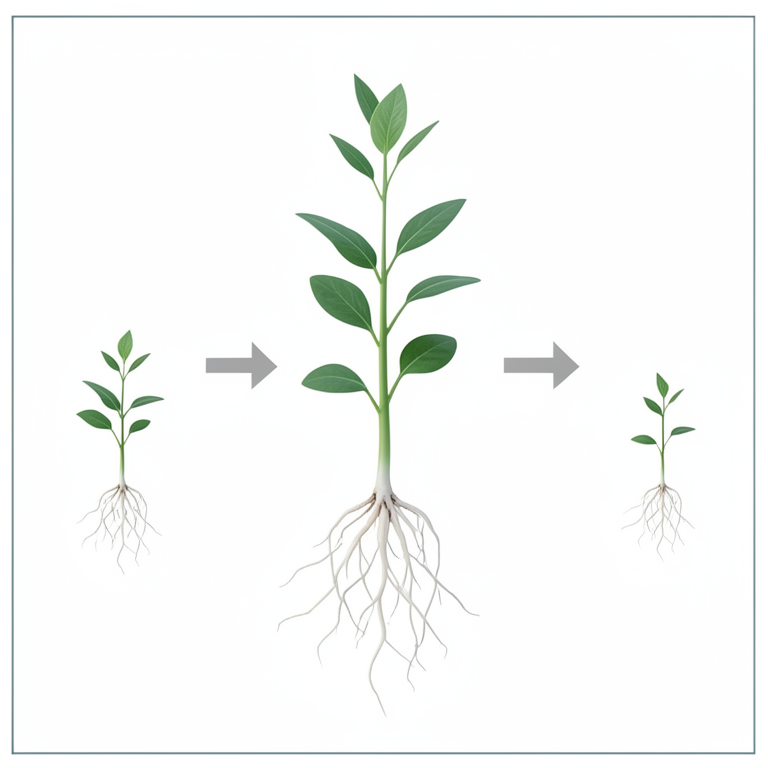
Dose-Response Concept
AI-generated conceptual illustration (common bean seedlings (Phaseolus vulgaris L.)). It explains the idea and does not show study data.
View source evidence ↗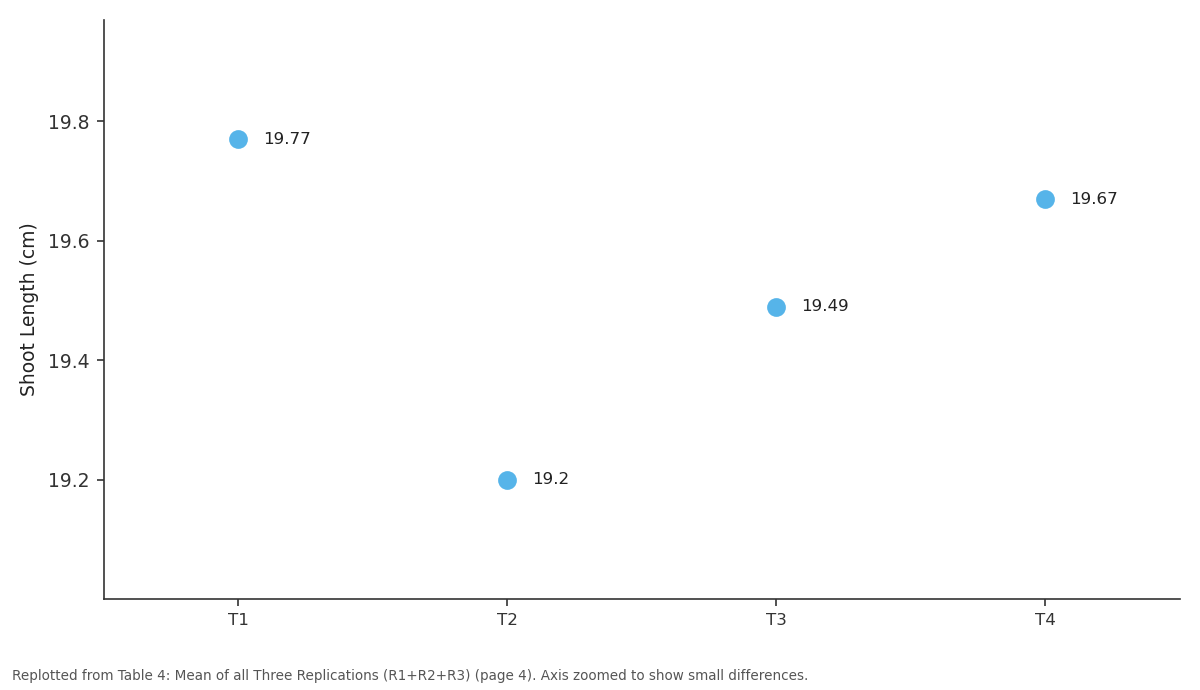
Shoot Length (cm): T1 vs T2 vs T3 vs T4
Replotted from Table 4 (page 4) of the original paper. Every bar is the paper's own table value.
View source evidence ↗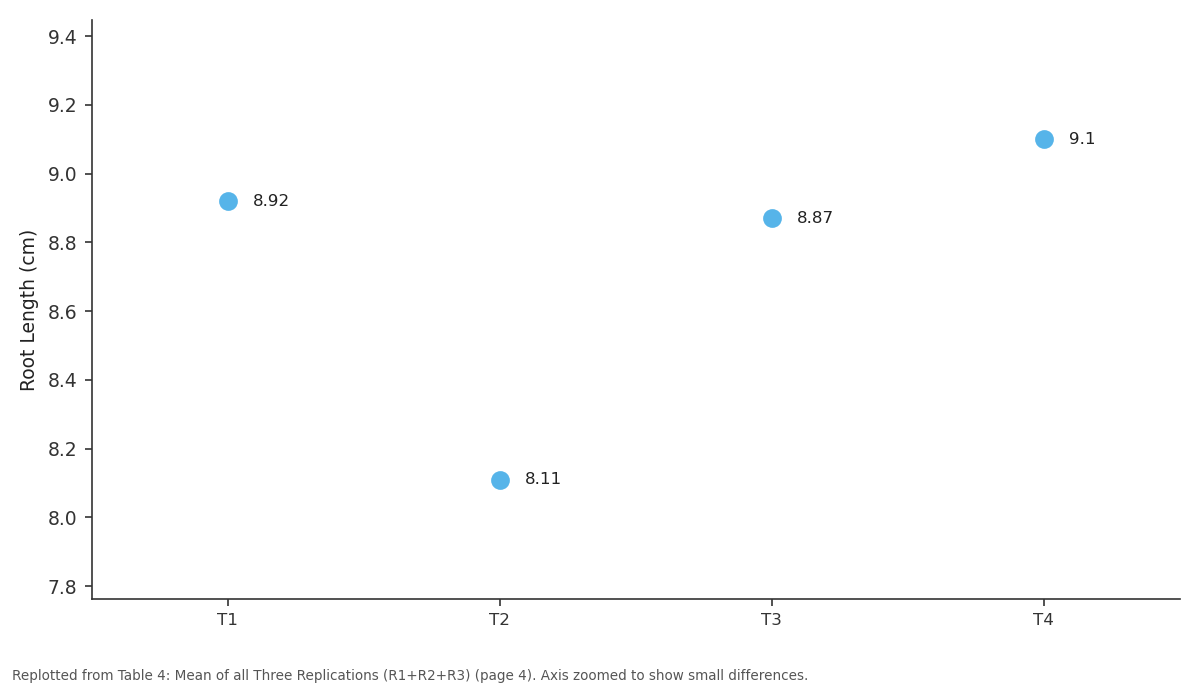
Root Length (cm): T1 vs T2 vs T3 vs T4
Replotted from Table 4 (page 4) of the original paper. Every bar is the paper's own table value.
View source evidence ↗Figures & tables
From the original paper Table 1
 Table 2
 Table 3
 Table 4
Introduction
Kidney bean (Phaseolus vulgaris L.), commonly known as Rajma, is a legume belonging to the Fabaceae family. It is widely grown in Maharashtra and is cultivated for both tender green beans and dry beans. Kidney beans are an essential part of many diets globally due to their nutritional value and low cost as a source of protein. These beans are particularly popular in Indian cities and are commercially grown, earning the title of "King of Nutrition" due to their high protein and fibre content. Additionally, kidney beans are used to manage obesity due to their healthy nutritional profile. In this study, the Chitra variety of kidney beans was used, which are uniform in size, healthy in appearance, and obtained from the Agriculture Centre in Rahata, Ahmednagar. The application of biofertilizers plays a vital role in attractive crop yields. Using biofertilizers is important for getting good crop yields. However, using chemical fertilizers and pesticides for a long time can harm the environment and human health. These chemicals may increase food production in the short term, but they negatively impact the land's productivity and pose health risks. Among the various types of organic fertilizers, freshwater algae is one of the most readily available options. Algal extracts have been shown to positively impact seed germination, seed vigour, and overall seedling growth. The benefits of algae are attributed to the occurrence of essential trace essentials and metabolites like growth regulators. These substances improve key plant growth factors, such as shoot and root length, seedling height, and vigour index. This study discovers the effect of freshwater algae as a liquid biofertilizer on the growth and yield of kidney beans (Phaseolus vulgaris L.), aiming to offer an environmental and sustainable another to chemical fertilizers.
Materials and Methods
Freshwater algae were collected from Astagaon village, Rahata, Maharashtra. The algae were cleaned carefully with tap water to eliminate impurities and the algae samples were put in plastic bags with water to stop it from evaporating during transport. Once they arrived at the lab, the algae were dried in the shade. After they were completely dry, they were crushed into a fine powder using a crusher. The powdered samples were then kept in a refrigerator to preserve their quality until required for use in subsequent experiments. This process ensured that the algal biofertilizer was ready for application in the growth trials of Phaseolus vulgaris L.
Boiling Methods
To make the algal extract, 100 gram of fine algal powder was mixed with 1000 ml of distilled water and boiled at 100°C until the capacity reduced toward 100 ml. The extract was then filtered through muslin cloth, resulting in a 100% standard algal extract. From this, different concentrations were prepared, including 1%, 5%, 10%, 15%, 20%, and 25%. Distilled water was used as a control for comparison. This method of preparing the extract was based on the work of Bhosale et al. (1975) [5] .
Experimental Setup -
To test how the algal extract affects kidney bean seed germination, the paper towel method from Singh et al. (1972) was used. In the experiment, 20 seeds were soaked in different amounts of algal extract for 12 hours. After soaking, the seeds were placed on germination paper. The experiment was repeated three times for accuracy. On the germination paper, 20 soaked seeds were placed on one side, while a clean polythene sheet was placed on the other side. The seeds were arranged in four rows of five seeds each. The germination paper was moved from the right side, with a plastic sheet wrapped around it and secured with rubber bands. This rolled germination paper was then placed vertically in a beaker with just enough water to keep it moist. The first count for seed germination percentage was done after 5 days, and the final count was done after 9 days (Agrawal R.L., 1976). To measure total seedling growth, various factors such as root length, shoot length, and overall seedling height were observed. This method allowed for careful monitoring of seed germination and growth at different algal extract concentrations.
Results
The results showed that the freshwater algal extract had a positive effect on kidney bean seed germination, root length, shoot length, and total seedling height. Among the different concentrations tested, the 15% algal extract concentration showed the best results. It resulted in the highest shoot length, root length, and total seedling height. Additionally, the 15% concentration also produced the highest seed germination rate, compared to the control group (which used distilled water). This indicates that the 15% algal extract is the most effective for promoting seed growth and improving seedling health in kidney beans.
Discussion
The results showed that the 15% algal extract concentration produced the best results for seed germination, root length, shoot length, and total seedling height. Other concentrations of algal extract also showed positive effects on some of these factors in kidney beans. For example, the total seedling height at different concentrations was as follows: 27.31 cm at 1%, 28.17 cm at 5%, 29.25 cm at 10%, 33.89 cm at 15%, 23.19 cm at 20%, 21.87 cm at 25%, and 28.44 cm at the control. The 15% concentration had the highest seedling height compared to the control. In terms of seed germination, the percentage at 1%, 5%, 10%, 15%, 20% and 25% was higher than at the control, with 100% germination at the 15% concentration. This shows that blue-green algal extract is very effective in promoting kidney bean seedling growth.
Conclusion
The results of the experiment show that the algal extract improved seed germination, increased the height of the seedlings, compared to the control group. Many farmers are now using fresh water algal extract as a biofertilizer. This biofertilizer is a low-cost, eco-friendly product that helps reduce environmental pollution. Then the farmers in their ponds easily available the algal material. So, algal mixture is used for experimental study.
Figures and tables from the paper
| Parameters | T1 | T2 | T3 | T4 | T5 | T6 | T7 |
|---|---|---|---|---|---|---|---|
| Shoot Length (cm) | 18.91 | 18.14 | 18.66 | 19.24 | 22.81 | 16.85 | 13.47 |
| Root Length (cm) | 10.78 | 9.25 | 10.35 | 10.51 | 11.72 | 9.45 | 7.65 |
| Total Plant Height(cm) | 29.70 | 27.39 | 28.39 | 30.03 | 34.53 | 26.66 | 20.77 |
Table text extracted from the original PDF; superscript letters are shown inline. The original table image is below.
View original table image
| Parameters | T1 | T2 | T3 | T4 | T5 | T6 | T7 |
|---|---|---|---|---|---|---|---|
| Shoot Length (cm) | 18.99 | 19.58 | 19.65 | 20.20 | 23.24 | 15.91 | 16.48 |
| Root Length (cm) | 8.36 | 9.74 | 9.8 | 9.26 | 10.93 | 9.38 | 7.38 |
| Total Plant Height (cm) | 27.35 | 29.32 | 29.48 | 29.47 | 34.18 | 25.30 | 23.86 |
Table text extracted from the original PDF; superscript letters are shown inline. The original table image is below.
View original table image
| Parameters | T1 | T2 | T3 | T4 | T5 | T6 | T7 |
|---|---|---|---|---|---|---|---|
| Shoot Length (cm) | 21.43 | 19.88 | 20.17 | 19.59 | 22.86 | 11.91 | 14.89 |
| Root Length (cm) | 7.64 | 5.34 | 6.48 | 7.54 | 10.23 | 5.76 | 6.11 |
| Total Plant Height (cm) | 28.27 | 25.23 | 26.66 | 28.25 | 32.97 | 7.67 | 21.00 |
Table text extracted from the original PDF; superscript letters are shown inline. The original table image is below.
View original table image
| Parameters | T1 | T2 | T3 | T4 | T5 | T6 | T7 |
|---|---|---|---|---|---|---|---|
| Shoot Length (cm) | 19.77 | 19.2 | 19.49 | 19.67 | 22.97 | 14.89 | 14.94 |
| Root Length (cm) | 8.92 | 8.11 | 8.87 | 9.10 | 10.96 | 8.19 | 7.04 |
| Total Plant Height (cm) | 28.44 | 27.31 | 28.17 | 29.25 | 33.89 | 23.19 | 21.87 |
Table text extracted from the original PDF; superscript letters are shown inline. The original table image is below.
View original table image
References
6 in the original paper- Taylor AG, Paine DH, Suzuki N. Coating technology for seed treatment applications. NY 14456 USA; 2004. p. 49-54.
- Selvakumar GM, Lenin P, Thamizhiniyan T, Ravimycin T. Response of biofertilizer on the growth and yield of black gram (Vigna mungo L.). Recent Res Sci Technol. 2009;1(4):169-175.
- Kaushal H, Kukreja S. The effect of biofertilizers on growth and yield of legumes -a review. Int J Curr Microbiol Appl Sci. 2020;9(11):2606-2613.
- Anitha KK, Raja Kumar KN, Narasimha Rao CH. Adverse effects of chemical fertilizers and pesticides on human health and environment. Natl Semin Impact Tox Met Min Solv Environ Pollut. J Chem Pharm Sci. 2014;Special Issue 3:149-151.
- Bhosale NB, Untawale AG, Dhargalkar VK. Effect of seaweed extracts on the growth of Phaseolus vulgaris L. Indian J Mar Sci. 1975;4:209-210.
- El-Sheekh MM, El-Saiedh AEF. Effect of seaweed extract on seed germination, seedling growth and some metabolic processes of faba beans (Vicia faba L.). Phykos. 1999;38:55-64.