
Research article · 2025 · Full text
International Journal of Biology SciencesSynergistic effects of silicon and anti-gibberellins on lodging resistance in cereals
Volume 7(6) · Pages 14–16 · DOI: 10.33545/26649926.2025.v7.i6a.349 ↗
Research areasSilicon Effects in AgricultureCrop Yield and Soil Fertility
Abstract
Author-writtenMillet farmers face a significant challenge known as lodging, where plant stems break or fall over due to environmental stresses. This issue results in decreased crop yields, compromised grain quality, and harvesting complications. To combat this problem, especially in regions susceptible to strong winds, heavy rainfall or dense crop planting, innovative agricultural solutions are essential. Two promising approaches have emerged to enhance crop stability: the use of Silicon (Si) and anti-gibberellins (AGs). The implementation of this dual-treatment strategy has the potential to revolutionize millet production in areas where lodging is a persistent problem. By promoting stable yields, enhancing grain quality, and improving adaptability to unpredictable weather conditions, this approach offers a promising solution for millet farmers facing the challenges of lodging.
Summary
Source-checkedPlain-language reading of the full paper, prepared with AI and checked against the text. Each point links to the authors' own words.
Why it matters
- Millets are essential for food security in arid regions due to their nutrient density and ability to withstand drought. View evidence ↗
- Lodging, where plant stems break or fall, is a major challenge for millet farmers and can reduce crop yields by 30% to 80%. View evidence ↗
- Lodging impairs the plant's ability to perform photosynthesis and transport water and nutrients, leading to lower grain quality and yield loss. View evidence ↗
The question
- The paper explores whether a dual-treatment strategy using Silicon (Si) and anti-gibberellins (AGs) can effectively enhance lodging resistance in cereals, specifically millets. View evidence ↗
What they did
- The authors conducted a comparative analysis of the effects of silicon and anti-gibberellins when applied alone versus in combination. View evidence ↗
- The review cites studies where maize seeds were treated with uniconazole at 0, 25, 50, and 75 mg kg−1, or foliar sprays were applied at 0, 25, 50, and 75 mg L−1. View evidence ↗
What they found
- Silicon application can increase stem stiffness by 15-25% by depositing silica in the cell walls. View evidence ↗
- The use of 300 mg L−1 and 3.5 g kg−1 of paclobutrazol reduces lodging risk by controlling height and increasing lignin in lower internodes. View evidence ↗
- Anti-gibberellins reduce lodging by inhibiting gibberellin synthesis, which lowers the plant's center of gravity by reducing height. View evidence ↗
- Combining silicon and anti-gibberellins provides synergistic benefits by simultaneously increasing mechanical strength and regulating growth. View evidence ↗
- In rice, the combined application of silicon and anti-gibberellins significantly reduced lodging and improved the stability of the yield. View evidence ↗
- Broadcasting silicon fertilizers is more effective for enhancing lodging resistance than foliar spraying. View evidence ↗
What it means
- The authors conclude that the combined use of silicon and anti-gibberellins is a superior strategy for lodging resistance compared to using either treatment alone. View evidence ↗
- Further field trials are needed to determine the optimal ratio of anti-gibberellin to silicon for different plant types and environmental conditions. View evidence ↗
Visual summary
1 visualsIllustrations explain the paper; they do not show study data.
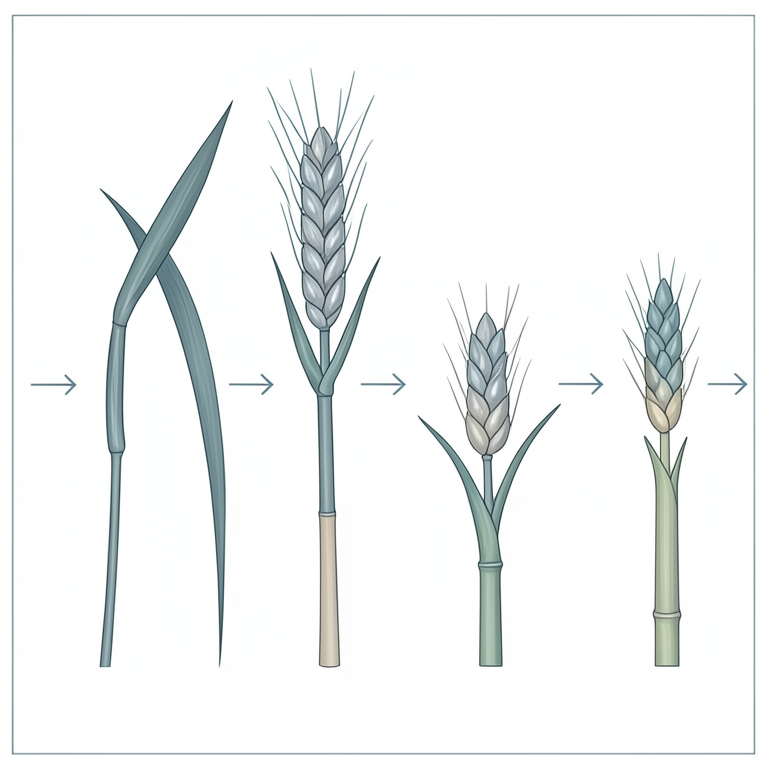
Mechanism of Lodging Resistance
AI-generated conceptual illustration (wheat plants). It explains the idea and does not show study data.
View source evidence ↗Introduction
Millets play a vital role in dry regions, standing out for their toughness, ability to handle drought, and high nutrient content. These traits make them key to food security in tough growing areas (Sharma et al., 2022) [1] . However, millet farmers face a big problem: lodging. This happens when stems bend or fall due to stress from strong winds, heavy rain, or crowded planting. Lodging can cut yields by 30-80%, depending on how bad it is and when it occurs (Wang et al., 2021) [3] . The harm goes beyond lower yields; it also hurts grain quality, makes harvesting harder, and cuts into farm profits. This poses a major hurdle for millet growing and stability (Kumar et al., 2022) [2] . New farming methods have found two promising tools to fight lodging in cereals: silicon (Si) and anti-gibberellins (AGs). Silicon has been well-studied for its help in making plants stronger and better able to handle stress. Studies show that adding silicon can make stems up to 15-25% stiffer by putting silica in cell walls, which makes the plant's structure thicker and stronger (Kumar et al., 2020) [20] . This stronger structure helps plants resist bending from wind or rain, making silicon useful for fighting lodging. Silicon also helps plants take up nutrients better and use water more efficiently, which further supports plant health and stability (Wang et al., 2021) [3] . The use of PGRs provides an effective way for minimising the negative impacts of stress on agricultural productivity and plant growth. The mix of silicon and anti-gibberellins can greatly improve the ability of different crops to resist lodging. An increase in silicon content in rice shoots resulted in thicker cell walls in the stem and larger vascular bundles, leading to a lower lodging index. Severe storms that lead to lodging can also increase the evaporation of water from leaves and cause dehydration in plant tissues [Ahmad et al., 2020] [15] . Furthermore, this factor also impacts the structure of plant foliage in order to enhance light absorption, thus enhancing sclerenchyma, vascular tissues, and vascular sheaths, and preventing lodging in wheat and rice. This micronutrient can be used to promote silicification and lignification in thick-walled cells, thicken collenchyma cells, and enhance keratinocyte development and increase cellulose content, thereby boosting lodging resistance in rice. Studies that were conducted before proposed that uniconazole greatly decreased lodging increased stress levels and enhanced the antioxidant defense mechanism and maize seed-filling rates [Amin et al. 2018 and Ahmad 2022] [6, 15] . Furthermore, paclobutrazol has the ability to be chemically administered in order to reduce the possibility of lodging occurring in cereal crops [Ahmad, 2020] [15] . Silicon boosts the amounts of lignin and cellulose, leading to improved physical strength in the stem and a greater ability for rice plants to resist lodging. [Liu et al., 2018] [18] . A recent study analysing multiple sources of data also found that applying Si fertilizers through broadcasting is more successful than using foliar spraying to enhance the resistance of plants to lodging. [Li et al., 2023] [19] . Applying silicon-potassium fertilizer can boost the lignin levels in the second stem node at the base of rice plants, leading to a notable improvement in their ability to resist lodging. [Xue et al., 2017] [9] . Applying the correct quantity of nano silicon can help increase the lodging resistance of the second node of wheat's basal stem. Paclobutrazol decreased the length between nodes, the height of the plant, the height of the ear, the height of the center of gravity, and the rate of lodging. Furthermore, a greater amount of lignin was stored in the lower node. [Ahmad et al, 2020] [15] Crop lodging: A Comprehensive overview The permanent removal of a stem from its upright posture is known as lodging. According to Hu (2022) [17] , a plant is deemed to have lodged when its stems topple over and fail to straighten again. However, lodging has also been defined as bending at the peduncle's base. One of the biggest obstacles to increasing mean yields and improving the quality of cereal harvests is lodging, which can be caused by the adoption of tall cultivars, poor nitrogen management, or unfavourable weather circumstances. Crop lodging drastically lowers the millets' capacity for photosynthetic activity as well as the movement of nutrients, water, and carbohydrates, which eventually results in a large loss of yield and a decline in quality (Wu et al., 2020) [12] . There are two types of lodging that crop plants might experience: stem lodging and root lodging. The bending or breaking of the stem's basal internodes is referred to as stem lodging. The morphological and mechanical characteristics of the lower internodes, including stem diameter, bending strength, flexural rigidity, and Young's modulus (which represents elasticity), are crucial in creating resistance to stem lodging.
Environmental and agronomic determinants of crop lodging Illuminating the Risk: Light Intensity and Lodging in Millets
A critical factor influencing lodging is light intensity. Light intensity directly affects the photosynthesis process, plant morphology, and ultimately the plant's structural strength, including its resistance to lodging. Major challenge in millet cultivation is lodging when plants fall or lean, often due to mechanical forces or environmental stress. A critical factor influencing lodging is light intensity. Higher light intensity generally leads to increased photosynthesis, resulting in enhanced plant growth. However, this can also increase the plant's vulnerability to lodging, especially if the plant develops excessive vegetative growth without adequate strengthening of the stalks. Kumar et al. (2022) [2] in Agronomy Journal showed that specific pearl millet genotypes exhibited greater stem thickness and stronger basal internodes under high light intensity. These traits contributed to better lodging resistance. Researchers noted that improving these genetic traits through breeding programs could help mitigate the risk of lodging under intense light conditions. Millets are generally short-day plants, and their growth responses to light vary based on photoperiod and light intensity. In regions with high light intensity, the interaction between light duration and intensity can also influence plant height and lodging risk. A study by Xie et al. (2021) [13] published in Plant Science found that increasing light intensity during the early stages of millet growth enhanced vegetative development. However, excessive light during the flowering and grain-filling stages led to top-heavy plants, increasing the likelihood of lodging. This effect was more pronounced in early-maturing varieties that were more sensitive to changes in light quality and intensity.
Investigating the optimal ratio of anti-Gibberellin and silicon for lodging resistance
The ideal proportion of anti-gibberellin to silicon for preventing lodging may differ based on the plant species and the environment. Generally, anti-gibberellins (like paclobutrazol) help reduce stem elongation, while silicon strengthens cell walls and improves structural integrity. The current results indicate that using 300 mg L -1 and 3.5 g kg -1 of paclobutrazol can effectively reduce lodging risk by controlling plant height and improving culm strength and lignin accumulation in lower internodes. [Chakma et al, 2021] [14] Seeds of Maize were immersed in uniconazole solutions at levels of 0 (SCK0), 25 (SU25), 50 (SU50) and 75 (SU75) mg kg -1 . In a different trial, uniconazole was sprayed on the leaves at levels of 0 (FCK0), 25 (FU25), 50 (FU50) and 75 (FU75) mg L -1 when the plants had eight leaves. The findings indicated that uniconazole effectively reduced the risk of lodging by improving lignin breakdown and enhancing the physical features of the stem. Uniconazole greatly enhanced the amount of lignin and the functions of enzymes involved in lignin formation like phenylalanine ammonia-lyase, cinnamyl alcohol dehydrogenase, tyrosine ammonia-lyase, and peroxidase. [Irshad Ahmad et al., 2018] [6] . Field trials are essential to identify the most suitable antigibberellin to silicon ratio, like 1:1 or 1:2, for the particular conditions and plant types.
Comparative analysis of silicon and anti-gibberellin alone vs. Combination therapy for lodging resistance
Lodging, the bending or breaking of crop stems, is a significant agricultural issue, particularly for cereals like wheat and rice, as it can lead to major yield losses. Recent research has focused on using silicon (Si) and antigibberellin (AG) treatments to enhance lodging resistance. This comparative analysis evaluates the effects of silicon and anti-gibberellin (AG) applications individually and in combination, showing that while each has benefits, their combined use offers unique advantages in structural resilience and yield stability. When applied alone, silicon contributes to lodging resistance by strengthening cell walls and increasing lignin content, which reinforces stem rigidity. This is achieved through enhanced lignin biosynthesis and deposition, which thickens cell walls and reduces the plant's susceptibility to lodging under adverse environmental conditions (Ji et al., 2023) [16] . Silicon has been shown to improve stem diameter and mechanical strength, making crops like wheat and rapeseed less likely to bend or break under heavy winds (Hu et al., 2022) [10] . On the other hand, anti-gibberellins such as triazoles or paclobutrazol operate through a different mechanism. These compounds inhibit gibberellin synthesis, which slows stem elongation and reduces plant height, thereby lowering the centre of gravity and making the plant sturdier and more resistant to lodging. Anti-gibberellins (AG) also influence hormonal pathways that affect cell division, promoting a denser and more compact growth form that resists lodging (Tian, 2018) [18] . Studies have found that a combination therapy of silicon and anti-gibberellin (AG) treatments can yield synergistic benefits, offering both the mechanical strength provided by silicon and the growth control induced by AGs. This dual approach promotes not only shorter and thicker stems but also a more robust cell wall structure, thereby enhancing resistance to external stressors such as heavy rain and strong winds (Tian et al., 2023) [19] . For instance, in rice, this combination therapy has resulted in a significant reduction in lodging incidents and an improvement in yield stability, making it an attractive strategy for high-yield, intensive farming systems (Li et al., 2023) [19] . In conclusion, while silicon and anti-gibberellins each offer valuable benefits independently, their combined application provides a superior strategy for lodging resistance by leveraging both structural reinforcement and growth regulation. As environmental conditions continue to challenge crop resilience, integrated approaches like these are likely to play a vital role in sustainable agriculture.
References
19 in the original paper- Sharma R, Soni P, Joshi V. Genotypic variation in stem strength and lodging resistance in pearl millet under variable light intensity. Agronomy Journal. 2022;114(3):521-530.
- Kumar S, Singh R, Pathak H. Improving lodging resistance in millet through integrated agronomic strategies. Journal of Cereal Science. 2022;103:57-65.
- Wang M, Wang R, Mur LAJ, Ruan J, Shen Q, Guo S. Functions of silicon in plant drought stress responses. Horticulture Research. 2021;8:1-11.
- Mir RA, Bhat BA, Yousuf H, Islam ST, Raza A, Rizvi MA, et al. Multidimensional role of silicon to activate resilient plant growth and to mitigate abiotic stress. Frontiers in Plant Science. 2022;13:819658.
- Kamran M, Guo Z, Meng X, Ali S. Optimization of nitrogen-silicon (N-Si) fertilization for grain yield and lodging resistance of early-season indica fragrant rice under different planting methods. CSIRO Publishing. 2020;1-12.
- Amin M, Ahmad R, Ali A, Hussain I, Mahmood R, Aslam M, et al. Influence of silicon fertilization on maize performance under limited water supply. Silicon. 2018;10:177-183.
- Liu Q, Ma J, Zhao Q, Zhou X. Physical traits related to rice lodging resistance under different simplifiedcultivation methods. Agronomy Journal. 2018;110:127132.
- Li Z, Liu F, Wu W. Optimising nitrogen management strategies to minimise lodging risk while sustaining high seed yield in rapeseed. European Journal of Agronomy. 2023;142:126671.
- Xue J, Gao S, Fan Y, Li L, Ming B, Wang K, et al. Traits of plant morphology, stalk mechanical strength, and biomass accumulation in the selection of lodgingresistant maize cultivars. European Journal of Agronomy. 2020;117:126073.
- Hu H, Li J, Yang T, Zhou R, Zhang W, Gao Y, et al. Role of silicon and lignin in lodging resistance. Frontiers in Plant Science. 2022;13:1-15.
- Wu K, Zhou F, Zhou S, Zhang X, Wu B. Enhancing root lodging resistance of maize with twin plants in wide-narrow rows: a case study. Plant Production Science. 2020;23:286-296.
- Xie Z, Zhang W, Liu D. Light intensity and plant architecture: their role in lodging resistance of millets. Plant Science. 2021;292:110445.
- Chakma R, Saekong P, Biswas A, Ullah H, Datta A. Growth, fruit yield, quality, and water productivity of grape tomato as affected by seed priming and soil application of silicon under drought stress. Agricultural Water Management. 2021;256:107055.
- Ahmad I, Kamran M, Guo Z, Meng X, Ali S. Optimization of nitrogen-silicon (N-Si) fertilization for grain yield and lodging resistance of early-season indica fragrant rice under different planting methods. CSIRO Publishing. 2020;1-12.
- Ji Y, Xu Y, Li L, Cheng S, Zhang Y, Hu W, et al. Silicon and lodging resistance in wheat. Agronomy. 2023;13(10):2565.
- Hu H, Li J, Yang T, Zhou R, Zhang W, Gao Y, et al. Role of silicon and lignin in lodging resistance. Frontiers in Plant Science. 2022;13:1-15.
- Tian B, Luan S, Zhang L, Liu Y, Zhang L, Li H. Penalties in yield and yield-associated traits caused by stem lodging at different developmental stages in summer and spring foxtail millet cultivars. Field Crops Research. 2018;217:104-112.
- Tian Z, Wang X, Dun X, Tian Z, Zhang X, Li J, et al. Integrating biochemical and anatomical characterizations with transcriptome analysis to dissect superior stem strength of ZS11 (Brassica napus). Frontiers in Plant Science. 2023;14:1144892.
- Kumar M, Patel AK, Shah AV, Raval J, Rajpara N, Joshi M, Joshi CG. First proof of the capability of wastewater surveillance for COVID-19 in India through detection of genetic material of SARS-CoV-2. Science of The Total Environment. 2020 Dec 1;746:141326.