
Research article · 2025 · Full text
International Journal of Agriculture and Food ScienceTransitioning to cleaner cooking fuels: Challenges faced by rural women and recommendations for sustainable adoption under Ujjwala Yojana
Volume 7(6) · Pages 195–198 · DOI: 10.33545/2664844x.2025.v7.i6c.457 ↗
Research areasEnergy and Environment Impacts
Abstract
Author-writtenAccess to clean cooking energy remains a persistent challenge in rural India, with significant implications for women’s health, environmental sustainability, and social equity. The Pradhan Mantri Ujjwala Yojana (PMUY), launched in 2016, was envisioned as a transformative initiative aimed at enabling access to Liquefied Petroleum Gas (LPG) for economically disadvantaged households, particularly in rural areas. Despite the wide distribution of LPG connections under PMUY, sustained and exclusive adoption remains elusive. This study, based in Udaipur district of Rajasthan, investigates the challenges rural women face in transitioning to cleaner cooking fuels. Employing primary data sourced through interviews with 100 rural women (50 LPG users and 50 non-users), the study reveals that high refill costs, supply chain inefficiencies, and ingrained cultural preferences remain major barriers to full adoption. Additionally, a lack of safety awareness and limited understanding of LPG handling pose risks and discourage consistent use. The study advocates for a more holistic and inclusive policy framework that thoughtfully considers the economic, behavioral, and infrastructural barriers affecting sustained LPG adoption. It emphasizes the importance of tailoring interventions to the lived realities of rural women, ensuring that clean cooking transitions are not only accessible but also practical and sustainable in the long term. Recommendations include enhancing refill subsidies, expanding last-mile delivery services, and conducting targeted awareness and safety education campaigns. By foregrounding women's voices and lived experiences, this research paper advances the discourse on sustainable energy transitions and gender-sensitive policy making in India.
Summary
Source-checkedPlain-language reading of the full paper, prepared with AI and checked against the text. Each point links to the authors' own words.
Why it matters
- Rural households in India often rely on biomass fuels like firewood and cow dung, which are labor-intensive and cause significant indoor air pollution. View evidence ↗
- Exposure to smoke and particulate matter from traditional fuels leads to serious health problems, including cardiovascular issues and chronic respiratory conditions. View evidence ↗
- The use of biomass fuels negatively impacts the environment by accelerating deforestation and contributing to climate change. View evidence ↗
The question
- The study aims to identify the challenges rural women face when using LPG under the Ujjwala Yojana and to suggest ways to ensure sustainable use. View evidence ↗
What they did
- The research used an exploratory design in the Udaipur district of Rajasthan, sampling 100 women divided equally between LPG users and non-users. View evidence ↗
- Data was collected via structured interviews, using purposive sampling for LPG users from beneficiary lists and random sampling for non-users. View evidence ↗
- The researchers analyzed the collected data using descriptive statistics, specifically percentages and frequencies. View evidence ↗
What they found
- While 74% of LPG users used the fuel for all cooking, 26% practiced 'fuel stacking' by combining LPG with traditional biomass fuels. View evidence ↗
- Cost-effectiveness was the primary reason for avoiding LPG, cited by 88% of non-users. View evidence ↗
- Logistical issues are significant, with 62% of LPG users reporting the unavailability of fuel as a barrier. View evidence ↗
- LPG significantly saves time: 76% of users finished cooking in 1-2 hours, whereas only 34% of non-users did the same. View evidence ↗
- Safety awareness is low, with 52% of LPG users lacking knowledge of basic safety guidelines. View evidence ↗
- The recurring cost of refills, typically between ₹500 and ₹600, was cited by all users as a deterrent to consistent use. View evidence ↗
- LPG adoption improves ergonomics; 62% of non-users cook in a squatting position compared to 40% of LPG users. View evidence ↗
- Standing while cooking, which is more ergonomically favorable, was reported exclusively by LPG users (58%). View evidence ↗
What it means
- The authors recommend shifting from one-time connection subsidies to ongoing refill support for low-income households to ensure sustainable use. View evidence ↗
Visual summary
3 visualsIllustrations explain the paper; charts are replotted from the paper's own table values.
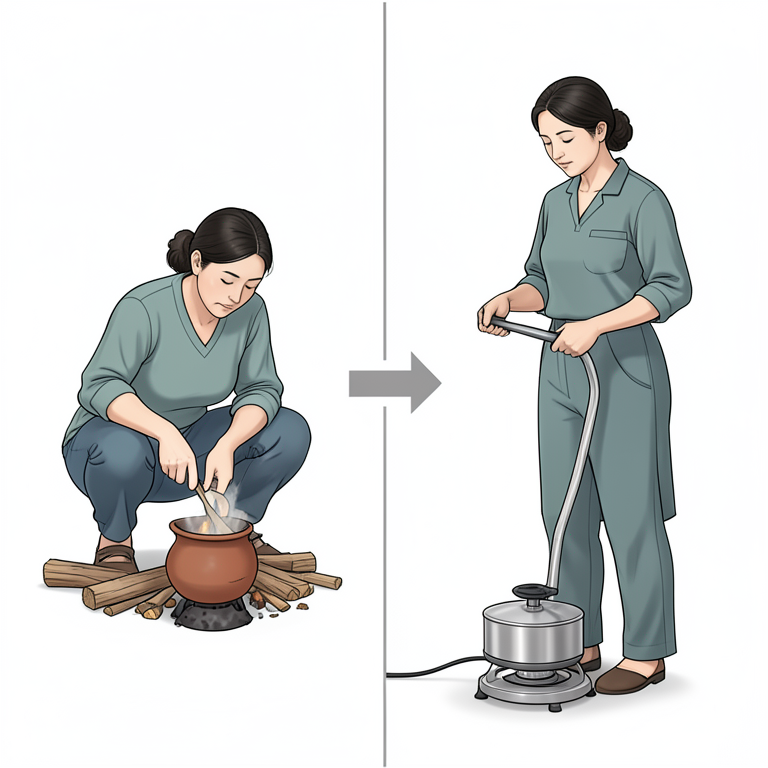
Ergonomic Comparison of Cooking Postures
AI-generated conceptual illustration (Rural Indian women in a domestic kitchen setting). It explains the idea and does not show study data.
View source evidence ↗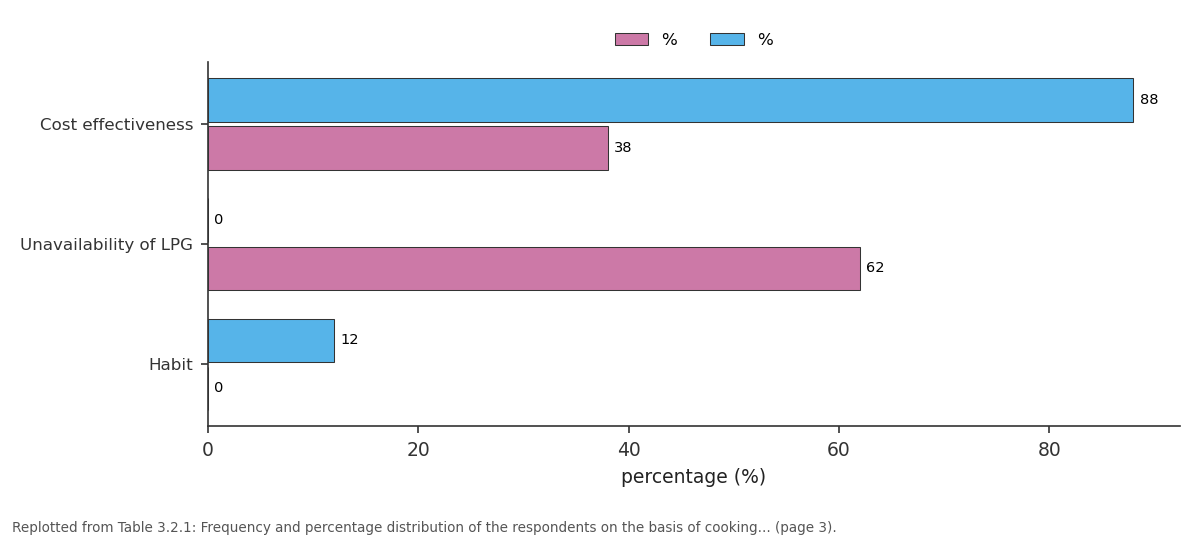
% and %: Cost effectiveness vs Unavailability of LPG vs Habit
Replotted from Table 3 (page 3) of the original paper. Every bar is the paper's own table value.
View source evidence ↗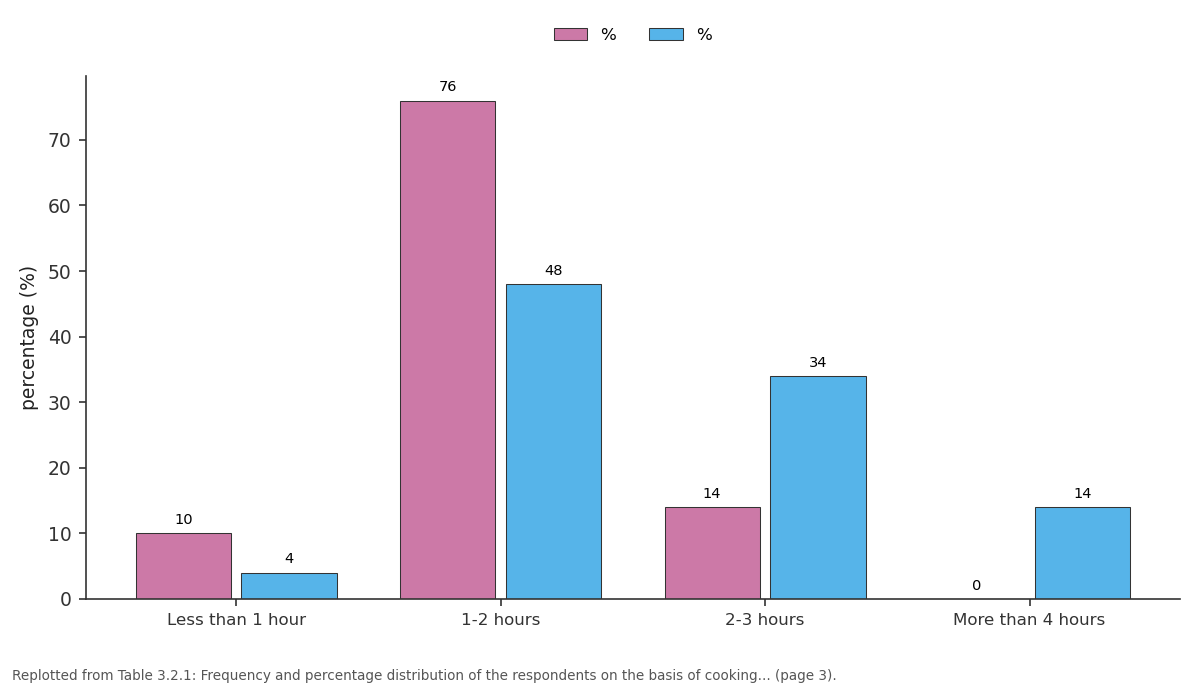
% and %: Less than 1 hour vs 1-2 hours vs 2-3 hours vs More than 4 hours
Replotted from Table 3 (page 3) of the original paper. Every bar is the paper's own table value.
View source evidence ↗Figures & tables
From the original paper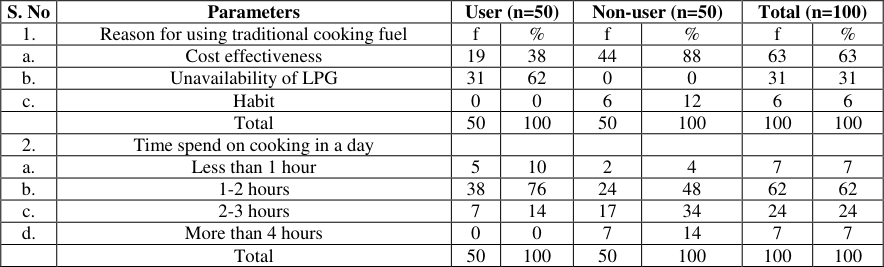 Table 3
 Table 3
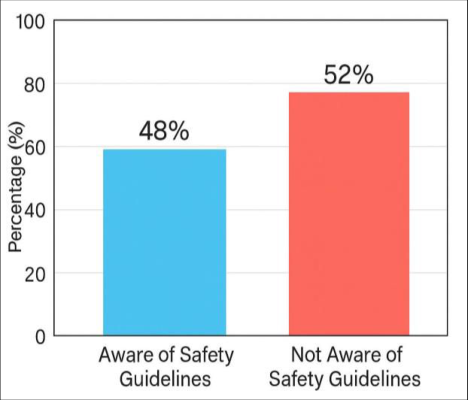 Figure 1
Introduction
In India, the transition to cleaner cooking fuels represents a pivotal development challenge, especially for rural women who bear the brunt of traditional cooking practices. Across economically weaker rural households, cooking with solid biomass fuels such as firewood, cow dung, and crop residues remains deeply entrenched. These fuels are not only laborintensive to collect but also produce high levels of indoor air pollution. Prolonged exposure to smoke, carbon monoxide, and particulate matter causes severe health risks including chronic respiratory conditions, eye irritation, and cardiovascular issues. Women, who are primarily responsible for cooking in rural households, spend considerable time in smokefilled kitchens and suffer the most from these adverse effects. The environmental implications are equally dire-biomass fuel consumption accelerates deforestation, depletes natural resources, and contributes to climate change. This study aims to: 1. To examine the key challenges rural women face in adopting and using LPG under Ujjwala Yojana 2. To suggest measures for sustainable and continued use of clean cooking fuels in rural areas.
LPG connections have been distributed under PMUY, marking it as one of the largest clean fuel initiatives globally. However, while access to LPG has increased significantly, the transition to exclusive and sustained LPG use remains incomplete. A large segment of rural women continue to practice 'fuel stacking', where LPG is used only for specific meals or occasions, while traditional fuels remain the dominant energy source. This pattern is symptomatic of deeper structural and behavioral challenges that obstruct a full shift to clean cooking. Key barriers include the affordability of refills, lack of safety awareness, insufficient training, unreliable delivery mechanisms, and deep-seated cultural preferences. For many women, the recurring cost of a refill-often between ₹500 and ₹600-is financially burdensome. Without regular and transparent subsidy support or refill subsidies, households revert to firewood, which is perceived as "free" albeit more laborious and harmful. Moreover, poor last-mile delivery infrastructure in remote areas leads to delays and inaccessibility, reducing the practical usability of LPG even among registered users. A growing body of empirical studies reinforces these findings. For instance, Behera and Mallick (2023) [2] , in their study of PMUY in Bihar, revealed that economic hardship and cultural norms prevented women from consistently using LPG, despite initial uptake. Angoori et al.
(2023) [1] also observed that affordability, not awareness, was the central obstacle to regular LPG use. Gould and Urpelainen (2018) [4] identified that fuel stacking persisted even among households with positive perceptions of LPG, reflecting practical and habitual limitations. Infrastructure issues were highlighted by Jain et al. (2018) [5] , who pointed out that the absence of reliable cylinder delivery networks hindered consistent usage. Furthermore, Sundar and Garg (2020) [8] found that fear of accidents and lack of formal safety training dissuaded many women from full adoption. Dalvi (2022) [3] emphasized that, despite recognizing the time-saving advantages of LPG, economic insecurities often pushed women back to traditional fuels during lean financial periods. Lastly, Khandker et al. (2020) [6] advocated for behavioral change communication (BCC) and targeted financial incentives to ensure that LPG usage becomes habitual and not just symbolic. These studies collectively affirm that access alone is insufficient. For PMUY to deliver on its promises of women's empowerment, improved health, and environmental protection, it must address the nuanced and intersecting challenges rural women face in transitioning to cleaner cooking fuels. The current research focuses specifically on these challenges-drawing from primary data in rural Rajasthan-to assess the ground-level realities and propose concrete, actionable strategies for sustainable adoption of LPG under Ujjwala Yojana.
Methodology
This study was conducted in the Udaipur district of Rajasthan and employed an exploratory research design. A sample of 100 women was selected, comprising 50 LPG users and 50 non-users. User data was sourced using purposive sampling from PMUY beneficiary lists, while non-users were randomly selected. A structured interview schedule was used to collect data on fuel usage, sociodemographics, safety awareness, affordability issues, and perceived barriers. Data were analyzed using descriptive statistics including frequency and percentage.
Results and Discussion
Results and Discussion
Socio-Demographic Characteristics
The socio-demographic profile of the respondents revealed that a majority were aged between 35 to 45 years, with the 35-45 age group comprising 57% of the total sample. Most of the respondents were homemakers, especially among LPG users (82%) as compared to 56% among non-users, suggesting that women with greater domestic responsibilities were more inclined to adopt LPG due to the convenience and time efficiency it offers. Educational attainment was relatively low across both groups, with 29% never attending school and 32% completing only primary education. Despite limited formal education, the women demonstrated a practical understanding of cooking methods and fuel usage based on lived experience (Krishna Devi et al., 2022) [7] .
Cooking Practices and Fuel Preferences
The data indicated a contrast in cooking fuel patterns between LPG users and non-users. Among LPG users, 74% reported using LPG for complete cooking, while 26% still engaged in partial cooking, combining LPG with traditional fuels like firewood or dung cakes. The reasons for partial adoption included high refill costs, occasional unavailability of LPG, and preferences for cooking certain traditional dishes over firewood. For non-users, 76% relied on firewood and 24% on dung cakes, underscoring continued dependence on biomass fuels. The data in table 3.2.1, highlights stark differences in cooking practices between LPG users and non-users. Among non-users, cost-effectiveness was the most cited reason for continuing the use of traditional fuels, with 88% respondents selecting this option. Unavailability of LPG was reported by 62% of users as a barrier, underscoring logistical and supply-related challenges in rural areas. Interestingly, 12% of non-users indicated that habit played a role in avoiding LPG adoption, reflecting the influence of cultural or behavioral inertia, while no such response was observed among LPG users. LPG usage significantly reduced cooking time, with 76% of users completing cooking within 1-2 hours, compared to only 34% of non-users. In contrast, 38% of non-users spent 2-3 hours, and 14% spent over 4 hours daily on cooking. This highlights the inefficiency of traditional fuels and underscores LPG's role in saving time and reducing health risks, particularly benefiting rural women.
| S. No | Posture while cooking | User (n=50) | — | Non-user (n=50) | — | Total (n=100) | — |
|---|---|---|---|---|---|---|---|
| f | % | f | % | f | % | ||
| 1. | Squatting | 20 | 40 | 31 | 62 | 51 | 51 |
| 2. | Standing | 29 | 58 | 0 | 0 | 29 | 29 |
| 3. | Sitting | 1 | 2 | 19 | 38 | 20 | 20 |
Table text extracted from the original PDF; superscript letters are shown inline. The original table image is below.
View original table image
| S. No | Parameters | User (n=50) | — | Non-user (n=50) | — | Total (n=100) | — |
|---|---|---|---|---|---|---|---|
| 1. | Reason for using traditional cooking fuel | f | % | f | % | f | % |
| a. | Cost effectiveness | 19 | 38 | 44 | 88 | 63 | 63 |
| b. | Unavailability of LPG | 31 | 62 | 0 | 0 | 31 | 31 |
| c. | Habit | 0 | 0 | 6 | 12 | 6 | 6 |
| Total | 50 | 100 | 50 | 100 | 100 | 100 | |
| 2. | Time spend on cooking in a day | ||||||
| a. | Less than 1 hour | 5 | 10 | 2 | 4 | 7 | 7 |
| b. | 1-2 hours | 38 | 76 | 24 | 48 | 62 | 62 |
| c. | 2-3 hours | 7 | 14 | 17 | 34 | 24 | 24 |
| d. | More than 4 hours | 0 | 0 | 7 | 14 | 7 | 7 |
| Total | 50 | 100 | 50 | 100 | 100 | 100 |
Table text extracted from the original PDF; superscript letters are shown inline. The original table image is below.
View original table image
Safety Awareness and Training
Awareness regarding safety protocols of LPG usage was found to be alarmingly low. The data in figure 1 shows only 48% of users were aware of basic LPG safety procedures and 52% were not aware of basic safety guidelines of LPG. Although all respondents claimed to turn off the regulator in case of a suspected leak, only 70% knew the importance of opening windows for ventilation, and a mere 52% were aware of the need to switch off electrical appliances to avoid sparks. Formal training was not provided during the installation process, which left users to rely on informal community knowledge or distributor instructions.
Fig 1: Percentage distribution on the basis of basic awareness of LPG safety guidelines
When asked about handling practices, all respondents (100%) confirmed that they avoided unsafe behaviors like tilting the LPG cylinder to extract the remaining gas. While this indicates a baseline level of safety consciousness, the overall picture reveals a gap in formal safety education, which may lead to significant consequences in case of emergencies.
Barriers to Refill and Continued use
The most pressing barrier to sustained LPG usage remains the cost of refilling. Despite initial subsidies on connections, the recurring refill cost-ranging from ₹500 to ₹600-was reported by all users as a deterrent to regular usage. In absence of a refill subsidy, households tend to ration their LPG usage, resorting to firewood during lean periods. Delays in delivery and confusion about pricing further complicate the situation. Respondents highlighted instances where refill prices were inconsistent and often not communicated clearly. The lack of a transparent subsidy mechanism added to the frustration. When LPG cylinders were exhausted, all respondents reported an immediate reversion to traditional fuels, showcasing how economic and logistical gaps can disrupt cleaner fuel usage cycles.
Cultural and Behavioral Challenges
Cultural beliefs and household dynamics were also strong influencers of fuel choice. Many women reported that food, tasted better when cooked on firewood. Elders in joint families often discouraged the exclusive use of LPG, viewing it as inappropriate for traditional recipes. This resistance to behavioral change was further compounded by occasional cylinder shortages and inadequate follow-up from distributors or government representatives.
The study also explored ergonomic practices. The data shown in table 3.5.1, reveals notable differences in cooking postures between LPG users and non-users, reflecting the influence of fuel type on ergonomics. Among LPG users, 40% reported cooking in a squatting position, whereas a higher percentage of 62% of non-users adopted this posture. This indicates that traditional fuels like firewood or dung cakes, require users to squat while cooking. Standing posture was reported exclusively by LPG users, with 58% of them cooking in a standing position, which is ergonomically more favorable. Sitting posture was more prevalent among non-users (38%) compared to only 2% of LPG users. These findings highlight that the adoption of LPG not only influences fuel choice but also facilitates more comfortable and health-friendly cooking postures. This study emphasizes that LPG adoption is not simply a matter of access-it is a social, economic, and behavioral transformation. For the Ujjwala Yojana to achieve its full potential, a gender-sensitive, community-based, and economically responsive strategy is essential. Sustainable adoption of cleaner fuels will not only improve health outcomes and reduce environmental harm but will also empower rural women by reducing drudgery, saving time, and improving quality of life.
References
8 in the original paper- Angoori R, Kumari S, Singh P. Evaluating the adoption of LPG under Ujjwala Yojana: perceptions and affordability among rural women. J Rural Dev. 2023;42(1):55-67.
- Behera B, Mallick D. Ujjwala Yojana and clean fuel transition in Bihar: an assessment of usage and barriers. Energy Policy. 2023;172:113012.
- Dalvi R. Examining the socio-economic impact of PMUY on women in Maharashtra. J Gend Dev Stud. 2022;10(4):234-245.
- Gould CF, Urpelainen J. LPG as a clean cooking fuel: adoption and fuel stacking in rural India. Energy Policy. 2018;122:395-408.
- Jain A, Tripathi S, Mani S, Shahidi T. Access to clean cooking energy and electricity: survey of states. New Delhi: Council on Energy, Environment and Water (CEEW); 2018.
- Khandker SR, Samad HA, Hossain A. Understanding the adoption of LPG in rural India: evidence from national surveys. Washington (DC): World Bank; 2020. (World Bank Policy Research Working Paper No. 9281).
- Devi K, Singh M, Kumar P, Kumar Y. Household domestic water consumption patterns in a rural semiarid village: A case study of Kumbha village in Hisar district, Haryana. Int J Geogr Geol Environ 2022;4(2):01-05. DOI: 10.22271/27067483.2022.v4.i2a.105
- Sundar P, Garg S. Behavioral barriers in clean cooking transitions: a qualitative study of Ujjwala beneficiaries. Indian J Energy Environ. 2020;41(2):89-102.