
Research article · 2025 · Full text
International Journal of Biology SciencesAssessment of floristic diversity of tree species and medicinal value in College Campus of Maharaja Purna Chandra Autonomous College, Odisha, India
Volume 7(6) · Pages 01–06 · DOI: 10.33545/26649926.2025.v7.i6a.347 ↗
Research areasEthnobotanical and Medicinal Plants StudiesFlowering Plant Growth and CultivationBotanical Studies and Applications
Abstract
Author-writtenAn assessment was conducted at Maharaja Purna Chandra Autonomous College, Takhatpur, Baripada (21º93’N; 86º76'E) in Mayurbhanj, Odisha, India, from September 2024 to February 2025 to examine the diversity of tree species and their medicinal applications. Plant specimens were collected using random sampling methods and identified through standard floras and herbarium references. A total of 44 tree species with recognized medicinal value were recorded and classified based on their families, life forms and ecological attributes. These species were distributed among 24 plant families, with Fabaceae being the most dominant (7 species), followed by Arecaceae (5 species), Moraceae (4 species), and Myrtaceae (3 species). Families such as Rubiaceae, Sapotaceae, Lamiaceae, Apocynaceae and Rutaceae each contributed two species, while the remaining 15 families including Rosaceae, Rhamnaceae, Araucariaceae, Anacardiaceae, Cycadaceae, Caricaceae, Annonaceae, Euphorbiaceae, Sapindaceae, Meliaceae, Malvaceae, Achariaceae, Simaroubaceae, Cornaceae and Oleaceae were represented by a single species each. Mangifera indica, Tectona grandis and Neolamarckia cadamba were identified as the most prevalent species in the campus, whereas Nyctanthes arbor-tristis and Saraca asoca were noted as rare and in need of conservation efforts. Information on medicinal uses was obtained through literature review and informal consultations with local herbal practitioners and traditional healers. The study revealed that many of these species are traditionally used to treat a wide range of ailments, including fever, skin diseases, digestive disorders, respiratory problems, and inflammation. The diversity of tree species observed in the study area is likely shaped by a combination of environmental and biological factors such as local flora, soil conditions, topography, climate, and ecological dynamics.
Summary
Source-checkedPlain-language reading of the full paper, prepared with AI and checked against the text. Each point links to the authors' own words.
Why it matters
- Tree diversity is essential for ecological balance, as it supports wildlife and provides critical ecosystem services like climate regulation and carbon sequestration. View evidence ↗
- Medicinal plants are highly valued in India because of their long-standing use in traditional healthcare systems such as Unani, Siddha, and Ayurveda. View evidence ↗
- College campuses often serve as overlooked reservoirs of biodiversity because their relatively undisturbed green spaces provide ideal conditions for conserving medicinal plant species. View evidence ↗
The question
- The study aimed to assess the diversity of tree species and evaluate their ethnomedicinal significance within the Maharaja Purna Chandra Autonomous College campus. View evidence ↗
What they did
- The assessment took place at Maharaja Purna Chandra Autonomous College in Mayurbhanj, Odisha, India, between September 2024 and February 2025. View evidence ↗
- Researchers used a stratified random sampling technique, dividing the campus into five strata: religious, business, student halls, administrative, and academic areas. View evidence ↗
- Plant specimens were identified using standard botanical references from Saxena & Brahmam (1994), Mooney (1950), and Haines (1921). View evidence ↗
- To determine medicinal uses, the researchers conducted comprehensive interviews with community members and local healers. View evidence ↗
What they found
- The survey identified 44 tree species with medicinal value, which were distributed across 24 different plant families. View evidence ↗
- Fabaceae was the most dominant family with 7 species (15.91%), followed by Arecaceae (5 species, 11.36%), Moraceae (4 species, 9.09%), and Myrtaceae (3 species, 6.82%). View evidence ↗
- Five families, Rutaceae, Apocynaceae, Lamiaceae, Sapotaceae, and Rubiaceae, each contributed 2 species, representing 4.55% each. View evidence ↗
- The most prevalent species found on the campus were Neolamarckia cadamba, Tectona grandis, and Mangifera indica. View evidence ↗
- Saraca asoca and Nyctanthes arbor-tristis were identified as rare species that require conservation efforts. View evidence ↗
- The identified species are traditionally used to treat various conditions, including inflammation, respiratory problems, digestive disorders, skin diseases, and fever. View evidence ↗
What it means
- The authors conclude that the study establishes a baseline for future research and education, and they recommend a structured management plan to sustainably utilize and preserve the campus's botanical resources. View evidence ↗
Visual summary
1 visualsIllustrations explain the paper; they do not show study data.
Campus Sampling Strategy
AI-generated conceptual illustration (A college campus landscape with diverse tropical tree species). It explains the idea and does not show study data.
View source evidence ↗Figures & tables
From the original paper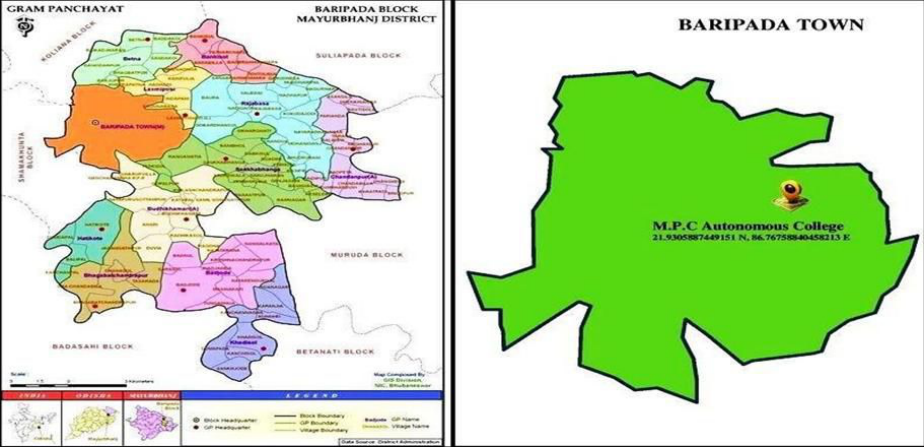 Figure 1
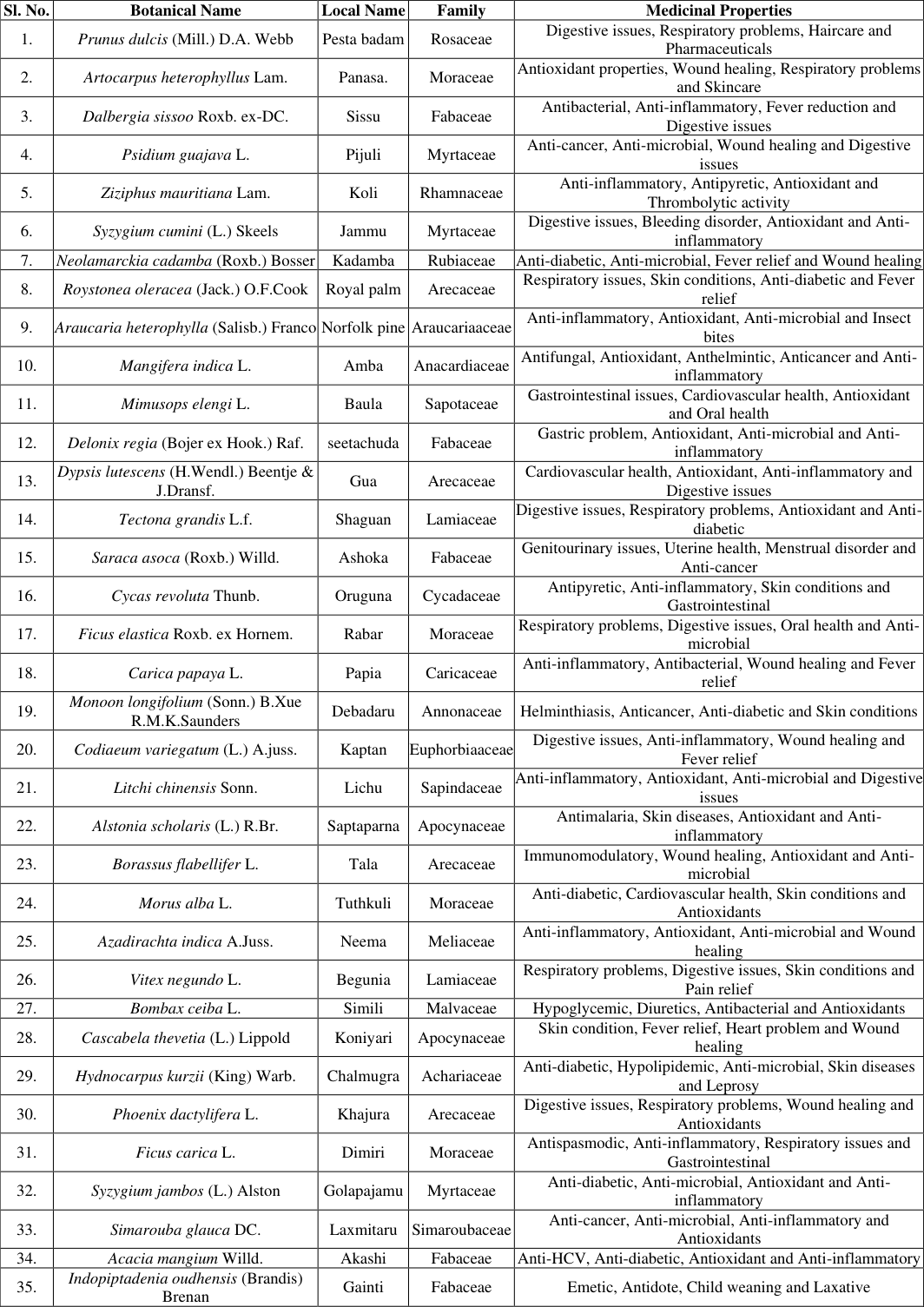 Table 1
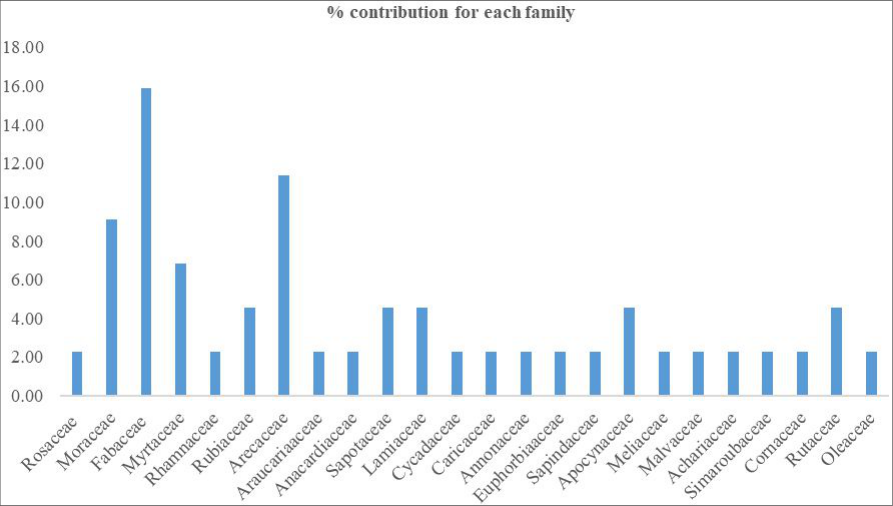 Figure 2
Introduction
Biodiversity is a fundamental component of the Earth's life-support system, encompassing the diversity of life at genetic, species, and ecosystem levels. Among its many aspects, floristic diversity, particularly tree diversity, plays a vital role in maintaining ecological balance, supporting wildlife and offering ecosystem services such as carbon sequestration, soil stabilization, and climate regulation (Heywood & Watson, 1995) [1] . Within this floristic framework, medicinal plants represent a highly valued group due to their relevance in traditional healthcare systems like Ayurveda, Siddha, and Unani, which have been practiced in India for centuries (Kumar et al., 2013) [2] . Increasingly, college and university campuses are being recognized as overlooked repositories of plant biodiversity. The relatively undisturbed green spaces and limited anthropogenic pressure in such environments provide favorable conditions for the conservation of diverse plant species, including those with medicinal value (Chavan & Pawar, 2011) [3] . These protected academic landscapes not only contribute to local ecological stability but also offer opportunities for education, research and the documentation of traditional botanical knowledge. The significance of local-level floristic surveys in biodiversity conservation has been long established. Jain and Rao (1997) [4] argued that such efforts are essential to preserving both plant diversity and associated traditional knowledge systems. Similarly, Gadgil and Guha (1995) [5] highlighted the critical need for community-level biodiversity assessments, particularly in the context of increasing urbanization and the unregulated transformation of natural habitats. Their work emphasized the importance of conserving green spaces within human settlements as integral components
International Journal of Biology Sciences https://www.biologyjournal.net of sustainable development. Odisha, located along the eastern coastline of India, is known for its rich biological and cultural diversity. The state encompasses various ecosystems such as tropical moist deciduous forests, dry deciduous forests, and mangroves (Reddy et al., 2008) [6] . Similarly, Mohanty et al. (2010) [7] documented that tribal communities in the Similipal region-located in the Mayurbhanj district use over 130 plant species to treat common ailments, underscoring the area's ethnobotanical significance. Panda et al. (2014) [8] identified 62 tree species from 28 families within the campus of North Orissa University, many of which were found to be traditionally used by tribal communities. Similarly, Mishra et al. (2012) [9] recorded 112 plant species in the Sambalpur University campus, identifying numerous species with therapeutic value, and emphasized the potential of university campuses to act as repositories of ethnobotanical knowledge. In Balasore district, Rout and Panda (2015) [10] emphasized the need to document local medicinal knowledge to prevent its erosion, advocating for systematic floristic assessments as a foundation for conservation. Likewise, Behera and Misra (2005) [11] drew attention to the gradual loss of traditional botanical knowledge among younger generations in Odisha, urging the integration of biodiversity education into academic curricula. More recently, studies have begun focusing on specific educational institutions in ecologically significant areas. In Baripada, located in Mayurbhanj district near the Similipal Biosphere Reserve, Nayak and Barik (2024) [12] examined the floristic diversity and phytosociological structure of grassland communities within the Maharaja Purna Chandra (Autonomous) College campus. In a complementary study, Sethi and Nayak (2025) [14] documented the diversity and therapeutic value of herbaceous plant species on the same campus. These efforts have laid a foundation for further biodiversity assessments in the region. Despite the green richness of the Maharaja Purna Chandra (Autonomous) College campus and its location within an ecologically sensitive zone, a systematic study of tree species diversity and their medicinal potential has yet to be conducted. Given the college's proximity to
Similipal and its relatively undisturbed vegetation, this research seeks to fill that knowledge gap by assessing the floristic diversity of tree species and evaluating their ethnomedicinal significance. This study not only contributes to the local biodiversity database but also aims to support conservation initiatives and promote awareness about the ecological value of campus green spaces.
Materials and Methods
Materials and Methods
Geographical description
Maharaja Purna Chandra (Autonomous) College, located in Takhatpur, Baripada, Mayurbhanj, Odisha, was established in July 1948. The campus is approximately 5 km from Bada Dando (the town center), 2 km from Baripada Railway Station, and 1 km from the bus stand. In 2000-2001, the college was granted autonomous status by the UGC and the Government of Odisha. Spread across a sprawling 330-acre campus along the banks of the Budha Balanga River, the college initially received 267 acres for its establishment, with an additional 63 acres generously donated by Maharani Takat Kumari. The built-up area covers 218,996.809 square feet, housing classrooms, laboratories, hostels, administrative buildings, and sports complexes. With approximately 25,000 trees, the campus offers a lush, eco-friendly environment conducive to academic pursuits (Fig. -1).
Meteorology and soil condition of the study area
The Maharaja Purna Chandra (Autonomous) College campus in Baripada, Odisha, is widely recognized for its eco-friendly and green environment. The presence of small water bodies, open green fields, and well-maintained gardens contributes to a balanced and thriving ecosystem, supporting local bird species and small animals. The college actively promotes environmental conservation and sustainable practices, including waste management and afforestation initiatives led by students and faculty. These efforts have significantly enriched the campus's natural diversity, making it both academically inspiring and environmentally responsible. The region's tropical monsoon climate-characterized by hot summers (35-40 °C), a wet monsoon season (June-September), and mild winters (10-15 °C)-strongly influences the plant diversity on campus. Moisture-loving trees like mango flourish during the monsoon, while drought-resistant species such as neem and banyan thrive during the dry summer months due to their deep root systems. The mild winters support a mix of deciduous and evergreen species, ensuring year-round greenery. Soil diversity further enhances this ecological richness. The campus features a combination of lateritic, alluvial, and red sandy soils, each supporting different vegetation types. Lateritic and red sandy soils allow drought-tolerant and medicinal plants to thrive, while alluvial patches support more water-loving species. This varied soil composition sustains a wide range of native trees, fruit-bearing plants, and medicinal vegetation, reinforcing the college's commitment to a sustainable and biodiverse environment.
Survey design and Plant Identification
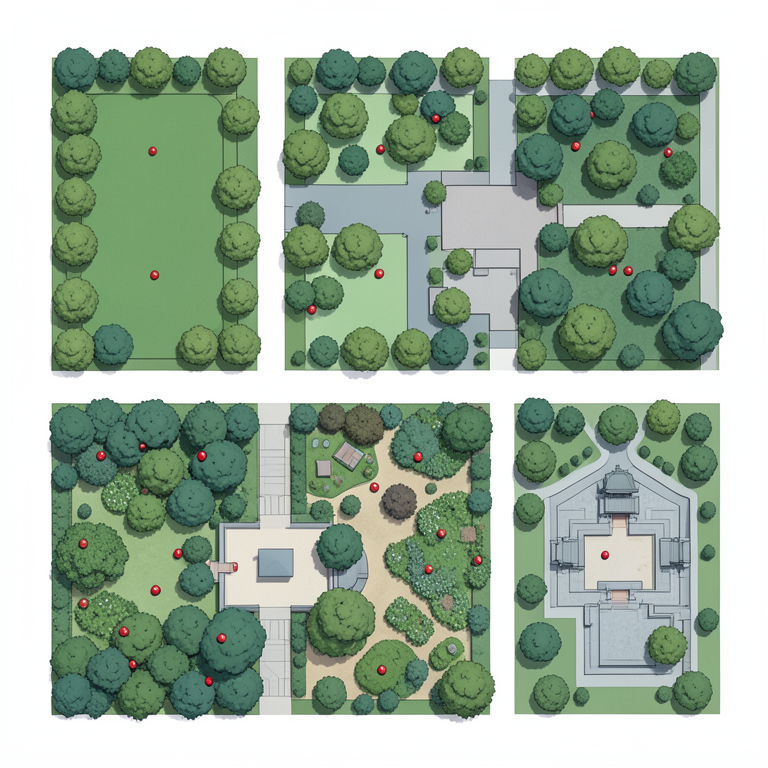
A structured tree survey was conducted within the campus of Maharaja Purna Chandra (Autonomous) College campus following a systematic approach. Based on the sampling strategy, the survey aimed to gather detailed data either from the entire campus or from selected representative areas. For this study, a stratified random sampling technique was employed to ensure comprehensive and accurate coverage. The campus was divided into five primary strata-academic area, administrative area, business area, student halls, and religious area. Each stratum was further subdivided into sub-strata to facilitate easier sampling, data collection, and analysis. Within each sub-stratum, random sampling points were selected, and all trees within a defined radius or area around each point were recorded. Each identified tree was documented to the species level, including its scientific name, local name, and family. Fieldwork utilized a range of tools, including quadrats, measuring tapes, cameras, GPS devices, field notebooks, and plant identification manuals. At each sampling site, standardized data were recorded, covering key parameters like location, date, weather conditions, and observer information. Taxonomic identification of plant specimens was performed using recognized botanical references, including the works of Haines (1921) [15] , Mooney (1950) [16] , and Saxena & Brahmam (1994) [17] . All sampling activities were conducted with minimal disturbance to plants and their natural habitat, ensuring the preservation of the campus's ecological integrity while enabling comprehensive biodiversity documentation.
Ethnobotanical survey
A comprehensive interview was conducted with local healers and community members to gather valuable insights into the medicinal uses of plants within traditional healing practices. The primary aim was to document indigenous knowledge, understand the significance of plants in natural medicine, and support efforts to preserve traditional healing systems. To ensure clarity and cultural sensitivity, the interviews were carried out in local languages, allowing participants to express themselves comfortably. Detailed written notes were maintained to accurately capture the information shared. The collected data was systematically categorized based on plant species, the ailments treated, and the methods of preparation. This ethnobotanical study highlights the deep connection between the local community and their environment and underscores the importance of preserving this traditional ecological knowledge for future generations.
Results and Discussion
The campus of Maharaja Purna Chandra Autonomous College exhibits notable floristic richness, particularly in terms of medicinally valuable tree species. A total of 44 such tree species were recorded, belonging to 24 distinct plant families. The Fabaceae family emerged as the most dominant, contributing 7 species (15.91%), followed by Arecaceae with 5 species (11.36%), Moraceae with 4 species (9.09%), and Myrtaceae with 3 species (6.82%). Five families-Rubiaceae, Sapotaceae, Lamiaceae, Apocynaceae, and Rutaceae-each accounted for 2 species (4.55%). The remaining 15 families, namely Rosaceae, Rhamnaceae, Araucariaceae, Anacardiaceae, Cycadaceae, Caricaceae, Annonaceae, Euphorbiaceae, Sapindaceae, Meliaceae, Malvaceae, Achariaceae, Simaroubaceae, Cornaceae, and Oleaceae, were each represented by a single species (2.27%). Among the most frequently occurring species were Mangifera indica, Tectona grandis, and Neolamarckia cadamba, while Nyctanthes arbor-tristis and Saraca asoca were found to be rare and in need of conservation efforts. Comprehensive details including botanical names, local names, family classifications, and medicinal applications of these 44 tree species are presented in Table 1 and represented in Figures 2. Caesalpinia pulcherrima (L.) Sw. Purai phul Fabaceae Asthma, Bronchitis, Cholera and Jaundice 44.
| Sl. No. | Botanical Name | Local Name | Family | Medicinal Properties |
|---|---|---|---|---|
| 1. | Prunus dulcis (Mill.) D.A. Webb | Pesta badam | Rosaceae | Digestive issues, Respiratory problems, Haircare and Pharmaceuticals |
| 2. | Artocarpus heterophyllus Lam. | Panasa. | Moraceae | Antioxidant properties, Wound healing, Respiratory problems and Skincare |
| 3. | Dalbergia sissoo Roxb. ex-DC. | Sissu | Fabaceae | Antibacterial, Anti-inflammatory, Fever reduction and Digestive issues |
| 4. | Psidium guajava L. | Pijuli | Myrtaceae | Anti-cancer, Anti-microbial, Wound healing and Digestive issues |
| 5. | Ziziphus mauritiana Lam. | Koli | Rhamnaceae | Anti-inflammatory, Antipyretic, Antioxidant and Thrombolytic activity |
| 6. | Syzygium cumini (L.) Skeels | Jammu | Myrtaceae | Digestive issues, Bleeding disorder, Antioxidant and Anti- inflammatory |
| 7. | Neolamarckia cadamba (Roxb.) Bosser | Kadamba | Rubiaceae | Anti-diabetic, Anti-microbial, Fever relief and Wound healing |
| 8. | Roystonea oleracea (Jack.) O.F.Cook | Royal palm | Arecaceae | Respiratory issues, Skin conditions, Anti-diabetic and Fever relief |
| 9. | Araucaria heterophylla (Salisb.) Franco | Norfolk pine | Araucariaaceae | Anti-inflammatory, Antioxidant, Anti-microbial and Insect bites |
| 10. | Mangifera indica L. | Amba | Anacardiaceae | Antifungal, Antioxidant, Anthelmintic, Anticancer and Anti- inflammatory |
| 11. | Mimusops elengi L. | Baula | Sapotaceae | Gastrointestinal issues, Cardiovascular health, Antioxidant and Oral health |
| 12. | Delonix regia (Bojer ex Hook.) Raf. | seetachuda | Fabaceae | Gastric problem, Antioxidant, Anti-microbial and Anti- inflammatory |
| 13. | Dypsis lutescens (H.Wendl.) Beentje & J.Dransf. | Gua | Arecaceae | Cardiovascular health, Antioxidant, Anti-inflammatory and Digestive issues |
| 14. | Tectona grandis L.f. | Shaguan | Lamiaceae | Digestive issues, Respiratory problems, Antioxidant and Anti- diabetic |
| 15. | Saraca asoca (Roxb.) Willd. | Ashoka | Fabaceae | Genitourinary issues, Uterine health, Menstrual disorder and Anti-cancer |
| 16. | Cycas revoluta Thunb. | Oruguna | Cycadaceae | Antipyretic, Anti-inflammatory, Skin conditions and Gastrointestinal |
| 17. | Ficus elastica Roxb. ex Hornem. | Rabar | Moraceae | Respiratory problems, Digestive issues, Oral health and Anti- microbial |
| 18. | Carica papaya L. | Papia | Caricaceae | Anti-inflammatory, Antibacterial, Wound healing and Fever relief |
| 19. | Monoon longifolium (Sonn.) B.Xue R.M.K.Saunders | Debadaru | Annonaceae | Helminthiasis, Anticancer, Anti-diabetic and Skin conditions |
| 20. | Codiaeum variegatum (L.) A.juss. | Kaptan | Euphorbiaaceae | Digestive issues, Anti-inflammatory, Wound healing and Fever relief |
| 21. | Litchi chinensis Sonn. | Lichu | Sapindaceae | Anti-inflammatory, Antioxidant, Anti-microbial and Digestive issues |
| 22. | Alstonia scholaris (L.) R.Br. | Saptaparna | Apocynaceae | Antimalaria, Skin diseases, Antioxidant and Anti- inflammatory |
| 23. | Borassus flabellifer L. | Tala | Arecaceae | Immunomodulatory, Wound healing, Antioxidant and Anti- microbial |
| 24. | Morus alba L. | Tuthkuli | Moraceae | Anti-diabetic, Cardiovascular health, Skin conditions and Antioxidants |
| 25. | Azadirachta indica A.Juss. | Neema | Meliaceae | Anti-inflammatory, Antioxidant, Anti-microbial and Wound healing |
| 26. | Vitex negundo L. | Begunia | Lamiaceae | Respiratory problems, Digestive issues, Skin conditions and Pain relief |
| 27. | Bombax ceiba L. | Simili | Malvaceae | Hypoglycemic, Diuretics, Antibacterial and Antioxidants |
| 28. | Cascabela thevetia (L.) Lippold | Koniyari | Apocynaceae | Skin condition, Fever relief, Heart problem and Wound healing |
| 29. | Hydnocarpus kurzii (King) Warb. | Chalmugra | Achariaceae | Anti-diabetic, Hypolipidemic, Anti-microbial, Skin diseases and Leprosy |
| 30. | Phoenix dactylifera L. | Khajura | Arecaceae | Digestive issues, Respiratory problems, Wound healing and Antioxidants |
| 31. | Ficus carica L. | Dimiri | Moraceae | Antispasmodic, Anti-inflammatory, Respiratory issues and Gastrointestinal |
| 32. | Syzygium jambos (L.) Alston | Golapajamu | Myrtaceae | Anti-diabetic, Anti-microbial, Antioxidant and Anti- inflammatory |
| 33. | Simarouba glauca DC. | Laxmitaru | Simaroubaceae | Anti-cancer, Anti-microbial, Anti-inflammatory and Antioxidants |
| 34. | Acacia mangium Willd. | Akashi | Fabaceae | Anti-HCV, Anti-diabetic, Antioxidant and Anti-inflammatory |
| 35. | Indopiptadenia oudhensis (Brandis) Brenan | Gainti | Fabaceae | Emetic, Antidote, Child weaning and Laxative |
Table text extracted from the original PDF; superscript letters are shown inline. The original table image is below.
View original table image
Manilkara hexandra (Roxb.) Dubard Khira koli Sapotaceae Anthelmintic, Antioxidant, Anti-inflammatory and Anti-ulcer
Conclusion
The floristic inventory of Maharaja Purna Chandra (Autonomous) College, odisha, india campus documents a rich diversity of tree species across 44 families, with Fabaceae emerging as the most dominant. This family, along with other tropical groups like Arecaceae, Moraceae, Myrtaceae, and Rubiaceae, highlights the ecological and medicinal richness of the campus flora. Fabaceae species are particularly notable for their pharmacological benefits and ecological functions, such as nitrogen fixation and carbon sequestration. The study provides a vital baseline for future conservation, research, and education, emphasizing the need for a structured management plan to preserve and sustainably utilize the campus's botanical resources.
Acknowledgement
AcknowledgmentsThe authors extend their sincere gratitude to the Principal of Maharaja Purna Chandra Autonomous College, Takhatpur, Baripada, Odisha, for granting access to the study site and providing institutional support throughout the research. Special thanks are also due to the Head of the Department of Botany for their valuable guidance and unwavering cooperation during the course of the study. The authors gratefully acknowledge the assistance of Abhishek, Suravi, Debasmita, Abhipsa, and Jagadish in data collection. Appreciation is also extended to the faculty, staff and students of the Department of Botany for their support and encouragement during the research.
Figures and tables from the paper
References
17 in the original paper- Heywood VH, Watson RT. Global biodiversity assessment. Cambridge: Cambridge University Press; 1995.
- Kumar M, Paul Y, Anand R. Medicinal plants in India: An overview. Int J Pharm Sci Res. 2013;4(4):12451252.
- Chavan SP, Pawar SE. Floristic diversity and medicinal uses of plants in college campus in India. J Ecobiotechnol. 2011;3(12):22-27.
- Jain SK, Rao RR. A handbook of field and herbarium methods. New Delhi: Today and Tomorrow's Printers and Publishers; 1997.
- Gadgil M, Guha R. Ecology and equity: The use and abuse of nature in contemporary India. London: Routledge; 1995.
- Reddy CS, Pattanaik C, Reddy KN. Plant diversity and conservation of university campuses in India. J Environ Biol. 2008;29(6):805-812.
- Mohanty RB, Nayak BK, Pattnaik S. Medicinal plants used by the tribals of Similipal Biosphere Reserve, Odisha. Indian J Tradit Know. 2010;9(1):68-71. International Journal of Biology Sciences https://www.biologyjournal.net
- Panda T, Tripathy A, Das S. Assessment of tree diversity in the North Orissa University campus. Indian J Environ Prot. 2014;34(10):789-794.
- Mishra S, Behera N, Mohanty RC. Ethnobotanical study of medicinal plants used by tribals in Sambalpur district, Odisha. Int J Plant Res. 2012;2(4):21-34.
- Rout SD, Panda T. Medicinal plant resources in Balasore district of Odisha, India: A review. Int J Herbal Med. 2015;3(3):17-22.
- Behera MD, Misra MK. Indigenous phytotherapy for genito-urinary diseases used by the Kandha tribe of Orissa, India. J Ethnopharmacol. 2005;102(3):319-325.
- Nayak AK, Barik KL. Floristic diversity of a grassland community of Baripada, Odisha, India. Eco Env Cons. 2024;30(2):495-499.
- Nayak AK, Barik KL. Phytosociological study of a grassland community of Baripada, Mayurbhanj district of Odisha, India: Conservation strategies for floristic diversity. Plant Sci Today. 2024;11(3):279-285. https://doi.org/10.14719/pst.3691
- Sethi A, Nayak AK. Floristic diversity and therapeutic potential of herbaceous plants in Maharaja Purna Chandra Autonomous College campus, Odisha, India. Int J Bot Stud. 2025;10(5):37-40.
- Haines HH. The botany of Bihar and Orissa. London: Adlard & Sons; 1921-1925. 6 parts.
- Mooney HF. Supplement to the botany of Bihar and Orissa. Ranchi: Catholic Press; 1950.
- Saxena HO, Brahmam M. The flora of Orissa. Vols. IIV. Bhubaneswar: Regional Research Laboratory (CSIR) and Forest Development Corporation Ltd.; 1994-1996.