
Research article · 2025 · Full text
International Journal of Agriculture and Food ScienceBiotechnology-An era in plant breeding
Volume 7(6) · Pages 151–159 · DOI: 10.33545/2664844x.2025.v7.i6c.450 ↗
Research areasGenetically Modified Organisms ResearchPlant tissue culture and regeneration
Abstract
Author-writtenBiotechnology in plant breeding is transforming agricultural practices by integrating advanced molecular tools to enhance crop improvement. Biotechnology enhances these methods by providing tools to manipulate plant genomes, enabling the introduction of specific traits with greater speed and precision. Genetic engineering, Marker-Assisted Selection (MAS), and gene editing technologies like CRISPR/Cas9 are crucial in modern plant breeding, Plants can be modified to express traits such as resistance to environmental stress, diseases and pests, and boosted nutritional content, through genetic engineering. Marker-assisted selection enables the recognition of desirable traits at the molecular level, allowing breeders to choose plants with the high genetic potential even before they are fully grown. Biotechnology is also a cornerstone in contributing to the enhancement of plants with greater adaptability to changing climate conditions. Implication of Biotechnological and computational tools in plant breeding also eases the breeding process. However, continuing research and regulatory frameworks remain to address these concerns, ensuring that biotechnological innovations are carefully integrated into agricultural practices.
Summary
Source-checkedPlain-language reading of the full paper, prepared with AI and checked against the text. Each point links to the authors' own words.
Why it matters
- Biotechnology in plant breeding is essential for improving the productivity, quality, and resilience of crops. View evidence ↗
- Traditional breeding methods like hybridization are often too slow and are limited by the natural genetic diversity of plant populations. View evidence ↗
- Biotechnological tools are critical for addressing global challenges such as population growth, environmental degradation, and climate change. View evidence ↗
The question
- The paper explores how integrating advanced molecular tools through biotechnology can transform agricultural practices and enhance crop improvement. View evidence ↗
What they did
- Molecular plant breeding combines traditional breeding techniques with molecular biology tools to accelerate the development of improved varieties. View evidence ↗
- Genomics-assisted breeding (GAB) integrates genomic tools into traditional methods to speed up the creation of improved crops. View evidence ↗
- Genome-Wide Association Studies (GWAS) involve genotyping large plant populations using genome-wide markers, typically single nucleotide polymorphisms (SNPs), to link genetic variations to phenotypic traits. View evidence ↗
- The primary genome editing technologies used in plant breeding include CRISPR/Cas9, ZFNs, and TALENs. View evidence ↗
- Speed breeding optimizes environmental factors like temperature and light to shorten the plant life cycle and produce more generations in a shorter time. View evidence ↗
What they found
- Marker-Assisted Selection (MAS) allows breeders to identify desirable traits using DNA, reducing the reliance on time-consuming physical characteristics and field trials. View evidence ↗
- The use of molecular markers and genetic modification in Golden Rice has enabled the biosynthesis of β-carotene, providing a source of provitamin A. View evidence ↗
- Genome editing can create modified crops without introducing foreign DNA, which is advantageous in regulatory environments that restrict GMOs. View evidence ↗
- Speed breeding can increase the number of generations per year for crops like wheat, barley, and chickpeas to up to six, compared to the usual one or two. View evidence ↗
- Genomic selection uses genomic data to predict the genetic potential of plants for complex traits such as yield and disease resistance early in the breeding cycle. View evidence ↗
What it means
- The authors conclude that biotechnology has significantly improved the speed, precision, and efficiency of producing improved crop varieties. View evidence ↗
- Biotechnology helps meet the food needs of a growing population and promotes sustainability by reducing chemical use in agriculture. View evidence ↗
- The use of biotechnology, particularly GMOs, raises ethical, safety, and environmental concerns that require ongoing research and regulatory frameworks. View evidence ↗
Figures & tables
From the original paper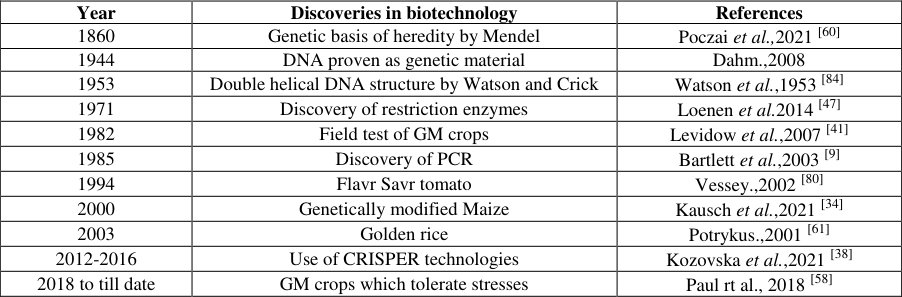 Table 1
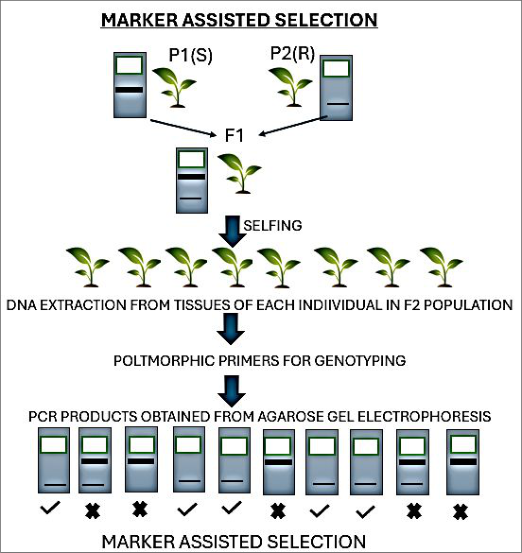 Figure 1
 Figure 2
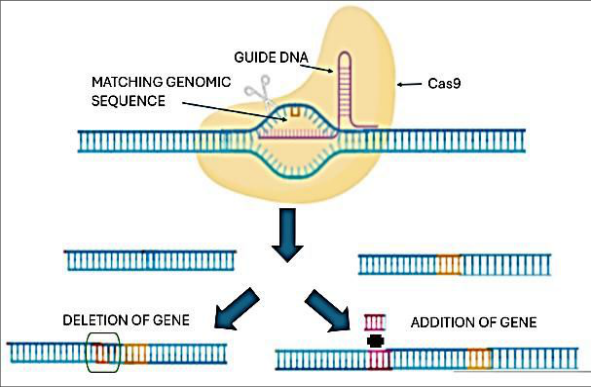 Figure 3
Introduction
Biotechnology is an interdisciplinary field which integrates biology, technology and engineering to manipulate living organisms or their components for practical applications. One of the most assuring areas of biotechnology is in the field of plant breeding, which is necessary in enhancing crop productivity, quality and resilience (Chawla., 2011) [14] . Traditional plant breeding practices, such as hybridization and selective breeding are the primary components of agricultural development for centuries. Nevertheless, these methods are often slow and limited due to the genetic diversity available in natural plant populations. Biotechnology provides advanced tools to overcome these limitations, enabling the ability to enhance and enhance plant breeding with greater precision and efficiency (Liu et al., 2013). The application of biotechnology in plant breeding involves the use of molecular biology tools to manipulate and modify plant genomes (Kumar et al., 2009) [39] . Genetic engineering, for instance, allows scientists to change, insert or modify genes within a plant's DNA to introduce biotechnology can play a vital role in decreasing the environmental impact of agriculture, promoting the efficient use of pesticides, fertilizers and water (Chawla., 2011) [14] . Despite its promise, the use of biotechnology in plant breeding provokes ethical, safety, and environmental concerns, especially surrounding genetically modified organisms (GMOs). Regulatory frameworks and ongoing research are vital to ensuring that these innovations are safe for both consumers and the environment (Buttel et al., 1987) [12] . Nonetheless, biotechnology continues to denote a frontier in agricultural research, offering vast potential to address the growing need for food in an increasingly unpredictable world.
History of biotechnology
The history of biotechnology in plant breeding can be trailed back to the early 20th century, but significant advancements in the field have emerged more recently with the arrival of genetic engineering and molecular biology.
Table 1: Milestones in plant biotechnology
Table 1: Milestones in plant biotechnology
Year
Discoveries in biotechnology References 1860 Genetic basis of heredity by Mendel Poczai et al.,2021 [60] 1944 DNA proven as genetic material Dahm.,2008 1953 Double helical DNA structure by Watson and Crick Watson et al.,1953 [84] 1971 Discovery of restriction enzymes Loenen et al.2014 [47] 1982
Field test of GM crops Levidow et al.,2007 [41] 1985 Discovery of PCR Bartlett et al.,2003 [9] 1994 Flavr Savr tomato Vessey.,2002 [80] 2000
Genetically modified Maize Kausch et al.,2021 [34] 2003 Golden rice Potrykus.,2001 [61]
2012-2016
Use of CRISPER technologies Kozovska et al.,2021 [38] 2018 to till date GM crops which tolerate stresses Paul rt al., 2018 [58] Conventional plant breeding engages the crossing of selected plants with needed traits to develop improved varieties. This process depends on natural genetic variation and methods such as hybridization, selection and mutation breeding. It is typically slow and depends on the availability genetic diversity within the species (Acquaah., 2015) [1] . Through successive generations, breeder targets to combine beneficial traits like stress resistance, environmental adaptability and higher yield. While effective, conventional breeding has drawbacks in speed and precision compared to modern biotechnological approaches (Jauhar, 2006) [31] .
In the contrary, Molecular plant breeding, which is a modern approach that combines traditional techniques with molecular biology tools to speed up the development of improved crop varieties (Moose et al., 2008) [55] . It utilizes molecular markers -DNA sequences linked with desirable traits which helps to recognise and select plants with the most optimal genetic potential early in the breeding process. This technique, known as marker-assisted selection (MAS), helps breeders to locate specific genes responsible for characters like enhanced nutritional content, drought tolerance and disease resistance, significantly reducing the cost and time of breeding programs (Collard et al.,2008) [17] . Additionally, molecular plant breeding integrates advanced techniques such as genetic transformation and genome editing like CRISPR/Cas9, enabling precise changes at the DNA level (Liu et al., 2017). These innovations allow for the initiation of traits that may not necessarily occur within the species, providing more control over crop improvement. Overall, molecular plant breeding improves the efficiency, accuracy and speed of breeding plants with better quality, yield and resistance to stress in diverse environmental conditions (Hussain et al., 2015) [29] . The combination of molecular breeding and conventional techniques creates a powerful, synergistic approach to plant improvement. While conventional breeding being foundation in developing crop varieties with desirable traits through selection, hybridization and mutation, it often counts on natural genetic variation and can be time-consuming (Jauhar, 2006) [31] . Furthermore, Molecular plant breeding utilizes advanced tools such as molecular markers, genetic transformation, and genome editing to enhance the precision and speed of the breeding process (Jauhar., 2006) [31] . By combining both approaches, breeders can effectively identify and select plants with desired characters early in the breeding cycle using marker-assisted selection (MAS). This reduces the need for widespread field trials and accelerates the development of improved varieties. Furthermore, genome editing and genetic engineering can introduce novel characteristics that may not exist in the crop's gene pool, addressing challenges such as pest resistance or climate adaptability (Akhtar et al., 2023) [3] . Genomics-assisted breeding (GAB) is a developed approach that combines the application of technologies along with genomic tools into traditional plant breeding methods to accelerate the development of improved crop varieties (Varshney et al., 2005) [79] . By providing detailed information about the plant genome, GAB allows breeders to identify genetic markers, comprehend the genetic basis of traits and make more informed and precise breeding decisions (Varshney et al., 2021) [78] . This approach utilizes the power of molecular markers, high-throughput sequencing, gene editing techniques, and bioinformatics, allowing breeders to choose plants with required traits more efficiently and quickly (Kole et al., 2015) [37] . One of the primary tools in genomics-assisted breeding is the application of molecular markers. Molecular markers are certain DNA sequences correlated with the traits of interest, like disease resistance, drought tolerance or improved nutritional content (Farooq et al., 2002) [23] . These markers allow plant breeders to recognise and identify plants with the anticipated genetic makeup comparatively early in the breeding process, significantly decreasing the time and resources needed for field trials (Nadeem et al., 2018). Marker-assisted selection (MAS) assists breeders to target regions of the genome or specific genes associated with these traits, speeding up the development of varieties with higher accuracy and precision (Collard et al.,2008) [17] .
Another important method in GAB is Genome-Wide Association Studies (GWAS). GWAS encompasses the scanning of entire genome of a population to identify genetic variations that are correlated with certain traits. By linking these genetic markers to phenotypic traits, breeders can determine the genetic factors responsible for traits like quality attributes, resistance to abiotic and biotic stresses, and yield (He et al., 2017). GWAS helps in knowing the genetic architecture of intricate traits. It also guides breeders in selecting the best candidates for further breeding (Khan et al., 2021) [35] . Genome editing technologies like CRISPR/Cas9, represent another breakthrough in genomics-assisted breeding. Genome editing allows precise, precise adjustments to a plant's DNA, enabling the addition, deletion, or alteration of specific genes (Liu et al., 2017). This provides a more efficient and precise way to introduce favourable traits into crops without the need for traditional crossbreeding or transgenic methods. For instance, CRISPR has been used to enhance disease resistance, improve nutrient content, and increase stress tolerance in various crops (Ma et al., 2016). Genomics-assisted breeding also aid from advances in bioinformatics and computational tools, which enable breeders to analyse and interpret vast amounts of genomic data. These tools can assist in identifying the most promising genetic combinations and making decisions based on largescale data, enhancing the accuracy of breeding programs (Aglawe et al.,2021) [2] .
Molecular Markers
Molecular markers are particular DNA sequences that can be used to pinpoint genes or regions of a plant genome associated with desirable trait. These markers are helpful tools in modern plant breeding, allowing for more accurate, faster and more efficient selection of plants with the desired genetic characteristics. Molecular markers are commonly used in various breeding applications, including genetic mapping, marker-assisted selection (MAS) and the selection of quantitative trait loci (QTLs), which are associated to valuable traits (Nadeem et al., 2018). The molecular markers play some vital role in plant breeding includes,
Marker-Assisted Selection (MAS):
Which helps breeders to identify plants with desirable characters, based on their DNA rather than relying on lengthy field trials or physical characteristics. For example, molecular markers that are linked to stress resistance genes can be used to identify resistant plants in a breeding population, even before symptoms of disease appear on the crop (Collard et al., 2008) [17] .
Fig 1: marker assisted selection
Genetic mapping, by identifying markers that segregate with specific traits in a population, breeders can develop genetic maps that locate the genes responsible for those characteristics. These maps assist in the establishment of improved varieties by providing breeders with the precise locations of important genes, assisting in efficient breeding decisions (Semagn et al., 2006) [66] .
QTL (Quantitative Trait Loci) are regions of the genome allied with complex traits that are controlled by various genes, like drought tolerance, disease resistance and yield (Miurra et al., 2011). Molecular markers can help identify and locate these QTLs, allowing breeders to integrate multiple beneficial traits into new varieties (Amanullah et al., 2021) [6] . Molecular markers are essential in reducing disease resistance in plants by enabling early identification and selection of plants with desirable resistance traits (Farooq et al., 2002) [23] . Traditionally, disease resistance was evaluated through field trials, which could be costly and time consuming. However, molecular markers offer a more efficient, precise and faster way to select plants that carry genes related with disease resistance, even before they are exposed to the pathogen (Jonah et al.,2011) [33] .
Markers have been successful in incorporating resistance to rice blast disease, which is caused by the fungus Magnaporthe oryzae, into breeding lines (Liu et al., 2007). The Pi series of resistance genes was identified using molecular markers and has now been mostly used in rice breeding program (Peng et al., 2021) [59] . Wheat breeding programs use molecular markers which are linked to resistance against wheat rust diseases (e.g., stem rust, leaf rust) and Fusarium head blight. Markers linked to resistance genes like Lr34 for leaf rust and Sr31 for stem rust are widely used in MAS for wheat improvement (Savin et al.,2024) [65] . In case of Tomato, Molecular markers are used to introduce resistance against bacterial speck and blight in tomato varieties by selecting for the Cf gene, which provides resistance to Cladosporium fulvum (Thomas et al., 1998) [74] . Nutritional enhancement in crops is a key target of modern plant breeding, aiming to improve the composition of essential minerals, vitamins and other nutrients to address global challenges. Molecular markers are crucial in accelerating the development of nutritionally enhanced crops by enabling precise and efficient selection for desired traits related to nutrition (Thangadurai et al.,2020) [73] . By integrating molecular markers into breeding programs, breeders can recognise and select plants with higher levels of specific nutrients, such as provitamin A (β-carotene), zinc, iron, and essential amino acids, without the need for timeconsuming phenotypic evaluation or extensive field trials (Tucker.,2003) [76] . Golden Rice is another notable example of using molecular markers for nutritional enhancement. By incorporating genes for β-carotene biosynthesis, this genetically modified rice provides a substantial source of provitamin A (beta-carotene), an essential nutrient for preventing blindness due to vitamin A deficiency mostly in evolving countries (Moghissi et al.,2016) [54] .
Crop Nutritional enhancement Molecular Marker Application Example Outcome Reference
Rice Iron and Zinc fortification Marker-assisted selection (MAS) for high iron and zinc content Biofortified rice varieties (e.g., Iron-rich rice Sperotto et al.,2012 [69] Maize Provitamin A (Beta-carotene) enhancement MAS for increased provitamin A content Golden maize (higher beta-carotene content) Muzhingi et al., 2011 [56] Wheat Increased zinc quality and quantity MAS for high zinc and essential amino acid High-zinc wheat varieties Chattha et al.,2017 [13] Cassava Increased pro-vitamin A (betacarotene) MAS for carotenoid biosynthesis genes Biofortified cassava with enhanced carotenoids Esuma ett al.,2016 [22] Sweet Potato
Increased pro-vitamin A (betacarotene)
MAS for beta-carotene biosynthesis genes
Orange-fleshed sweet potato (higher vitamin A content)
Van Jaarsveld et al.,2005 [77] Tomato Increased lycopene and antioxidant levels MAS for lycopene biosynthesis genes Lycopene-rich tomatoes Ashrafi et al.,2012 [7] Soybean Increased protein content and oil composition MAS for high protein and oil yield High-protein, high-oil soybean varieties Kumar et al.,2021 [40] Cowpea Increased iron and zinc content MAS for micronutrient fortification Biofortified cowpea with higher iron and zinc content Yadav et al.,2024 [85] Barley Enhanced beta-glucan content for health benefits (cholesterol-lowering)
MAS for beta-glucan biosynthesis
MAS for beta-glucan biosynthesis
Barley varieties with enhanced beta-glucan levels
Walling et al.,2022 [81] Pea Increased protein quality, high levels of essential amino acids MAS for high-protein content High-protein pea varieties Barac et al.,2010 [8] Chickpea Increased zinc, iron, and protein content
MAS for micronutrient content enhancement
Biofortified chickpeas with higher zinc and iron content
Roorkiwal et al.,2020
Roorkiwal et al.,2020
Genome-Wide Association Studies (GWAS) in Plant Breeding
Genome-Wide Association Studies (GWAS) is an operative tool in modern plant breeding that allows for the recognition of genetic variants associated with complex traits, like drought tolerance, disease resistance, quality characteristics and yield (Cortes et al., 2021). GWAS examines the relationship between specific genetic variations (single nucleotide polymorphisms or SNPs) and phenotypic traits over a bulky population of plants. By linking these genetic variations to traits of interest, GWAS helps to reveal the genetic basis of complex polygenic characters, thereby speeding up the breeding of improved crop varieties (He et al., 2017). GWAS works by genotyping a large population of plants (such as a breeding population or natural population) for a wide range of genetic markers (typically SNPs) that cover the whole genome. These markers demonstrate the differences in the DNA sequence between individuals. The phenotype of interest, such as resistance to a particular disease, drought tolerance or high yield is then assessed across the same population (He et al., 2017). By statistically analysing the correlation between phenotypic traits and genetic markers, GWAS identifies which markers are associated with the expression of those traits (Hayes., 2013).
Applications of GWAS in Plant Breeding
Gene Identification and Trait Dissection: GWAS is particularly helpful for dissecting polygenic traits which are complex, where multiple genes affect a single phenotype. It enables breeders to pinpoint the genes accountable for vital agronomic characters, such as nutritional content, disease resistance and yield. In addition, GWAS has been used to detect genes linked with drought tolerance in maize, providing a valuable source for breeding drought-resistant varieties (Thakur et al.,2024) [72] .
Marker Development for Quick Selection:
The SNPs or other genetic markers identified through GWAS can be employed for marker-assisted selection (MAS) in breeding programs. Once significant markers are identified for specific traits, breeders can use these markers to choose individuals with desirable characters in the early stages, speeding up the development of more advanced varieties. This is especially useful in crops where phenotypic evaluation is timeconsuming or difficult, such as resistance to soil-borne diseases (Perez-de-Castro et al., 2012) [49] .
Improvement of Complex Traits: GWAS has been applied to characters that are coordinated by multiple genes, such as grain quality, disease resistance and yield. For instance, in rice, it has been used to pinpoint genes associated with rice blast resistance, while in wheat breeding, GWAS has identified genetic loci linked to resistance to leaf rust (Cheng., 2024) [15] .
Understanding Genotype-Environment Interactions:
Since many traits are influenced by environmental factors, GWAS can help to evaluate how specific genetic variants interact with different environmental conditions. This can lead to the development of crops which are well-suited to a range of environmental conditions, such as drought, heat, or nutrient deficiency (Cui et al., 2018) [20] .
Accelerating Breeding Programs: GWAS allows for the detection of genetic variants linked with traits of interest early in the breeding cycle. This means that breeders can use molecular markers to choose plants with the required traits at an early stage, reducing the number of generations required to develop superior varieties and accelerating the overall breeding process (Kim et al., 2020) [36] .
Genome editing technologies
Genome editing technologies have transformed plant breeding by aiding accurate and targeted alterations to the DNA of plants. Unlike traditional breeding methods, which depend on selection and crossbreeding over many generations, genome editing allows for the direct modification of a crop genome to correct undesirable characteristics or introduce specific traits. The most widely used genome editing technologies in plant breeding are CRISPR/Cas9, Zinc Finger Nucleases (ZFNs) and TALENs (Transcription Activator-Like Effector Nucleases) (Shamshirgaran et al., 2022) [67] . These technologies helps breeders to make changes at the DNA level with exceptional accuracy and efficiency, opening new possibilities for crop improvement. The CRISPR/Cas9 system has garnered substantial attention because of its simplicity, high precision and versatility. CRISPR (Clustered Regularly Interspaced Short Palindromic Repeats) relies on a bacterial defence mechanism that uses an RNA molecule to guide the Cas9 enzyme to a particular location in the genome (Liu et al., 2017). This allows for targeted gene editing by cutting the DNA at the desired location, which could then be altered repaired by the plant's natural repair methods (Ma et al., 2016). This system could be used to insert new genes, knock out genes or make small modifications to the genetic sequence. In plant breeding, CRISPR/Cas9 is used to improve characters like disease resistance, drought tolerance, nutritional content and yield (Belhaj et al., 2015) [10] .
Fig 3: CRISPER Cas9
One of the major advantages of genome editing is its capability to make specific changes without introducing foreign DNA. This permits for the creation of genetically modified crops that do not carry transgenic material, which can be a significant advantage in regulatory environments where genetically modified organisms (GMOs) are constrained (Ma et al., 2019). For example, CRISPR is used to edit genes in crops like wheat, rice, and tomatoes to enhance their resistance to diseases like bacterial fungal and blight infections, improve nutrient content (such as increasing provitamin A in rice), or develop crops with better tolerance to stress (LeBlanc et l., 2018). In addition to CRISPR/Cas9, ZFNs and TALENs are also used in genome editing for plant breeding (Gupta et al., 2014) [27] . Both technologies utilize engineered nucleases to create double strand cuts at certain locations in the genome. While less widely used than CRISPR, they have been applied successfully to enhance characters in crops like soybean and cotton (Gaj et al., 2013) [24] .
Bioinformatics and Computational Tools Used in GWAS
Genome-Wide Association Studies (GWAS) depend heavily on bioinformatics and computational tools to analyse, process and understand huge volumes of genomic and phenotypic data. These tools are necessary for identifying genetic changes associated with complex traits, ensuring the proficiency and accuracy of the analysis (Gumpinger et al., 2018) [26] . The bioinformatics pipeline in GWAS involves several stages, including statistical analysis, data preparation, and result visualization (Aglawe et al., 2021) [2] . these are some important bioinformatics and computational tools widely used in GWAS: PLINK being one of the most used software tools for GWAS, a free, open-source tool designed for the analysis of genotype and phenotype data. PLINK offers a range of functions for data filtering, quality control and association testing. It is particularly useful for conducting basic GWAS analyses, such as performing association tests, calculating allele frequencies and generating summary statistics (Purcell et al.,2007) [63] . PLINK also provides tools for handling large datasets, examining population structure and making it an essential tool in GWAS pipelines (Solo-Cerda et al., 2012).
GEMMA (Genome-wide Efficient Mixed Model
Association) is a powerful software used for conducting mixed model-based GWAS. Mixed models are particularly beneficial in GWAS because they are based on both fixed effects (such as SNP effects) and random effects (such as population structure and similarities between individuals) (Zhou et al., 2012) [86] . GEMMA provides effective algorithm for association testing in large datasets and helps to control confounding factors, improving the accuracy of association results (Team et al.,2024) [71] .
Eigenstrat is a tool used for controlling population stratification in GWAS. Subgroups within the population have different allele frequencies, potentially leading to false associations (Alexander et al., 2009) [5] . EIGENSTRAT uses principal component analysis (PCA) to adjust the population structure and ensure that the association results reflect true genetic effects relatively than artifacts caused by underlying population structure (Price et al., 2006) [62] .
BOLT-LMM is a computational tool designed for largescale GWAS. It is optimized for its capability of handling datasets and high-performance computing with millions of individuals and SNPs (Sullivan., 2015). BOLT-LMM utilizes mixed linear models to improve statistical power and control for confounding factors such as relatedness among individuals and population structure. Useful especially in large cohorts where computational efficiency is a concern (Jiang et al., 2019) [32] .
Fast SKAT: (Fast Sequence Kernel Association Test) is a software used for rare variant analysis in GWAS. It provides an effective way to test the association between complex traits and genetic variants (especially rare variants). Fast SKAT improves the ability to detect associations in regions of the genome where rare variants may have a significant impact, addressing the limitations of traditional GWAS methods that often focus on common variants (Lumley et al.,2018) [18] . As genomic data continues to grow, the development and optimization of computational tools will be crucial in advancing GWAS applications and enhances our understanding of the genetic basis of traits in plants, animals, and humans (Conomos et al., 2024) [18] .
Genomic Selection and Speed Breeding in Plant Breeding
Genomic selection and speed breeding are two novel approaches that have significantly accelerated the development of enhanced varieties, addressing the increasing demand for agricultural sustainability and food security (Watson et al., 2018) [82] . Genomic selection is a breeding method which uses genomic information, to calculate the genetic potential of plants for complex characters like yield, disease resistance and environmental adaptability (Jannink et al., 2010) [30] . Unlike traditional breeding, which relies on phenotypic selection (observing physical traits), genomic selection comprises in creating prediction models based on genotypic data which allows breeders to choose plants with desirable traits early in the breeding cycle (Crossa et al.,2017) [19] . Genomic selection refers to phenotypic traits measured on a grroup of plants in a reference population which are then genotyped (Goddard et al., 2007) [25] . Then statistical models are developed using this data to link certain genomic regions, or markers, to the traits of interest. Once or models are established they can use genotype to calculate the performance of untested plants (Liu et al., 2018). This method enables breeders to evaluate plants at the seedling or early vegetative stage without having the plants reach maturity. Integration of genomic selection into breeding programs allows breeders to make faster and more accurate decisions than currently possible practicing traditional phenotypic evaluations, and thereby eliminating time and cost spent in traditional phenotypic evaluations (Spindel et al., 2015) [70] . In contrast to that, speed breeding refers to optimizing conditions under which plant grow to induce its life cycle and grow several generations within short period of time (Samantara et al.,2022) [64] . It typically is a technique in which we manipulate environmental factors, like light exposure and temperature, to shorten the time taken for a plant to mature and to produce seeds (Watson et al., 2018) [82] . Speed breeding is highly complementary to genomic selection because it enables breeders to cycle through numerous generations of plants very rapidly, so that they can assess whether selected genotypes affect crop performance. For instance, speed breeding can help breeders to complete up to six generations of barley, wheat or chickpeas per year, versus one or two generations (Alahmad et al.,2018) [4] .
Graph 1: Timeline comparison of the breeding techniques
Genomic selection and speed breeding are powerful tools that together improve plant breeding program efficiency and precision (Watson et al., 2019) [83] . The integration of these approaches enabled breeders to speed up creation of new crop varieties with improved traits to address problems like climate variation, disease and food security (Pandey et al.,2022) [57] . Together this integrated strategy holds potential to substantially decrease the amount of time necessary to get improved crop varieties to market, thereby enabling the development of sustainable agricultural systems (Samantara et al.,2022) [64] .
Conclusion
In summary, biotechnology has made great contributions towards plant breeding by providing new scientific tools that have improved breeding speed, precision and efficiency to produce improved crop varieties. Furthermore, genomic selection, molecular markers, and genome editing make it possible for breeders to address complex characters (e.g., drought tolerance, disease resistance, yield and nutritional enhancement) more accurately and more cheaply than through traditional breeding methods. The use of biotechnology in plant breeding not only enhance the development of crops to meet the needs of an ever-growing world population, but it also contributes to more sustainable agricultural practices by reducing the use of chemicals and promoting crops that are resilient and highly productive. With biotechnology advancing, enhances the capability to deal with issues of climate change, food security and malnutrition. Thereby making it a cornerstone of future sustainability and agricultural innovation.
Figures and tables from the paper
| Year | Discoveries in biotechnology | References |
|---|---|---|
| 1860 | Genetic basis of heredity by Mendel | Poczai et al.,2021 [60] |
| 1944 | DNA proven as genetic material | Dahm.,2008 |
| 1953 | Double helical DNA structure by Watson and Crick | Watson et al.,1953 [84] |
| 1971 | Discovery of restriction enzymes | Loenen et al.2014 [47] |
| 1982 | Field test of GM crops | Levidow et al.,2007 [41] |
| 1985 | Discovery of PCR | Bartlett et al.,2003 [9] |
| 1994 | Flavr Savr tomato | Vessey.,2002 [80] |
| 2000 | Genetically modified Maize | Kausch et al.,2021 [34] |
| 2003 | Golden rice | Potrykus.,2001 [61] |
| 2012-2016 | Use of CRISPER technologies | Kozovska et al.,2021 [38] |
| 2018 to till date | GM crops which tolerate stresses | Paul rt al., 2018 [58] |
Table text extracted from the original PDF; superscript letters are shown inline. The original table image is below.
View original table image
References
86 in the original paper- Acquaah G. Conventional plant breeding principles and techniques. In: Advances in Plant Breeding Strategies: Breeding, Biotechnology and Molecular Tools. 2015. p. 115-158.a
- Aglawe SB, Verma AK, Upadhyay AK. Bioinformatics tools and databases for genomics-assisted breeding and population genetics of plants: a review. Curr Bioinform. 2021;16(6):766-773.
- Akhtar S, Rao E, Uike A, Saatu M. Plant breeding strategies: traditional and modern approaches. In: Genetic Revolution in Agriculture: Unleashing the Power of Plant Genetics. New Delhi: Elite Publishing House; 2023.
- Alahmad S, Dinglasan E, Leung KM, Riaz A, Derbal N, Voss-Fels KP, et al. Speed breeding for multiple quantitative traits in durum wheat. Plant Methods. 2018;14:1-15.
- Alexander DH, Novembre J, Lange K. Fast model-based estimation of ancestry in unrelated individuals. Genome Res. 2009;19(9):1655-1664.
- Amanullah S, Gao P, Osae BA, Saroj A, Yang T, Liu S, et al. Genetic linkage mapping and QTLs identification for morphology and fruit quality related traits of melon by SNP based CAPS markers. Sci Hortic. 2021;278:109849.
- Ashrafi H, Kinkade MP, Merk HL, Foolad MR. Identification of novel quantitative trait loci for increased lycopene content and other fruit quality traits in a tomato recombinant inbred line population. Mol Breed. 2012;30:549-67.
- Barac M, Cabrilo S, Pesic M, Stanojevic S, Zilic S, Macej O, et al. Profile and functional properties of seed proteins from six pea (Pisum sativum) genotypes. Int J Mol Sci. 2010;11(12):4973-90.
- Bartlett JM, Stirling D. A short history of the polymerase chain reaction. In: PCR Protocols. 2003. p. 3-6.
- Belhaj K, Chaparro-Garcia A, Kamoun S, Patron NJ, Nekrasov V. Editing plant genomes with CRISPR/Cas9. Curr Opin Biotechnol. 2015;32:76-84.
- Bulik-Sullivan B. Mixed models for meta-analysis and sequencing \[Preprint]. bioRxiv. 2015;020115.
- Buttel FH, Belsky J. Biotechnology, plant breeding, and intellectual property: social and ethical dimensions. Sci Technol Hum Values. 1987;12(1):31-49.
- Chattha MU, Hassan MU, Khan I, Chattha MB, Mahmood A, Chattha MU, et al. Biofortification of wheat cultivars to combat zinc deficiency. Front Plant Sci. 2017;8:281.
- Chawla HS. Introduction to Plant Biotechnology. 3rd ed. Boca Raton: CRC Press; 2011.
- Cheng F. Application of genome-wide association study in crop disease resistance breeding. Field Crop. 2024;7. International Journal of Agriculture and Food Science https://www.agriculturaljournals.com
- Christou P. Plant genetic engineering and agricultural biotechnology 1983-2013. Trends Biotechnol. 2013;31(3):125-127.
- Collard BC, Mackill DJ. Marker-assisted selection: an approach for precision plant breeding in the twenty-first century. Philos Trans R Soc Lond B Biol Sci. 2008;363(1491):557-572.
- Conomos MP, Gogarten SM, Brown L, Chen H, Lumley T, Rice K, et al. Package 'GENESIS'. 2024.
- Crossa J, Pérez-Rodríguez P, Cuevas J, MontesinosLópez O, Jarquín D, De Los Campos G, et al. Genomic selection in plant breeding: methods, models, and perspectives. Trends Plant Sci. 2017;22(11):961-75.
- Cui Y, Zhang F, Zhou Y. The application of multi-locus GWAS for the detection of salt-tolerance loci in rice. Front Plant Sci. 2018;9:1464.
- Dahm R. Discovering DNA: Friedrich Miescher and the early years of nucleic acid research. Hum Genet. 2008;122:565-81.
- Esuma W, Herselman L, Labuschagne MT, Ramu P, Lu F, Baguma Y, et al. Genome-wide association mapping of provitamin A carotenoid content in cassava. Euphytica. 2016;212:97-110.
- Farooq S, Azam F. Molecular markers in plant breedingI: Concepts and characterization. Pak J Biol Sci. 2002;5(10):1135-1140.
- Gaj T, Gersbach CA, Barbas CF. ZFN, TALEN, and CRISPR/Cas-based methods for genome engineering. Trends Biotechnol. 2013;31(7):397-405.
- Goddard ME, Hayes BJ. Genomic selection. J Anim Breed Genet. 2007;124(6):323-330.
- Gumpinger AC, Roqueiro D, Grimm DG, Borgwardt KM. Methods and tools in genome-wide association studies. In: Computational Cell Biology: Methods and Protocols. 2018. p. 93-136.
- Gupta RM, Musunuru K. Expanding the genetic editing tool kit: ZFNs, TALENs, and CRISPR-Cas9. J Clin Invest. 2014;124(10):4154-4161.
- He J, Meng S, Zhao T, Xing G, Yang S, Li Y, et al. An innovative procedure of genome-wide association analysis fits studies on germplasm population and plant breeding. Theor Appl Genet. 2017;130:2327-2343.
- Hussain B. Modernization in plant breeding approaches for improving biotic stress resistance in crop plants. Turk J Agric For. 2015;39(4):515-530.
- Jannink JL, Lorenz AJ, Iwata H. Genomic selection in plant breeding: from theory to practice. Brief Funct Genomics. 2010;9(2):166-177.
- Jauhar PP. Modern biotechnology as an integral supplement to conventional plant breeding: the prospects and challenges. Crop Sci. 2006;46(5):1841-1859.
- Jiang L, Zheng Z, Qi T, Kemper KE, Wray NR, Visscher PM, et al. A resource-efficient tool for mixed model association analysis of large-scale data. Nat Genet. 2019;51(12):1749-1755.
- Jonah PM, Bello LL, Lucky O, Midau A, Moruppa SM. The importance of molecular markers in plant breeding programmes. Glob J Sci Front Res. 2011;11(5):5-12.
- Kausch AP, Wang K, Kaeppler HF, Gordon-Kamm W. Maize transformation: history, progress, and perspectives. Mol Breed. 2021;41:1-36.
- Khan SU, Saeed S, Khan MH, Fan C, Ahmar S, Arriagada O, et al. Advances and challenges for QTL analysis and GWAS in the plant-breeding of highyielding: a focus on rapeseed. Biomolecules. 2021;11(10):1516.
- Kim KD, Kang Y, Kim C. Application of genomic big data in plant breeding: past, present, and future. Plants. 2020;9(11):1454.
- Kole C, Muthamilarasan M, Henry R, Edwards D, Sharma R, Abberton M, et al. Application of genomicsassisted breeding for generation of climate resilient crops: progress and prospects. Front Plant Sci. 2015;6:563.
- Kozovska Z, Rajcaniova S, Munteanu P, Dzacovska S, Demkova L. CRISPR: history and perspectives to the future. Biomed Pharmacother. 2021;141:111917.
- Kumar P, Gupta VK, Misra AK, Modi DR, Pandey BK. Potential of molecular markers in plant biotechnology. Plant Omics. 2009;2(4):141-162.
- Kumar V, Vats S, Kumawat S, Bisht A, Bhatt V, Shivaraj SM, et al. Omics advances and integrative approaches for the simultaneous improvement of seed oil and protein content in soybean (Glycine max L.). Crit Rev Plant Sci. 2021;40(5):398-421.
- Levidow L, Carr S. GM crops on trial: technological development as a real-world experiment. Futures. 2007;39(4):408-431.
- Liu W, Yuan JS, Stewart CN Jr. Advanced genetic tools for plant biotechnology. Nat Rev Genet. 2013;14(11):781-793.
- Liu X, Wang H, Wang H, Guo Z, Xu X, Liu J, et al. Factors affecting genomic selection revealed by empirical evidence in maize. Crop J. 2018;6(4):341-52.
- Liu X, Wu S, Xu J, Sui C, Wei J. Application of CRISPR/Cas9 in plant biology. Acta Pharm Sin B. 2017;7(3):292-302.
- Liu X, Wu S, Xu J, Sui C, Wei J. Application of CRISPR/Cas9 in plant biology. Acta Pharm Sin B. 2017;7(3):292-302.
- Liu X, Yang Q, Lin F, Hua L, Wang C, Wang L, et al. Identification and fine mapping of Pi39 (t), a major gene conferring the broad-spectrum resistance to *Magnaporthe oryzae*. Mol Genet Genomics. 2007;278:403-410.
- Loenen WA, Dryden DT, Raleigh EA, Wilson GG, Murray NE. Highlights of the DNA cutters: a short history of the restriction enzymes. Nucleic Acids Res. 2014;42(1):3-19.
- Lumley T, Brody J, Peloso G, Morrison A, Rice K. FastSKAT: sequence kernel association tests for very large sets of markers. Genet Epidemiol. 2018;42(6):516527.
- Perez-de-Castro M, Vilanova S, Cañizares J, Pascual L, Blanca M, Diez MJ, et al. Application of genomic tools in plant breeding. Curr Genomics. 2012;13(3):179-195.
- Ma X, Zhu Q, Chen Y, Liu YG. CRISPR/Cas9 platforms for genome editing in plants: developments and applications. Mol Plant. 2016;9(7):961-974.
- Ma X, Zhu Q, Chen Y, Liu YG. CRISPR/Cas9 platforms for genome editing in plants: developments and applications. Mol Plant. 2016;9(7):961-974.
- Mao Y, Botella JR, Liu Y, Zhu JK. Gene editing in plants: progress and challenges. Natl Sci Rev. 2019;6(3):421-437.
- Miura K, Ashikari M, Matsuoka M. The role of QTLs in the breeding of high-yielding rice. Trends Plant Sci. 2011;16(6):319-326.
- Moghissi AA, Pei S, Liu Y. Golden rice: scientific, regulatory and public information processes of a genetically modified organism. Crit Rev Biotechnol. 2016;36(3):535-541.
- Moose SP, Mumm RH. Molecular plant breeding as the foundation for 21st century crop improvement. Plant Physiol. 2008;147(3):969-977.
- Muzhingi T, Gadaga TH, Siwela AH, Grusak MA, Russell RM, Tang G. Yellow maize with high β-carotene is an effective source of vitamin A in healthy Zimbabwean men. Am J Clin Nutr. 2011;94(2):510-519.
- Pandey S, Singh A, Parida SK, Prasad M. Combining speed breeding with traditional and genomics-assisted breeding for crop improvement. Plant Breed. 2022;141(3):301-313.
- Paul MJ, Nuccio ML, Basu SS. Are GM crops for yield and resilience possible?. Trends Plant Sci. 2018;23(1):10-16.
- Peng M, Lin X, Xiang X, Ren H, Fan X, Chen K. Characterization and evaluation of transgenic rice pyramided with the Pi genes Pib, Pi25 and Pi54. Rice. 2021;14:1-14.
- Poczai P, Santiago-Blay JA. Principles and biological concepts of heredity before Mendel. Biol Direct. 2021;16:1-17.
- Potrykus I. Golden rice and beyond. Plant Physiol. 2001;125(3):1157-1161.
- Price AL, Patterson NJ, Plenge RM, Weinblatt ME, Shadick NA, Reich D. Principal components analysis corrects for stratification in genome-wide association studies. Nat Genet. 2006;38(8):904-909.
- Purcell S, Neale B, Todd-Brown K, Thomas L, Ferreira MA, Bender D, et al. PLINK: a tool set for wholegenome association and population-based linkage analyses. Am J Hum Genet. 2007;81(3):559-575.
- Samantara K, Bohra A, Mohapatra SR, Prihatini R, Asibe F, Singh L, et al. Breeding more crops in less time: a perspective on speed breeding. Biology. 2022;11(2):275.
- Savin T, Zotova L, Zhumalin A, Gajimuradova A, Rsaliyev A, Maulenbay A, et al. Effectiveness of the influence of Sr and Lr genes on the field resistance of wheat to stem and leaf rust. Casp J Environ Sci. 2024;22(1):43-51.
- Semagn K, Bjørnstad Å, Ndjiondjop MN. Principles, requirements and prospects of genetic mapping in plants. Afr J Biotechnol. 2006;5(25).
- Shamshirgaran Y, Liu J, Sumer H, Verma PJ, TaheriGhahfarokhi A. Tools for efficient genome editing; ZFN, TALEN, and CRISPR. In: Applications of genome modulation and editing. 2022. p. 29-46.
- Soto-Cerda BJ, Cloutier S. Association mapping in plant genomes. Genet Divers Plants. 2012;29(54):10-5772.
- Sperotto RA, Ricachenevsky FK, de Abreu Waldow V, Fett JP. Iron biofortification in rice: it's a long way to the top. Plant Sci. 2012;190:24-39.
- Spindel J, Begum H, Akdemir D, Virk P, Collard B, Redona E, et al. Genomic selection and association mapping in rice (*Oryza sativa*): effect of trait genetic architecture, training population composition, marker number and statistical model on accuracy of rice genomic selection in elite, tropical rice breeding lines. PLoS Genet. 2015;11(2)\:e1004982.
- Team G, Mesnard T, Hardin C, Dadashi R, Bhupatiraju S, Pathak S, et al. Gemma: Open models based on gemini research and technology. arXiv \[Preprint]. 2024. arXiv:2403.08295.
- Thakur N, Ingle KP, Barmukh R, Gnanapragasam N, Jadhav Y, Sargar P, et al. The application of genomewide association studies in plant breeding. In: Plant Molecular Breeding in Genomics Era: Concepts and Tools. Cham: Springer Nature Switzerland; 2024. p. 113-148.
- Thangadurai D, Kordrostami M, Islam S, Sangeetha J, Al-Tawaha ARMS, Jabeen S. Genetic enhancement of nutritional traits in rice grains through marker-assisted selection and quantitative trait loci. In: Rice Research for Quality Improvement: Volume 2. 2020. p. 493-507.
- Thomas CM, Dixon MS, Parniske M, Golstein C, Jones JD. Genetic and molecular analysis of tomato Cf genes for resistance to *Cladosporium fulvum*. Philos Trans R Soc Lond B Biol Sci. 1998;353(1374):1413-1424.
- Tibbs Cortes L, Zhang Z, Yu J. Status and prospects of genome-wide association studies in plants. Plant Genome. 2021;14(1)\:e20077.
- Tucker G. Nutritional enhancement of plants. Curr Opin Biotechnol. 2003;14(2):221-225.
- van Jaarsveld PJ, Faber M, Tanumihardjo SA, Nestel P, Lombard CJ, Benadé AJS. β-Carotene-rich orangefleshed sweet potato improves the vitamin A status of primary school children assessed with the modifiedrelative-dose-response test. Am J Clin Nutr. 2005;81(5):1080-1087.
- Varshney RK, Bohra A, Yu J, Graner A, Zhang Q, Sorrells ME. Designing future crops: genomics-assisted breeding comes of age. Trends Plant Sci. 2021;26(6):631-649.
- Varshney RK, Graner A, Sorrells ME. Genomicsassisted breeding for crop improvement. Trends Plant Sci. 2005;10(12):621-630.
- Vessey JK. First Fruit: The Creation of the Flavr Savr™ Tomato and the Birth of Biotech Foods. 2002.
- Walling JG, Sallam AH, Steffenson BJ, Henson C, Vinje MA, Mahalingam R. Quantitative trait loci impacting grain β-glucan content in wild barley (*Hordeum vulgare* ssp. *spontaneum*) reveals genes associated with cell wall modification and carbohydrate metabolism. Crop Sci. 2022;62(3):1213-1227.
- Watson A, Ghosh S, Williams MJ, Cuddy WS, Simmonds J, Rey MD, et al. Speed breeding is a powerful tool to accelerate crop research and breeding. Nat Plants. 2018;4(1):23-29.
- Watson A, Hickey LT, Christopher J, Rutkoski J, Poland J, Hayes BJ. Multivariate genomic selection and potential of rapid indirect selection with speed breeding in spring wheat. Crop Sci. 2019;59(5):1945-1959.
- Watson JD, Crick FH. The structure of DNA. Cold Spring Harb Symp Quant Biol. 1953;18:123-131.
- Yadav P, Dhankhar SK, Mehar R, Yadav VK. Biofortification-A promising approach to enhance iron and zinc content in cowpea. 2024.
- Zhou X, Stephens M. Genome-wide efficient mixedmodel analysis for association studies. Nat Genet. 2012;44(7):821-824.