
Research article · 2025 · Full text
International Journal of Agriculture and Food ScienceBuying behavior of rural consumers toward Biofertilizers in Andhra Pradesh: A case study of Guntur District
Volume 7(6) · Pages 111–113 · DOI: 10.33545/2664844x.2025.v7.i6b.447 ↗
Research areasAgricultural Economics and PracticesInnovation and Socioeconomic DevelopmentSocial and Economic Development in India
Abstract
Author-writtenThe increasing concern for sustainable agriculture has shifted the focus of Indian farmers toward eco-friendly alternatives such as biofertilizers. This study explores the buying behavior of rural consumers toward biofertilizers in Tenali Mandal of Guntur district, Andhra Pradesh. A sample of 100 farmers was selected through simple random sampling. A structured interview schedule was used to gather data on socio-economic characteristics, awareness levels, usage patterns, and constraints faced by farmers. Analytical tools used include descriptive statistics, Likert scale analysis, chi-square tests, Garrett’s ranking technique, and multiple regression analysis. The study reveals that socio-economic factors such as education, income, and farm size significantly affect purchasing decisions. Around 60% of farmers were aware of biofertilizers, but only 45% regularly used them. Major challenges identified include lack of awareness (ranked 1st), non-availability in local markets (2nd), and doubts about effectiveness (3rd). Regression results confirmed that education level and awareness positively influenced buying behavior at a 5% significance level. The study recommends improving extension services, offering subsidies, enhancing supply chain networks, and promoting demonstration trials to boost biofertilizer adoption. These measures will not only increase adoption but also ensure long-term sustainability and environmental health in agriculture.
Summary
Source-checkedPlain-language reading of the full paper, prepared with AI and checked against the text. Each point links to the authors' own words.
Why it matters
- Intensive farming in India has caused soil degradation and environmental problems due to the over-reliance on chemical inputs. View evidence ↗
- Biofertilizers offer a sustainable alternative by using living microorganisms to improve soil fertility and plant growth. View evidence ↗
- Despite their benefits, rural farmers have not widely adopted biofertilizers. View evidence ↗
The question
- The study aims to determine how socio-economic factors, awareness, and specific constraints influence the purchase and adoption of biofertilizers among rural consumers. View evidence ↗
What they did
- The research was conducted in Tenali Mandal, Guntur district, Andhra Pradesh. View evidence ↗
- The study used a simple random sampling technique to select 100 farmers. View evidence ↗
- Data were analyzed using descriptive statistics, Likert scale analysis, chi-square tests, Garrett's ranking, and multiple regression. View evidence ↗
What they found
- Middle-aged farmers (31-45 years) were the most represented group at 45%, suggesting they are more active in decision-making regarding new inputs. View evidence ↗
- Men made up 78% of the respondents, indicating they primarily handle input purchase decisions in rural settings. View evidence ↗
- A majority of the farmers (65%) had at least a secondary education. View evidence ↗
- While 60% to 70% of farmers showed moderate to high awareness of biofertilizers, only 45% used them regularly. View evidence ↗
- The top three constraints to adoption were lack of awareness (mean score 72.4), non-availability in local markets (mean score 69.2), and doubts about effectiveness (mean score 66.5). View evidence ↗
- Regression analysis showed that awareness had the strongest positive influence on buying behavior (coefficient 0.521, p=0.002). View evidence ↗
- Education level significantly influenced purchasing decisions with a coefficient of 0.482 (p=0.004). View evidence ↗
- Income also positively influenced buying behavior (coefficient 0.399, p=0.010), highlighting the role of affordability. View evidence ↗
What it means
- The authors recommend increasing adoption through training programs, improving local supply chains, providing financial incentives for small farmers, and using demonstration trials to build trust. View evidence ↗
Visual summary
2 visualsIllustrations explain the paper; charts are replotted from the paper's own table values.
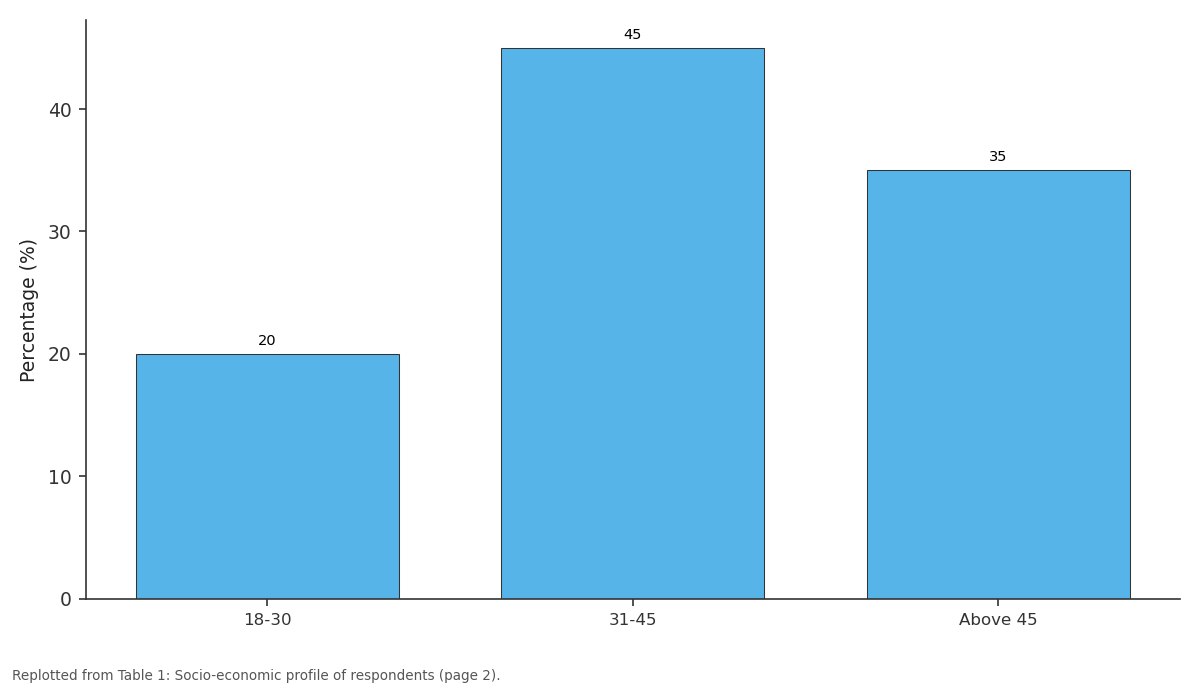
Percentage (%): 18-30 vs 31-45 vs Above 45
Replotted from Table 1 (page 2) of the original paper. Every bar is the paper's own table value.
View source evidence ↗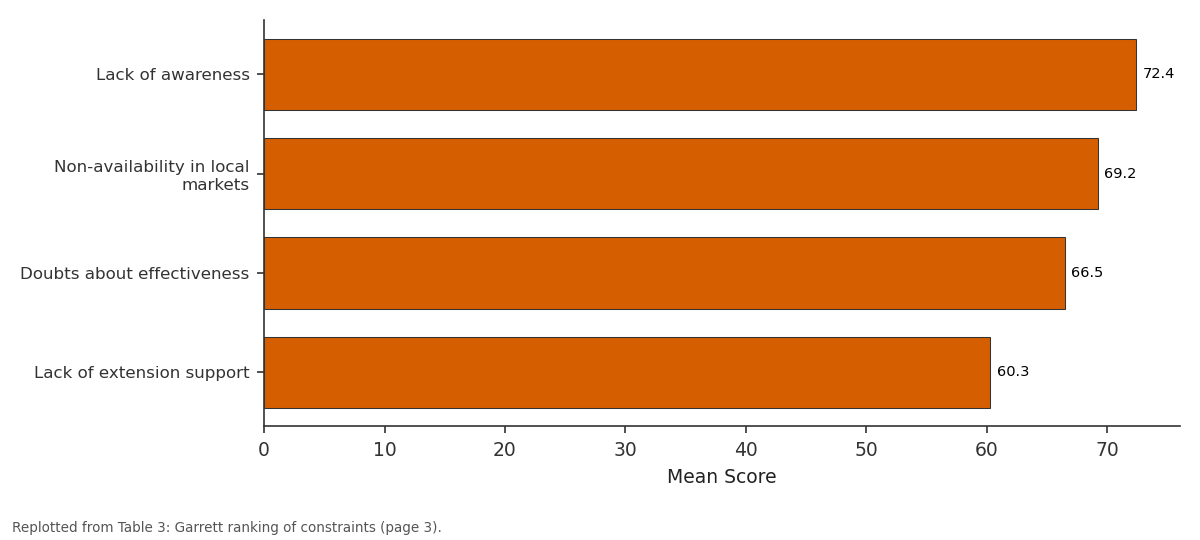
Mean Score: Lack of awareness vs Non-availability in... vs Doubts about... vs Lack of extension...
Replotted from Table 3 (page 3) of the original paper. Every bar is the paper's own table value.
View source evidence ↗Figures & tables
From the original paper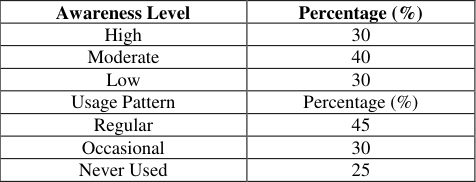 Table 2
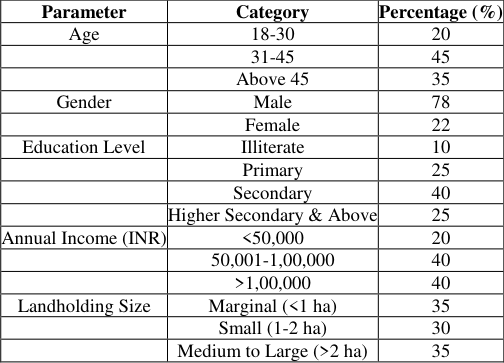 Table 1
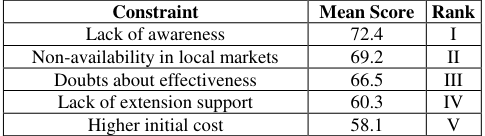 Table 3
 Table 4
Introduction
The agricultural sector in India plays a critical role in ensuring food security and livelihoods for millions. However, intensive farming practices have led to the excessive use of chemical inputs, resulting in soil degradation and environmental issues. In this context, the use of biofertilizers has emerged as an eco-friendly and sustainable alternative. Biofertilizers are formulations containing living microorganisms that enhance soil fertility by fixing atmospheric nitrogen, solubilizing phosphorus, and promoting plant growth through various mechanisms.
Despite the proven benefits, the adoption of biofertilizers remains limited, especially among rural farmers. Understanding the behavior of rural consumers in purchasing and using biofertilizers is vital for promoting their adoption. Buying behavior in this context is influenced by multiple factors such as socio-economic status, access to information, awareness levels, previous experiences, and the perceived effectiveness of the product. In Andhra Pradesh, several initiatives have been undertaken to promote biofertilizer usage, especially in agriculturally progressive districts like Guntur.
However, challenges persist in reaching small and marginal farmers. This study focuses on analyzing the buying behavior of rural consumers toward biofertilizers in Tenali Mandal, Guntur district. The research aims to identify the socio-economic factors influencing purchase decisions, understand the level of awareness and usage, and highlight the key constraints hindering wider adoption. This information is essential for policymakers, extension agents, and agribusiness stakeholders to design targeted interventions that support sustainable farming.
NAAS Rating: 4.97 IJAFS 2025; 7(6): 111-113 K Kotesh Yadav Research Scholar, PG, Department of Agricultural Economics, SHUATS, Naini, Prayagraj, Uttar Pradesh, India Dr. Pritesh Dwivedi Assistant Professor, PG, Department of Agricultural Economics, SHUATS, Naini, Prayagraj, Uttar Pradesh, India K Kotesh Yadav Research Scholar, PG, Department of Agricultural Economics, SHUATS, Naini, Prayagraj, Uttar Pradesh, India https://www.agriculturaljournals.com Age Distribution: The 31-45 age group dominates (45%), indicating that middle-aged farmers are more active in decision-making and open to adopting new inputs like biofertilizers. This age group typically balances experience with openness to innovation. Gender: Male respondents constitute 78%, underlining that male members are predominantly responsible for input purchase decisions in rural areas. However, the 22% female participation suggests growing involvement of women in agribusiness decisions, an important consideration for gender targeted interventions. Education Level: 65% of respondents had at least secondary education, which is significant for promoting biofertilizer use, as educated farmers are more likely to understand the long-term benefits of sustainable practices and navigate product information effectively. Income Levels: 80% of farmers earn more than ₹50,000 annually, showing that a large portion have moderate purchasing capacity.
These income levels influence product affordability and willingness to try premium agricultural inputs like biofertilizers. Landholding Size: 65% of farmers are marginal or small-scale, indicating high land pressure and the need for productivity-enhancing yet cost-effective technologies. Adoption of biofertilizers in this group could significantly affect soil fertility and yield sustainability. Implication: These socio-economic indicators suggest that the target group is reasonably literate, economically active, and has moderate access to land, making them a promising segment for biofertilizer marketing-provided that barriers like awareness and access are addressed. Table 2: Awareness and usage of biofertilizers 2.
| Awareness Level | Percentage (%) |
|---|---|
| High | 30 |
| Moderate | 40 |
| Low | 30 |
| Usage Pattern | Percentage (%) |
| Regular | 45 |
| Occasional | 30 |
| Never Used | 25 |
Table text extracted from the original PDF; superscript letters are shown inline. The original table image is below.
View original table image
Objectives 1. To assess the socio-economic profile, awareness level, and usage behavior of rural consumers toward biofertilizers in Tenali Mandal. 2. To identify the factors influencing buying behavior and analyze constraints in the adoption of biofertilizers.
Methodology
The present study employs a descriptive-cum-diagnostic research design combining both qualitative and quantitative data collection methods. The study area selected is Tenali Mandal of Guntur district in Andhra Pradesh due to its agricultural significance and potential for biofertilizer adoption. Sampling Procedure: A total of 100 respondents were selected using a simple random sampling technique. The sample included a diverse group of farmers based on landholding size, education, age, and income level. Data Collection: Primary data were gathered through structured, pre-tested interview schedules covering socio-economic profile, awareness, usage patterns, and adoption constraints. Secondary data were collected from Krishi Vigyan Kendras (KVKs), the Department of Agriculture, government reports, and academic journals.
Analytical Tools Descriptive statistics to summarize socio-economic data. Likert scale analysis for assessing attitudes and satisfaction. Chi-square test to determine the association between socio-economic variables and biofertilizer usage. Garrett’s ranking technique to prioritize constraints. Multiple regression analysis to determine the influence of variables such as education, income, and awareness on buying behavior. The analysis was performed using Microsoft Excel and SPSS software.
Results And Discussion
Table 1: Socio-economic profile of respondents Parameter Category Percentage (%) Age 18-30 20 31-45 45 Above 45 35 Gender Male 78 Female 22 Education Level Illiterate 10 Primary 25 Secondary 40 Higher Secondary & Above 25 Annual Income (INR) <50,000 20 50,001-1,00,000 40 >1,00,000 40 Landholding Size Marginal (<1 ha) 35 Small (1-2 ha) 30 Medium to Large (>2 ha) 35
| Parameter | Category | Percentage (%) |
|---|---|---|
| Age | 18-30 | 20 |
| 31-45 | 45 | |
| Above 45 | 35 | |
| Gender | Male | 78 |
| Female | 22 | |
| Education Level | Illiterate | 10 |
| Primary | 25 | |
| Secondary | 40 | |
| Higher Secondary & Above | 25 | |
| Annual Income (INR) | <50,000 | 20 |
| 50,001-1,00,000 | 40 | |
| >1,00,000 | 40 | |
| Landholding Size | Marginal (<1 ha) | 35 |
| Small (1-2 ha) | 30 | |
| Medium to Large (>2 ha) | 35 |
Table text extracted from the original PDF; superscript letters are shown inline. The original table image is below.
View original table image
Discussion
This table provides insights into the socio- economic landscape that shapes rural consumer behavior: Awareness Level Percentage (%) High 30 Moderate 40 Low 30 Usage Pattern Percentage (%) Regular 45 Occasional 30 Never Used 25
Discussion
This table reflects both the reach and effectiveness of promotional campaigns and the actual behavioral change among rural consumers. Awareness: A combined 70% of respondents had moderate to high awareness. This shows successful initial outreach, possibly through extension services, input dealers, or peer networks. However, the 30% with low awareness indicates an information gap, especially among marginal farmers or those in remote areas. Usage: While 45% of respondents regularly use biofertilizers, 25% have never used them. Regular users are likely those with better education, higher trust in organic practices, or positive past experiences.
Occasional users may be in a trial phase, showing partial adoption but not full confidence. Behavioral Insight: According to consumer behavior models (like the AIDA model-Attention, Interest, Desire, https://www.agriculturaljournals.com Action), a majority of the respondents have moved beyond interest to action, but a large chunk still requires stronger persuasion and trust-building through demonstrations, success stories, and visible yield impact. Table 3: Garrett ranking of constraints greater risk-taking ability and openness to trying new agricultural inputs. Interpretation: These findings align with the Theory of Planned Behavior, where perceived knowledge (awareness), capacity (income), and capability (education) strongly influence behavior.
| Constraint | Mean Score | Rank |
|---|---|---|
| Lack of awareness | 72.4 | I |
| Non-availability in local markets | 69.2 | II |
| Doubts about effectiveness | 66.5 | III |
| Lack of extension support | 60.3 | IV |
| Higher initial cost | 58.1 | V |
Table text extracted from the original PDF; superscript letters are shown inline. The original table image is below.
View original table image
Marketing strategies should prioritize these determinants.
Summary
and Conclusion The study examined the buying behavior of rural farmers toward biofertilizers in Tenali Mandal, Guntur district.
Results
show that although awareness is growing, significant gaps remain in terms of product availability and trust. Socio-economic factors, particularly education and income, play a crucial role in adoption decisions. Constraints such as lack of awareness, non-availability, and doubts about product effectiveness ranked highest among challenges. To address these issues, it is recommended to enhance farmer education through training programs, ensure consistent supply through local networks, offer financial incentives to smallholders, and conduct demonstration trials to build trust.
With targeted interventions, biofertilizer adoption can be improved, contributing to the sustainability and productivity of Indian agriculture.
Discussion
This analysis helps identify the most pressing challenges in the marketing and adoption of biofertilizers: Top Constraint: Lack of Awareness (Rank I): Despite outreach efforts, many farmers lack detailed knowledge of how biofertilizers work, when and how to apply them, and what benefits to expect. Visual demonstrations and local campaigns are critical here. Non-availability in Local Markets (Rank II): Even interested farmers face supply-side challenges. Input dealers often prefer chemical fertilizers due to better margins or familiarity. Strengthening rural supply chains and incentivizing retailers is crucial. Doubt about Effectiveness (Rank III): This constraint reflects a lack of experiential knowledge.
Farmers may not see immediate results, unlike chemical inputs, leading to skepticism. This can be overcome through field trials and success stories. Lack of Extension Support (Rank IV): The absence of follow-up guidance limits adoption. Extension officers must be trained and equipped to guide farmers from awareness to application. Higher Initial Cost (Rank V): Although not the primary barrier, cost still matters. Many biofertilizers are perceived as expensive due to packaging or marketing.
Subsidies or bundled offers with other inputs can help improve affordability. Implication: A multi-pronged strategy is needed-building awareness, ensuring product availability, training for usage, and pricing interventions to boost adoption. Table 4: Regression analysis results Variable Coefficient T-Value Significance Education Level 0.482 2.95 0.004 Income 0.399 2.63 0.010 Awareness 0.521 3.22 0.002
| Variable | Coefficient | T-Value | Significance |
|---|---|---|---|
| Education Level | 0.482 | 2.95 | 0.004 |
| Income | 0.399 | 2.63 | 0.010 |
| Awareness | 0.521 | 3.22 | 0.002 |
Table text extracted from the original PDF; superscript letters are shown inline. The original table image is below.
View original table image
Discussion
This regression model quantitatively explains which factors influence biofertilizer purchasing decisions: Awareness has the strongest and most significant impact (β=0.521), indicating that knowledge directly translates into purchase decisions. This validates the need for targeted awareness drives. Education (β=0.482) plays a critical role, reinforcing that literate farmers can better comprehend long-term soil health, understand product manuals, and assess benefits. Income (β=0.399) indicates that affordability and economic security matter. Higher income leads to
References
7 in the original paper- Singh R. Adoption of biofertilizers in Indian agriculture. Indian J Agric Econ, 2020.
- Government of Andhra Pradesh. Department of Agriculture Reports.
- FAO. Sustainable input practices in South Asia. Rome: FAO, 2019.
- Krishi Vigyan Kendra. Annual reports [Internet], 2020- 2023.
- Patel A, Sharma P. Factors affecting biofertilizer adoption. J Rural Stud, 2021.
- Rao VC. Agricultural extension and biofertilizer promotion. Agri-Ext J, 2022.
- Kumar D. Role of awareness in biofertilizer utilization. Indian Res J Ext Educ, 2023. Constraint Mean Score Rank Lack of awareness 72.4 I Non-availability in local markets 69.2 II Doubts about effectiveness 66.5 III Lack of extension support 60.3 IV Higher initial cost 58.1 V