
Research article · 2025 · Full text
International Journal of Agriculture and Food SciencePlant insect interaction mechanism: An overview
Volume 7(6) · Pages 94–100 · DOI: 10.33545/2664844x.2025.v7.i6b.444 ↗
Research areasAgricultural pest management studies
Abstract
Author-writtenPlants have evolved sophisticated strategies to defend themselves from insect pests, employing both direct and indirect mechanisms. Direct defense involves physical and chemical barriers that work together to inhibit the growth, development, and reproduction of these pests. In contrast, indirect defense doesn't directly affect the insects but instead reduces their populations by releasing volatile organic compounds that attract the pests' natural enemies. Plant defense is a component of intricate interaction networks involving multiple organisms. Understanding these complex relationships necessitates biochemical, ecological, and molecular investigations, often in combination.
Summary
Source-checkedPlain-language reading of the full paper, prepared with AI and checked against the text. Each point links to the authors' own words.
Why it matters
- Insect pests are a major global problem because they cause significant annual losses to crops. View evidence ↗
- Studying plant defense mechanisms is essential for creating resistant crops and improving pest management to reduce the use of harmful pesticides. View evidence ↗
- Plant defenses are categorized as either constitutive (always present) or induced (activated by herbivory). View evidence ↗
The question
- The paper aims to provide an overview of the biochemical, ecological, and molecular mechanisms plants use to interact with and defend against insects. View evidence ↗
What they did
- The review examines direct defense mechanisms, which utilize physical and chemical barriers to hinder pest growth and reproduction. View evidence ↗
- The review examines indirect defense mechanisms, where plants release volatile organic compounds to attract natural enemies of the pests. View evidence ↗
What they found
- Sclerophylly, or the hardening of leaves, reduces herbivore damage by making plant tissues less digestible and palatable. View evidence ↗
- High trichome density protects plants by deterring feeding and egg-laying and by reducing the nutrition available to larvae. View evidence ↗
- In tomatoes, different defensive elements like alkaloids and Proteinase Inhibitors work synergistically to affect insect metabolism and digestion, whereas they have limited impact individually. View evidence ↗
- Proteinase Inhibitors (PIs) make up 1-10% of the total protein content in plant storage tissues like tubers and seeds. View evidence ↗
- Tannins hinder insect growth and development by damaging the midgut and binding to proteins, which reduces nutrient absorption. View evidence ↗
- Herbivore-induced plant volatiles (HIPVs) serve as a defense by either deterring pests from feeding and egg-laying or by attracting the pests' natural predators. View evidence ↗
- Most plant defense responses to insect herbivory are triggered by signaling pathways involving ethylene, salicylic acid, and jasmonic acid. View evidence ↗
What it means
- The authors conclude that creating insect-resistant crops would provide significant economic and environmental benefits by reducing the need for synthetic insecticides. View evidence ↗
- A limitation of enhancing resistance is that complex hormone interactions may make a plant more vulnerable to one type of herbivore while increasing resistance to another. View evidence ↗
Figures & tables
From the original paper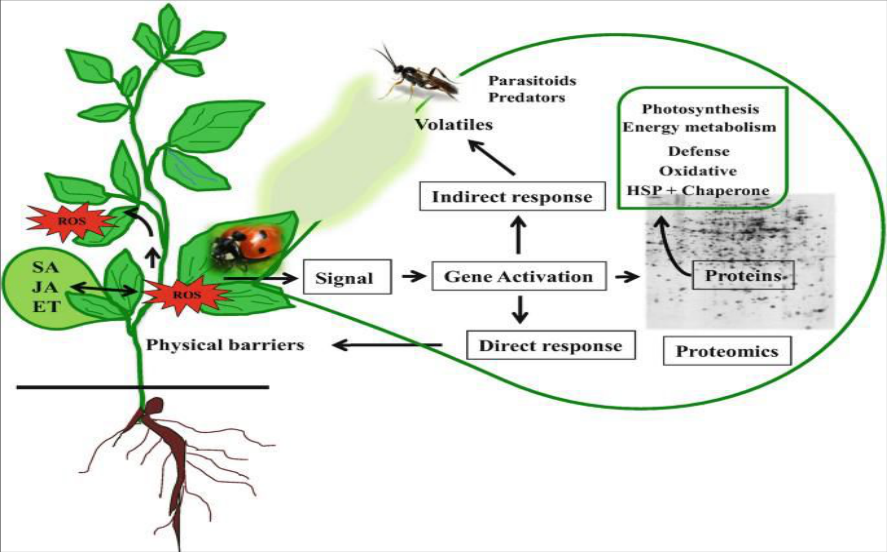 Figure 1
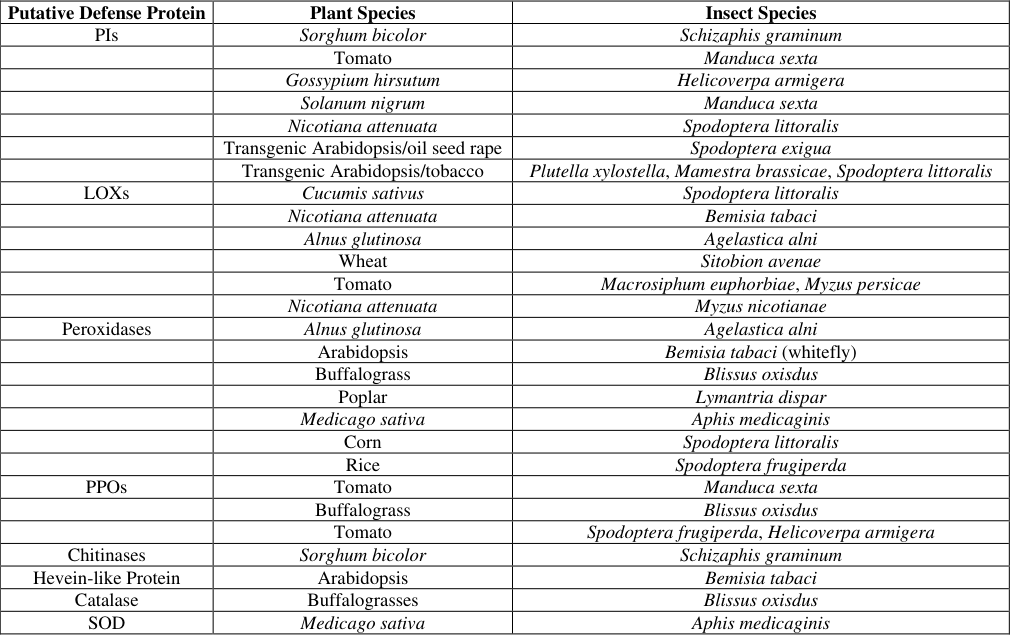 Table 1
 Table 2
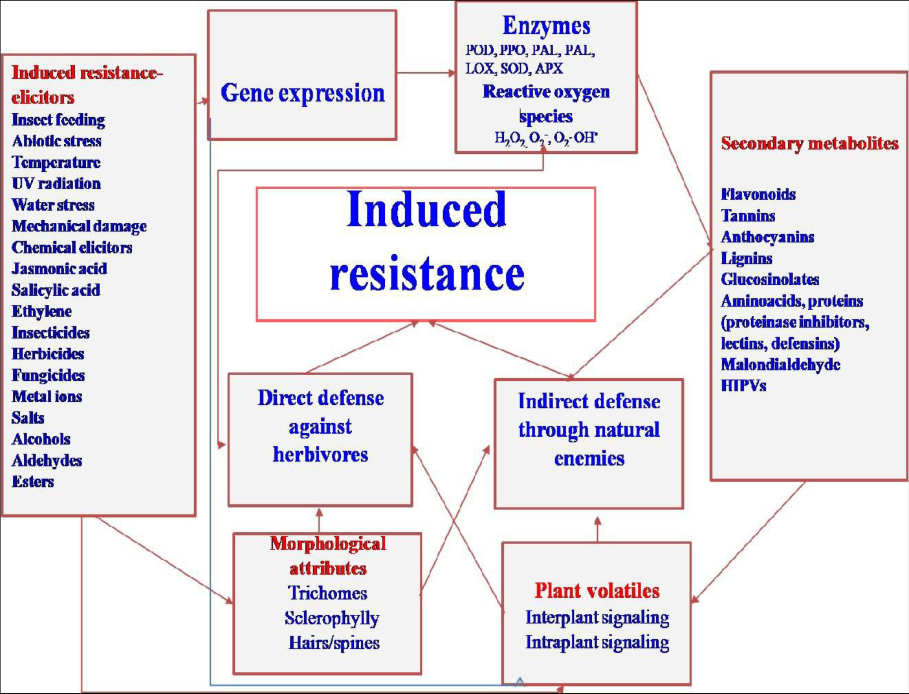 Figure 1
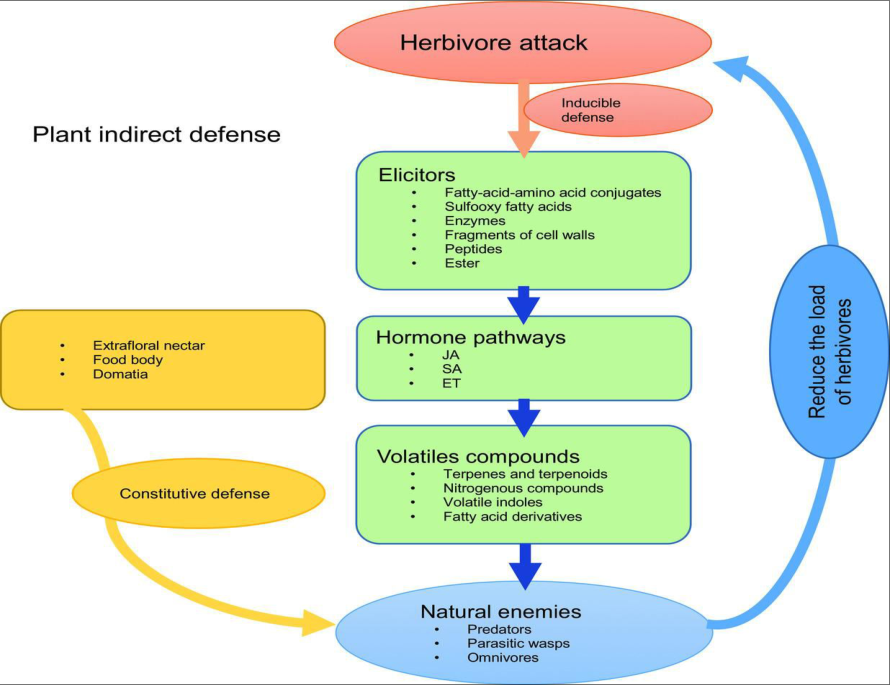 Figure 2
Introduction
With their high species diversity, insects are a dominant life form. Plants interact with them in various ways, including negative interactions with pests and positive ones with natural enemies and pollinators. Plants protect themselves directly or by enlisting pest "bodyguards". Insect pests cause significant global crop losses annually [10] . Plants employ diverse structural, chemical, and molecular mechanisms to defend against insect pest attacks. Understanding these defenses is key to developing resistant crops and better pest management, reducing reliance on harmful pesticides and preventing pesticide resistance. Plant defenses can be constitutive or induced by herbivory, leading to varied plant characteristics and insect interactions [5] . Insect pests are classified as polyphagous (feeding on many plant families) or monophagous/oligophagous (feeding on one or a few within a family). Polyphagous insects tolerate common defenses but not unique ones. Monophagous/oligophagous insects use specific host plants, where defense compounds can also act as feeding and egg-laying cues [4] . Plants possess multifaceted defense mechanisms against herbivores, operating at various levels. These defenses range from external physical barriers like thorns to complex chemical responses that can be poisonous to attackers. In response to insect attacks, plants develop specialized morphological features or synthesize secondary metabolites and proteins that exhibit toxic, repellent, and/or anti-nutritional properties against the pests. Additionally, plants release volatile organic compounds that attract the natural enemies of these herbivores [14] . Direct defense mechanisms in plants against herbivorous insects involve traits that negatively impact insect host selection, oviposition, and feeding behavior, as well as their growth, development, and reproductive success, ultimately increasing plant fitness in hostile environments. Such traits include physical defenses like trichomes, epicuticular waxes and crystals, thorns, spines, and tough tissues, along with secretory structures that produce latex or resins. They also include chemical defenses such as secondary metabolites, proteins that reduce digestibility, and anti-nutritive enzymes. These defensive traits can be constitutively expressed as preformed resistance factors or induced and activated only following insect infestation. The induction of these defensive responses is not localized to the site of damage but spreads to undamaged parts of the plant. This systemic response to herbivore attack necessitates a long-distance signaling system capable of generating, transporting, and interpreting alarm signals originating from the plant-herbivore interaction. Much of the research on the signaling events initiated by herbivore feeding has centered on tomato and other solanaceous plants. In this model system, the peptide system in acts at or near the wound to amplify the production of jasmonic acid.
International Journal of Agriculture and Food Science https://www.agriculturaljournals.com Jasmonic acid or its metabolized forms serve as mobile long-distance signals within the phloem, triggering the expression of defense-related genes in distant parts of the plant [17] .
Host Plant Defenses against Insects
Plants have a complex and ever-changing defense system against insect attacks, using physical barriers, poisonous substances, and even attracting the insects' natural predators. These defenses can be present all the time or activated when insects damage the plant. Triggering these defenses in plants is a key way to manage insect pests in farming, as it helps control their populations. When plants activate their defenses, it makes them more adaptable, reducing the likelihood that attacking insects will get used to the plant's chemical defenses. These changes in a plant's defense chemicals after an insect attack create an unpredictable environment for the pests, which can harm their well-being and behaviour. If a plant can activate its defenses very quickly, it's a big advantage, as it can lessen future attacks from both insects and diseases, ultimately making the plant healthier overall. Plants that have a wide range of defense chemicals tend to be better at protecting themselves compared to those with a more limited variety [16] .
Direct defence system
Plants possess initial physical defenses against insect feeding, such as leaf surface wax, thorns, or trichomes, as well as cell wall thickness and lignification. Following this, secondary metabolites function as toxins and hinder insect growth, development, and digestion, providing further protection. Furthermore, the combined action of various defensive elements can strengthen a plant's resistance to insect invaders. For instance, in tomatoes, alkaloids, phenolics, Proteinase Inhibitors (PIs), and oxidative enzymes individually have a limited impact, but together they act synergistically to affect insects during feeding, digestion, and metabolism. Similarly, in wild tobacco (Nicotiana attenuata), the production of trypsin proteinase inhibitors and nicotine worked together to enhance defense against the beet armyworm (Spodoptera exigua) [16] .
Physical defence through morphological features:
Because insect pests across all feeding types need to physically interact with a plant to colonize it, the surface characteristics of the plant, both physical and chemical, play a significant role in its defense mechanisms. Every part of a plant exhibits some level of resistance against herbivores, varying from the toughness of its tissues to sophisticated structures like glandular trichomes and spines. The cuticle of most vascular plants is covered by leaf surface wax films and crystals. Beyond their crucial function in preventing water loss, these features also create a slippery surface, making it difficult for many generalist insects to establish themselves on the leaves. The physical attributes and chemical makeup of this wax layer are key elements of existing plant defenses [17] . Plant structures serve as the initial defense mechanism against insect pests and are crucial for host plant resistance. This primary defense involves physical barriers like a waxy cuticle and the development of spines, setae, or trichomes. Structural defenses encompass both morphological and anatomical characteristics that directly deter insect feeding, ranging from visible protrusions to microscopic changes in cell wall thickness due to lignification and suberization. Key structural traits that protect against insect pests include spines and thorns (spinescence), trichomes (pubescence), tough or hardened leaves (sclerophylly), the incorporation of minerals into tissues, and divaricated branching. Sclerophylly, the hardening of leaves, actively defends plants by making tissues less palatable and digestible, thus reducing herbivore damage. Spinescence, which includes spines, thorns, and prickles, has been shown to protect plants from various insects. Pubescence, a layer of hairs (trichomes) on above-ground plant parts like stems, leaves, and fruits, exists in diverse forms such as straight, spiral, stellate, hooked, and glandular. For example, Chamarthi et al. [3] found that leaf glossiness, plumule, and leaf sheath pigmentation contributed to resistance against the sorghum shoot fly (Atherigona soccata) in Sorghum bicolor (L. Moench).
Trichomes
Trichomes, epidermal outgrowths common across terrestrial plant groups, develop from the surface tissue into hair-like structures [8] . These structures are crucial for plant defense against insect pests, employing both toxic and deterrent mechanisms. A higher density of trichomes can negatively impact insect pests by deterring egg-laying and feeding, as well as reducing larval nutrition. Furthermore, dense trichomes physically impede the movement of insects and other arthropods on the plant surface, limiting their access to the leaf epidermis. Trichomes exhibit diverse forms, including straight, spiral, hooked, branched, or un-branched types, and can be either glandular or non-glandular. Glandular trichomes contribute to defense by secreting secondary metabolites such as flavonoids, terpenoids, and alkaloids, which can poison, repel, or trap insects, thus providing a combined physical and chemical barrier. Notably, many plants exhibit an induced increase in trichome production in response to insect damage [1] . This increase in density is observed only in leaves that develop after the insect attack, as the trichome density of existing leaves remains constant. For instance, damage by adult leaf beetles (Phratora vulgatissima) on Salix cinerea has been shown to induce a greater trichome density in subsequent new leaves. Similarly, an increase in trichome density in S. cinerea has been reported following coleopteran damage. This phenomenon of increased trichome density after insect damage has also been documented in Lepidium virginicum L. and Raphanus raphanistrum L. In black mustard, feeding by the small white butterfly (Pieris rapae) led to elevated trichome density and glucosinolate levels. Moreover, insect infestation can also induce changes in the proportion of glandular and non-glandular trichomes.
Leaf and root toughness and quantity
The toughness of leaves presents a barrier to piercingsucking insects trying to access plant tissues and can accelerate wear on the mouthparts of chewing insects [12] . Plants also strengthen their leaf cell walls during insect feeding by depositing various macromolecules like lignin, cellulose, suberin, and callose, along with smaller organic compounds such as phenolics, and even inorganic silica. When insect pests feed on roots, the plants often show significant regrowth, increasing both the density, as seen in white clover (Trifolium repens) attacked by the clover root weevil (Sitona lepidus), and the overall amount, as observed in alfalfa (Medicago sativa) damaged by the clover weevil (Sitona hispidulus). This increased root density might be due to increased lignification, which could make the roots tougher. Furthermore, plant varieties with long, thin roots experience less herbivory compared to those with short, thick roots.
Chemical defense of plants by secondary metabolites
Plants produce a wide variety of organic compounds beyond those directly involved in basic growth and development processes like photosynthesis, respiration, transport, nutrient uptake, and differentiation. These specialized compounds play a significant role in defense against herbivores through two main mechanisms: reducing the plant's nutritional value or acting as deterrents or toxins. The relative importance of these two defensive strategies in plant-herbivore interactions is a subject of ongoing discussion, particularly regarding the evolutionary role of primary and secondary metabolite variation in plant defense [2] . While primary metabolism provides essential nutrients shared with insects, secondary metabolites, which do not directly contribute to plant growth, can decrease the palatability of plant tissues. These defensive secondary metabolites can be constitutively present (phytoanticipins) or induced upon attack by insects or microbes (phytoalexins). Phytoanticipins, such as glucosinolates and benzoxazinoids (BXs), are often activated by enzymes like β-glucosidase upon tissue damage, releasing biocidal compounds. Phytoalexins, including isoflavonoids, terpenoids, and alkaloids, negatively impact insect performance and survival. Beyond defense, secondary metabolites can also enhance plant fitness. For example, maize resistance to the corn earworm is linked to the presence of maysin and chlorogenic acid, while 4, 4-dimethyl cyclooctene contributes to shoot fly resistance in sorghum [3] . Research on secondary metabolites may uncover new signaling molecules in plant-insect resistance, potentially leading to the identification of relevant genes and enzymes. Some secondary metabolites involved in plant defense include.
Plant phenolic compounds
Plant phenols represent a prevalent and diverse category of defensive compounds crucial for host plant resistance to insects. These compounds function defensively not only against insects but also against microorganisms and competing plant species. Lignin, a complex phenolic polymer, is central to plant defense against both insects and pathogens. It impedes pathogen entry through physical barriers or by increasing leaf toughness, which in turn deters insect feeding and lowers the leaf's nutritional value. Notably, lignin synthesis is triggered by insect or pathogen attacks, and its rapid accumulation can hinder further pathogen growth or reduce insect reproduction.
Plant defensive proteins
From an ecological perspective, the relationship between insects and plants is crucial for the survival of both organisms. Insects actively seek out healthy host plants that can provide adequate nutrition, suitable mating and egglaying sites, and sustenance for their young. Similar to other animals, insects have specific nutritional needs, and any disruption in their ability to digest and utilize plant proteins can significantly impact their physiology. When plants experience stress, such as insect attacks, changes in gene expression lead to alterations in the types and amounts of proteins they produce. These altered proteins play a vital role in processes like signal transduction and defense against oxidative damage. Many plant proteins consumed by insects remain stable as they pass through the insect's midgut and even enter their circulatory system. Modifications to a protein's amino acid composition or sequence can affect its function. Similarly, the effectiveness of toxic plant proteins that are easily broken down can be enhanced by using protease inhibitors, which prevent their degradation and allow them to exert their defensive effects. A deeper understanding of how protein structure and posttranslational modifications contribute to stability within the insect gut could help predict the toxicity and mechanisms of plant resistance proteins. Recent advancements in microarray and proteomic technologies have shown that a diverse range of plant resistance proteins participate in defending against insect herbivores.
Lectins: Plant lectins, which are proteins that bind to carbohydrates, serve as a natural defense against various pests. Their insecticidal properties have been explored for pest control. A key characteristic of these lectins is their ability to withstand the insect digestive system, enhancing their potential as insecticides. By attaching to glycosyl groups in the gut lining, they disrupt nutrient processing and absorption, acting as antifeedants or toxins and causing systemic harm. Notably, lectins remain stable across a broad pH range and can damage the gut's epithelial membranes (Table 1).
| Putative Defense Protein | Plant Species | Insect Species |
|---|---|---|
| PIs | Sorghum bicolor | Schizaphis graminum |
| Tomato | Manduca sexta | |
| Gossypium hirsutum | Helicoverpa armigera | |
| Solanum nigrum | Manduca sexta | |
| Nicotiana attenuata | Spodoptera littoralis | |
| Transgenic Arabidopsis/oil seed rape | Spodoptera exigua | |
| Transgenic Arabidopsis/tobacco | Plutella xylostella, Mamestra brassicae, Spodoptera littoralis | |
| LOXs | Cucumis sativus | Spodoptera littoralis |
| Nicotiana attenuata | Bemisia tabaci | |
| Alnus glutinosa | Agelastica alni | |
| Wheat | Sitobion avenae | |
| Tomato | Macrosiphum euphorbiae, Myzus persicae | |
| Nicotiana attenuata | Myzus nicotianae | |
| Peroxidases | Alnus glutinosa | Agelastica alni |
| Arabidopsis | Bemisia tabaci (whitefly) | |
| Buffalograss | Blissus oxisdus | |
| Poplar | Lymantria dispar | |
| Medicago sativa | Aphis medicaginis | |
| Corn | Spodoptera littoralis | |
| Rice | Spodoptera frugiperda | |
| PPOs | Tomato | Manduca sexta |
| Buffalograss | Blissus oxisdus | |
| Tomato | Spodoptera frugiperda, Helicoverpa armigera | |
| Chitinases | Sorghum bicolor | Schizaphis graminum |
| Hevein-like Protein | Arabidopsis | Bemisia tabaci |
| Catalase | Buffalograsses | Blissus oxisdus |
| SOD | Medicago sativa | Aphis medicaginis |
Table text extracted from the original PDF; superscript letters are shown inline. The original table image is below.
View original table image
Flavonoids
Flavonoids exhibit cytotoxic properties and interact with various enzymes through complex mechanisms.
Tannins
Tannins significantly harm plant-eating insects by hindering their growth and development. This occurs because tannins bind to proteins, diminish the effectiveness of nutrient absorption, and damage the midgut. As astringent and bitter polyphenols, tannins also deter feeding in numerous insect pests. Their protein precipitation action is non-specific, involving hydrogen or covalent bonding with protein NH2 groups, which includes the insects' digestive enzymes. Furthermore, tannins bind to metal ions, limiting their availability to insects. When insects consume tannins, protein digestibility decreases, thereby lowering the nutritional value of plants. The role of tannins in defending plants against various stresses, and their increased production in response to insect damage, has been investigated in many plant species.
Proteinase inhibitors
As one of the most prevalent classes of defensive proteins in the plant kingdom, Proteinase Inhibitors (PIs) are found in high amounts within storage tissues such as seeds and tubers, accounting for a significant portion (1-10%) of their total protein content. These inhibitors function in plant defense against insects by targeting and inactivating digestive enzymes in the insect gut. This interference with protein digestion leads to a scarcity of amino acids, consequently slowing insect development and potentially causing starvation. Numerous studies have explored the protective role of various PIs against insect pests, either directly or by incorporating them into transgenic plants to boost insect resistance, particularly against lepidopteran and hemipteran species. The success achieved with transgenic crops expressing PIs to combat insect pests underscores the necessity for a deeper understanding of their operational mechanisms, their interplay with other defense strategies, and the evolutionary adaptations of insects in response (Table 2).
| Lectin | Plant | Insect |
|---|---|---|
| Allium sativum leaf lectin | Tobacco Chickpea | Aphids Aphis craccivora |
| Jacalin-like lectins Bauhinia monandra leaf lectin | Wheat Tobacco | Mayetiola destructor Anagasta kuehniella Zabrotes subfasciatus Callosobruchus maculates |
| Snowdrop lectin | Rice Wheat Arabidopsi | Aphids Nilaparvata lugens Aphids Pieris rapae, Spodoptera littoralis |
| Nictaba-related lectins NICTABA, PP2 | Tobacco | Spodoptera littoralis, Manduca sexta, Acyrthosiphon pisum |
| Arum maculatum lectin | Lipaphis erysimi, Aphis craccivora |
Table text extracted from the original PDF; superscript letters are shown inline. The original table image is below.
View original table image
Enzymes
Enzymes play a crucial role in host plant resistance to insects by interfering with their nutrient absorption. Peroxidases, polyphenol oxidases, and ascorbate peroxidases are examples of enzymes that disrupt insect nutrition. They achieve this by oxidizing mono or dihydroxyphenols, leading to the formation of electrophiles.
Indirect Defenses Methods
Plants defend themselves against insect attacks partly by attracting the natural enemies of those insects. This defensive strategy, known as an indirect defense, can be present in the plant all the time or triggered by a combination of physical damage and substances from the attacking herbivore. The release of volatile organic compounds and the secretion of extra floral nectar are key mechanisms through which plants interact with parasitoids or predators of the pests, leading to a reduction in pest populations. Recently, induced indirect defenses have become a significant area of research, with investigations spanning genetics, biochemistry, physiology, and ecology [].
Herbivore induced plant volatiles (HIPVs)
When insects feed on plants, the plants indirectly defend themselves by releasing a mixture of volatile and nonvolatile substances. These insect-induced plant volatiles (HIPVs) are crucial for plant defense. They can attract the natural predators of the insects or deter the insects from feeding or laying eggs. HIPVs are lipophilic compounds with a high vapor pressure, released from various parts of the plant (leaves, flowers, fruits) into the air and from the roots into the soil when insects attack. The specific HIPVs produced depend on factors such as the plant and insect species, as well as their developmental stages and overall condition. While plants typically release a certain amount of volatile compounds, insect attacks trigger the production of a distinct blend. This specific volatile blend is unique to the particular interaction between the plant and the insect, and it can also influence natural enemies and nearby plants. HIPVs facilitate communication between plants and arthropods, microorganisms, neighboring undamaged plants, or even trigger internal signals within the plant to warn other undamaged parts (Figure 1). The activation of different defense signaling pathways, based on the insect's feeding method, leads to the production of specific volatile compounds [15] .
Defense elicitors (Insect Oral Secretion)
Plants exhibit significant alterations in their transcriptomes, proteomes, and metabolomes when exposed to herbivoreinduced physical and chemical signals, including insect oral secretions and oviposition fluid components. The prevailing understanding is that these insect-triggered plant responses are facilitated by the herbivore's oral secretions and regurgitation. The defensive mechanisms elicited vary depending on the specific elicitor and the underlying biological processes. For instance, β-glucosidase, found in the regurgitate of Pieris brassicae L. larvae, has been identified as a potential elicitor of herbivore-induced plant volatiles. This enzyme leads to the release of a volatile mixture from mechanically damaged cabbage leaves, which attracts the parasitic wasp, Cotesia glomerata (L.) [13] .
Role of phytohormones
Plants employ intricate signal transduction pathways, orchestrated by a network of phytohormones, to defend themselves against insect attacks. These plant hormones are crucial regulators of growth, development, and defense responses. Notably, several plant hormones facilitate communication within and between plants that have been damaged by insects. The majority of defense responses in plants against insect herbivory are triggered by signal transduction pathways involving jasmonic acid, salicylic acid, and ethylene. Upon wounding or insect feeding, these pathways activate specific sets of genes associated with defense. Depending on the attacking insect, these hormones can function independently, in concert, or in opposition (Figure 2). A key plant hormone in insect defense, jasmonic acid triggers both direct and indirect protective mechanisms. Produced via the octadecanoid pathway from linolenic acid, its levels rise in plant tissues when they are wounded or eaten by herbivores. Insect feeding initiates the dioxygenation of linoleic and linolenic acids. Furthermore, jasmonic acid has been shown to influence the transcript and activity of Calcium-Dependent Protein Kinases (CDPKs) in potato plants. These CDPKs, a large family of serine/threonine kinases in plants (with 34 members in Arabidopsis), are crucial for signaling pathways involved in plant defense against various environmental stresses [9] . Beyond its role in directly combating insect pests through the production of defensive compounds, jasmonic acid's contribution to indirect resistance is also well-documented. A significant phytohormone, ethylene actively participates in plant protection against numerous insect species. The ethylene signaling cascade is vital for both direct and indirect induced plant defense mechanisms against insects and pathogens. This signaling often works in concert or in opposition with jasmonic acid signaling to control the expression of plant defense responses to pathogens and herbivorous insects. Studies have shown that ethylene and jasmonic acid function jointly in tomato to promote proteinase inhibitor expression. Generally, the diverse plant elicitors produced in response to herbivory activate different signal transduction routes, including those involving calcium ions (Ca2+) and reactive oxygen species.
Conclusion
Plants in their natural habitats face constant threats from numerous living organisms (biotic) and various non-living environmental stresses (abiotic). Diverse ecosystems are home to a wide array of bacteria, viruses, fungi, nematodes, mites, insects, mammals, and other herbivores, which significantly reduce crop yields. Plants have evolved natural defenses, both physical structures and the production of secondary metabolites. These mechanical defenses in plants negatively impact insect pests, hindering their development and reproduction. Often, a single plant trait can serve multiple protective roles throughout its life cycle. Examples include pubescence, tissue texture, crystals, latex, waxes, and resins, all effective against insect pests. Furthermore, secondary metabolites, such as terpenes, phenolics, and compounds containing nitrogen and sulfur, protect from various pests, pathogenic microorganisms, and abiotic stresses.
Understanding how plants develop resistance can help us interpret ecological interactions between plants and pests and improve pest management in agriculture. Because the biochemical pathways leading to induced resistance are similar across many plant species, the substances that trigger these pathways could be used as inducers in various crops.
A key challenge for the future is to utilize these elicitors of induced defense for pest management and to identify the genes responsible for the changes in protein expression during herbivore attacks. These genes could then be used to create pest-resistant crops through genetic modification. However, before effectively using an elicitor in agriculture, we need to understand the chemical changes it causes in the plant, its effects on pests in real-world conditions, and whether it impacts plant growth and yield. The Eco-genomic approach, which involves association and correlation studies, natural selection mapping, and population genomics, allows us to estimate the specific selection pressures on certain genes, distinguishing them from broader genomic processes like migration and genetic drift.
From the perspectives of biotechnology, food development, and breeding, understanding plant defense systems and their application is highly valuable. For example, modifications to the jasmonic acid pathway have been suggested [6] . However, due to complex interactions with other hormone signaling pathways, increased resistance to one insect herbivore might lead to increased vulnerability to another. Additionally, some defense mechanisms, involving toxic bioactive compounds and proteins that reduce digestibility, could have negative environmental and human health consequences. Nevertheless, developing insect-resistant crops to reduce the need for synthetic insecticides would significantly benefit the food production industry economically and environmentally.
References
17 in the original paper- Agrawal AA. Induced responses to herbivory in wild radish: effects on several pests and plant fitness. Ecology. 1999;80(5):1713-1723.
- Berenbaum MR. Turnabout is fair play: secondary roles for primary compounds. J Chem Ecol. 1995;21(7):925940.
- Chamarthi SK, Sharma HC, Vijay PM, Narasu LM. Leaf surface chemistry of sorghum seedlings influencing expression of resistance to sorghum shoot fly (Atherigona soccata). J Plant Biochem Biotechnol. 2011;20(2):211-216.
- Da Costa CP, Jones CM. Cucumber beetle resistance controlled by the bitter gene in Cucumis sativa L. Science. 1971;172(3988):1145-1146.
- Dicke M. Inducible defence of plants against insects: from molecular to evolutionary biology. Appl Entomol Nev Amst. 2001;12:9-18.
- Grant MR, Kazan K, Manners JM. Exploiting pathogens' tricks of the trade for engineering of plant disease resistance: challenges and opportunities. Microb Biotechnol. 2013;6(3):212-222.
- Patil PB, Ashick Rajah R, Bora NR, Brahma D, Navaneetha Krishnan S, Vasanth V, Nath I, Dutta PL, Nitish G, Manoj Prabhakar SJ. Pollination ecology: Understanding plant-pollinator relationships. Int J Res Agron. 2024;7(5):101-105. DOI: 10.33545/2618060X.2024.v7.i5b.654
- Johnson B. Plant pubescence: An ecological perspective. Bot Rev. 1975;41:233-258.
- Ludwig AA, Romeis T, Jones JD. CDPK-mediated signaling pathways: Specificity and cross-talk. J Exp Bot. 2004;55(395):181-188.
- Oerke EC. Crop losses to pests. J Agric Sci. 2006;144(1):31-43.
- Pegadaraju V, Knepper C, Reese J, Shah J. Premature leaf senescence modulated by the Arabidopsis Phytoalexin Deficient4 gene is associated with defense against the phloem feeding Green Peach aphid. Plant Physiol. 2005;139(4):1927-1935.
- Raupp MJ. Effects of leaf toughness on mandibular wear of the leaf beetle, Plagiodera versicolora. Ecol Entomol. 2008;10(1):73-79.
- Steppuhn A, Baldwin IT. Resistance management in a native plant: nicotine prevents pests from compensating for plant protease inhibitors. Ecol Lett. 2007;10(6):499511.
- Usha Rani P, Jyothsna Y. Biochemical and enzymatic changes in rice as a mechanism of defense. Acta Physiol Plant. 2010;32(4):695-701.
- Walling LL. The myriad plant responses to pests. J Plant Growth Regul. 2000;19(2):195-216.
- War AR, Paulraj MG, Ahmad T, Buhroo AA, Hussain B, et al. Mechanisms of plant defense against insect pests. Plant Signal Behav. 2012;7(10):1306-1320.
- Howe GA, Schaller A. Direct defenses in plants and their induction by wounding and insect pests. University of Hohenheim, Institute of Plant Physiology and Biotechnology, 2008, p. 7-29.
Cited by 2
From OpenAlex, OpenCitations and reference lists read by Scinovex
- Evaluation and characterization of aphid (Aphis craccivora) resistance in selected alfalfa genotypes ↗
Xin Peng Jiang, Jing Tian, Gang Li, Guy J. Smagghe, Zhong-Yi Li, Dao‐Chao Jin et al. · Crop Protection · 2025
❝ 2 - Phenotype-genotype association for the identification of resistance to stem borers (Diatraea spp., Lepidoptera: Crambidae) in sugarcane ↗
Claudia Echeverri-Rubiano, Carolina Saavedra‐Diaz, Mónica Prías-Blanco, Jhon Henry Trujillo‐Montenegro, Hugo Arley Jaimes, Carolina Camargo-Gil et al. · Frontiers in Plant Science · 2026
Sugarcane ( Saccharum spp.) is a major crop for sugar production, but its productivity is affected by stem borers ( Diatraea spp.). These insects cause significant losses by damaging the stem and disrupting the transport of photosynthates and nutrients. Although biological control has been effective in Colombia, the identification of genetic resources for the resistance would provide complementary long-term crop…
❝ 0PDF