
Research article · 2025 · Full text
International Journal of Agriculture and Food ScienceDevelopment and standardization of monk fruit sweetened chocolate protein shake-guilt-free alternative to chocolate shake
Volume 7(6) · Pages 114–117 · DOI: 10.33545/2664844x.2025.v7.i6b.448 ↗
Research areasFood Chemistry and Fat Analysis
Abstract
Author-writtenThe study presents the development of chocolate flavoured Monk Fruit Sweetened Protein Shake (MFSPS). The formulation was aimed to enhance nutritional value, sensory acceptability, and product sustainability. The protein shake composed of whey protein isolate, Monk Fruit Extract (MFE), Skim Milk Powder (SMP), unsweetened cocoa powder and blended with water. Siraitia grosvenorii (Monk fruit) extract in powder form was used as a low-calorie natural sweetener. Whey protein isolate is used as a base formulation in the product as protein supplement. Other ingredients used SMP, and unsweetened cocoa powder were added to provide flavour profile and overall mouthfeel. Additionally, additives like xanthan gum and potassium sorbate were used to maintain physiochemical stability and microbiological safety respectively. Xanthan gum was added to maintain stability by preventing coagulation of protein due to pasteurization. Potassium sorbate at the rate of 1000 ppm was added to extend the shelf life of the product. The developed MFSPS contains balance amount of carbohydrate (2.08g), protein (11.04g), and fat (0.38g). Sensory evaluation was conducted to understand product acceptability. The product shows an average overall acceptability score of 7.25 on a 9-point Hedonic scale, indicating good consumer preference. Based on its nutritional composition and low glycaemic profile, the formulated product is ready for commercialization and can be recommended for athletes as recovery drink and those seeking low sugar, low calories options.
Summary
Source-checkedPlain-language reading of the full paper, prepared with AI and checked against the text. Each point links to the authors' own words.
Why it matters
- High sugar consumption is linked to health issues such as diabetes, obesity, and cardiovascular diseases, particularly in younger people. View evidence ↗
- Artificial non-caloric sweeteners may negatively impact the intestinal microbiome, potentially leading to glucose intolerance and metabolic syndrome. View evidence ↗
- Monk fruit (Siraitia grosvenorii) is a natural, non-caloric sweetener native to southern China. View evidence ↗
The question
- The study aimed to develop a chocolate-flavored protein shake sweetened with monk fruit to improve nutritional value and sensory acceptability. View evidence ↗
What they did
- The shake was formulated using water (85.9%), whey protein isolate (6%), skim milk powder (5.5%), cocoa powder (1.2%), monk fruit extract (1%), xanthan gum (0.2%), potassium sorbate (0.1%), and salt (0.1%). View evidence ↗
- The product was homogenized, pasteurized at 72°C for 15 seconds, and then cooled to 10°C. View evidence ↗
- Sensory attributes including flavor, color, and texture were evaluated using a 9-point Hedonic scale. View evidence ↗
What they found
- The product exhibited a mildly acidic profile with a pH of 5.5±0.5 and acidity of 0.14%±0.01. View evidence ↗
- The Total Soluble Solids (TSS) of the shake were measured at 16±1° Brix. View evidence ↗
- The Coliform Count (CC) was 2/ml, meeting the safety limit of <10/ml. View evidence ↗
- The use of xanthan gum as a stabilizer resulted in a homogeneous appearance without separation or sedimentation. View evidence ↗
- The shake received an average overall acceptability score of 7.25 on a 9-point scale, indicating strong consumer preference. View evidence ↗
What it means
- The authors conclude the product is ready for commercialization and recommend it for athletes as a recovery drink or for individuals seeking low-calorie, low-sugar options. View evidence ↗
- The authors state that the shake's low cost and ease of preparation make it suitable for commercial production as a functional nutrition product. View evidence ↗
Visual summary
1 visualsIllustrations explain the paper; they do not show study data.
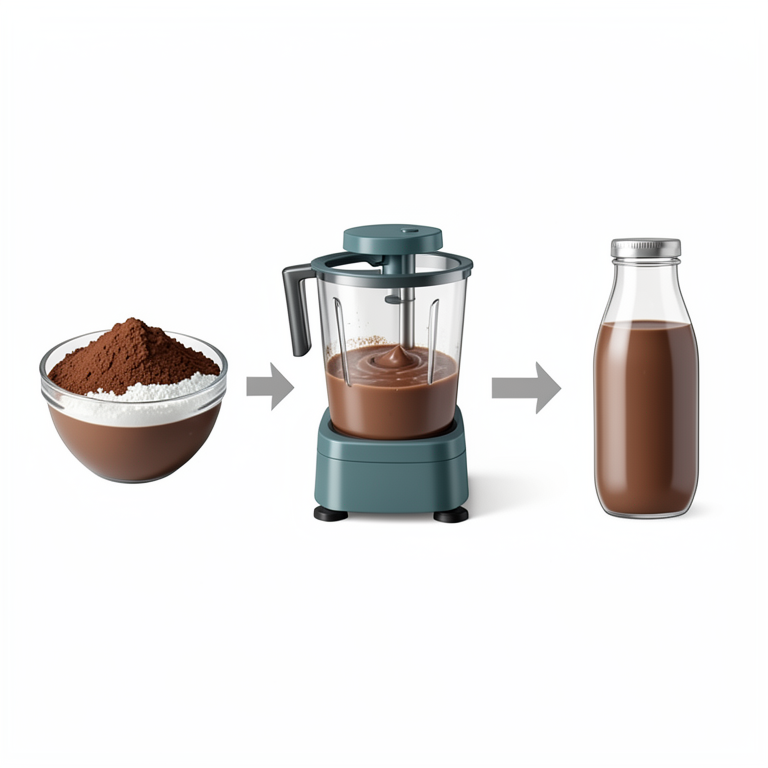
Production Process Flow
AI-generated conceptual illustration (monk fruit sweetened chocolate protein shake). It explains the idea and does not show study data.
View source evidence ↗Figures & tables
From the original paper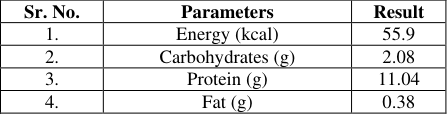 Table 2
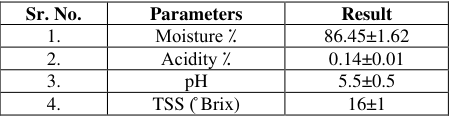 Table 1
 Table 3
Introduction
Sweetness is one of the fundamental human pleasures. However, while satisfying this need, the consumption of sugar has increased a great deal. But higher consumption of sugar has led to many conditions like obesity, diabetes and cardiovascular diseases even among the younger generations. To cope up with this, manufacturers have started making use of noncaloric artificial sweeteners such as sucralose, acesulfame K, etc. Even though they have a general acceptance for consumption, recent research has shown their side effects on the intestinal microbiome, which can lead to metabolic syndrome and glucose intolerance. Taking into consideration the problems associated with natural sugar and non-caloric artificial sweeteners, now the natural sweeteners come into picture to satisfy the human need (Itkin et al., 2016) [1] . Monk fruit, Serratia grosvenorii, an herbaceous perennial plant, native to the southern parts of China is widely used as a non-caloric natural sweetener. It contains cucurbitane-type triterpene glycosides known as Mogrosides. Monk fruit extract is said to be 300 times sweeter than sucrose. Despite its importance and rising demand monk fruit is not cultivated outside China because of lack of information regarding its faming and cultivation (Shivani et al., 2021) [2] . Protein beverages have an increased demand among the youth of today. Students and working generation have a new-found attraction towards gym and bodybuilding. One of the most common protein sources is whey protein in two forms, whey protein isolate, or whey protein concentrate which are both extracted by membrane filtration of liquid whey. Whey protein is a complete source of amino acids and are high in branchedchain amino acids that aid in muscle recovery which make it an ideal source for protein shakes (Parker et al., 2018) [3] .
Chocolate shake has an increased demand among children, but higher sugar content increases health concerns. The concept of sugar reduction and parents' preference for noncaloric natural sweeteners further necessitates the cause for research (Li et al., 2015) [4] . A combination of chocolate, protein and natural sweeteners will surely gain the interest of consumers.
Materials and Methodology Materials
The raw materials used in the formulation are water (85.9%), unflavoured whey protein isolate (6%), SMP (5.5%), cocoa powder (1.2%), MFE (1%), xanthan gum (0.2%), potassium sorbate (0.1%), salt (0.1%). The rest of the raw materials were sourced and procured from Ecommerce platform, Amazon. All the raw materials used for developing the product are of food-grade and safe for human consumption. The product trials and final production was done at Food Process and Product Technology lab of School of Food Technology, MIT ADT University and Pune from the month of January to April 2025.
Formulation and Preparation
The standardized formulation of chocolate whey protein shake was developed for 100ml serving. All the dry ingredients (whey protein isolate, SMP, cocoa powder, MFE, xanthan gum, potassium sorbate, and salt) were accurately weighed using an electronic digital balance and mixed thoroughly. The dry mix was then gradually reconstituted in room temperature water with continuous stirring to prevent lumps. This solution was blended at 5000 rpm for 1 minute. The homogenized shake was pasteurized at 72℃ for 15 seconds and rapidly cooled to 10℃. The product is then filled into sterilized Polyethylene Terephthalate bottles and stored at 4℃.
Physicochemical Analysis:
Moisture Content: Moisture content was determined using hot air oven method at 105±2℃ until constant weight, as per. The% moisture was calculated as per the formula given in equation (1).
Where, M 0 = Wt. of empty dish M 1 = Wt. of dish + Wt. of Sample before drying M 2 = Wt. of dish + Wt. of Sample after drying Titrable Acidity: Estimated by titration using 0.01N NaOH with phenolphthalein indicator and calculated as% lactic acid. The% acidity was calculated as per the formula given in equation (2). Macronutrient Analysis: Protein, fat, carbohydrate and energy values were estimated using lab estimation methods and calculations.
Protein, the% nitrogen content was calculated as per the formula given in equation ( 3)
Where, V = Volume of acid used (ml) N = Normality of standard acid W = Weight of Sample The% protein content was calculated as per the formula given in equation ( 4)
Fat, was conducted by Gerber's Method using Gerber Butryometer.
The% carbohydrate content was calculated as per the formula given in equation ( 5)
Carbohydrate% (by difference method) = 100-(Moisture + Protein + Fat)
The Energy content was calculated as per the formula given in equation ( 6)
Microbial
Microbial
Sensory Evaluation
A 9-point Hedonic scale was used to find out the beverage's colour, flavor, texture, mouth feel and overall acceptability. The sensory evaluation was carried out by the faculty and students at School of Food Technology under proper conditions.
Results and Discussion
Results and Discussion
Physico-Chemical Analysis
The development and formulation of MFSPS was acceptable in terms of its sensory attributes, microbial stability and physico-chemical properties. The study evaluated that the product is preferred by participants after conducting sensory rating and can be a good option for those who consume regularly sweetened protein shakes. A similar reduced sugar chocolate flavoured milk was developed using monk fruit by Mahato et al., (2022) [8] . As per the results cited in Table 1 present the physicochemical analysis of the sample, which include moisture content, acidity, pH, TSS. Each parameter was assessed on three observations, and the result were expressed as mean and standard deviation. As the 85% of the formulation is water based, contributing to 86.45%±1.62 of moisture content. The acidity was measured at 0.14%±0.01, and pH at 5.5±0.5, observing a mild acidic profile, primarily contributed by whey protein isolate, monk fruit powder, SMP, and cocoa powder because of the presence of organic acid and protein. The TSS was observed at 16±1 Brix, contributed by monk fruit sweetener, SMP, and whey protein isolate. This study provides insight into the physicochemical characteristics of the sample, which are essential for understanding the quality and stability of the product. As per the results cited in Table 2 shows the macronutrient analysis per 100ml of the sample. Energy is 55.9 kcal, Carbohydrates are 2.08g, Protein 11.04g, and Fat 0.38g. These findings represent the nutritional information and the product composition. The MFSPS offers an affordable and approachable alternative to expensive commercial protein drinks. The utilization of such high quality yet common available ingredients with no special processing skills provides a convenient and cost-effective option. [10] use of MFE suggests it could be suitable natural sweetener in yoghurt and other food products application.
| Sr. No. | Parameters | Result |
|---|---|---|
| 1. | Moisture ⁒ | 86.45±1.62 |
| 2. | Acidity ⁒ | 0.14±0.01 |
| 3. | pH | 5.5±0.5 |
| 4. | TSS (̊ Brix) | 16±1 |
Table text extracted from the original PDF; superscript letters are shown inline. The original table image is below.
View original table image
| Sr. No. | Parameters | Result |
|---|---|---|
| 1. | Energy (kcal) | 55.9 |
| 2. | Carbohydrates (g) | 2.08 |
| 3. | Protein (g) | 11.04 |
| 4. | Fat (g) | 0.38 |
Table text extracted from the original PDF; superscript letters are shown inline. The original table image is below.
View original table image
Microbial Analysis
Microbial Analysis
Conclusion
The development and standardization of the MFSPS is a significant innovation towards formulation of health and nutrition-dense version of chocolate shakes. By utilizing natural sweeteners like MFE and high-quality whey protein isolate, the formulation achieves the low-calorie, highprotein nature while maintaining good sensory and physicochemical properties. The product exhibited microbial safety, long shelf-life, and was highly acceptable during sensory evaluation, validating its acceptability and possible appeal to health-oriented consumers. Due to its low cost, ease of preparation, and nutritional advantages, MFSPS is suitable for commercial production, especially for guilt-free indulgence and functional nutrition product.
Figures and tables from the paper
| Sr. No. | Parameters | Media Used | Units | FSSAI Limit(9) | Observation | Inference |
|---|---|---|---|---|---|---|
| 1. | Total Plate Count (TPC) | Plate Count Agar | CFU/ml | ≤ 104 CFU/ml | 1.0*102 CFU/ml | Complies |
| 2. | Yeast and Mould Count (YMC) | Potato Dextrose Agar | CFU/ml | NA | 6*101 CFU/ml | Complies |
| 3. | Coliform Count (CC) | Mac Conkey Broth | MPN/ml | <10/ml | 2/ml | Complies |
Table text extracted from the original PDF; superscript letters are shown inline. The original table image is below.
View original table image
References
9 in the original paper- Itkin M, Rikanati DR, Cohen S, Portnoy V, Faigenboim DA, Oren E, et al. The biosynthetic pathway of the nonsugar, high-intensity sweetener mogroside V from Siraitia grosvenorii. Proc Natl Acad Sci, USA. 2016 Nov 22;113(47):E7619-28.
- Shivani, Thakur BK, Mallikarjun CP, Mahajan M, Kapoor P, Malhotra J, et al. Introduction, adaptation and characterization of monk fruit (Siraitia grosvenorii): A non-caloric new natural sweetener. Sci Rep. 2021 Dec 1;11(1).
- Parker MN, Lopetcharat K, Drake MA. Consumer acceptance of natural sweeteners in protein beverages. J Dairy Sci. 2018 Oct 1;101(10):8875-89.
- Li XE, Lopetcharat K, Drake MA. Parents' and children's acceptance of skim chocolate milks sweetened by monk fruit and stevia leaf extracts. J Food Sci. 2015 May 6;80(5).
- Indian Standards B. IS 5402, Microbiology of food and animal feeding stuffs-Horizontal method for the International Journal of Agriculture and Food Science https://www.agriculturaljournals.com enumeration of micro-organisms, Colony-count technique at 30°C, 2012.
- Indian Standards B. IS 5403. Method for yeast and mould count of foodstuffs and animal feeds, 1999.
- Indian Standards B. IS 5401-1. Microbiology of food and animal feeding stuffs-horizontal method for the detection and enumeration of coliforms, part 1: Colony count technique, 2012.
- Mahato DK, Jadhav SR, Mukurumbira AR, Keast R, Liem DG, Shah R. Food processing preservation. Physicochemical properties and microbial safety of reduced-sugar, 2022.
- Ban Q, Liu Z, Yu C, Sun X, Jiang Y, Cheng J, et al. Physiochemical, rheological, microstructural, and antioxidant properties of yogurt using monk fruit extract as a sweetener. J Dairy Sci. 2020 Nov 1;103(11):10006-14.