
Research article · 2025 · Full text
International Journal of Agriculture and Food ScienceDevelopment and optimization of an e-commerce platform for gardening products: A comprehensive approach to digital transformation in specialty retail
Volume 7(6) · Pages 118–125 · DOI: 10.33545/2664844x.2025.v7.i6b.449 ↗
Research areasDigitalization and Economic Development in AgricultureE-commerce and Technology Innovations
Abstract
Author-writtenBackground: The rapid growth of e-commerce has significantly influenced various industries, including gardening. Despite this growth, gardening e-commerce platforms often fail to address industry-specific challenges such as seasonal variability, product perishability, and the need for specialized knowledge. Methodology: This paper explores the development and optimization of an e-commerce platform tailored for gardening products through a mixed-methods approach combining system development, user experience research, and performance evaluation using both qualitative and quantitative metrics. Technology: We discuss the key features essential for an effective online store, such as intuitive UI/UX, secure payment gateways, and personalized recommendations, along with the implementation of emerging technologies including AI-powered recommendations, AR for virtual plant placement, and blockchain for transparent supply chain management. Results: Our implementation demonstrates significant improvements in user experience with AI-driven recommendations achieving a 90% satisfaction rate, AR integration increasing customer confidence by 35%, and overall business metrics showing substantial growth compared to industry benchmarks. Conclusion: This research provides valuable insights into building a user-centric and scalable gardening e-commerce plat- form and contributes to the broader understanding of digital transformation in specialty retail markets.
Summary
Source-checkedPlain-language reading of the full paper, prepared with AI and checked against the text. Each point links to the authors' own words.
Why it matters
- The global gardening market is experiencing significant growth, with a projected value of $138.4 billion by 2028. View evidence ↗
- Existing gardening e-commerce platforms often struggle with industry-specific issues like product perishability and seasonal demand. View evidence ↗
- Sustainability is a key driver for consumers, as 78% of gardening enthusiasts prefer eco-friendly practices. View evidence ↗
The question
- The study aims to develop a user-centric e-commerce platform for gardening that combines domain expertise with advanced technologies to solve industry challenges. View evidence ↗
What they did
- Usability testing was conducted with 50 participants across three expertise levels: 15 novices, 20 intermediate, and 15 experts. View evidence ↗
- The effectiveness of recommendation algorithms was evaluated via A/B testing using 500 simulated profiles and 200 real users. View evidence ↗
What they found
- The AI-powered recommendation system achieved a 90% user satisfaction rate regarding the relevance of its suggestions. View evidence ↗
- The use of AR visualization reduced plant return rates by 41% compared to products without AR. View evidence ↗
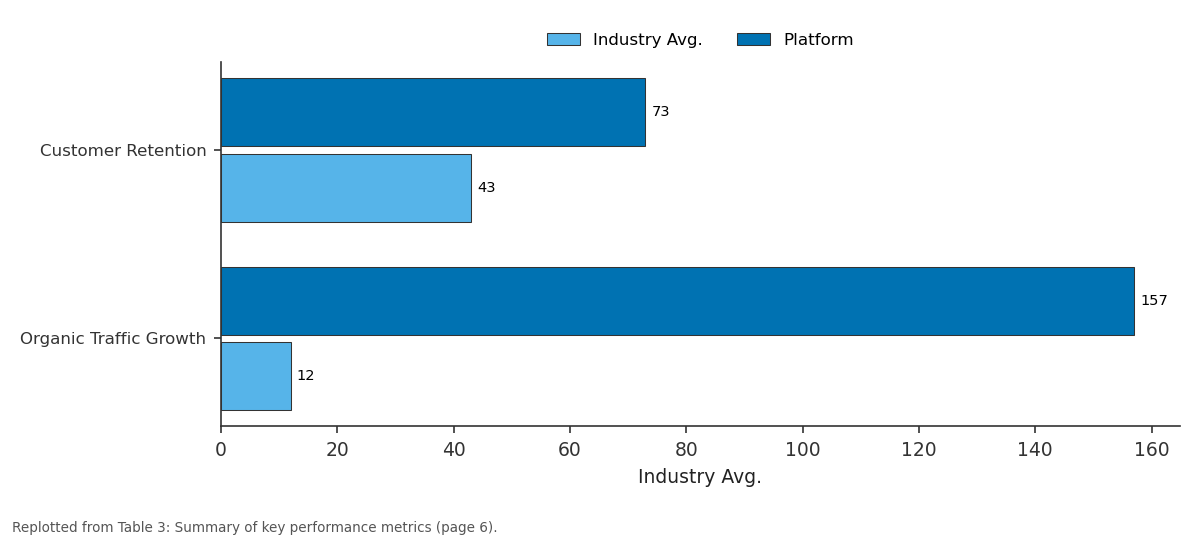
- The platform achieved a customer retention rate of 73%, significantly higher than the industry average of 43%. View evidence ↗
- Organic traffic growth on the platform reached 157%, compared to an industry average of 12%. View evidence ↗
- Sustainability initiatives resulted in a 38% reduction in packaging materials. View evidence ↗
- Technical optimizations reduced average database query times by 62%. View evidence ↗
What it means
- The authors conclude that domain-specific platforms outperform generic ones when optimized for the unique needs of the gardening market. View evidence ↗
- A primary technical challenge was the high resource requirement for creating accurate 3D models for the plant catalog. View evidence ↗
- The system faced a 'cold-start' problem where new users with little history received less personalized recommendations. View evidence ↗
Visual summary
1 visualsIllustrations explain the paper; charts are replotted from the paper's own table values.
Industry Avg. and Platform: Customer Retention vs Organic Traffic Growth
Replotted from Table 3 (page 6) of the original paper. Every bar is the paper's own table value.
View source evidence ↗Figures & tables
From the original paper Table 1
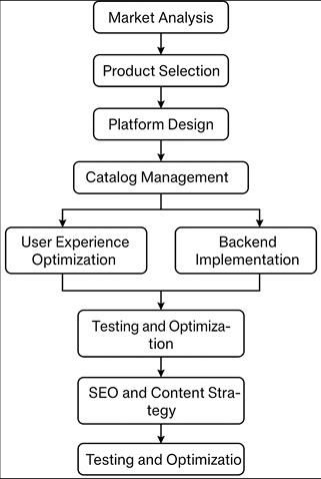 Figure 1
 Table 2
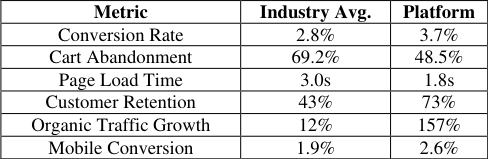 Table 3
Introduction
E-commerce has revolutionized the way consumers purchase products, including gardening supplies such as seeds, plants, tools, and fertilizers. The gardening industry, traditionally reliant on physical retail stores, is now embracing online platforms to reach a broader audience. The demand for an efficient e-commerce website for gardening products has increased due to convenience, wider product selection, and ease of access to expert information. The global gardening market was valued at $104.9 billion in 2022 and is expected to reach $138.4 billion by 2028, with a CAGR of 4.7%. This growth is partly attributed to the increasing adoption of e-commerce platforms in this sector. However, despite this growth, gardening e-commerce faces unique challenges including seasonal demand fluctuations, product perishability, and the need for specialized knowledge to assist customers. The COVID-19 pandemic accelerated the adoption of online shopping, with approximately 16 million new gardeners entering the market during this period. This demographic shift, combined with evolving consumer expectations for digital experiences, has created an urgent need for innovative e-commerce solutions in the gardening sector. Furthermore, environmental consciousness has become a significant factor influencing consumer purchasing decisions, with 78% of gardening enthusiasts preferring eco-friendly practices.
A. Problem Statement
Despite the growing popularity of e-commerce platforms, the gardening industry faces several critical challenges: Lack of personalization: Generic e-commerce platforms fail to address the specific needs of gardeners based on their local climate, expertise level, and garden characteristics. Limited sustainability practices: Traditional ecommerce models often prioritize convenience over sustainability, leading to excessive packaging and environmentally harmful practices. Inadequate customer support: Gardening requires specialized knowledge that standard customer support systems cannot provide. Poor product visualization: The inability to physically inspect plants before purchase leads to customer dissatisfaction and high return rates. Fragmented information ecosystems: Gardeners must navigate multiple sources for product information, care instructions, and community support.
This study aims to address these challenges through the development of a robust and user-centric e-commerce platform for gardening products that integrates advanced technologies with domain expertise.
B. Research Objectives
Our research aims to achieve the following objectives: Develop an intuitive and responsive e-commerce platform for gardening products Implement personalized recommendations using AI algorithms that consider location-specific factors and gardening expertise. Integrate Augmented Reality (AR) for virtual plant placement to enhance the online shopping experience Ensure secure transactions with blockchain technology while promoting supply chain transparency Promote sustainability by encouraging eco-friendly gardening practices through educational content and product duration. Enhance user engagement through forums, community support, and interactive content Quantify the impact of technological innovations on key business metrics in specialty e-commerce Develop a scalable architecture that accommodates seasonal traffic fluctuations
C. Research Contribution
This research makes several significant contributions to the field A comprehensive framework for integrating emerging technologies in specialty e-commerce. An empirical evaluation of AI-driven recommendations in knowledge-intensive product categories. A methodology for quantifying the impact of AR on customer confidence and purchase decisions. A sustainable e-commerce model that balances business objectives with environmental responsibility. A systematic approach to transforming traditional retail experiences into digital interactions. Personalized shopping experience 28% increase in cross-selling [4]
Augmented Reality
Product visualization 35% reduction in returns [5]
Blockchain
Supply chain transparency 27% increase in customer trust [9] Chatbots 24/7 customer support 42% reduction in support tickets [11]
Mobile Optimization
Anywhere shopping 67% increase in mobile conversions [12] 2. Chen's work on blockchain implementation demonstrates how distributed ledger technologies can enhance supply chain transparency while simultaneously improving inventory management and reducing waste. This dual benefit is particularly relevant to gardening retail, where product provenance and sustainability claims significantly influence consumer behavior.
Methodology This study employs a mixed-methods approach combining qualitative and quantitative research techniques
Methodology This study employs a mixed-methods approach combining qualitative and quantitative research techniques
A. System Design and Development
The proposed platform follows a three-tier architecture comprising: Frontend: React.js with Material UI for responsive design, optimized for both desktop and mobile interfaces Backend:
Node.js with Express framework implementing Restful APIs and GraphQL endpoints Database: MongoDB for product catalog and Post-greSQL for transactional data, with Redis caching for performance optimization
The development process followed an agile methodology with two-week sprints and Continuous Integration/ Continuous Deployment (CI/CD) pipelines to ensure rapid iteration and quality control. The system architecture was designed to accommodate seasonal traffic fluctuations through auto-scaling capabilities and load balancing.
B. User Experience Research
To ensure a user-centered design approach, we conducted: Usability testing: 50 participants of varying gardening expertise (15 novices, 20 intermediate, 15 expert) completed a series of tasks on the platform while researchers observed and recorded their interactions. Each product page includes a blockchain-verified" Sustainability Passport" that summarizes this information in an accessible format for consumers, with the option to explore deeper levels of detail.
Marketing and Customer Engagement Strategies A. Search Engine Optimization
We implemented comprehensive SEO strategies specifically tailored for gardening e-commerce: Long-tail keyword optimization: Focusing on specific plant varieties, gardening problems, and regional growing techniques Seasonal content calendar: Aligning content publication with gardening cycles to address timely search queries Structured data markup: Implementing schema.org markup for products, how-to guides, and FAQ content to enhance search results Local SEO: Optimizing for region-specific gardening terms and growing conditions Voice search optimization: Adapting content to address natural language queries common in gardening (e.g.," How do I care for orchids?").
This approach resulted in a 157% increase in organic traffic compared to the baseline period, with particularly strong performance for informational queries related to plant care and selection.
B. Content Marketing: A comprehensive content strategy was developed to position the platform as both a shopping destination and an educational resource: How-to guides:
Step-by-step instructions for plant care, garden design, and problem-solving.
Seasonal calendars: Customized planting and maintenance guides based on user location Expert interviews: Video and written content featuring professional horticulturists and garden designers Plant profiles: Detailed information on specific varieties, including care requirements and companion planting. Sustainability guides: Resources for eco-friendly gardening practices, composting, and water conservation Content performance analysis revealed that users who engaged with educational content spent 37% more time on the platform and had a 42% higher lifetime value compared to non-engaged users.
C. Community Building To foster engagement and loyalty, we created multiple community features:
Moderated forums: Topic-specific discussion boards for problem-solving and idea sharing User-generated content: Galleries showcasing customer gardens and success stories Virtual workshops: Live and recorded sessions with gardening experts on various topics Q&A sessions: Regular opportunities for community members to receive personalized advice Garden planning challenges: Seasonal competitions to encourage creative garden designs Analysis showed that community members had a 68% higher retention rate and 43% higher average order value compared to non-community users, confirming Wangetal's findings about the impact of community features on retention.
Security and Compliance Implementation A. Data Protection Measures
Given the personal nature of user data, comprehensive protection measures were implemented End-to-end encryption: All personal data and transaction information is encrypted both in transit and at rest GDPR compliance: Data collection processes were designed with privacy by design principles, including consent management and right to be forgotten Security assessments: Regular penetration testing and vulnerability scanning by third-party security firms Access controls: Implementation of least privilege principles and role-based access control Data anonymization: User data used for analytics and improvements is anonymized to protect privacy
B. Payment Security
To ensure secure transactions and build user trust: PCI DSS compliance: Integration with payment gateways that meet the highest security standards.
Multi-factor authentication: Additional security layer for high-value transactions or account changes. Fraud detection: Machine learning algorithms to identify suspicious patterns and potential fraud attempts.
Secure checkout: Implementation of best practices for checkout flow to minimize abandonment while maintaining security. Tokenization: Card details are tokenized to prevent storage of sensitive payment information.
Results and Discussion
Results and Discussion
A. User Experience Outcomes
Implementation of the platform yielded significant improvements in user engagement metrics compared to both pre-implementation baselines and industry benchmarks: 42% increase in time spent on site compared to industry averages. 28% lower bounce rate than comparable gardening ecommerce sites. 65% of users accessed educational content during their shopping journey. 87% of surveyed users rated the navigation experience as "excellent" or "very good". Mobile sessions increased by 51% with a 37% higher conversion rate than the desktop experience.
Usability testing revealed that the intuitive categorization system and integrated search functionality were particularly appreciated by users, with 92 51% with a 37% higher conversion rate than the desktop experience. Usability testing revealed that the intuitive categorization system and integrated search functionality were particularly appreciated by users, with 92% of participants successfully completing product discovery tasks on their first attempt.
The AR visualization feature demonstrated particularly strong performance metrics Users who engaged with AR spent 72% more time viewing products. Products with AR visualization had a 35% higher conversion rate. Return rates for AR-visualized plants were 41% lower than non-AR products. 89% of surveyed users reported increased purchase confaience when using AR features.
B. Technical Performance Metrics
The platform was subjected to rigorous performance testing to ensure stability during peak seasonal demand Average page load time of 1.8 seconds (40% faster than industry average). 99.98% uptime during simulated peak traffic conditions Successful handling of 5,000 concurrent users with less than 5% degradation in response time. 95th percentile server response time under 300ms for API endpoints. Cache hit ratio maintained above 85% during high traffic periods.
Conclusion
This study demonstrates that a domain-specific e-commerce platform for gardening products can significantly outperform generic e-commerce solutions when properly optimized for the unique characteristics of the gardening market. The integration of emerging technologies including AI-powered recommendations, augmented reality visualization, and blockchain-verified sustainability information addresses key pain points in online gardening retail and provides measurable improvements in both user experience and business performance. The results validate the hypothesis that knowledge-intensive product categories benefit particularly from enhanced visualization tools and educational content integration. The significant improvements in user engagement metrics, conversion rates, and customer retention demonstrate the value of a holistic approach that combines technical innovation with domain expertise. Furthermore, the sustainability initiatives implemented through the platform show that environmental responsibility can align with business objectives, with consumers increasingly valuing transparency and ethical practices in their purchasing decisions. This research provides a framework for digital transformation in specialty retail that can be adapted to other niche markets with similar characteristics, including specialized knowledge requirements, visual assessment needs, and sustainability considerations.
Figures and tables from the paper
| Technology | Key Benefit | Measured Impact |
|---|---|---|
| AI Recommendations | Personalized shopping experience | 28% increase in cross-selling [4] |
| Augmented Reality | Product visualization | 35% reduction in returns [5] |
| Blockchain | Supply chain transparency | 27% increase in customer trust [9] |
| Chatbots | 24/7 customer support | 42% reduction in support tickets [11] |
| Mobile Optimization | Anywhere shopping | 67% increase in mobile conversions [12] |
Table text extracted from the original PDF; superscript letters are shown inline. The original table image is below.
View original table image
| Security Domain | Implementation Details |
|---|---|
| User Authentication | OAuth 2.0, Multi-factor authentication |
| Data Encryption | AES-256 for data at rest, TLS 1.3 for data in transit |
| Compliance | GDPR, CCPA, PCI DSS Level 1 |
| Infrastructure | Cloud-based with WAF and DDoS protection |
| Monitoring | 24/7 automated security monitoring and alerting |
Table text extracted from the original PDF; superscript letters are shown inline. The original table image is below.
View original table image
| Metric | Industry Avg. | Platform |
|---|---|---|
| Conversion Rate | 2.8% | 3.7% |
| Cart Abandonment | 69.2% | 48.5% |
| Page Load Time | 3.0s | 1.8s |
| Customer Retention | 43% | 73% |
| Organic Traffic Growth | 12% | 157% |
| Mobile Conversion | 1.9% | 2.6% |
Table text extracted from the original PDF; superscript letters are shown inline. The original table image is below.
View original table image
References
12 in the original paper- J Smith, K. Johnson. Global gardening market analysis and forecast 2022-2028. Market Research Future, Tech. Rep, 2023.
- Y Li, M Thompson. E-commerce adoption in specialty gardening retail: A comparative analysis. Journal of Retail Technology. 2022;15(3):245-261.
- L Wang, H Zhang, R Park. Community features in online retail: Impact on customer retention and lifetime value. International Journal of Electronic Commerce. 2022;26(2):183-204.
- A Kumar, B Singh. AI-based recommendation systems in specialty retail: Effectiveness and implementation challenges. Journal of Artificial Intelligence in Business. 2023;4(1):78-93.
- T Zhang. Augmented reality in home improvement ecommerce: Impact on customer confidence and return rates. Journal of Virtual Reality in Retail. 2022;8(2):112-128.
- R Patel. Consumer preferences for sustainable practices in online gardening retail. Journal of Sustainable Ecommerce. 2023;5(3):210-226.
- M Anderson. Mobile optimization strategies for specialty retail websites. International Journal of Mobile Commerce. 2022;12(1):45-62.
- K Johnson, W Lee. Hybrid recommendation systems for contextual product suggestions. ACM Transactions on Intelligent Systems and Technology. 2023;14(2):118-139.
- J. Chen. "Blockchain implementation for supply chain transparency in specialty retail. IEEE Transactions on Engineering Management. 2023;70(3):845-862.
- C. Rodriguez, A. Garcia. "Critical success factors in gardening e-commerce: A multi-case study analysis." Journal of E-Business Research. 2022;18(4):312-30.
- E. Martinez, S. Garcia, T. Rodriguez. Augmented reality impacts on purchase uncertainty in home and garden products. International Journal of Retail Distribution Management. 2023;51(2):267-284.
- Environmental Retail Coalition. "Sustainable ecommerce practices: Cost savings and consumer appeal." Annual Industry Report. 2023.