
Research article · 2025 · Full text
International Journal of Agriculture and Food ScienceMarketing and Cultivation Challenges of Bt Cotton and SAU Cotton Varieties in Tamil Nadu
Volume 7(6) · Pages 01–05 · DOI: 10.33545/2664844x.2025.v7.i6a.430 ↗
Research areasAgricultural Economics and Practices
Abstract
Author-writtenThe cultivation of cotton in Tamil Nadu has evolved significantly with the adoption of Bt cotton and the continued promotion of State Agricultural University (SAU) cotton varieties. This article explores and compares the key marketing and cultivation challenges faced by farmers cultivating these two types of cotton. Using primary data collected from selected districts and analyzed with statistical tools such as the Friedman test, the study highlights issues such as pest resistance, input cost burden, seed accessibility, and market volatility. The results indicate that while Bt cotton offers yield advantages, it also introduces challenges related to sustainability and input dependency. SAU varieties, though eco-friendlier and more cost-effective, lack competitive market incentives. The study concludes with recommendations for policy interventions aimed at strengthening farmer support systems, enhancing market access, and promoting balanced varietal adoption in cotton farming.
Summary
Source-checkedPlain-language reading of the full paper, prepared with AI and checked against the text. Each point links to the authors' own words.
Why it matters
- Cotton is an economically critical fiber crop in India, supporting more than 6 million farmers and numerous workers in the garment and textile sectors. View evidence ↗
- Bt cotton was introduced to combat bollworms using a protein from Bacillus thuringiensis, leading to its popularity through reduced pesticide needs and increased yields. View evidence ↗
- State Agricultural Universities (SAUs) develop non-GM cotton varieties that are tailored to local conditions, focusing on lower seed costs and ecological sustainability. View evidence ↗
The question
- The study aims to analyze and compare the cultivation and marketing challenges faced by farmers in Tamil Nadu who adopt SAU cotton varieties versus Bt cotton. View evidence ↗
What they did
- The research was conducted in the Virudhunagar and Perambalur districts of Tamil Nadu, chosen for their significance in cotton farming. View evidence ↗
- The sample consisted of 60 farmers, with 15 Bt and 15 SAU cotton farmers surveyed in each of the two districts. View evidence ↗
- Primary data was collected through face-to-face structured interviews with the participating farmers. View evidence ↗
- The researchers used the Friedman non-parametric test to analyze the data for the first objective. View evidence ↗
What they found
- For Bt cotton farmers, labor shortage was the most significant cultivation challenge, with a mean rank of 2.67. View evidence ↗
- SAU cotton farmers identified high input costs as their primary cultivation challenge, recording a mean rank of 2.27. View evidence ↗
- The difference in cultivation challenges between the two groups was statistically significant, with a p-value of 0.040. View evidence ↗
- The most significant marketing challenge for Bt cotton farmers was the lack of grading facilities, with a mean rank of 4.73. View evidence ↗
- SAU cotton farmers also identified the lack of grading as their top marketing challenge, with a mean rank of 4.90. View evidence ↗
- Marketing challenges were found to be statistically significant for both Bt and SAU cotton farmers (p = 0.000). View evidence ↗
What it means
- The authors conclude that the common struggle with grading facilities points to structural inefficiencies in the cotton value chain that limit farmers' income and bargaining power. View evidence ↗
- The authors recommend policy interventions to improve market access, strengthen support systems for farmers, and encourage a balanced adoption of different cotton varieties. View evidence ↗
Figures & tables
From the original paper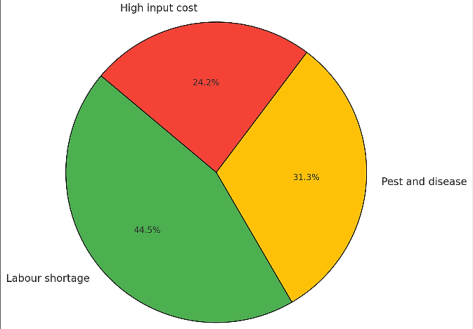 Figure 1
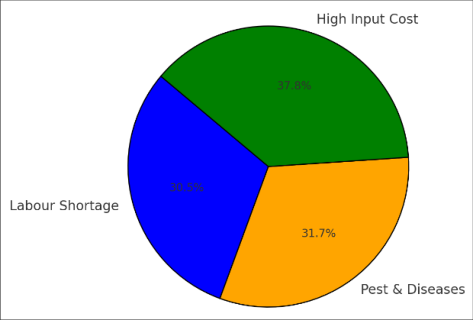 Figure 2
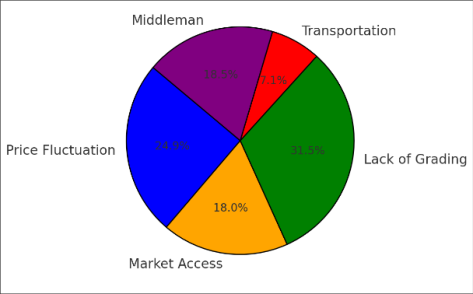 Figure 3
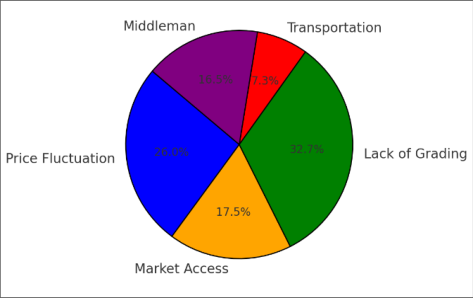 Figure 4
Introduction Importance of Cotton in Indian Agriculture
Cotton is a vital fiber crop in India and holds immense economic importance. It supports the livelihoods of over 6 million farmers and countless workers in the textile and garment industries. India ranks as the world's largest cotton producer and the second-largest exporter, underscoring its influence in global textile supply chains. Tamil Nadu, although not a major producer, plays a significant role in processing due to its dense cluster of textile mills, making it a hub for cotton-based industries.
Emergence of Bt Cotton and SAU Varieties
The introduction of Bt cotton in India in 2002 brought a major shift in cotton cultivation. Bt cotton contains a gene from the bacterium Bacillus thuringiensis, which produces a protein toxic to bollworms, a major pest. It gained popularity due to higher yields and reduced pesticide use. Parallel to this, State Agricultural Universities (SAUs), including Tamil Nadu Agricultural University (TNAU), continued developing high-yielding, region-specific non-GM (non-genetically modified) varieties tailored to local agro-climatic conditions. These varieties emphasize ecological sustainability and seed cost reduction.
Yield and Profitability Differences
Studies and field evidence indicate that Bt cotton tends to offer better yields-sometimes up to 20-30% more than SAU varieties-primarily due to its pest resistance. However, SAU varieties can be cost-effective in the long run due to lower input costs. Profitability, therefore, hinges on a combination of yield, input cost, and sustainability. In rainfed areas, where resources are limited, some farmers prefer SAU varieties for their resilience and affordability.
Sustainability and Environmental Concerns
SAU cotton varieties are often viewed as more sustainable due to their compatibility with organic and low-input farming systems. They promote biodiversity, reduce chemical load on the soil, and pose no risk of genetic contamination. On the other hand, long-term of Bt cotton has raised concerns about soil fertility depletion, monoculture practices, and rising resistance in bollworm populations. These factors influence farmers' long-term preference for either variety.
Marketing Constraints and Price Fluctuations
One of the most pressing issues for both Bt and SAU cotton growers is market instability. Cotton prices fluctuate widely due to changing global demand, international trade policies, and the absence of an effective Minimum Support Price (MSP) procurement mechanism in many areas. SAU varieties are often under-marketed and poorly branded, making it hard for farmers to secure competitive prices. Bt cotton, though more popular, still faces price uncertainties and market dominance by private seed companies and traders.
Role of Middlemen and Lack of Procurement Support
In the absence of robust marketing channels or farmerproducer organizations (FPOs), cotton growers often depend on middlemen, who exploit the situation by offering low prices. Procurement by government agencies like Cotton Corporation of India (CCI) is either irregular or insufficient in Tamil Nadu, leading to distress sales. This disproportionately affects SAU cotton farmers, who lack visibility and face difficulties in accessing wider markets.
Access to Credit and Institutional Support
High input costs in Bt cotton cultivation often require farmers to borrow from informal sources at high interest rates. While formal credit exists, not all farmers qualify due to lack of land titles or collateral. SAU varieties, being lower in input demand, may reduce financial risk, but limited promotional support, extension outreach, and creditlinked incentives hinder their widespread adoption.
Seed Availability and Farmer Awareness
While Bt cotton seeds are readily available in the market, they are expensive and controlled by a few large companies. In contrast, SAU seeds are distributed by government agencies or university research stations, but their availability is seasonal and limited. Lack of awareness among farmers regarding the benefits and performance of SAU varieties adds to the challenge, reducing adoption rates despite their potential advantages.
Objectives
The main objective of the present study is to analyse the Impact of Cotton Varieties Released by SAU's Vs Bt Cotton in Tamil Nadu. The specific objectives are;
To analyze the marketing and cultivation challenges faced by farmers in adopting SAU's cotton variety compared to Bt cotton.
Null Hypothesis (Ho):
There is no significant difference in the marketing and cultivation challenges faced by farmers in adopting SAU's cotton variety compared to Bt cotton.
Review of Literature Economic Benefits and Profitability of Bt Cotton
Gayathri & Karunakaran (2022) [7] demonstrated that Bt cotton technology improved productivity and profitability in Tamil Nadu and Maharashtra. The study found that Bt cotton farmers had higher technical efficiency (94-97%) compared to non-Bt farmers (74-76%). Resource use efficiency was suboptimal, indicating the potential for higher yields with better resource management. The study recommends extension services and training to enhance farmer's skills and improve efficiency. Tokel et al., (2020) [24] examined the economic impacts of Bt cotton technology. The study highlighted how Bt cotton increased yields, reduced pesticide use, and improved farmer's profitability. The authors also discussed the sustainability challenges and the potential for resistance development among pests. Ibrahim et al., (2020) [8] conducted a study on the economic and environmental effects of Bt cotton adoption. Their findings highlighted the increased profitability for farmers but raised concerns over soil health degradation and pest resistance.
Environmental and Pest Control Effects
Arends et al., (2021) [3] investigated the relationship between landscape composition and resistance selection in Bt cotton systems. The study found that the abundance of maize, cotton, and soybean influenced the effectiveness of resistance management strategies. Kranthi (2020) [10] reviewed the long-term performance of Bt cotton in India, noting the stagnation in yield gains and the emergence of resistance issues. The study emphasized the need for integrated pest management practices to sustain the benefits of Bt cotton. Arshad et al., (2015) [4] compared the population dynamics of insect predators and parasitoids between Bt and non-Bt cotton fields in Pakistan. Field trials revealed no significant difference in the abundance of beneficial insects, concluding that Bt cotton does not negatively impact biological control agents under field conditions. Little et al., (2017) [12] evaluated the effectiveness of microbial and chemical insecticides for bollworm control on Bt and non-Bt cotton in the U.S. The study found that supplemental insecticide applications were effective on non-Bt cotton but unnecessary on Bt cotton due to lower bollworm densities (Bhopala UD et al, 2023) [26] .
Sustainability Challenges
Riaz et al., (2020) [8] investigated the effects of Bt and non-Bt cotton mulches on soil properties, weed dynamics, and productivity of subsequent winter crops. The study found that non-Bt mulches enhanced soil porosity and organic matter, resulting in better crop performance compared to Bt mulches, which negatively impacted soil properties due to the release of Bt toxins. Explored the morpho-physiological and proteomic response of Bt and non-Bt cotton to drought stress. Their findings demonstrated that Bt cotton exhibited enhanced drought tolerance, attributed to improved photosynthesis, water retention, and antioxidant activity compared to non-Bt varieties. Little et al., (2017) [12] highlighted the adoption of Bt cotton has significantly increased cultivation area, with a 42% rise by 2017-18, due to its effectiveness in controlling bollworms, which caused 20-66% yield losses in non-Bt cotton. It reduced insecticide use and improved productivity. However, the misuse of illegal or low-tolerance Bt cultivars by farmers has led to crop damage and increased resistance in secondary pests. This threatens the long-term sustainability of Bt cotton, especially in developing countries. Effective policies and integrated pest management practices are essential to address these challenges.
Design of the Study Selection of Study Area
The study was conducted in the districts of Virudhunagar and Perambalur, selected purposively due to their prominent role in cotton cultivation in Tamil Nadu. Virudhunagar records a cultivated area of 19,131 hectares, while Perambalur accounts for 12,629 hectares.
Data Collection Methods
Primary Data: Gathered using a structured interview schedule through face-to-face interactions with selected farmers. Secondary Data: Sourced from official publications such as government reports, TNAU bulletins, scholarly journals, and statistical records relevant to cotton cultivation. Perambalur offers a diverse cotton cultivation landscape, with farmers growing both, Bt cotton (genetically modified for pest resistance), SAU-released cotton varieties (conventionally bred, non-GM). This diversity provides an ideal setting for comparative economic analysis of both cotton types under similar agro-climatic conditions.
Sample Size
Sample Size
Objective
To analyze the marketing and cultivation challenges faced by farmers in adopting SAU's cotton variety compared to Bt cotton.
Interpretation
Both Bt and SAU's cotton farmers face grading issues as the most significant marketing challenge. Transportation issues are ranked the lowest.
Conclusion Marketing and Cultivation Challenges
The study also examined the marketing and cultivation challenges faced by farmers in adopting Bt and SAU's cotton varieties using the Friedman Non-Parametric Test.
The results revealed statistically significant differences in the severity of challenges encountered by the two groups.
In terms of cultivation challenges, Bt cotton farmers reported labor shortage as the most significant issue, with a mean rank of 2.67. This was followed by pest and disease problems (mean rank of 1.88), while high input costs were ranked the lowest (mean rank of 1.45). The statistically significant p-value of 0.040 indicated that the differences were significant. The prevalence of labor shortages among Bt cotton farmers may be due to the larger-scale cultivation of Bt cotton, which requires more labor during harvesting and field management.
Conversely, SAU's cotton farmers ranked high input costs as their most significant challenge, with a mean rank of 2.27. This was followed by pest and disease problems (mean rank of 1.90), while labor shortage was ranked the lowest (mean rank of 1.83). The p-value of 0.040 confirmed the statistical significance of the differences. The higher input costs for SAU's cotton farmers reflect their greater expenditure on pesticides and fertilizers, which reduces their profitability.
In terms of marketing challenges, both Bt and SAU's cotton farmers identified lack of grading facilities as the most significant issue. Bt cotton farmers ranked lack of grading highest, with a mean rank of 4.73, followed by price fluctuation (mean rank of 3.73), middleman influence (mean rank of 2.77), and market access (mean rank of 2.70).
Transportation was ranked the lowest, with a mean score of 1.07. The statistically significant p-value of 0.000 indicates that these challenges significantly affect Bt cotton farmers.
Similarly, SAU's cotton farmers ranked lack of grading as their most significant marketing challenge, with a mean rank of 4.90, followed by price fluctuation (3.90), middleman influence (2.63), and market access (2.47). Transportation was again ranked the lowest, with a mean score of 1.10. The p-value of 0.000 confirmed the statistical significance of the challenges faced by SAU's cotton farmers.
The results indicate that while both Bt and SAU's cotton farmers face significant marketing and cultivation challenges, they differ in severity. Bt cotton farmers encounter more labor shortage issues, while SAU's cotton farmers face higher input costs. The shared marketing challenge of lack of grading facilities highlights structural inefficiencies in the cotton value chain, which reduce farmers' bargaining power and income potential.
Figures and tables from the paper
References
28 in the original paper- Saravanan S, Mohanasundaram V. Development and adoption of Bt cotton in India: economic, environmental and health issues. 2016. p. 1-19.
- Orphal J. Comparative analysis of the economics of Bt and non-Bt cotton production. Inst. für Gartenbauökonomie. 2005. p. 1-7.
- Arends B, Lu Y, Xu W, Jiang Y, Wu K. Effectiveness of the natural resistance management refuge for Btcotton is dominated by local abundance of soybean and maize. Sci Rep. 2021;11(1):17601.
- Arshad M, Suhail A, Asghar M, Gogi MD, Arif MJ, Hafeez F, et al. Incidence of insect predators and parasitoids on transgenic Bt cotton in comparison to non-Bt cotton varieties. Pak J Zool. 2015;47(3):823839.
- Ashok KR, Uma K, Prahadeeswaran M, Jeyanthi H. Economic and environmental impact of Bt cotton in India. Indian J Agric Econ. 2012;67(3):1-6.
- Braswell LR, Adamczyk JJ, Perera OP, Gore J, Greene JK, Abel CA. Development and dispersal of Helicoverpa zea (Lepidoptera: Noctuidae) on non-Bt and Bt pyramided cotton. Environ Entomol. 2019;48(2):465-477.
- Gayathri R, Karunakaran KR. Impact of Bt cotton technology in an Indian cotton production system: a comparative econometric analysis between Maharashtra and Tamil Nadu. J Appl Nat Sci. 2022;14(1):1-6.
- Ibrahim M, Khan S, Riaz L, Bano Q, Ahmad N, Rehman F. Studies on correlations between soil International Journal of Agriculture and Food Science https://www.agriculturaljournals.com chemistry and bacterial population in rhizosphere of Bt and non-Bt cotton and characterization of rhizobacteria. J Taibah Univ Sci. 2020;14(1):1463-1474.
- Kathage J, Qaim M. Economic impacts and impact dynamics of Bt (Bacillus thuringiensis) cotton in India. Proc Natl Acad Sci USA. 2012;109(29):11652-11656.
- Kranthi KR, Stone GD. Long-term impacts of Bt cotton in India. Nat Plants. 2020;6(3):188-196.
- Li X, Xu W, He K, Wang Z, Liu H, Bai S, et al. Comparison of the physiological characteristics of transgenic insect-resistant cotton and conventional lines. Sci Rep. 2015;5:8739.
- Little NS, Leonard BR, Gore J, Cook DR, Perera OP, Abel CA, et al. Effectiveness of microbial and chemical insecticides for supplemental control of bollworm on Bt and non-Bt cottons. J Econ Entomol. 2017;110(3):1039-1051.
- Lu Y, Wu S, Jiang Y, He K, Wu K. Bt cotton area contraction drives regional pest resurgence, crop loss, and pesticide use. Plant Biotechnol J. 2022;20(2):390398.
- Mallesh M, Sravanthy C. Seasonal diversity and abundance of insect pests in Bt and non-Bt cotton fields. Uttar Pradesh J Zool. 2021;42(22):88-96.
- Niranjan N, Udikeri SS. Incidence pattern of pink bollworm, Pectinophora gossypiella (Saund.) on different event Bt and non-Bt cottons. J Farm Sci. 2023;36(2):168-171.
- Noonari S, Kalwar GY, Jamroo AS. Comparative economics analysis of the Bt cotton v/s conventional cotton production in Khairpur District, Sindh, Pakistan. Int J Bus Econ Res. 2015;4(3):72-85.
- Sadashivappa P. Socio-economic impacts of Bt cotton adoption in India: evidence from panel data. 2015. p. 193-208.
- Rani SU, Selvaraj G. Bt cotton in Tamil Nadu: an evaluation of farmers' experiences. Indian Res J Ext Educ. 2013;13(3):64-70.
- Marral R, Waseem M, Abbas T, Hafeez F, Rehman A. The influence of transgenic (Bt) and non-transgenic (non-Bt) cotton mulches on weed dynamics, soil properties and productivity of different winter crops. PLoS One. 2020;15(9):e0238716.
- Samak ANR, Patil MA, Kadam TA, Mulge R. Genetic diversity analysis in Bt introgressed and non-Bt lines of upland cotton (Gossypium hirsutum L.). Electron J Plant Breed. 2021;12(4):1069-1074.
- Sankaranarayanan K, Solaimalai A, Kumar SR, Subramanian A, Rajendran K. Evaluation of Bt (Bacillus thuringiensis) and non-Bt cotton (Gossypium hirsutum) hybrids under varied planting time. Indian J Agron. 2011;56(1):68-73.
- Singh S. Transgenic cotton-its adoption, threats and challenges ahead: a review. J Entomol Zool Stud. 2018;6(5):1989-1997.
- Subramanian A. Sustainable agriculture and GM crops: the case of Bt cotton impact in Ballari district of India. Front Plant Sci. 2023;14:1102395.
- Tokel D, Genc BN, Ozyigit II. Economic impacts of Bt (Bacillus thuringiensis) cotton. J Nat Fibers. 2022;19(12):4622-4639.
- Wan P, Zhang Y, Wu K, Huang M, Yu C, Wu Y. Hybridizing transgenic Bt cotton with non-Bt cotton counters resistance in pink bollworm. Proc Natl Acad Sci USA. 2017;114(21):5413-5418.
- Bhopala UD, Dhandhalya MG, Rathod RB. Spatiotemporal dynamics in cotton area, production and productivity: A worldwide scenario. Int J Stat Appl Math 2023;8(6):183-186. DOI: 10.22271/maths.2023.v8.i6b.1540
- Wang L, Ma Y, Wang L, Wang L, Huang M, Liu Y, et al. Transposon insertion causes cadherin mis-splicing and confers resistance to Bt cotton in pink bollworm from China. Sci Rep. 2019;9(1):7479.
- Zeilinger AR, Olson DM, Andow DA. Competitive release and outbreaks of non-target pests associated with transgenic Bt cotton. Ecol Appl. 2016;26(4):10471054.