
Research article · 2025 · Full text
International Journal of Biology SciencesFormulation & evaluation of herbal face mask
Volume 7(5) · Pages 41–44 · DOI: 10.33545/26649926.2025.v7.i5a.344 ↗
Research areasComplementary and Alternative Medicine Studies
Abstract
Author-writtenThe present study focuses on formulating and evaluating an herbal face mask utilizing natural ingredients known for their skincare benefits, including neem powder, aloe vera, glycerin, xanthan gum, lemon oil, and vitamin E. The primary objective was to develop a cost-effective, eco-friendly, and efficacious topical skincare product that aligns with the increasing consumer demand for herbal cosmetics. Three formulations (F1, F2, F3) were prepared using varying concentrations of active ingredients and evaluated based on physical appearance, pH, spreadability, homogeneity, irritancy, and stability under different storage conditions. Among the three, formulation F2 demonstrated superior performance, showing optimal pH (4.9), highest spreadability (5.6 cm), excellent texture, and stability without phase separation. Using Eudragit polymer as a film-forming agent contributed to the smoothness and adhesion of the mask, while aloe vera and neem provided hydration, anti-inflammatory, and antimicrobial properties. The results indicate that the herbal face mask, particularly formulation F2, is a promising alternative to chemical-based skincare products, offering natural therapeutic benefits along with consumer safety and acceptability. This formulation holds potential for large-scale production and commercialization.
Summary
Source-checkedPlain-language reading of the full paper, prepared with AI and checked against the text. Each point links to the authors' own words.
Why it matters
- Herbal cosmetic formulations are gaining popularity due to their effectiveness and lower risk of adverse reactions compared to chemical alternatives. View evidence ↗
- Maintaining the health of the skin is essential for overall well-being because it serves as the body's primary protective barrier against microbes. View evidence ↗
- Herbal sheet masks are used to hydrate the skin, remove impurities and excess oils, and improve the appearance of pores. View evidence ↗
The question
- The study aimed to create an eco-friendly, cost-effective, and effective herbal topical skincare product to meet consumer demand. View evidence ↗
What they did
- The researchers developed three different formulations (F1, F2, and F3) by varying the concentrations of active ingredients. View evidence ↗
- The mask ingredients included neem powder, aloe vera gel, Eudragit polymer, ethanol, glycerin, xanthan gum, vitamin E, lemon essential oil, and methyl paraben. View evidence ↗
- The formulations were evaluated for their pH, spreadability, homogeneity, irritancy, physical appearance, and stability during storage. View evidence ↗
- Stability was tested by storing the masks for one month at room temperature, in a refrigerator, and at 45 °C. View evidence ↗
What they found
- The pH levels of the formulations ranged from 4.7 (F1) to 5.0 (F3), which were considered acceptable. View evidence ↗
- Spreadability measurements ranged from 5.1 for F1 to 5.7 for F3, all falling within the acceptable skin range. View evidence ↗
- Formulation F2 was identified as the most balanced and effective, though there is a discrepancy between the text (pH 5.0, spreadability 5.7 cm) and the summary table (pH 4.9, spreadability 5.6). View evidence ↗
- F2 and F3 both exhibited a smooth texture, whereas F1 was found to be rigid. View evidence ↗
- The masks remained stable without significant changes to their pH, appearance, or texture during the one-month storage study. View evidence ↗
- F3 was considered less attractive to consumers than F2 due to a darker color and lower spreadability (reported as 5.2 cm in text, though 5.7 in the table). View evidence ↗
What it means
- The authors conclude that the herbal face mask is a viable alternative to chemical masks and has the potential for large-scale commercial production. View evidence ↗
Visual summary
2 visualsIllustrations explain the paper; charts are replotted from the paper's own table values.
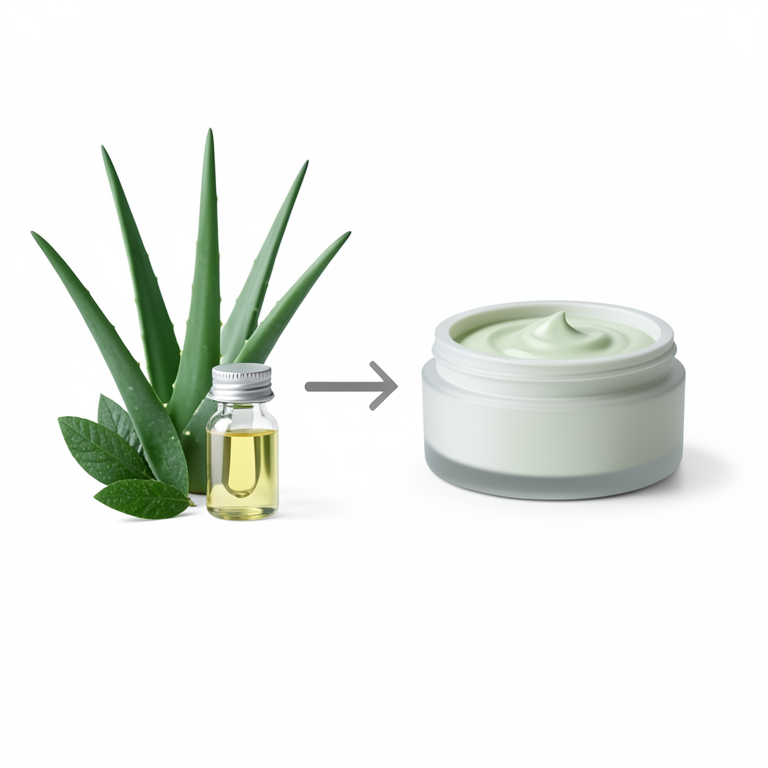
Herbal Mask Components
AI-generated conceptual illustration (herbal face mask ingredients and final product). It explains the idea and does not show study data.
View source evidence ↗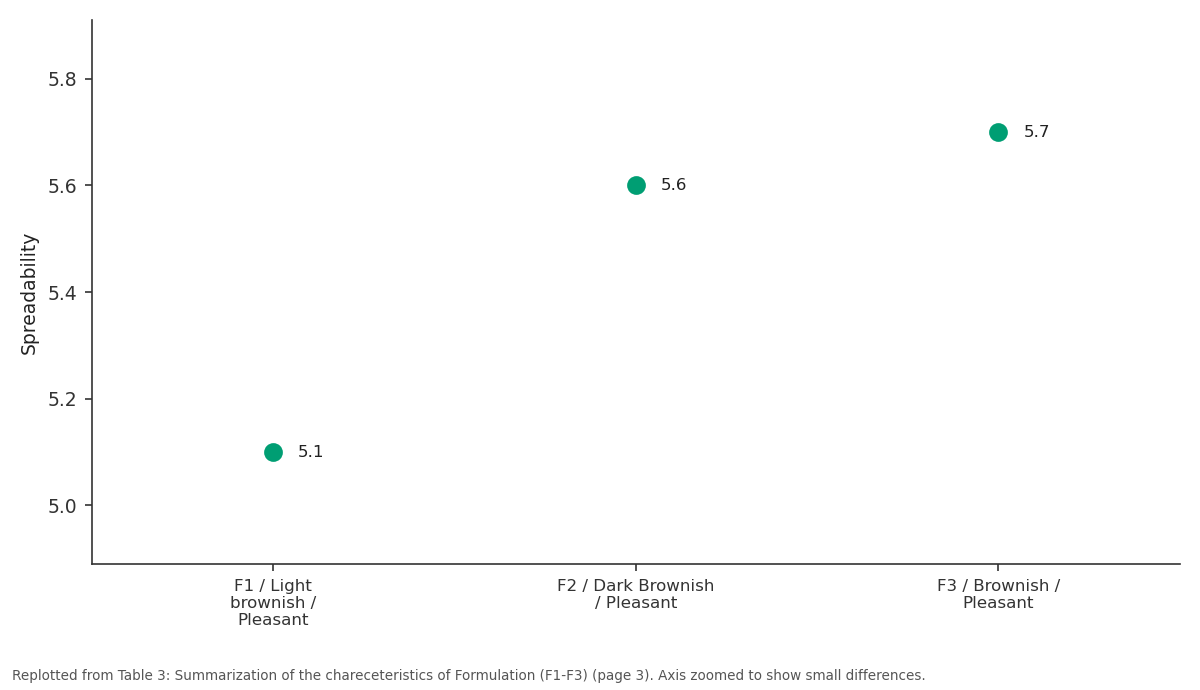
Spreadability: F1 / Light brownish /... vs F2 / Dark Brownish /... vs F3 / Brownish / Pleasant
Replotted from Table 3 (page 3) of the original paper. Every bar is the paper's own table value.
View source evidence ↗Figures & tables
From the original paper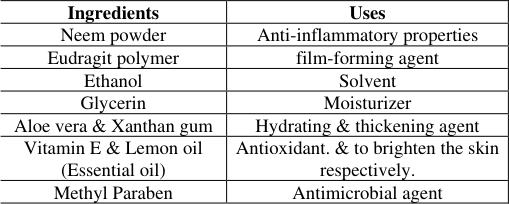 Table 1
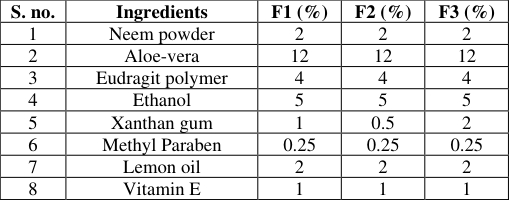 Table 2
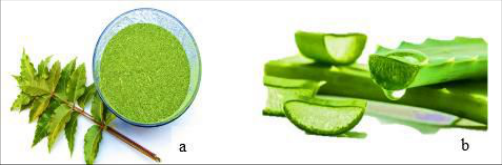 Figure 1
 Table 3
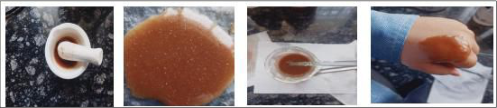 Figure 2
Introduction
The largest organ, the skin, serves as a barrier of defense. Herbal formulations are becoming more popular in modern cosmetic sciences because of their efficacy and low risk of adverse effects. Neem's antibacterial and anti-inflammatory properties are widely recognized. A natural moisturizer that promotes skin renewal is Aloe Vera. Ethanol is a solvent and preservative, and vitamin E has antioxidant qualities. [1] This research investigates the development of an herbal gel intended for skincare. The skin is the body's largest organ and acts as a protective barrier against the entry of microbes. Therefore, maintaining skin health is a crucial component of overall personal well-being. Additionally, skin condition has a psychological and social impact on individuals and their interactions. To date, there has been no universally accepted classification of facial skin types. Cosmetics refer to the act of embellishing something or someone with ornamental additions. The Food and Drug & Cosmetics Act describes cosmetics as products intended to be applied, poured, sprinkled, or sprayed on, as well as those that alter one's appearance. The category of cosmetics includes skin care creams, lotions, powders, perfumes, lipsticks, nail polish for fingers and toes, eye and facial makeup, colored contact lenses, hair dyes, and hair sprays. There is a growing demand for children's cosmetics in the global market, which are considered a valuable gift from nature. Cosmetics are not only used to enhance an individual's appearance but also serve purposes in caring for the skin and body.
Herbal Sheet Mask
Herbal sheet masks have existed for a considerable time, and their benefits are nearly limitless. These masks can hydrate the skin, eliminate excess oils and impurities, and enhance the appearance of pores. Materials such as microfibers or cellulose are utilized in the production of these sheet masks. These facial masks are affordable, making them accessible for everyone to use with ease. They are also budget-friendly, allowing individuals to save time at the spa and avoid purchasing expensive cosmetics. With growing awareness of the environmental harm caused by industrialization, there is a trend toward using products with natural ingredients. Natural extracts are versatile and function as antioxidants, contributing to the creation of pharmaceutical products [2,3] . [4] • Hydration: Sheet masks are infused with moisturizing elements such as fruit extracts, glycerin, and seed oils. • Improved Ingredient Absorption: The liquid formula aids in delivering active ingredients directly to the skin. • Convenience: Simple to apply and free of mess.
Mechanism of Herbal face mask
• Relaxation: A calming and indulgent experience.
• Cleanses impurities and supports healthy skin. Instant and Long-Lasting Results. They make your skin look dewier, brighter, renewed, and rejuvenated.
Materials and Methods
The herbal face mask was prepared using a variety of natural and functional ingredients, each selected for its specific skin-enhancing properties. The ingredients used in the formulation include neem powder, Aloe Vera gel, Eudragit polymer, ethanol, glycerin, xanthan gum, vitamin E, lemon essential oil, and methyl paraben as a preservative. These components were chosen for their anti-inflammatory, moisturizing, film-forming, antioxidant, stabilizing, and antimicrobial benefits, contributing to the overall effectiveness of the face mask Table 1. Neem Powder includes neem powder because of its strong antibacterial and anti-inflammatory qualities. By promoting skin clarity and smoothness, it provides anti-aging benefits, calms inflamed skin, and combats germs that cause acne. It is a useful herbal element for preserving good skin because of its naturally occurring bioactive ingredients. [5] Aloe vera is employed because of its remarkable calming and hydrating properties. It moisturizes the skin, lowers inflammation, and speeds up the healing of small cuts or irritations because it is high in vitamins, enzymes, and amino acids. Its antibacterial properties also help to preserve the protection and health of the skin. [6] Figure 1. While its antimicrobial qualities aid in skin cleansing and protection, it also helps to brighten the skin and improve complexion. Additionally, it has a revitalizing citrus scent that improves consumer satisfaction. [7] The formulation's shelf life is increased using methyl paraben as a preservative. By stopping the growth of bacteria, fungi, and other microbes, it guarantees the product's longevity and safety. When used within controlled limits, it is well known for being safe in cosmetics and personal hygiene products.
| Ingredients | Uses |
|---|---|
| Neem powder | Anti-inflammatory properties |
| Eudragit polymer | film-forming agent |
| Ethanol | Solvent |
| Glycerin | Moisturizer |
| Aloe vera & Xanthan gum | Hydrating & thickening agent |
| Vitamin E & Lemon oil (Essential oil) | Antioxidant. & to brighten the skin respectively. |
| Methyl Paraben | Antimicrobial agent |
Table text extracted from the original PDF; superscript letters are shown inline. The original table image is below.
View original table image
Method of Preparation
Fresh aloe vera gel was obtained by thoroughly washing and blending the aloe vera leaves. Xanthan gum was gradually added to distilled water with constant stirring until it became fully hydrated, forming a stable gel base. To this base, other ingredients were added sequentially: aloe vera gel, neem powder, glycerin, vitamin E, Eudragit polymer, ethanol, lemon essential oil, and methyl paraben (used as a preservative). All ingredients were incorporated into the formulation in specific concentrations (% w/w) as detailed in the formulation table . Continuous stirring was applied throughout the process to ensure a uniform and homogeneous gel. Table 2 The prepared herbal face mask gel was then stored in airtight containers and kept under controlled conditions for further evaluation and testing. [8]
| S. no. | Ingredients | F1 (%) | F2 (%) | F3 (%) |
|---|---|---|---|---|
| 1 | Neem powder | 2 | 2 | 2 |
| 2 | Aloe-vera | 12 | 12 | 12 |
| 3 | Eudragit polymer | 4 | 4 | 4 |
| 4 | Ethanol | 5 | 5 | 5 |
| 5 | Xanthan gum | 1 | 0.5 | 2 |
| 6 | Methyl Paraben | 0.25 | 0.25 | 0.25 |
| 7 | Lemon oil | 2 | 2 | 2 |
| 8 | Vitamin E | 1 | 1 | 1 |
Table text extracted from the original PDF; superscript letters are shown inline. The original table image is below.
View original table image
Evaluation Parameters 1. Physical Appearance:
This involves evaluating the face mask sheet's color, scent, and texture. A perfect formulation should display an appealing color that corresponds with the ingredients' characteristics, a calming natural aroma, and a silky texture free of grittiness or separation. The visual aspect also indicates the product's attractiveness to consumers [9] .
pH Measurement:
The pH of a topical product should align with the skin's natural pH, which is around 5.5 to 6.5. A pH level that is excessively high or low could lead to skin irritation. In our research, the pH varied between 6.2 and 6.6, indicating that all formulations are appropriate for application on the skin [4] . 3. Spreadability: This evaluation assesses how easily the face mask sheet can be applied to the skin, which is vital for promoting patient compliance. The Spreadability assessment was carried out using a standardized slip-and-drag method. A formulation that spreads easily requires less effort in the application process. Among the three batches evaluated, F2 exhibited the highest Spreadability. The measurement unit used is square centimeters [1] . 4. Irritancy Test: This evaluation examines the ease of application of the face mask sheet on the skin, which is crucial for encouraging patient adherence. The assessment of Spreadability was conducted using a standardized slip-and-drag technique. A formulation that spreads effortlessly necessitates less effort during the application process.
Homogeneity and Phase Separation: A visually
consistent product demonstrates an even distribution of components. The lack of phase separation implies physical stability. Each formulation displayed uniform texture without any indications of separation over time.
Stability Studies:
The formulations were kept at room temperature, in refrigerated conditions, and at an elevated temperature of 45 °C for a month. The face mask sheet showed stability without any notable alterations in texture, pH, or appearance, indicating its potential for shelf life [10] .
Results and Discussion
All three formulations (F1-F3) were evaluated for a range of physicochemical characteristics. The findings revealed the following conclusions: F1 showed adequate properties with moderate viscosity and Spreadability, making it workable but somewhat less efficient than the other two formulations. F2 exhibited the best results for nearly all metrics, featuring a pH of 5.0 and the highest Spreadability at 5.7 cm. Furthermore, it retained a smooth texture and color without any signs of phase separation under all storage conditions, demonstrating its exceptional physical and chemical stability. F3 included the highest concentration of active ingredients. While it boasted excellent pH and viscosity, it's slightly darker hue and a marginally reduced Spreadability of 5.2 cm compared to F2 made it less attractive to consumers, although it still proved effective Table 3. In summary, F2 stood out as the most balanced and effective formulation of the three, offering outstanding viscosity, Spreadability, stability, and consumer acceptability. Figure 2. Eudragit polymer forms a smooth film. Provides a calming effect, in addition to its Anti-aging benefits. It also protects against inflammation. Preservative adds methyl paraben. It's used in almost safe use of paraben as Preservatives in food, medicine, and personal care cosmetics and personal care sectors. Additionally, Face mask sheet is the solution for healthy skin, nourishing and soothing skin tone, treating aging, sunburn, and many other skin problems. This product can be manufactured on a large scale and commercialized as an alternative to the chemical sheet mask.
| Parameter | F1 | F2 | F3 | Remarks |
|---|---|---|---|---|
| Color | Light brownish | Dark Brownish | Brownish | Acceptable |
| Odor | Pleasant | Pleasant | Pleasant | Acceptable |
| PH | 4.7 | 4. 9 | 5.0 | Acceptable |
| Texture | Rigid | Smooth | Smooth | Optimal |
| Spreadability | 5.1 | 5.6 | 5.7 | Within the skin range |
Table text extracted from the original PDF; superscript letters are shown inline. The original table image is below.
View original table image
References
10 in the original paper- Aglawe SB, et al. Formulation and evaluation of herbal face pack. Int J Pharm Biol Sci. 2018;8:49-52.
- Negi A, Ghildiyal P, Suyal J, Dobhal K, Semwal A. Pharmacognostical studies and preliminary phytochemical investigation on the bark of Bauhinia variegata (Caesalpiniaceae). Int J Res AYUSH Pharm Sci. 2017;155-61.
- Chandegara DV, Varshney A. Aloe vera L. processing and products: a review. Int J Med Aromat Plants. 2013;3:492-506.
- Kumar R. Formulation and evaluation of herbal face pack. Asian J Pharm Res. 2021;11(1).
- Bhatia R, Thapliyal K, Kumar D. Phytochemical and therapeutic aspects of Morinda citrifolia L. (Noni plant): a review. Res J Pharmacogn Phytochem. 2015;7(3):167-74.
- Hendrawati TY, et al. Formulation process for making an Aloe vera mask with a variable percentage of Aloe vera gel extract. In: IOP Conference Series: Materials Science and Engineering. IOP Publishing; 2018.
- Dulhat JD, et al. Formulation and evaluation of herbal face pack. 2025.
- Bhutkar M, Shah MM. Formulation and evolution of herbal antibacterial face pack. J Emerg Technol Innov Res. 2019;6(5):77-82.
- Nagre AK, et al. Formulation and evaluation of herbal face pack. World J Pharm Res. 2022;3.
- Priya R, Anand K, Rasika D. Preparation and evaluation of herbal anti-acne face pack. World J Pharm Res. 2017;6(6):1000-10.