
Research article · 2025 · Full text
International Journal of Agriculture and Food ScienceStudy on marketing of coconut (Kalpa Raksha) in Konaseema district of Andhra Pradesh
Volume 7(6) · Pages 23–25 · DOI: 10.33545/2664844x.2025.v7.i6a.435 ↗
Research areasAgricultural Economics and PracticesSocial and Economic Development in IndiaFood Science and Nutritional Studies
Abstract
Author-writtenThe present study entitled “Economic Analysis and Marketing Efficiency of Coconut (Kalpa Raksha) in Konaseema District of Andhra Pradesh” was undertaken to assess the economic viability and marketing efficiency of coconut cultivation, specifically the Kalpa Raksha variety. Coconut is an economically significant plantation crop that supports millions of farmers across tropical regions. The Kalpa Raksha variety, developed by the Central Plantation Crops Research Institute (CPCRI), is gaining popularity due to its drought tolerance, high copra yield, and suitability for rain fed conditions. A sample of 150 coconut farmers cultivating this variety was selected using stratified random sampling. Data on socio-economic profile, production practices, input costs, yields, marketing channels, price spread, marketing costs, margins, and constraints were collected through personal interviews using pre-tested schedules. The study found that coconut cultivation is economically viable, with a favorable benefit-cost ratio. Among four identified marketing channels, direct marketing (Channel-IV) was the most efficient with the lowest marketing cost (₹85/quintal), highest efficiency (95.00%), and maximum producer’s share (₹1,615 out of ₹1,700). Price spread analysis revealed considerable variation across channels. Garrett’s Ranking Technique identified major constraints: price fluctuations, limited market access, lack of storage/processing facilities, and intermediary exploitation. The study recommends strengthening cooperatives, promoting direct marketing, improving infrastructure, and providing training in value addition.
Summary
Source-checkedPlain-language reading of the full paper, prepared with AI and checked against the text. Each point links to the authors' own words.
Why it matters
- Coconut is a vital plantation crop that provides economic support to millions of farmers in tropical areas. View evidence ↗
- The Kalpa Raksha variety is becoming popular because it is suitable for rain-fed conditions, tolerates drought, and produces high copra yields. View evidence ↗
- Coconut growers struggle with several marketing issues, such as instability in prices, poor access to markets, and a reliance on middlemen. View evidence ↗
The question
- The study aimed to evaluate the marketing efficiency and economic viability of cultivating the Kalpa Raksha coconut variety in the Konaseema District of Andhra Pradesh. View evidence ↗
What they did
- Researchers used stratified random sampling based on location and farm size to select 150 coconut farmers for the study. View evidence ↗
- Primary data were gathered via personal interviews using pre-tested structured schedules to collect information on production, costs, yields, and socio-economic profiles. View evidence ↗
- The study employed cost-benefit analysis, price spread analysis, a specific marketing efficiency index, and Garrett’s Ranking Technique for analyzing constraints. View evidence ↗
What they found
- Most of the surveyed farmers (60%) were classified as small or marginal, owning less than 2 hectares of land. View evidence ↗
- Cultivation was found to be highly profitable, with an average cost of ₹65,000 per hectare and gross returns of ₹1,30,000 per hectare, resulting in a benefit-cost ratio of 2.00. View evidence ↗
- The primary input costs for cultivation were fertilizers at 30% and labor at 25% of the total cost. View evidence ↗
- Direct marketing (Channel IV) was the most efficient channel, featuring the lowest cost (₹85/quintal), the highest efficiency (95.00%), and the highest producer's share of ₹1,615 out of ₹1,700. View evidence ↗
- Channel II was the least efficient; despite having the highest consumer price of ₹1,750, the farmer received the lowest share of ₹1,100 due to multiple intermediaries. View evidence ↗
- The top marketing constraint identified was price fluctuations (Garrett score 76.21), followed by inadequate market access and a lack of storage or processing units. View evidence ↗
What it means
- The authors conclude that cultivating the Kalpa Raksha variety in Konaseema is highly profitable under current conditions. View evidence ↗
Visual summary
3 visualsIllustrations explain the paper; charts are replotted from the paper's own table values.
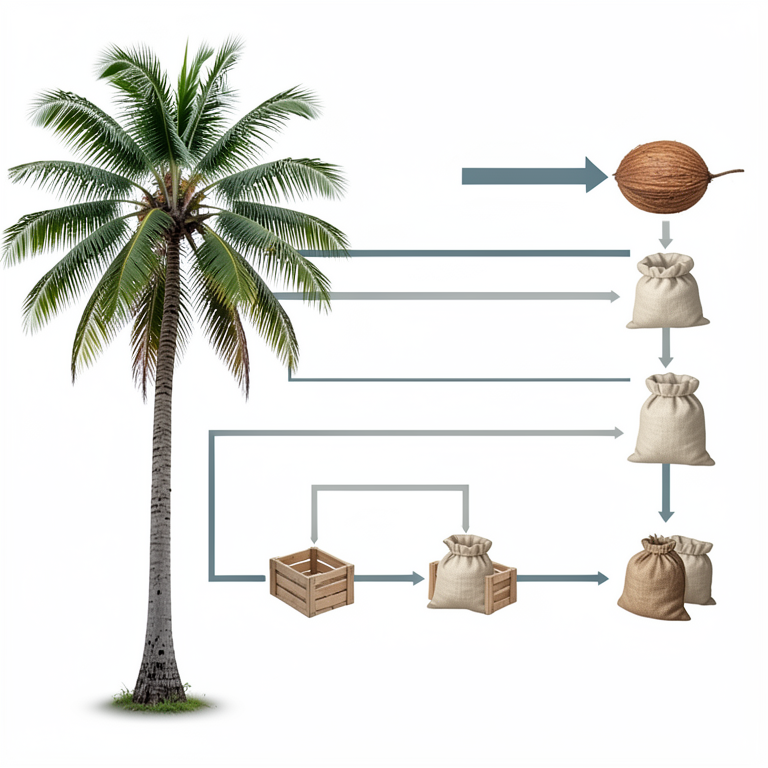
Comparison of Marketing Channels
AI-generated conceptual illustration (Coconut palms and coconuts). It explains the idea and does not show study data.
View source evidence ↗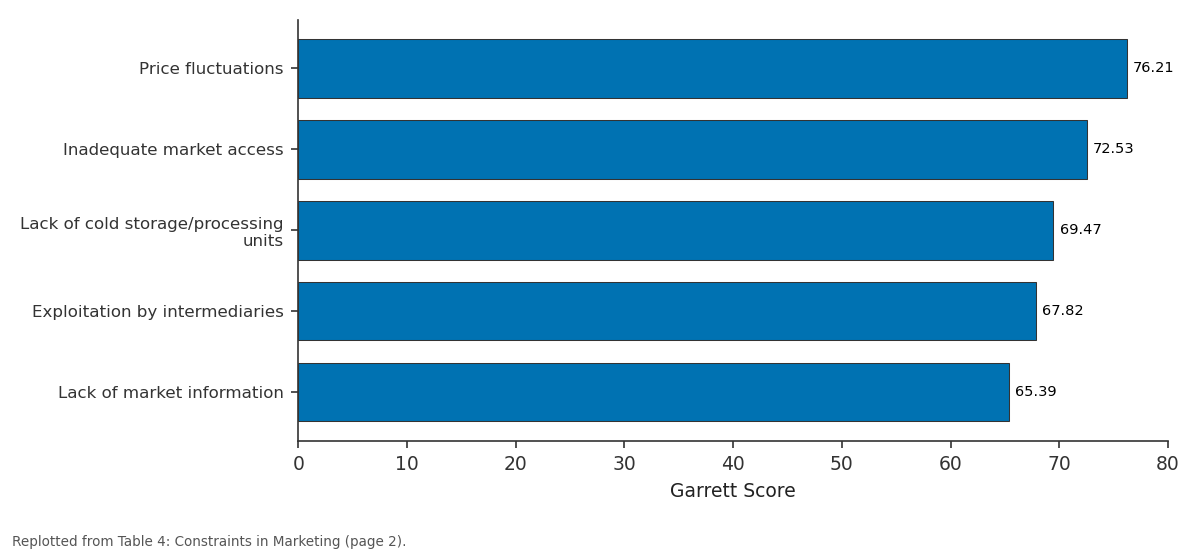
Garrett Score: Price fluctuations vs Inadequate market access vs Lack of cold... vs Exploitation by... vs Lack of market...
Replotted from Table 4 (page 2) of the original paper. Every bar is the paper's own table value.
View source evidence ↗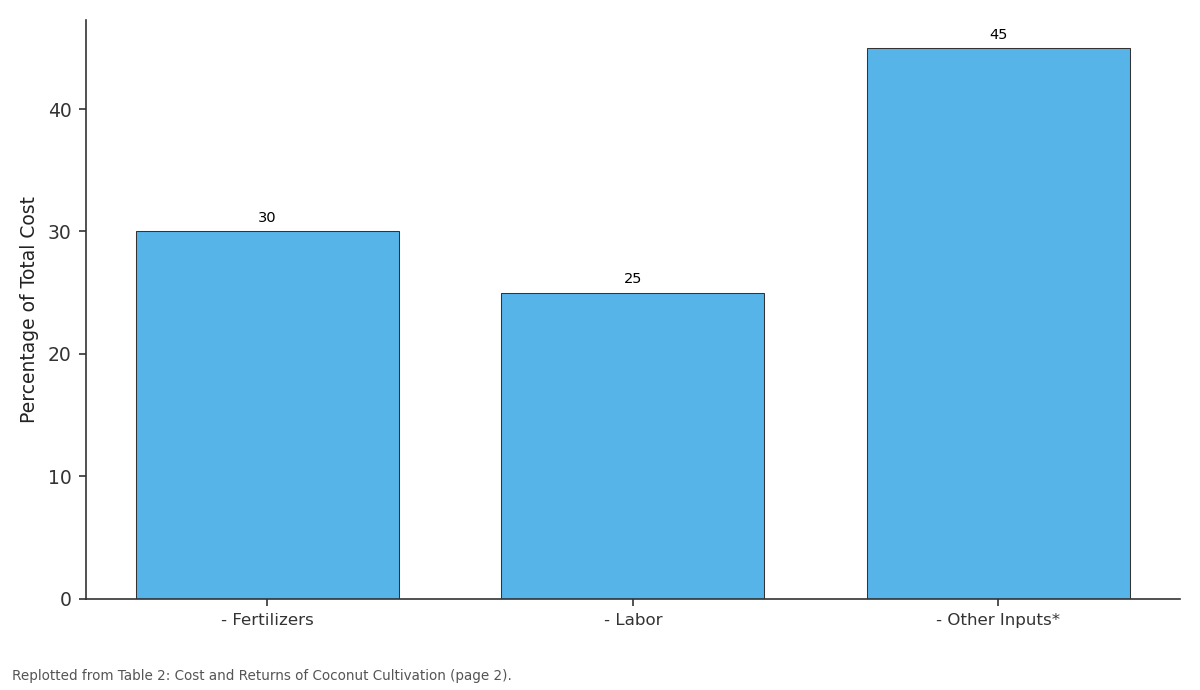
Percentage of Total Cost: - Fertilizers vs - Labor vs - Other Inputs*
Replotted from Table 2 (page 2) of the original paper. Every bar is the paper's own table value.
View source evidence ↗Figures & tables
From the original paper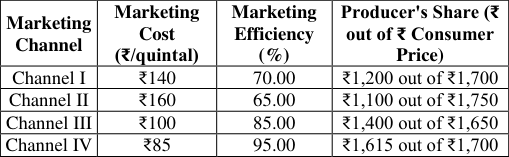 Table 3
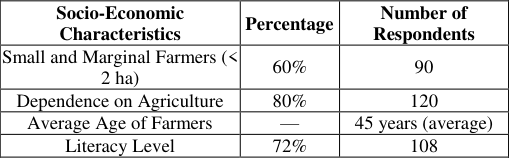 Table 1
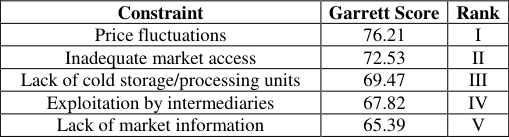 Table 4
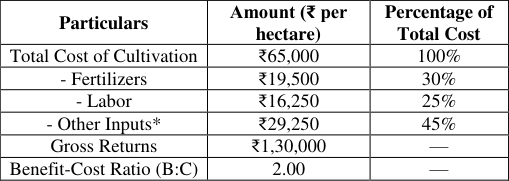 Table 2
Introduction
Coconut (Cocos nucifera) is known as the "tree of life" due to its wide range of uses and economic value. It supports the livelihoods of millions of small and marginal farmers in India, particularly in coastal states like Andhra Pradesh, Kerala, Tamil Nadu, and Karnataka. In Andhra Pradesh, the Kalpa Raksha variety has shown promise due to its adaptability to rainfed conditions and higher yield potential. Despite its importance, coconut growers face numerous marketing challenges including poor market access, dependence on middlemen, price instability, and inadequate storage facilities. In the context of the Konaseema district, where coconut cultivation is significant, a focused study on the marketing efficiency and economic viability of the Kalpa Raksha variety is crucial to formulate policy and practice-based recommendations.
Objectives of the Study
1. To study the socio-economic profile of coconut growers in the study area. 2. To evaluate the production and marketing costs of the Kalpa Raksha coconut variety. 3. To assess market margins, marketing efficiency, and the producer's share in the consumer's rupee.
4.
To identify constraints in coconut marketing and suggest suitable remedial measures.
Research Methodology
The present study was conducted in Konaseema District of Andhra Pradesh, a region known for its extensive coconut cultivation, particularly of the Kalpa Raksha variety. To ensure representativeness and accuracy, a stratified random sampling technique was employed.
The stratification was based on key factors such as farm size and location within the district to capture the diverse characteristics of coconut growers. From this stratified population, a sample of 150 coconut farmers was randomly selected for the study. Primary data were collected through personal interviews with the selected farmers using pre-tested structured schedules designed to elicit comprehensive information on socio-economic characteristics, production practices, input costs, yield, and marketing behavior. To complement the primary data, secondary data were gathered from a range of credible sources including government publications, reports published by the Central Plantation Crops Research Institute (CPCRI), and previous scholarly research relevant to coconut cultivation and marketing. The majority of the respondents (60%) were small and marginal farmers with holdings less than 2 hectares. About 80% of the farmers depended primarily on agriculture for their livelihood. The average age of farmers was 45 years and the literacy level was 72%.
Analytical Tools
Analytical Tools
Discussion
The comparative analysis of the four marketing channels reveals that Channel IV (Direct Marketing: Producer → Consumer) offers the most advantages to coconut farmers. It significantly reduces the marketing cost and eliminates the role of intermediaries, which in turn enhances the producer's share in the final consumer price. This channel also showed the highest marketing efficiency at 95.00%, demonstrating that farmers receive the maximum return for their produce when they sell directly to consumers through local markets or farm gates. Channel III, which involves direct retailing by the producer, also showed relatively high efficiency (85.00%) and better producer share compared to Channel I and II. Channel I and II involve more intermediaries, which escalates the marketing cost and results in a reduced share for producers.
In Channel II, even though the consumer price is the highest (₹1,750), the farmer's share is the lowest (₹1,100),
indicating inefficiency due to multiple levels of intermediation. Therefore, the findings clearly suggest that direct-toconsumer models are the most beneficial for farmers. Promoting such models can substantially increase the income of coconut growers in the region. These findings call for a strategic policy shift toward direct marketing platforms supported by government initiatives and farmer organizations.
Conclusions and Policy Implications
The study highlights that coconut cultivation, particularly of the Kalpa Raksha variety, is highly profitable under the current agricultural and market conditions in Konaseema.
The direct marketing channel (Producer → Consumer) is the most beneficial, minimizing costs and maximizing the producer's income. However, major barriers such as market inefficiencies, infrastructure gaps, and fluctuating prices must be addressed.
Recommendations
Strengthening farmer cooperatives to facilitate bulk marketing and reduce dependency on intermediaries.
Encouraging direct marketing models like Rythu Bazaars and online platforms. Investing in cold storage and processing infrastructure to reduce post-harvest losses. Capacity building through farmer training on value addition, packaging, and marketing strategies. Establishing market intelligence systems to provide real-time price and demand information.
Figures and tables from the paper
| Marketing Channel | Marketing Cost (₹/quintal) | Marketing Efficiency (%) | Producer's Share (₹ out of ₹ Consumer Price) |
|---|---|---|---|
| Channel I | ₹140 | 70.00 | ₹1,200 out of ₹1,700 |
| Channel II | ₹160 | 65.00 | ₹1,100 out of ₹1,750 |
| Channel III | ₹100 | 85.00 | ₹1,400 out of ₹1,650 |
| Channel IV | ₹85 | 95.00 | ₹1,615 out of ₹1,700 |
Table text extracted from the original PDF; superscript letters are shown inline. The original table image is below.
View original table image
| Socio-Economic Characteristics | Percentage | Number of Respondents |
|---|---|---|
| Small and Marginal Farmers (< 2 ha) | 60% | 90 |
| Dependence on Agriculture | 80% | 120 |
| Average Age of Farmers | — | 45 years (average) |
| Literacy Level | 72% | 108 |
Table text extracted from the original PDF; superscript letters are shown inline. The original table image is below.
View original table image
| Constraint | Garrett Score | Rank |
|---|---|---|
| Price fluctuations | 76.21 | I |
| Inadequate market access | 72.53 | II |
| Lack of cold storage/processing units | 69.47 | III |
| Exploitation by intermediaries | 67.82 | IV |
| Lack of market information | 65.39 | V |
Table text extracted from the original PDF; superscript letters are shown inline. The original table image is below.
View original table image
| Particulars | Amount (₹ per hectare) | Percentage of Total Cost |
|---|---|---|
| Total Cost of Cultivation | ₹65,000 | 100% |
| - Fertilizers | ₹19,500 | 30% |
| - Labor | ₹16,250 | 25% |
| - Other Inputs* | ₹29,250 | 45% |
| Gross Returns | ₹1,30,000 | — |
| Benefit-Cost Ratio (B:C) | 2.00 | — |
Table text extracted from the original PDF; superscript letters are shown inline. The original table image is below.
View original table image
References
4 in the original paper- Acharya SS, Agarwal NL. Agricultural marketing in India. New Delhi: Oxford and IBH Publishing Co.; 2011.
- Central Plantation Crops Research Institute (CPCRI). Kalpa Raksha coconut variety description. Kasaragod: CPCRI; 2020.
- Garrett HE. Statistics in psychology and education. Mumbai: Vakils, Feffer and Simons Pvt. Ltd.; 1969.
- Ramesh P, Rajan S, Kumar V, Devi K. Marketing constraints faced by coconut farmers in South India. Indian J Agric Mark. 2019;33(2):42-94.