
Research article · 2025 · Full text
International Journal of Biology SciencesFormulation and characterization of the esomeprazole magnesium enteric coated tablet
Volume 7(5) · Pages 52–57 · DOI: 10.33545/26649926.2025.v7.i5a.346 ↗
Research areasPharmaceutical studies and practicesDrug Solubulity and Delivery Systems
Abstract
Author-writtenGastric ulcers are a common gastrointestinal condition often treated with proton pump inhibitors like Esomeprazole Magnesium. However, stability issues in the gastric environment necessitate advanced drug delivery systems. This study focuses on developing an enteric-coated tablet of Esomeprazole Magnesium using ethyl cellulose as the coating polymer, aiming to enhance gastric stability and therapeutic efficacy. The formulation was prepared using the wet granulation method and evaluated against a marketed formulation. FT-IR spectroscopy confirmed the absence of drug-excipient interactions. Physical parameters of the tablets were within pharmacopeial limits. In vitro drug release studies demonstrated a sustained release from the laboratory formulation compared to the marketed product. The area under the curve (AUC) and similarity factor (f₂ = 53.53) were calculated to assess bioavailability. Drug release followed Peppas-Korsmeyer kinetics (R² = 0.9664), indicating diffusion and erosion mechanisms. Results suggest that the formulated enteric-coated Esomeprazole tablet is a viable alternative to commercial products, offering comparable release characteristics and improved formulation stability.
Summary
Source-checkedPlain-language reading of the full paper, prepared with AI and checked against the text. Each point links to the authors' own words.
Why it matters
- Gastric ulcers are frequent gastrointestinal issues that are commonly managed using proton pump inhibitors, such as Esomeprazole Magnesium. View evidence ↗
- Advanced drug delivery systems are needed for these treatments because the drug faces stability challenges within the gastric environment. View evidence ↗
- Enteric coatings serve as protective layers that prevent drug release until the medication reaches the small intestine, ensuring absorption in the correct part of the digestive system. View evidence ↗
The question
- The study aimed to develop an enteric-coated tablet of Esomeprazole Magnesium to improve its therapeutic efficacy and stability. View evidence ↗
- The researchers sought to evaluate the new formulation's bioavailability by comparing it to a commercially available marketed product. View evidence ↗
What they did
- The Esomeprazole Magnesium enteric-coated tablets were manufactured using the wet granulation method. View evidence ↗
- Ethyl cellulose was utilized as the enteric coating agent, applied to the tablets using a coating pan. View evidence ↗
- Physical evaluations included measuring the hardness of 10 randomly selected tablets using a Monsanto tester and calculating weight variation from 10 individually weighed tablets. View evidence ↗
What they found
- FT-IR spectroscopy showed no significant shifts in peak positions, indicating that there were no chemical interactions between the drug, the polymer, and the excipients. View evidence ↗
- The physical parameters of both the laboratory and marketed formulations, including thickness, hardness, and weight variation, were within the acceptable limits of the Indian pharmacopeia. View evidence ↗
- By the 6-hour mark, the laboratory tablet released 94.32% of the drug, while the marketed tablet released 98.39%. View evidence ↗
- The similarity factor (f₂) was 53.53, which indicates that the laboratory formulation has drug release characteristics comparable to the marketed product. View evidence ↗
- The Area Under the Curve (AUC) for the laboratory formulation was 227.10, compared to 259.92 for the marketed formulation. View evidence ↗
- The drug release followed the Peppas-Korsmeyer model (R² = 0.9664), which suggests the drug is released through a combination of diffusion and erosion. View evidence ↗
What it means
- The authors conclude that their developed formulation is a stable and cost-effective alternative to commercial Esomeprazole products due to its comparable release characteristics. View evidence ↗
- The authors state that further scale-up and in vivo studies are necessary to confirm the commercial viability of the formulation. View evidence ↗
Visual summary
3 visualsIllustrations explain the paper; charts are replotted from the paper's own table values.
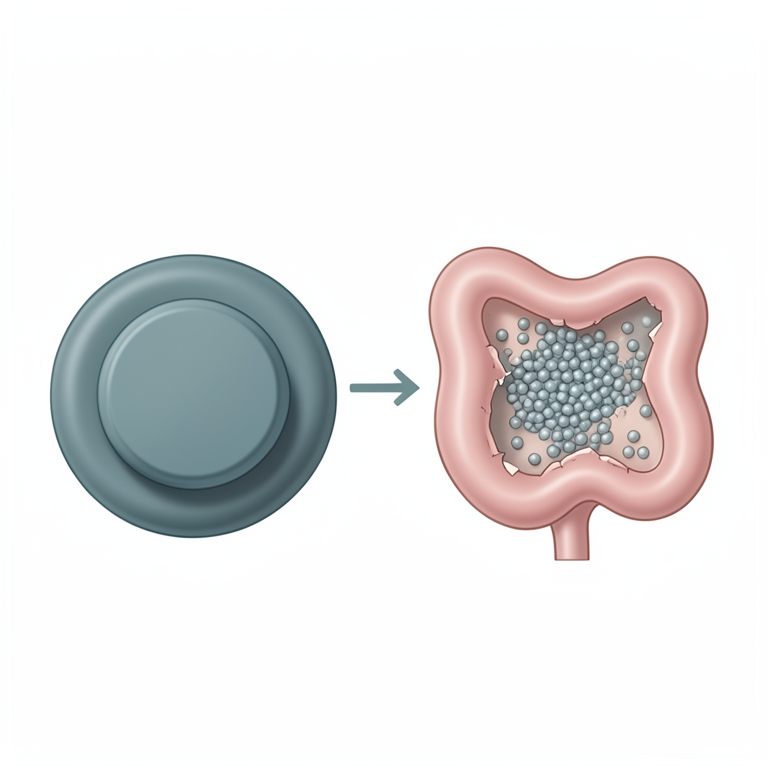
Enteric Coating Mechanism
AI-generated conceptual illustration (esomeprazole magnesium enteric coated tablet in the human digestive tract). It explains the idea and does not show study data.
View source evidence ↗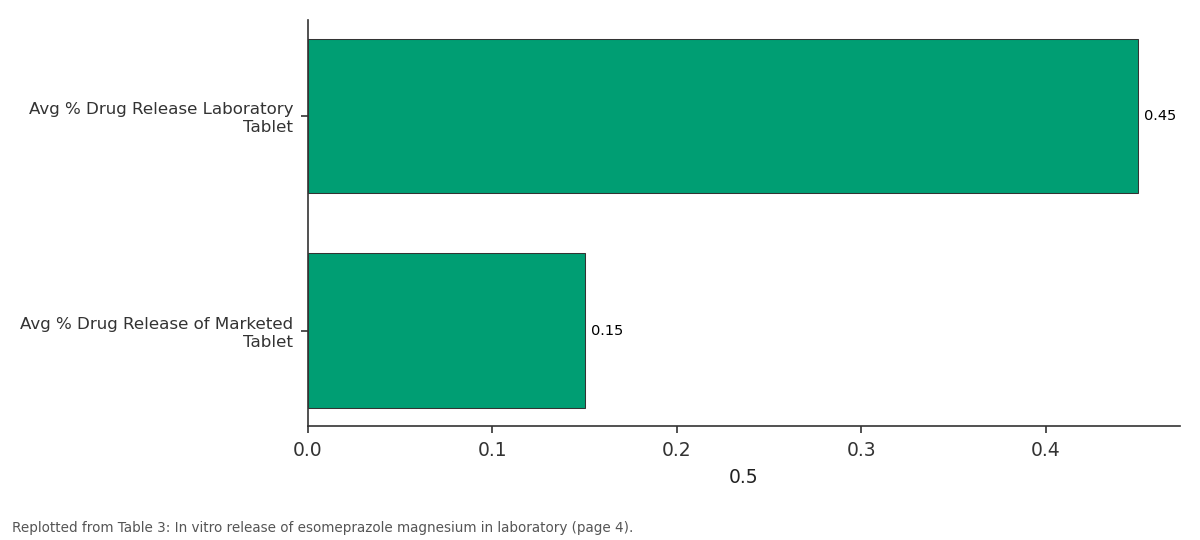
0.5: Avg % Drug Release... vs Avg % Drug Release of...
Replotted from Table 3 (page 4) of the original paper. Every bar is the paper's own table value.
View source evidence ↗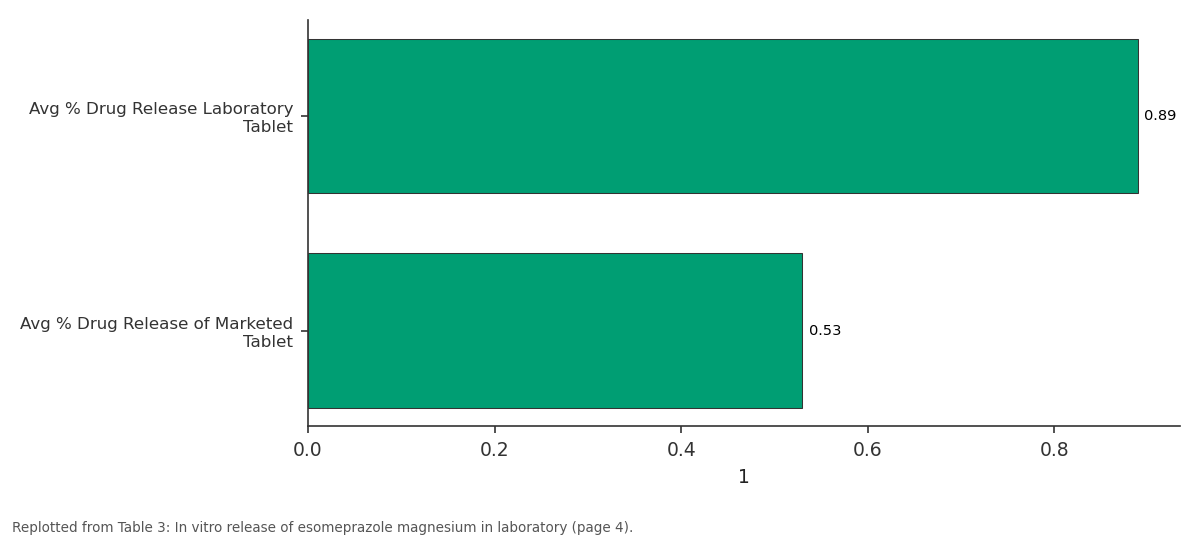
1: Avg % Drug Release... vs Avg % Drug Release of...
Replotted from Table 3 (page 4) of the original paper. Every bar is the paper's own table value.
View source evidence ↗Figures & tables
From the original paper Table 1
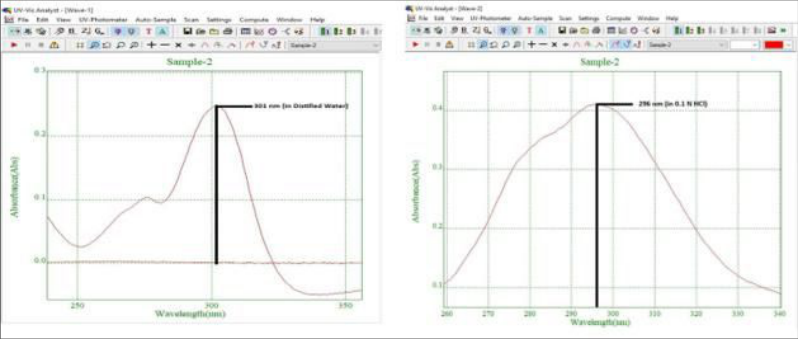 Figure 1
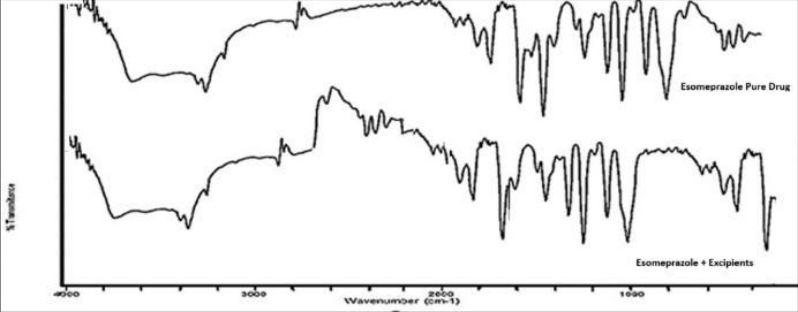 Figure 2
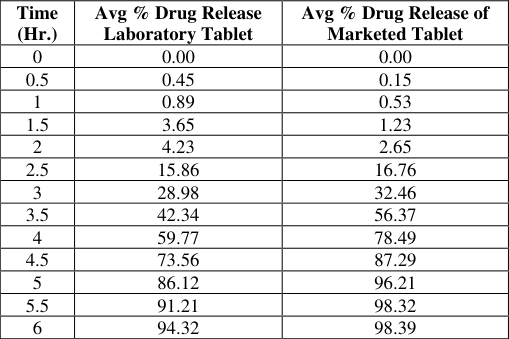 Table 3
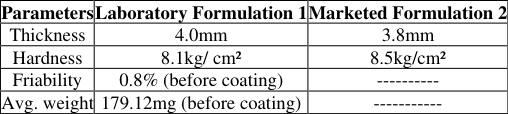 Table 2
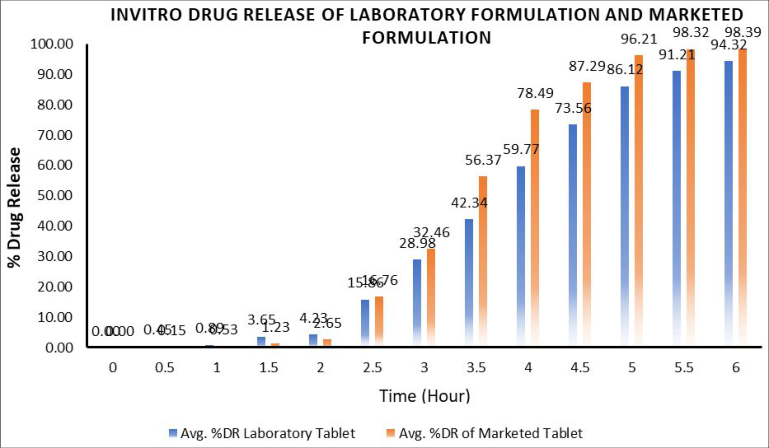 Figure 3
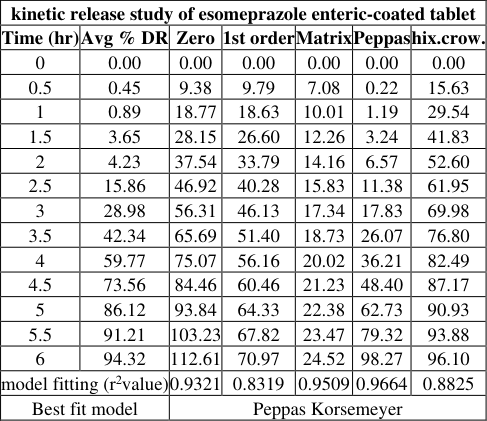 Table 4
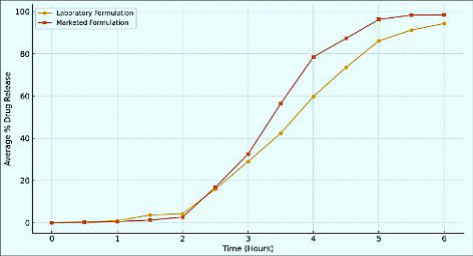 Figure 4
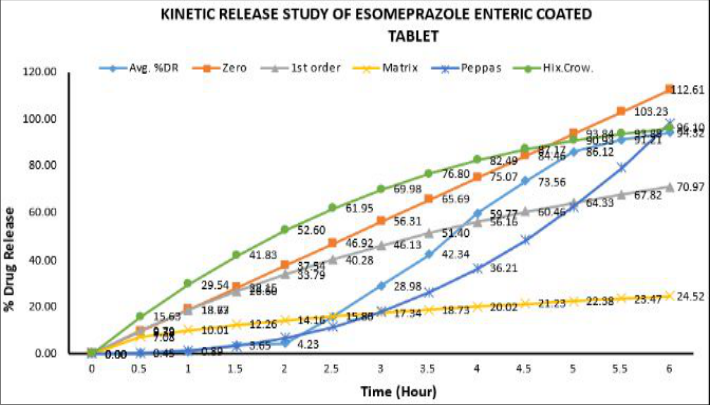 Figure 5
Introduction
Gastric ulcer is the most common disorder of the upper digestive tract. The prevalence of gastric ulcers is 2.4% in the Western population, and annual incidence rates range from 0.10% to 0.19%. In certain regions of Mainland China, the prevalence of gastric ulcer is as high as 6.07% in the general population, and 22.5% of patients with gastrointestinal symptoms have gastric ulcer. Higher incidence usually occurs in people who smoke, use nonsteroidal anti-inflammatory drugs (NSAIDs), or consume alcohol (Khan, Dar, & Mir, 2023) [10] . The recurrence rate is as high as 60%. Gastric ulcers have a significant economic impact. Average annual medical costs are $23819 for a gastric ulcer in the United States. In South Korea, the annual medical costs for gastric ulcer range from $959.6 to $2553. 10. Although some studies have demonstrated that Helicobacter pylori (H. pylori) eradication therapy is cost-effective, a more systematic study indicated that there was no significant cost difference per subject between eradication therapy and placebo (Jaiswal, Rai, Wal, Wal, & Singh, 2021) [8] . Although conventional regimens are effective, their side effects are often inevitable and limit clinical utility. However, both clinical and experimental studies have demonstrated that herbal medicines exhibit therapeutic benefits for gastric ulcers with fewer side effects. Moreover, the cost of herbal medicine for gastric ulcers is only about one-sixth of that of Western medicine (Laucirica, Iglesias, & Calvet, 2023) [11] . The role of treatment with proton pump inhibitors for patients with active or recent ulcer bleeding is controversial. If given in an adequate dose by continuous intravenous infusion, proton pump inhibitors can maintain intragastric pH at 6 or above (Clarke et al., 2022) [3] . Those levels of pH, peptic activity are minimized, platelet function is optimized, and fibrinolysis is inhibited; these effects should help to stabilize clot formation over an ulcer. Although proton pump inhibitors are already widely used for ulcer bleeding, intravenous therapy may have been overused and given inappropriately for patients at low risk. (Csiki et al., 2021) [4] Extended-Release formulations are usually designed to reduce dose frequency and maintain relatively constant or flat plasma drug concentration. This helps avoid the side effects associated with high concentration. Such coatings are variously referred to as enteric coatings. (Loh, Enose, & Garg, 2022) [13] An enteric coating is a protective layer that controls the medication in the digestive system, where it is absorbed. The word "Enteric" indicates the small intestine; therefore, enteric coating prevents the release of the drug before it reaches the small intestine. (Patil, Tambe, Shirsat, & Patil, 2021) [15] A tablet that has a special outer covering layer, which was designed to dissolve in the small intestine and has an alkaline pH of about 7-9. So, most of the currently used enteric coatings are weak acids which remain undissociated in the low pH environment, but they readily get ionized when the pH rises above. An enteric coating is a barrier that controls the location of oral medication in the digestive system, where it is absorbed. The enteric-coated polymers remain unionized at low pH, and therefore, remain insoluble. But as the pH increases in the GIT, the acidic functional groups are capable of ionization, and the polymer swells or becomes soluble in the intestinal fluid. (Ghube, Khade, & Bhosale, 2020; Thakkar, 2023) [6,17] "In the present research work, an enteric-coated tablet formulation of Esomeprazole Magnesium has been developed to enhance its stability and therapeutic efficacy. The prepared formulation is evaluated and compared with a commercially available marketed formulation in terms of bioavailability, to assess its in vivo performance and potential for improved clinical outcomes."
Materials and Methods
Materials and Methods
Materials
Esomeprazole Magnesium was obtained from Dhamtec Pharma and Consultants (Maharashtra, India) Ethanol was purchased from Central Drug House (India). Mannitol was obtained from Central Drug House (India). Starch, Magnesium stearate was bought from Central Drug House (India). Ethyl cellulose was obtained from Central Drug House (India).
Methods
Methods
Preparation of Esomeprazole Magnesium Enteric Coated Tablet
Esomeprazole magnesium Enteric Coated Tablet was prepared by the Wet Granulation method. All Excipients were accurately weighed and passed through a sieve number 22 (Except Talc and Magnesium Stearate). Mannitol, fenugreek seeds, and the drug were transferred into an airfilled polybag and mixed by shaking it for 5 minutes. Then the mixture was transferred into a mortar and pestle. Starch was dissolved in chloroform, and a paste (5%) was made for the mixture. The prepared solution was slowly added to the mortar, then the mixture was triturated, and the granules were formed. Granules were dried in a hot air oven for 5 minutes at 60 C. After half drying granules passed through sieve no. 22. Then these granules were completely dried in an oven. Sieve no. 22, 44, and the collectors were taken; dried granules were transferred to sieve no. 22, and these sieves were shaken. Fine and coarse powder was collected. 70% coarse and 30% fine powder were taken and lubricated with talc and magnesium stearate. Finally, the granules were compressed in the form of tablets by using single-station rotary compression machines. Then, tablets are coated with ethyl cellulose (as an enteric coating agent) using a coating pan (Kadam, Yadav, & Landge, 2020; Lee, Kim, Kim, Ro, & Na, 2023) [9,12] .
Evaluation of Esomeprazole Magnesium Enteric Coated Tablet 1. Determination of Absorption maxima (λmax):
Absorption maxima are generally carried out to determine the purity of the drug as well as find the maximum λ max of Esomeprazole. Standard stock solutions (6µg/ml and 8 µg/ml) of Esomeprazole Magnesium were prepared in distilled water and a pH 1.2 acidic buffer. Then the solution was scanned at 400 to 200 nm in a UV-visible spectrophotometer (Lab India) (Ruikar et al., 2020) [16] .
Fourier transform infrared spectroscopy (FT-IR):
FT-IR is a simple, quick, and inexpensive analytical technique employed to anticipate drug-excipient interaction. This analysis has been carried out using the potassium bromide pellet technique. The FT-IR of Esomeprazole and Esomeprazole with different polymers was taken and homogeneously combined with 200 mg potassium bromide. Then the mixture was compressed using a mechanical die press. It was captured using Shimadzu's Fourier transform infrared spectrometer (Japan) with a frequency range of 4,000 to 450 cm -1 . (Deepika, Vishnu, & Rao, 2021) [5] 3. General appearance: Tablets were assessed for their general appearance. 4. Hardness: 10 tablets of each formulation were selected randomly, and the hardness of tablets was measured by using the Monsanto hardness tester. 5. Weight variation: 10 tablets were accurately weighed individually, and the average weight was calculated.
Percent weight variation was calculated by this formula 1. Thickness: The Thickness of tablets is determined by using the vernier caliper scale.
In vitro drug release study: A USP-type II dissolution
apparatus was used for the in vitro drug release study. The Enteric Coating Tablet was transferred to the 900 mL dissolution medium (0.1N HCl) for 2 hours. The dissolution apparatus was operated at 75 rpm, and the temperature was set at 37ºC. Samples were taken at 0.5, 1, 1.5, and 2-hour intervals. After two hours, the dissolution medium was replaced with pH 6.8 phosphate buffers. The temperature was maintained at 37 ºC, and the apparatus was operated at 75 rpm.
Samples were taken at 2.5, 3, 3.5, 4.5, 5, 5.5, and 6hour intervals (Gopaiah et al., 2020; Parihar, Prajapati, Patel, & Paliwal, 2023) [7,14] .
Drug release kinetics:
The mechanism of drug release and rate kinetics were evaluated by plotting the in vitro release data in various kinetic models. • Zero-order kinetics: when the rate of reaction is independent of the concentration.
• First-order kinetics: When the reaction rate depends on the first power of the concentration of a single reactant. • Higuchi kinetics: Drug release was proportional to the square root of time. This indicates that drug release is diffusion-controlled. (Askarizadeh, Esfandiari, Honarvar, Sajadian, & Azdarpour, 2023; Cheng, Qin, Acevedo, Jiang, & Shi, 2020) [1,2]
Results and Discussion
• Determination of Absorption maxima (λmax):
Absorption maxima of Esomeprazole Magnesium were obtained at 301 nm in distilled water and 296 nm in 0.1 N HCl, which shows that the API was pure, as shown in Figure 1. • Tablet Evaluation: Enteric coating tablet of Esomeprazole magnesium was formulated and evaluated. Both formulations have hardness, thickness, friability, and weight variation (before coating) within acceptable limits. Tablets were found to be satisfactory as per Indian pharmacopeia tolerance limit and both formulations were subjected to various parameters and the result obtained was within the range. ----------Avg. weight 179.12mg (before coating) -----------
• In-vitro drug release of the Laboratory Formulation:
In-vitro release of esomeprazole studies is shown in Table 3. A Dissolution study of each formulation was conducted by using 0.1N HCl for the first 2 hours. After two hours of dissolution, the media were replaced with phosphate buffer, pH 6.8. A graph was plotted between % drug release versus time (Fig. 1). The in vitro data were fitted to different kinetic models by using BITSTAT software. The results (Table 4) revealed that the formulation prepared alone followed the first-order release kinetics with a correlation coefficient. The similarity factor (f₂) between the dissolution profiles of the laboratory and marketed formulations was calculated to be 53.53. An f₂ value between 50 and 100 suggests that the two formulations exhibit similar drug release characteristics.
| kinetic release study of esomeprazole enteric-coated tablet | — | — | — | — | — | — |
|---|---|---|---|---|---|---|
| Time (hr) | Avg % DR | Zero | 1st order | Matrix | Peppas | hix.crow. |
| 0 | 0.00 | 0.00 | 0.00 | 0.00 | 0.00 | 0.00 |
| 0.5 | 0.45 | 9.38 | 9.79 | 7.08 | 0.22 | 15.63 |
| 1 | 0.89 | 18.77 | 18.63 | 10.01 | 1.19 | 29.54 |
| 1.5 | 3.65 | 28.15 | 26.60 | 12.26 | 3.24 | 41.83 |
| 2 | 4.23 | 37.54 | 33.79 | 14.16 | 6.57 | 52.60 |
| 2.5 | 15.86 | 46.92 | 40.28 | 15.83 | 11.38 | 61.95 |
| 3 | 28.98 | 56.31 | 46.13 | 17.34 | 17.83 | 69.98 |
| 3.5 | 42.34 | 65.69 | 51.40 | 18.73 | 26.07 | 76.80 |
| 4 | 59.77 | 75.07 | 56.16 | 20.02 | 36.21 | 82.49 |
| 4.5 | 73.56 | 84.46 | 60.46 | 21.23 | 48.40 | 87.17 |
| 5 | 86.12 | 93.84 | 64.33 | 22.38 | 62.73 | 90.93 |
| 5.5 | 91.21 | 103.23 | 67.82 | 23.47 | 79.32 | 93.88 |
| 6 | 94.32 | 112.61 | 70.97 | 24.52 | 98.27 | 96.10 |
| model fitting (r2value) | 0.9321 | 0.8319 | 0.9509 | 0.9664 | 0.8825 | |
| Best fit model | Peppas Korsemeyer |
Table text extracted from the original PDF; superscript letters are shown inline. The original table image is below.
View original table image
| Time (Hr.) | Avg % Drug Release Laboratory Tablet | Avg % Drug Release of Marketed Tablet |
|---|---|---|
| 0 | 0.00 | 0.00 |
| 0.5 | 0.45 | 0.15 |
| 1 | 0.89 | 0.53 |
| 1.5 | 3.65 | 1.23 |
| 2 | 4.23 | 2.65 |
| 2.5 | 15.86 | 16.76 |
| 3 | 28.98 | 32.46 |
| 3.5 | 42.34 | 56.37 |
| 4 | 59.77 | 78.49 |
| 4.5 | 73.56 | 87.29 |
| 5 | 86.12 | 96.21 |
| 5.5 | 91.21 | 98.32 |
| 6 | 94.32 | 98.39 |
Table text extracted from the original PDF; superscript letters are shown inline. The original table image is below.
View original table image
In this case, an f₂ value of over 50 indicates that the laboratory formulation has a comparable dissolution profile to the marketed formulation, although it is not identical.
Conclusion
The present study successfully formulated and evaluated an enteric-coated tablet of Esomeprazole Magnesium aimed at improving drug stability and achieving a sustained release profile. Using ethyl cellulose as the enteric polymer and employing the wet granulation technique, the formulation was optimized and compared with a marketed product to assess its pharmaceutical performance. Physicochemical evaluations-including tablet hardness, thickness, and weight variation-confirmed that the formulation met pharmacopeial standards. FT-IR spectroscopy showed no significant interactions between the drug and excipients, confirming the compatibility of the formulation components.
In vitro drug release studies revealed a gradual and extended drug release pattern from the laboratory formulation. Bioavailability comparison using AUC showed values of 227.10 for the laboratory formulation and 259.92 for the marketed one, indicating substantial release efficiency. The similarity factor (f₂ = 53.53) further demonstrated that both formulations have comparable dissolution profiles. Kinetic modeling showed the best fit with the Peppas-Korsmeyer model, suggesting a release mechanism governed by both diffusion and erosion. This is ideal for maintaining consistent therapeutic levels and minimizing side effects. Overall, the developed formulation offers a promising, costeffective alternative to marketed Esomeprazole products, with comparable drug release characteristics and enhanced stability. Further in vivo and scale-up studies are recommended to support commercial viability.
Figures and tables from the paper
| Name of Ingredient | Quantity of Ingredient | — |
|---|---|---|
| Laboratory Formulation 1 | Marketed Formulation 2 (NEXPRO-40) | |
| Esomeprazole magnesium | 20mg | ----- |
| Mannitol | 120mg | ----- |
| Fenugreek seeds | 35mg | ----- |
| Starch paste (In Chloroform) | q. s | ----- |
| Talc | 2.5mg | ----- |
| Magnesium Stearate | 2.5mg | ----- |
| Ethyl cellulose | 15% Solution in Ethanol | ----- |
Table text extracted from the original PDF; superscript letters are shown inline. The original table image is below.
View original table image
| Parameters | Laboratory Formulation 1 | Marketed Formulation 2 |
|---|---|---|
| Thickness | 4.0mm | 3.8mm |
| Hardness | 8.1kg/ cm² | 8.5kg/cm² |
| Friability | 0.8% (before coating) | ---------- |
| Avg. weight | 179.12mg (before coating) | ----------- |
Table text extracted from the original PDF; superscript letters are shown inline. The original table image is below.
View original table image
References
16 in the original paper- Askarizadeh M, Esfandiari N, Honarvar B, Sajadian SA, Azdarpour A. Kinetic modeling to explain the release of medicine from drug delivery systems. ChemBioEng Rev. 2023;10(6):1006-49.
- Cheng Y, Qin H, Acevedo NC, Jiang X, Shi X. 3D printing of extended-release tablets of theophylline using hydroxypropyl methylcellulose (HPMC) hydrogels. Int J Pharm. 2020;591:119983.
- Clarke K, Adler N, Agrawal D, Bhakta D, Sata SS, Singh S, et al. Indications for the use of proton pump inhibitors for stress ulcer prophylaxis and peptic ulcer bleeding in hospitalized patients. Am J Med. 2022;135(3):313-7.
- Csiki E, Szabo H, Hanak L, Szakacs Z, Kiss S, Vörhendi N, et al. Oral proton pump inhibitors may be as effective as intravenous in peptic ulcer bleeding: a systematic review and meta-analysis. Clin Transl Gastroenterol. 2021;12(4):e00341.
- Deepika K, Vishnu MS, Rao AL. Development and evaluation of controlled release formulations of esomeprazole. Int J Res AYUSH Pharm Sci. 2021;53652.
- Ghube K, Khade P, Bhosale A. A review on enteric coating. J Curr Pharma Res. 2020;10(4):3848-62.
- Jaiswal F, Rai A, Wal P, Wal A, Singh SP. Peptic ulcer: a review on etiology, pathogenesis, and treatment. Asian J Pharm Educ Res. 2021;10(4):1.
- Kadam S, Yadav P, Landge D. Formulation and evaluation of colon-targeted enteric-coated tablets of loperamide. Res J Pharm Technol. 2020;13(3):1447-52.
- Khan AH, Dar MA, Mir MA. Gastric ulcer: an overview. Int J Curr Res Physiol Pharmacol. 2023;1-7.
- Laucirica I, Iglesias PG, Calvet X. Peptic ulcer. Med Clin (Engl Ed). 2023;161(6):260-6.
- Lee TJ, Kim D, Kim JC, Ro SW, Na DH. Formulation development and pharmacokinetic evaluation of enteric-coated dexrabeprazole tablets. J Pharm Investig. 2023;53(2):323-31.
- Loh YY, Enose AA, Garg V. Enteric-coated polymers past and present review. Drug Deliv Lett. 2022;12(2):85-95.
- Parihar A, Prajapati BG, Patel K, Paliwal H. Formulation, evaluation, and optimization of the omeprazole magnesium multi-unit particulate controlled release tablets using different concentrations of polymers. IP Int J Compr Adv Pharmacol. 2023;7(4):211-7.
- Patil GD, Tambe KP, Shirsat SP, Patil A. Review on enteric-coated polymers. Res J Pharm Dosage Forms Technol. 2021;13(1):82-5.
- Ruikar DB, Bhushan Bhoyar MSK, Moon MT, Barbuddhe MT, Thakare MA, Deshmukh MGJ. Comparative analysis of ibuprofen tablets by UVvisible spectroscopy & FTIR. J Cardiovasc Dis Res. 2020;11(4):2199-211.
- Thakkar D. Development and characterization of an enteric coated extended-release formulation of betablocker. Institute of Pharmacy, Nirma University, Ahmedabad; 2023.
Cited by 1
From OpenAlex, OpenCitations and reference lists read by Scinovex
- Development and evaluation of an esomeprazole–MgO–Zn nanoconjugate for enhanced stability, antioxidant activity, and sustained drug delivery ↗
Pratikeswar Panda, Rajaram Mohapatra · Inorganic and Nano-Metal Chemistry · 2026
Metallic nanoparticles are promising carriers for enhancing drug stability, bioavailability, and therapeutic performance. In this study, a novel Esomeprazole–MgO–Zn nanoparticle conjugate (EZ–MZ) was developed to overcome the poor solubility and instability of esomeprazole while exploiting the synergistic properties of MgO and Zn nanoparticles. MgO–Zn nanoparticles were synthesized by a precipitation method and characterized by DLS, zeta potential, and AFM, showing…
❝ 0