
Research article · 2025 · Full text
International Journal of Agriculture and Food ScienceQuality evaluation of kokum (Garcinia indica)-Infused finger millet pasta
Volume 7(5) · Pages 368–372 · DOI: 10.33545/2664844x.2025.v7.i5f.427 ↗
Research areasAdvances in Cucurbitaceae ResearchNatural Compound Pharmacology Studies
Abstract
Author-writtenThis study reports the development and comprehensive evaluation of pasta formulated by incorporating finger millet (Eleusine coracana) and kokum (Garcinia indica). Finger millet, known for its rich fiber, calcium, and iron content, was combined with kokum extract—a potent source of anthocyanins and hydroxycitric acid—to enhance the functional and sensory attributes of the product. A series of formulation trials (T1-T4) were conducted to optimize ingredient ratios and product characteristics. The optimized formulation (T4) underwent proximate, bioactive, and microbial analyses along with sensory evaluation using a 9-point hedonic scale. The final product showed high consumer acceptability, favorable nutritional composition (Protein: 7%, fiber: 2.2%, energy: 350 kcal/100 g), and strong antioxidant potential (DPPH inhibition: 75%). Microbial analysis confirmed product safety with negligible counts. These findings demonstrate the potential of kokum-finger millet pasta as a clean-label, plant-based functional food suitable for health-conscious and gluten-intolerant consumers.
Summary
Source-checkedPlain-language reading of the full paper, prepared with AI and checked against the text. Each point links to the authors' own words.
Why it matters
- Finger millet is rich in fiber, calcium, and iron, while kokum extract provides anthocyanins and hydroxycitric acid, making them suitable for enhancing food functionality. View evidence ↗
- Kokum is a tropical tree spice with medicinal and functional properties that remains underutilized despite being widely cultivated in India. View evidence ↗
- Combining kokum and finger millet in pasta can create a functional food that is gluten-free and rich in antioxidants. View evidence ↗
The question
- The study aims to develop and evaluate a kokum-infused finger millet pasta as a nutritious alternative to traditional wheat pasta. View evidence ↗
What they did
- The pasta was made using finger millet flour, refined wheat flour, kokum extract, water, and a custom blend of Indian spices. View evidence ↗
- The pasta was produced via an extrusion-based method, cut into uniform lengths, and air-dried for 4 to 6 hours at approximately 28-30 °C. View evidence ↗
- A semi-trained panel of 20 people (aged 20-50) evaluated the pasta's appearance, aroma, texture, flavor, and overall acceptability using a 9-point hedonic scale. View evidence ↗
What they found
- Among the experimental formulations, Trial T4 achieved the highest sensory scores, including an overall acceptability score of 8.1. View evidence ↗
- The T4 pasta exhibited strong antioxidant properties with 75% DPPH inhibition, 150 mg GAE/100 g total phenolics, 30 mg QE/100 g flavonoids, and 22.5 mg C3G/100 g anthocyanins. View evidence ↗
- Microbial analysis of T4 pasta showed it was safe for consumption, with total plate counts <10³ cfu/g, yeast and mould <10² cfu/g, and an absence of coliforms, E. coli, and Salmonella. View evidence ↗
- Vitamin C content decreased from 20 mg/100 g in the kokum extract to 4.5 mg/100 g in the final T4 pasta due to processing. View evidence ↗
- The final T4 pasta contained 4.5 mg of iron per 100 g, primarily sourced from the finger millet. View evidence ↗
What it means
- The authors conclude that kokum-infused finger millet pasta is a viable functional food for health-conscious and gluten-intolerant consumers. View evidence ↗
- The authors suggest that with proper marketing and education, this pasta can promote the use of climate-resilient millets and improve dietary habits. View evidence ↗
Visual summary
2 visualsIllustrations explain the paper; charts are replotted from the paper's own table values.
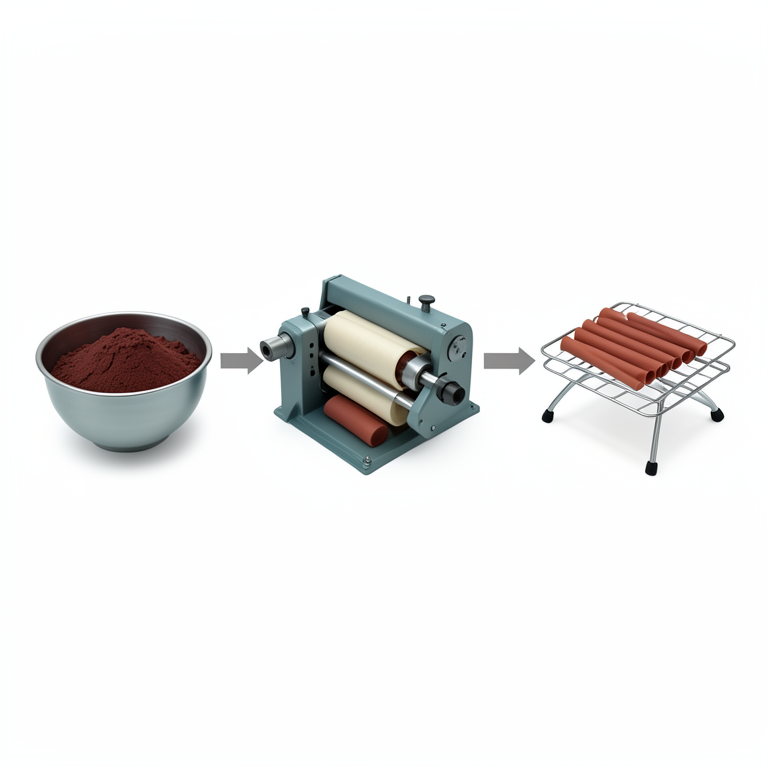
Pasta Production Process
AI-generated conceptual illustration (finger millet and wheat pasta infused with kokum extract). It explains the idea and does not show study data.
View source evidence ↗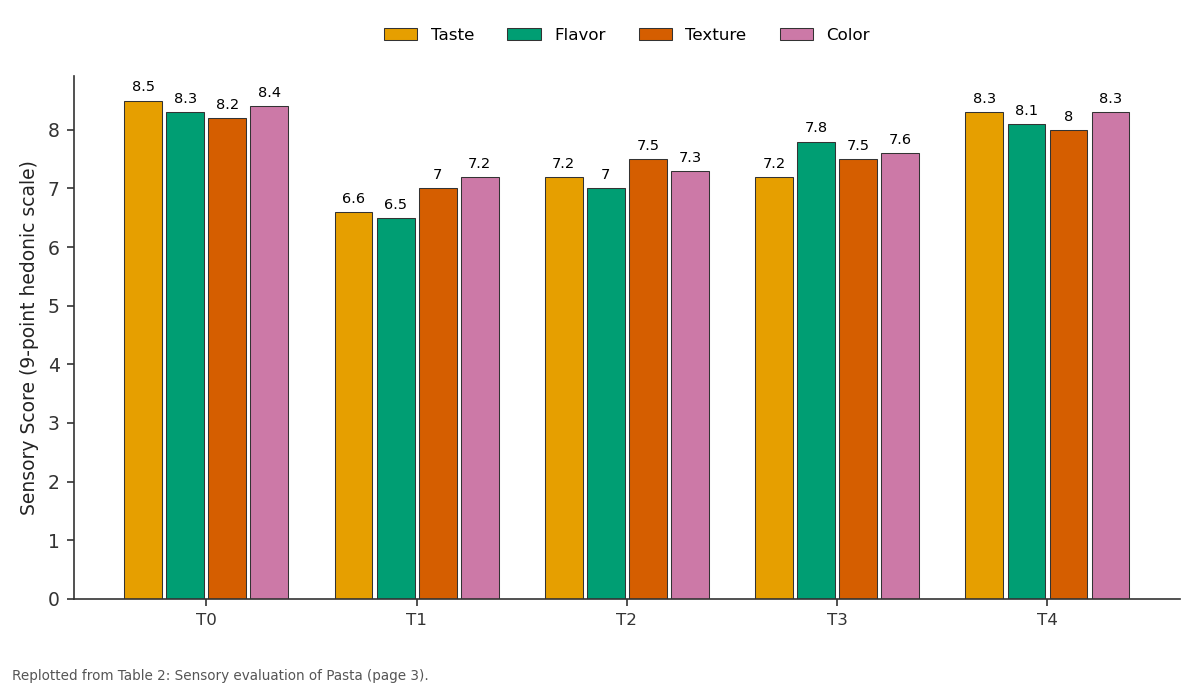
Taste and Flavor and more: T0 vs T1 vs T2 vs T3 vs T4
Replotted from Table 2 (page 3) of the original paper. Every bar is the paper's own table value.
View source evidence ↗Figures & tables
From the original paper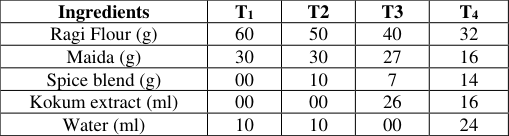 Table 1
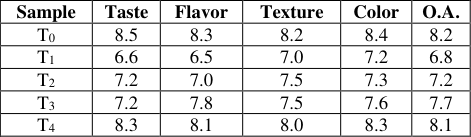 Table 2
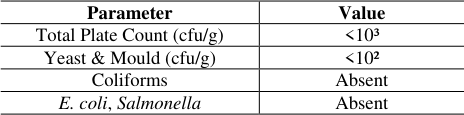 Table 5
 Table 6
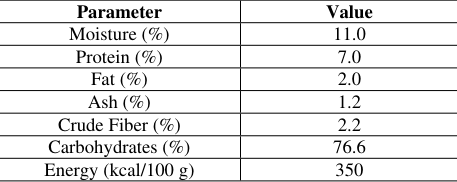 Table 3
 Table 7
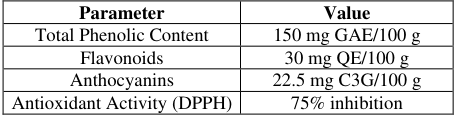 Table 4
Introduction
Kokum (Garcinia indica), a lesser-known tropical tree spice, is predominantly cultivated along the Western Ghats of India, especially in the states of Maharashtra, Goa, Karnataka, Kerala, and southern Gujarat. It also grows in parts of northeastern India, including Assam, Meghalaya, and West Bengal. Despite its widespread cultivation, kokum remains underutilized and lacks mainstream recognition, even though it possesses valuable medicinal and functional properties. Traditionally, kokum trees are grown alongside mango and cashew orchards, and are also found near areca nut and coconut plantations, as well as in kitchen gardens (Ranveer & Sahoo, 2017) [25] . Finger millet (Eleusine coracana), commonly known as ragi or mandua, is a highly nutritious cereal grain belonging to the Poaceae family. Native to Africa and widely cultivated in India, it is available in several color variants-ranging from white and tan to red, brown, and violet. Red cultivars are especially popular in Sri Lanka, Nepal, Madagascar, Malaysia, Uganda, Japan, and across the Indian subcontinent (Jagati et al., 2021) [19] . Due to its dense nutritional profile, finger millet is often used in supplementary feeding programs. It is an excellent source of dietary fiber, iron, calcium, phosphorus, and antioxidants, and is associated with health benefits such as weight management, cholesterol reduction, and enhanced bone health (Karki et al., 2020) [21] . Wheat, in contrast, is one of the most commonly consumed cereal grains globally due to its favorable processing characteristics, storage stability, and versatility in food applications. It continues to be a staple for the production of bread, pasta, noodles, biscuits, and other baked goods, retaining dominance in the global flour industry (Harke et al., 2022) [17] . However, with growing awareness of health and sustainability, there is an increasing shift toward the consumption of underutilized grains and the adoption of innovative food processing technologies. Millets-particularly finger millet-are being increasingly valued for their nutrient density, resilience to climate variability, and health-promoting properties (Yadav et al., 2021) [29] . Ragi's richness in fiber, iron, calcium, and natural antioxidants makes it a promising base for developing functional and health-oriented food products (Chethan & Malleshi, 2007) [12] . Simultaneously, there is a growing consumer preference for natural, traditional ingredients that contribute not only to health benefits but also to sensory satisfaction. Kokum, recognized for its tangy taste and high levels of hydroxycitric acid (HCA) and anthocyanins, presents a unique opportunity for fortification in staple foods (Joshi et al., 2013) [20] . The integration of kokum with finger millet in pasta formulation has the potential to create a gluten-free, antioxidant-rich, and consumer-appealing functional food. The present study focuses on the development and evaluation of kokum-infused finger millet pasta as a nutritious, value-added alternative to conventional wheatbased products. The research aims to support the diversification of millet-based offerings, promote the use of traditional functional ingredients, and contribute to the growing domain of health-conscious food innovations. The following sections detail the methodology, results, and conclusions derived from this investigation.
Materials and Methods Selection and Procurement of Raw Materials
All raw materials used in the development of the kokumincorporated ragi pasta were sourced from local suppliers in Pune, Maharashtra. The primary ingredients included finger millet (ragi) flour, refined wheat flour, kokum (Garcinia indica) extract, water, and a spice blend composed of traditional Indian spices. The spice blend was formulated inhouse using dried and powdered forms of turmeric, cumin, coriander, black pepper, red chili, and ginger to enhance both flavor and functionality. All ingredients were selected based on their freshness, quality, and suitability for foodgrade applications.
Preparation Method for Kokum-Ragi Pasta
The preparation of kokum-infused finger millet pasta was carried out using a standardized extrusion-based method by modifying the method given by Alfiya, P. V. et al (2021) [1] . Each step in the process was carefully monitored to ensure uniformity and reproducibility across all formulation trials. Initially, all raw ingredients were accurately weighed using a digital kitchen balance with a sensitivity of 0.01 grams to maintain precision. The finger millet and refined wheat flours were then pre-blended and sifted to ensure uniform binding and achieve the desired texture. The weighed flours were mixed thoroughly with kokum extract and water to form a homogeneous dough. This mixture was fed into an automatic pasta-making machine, where it was kneaded and extruded through a pasta die to form short, cylindrical pasta shapes. The extruded pasta was then manually cut into uniform lengths for consistency in appearance and cooking behavior. Finally, the pasta samples were air-dried for 4 to 6 hours under ambient conditions (Approximately 28-30 °C) to reduce moisture content and stabilize the product for further analysis. The inclusion of kokum extract aimed to enrich the pasta with natural antioxidants, improve its color appeal with anthocyanins, and introduce a subtle tangy flavor. Finger millet was used as the primary base to enhance the dietary fiber and micronutrient profile of the product.
Analytical Methods
To determine the physical and nutritional properties of the product, the following analytical procedures were employed:
Moisture Content
Approximately 10 g of the sample was accurately weighed in a pre-dried moisture dish and dried in a hot air oven at 105±2 °C to constant weight. After drying, the sample was cooled in a desiccator and reweighed. Moisture content was calculated as the percentage loss in weight. (AOAC International, 2019, Method 925.10).
Protein Estimation
One gram of the defatted sample was digested in concentrated sulfuric acid using a catalyst mixture (usually potassium sulfate and copper sulfate) in a Kjeldahl digestion unit. After digestion, the mixture was neutralized with sodium hydroxide and distilled using a Kjeldahl distillation unit. Ammonia was collected in a boric acid solution and titrated with 0.
Ash Content
Approximately 5 g of sample was weighed into a preweighed crucible, charred on a low flame, and then incinerated in a muffle furnace at 550±25 °C for 5-6 hours until a white or gray ash was obtained. The crucible was cooled in a desiccator and weighed. (AOAC International, 2019, Method 923.03).
Crude Fibre
Approximately 2 g of the dried, defatted sample was digested sequentially with 1.25% sulfuric acid followed by 1.25% sodium hydroxide solution under controlled conditions using a fiber estimation apparatus. The residue was then dried, weighed, incinerated in a muffle furnace at 550±25 °C, cooled in a desiccator, and reweighed. The difference in weights before and after ashing was used to calculate crude fiber content. (AOAC International, 2019, Method 962.09).
Carbohydrate Estimation
The carbohydrate content of the sample was calculated by difference using the formula:
Energy Value Calculation
The energy content of the sample was calculated using the Atwater general factors:
(USDA Handbook No. 74, Merrill & Watt, 1973) [24] .
Ascorbic Acid (Vitamin C) Estimation
The sample was extracted with 4% oxalic acid solution and filtered. An aliquot was titrated against a standard 2,6dichlorophenolindophenol (DCPIP) dye solution until a persistent pink endpoint was observed. The ascorbic acid content was calculated from the volume of dye consumed.
(AOAC International, 2019, Method 967.21).
Total Anthocyanin Content (TAC) Determination
The total anthocyanin content was determined according to the method described by Suradkar et al. (2017) [28] . Anthocyanins were extracted using acidified ethanol, and the absorbance of the clear extract was measured at 535 nm using a UV-Vis spectrophotometer. The anthocyanin content was calculated using the absorbance value, dilution factor, molar absorptivity, and molecular weight of cyanidin-3-glucoside, and expressed as mg cyanidin-3glucoside equivalents per 100 g of fresh sample.
Total Phenolic Content (TPC)
TPC was determined using the Folin-Ciocalteu method. Two grams of powdered sample were extracted with 80% methanol, and 0.5 ml of the extract was mixed with 2.5 ml of 10% Folin-Ciocalteu reagent and 2 ml of 7.5% sodium carbonate. The mixture was incubated for 30 minutes in the dark, and absorbance was measured at 765 nm. The results were expressed as mg gallic acid equivalents (GAE) per 100 g of sample. (Singleton & Rossi, 1965) [27] .
Total Flavonoids
Flavonoid content was determined by the aluminum chloride colorimetric method. One ml of the methanolic extract was mixed with 4 ml distilled water and 0.3 ml of 5% sodium nitrite solution. After 5 minutes, 0.3 ml of 10% aluminum chloride was added, followed by 2 ml of 1 M sodium hydroxide. The absorbance was measured at 510 nm, and results were expressed as mg quercetin equivalents (QE) per 100 g of sample. (Chang et al., 2002) [11] .
Antioxidant Activity (DPPH Radical Scavenging)
Antioxidant activity was assessed using the DPPH assay. One ml of the extract was mixed with 2 ml of 0.1 mM DPPH solution prepared in methanol. The mixture was kept in the dark for 30 minutes, and the absorbance was read at 517 nm. The percent inhibition of DPPH was calculated to determine antioxidant potential. (Brand-Williams et al., 1995) [10] .
Iron Content Estimation
Iron content was estimated using the colorimetric method. One gram of sample was digested with a mixture of nitric acid and perchloric acid. The digested sample was filtered and reacted with 1, 10-phenanthroline reagent under acidic conditions to develop a red-colored complex. The absorbance was measured at 510 nm, and the iron content was calculated from a standard curve. (AOAC International, 2019, Method 944.02).
Microbial Analysis
Microbial Analysis
Results and Discussion
Results and Discussion
Sensory Evaluation
Sensory analysis was carried out by a semi-trained panel of 20 individuals aged between 20 and 50 years. Evaluation criteria included appearance, aroma, texture, flavor, and overall acceptability. A 9-point hedonic scale was used for scoring. profile. The presence of anthocyanins from kokum imparted an attractive reddish-purple hue (Joshi et al., 2013) [20] , while the spice blend enhanced both flavor and aroma, contributing to a highly acceptable product. Trial T 0 , used as a reference, was a market-available pasta made entirely from maida (Refined wheat flour). As expected, it scored the highest overall (O.A. 8.2), primarily due to consumer familiarity and the refined texture typical of commercial wheat pasta. However, despite being slightly lower in scores, T 4 's performance was comparable, showing that a gluten-free, millet-based pasta can compete favorably in terms of sensory attributes. Trial T 3 also showed high acceptability, particularly in flavor (7.8) and color (7.6), likely due to a slightly higher kokum concentration. Nevertheless, its marginally lower taste and texture scores suggest that excessive kokum may affect the balance of sensory appeal.
Trial T 1 , the initial modified trial with kokum and spices, scored the lowest among the experimental versions, indicating an imbalance in the spice-to-kokum ratio. However, a steady improvement in sensory scores from T 1 to T 4 reflects the positive impact of progressive formulation refinement and optimization. These findings confirm that the incorporation of kokum and spices, when optimized, significantly enhances the sensory quality of finger millet pasta. This aligns with earlier studies by Chethan & Malleshi (2007) [12] and Yadav et al. (2021) [29] , which emphasize the effectiveness of composite formulations in improving both nutrition and acceptability in millet-based food innovations. The high carbohydrate content (76.6%) confirms pasta's role as an energy-dense food, aligning with findings by Maske and Yadav (2022) [23] , who reported 73.8% carbohydrates in beetroot-based pasta. Protein content was 7%, slightly lower than the 9.95% reported by Singh and Emmanuel (2022) [26] in ragi-rice pasta but still sufficient for a plant-based product. The fiber content (2.2%) contributes to digestive health and satiety, which is comparable to 4% observed in moringa-based pasta by Getachew and Admassu (2020) [16] . The low fat (2.0%) and ash content (1.2%) are ideal for individuals seeking low-fat diets. The presence of 22.5 mg/100 g anthocyanins, derived from kokum extract, significantly enhances the nutraceutical value of the product. Anthocyanins are known for their antioxidant, anti-inflammatory, and anti-cancer potential (Joshi et al., 2013) [20] . Total phenolic content (150 mg GAE/100g) and flavonoids (30 mg QE/100 g) further strengthen the antioxidant profile, similar to values reported by Suradkar et al. (2017) [28] in other fruit-based functional products. The DPPH radical scavenging activity of 75% indicates potent antioxidant potential, promoting health benefits such as protection from oxidative stress and degenerative diseases. Though some loss of vitamin C occurred during processing, the final product retained a moderate amount (4.5 mg/100 g). This retention is consistent with established patterns of thermal degradation of vitamin C, as described in food processing literature (Fennema, 2008; Lee & Kader, 2000) [14, 22] . Iron content in the final pasta (4.5 mg/100 g) mainly originated from finger millet (ragi), known for its naturally high iron levels (Karki et al., 2020) [21] . This makes the pasta beneficial for individuals at risk of anemia, especially in regions where dietary iron intake is low.
Comparative Advantage and Functional Relevance
The integration of kokum and finger millet offers dual benefits: kokum contributes antioxidants like anthocyanins and vitamin C, while ragi enhances fiber and mineral content. Compared to conventional wheat pasta, this variant provides enhanced bioactivity, lower glycemic index, and improved micronutrient profile. The product aligns well with current consumer trends for gluten-free, plant-based, and functional foods (Yadav et al., 2021) [29] .
Conclusion
The successful development of kokum-infused finger millet pasta represents an innovative and nutritious adaptation of a familiar food product. By integrating the health-promoting properties of finger millet-known for its high fiber, iron, and calcium content-with the antioxidant-rich kokum, this formulation offers a compelling alternative to traditional wheat-based pasta.
Figures and tables from the paper
| Ingredients | T1 | T2 | T3 | T4 |
|---|---|---|---|---|
| Ragi Flour (g) | 60 | 50 | 40 | 32 |
| Maida (g) | 30 | 30 | 27 | 16 |
| Spice blend (g) | 00 | 10 | 7 | 14 |
| Kokum extract (ml) | 00 | 00 | 26 | 16 |
| Water (ml) | 10 | 10 | 00 | 24 |
Table text extracted from the original PDF; superscript letters are shown inline. The original table image is below.
View original table image
| Sample | Taste | Flavor | Texture | Color | O.A. |
|---|---|---|---|---|---|
| T0 | 8.5 | 8.3 | 8.2 | 8.4 | 8.2 |
| T1 | 6.6 | 6.5 | 7.0 | 7.2 | 6.8 |
| T2 | 7.2 | 7.0 | 7.5 | 7.3 | 7.2 |
| T3 | 7.2 | 7.8 | 7.5 | 7.6 | 7.7 |
| T4 | 8.3 | 8.1 | 8.0 | 8.3 | 8.1 |
Table text extracted from the original PDF; superscript letters are shown inline. The original table image is below.
View original table image
| Parameter | Value |
|---|---|
| Total Plate Count (cfu/g) | <10³ |
| Yeast & Mould (cfu/g) | <10² |
| Coliforms | Absent |
| E. coli, Salmonella | Absent |
Table text extracted from the original PDF; superscript letters are shown inline. The original table image is below.
View original table image
| Parameter | Value |
|---|---|
| Kokum extract | 20 mg/100 g |
| Pasta (T4) | 4.5 mg/100 g |
Table text extracted from the original PDF; superscript letters are shown inline. The original table image is below.
View original table image
| Parameter | Value |
|---|---|
| Moisture (%) | 11.0 |
| Protein (%) | 7.0 |
| Fat (%) | 2.0 |
| Ash (%) | 1.2 |
| Crude Fiber (%) | 2.2 |
| Carbohydrates (%) | 76.6 |
| Energy (kcal/100 g) | 350 |
Table text extracted from the original PDF; superscript letters are shown inline. The original table image is below.
View original table image
| Parameter | Value |
|---|---|
| Ragi flour | 3.75 mg |
| Spice blend | 0.75 mg |
| Pasta (T4) | 4.5 mg/100 g |
Table text extracted from the original PDF; superscript letters are shown inline. The original table image is below.
View original table image
| Parameter | Value |
|---|---|
| Total Phenolic Content | 150 mg GAE/100 g |
| Flavonoids | 30 mg QE/100 g |
| Anthocyanins | 22.5 mg C3G/100 g |
| Antioxidant Activity (DPPH) | 75% inhibition |
Table text extracted from the original PDF; superscript letters are shown inline. The original table image is below.
View original table image
References
28 in the original paper- Alfiya PV, Palanimuthu V, Megeri SN. Development of Ready-to-Cook Kodo Millet Pasta. Pharma Innovation J. 2021;10(6):106-110.
- AOAC International. Official Method 971.13 -Color of Food (Tintometer Lovibond Disc Method). In: Official Methods of Analysis. 21 st ed. 2019.
- AOAC International. Official Method 922.06 -Fat in Flour. In: Official Methods of Analysis. 21 st ed. 2019.
- AOAC International. Official Method 923.03 -Ash of Flour. In: Official Methods of Analysis. 21 st ed. 2019.
- AOAC International. Official Method 925.10 - Moisture in Flour. In: Official Methods of Analysis. 21 st ed. 2019.
- AOAC International. Official Method 944.02 -Iron in Foods by AAS. In: Official Methods of Analysis. 21 st ed. 2019.
- AOAC International. Official Method 962.09 -Crude Fiber in Foods. In: Official Methods of Analysis. 21 st ed. 2019.
- AOAC International. Official Method 967.21 - Ascorbic Acid in Vitamin Preparations and Juices. In: Official Methods of Analysis. 21 st ed. 2019.
- AOAC International. Official Method 2001.11 -Crude Protein in Cereal Grains and Oilseeds. In: Official Methods of Analysis. 21 st ed. 2019.
- Brand-Williams W, Cuvelier ME, Berset C. Use of a free radical method to evaluate antioxidant activity. LWT Food Sci Technol. 1995;28(1):25-30.
- Chang C, Yang M, Wen H, Chern J. Estimation of total flavonoid content in propolis by two complementary colorimetric methods. J Food Drug Anal. 2002;10(3):178-182.
- Chethan R, Malleshi NG. Functional properties of finger millet (Eleusine coracana L.) flours as influenced by different processing techniques. J Food Eng. 2007;79(2):529-536.
- FAO. Food energy -Methods of analysis and conversion factors. FAO Food Nutr Pap. 2003;77:1-97.
- Fennema OR. Fennema's Food Chemistry. Boca Raton, FL: CRC Press; 2008.
- FSSAI. Manual of Methods for Microbiological Analysis of Foods. Food Safety and Standards Authority of India; 2016. Available from: https://www.fssai.gov.in/upload/uploadfiles/files/Manu al_Microbiological_Analysis_Foods_12_06_2019.pdf 16. Getachew M, Admassu H. Production of pasta from moringa leaves-oat-wheat composite flour. Cogent Food Agric. 2020;6(1):1791921.
- Harke S, Megeri GB, Hadimani G, Megeri T. Effect of storage on quality characteristics of wheat. Int. J Res Eng Sci. 2022;10(10):12-33.
- ICMSF. Microorganisms in Foods 7: Microbiological Testing in Food Safety Management. Kluwer Academic/Plenum Publishers; 2002.
- Jagati P, Mahapatra I, Dash D. Finger millet (Ragi) as an essential dietary supplement. Int. J Home Sci. 2021;7(2):94-100.
- Joshi VC, Singh D, Satyanarayana T, Bhat TK. Garcinia indica Choisy (Kokum): A review of its botany, traditional uses, phytochemistry and pharmacology. J Ethnopharmacol. 2013;145(1):1-16.
- Karki A, Chandra A, Joshi S, Rawat P, Shilpa. An overview of Finger millet (Eleusine coracana). J Pharmacogn Phytochem. 2020;9(4):866-869.
- Lee SK, Kader AA. Preharvest and postharvest factors influencing vitamin C content of horticultural crops. Postharvest Biol Technol. 2000;20(3):207-220.
- Maske PP, Yadav KC. Development and quality evaluation of pasta incorporated with beetroot powder. Pharma Innovation J. 2022;11(6):1583-1586.
- Merrill AL, Watt BK. Energy value of foods: Basis and derivation. USDA Handb. 1973;74:1-105.
- Ranveer RC, Sahoo AK. Bioactive constituents of kokum and its potential health benefits. Nutr Food Toxicol. 2017;1(6):236-244.
- Singh K, Emmanuel G. Physico-chemical, nutritional and sensorial characteristics of ragi pasta enriched with rice and guar gum. Asian J Microbiol Biotechnol Environ Sci. 2022;24(4):[page numbers].
- Singleton VL, Rossi JA. Colorimetry of total phenolics with phosphomolybdic-phosphotungstic acid reagents. Am J Enol Vitic. 1965;16(3):144-158.
- Suradkar NG, Pawar VS, Shere DM. Physicochemical, proximate and bioactive composition of Jamun (Syzygium cuminii L.) fruit. Int. J Chem Stud. 2017;5(3):470-472.
- Yadav R, Devi GS, Thirumalisamy P, Grewal RB. Millets: A review on nutritional profile and health benefits. Front Nutr. 2021;8:678818.