
Research article · 2025 · Full text
International Journal of Advanced Chemistry ResearchIn vitro comparative analysis of hydrogen peroxide scavenging activity in Murraya koenigii and Moringa oleifera
Volume 7(5) · Pages 65–67 · DOI: 10.33545/26646781.2025.v7.i5a.280 ↗
Research areasMoringa oleifera research and applications
Abstract
Author-writtenMurraya koenigii and Moringa oleifera are well known for their therapeutic and nutritious role from the ancient time. Both plants are treasure of secondary metabolites including alkaloids, flavonoids, phenolic acids, and essential oils, offer the antioxidant potential. Present study investigates and compares the hydrogen peroxide (H₂O₂) scavenging capacity of methanolic extracts of Murraya koenigii leave (MKME) and Moringa oleifera leave (MOME). Extracts were prepared using Soxhlet extraction and confirmed via H₂O₂ scavenging assay using ascorbic acid as a reference. Both MKME and MOME displayed concentration-dependent antioxidant potential, while MKME exhibiting slightly higher antioxidant potential (55.76%) at 400 μg/mL compared to MOME (53.66%). These outcomes of the lant extract reveal the strong free radical scavenging properties to support their continual utilization as natural antioxidants in functional foods and therapeutic formulations.
Summary
Source-checkedPlain-language reading of the full paper, prepared with AI and checked against the text. Each point links to the authors' own words.
Why it matters
- Murraya koenigii and Moringa oleifera have been recognized since ancient times for their nutritional and therapeutic properties. View evidence ↗
- These plants contain secondary metabolites such as flavonoids, alkaloids, phenolic acids, and essential oils, which provide antioxidant potential. View evidence ↗
- Methanolic extracts of these leaves can counteract reactive oxygen species (ROS) and prevent cellular damage caused by oxidation. View evidence ↗
The question
- The study aims to investigate and compare how effectively methanolic extracts of Murraya koenigii (MKME) and Moringa oleifera (MOME) leaves scavenge hydrogen peroxide. View evidence ↗
What they did
- Leaves of both plants were collected from Dehradun, Uttarakhand, shade-dried, and ground into a coarse powder. View evidence ↗
- The methanolic extracts were obtained using a Soxhlet apparatus over three consecutive cycles. View evidence ↗
- The scavenging assay involved incubating different concentrations of the extracts with a 0.04 M H₂O₂ solution in phosphate buffer (pH 7.4) for 10 minutes, with absorbance measured at 230 nm. View evidence ↗
- Ascorbic acid (AA) served as the reference standard for comparing the antioxidant potential of the plant extracts. View evidence ↗
What they found
- Both MKME and MOME showed hydrogen peroxide scavenging activity that increased as the concentration of the extract increased. View evidence ↗
- MKME scavenging percentages were 41.13% at 100 µg/mL, 46.93% at 200 µg/mL, 49.11% at 300 µg/mL, and 55.76% at 400 µg/mL. View evidence ↗
What it means
- The authors conclude that both curry leaf and drumstick leaf methanolic extracts act as potent natural antioxidants due to their substantial hydrogen peroxide scavenging action. View evidence ↗
- The authors attribute the free radical neutralization capabilities of these extracts to the presence of phenolic acids and flavonoids. View evidence ↗
- The authors suggest that future research should use in vivo models and a wider variety of antioxidant assays to better understand the mechanisms of action and therapeutic potential. View evidence ↗
Visual summary
1 visualsIllustrations explain the paper; they do not show study data.
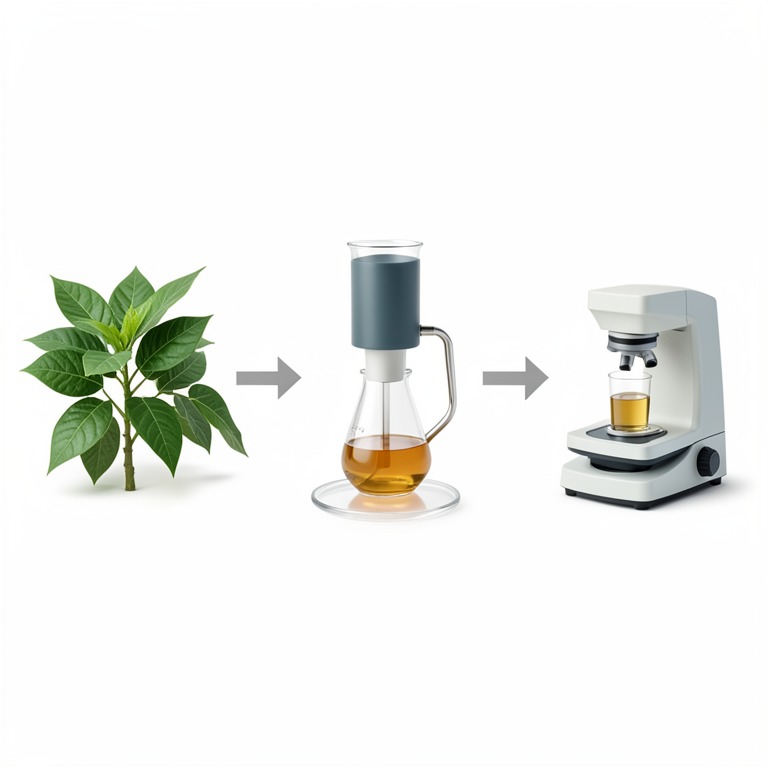
Experimental Workflow
AI-generated conceptual illustration (Murraya koenigii and Moringa oleifera leaves). It explains the idea and does not show study data.
View source evidence ↗Figures & tables
From the original paper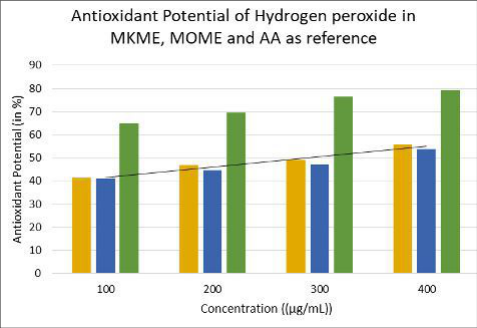 Figure 1
Introduction
Chalcones are organic compounds belonging to the flavonoid family and are commonly recognized by their structure, characterized by two aromatic rings joined by a three-carbon α,β-unsaturated carbonyl system [1][2][3] . They have attracted significant attention due to their diverse biological and pharmacological activities. These molecules are well known to found naturally in several plants and exhibited various beneficial properties, such as antioxidant, anti-inflammatory, antimicrobial, anticancer, and antiviral effects [4][5][6][7][8][9] . Because of their widespread presence in nature and multiple biological activities, chalcones have become important compounds for chemical synthesis and biological evaluations [10] . Plants are rich source of natural antioxidants which offer a vital role in improving health indicator. The antioxidant potential of different plant parts including leaves, stems, roots, seeds differ depending on their phytochemical conformation and extraction procedure [1,2] . Murraya koenigii or curry leaf and Moringa oleifera or drum stick are extensively exploited medicinal flora in traditional medicine systems, predominantly Ayurveda and Unani due to their culinary implication, rich phytochemical content, and widespread variety of pharmacological actions. Numerous studies have highlighted the antioxidant potential of both plants [3,4] . Curry leave are recognized to contain a diverse array of secondary metabolite, including alkaloids (mahanimbine, girinimbine), flavonoids (quercetin, kaempferol), phenolic acids (caffeic acid, chlorogenic acid), and essential oils such as caryophyllene and β-phellandrene. Correspondingly, drum stick is also rich in phenolic compounds, flavonoids, vitamins A, C, and E, and unique glucosinolate and isothiocyanates, which imparts in free radical scavenging activity. Plant extracts of curry leave and drumstick leave in methanol, have been revealed to display strong hydrogen peroxide antioxidant potential, demonstrating their capacity to counteract reactive oxygen species (ROS) and prevent oxidative cellular damage. Methanolic extracts of drum stick leaves have proved significant antioxidant activity in DPPH method (2, 2diphenyl-1-picrylhydrazy), ABTS methods (2, 2′-azinobis (3-ethylbenzothiazoline-6-sulfonic acid)), and FRAP assays.
(Fluorescence recovery after Photobleaching), though curry leave has likewise been stated to reduce oxidative stress markers in vitro and in vivo. Furthermore, both plants display anti-inflammatory, hypoglycaemic, hepatoprotective, and antimicrobial potential [7,8] . Drumstick has been widely investigated as hypoglycaemic agents and protecting liver tissues against toxin-induced damage. Both plants employed as nutraceuticals and functional foods due to their high nutrient content, particularly in leaves [9,10] . The amalgamation of traditional knowledge with contemporary pharmacological research reinforces the potential of these plants as promising candidates for the development of natural antioxidant therapies. Leave of both plants, contributing the presence of essential minerals viz. calcium, iron, and magnesium. Functionally, both plants display strong free radical scavenging activity established through assays such as DPPH, ABTS, and FRAP, due to presence of in situ antioxidants including flavonoids and phenolic acids. Overall, they possess anti-inflammatory potential through inhibition of inhibiting mediators including COX and TNF-α, hypoglycaemic action by regulating blood glucose and insulin levels, hepatoprotective potential via defence against toxin-induced liver damage, and antimicrobial activities against bacteria and fungi. 11
Materials and Methods Apparatus
All glassware was suitably cleaned and calibrated under controlled room conditions. The experiment was conducted using a Lab India (UV3200) single-beam UV-VIS spectrophotometer in the Central Instrumentation Laboratory (CIL) of the College of Pharmacy, Shivalik Campus, Dehradun and Uttarakhand.
Reagents and solutions
AR-grade chemicals were used in the study procure from the Pharmacy store of department. Hydrogen peroxide (30%v/v) from Avirise, Ascorbic acid from CDH, and distilled water were used during the study.
Preparation of plant extract
Leaves of Murraya koenigii and Moringa oleifera, were locally collected from Dehradun, Uttarakhand subjected to shade dry and converted into coarse powder. Furthermore, methanolic extraction was performed through a Soxhlet apparatus over consecutive three successive cycles. The subsequent extracts were concentrated until a dense oleoresin which is comprised by both volatile essential oils and non-volatile resinous bioactive compounds. A stock solution with a concentration of 10 mg/mL was prepared for each extract by dissolving the oleoresin in methanol. MKME and MOME was indicated furthermore for the methanolic extract of leave of Murraya koenigii and Moringa oleifera respectively [12] .
Antioxidant activity of hydrogen peroxide
To evaluate antioxidant potential of MKME and MOME, a hydrogen peroxide (H₂O₂) scavenging assay was carried out by the previous literature. A 0.04 M H₂O₂ solution was prepared in 0.05M phosphate buffer (pH 7.4). Different concentration of MKME and MOME was prepared and incubated with the H₂O₂-buffer solution for 10 minutes separately. Absorbance was measured at 230 nm wavelength using a single-beam UV-Visible spectrophotometer.
Ascorbic acid (AA) was employed as a reference to compare antioxidant potential of MKME and MOME [13] .
Results and Discussion
The MKME and MOME exhibited concentration-dependent in vitro hydrogen peroxide scavenging activity. Each concentration of MKME and MOME exhibits in the 0.05 M phosphate buffer with 0.04 M H₂O₂ solution. For MKME, the scavenging percentages were 41.13, 46.93, 49.11 and 55.76 at 100, 200, 300, and 400 µg/mL respectively. The corresponding outcomes of scavenging percentages for MOME were observed less than for MKME i.e., 40.95, 44.76, 47.16, and 53.66 respectively. Antioxidant activity of AA demonstrated considerably remarkable reduction with scavenging values of 64.79, 69.54, 76.34, and 81.35 at the same concentrations. Study suggests that MKME and MOME both display the good level of antioxidant potential at 200, 300, and 400 μg/mL concentrations, however but the maximum scavenging activities was observed at 400 μg/mL for the MKME and MOME. Results was also revealed that MKME (55.76%) exposed improved percentage antioxidant potential than MOME (53.66%). Figure 1 illustrations the hydrogen peroxide antioxidant potential of MKME, MOME, and AA. The stem and seed of curry plants also revealed the presence of in situ antioxidant components including phenolic compounds, flavonoids, tannins, and terpenoids. In comparison of leave, methanolic extracts of seed and stem displayed moderate to significant H₂O₂ scavenging activity.
The hydrogen peroxide scavenging potential of the stem and seed of drum stick has been investigated limited, however both parts possessing antioxidant potential due to the presence of various bioactive compounds [14,16] .
Conclusion
The comparative analysis of methanolic extracts of Curry leave and Drum stick leave addresses their substantial hydrogen peroxide scavenging action, supporting their role as potent natural antioxidants. MKME and MOME displayed a dose-dependent increase in antioxidant potential, MKME showed slightly superior activity compared to MOME. The presence of bioactive compounds such as flavonoids and phenolic acids contributes to their free radical neutralization capabilities. These results not only reinforce traditional knowledge but also support the ongoing exploration of these plants for development into natural antioxidant therapies. Future studies employing diverse antioxidant assays and in vivo models could further elucidate their therapeutic potential and mechanisms of action.
References
16 in the original paper- Negi A, Ghildiyal P, Suyal J, Dobhal K, Semwal A. Pharmacognostical studies and preliminary phytochemical investigation on the bark of Bauhinia variegate (Caesalpiniaceae). Int. J Res Ayurveda Pharm. 2017;8(2):155-161.
- Bhatia R, Thapliyal K, Kumar D. Phytochemical and therapeutic aspects of Morinda citrifolia L. (Noni plant): A review. Res J Pharmacognosy Phytochem. 2015;7(3):167-174.
- Reddy BM, Dhanpal CK, Lakshmi BV. A review on curry leaves (Murraya koenigii): Versatile multipotential medicinal plant. Int J Adv Pharm Med Bioallied Sci. 2018;6(1):31-41.
- Oyeyinka AT, Oyeyinka SA. Moringa oleifera as a food fortificant: Recent trends and prospects. J Saudi Soc Agric Sci. 2018 Apr 1;17(2):127-136.
- Batool S, Khera RA, Hanif MA, Ayub MA, Memon S. Curry leaf. In: Medicinal Plants of South Asia. Elsevier, 2020 Jan 1, p. 179-190.
- Lin H, Zhu H, Tan J, Wang H, Wang Z, Li P, et al. Comparative analysis of chemical constituents of Moringa oleifera leaves from China and India by ultra-performance liquid chromatography coupled with quadrupole time of flight mass spectrometry. Molecules. 2019 Mar 7;24(5):942.
- Singh AP, Wilson T, Luthria D, Freeman MR, Scott RM, Bilenker D, et al. LC-MS-MS characterisation of curry leaf flavonols and antioxidant activity. Food Chem. 2011 Jul 1;127(1):80-85.
- Sreelatha S, Padma PR. Antioxidant activity and total phenolic content of Moringa oleifera leaves in two stages of maturity. Plant Foods Hum Nutr. 2009 Dec;64:303-311.
- Farooq M, Ain ULI, Iftikhar AZ. Investigating the therapeutic potential of aqueous extraction of curry plant (Murraya koenigii) leaves supplementation for the regulation of blood glucose level in type 2 diabetes mellitus in female human subjects. Pak J Pharm Sci. 2023 Mar 1;36(2):601-605.
- Ahmed E, Ebrahim HS. Biochemical and molecular study on the effect of Murraya koenigii (curry) and Moringa oleifera on cardiac mitochondrial dysfunction in diabetic rats. World J Pharm Pharm Sci. 2018 Oct 17;7:1062-1076.
- Soni A, Pandiyan P, Elumalai P. Effective treatment of curry (Murraya koenigii) and Moringa oleifera leaves extracts on melanosis of Pacific white shrimp (Litopenaeus vannamei) during chilled storage. J Aquac Food Prod Technol. 2021 Nov 26;30(10):1304-1314.
- Rathaur H, Juyal D, Mukhopadhyay S, Pokhriyal AC. Extraction and phytochemical evaluation of Urtica dioica. Tuijin Jishu J Propuls Tech. 2023;44(3).
- Chaurasia PK, et al. Hydrogen peroxide scavenging by methanolic extracts of coriander: An in vitro antioxidant study. Pharmaceut Drug Regul Aff J. 2025;8(1):000162.
- Iqbal Z, Mehmood HK, Hussain M, Mehmood MH, Choudhry MN. Antioxidant activity of essential oil from the leaves and stems of Murraya koenigii. World J Pharm Res. 2017 May 3;6(7):267-273.
- Kumbhare MR, Guleha V, Sivakumar T. Estimation of total phenolic content, cytotoxicity and in vitro antioxidant activity of stem bark of Moringa oleifera. Asian Pac J Trop Dis. 2012 Apr 1;2(2):144-150.
- Kumari N, Pal Y, Tailor CS, Negi D, Syan J, Badhani A, et al. Unraveling the nutritional perspectives of probiotics and prebiotics in female healthcare. Recent Adv Food Nutr Agric, 2025 May 8. DOI: 10.2174/012772574X374047250325183211.
Cited by 2
From OpenAlex, OpenCitations and reference lists read by Scinovex
- Therapeutic Potential of Disubstituted [{[5-(2-Chloro phenyl)-1,3,4-thiadiazole-2-yl]imino}-methyl]phenyl Derivatives as α-Amylase Antagonists: Synthesis, In silico and In vitro Screening ↗
D. Ravi Sankar Reddy, T. Srinivasarao · Asian Journal of Chemistry · 2026
During the last few decades medicinal chemist focus turns to the novel heterocyclic moiety thiadiazole having similar stereotype with thiazole ring with hypoglycemic activity. Henceforth, this study aims to synthesise the designed novel 2,5-diarylsubstituted 1,3,4 thiadiazole derivatives (TDZ) by two step process using microwave irradiation method. The title compounds with electron withdrawing groups (nitro), electron donating groups (hydroxy, dimethyl amine)…
❝ 0PDF - Quinoline-derived transition metal complexes: synthesis, characterization, biological evaluation, catalytic activity, and theoretical studies ↗
Nazma Tabassum, Nouman, Umaira Mirza, Afreen Choudhary, Saiema Ahmedi, Saba Iqbal et al. · Inorganica Chimica Acta · 2026
❝ 0