
Research article · 2025 · Full text
International Journal of Geography Geology and EnvironmentPollution and contamination in the Gomati River along the Lucknow area: A critical review
Volume 7(4) · Pages 29–33 · DOI: 10.22271/27067483.2025.v7.i4a.358 ↗
Research areasWater Quality and Pollution Assessment
Abstract
Author-writtenThe Gomati,a groundwater-fed tributary of the Ganga River, originating from Gomath Tal, near MadhoTanda village in Puranpur tehsil, Pilibhit District, Uttar Pradesh which is now witnessing alarming levels of pollution in its Lucknow area due to rising anthropogenic pressures. This critical review synthesizes recent experimental studies and model-based assessments to evaluate the physico-chemical and biological degradation of the river’s water quality. Employing multivariate analyses, fuzzy soft set theory, and hydrological simulation models, this paper investigates the regional and temporal patterns of pollution, identifies the dominant sources, and evaluates the efficacy of existing mitigation strategies. The findings underscore the inadequacy of current technical interventions, advocating for an integrative, adaptive, and community-oriented approach to restore the river’s ecological health.
Summary
Source-checkedPlain-language reading of the full paper, prepared with AI and checked against the text. Each point links to the authors' own words.
Why it matters
- The Gomati River is a key tributary of the Ganga in Uttar Pradesh, serving essential ecological, hydrological, and socio-cultural roles. View evidence ↗
- Rapid urban growth and poor wastewater infrastructure have led to increased pollution from domestic sewage, industrial waste, and solid waste. View evidence ↗
- Agricultural runoff containing pesticides, phosphates, and nitrates adds non-point source pollution that degrades the river's biochemical state. View evidence ↗
The question
- This review aims to analyze the distribution of contaminants, identify primary pollution sources, and evaluate current mitigation strategies in the Lucknow area of the Gomati River. View evidence ↗
What they did
- The study synthesizes recent experimental data and model-based assessments using hydrological simulations, fuzzy soft set theory, and multivariate analyses. View evidence ↗
- The Water Evaluation and Planning (WEAP) system was used in cited research to forecast future water quality trends in the Lucknow stretch. View evidence ↗
- A Weighted Fuzzy Soft Expert System (WFSES) was developed to assess water quality in data-scarce and highly variable environments. View evidence ↗
What they found
- Simulations project that by 2030, water quality will drop below CPCB Class B standards, making the river unsuitable for outdoor bathing. View evidence ↗
- Principal Component Analysis showed that over 82% of the variance was explained by two components, with the first linked to organic and microbial pollution from untreated domestic waste. View evidence ↗
- Dissolved oxygen (DO) levels frequently drop below 2 mg/L downstream of sewage outfalls and stormwater drains, creating hypoxic conditions. View evidence ↗
- Stormwater runoff containing organic waste, hydrocarbons, and heavy metals enters the river via more than 40 unregulated drains. View evidence ↗
What it means
- The absence of real-time, continuous monitoring systems is a significant gap that hinders timely remediation efforts. View evidence ↗
Visual summary
1 visualsIllustrations explain the paper; they do not show study data.
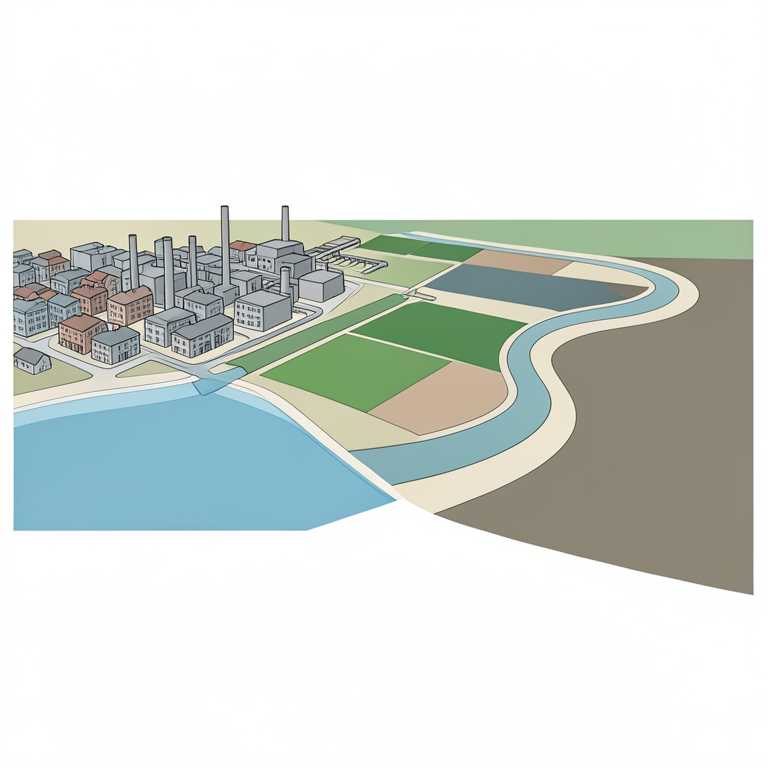
Sources of Gomati River Pollution
AI-generated conceptual illustration (Gomati River flowing through an urban and agricultural landscape). It explains the idea and does not show study data.
View source evidence ↗Introduction
The Gomati, a prominent tributary of the Ganga River, represents far more than a flowing waterbody which embodies a convergence of ecological utility, hydrological centrality, and socio-cultural identity, particularly within the regional and historical context of Uttar Pradesh. Historically, revered and functionally indispensable, this river has long sustained agrarian livelihoods, facilitated urban water supply, and anchored the ecological health of terrestrial landscapes. Although, the passage of the Gomati through Lucknow-a city undergoing rapid demographic and spatial transformation-has rendered its waters increasingly vulnerable to a spectrum of anthropogenic stressors. Unchecked urban expansion, coupled with an inadequate wastewater management infrastructure, has intensified the inflow of untreated domestic sewage, industrial discharges, and solid waste into the river's main stem (Kumar et al., 2013, p. 338) [2] . The magnitude of contamination is further exacerbated by the proliferation of impervious surfaces within the city's expanding footprint, which amplifies stormwater runoff. This runoff, often loaded with heavy metals, hydrocarbons, and organic waste, directly enters the river through more than 40 unregulated drains (Kushwah et al., 2023, p. 4) [3] . Industrial waste and peri-urban settlements discharge untreated or partially treated effluents, including pharmaceutical residues, chemical pollutants, and nutrient-rich waste, into the Gomati, transforming it into a receptacle for urban detritus rather than a lifeline for the region. Notably, agricultural runoff-laden with nitrates, phosphates, and pesticide residues from the broader catchment-contributes additional non-point source pollution, further deteriorating the river's biochemical profile (Das et al., 2024, p. 2) [1] . Climatic uncertainty further adds another layer of complexity, as variable rainfall patterns and rising temperatures influence the hydrological dynamics of the river, affecting both its volumetric flow and self-purification capacity. Seasonal discharge during lean period diminishes the riversassimilative potential which allow the pollutants to accumulate at toxic concentrations, particularly in urban areas. This synergy between anthropogenic pressures and climate-induced stress has led to the degradation of critical water quality indicatorssuch as biological oxygen demand (BOD), chemical oxygen demand (COD), dissolved oxygen (DO), and total coliforms-falling well below the standards prescribed for bathing or drinking purposes (Kumar, 2018, p. 5) [4] .
Apart from the bio-physical indicators, the crisis enveloping the Gomati is symptomatic of deeper institutional and planning failures. Urban planning processes have historically overlooked the rivers ecological edge, prioritizing land exploit and infrastructure over watershed integrity. The resultant policy fragmentation, wherein river governance remains siloed across municipal, state, and central bodies, has precluded the emergence of an integrated water management regime. Moreover, the lack of continuous and real-time monitoring systems hampers timely interventions, thereby widening the gap between degradation and remediation (Pankaj Kumar, 2018, p. 8) [4] . So, the critical review seeks to reveal the interconnected dimensions of river pollution within the Lucknow area of the Gomati. By observing recent empirical findings and modeling projections and theoretical frameworks which explores the regional distribution of contaminants, identifies dominant pollution sources, and evaluates the efficacy of mitigation strategies currently in place. Its goal is not only to evaluate the document environmental decline but also the path toward holistic, equity-centered river governance. In order to analyse situates the Gomati's plight within broader debates on urban ecology, environmental justice, and the politics of infrastructure in contemporary South Asia.
Sources and Nature of Pollution
The decay of the Gomati River, especially along its Lucknow area, is the result of a complex interplay between point and non-point sources, which contributes the rivers declining ecological and social health. Point source pollution is largely linked to the direct discharge of untreated or partially treated effluents from municipal and industrial sectors. Urban localities such as Sitapur and central Lucknow is the major contributors of the domestic sewage, waste from sugar mills, dairy processing plants, and distilleries entering the river with alarming regularity. These facilities, often operating with outdated or inefficient effluent treatment mechanisms, allow a significant volume of organic and chemical waste to reach the waterway untreated, thereby increasing the biological and chemical load on the system (Kumar et al., 2013, p. 338) [2] . Contemporaneously, non-point source pollution has taken on an increasingly insidious role, especially in peri-urban and agricultural zones along the river. These sources, though more challenging to monitor and regulate, contribute substantially to the cumulative toxicity of the river. Seasonal agricultural runoff particularly during the monsoon transports a mixture of urea-based fertilizers, phosphate-rich manure, pesticide residues, and sediment-bound heavy metals into the river system. Studies suggests that these runoff episodes are sequential but intense, leading to lack of nutrients that trigger eutrophication and disturb the rivers natural biochemical equilibrium (Das et al., 2024, p. 4) [1] . Survey of water quality indicators across multiple sampling areas further substantiates the deteriorating conditions. Parameters such as total suspended solids (TSS), total dissolved solids (TDS), biochemical oxygen demand (BOD), chemical oxygen demand (COD), and concentrations of nitrates consistently exceed the permissible limits set by national water quality standards. The frequency of heavy metals particularly iron, cadmium, copper, and arsenic indicate the additional risks not only to aquatic organisms but also to human populations depends on the river for secondary water needs (Kushwah et al., 2023, p. 6) [3] . Primarily, the elevated BOD level detected in urban hotspots like Daliganj, Baikunth Dham, and the Gomti Barrage. These sites show reduced dissolved oxygen concentrations, indicating a compromised capacity of the river to support aerobic life. The depletion of oxygen in these areas is a direct outcome of organic overload from sewage, which stimulates microbial activity that consumes dissolved oxygen at a rate exceeding natural replenishment. This process not only threatens aquatic biodiversity but also destabilizes the rivers self-purification mechanism, allowing further accumulation of toxins and pathogens in the water column (Kumar et al., 2013, p. 340; Kushwah et al., 2023, p. 7) [2,3] . Point sources pure fall under regulatory oversight, enforcement remains weak or inconsistent. Again, the diffuse nature of non-point sources challenges traditional regulatory frameworks, calling for a paradigm shift toward watershed-scale monitoring and land-use planning. Without label both ends of the pollution spectrum urban-industrial emissions and rural-agricultural runoff the prospects for restoring the Gomati to a viable ecological and socioeconomic resource remain bleak.
3.
Spatio-Temporal Variations and Modeling Approaches Considerating the dynamics of riverine pollution requires both a snapshot of current conditions and ability ofthe project future scenarios shaped by ongoing anthropogenic pressures. In this regard, the application of simulation and statistical models has become indispensable for evaluating the trajectory of water quality contamination and identifying regional patterns of ecological risk. One of the most comprehensive model efforts for the Gomati River was undertaken (PankajKumar, 2018) [4] who employed the Water Evaluation and Planning (WEAP) system to forecast future water quality trends along the Lucknow stretch. His simulations are based on business-as-usual (BAU) assumptions, integrated key drivers such as population growth, climate variability, urban sprawl, and existing wastewater treatment capacities. The model projected a troubling scenario: by 2030, water quality would fall below Class B standards as defined by the Central Pollution Control Board (CPCB), rendering the river unsuitable even for activities such as outdoor bathing, let alone supporting aquatic biodiversity (Kumar, 2018, p. 7) [4] . Crucially, the WEAP model not only present a linear forecast but also highlighted the limits of existing mitigation strategies which suggesting that the planned expansion of sewage treatment infrastructure. Moreover, when implemented without systemic changes, would fail to meet the quality thresholds. The model's sensitivity to urban land use change and rainfall variation also underscored how seasonal shifts could worsen pollutant concentrations due to reduced dilution capacity during lean-flow months (Kumar, 2018, p. 9) [4] . The insights offer not only a quantitative warning but also a diagnostic lens through which policy gaps and infrastructural bottlenecks can be label in a targeted manner. Enhancing the simulation-based understanding, Kushwah et al. (2023) [3] adopted a multivariate statistical approach to assess regional variation in the Gomati's water quality. By analyzing9physico-chemical parameters ranging from turbidity, pH to BOD, COD, and total hardness across 9 sampling locations in Lucknow. The researchers employed Cluster Analysis (CA) and Principal Component Analysis (PCA) to identify pollution hotspots and infer potential sources. Cluster analysis grouped the locations into three distinct classes, ranging from relatively less polluted to critically contaminated zones. Sites like SS4, SS7, and SS8 emerged as severely impacted, largely due to their proximity to urban drains, informal settlements, and industrial effluent discharge points (Kushwah et al., 2023, p. 5) [3] . The PCA results more refined observations by identifying latent variables driving pollution. Two principal components explained over 82% of the variance in the database with the first component strongly associated with parameters like COD, BOD, and total coliforms indicative of organic and microbial pollution stemming basically from untreated domestic waste. The second component was associated with mineral pollutants and heavy metals, signaling the influence of both industrial discharges and leaching from contaminated soils (Kushwah et al., 2023, p. 6) [3] . Subtle statistical disaggregation is vital which not only quantifies pollution levels but also traces them back to specific activities and land-use order. Altogether the simulation and statistical modeling approaches create a much more complete picture of the spatio-temporal dynamics affecting the Gomati River. It reinforces the urgency of rethinking mitigation not as a single-layered expansion of infrastructure, but as a multidimensional strategy incorporating urban planning, seasonal flow management, industrial zoning, and community engagement. Beyond integrated interventions, the Gomati's decline from a lifeline to a liability will become a statistical inevitability rather than an ecological challenge.
Novel Techniques for Pollution Assessment
Context the limitations of conventional water quality assessment tools, many of which rely on deterministic crisp database ill-suited to capture the complexities and uncertainties of real-world environmental systems recent scholarship has begun to adopt more flexible, hybrid analytical approaches. One particularly innovative contribution in this regard is the development of a Weighted Fuzzy Soft Expert System (WFSES) by Das et al. (2024) [1] , specifically designed to assess riverine water quality in highly variable and data-scarce contexts like that of the Gomati River. Durability of the WFSES lies in its accumulation of fuzzy logic with soft set theory, enabling it to account for imprecision, subjectivity, and incomplete data all of which are common challenges in environmental regulation. Contrasting, traditional indices that rely on fixed thresholds, this model assigns fuzzy membership values to various water quality parameters such as dissolved oxygen (DO), pH, total coliform count, and total hardness. These parameters are then weighted based on expert input regarding their relative importance in determining overall water quality, allowing the system to generate exact and context aware pollution rating (Das et al., 2024, p. 6) [1] . On comparing the multiple data of expert judgment and accommodating the inherent complexity of field data, the WFSES provides a robust alternative to rigid water quality indices like the National Sanitation Foundation Water Quality Index (NSFWQI), which can have sometime uncertain seasonal fluctuations. On applying this model across six strategic sampling points along the Gomati River spanning both upstream and downstream locations Das and colleagues were able to produce a continuous water pollution rating (WWP-score) ranging from 0.744 to 0.872. These scores, closer to 1, clearly indicate that water quality across the sampled segments falls within a "poor" or "very poor" category, based on their interpretive scale (Das et al., 2024) [1] . Most of the findings are ofSrimantapur which is characterized by high population density and have absence of wastewater treatment infrastructure. Here, the water registered some of the highest levels of coliform bacteria and organic pollutants variables which carry significant implications for both public health and aquatic biodiversity. Downstream sites exhibited similarly concerning metrics, suggesting that cumulative pollutant loading from both point and non-point sources continues to degrade water quality as the river traverses more urbanized landscapes (Das et al., 2024, p. 8) [1] . The WFSES enhances diagnostic precision and serves as a valuable decision support tool for policymakers. Its structure allows for scenario simulation and varying policy interventions such as increased sewage treatment capacity or reduced agricultural runoff that can predict their likely impact on river health. Such predictive functionality holds immense promise for crafting adaptive water management strategies under conditions of socio-environmental uncertainty. Moreover, WFSES fosters interdisciplinary collaboration between hydrologists, ecologists, engineers, and local governance actors. As applied to the Gomati River, the WFSES offers not just an assessment of presentday contamination but a platform for future oriented, context-sensitive decision-making.
Ecological and Health Implications
The continuous contamination of the Gomati Rivers water quality particularly along its urban area in Lucknow, has unleashed a cascade of ecological disruptions and public health crises that demand urgent interdisciplinary attention. Increasing pollution of the river has transitioned from a once reliable freshwater resource to a high-risk conduit of biological and chemical contaminants. Most alarming indicators is the frequent presence of fecal coliforms traceable primarily to untreated domestic sewage. These bacteria, especially Escherichia coli, pose immediate risks of gastrointestinal infections, dysentery, hepatitis, and other waterborne diseases for communities relying on the river for washing, bathing, or even incidental contact (Gaur et al., 2005, p. 177) [5] . Furthermore, increasing concentrations of nitrates and heavy metals including cadmium, lead, and arsenic have a long-term ecological toxicity and chronic human exposure risks. Excessive nitrate levels usually linked to agricultural runoff and leaky sewage lines which can lead to conditions such as methemoglobinemia or "blue baby syndrome" in infants, while heavy metals bioaccumulate in aquatic organisms, eventually entering the human food chain through fish consumption (Vinodhini & Narayanan, 2008, p. 113) [6] . Chronic ingestion of such toxins is associated with neurological impairments, renal dysfunction, and carcinogenic outcomes, underscoring the trans generational nature of the health burden. The ecological impacts are equally dreadful. One of the most terrible signs of ecological collapse in a freshwater system is the sustained drop in dissolved oxygen (DO) levels, and the Gomati River is no exception. In several areas particularly downstream of stormwater drains and sewage outfalls DO levels regularly fall below 2 mg/L (Kushwah et al., 2023, p. 6) [3] . And at this point hypoxic is common condition under which most aerobic aquatic species, including indigenous fish such as Labeorohita and Catlacatlacannot survive. The resulting loss of biodiversity is not only a biological tragedy but also a socio-economic setback as small-scale fisheries dependent on local species face a collapse of livelihoods. In hypoxic zones, the dominance of anaerobic bacteria further increases the rivers biochemical imbalance which leads to the release of noxious gases such as hydrogen sulfide and methane. These emissions contribute to foul odors and localized air pollution, compounding the environmental stress alongside human settlements. Additionally, the alteration of species composition favors invasive and pollution-tolerant organisms, thereby disrupting ecological trophic structures and weakening the river's natural resilience (Kumar et al., 2013, p. 341) [2] . What appears from this convergence of data is not only a narrative of contamination but also a portrait of systemic neglect where the interdependence between human health and ecological well-being has been ignored in policy and planning. The continued use of the river as an open drain reflects both infrastructural inadequacy and a deeper cultural disengagement from the idea of rivers as living entities. If this trajectory is not reversed through serious investment in ecological restoration, sanitation reform, and public education, the Gomati may soon reach a tipping point beyond which revival is neither technically feasible nor economically supportable.
Policy and Infrastructure Gaps
The Gomati Rivers pollution crisis lies not only environmental mismanagement but a deeper, structural disconnect between policy intent and implementation. While Lucknow, as the administrative capital of Uttar Pradesh, boasts multiple sewage treatment plants (STPs) theoretically designed to intercept and treat municipal wastewater, these facilities often operate below capacity or worse, bypass critical waste streams altogether. This underutilization is not due to a lack of technological potential but rather the result of systemic infrastructural inefficiencies. Decades-old sewer lines remain broken, leading to frequent leakages and overflows. In several localities, especially informal and periurban settlements, sewer connections are either nonexistent or unregulated, resulting in direct discharge into open drains that ultimately empty into the Gomati (Kumar, 2018, pp. 6-7) [4] . Moreover, the regional mismatch between STP locations and pollutant discharge zones further dilutes their impact. Many upstream and midstream contributors to river pollution fall outside the operational radius of existing treatment facilities. As a result, untreated domestic sewage and industrial effluents find alternative paths to the river via stormwater channels, often circumventing formal waste management systems. The lack of decentralized treatment options worsens this problem, especially in rapidly urbanizing fringe areas that have outpaced formal infrastructure planning. Policy frameworks usually suffer from limited organization focus. The existing Lucknow Master Plan and associated urban development policies adopt primarily engineering-oriented approach to waste management prioritizing hard infrastructure over ecological and social integration. A very less attentionis given to catchment-wide hydrological planning or the role of land-use change in altering runoff patterns and pollution loads. This is a critical oversight. Integrated watershed management, which considers both surface and sub-surface hydrological flows across municipal boundaries, remains conspicuously absent in current planning documents (Kumar, 2018, p. 8) [4] .
Recommendations
While conveying the complex, multi-scalar pollution crisis usually oppress the Gomati River necessitates that shift from fragmented reactive measures to an integrated systemic framework rooted in ecological intelligence and participatory governance. The following recommendations is adapated interdisciplinary insights and global best practices tailored to the local socio-political and hydrological realities of the Gomati basin.
Integrated River Basin Management (IRBM):
As a foundational planning framework, an urgent requirement of institutionalize Integrated River Basin Management is needed. It usually recognizes the river as a dynamic socioecological system which emphasizes holistic management of water resources across administrative boundaries and hydrological units. Addressing the align upstream activities such as agricultural intensification and land-use change with downstream impacts, enabling planners to predict the pollution loads and regulate water abstraction and balance ecological needs with developmental imperatives. International case studies, such as the Rhine River Commission, have demonstrated the success of basin-level coordination in achieving water quality improvements (UNESCO, 2009). For the Gomati, IRBM would require cross-departmental coordination between the Uttar Pradesh Pollution Control Board (UPPCB), Jal Nigam, municipal authorities, and agricultural departments.
Decentralized
Treatment Infrastructure: While given the controlled centralized STPs both in terms of regional coverage and infrastructural integrity there is a compelling case for deploying decentralized wastewater treatment systems. Adjustable units such as sequencing batch reactors (SBRs), constructed wetlands, and bio-digesters, can be installed at the ward or neighborhood level to intercept effluent at source before it enters the main drainage network. Wetland-based natural treatment systems, in particular, are cost-effective, low-maintenance, and ecologically regenerative. Pilot projects in Tamil Nadu and Kerala have shown that decentralized treatment enhances efficiency and promotes local ownership and compliance (Trivedi et al., 2015) [7] .
Community Engagement and Stewardship:
Reestablishment usually cannot succeed without the active involvement of communities living along the riverbanks especially those in open settlements who are both disproportionately affected by pollution and inadvertently contribute to it due to infrastructural deficits. Initiatives such as water quality monitoring, citizen science networks, and local water committees can democratize data collection and build public accountability. Environmental education campaigns in schools, religious centers, and urban slums can further nurture a collective sense of management.
Real-Time
Real-Time
Riparian Reforestation and Buffer Zones:
Contamination of the Gomati's riparian zones has polluted one of the rivers natural defenses against non-point source pollution. Restoration of vegetated buffer strips using native flora such as Tamarixdioica, Saccharum spontaneum, and Vetiveriazizanioides. That can significantly reduce sedimentation, absorb agricultural nutrients, and stabilize riverbanks. These green corridors also enrich biodiversity offering carbon sequestration co-benefits and serve as ecological sanctuaries within the urban matrix. Strategic land acquisition and ecological zoning backed by community forestry schemes which is essential for organise these buffers. Additionally, the remediation of the Gomati River is not merely a technical challenge but a sociopolitical opportunity to reimagine river governance in a more inclusive, resilient, and forward-looking manner. The proposed interventions demand both financial investment and a paradigm shift in how institutions and communities' value and engage with urban rivers.
Conclusion
The Gomati Rivers trajectory through Lucknow provides a microcosm of the larger environmental crisis confronting India's urban river. The crisis driven both visible pollutants and deeply entrenched systemic dysfunction. What arises from this critical review is a multi-faceted image of ecological decline where demographic explosion, infrastructural decay, regulatory fragmentation and weak civic engagement merges to create a persistent state of hydrological distress. River which was once central to Lucknow, cultural memory and ecological stability is now bears the brunt of uncontrolled urbanization, untreated effluents, and neglectful governance. So far, the evidence presented throughout this study also reveals that this decline is not certain. Modern tools such as WEAP alongside innovative assessment frameworks like the Weighted Fuzzy Soft Expert System (WFSES) which provide effective insights into the causes trajectories and possible futures of the Gomati's pollution crisis. These tools both identify spatial hotspots and future risks and offer a roadmap for strategic, localized interventions. Multivariate statistical analyses and scenario-based simulations have already laid bare the ecological approach. Acutely the restoration of the Gomati is not a question of technical feasibility but of political and institutional will. A shift from fragmented reactive approaches to integrated, anticipatory governance is both possible but urgently necessary. Strategies such as decentralized wastewater treatment, participatory monitoring, catchment level planning and riparian reforestation are all within reach if followed through coherent policy alignment, adequate resourcing, and genuine public engagement. The Gomati's revival, must be envisioned as more than an environmental objective it is a litmus test for the city's commitment to equitable development, intergenerational justice, and ecological integrity. In recognizing the river as both water body and living system embedded within social, cultural, and ecological networks, we open the possibility for its regeneration. The question is no longer whether the Gomati can be saved, but whether we are prepared to act collectively, intelligently, and urgently enough to make its revival a reality.
References
9 in the original paper- Das AK, Gupta N, Mahmood T, et al. Assessing anthropogenic influences on the water quality of Gomati River using an innovative weighted fuzzy soft set based water pollution rating system. Discover Water. 2024;4(73). https://doi.org/10.1007/s43832-02400136-3
- Kumar D, Verma A, Dhusia N, More N. Water quality assessment of River Gomti in Lucknow. Universal Journal of Environmental Research and Technology. 2013;3(3):337-344.
- Kushwah VK, Singh KR, Gupta N, et al. Assessment of the surface water quality of the Gomti River, India, using multivariate statistical methods. Water. 2023;15(3575). https://doi.org/10.3390/w15203575
- Kumar P. Simulation of Gomti River (Lucknow City, India) future water quality under different mitigation strategies. Heliyon. 2018;4:e01074. https://doi.org/10.1016/j.heliyon.2018.e01074
- Gaur RD, Gaur RB, Chauhan MB. Fecal contamination and water quality deterioration in the major rivers of India. Indian Journal of Environmental Protection. 2005;25(2):177-182.
- Vinodhini R, Narayanan M. Bioaccumulation of heavy metals in organs of freshwater fish Cyprinus carpio (common carp). International Journal of Environmental Science & Technology. 2008;5(2):179-182. https://doi.org/10.1007/BF03326011
- Trivedi RC, Sharma N, Soni M. Decentralized wastewater treatment in India: The role of community participation and constructed wetlands. Journal of Environmental Management. 2015;154:151-157. https://doi.org/10.1016/j.jenvman.2015.02.015
- UNESCO. Integrated river basin management: Guidelines and tools for good governance. Paris: United Nations Educational, Scientific and Cultural Organization; 2009.
- Zhang Y, Yang Z, Wang X. Smart water quality monitoring and governance in urban rivers: Lessons from China's Pearl River Delta. Environmental Monitoring and Assessment. 2021;193(2):88. https://doi.org/10.1007/s10661-021-08836-1