
Research article · 2025 · Full text
International Journal of Geography Geology and EnvironmentThe role of indigenous knowledge in environmental conservation and sustainable resource management
Volume 7(5) · Pages 01–05 · DOI: 10.22271/27067483.2025.v7.i5a.362 ↗
Research areasIndigenous Knowledge Systems and Agriculture
Abstract
Author-writtenThis research paper aims to explore the integral role IK plays in environmental conservation and sustainable resource management. Centuries of interaction and co-evolution with their local environments have given the indigenous communities across the globe a strong connection with their environment. And this connection has matured into a huge trove of knowing that is both singular and indispensable for today’s conservation. Knowledge of the Indigenous is investigated in terms of how it contributes to effective climate adaptation strategies and the conservation of biodiversity. The paper illustrates the successful integration of traditional ecological wisdom with the contemporary scientific techniques and the higher results for the ecological sustainability by the case studies. Additionally, the research covers the challenges and barriers in respect of recognition and implementation of Indigenous Knowledge in mainstream environmental management practices. It outlines the socio-political legal framework within which one could incorporate the Indigenous perspective and why a more inclusive process is needed that recognises and values this powerful, sophisticated knowledge base. In the end, this paper advocates for a more explicit integration of Indigenous Knowledge in environmental policies and practices, advocating that such integration would be a better and more sustainable way of resource management. It requires synergistic advancement in the interest of enhanced collaborative efforts between Indigenous communities and modern conservationists for a sustainable future.
Summary
Source-checkedPlain-language reading of the full paper, prepared with AI and checked against the text. Each point links to the authors' own words.
Why it matters
- Indigenous Knowledge (IK) consists of a vast collection of beliefs, practices, and knowledge developed over generations through direct interaction with the environment. View evidence ↗
- IK differs from many modern Western methods by focusing on a synergistic, long-term approach to the health of both the environment and its inhabitants rather than short-term goals. View evidence ↗
- Indigenous cultures offer viable alternatives to common resource management strategies that often lead to pollution, environmental degradation, and species extinction. View evidence ↗
The question
- The study aims to identify the role of IK in modern conservation and determine how it can be integrated with scientific approaches to improve sustainability. View evidence ↗
What they did
- The researchers used a systematic review of secondary literature to examine the integration of IK into environmental conservation and resource management. View evidence ↗
- The analysis employed thematic synthesis to identify core themes such as community engagement, policy implementation, and ecological outcomes. View evidence ↗
What they found
- Traditional fire management practices used by the Himba people in Namibia help maintain the balance of savannah ecosystems and their dependent flora and fauna. View evidence ↗
- Community-Based Natural Resource Management (CBNRM) in Botswana and Zimbabwe has successfully met conservation goals while providing economic benefits to local livelihoods. View evidence ↗
- The Kayapó people in the Amazon Rainforest successfully managed over 11 million acres of bio-cultural conservation area, preventing illegal logging and mining. View evidence ↗
- Indigenous practices, such as Berber water conservation in the Atlas Mountains and Aboriginal Australian fire management, help mitigate climate risks and improve ecosystem resilience. View evidence ↗
- Unlike standard conservation that relies on regulations, indigenous methods use community consensus and local knowledge, leading to higher compliance and intrinsic motivation. View evidence ↗
- Combining IK with scientific conservation methods increases the efficacy and scope of environmental management, resulting in better ecological and social outcomes. View evidence ↗
- A primary barrier to integrating IK is the lack of legal and institutional recognition of indigenous land rights and knowledge. View evidence ↗
What it means
- The authors recommend creating legal and institutional frameworks that recognize IK as a reputable source of environmental and social management wisdom. View evidence ↗
- The study concludes that IK has significant potential to enhance the sustainability and effectiveness of global environmental conservation efforts. View evidence ↗
- The study is limited by its reliance on secondary literature, which excludes valuable undocumented indigenous knowledge and unrecorded practices. View evidence ↗
- Because IK is highly context-specific to each community, it is difficult to generalize these findings into a universal approach for integration. View evidence ↗
Visual summary
1 visualsIllustrations explain the paper; they do not show study data.
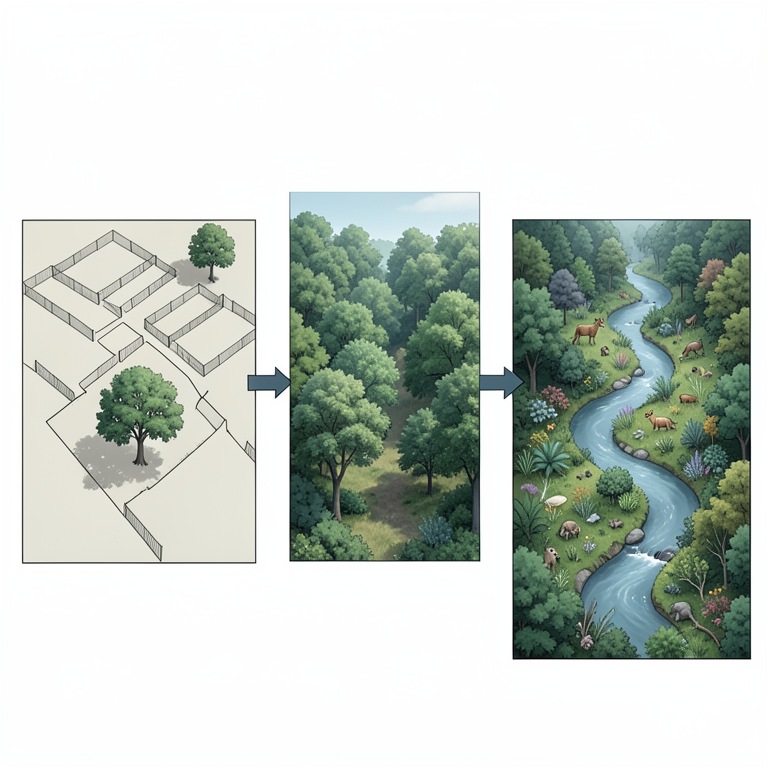
Comparison of Conservation Paradigms
AI-generated conceptual illustration (A mixed temperate forest ecosystem with a river and diverse wildlife). It explains the idea and does not show study data.
View source evidence ↗Introduction
Indigenous Knowledge is that which encompasses the mass of knowledge, practices, and beliefs developed through generations of talking to the environment by indigenous communities. And this knowledge is not only a relic of the community's past and recent experiences in relationship with natural ecosystems, but also a vital starting point to sustainably manage and conserve these environments (Akalibey et al., 2024) [1] . Though not widely known, Indigenous peoples have always used their different approach to local ecologies to maintain biodiversity, predicting environmental changes and managing our resources. Indigenous Knowledge has vital functions to play in sustainable resource management. Unlike most modern Western methods, which are often about short-term entertainment, IK is an all-around, synergistic approach, where the focus is on ensuring the long-term health of both the environment, and its inhabitants. These include practices that support resource renewal as well as prevent overexploitation, as well as maintaining a balanced coexistence with nature (Akalibey et al., 2024) [1] . Many indigenous cultures provide examples of viable alternatives to the commonly used resource management strategies that degenerate, pollute, and lead to the extinction of species of biodiversity. The intended purpose of this paper is to identify the role of Indigenous Knowledge in contemporary environmental conservation efforts, to determine how this knowledge may be accommodated with scientific approaches, for the betterment of the sustainability in such activities. Research scope includes a variety of indigenous practices in different cases from around the world, which contribute to the success of conservation and climate adaptation strategies (Burgos-Ayala et al., 2020) [3] . The paper attempts to contribute to a larger debate about environmental sustainability and to call for policy toward Indigenous Knowledge as an indispensable element in resource management by investigating these aspects (Burgos-Ayala et al., 2020) [3] .
The irony in this approach is that not only does it protect and preserve the indigenous cultures, it shapes and creates a more mature and more suitable panorama of how mankind should manage this Earth, in a truly sustainable and fair way for future generations.
Literature Review
Before this, Indigenous Knowledge (IK) has been intrinsically linked with the conservation of biodiversity through practices intrinsically sustainable and adapted to local ecosystems. Ntoko and Schmidt (2021) [10] highlight how indigenous groups have detailed knowledge on the local species phenology, ecological roles and their potential use, including medicinal properties. In addition, there is this deep-rooted understanding of intricate relationships between species and their physical environments, which is important for the maintenance and improvement of biodiversity (Ntoko & Schmidt, 2021) [10] . Harvesting is often indigenous practices revolving around seasonal rotations, and they tend to use non-invasive harvesting methods that enable survival and regeneration of plant and animal species. Secondly, the community's traditions and everyday practices are imbued with a conservation ethic sanctioning the conservation of natural elements due to their spiritual and cultural significances. Sinthumule (2023) [13] states restricts the conservation ethic from being practiced only upon the utility aspect of natural sources and enlarges the conservation to include the intrinsic value of such natural sources in a holistic approach to biodiversity conservation. In scientific circles increasingly these traditional approaches are being recognized as effective for conservation of biodiversity, and they are considered to be necessary for hardening comprehensive environmental management strategies. Traditional ecological knowledge endows them with particular adaptive capacities, which particularly put them at risk to be susceptible to climate variability and change, as indigenous communities. Villasante et al. (2022) [14] research shows that relying on indigenous peoples' traditional knowledge and practices makes it possible for them to predict, and react to, environmental changes. It rests on an empirical knowledge of local environments that enables new perceptions of land and resources that have taken shape over centuries. Two examples of such practices include the water conservation practices of the Berber communities in the Atlas Mountains and the fire management techniques of Aboriginal Australians to mitigate bush fire risks (Zhai & Lee, 2024) [15] . Not only do these practices act as a viable response to mitigating the adverse effects of climate change, but they also improve the ecosystem resilience. The study of the Indigenous adaptation strategies is mainly related to a sustainable interaction with the environment to recover balance and regenerate the resources. These indigenous strategies ought to be recognized and incorporated into the larger climate adaptation frameworks to create sustainable solutions that are finely tuned to localized conditions. Nowadays, the integration of Traditional Ecological Knowledge (TEK) alongside scientific research has increasingly been treated as a promising way of attaining more efficient and ecofriendly environmental management systems. The co-management of fisheries in New Zealand through the use of Maori ecological knowledge and scientific techniques has significantly contributed in improving resource sustainability, however, as stated by Lauter (2023) [9] . The use of this collaborative approach allows the integration of an empirical, science-based, and empirical techniques, with the traditional, experiential knowledge commonly neglected in conventional management systems. To that effect, such integration does not only bring about a better implementation of environment management but also serves as a tool for social and cultural inclusiveness of indigenous communities in managing their resource (Da Silva et al., 2023) [4] . Despite these challenges, however, it must be said that for this integration to succeed, two orders of magnitude of challenges must be overcome, namely between traditional knowledge holders and the scientific communities, and epistemologically. Key to merging these knowledge systems is initiatives aimed at fostering mutual respect, equitable partnering, and learning together. Finally, this collaborative model can be regarded as a blueprint for handling the complexity of environmental challenges over a diverse ecosystem throughout the world.
Conservation efforts and indigenous practices
Conservation through indigenous approaches is shown to have been highly effective in achieving the biodiversity preservation and the maintenance of ecological balance for long. To compare development experiences in subsistence economies with the present scene in contemporary conservation would be pointless, as these cultural traditions, steeped in knowledge of the land, maintain valuable insights and strategies for conservation.
Indigenous approaches to wildlife conservation
Indigenous conservation strategies are quite inherently different from the Western paradigms, typically they incorporate the cultural, spiritual and ecological spheres that respect and rightfully respect the wildlife. The approaches to these could be things such as seasonal hunting bans, sacred groves in which no extraction is permitted, or totemic relationships with certain animals that are not to be hunted or harmed as these animals have cultural importance (Fisk et al., 2024) [7] . For instance, the Namibia Himba people have traditional fire management practices that keep savannah ecosystems in balance and with the resulting flora and fauna reliant on these landscapes. It is not only a means to sustain such complex ecological networks, but it also provides a conservation ethic to the community.
Community-Based Natural Resource Management (CBNRM)
CBNRM is an approach that puts power to local communities, especially indigenous communities, to be involved in natural resources management sustainably. In short, this model gives rights to the local communities to use and manage natural resources in the territory and to benefit from natural resources on the condition that it is sustainable (Robinson et al., 2021) [12] . For example, CBNRM has been very successful in places such as Botswana and Zimbabwe where community trusts manage wildlife resources to deliver conservation objectives while also benefiting local livelihoods. Through ecological tourism and sustainable use of wildlife, these programs are recommended links of conservation efforts with economic benefits, practical incentives for communities to conserve their natural heritage.
Success stories
The Torres Strait Islanders in Australia are one of the success stories of using indigenous knowledge in conservation initiatives. Instead, they employ traditional practices with the current day science knowledge to control sea turtle populations, particularly that of the marine resources. Without their efforts, these data have been vital to understanding migration patterns and the effects of climate change on these species to help drive broader conservation strategies in the region (Das et al., 2018) [5] . The Kayapó people, for instance, have also been successful in the Amazon Rainforest in terms of their involvement, where they have dedicated more than 11 million acres to the biocultural conservation area. Mostly managed by the local community, this area has been able to prevent pressures from illegal logging, mining and deforestation that currently plague all surrounding areas.
Challenges
While this has been so, there remain many challenges to integrating indigenous practices into national and international conservation. The main issue is that indigenous land rights and knowledge are not accepted within a legal and institutional scope. As a result, indigenous communities can have conflicts with either the government or other private entities who are interested in exploiting natural resources (Bourke et al., 2022) [2] . In addition, indigenous communities are frequently significantly less powerful and possess less resources compared with national governments or multinational corporations, which can result in the relegation of indigenous voices in conservation dialogues. In addition, there is a hurdle in documenting, and communicating traditional knowledge such that it can be usefully added to scientific and policy frameworks. What's more, traditional knowledge is often oral, and most often specific to given cultures and locales, and it is difficult to approach systematically and integrate. Finally, indigenous practices are a useful resource that shamefully should not be overlooked when making efforts to conserve. These practices, which tend to have been honed over many years, the success of which provides an opportunity to enhance a more integrated approach that values and embraces indigenous rights, knowledge and capacities. However, changes in policy and law alone will not enable overcoming the challenges of integrating these practices in broader conservation efforts, because it requires a rethinking of how we value and understand what indigenous communities' contributions could potentially mean for global sustainability goals.
Methodology
For this research paper, the methodological approach primarily revolves around a systematic review of secondary literature to ascertain the kind of integration of Indigenous Knowledge (IK) in the conservation of environmental as well as sustainable resource management. The research design is structured for collecting and combining the relevant existing scholarly articles that give facets of indigenous practices in all the climatic zones of the globe.
Methods of data collection and research design
A study is conducted utilizing a qualitative research methodology whereby secondary data sources were used to have a thorough understanding of the topic in a less complex, less analytic and time-consuming process. The author gathers data from an exhaustive review of published academic journals, books, policy papers and the credible online databases. Such works are particularly focused on the processes of the traditional ecological knowledge, its application in the issue of the conservation and the outcome of such practice. The literature review presents an attempt to outline patterns, themes, and gaps in the current thinking as to how IK is employed in environmental management and conservation.
Criteria for selecting case studies
But the selected case studies have to fit a range of specified criteria to give a broad but detailed examination to the subject. There is geographic diversity, cases are picked across different continents to reflect the global practice of indigenous. The importance of the ecological challenges that the communities face as well as the uniqueness of the IK used are also considered (Bourke et al., 2022) [2] . Cases in which the outcome of integration between IK and modern conservation methods is clear are particularly valued as they provide insight into the practicalities of such collaborations. Recent studies on environmental conservation are preferred, and studies conducted recently, with the most recent additions and discussions, are also considered.
Analysis techniques
The thematic synthesis is used in this analysis to identify and talk about essential themes from the secondary literature. The first is coding the collected data thematically into thematic categories that contain core elements of IK integration into conservation practice. The themes can be community engagement, policy implementation, ecological outcomes and challenges of integration. The effectiveness and approaches of IK are also compared with different cultural and ecological context to facilitate comparison and enable understanding of the variability and scalability of indigenous practices for global conservation efforts. This paper intends to offer a contribution to the academic and practical understandings of the sustainable environmental management frameworks, which fuse Indigenous Knowledge and their pros and cons.
Analysis and Discussion
Case study findings synthesis demonstrates how Indigenous Knowledge (IK) systems uniquely provide to environmental conservation by means that are intrinsically sustainable and customised to local ecosystems. In keeping with this, the naturally occurring practices passed on from generation to generation grounded them in the wisdom of the natural world and it gives them a view closer to real practice that often goes beyond the virgin conservation methodology on sustainability and ecological balance (Dorji et al., 2024) [6] . Big differences are occurring in the comparative analysis between Indigenous and conventional conservation methods. An example of a holistic Indigenous practice would be the spiritual, social, and environmental aspects which all take into account the ecosystem as an entire whole (Dorji et al., 2024) [6] . This stands in contrast to the typical approaches of most conservation that tend to focus on a single quantifiable outcome such as species count, pollution level, without understanding the intricate and complex relation of ecosystems and the social aspect of conservation. Also, case studies adopt the finding that top-down regulations and technical interventions are more utilized in standard conservation methodologies, whereas Indigenous conservation methods typically rely on community consensus and intimate local knowledge, which results in great community compliance and intrinsic motivation to keep the environment clean (Kom & Nethengwe, 2024) [8] . Such an approach to sustainable practices as part of this community-based approach not only leads to these sustainable practices but also builds the social aspect and the self-reliance of the communities by making them self-reliant on their resources (Kom & Nethengwe, 2024) [8] . Here, about the synergy among IK, scientific conservation strategies, and their success in integrating, as demonstrated in areas such as the Amazon and the Arctic where Indigenous peoples are involved in conservation projects, the potential of this synergy succeeds. Yet, the analysis also brings to light important obstacles to combine these two systems of knowledge. However, Indigenous perspectives and contributions are usually sidelined, as they are largely absent from national and international environmental policies and environmental policies due to a lack of formal recognition of IK (Pirie et al., 2024) [11] . The oversight can result in the adoption of conservation strategies that are less effective or worse, counterproductive in the long run because they overlook the way that Indigenous people understand relationships between the ecosystem and themselves. This is profound for policy and practice. What is needed is an urgent development of policy frameworks that take Indigenous Knowledge into account and allow Indigenous communities to lead and be in the processes of conservation efforts. Such policies should encourage an active transmission of IK between the generations, and between cultures so that it is kept and up to date (Pirie et al., 2024) [11] . Additionally, conservation programs should be flexible, and integrated IK and scientific knowledge in such a way that takes into account both and uses what is appropriate from each.
Findings and limitations
The research in the integration of Indigenous Knowledge (IK) with conventional environmental conservation strategies has provided various important findings. Firstly, Indigenous practices have a deep foundation in a holistic view of nature, the cornerstone of which is the interconnect between all life forms and their environment. However, such an approach is often more sustainable and effective in producing outcomes to conservation than an attempt to develop only one solution. Beyond sustainability, these practices provide for biodiversity as well as the ecosystem's resilience to environmental changes and human impacts. Integration of IK with scientific ways of conservation has been demonstrated to enhance the scope of coverage and the efficacy of environmental management, secondly. Through this synthesis approach, the strength of the knowledge system approach is combined with that of the traditional approach to provide more intricate and culturally proper conservation approaches to be accepted, and enforced by local communities. Examples from the Amazon Basin and Australian Aboriginal communities show that integrative approaches bring about better ecological and social outcomes and better community involvement in conservation. Nevertheless, the study realizes several limitations. Several limitations apply, at least one being reliance on secondary literature for collection of data with its inherent uncertainty regarding what practices are being reported and the nuances of how they are applied. This approach limits the scope of the analysis only to that of documented studies and omits potential valuable undocumented knowledge and unrecorded practices that somehow have not been embraced by the academic or policy landscapes. The inner complexities as well as the diversities in IK across diverse cultures and locations present difficulties for generalization of the findings. The uniqueness of each indigenous community's environmental interactions is context specific, and is thus difficult to generalize the IK integration into conventional methods into a one-size fits all approach.
Recommendation and Conclusion
Based on this research, several are recommendations that will be able to improve the integration of Indigenous Knowledge (IK) with conventional environment conservation strategies. Second, it is necessary to create legal and institutional frameworks to effectively consider IK as a reputable source of both environmental and social management wisdom. Policies that respond to these rights, rather than extinguishing them, should be created by governments and international bodies, including policies that recognize Indigenous rights to manage and benefit from such lands and resources. Second, partnerships between Indigenous communities and conservation scientists need to be fostered for the co-development of conservation strategies. These should be done with respect and should attempt to meld traditional and scientific knowledge to further them both. To facilitate such adaptation and incorporation of IK into management plans, conservation programs should be designed to be flexible. Additionally, education about IK and its value should be among the scope of a set of educational programs that will raise awareness of IK among policymakers, environmental managers and the general public. Such programs could serve to reduce some of the biases against IK and facilitate its inclusion in mainstream conservation practice. The research concludes that Indigenous Knowledge has big potential to increase the effectiveness and sustainability of the environmental conservation efforts. Not only does IK provide vast techniques for the efficient management of the resources, it also has a philosophic frame of reference which supports concord and sustainability. Yet to realize this potential, it requires genuine commitment from all the stakeholders involved in the environmental management to adopt and integrate this body of knowledge with a mentality of respect, objectivity, and equity. Doing so will help us create a conservation more inclusive and less effective approach that benefits the environment and the indigenous communities who have cared for it for so many years.
References
15 in the original paper- Akalibey S, Hlaváčková P, Schneider J, Fialová J, Darkwah S, Ahenkan A et al. Integrating indigenous knowledge and culture in sustainable forest management via global environmental policies. J For Sci. 2024;70(6):265-280. https://doi.org/10.17221/20/2024-jfs
- Bourke SC, Chapman J, Jones R, Brinckley M, Thurber KA, Calabria B, et al. Developing Aboriginal and Torres Strait Islander cultural indicators: an overview from Mayi Kuwayu, the National Study of Aboriginal and Torres Strait Islander Wellbeing. Int J Equity Health. 2022;21(1):1-11. https://doi.org/10.1186/s12939-022-01710-8
- Burgos-Ayala A, Jiménez-Aceituno A, Torres-Torres AM, Rozas-Vásquez D, Lam DPM. Indigenous and local knowledge in environmental management for human-nature connectedness: a leverage points perspective. Ecosyst People. 2020;16(1):290-303. https://doi.org/10.1080/26395916.2020.1817152
- Da Silva C, Pereira F, Amorim JP. The integration of indigenous knowledge in school: a systematic review. Compare. 2023;54(7):1210-22. https://doi.org/10.1080/03057925.2023.2184200
- Das M, Kini R, Garg G, Parker R. Australian aboriginal and torres strait islanders' mental health issues: a litany of social causation. Indian J Soc Psychiatry. 2018;34(4):328. https://doi.org/10.4103/ijsp.ijsp_87_18
- Dorji T, Rinchen K, Morrison-Saunders A, Blake D, Banham V, Pelden S et al. Understanding how Indigenous knowledge contributes to climate change adaptation and resilience: a systematic literature review. Environ Manage, 2024. https://doi.org/10.1007/s00267024-02032-x
- Fisk JJ, Leong KM, Berl REW, Long JW, Landon AC, Adams MM, et al. Evolving wildlife management cultures of governance through Indigenous Knowledges and perspectives. J Wildl Manag. 2024;88(6). https://doi.org/10.1002/jwmg.22584
- Kom Z, Nethengwe NS. Indigenous and Local Knowledge: instruments towards achieving SDG2: a review in an African context. Sustainability. 2024;16(20):9137. https://doi.org/10.3390/su16209137
- Lauter O. Challenges in combining Indigenous and scientific knowledge in the Arctic. Polar Geogr. 2023;46(1):62-74. https://doi.org/10.1080/1088937x.2023.2233578
- Ntoko VN, Schmidt M. Indigenous knowledge systems and biodiversity conservation on Mount Cameroon. For Trees Livelihoods. 2021;30(4):227-241. https://doi.org/10.1080/14728028.2021.1980117
- Pirie E, Whillans T, Knopp J, Furgal C. Approaches and methods used to bring together Indigenous and Environmental science Knowledge in environmental research: a systematic map protocol. Ecol Solut Evid. 2024;5(2). https://doi.org/10.1002/2688-8319.12351
- Robinson LW, Eba B, Flintan F, Frija A, Nganga IN, Ontiri EM, et al. The challenges of community-based natural resource management in pastoral rangelands. Soc Nat Resour. 2021;34(9):1213-1231. https://doi.org/10.1080/08941920.2021.1946629
- Sinthumule NI. Traditional ecological knowledge and its role in biodiversity conservation: a systematic review. Front Environ Sci. 2023;11. https://doi.org/10.3389/fenvs.2023.1164900
- Villasante S, Macho G, Silva MRO, Lopes PFM, Pita P, Simón A, et al. Resilience and social adaptation to climate change impacts in small-scale fisheries. Front Mar Sci. 2022;9. https://doi.org/10.3389/fmars.2022.802762
- Zhai L, Lee J. Investigating vulnerability, adaptation, and resilience: a comprehensive review within the context of climate change. Atmosphere. 2024;15(4):474. https://doi.org/10.3390/atmos15040474
Cited by 2
From OpenAlex, OpenCitations and reference lists read by Scinovex
- Indigenous Environmental Ethics and the Decolonisation of Development: Ecological Moral Agency in Rural Zimbabwe ↗
Cornelius Dudzai, Jacob Rugare Mugumbate, Lynne Keevers, Noel Garikai Muridzo, John Chiwanza Magocha, Anesu Aggrey Matanga · Journal of Agricultural and Environmental Ethics · 2026
Dominant development paradigms remain largely anthropocentric, positioning the natural environment as a passive resource rather than an active participant in development. This study analyses Indigenous environmental ethics as a decolonial framework for reconfiguring human-environment relations. Drawing on insights from Birchenough Bridge and Honde Valley in Zimbabwe, the study employs a collaborative Indigenous research methodology involving purposive and relational sampling, engaging…
❝ 1PDF - Harnessing Local Wisdom: The Role of Gujii Indigenous Environmental Knowledge in Resource Management in Southern Ethiopia ↗
Mekuria Guye · Environmental Management · 2026
❝ 0