
Research article · 2025 · Full text
International Journal of Agriculture and Food ScienceFormulation and quality assessment of Moringa based herbal tea
Volume 7(5) · Pages 233–236 · DOI: 10.33545/2664844x.2025.v7.i5d.401 ↗
Research areasMoringa oleifera research and applicationsHibiscus Plant Research StudiesHeavy Metals in Plants
Abstract
Author-writtenIn this modern era, herbal tea plays an important role in promoting health and wellness to people. Herbal tea is just a beverage that is made by steeping various herbs, spices, flowers and other parts of plants. In the current time many people are turning to herbal tea as an alternative to sugary beverages or caffeinated drinks by knowing their potential to support hydration and provide various health benefits. Herbal tea is also considered and associated for mindfulness and relaxation practices. By enjoying a cup of tea will help to promote mental well-being and stress relief in today’s fast paced world. It is a symbol for sustainability by supporting environment friendly farming practices. Herbal tea made from Moringa leaves powder along with the cinnamon, tulsi, green tea powder is mixed in different ratio will help to provide many health benefits like they are good sources of antioxidants, they have anti-inflammatory properties or also have anti-inflammatory properties and many more. Several analytical methods are performed to ensure the nutritional composition and quality of the prepared herbal tea. Proximate analysis is a major analytical test is performed like- moisture content, ash content, fat content, protein content etc to ensure the nutritional value of the prepared moringa herbal tea.
Summary
Source-checkedPlain-language reading of the full paper, prepared with AI and checked against the text. Each point links to the authors' own words.
Why it matters
- Herbal teas are increasingly used to promote general health and wellness in modern society. View evidence ↗
- Moringa oleifera is a highly nutritious plant rich in proteins, vitamins, minerals, and antioxidants. View evidence ↗
- Cinnamon is valued for its flavor and health benefits, specifically its anti-inflammatory polyphenols. View evidence ↗
The question
- The study aims to formulate a herbal tea using a mixture of Moringa leaves, cinnamon, tulsi, and green tea to provide health benefits. View evidence ↗
What they did
- The herbal tea was formulated by blending Moringa, cinnamon, tulsi, and green tea powders in a 2:1:1:1 ratio. View evidence ↗
- Materials were sourced from ITM University (Moringa), local markets (cinnamon), and online markets (tulsi and green tea). View evidence ↗
- Moisture content was measured by heating samples in a hot air oven at 108°C for 6-7 hours. View evidence ↗
- Sensory evaluation of color, flavor, aroma, and taste was conducted by panelists using a 9-point hedonic scale. View evidence ↗
What they found
- The formulated moringa herbal tea had a moisture content of 12%-13%, suggesting a longer shelf life. View evidence ↗
- Processing fresh leaves into powder significantly reduced moisture from 70.40-71.63g to 9.24-12.56g and increased ash content from 4.4-5.6g to 8.33-9.42g. View evidence ↗
- Black moringa tea contained the highest mineral levels, with 2059mg Calcium, 226.10mg Phosphorus, and 33.12mg Iron, compared to fresh leaves. View evidence ↗
- Black moringa tea had the highest Vitamin A (21.25mg), B1 (2.79mg), and B2 (21.30mg) levels, while fresh leaves had the highest Vitamin C (215.00mg). View evidence ↗
- In sensory analysis, treatment T4 received the highest ratings for aroma, color, taste, and flavor. View evidence ↗
What it means
- The authors conclude that regular consumption of moringa herbal tea can lower cholesterol and blood pressure, helping to prevent heart disease. View evidence ↗
Visual summary
2 visualsIllustrations explain the paper; charts are replotted from the paper's own table values.
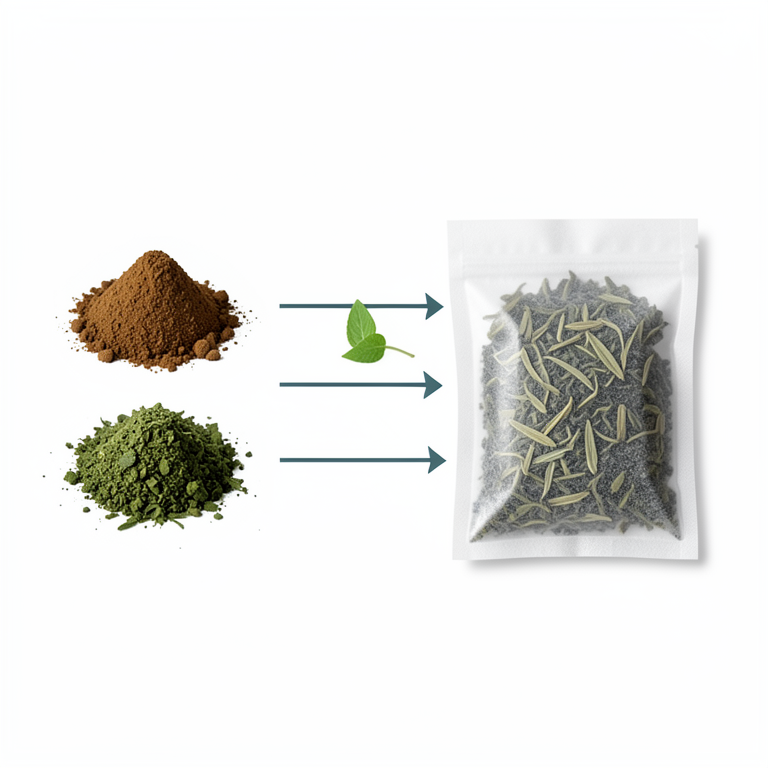
Herbal Tea Blend Composition
AI-generated conceptual illustration (Moringa oleifera leaves, cinnamon bark, tulsi leaves, and green tea leaves). It explains the idea and does not show study data.
View source evidence ↗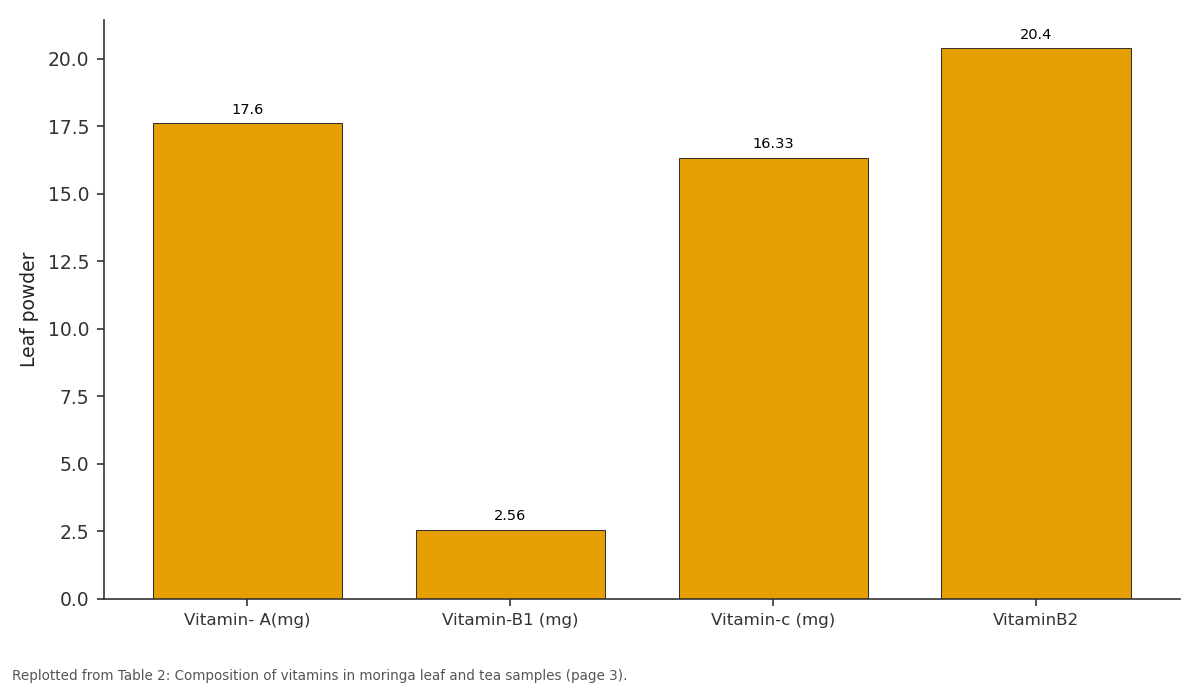
Leaf powder: Vitamin- A(mg) vs Vitamin-B1 (mg) vs Vitamin-c (mg) vs VitaminB2
Replotted from Table 2 (page 3) of the original paper. Every bar is the paper's own table value.
View source evidence ↗Figures & tables
From the original paper Table 1
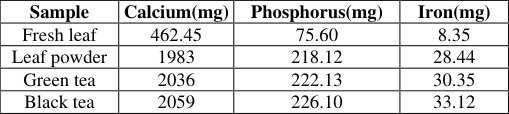 Table 3
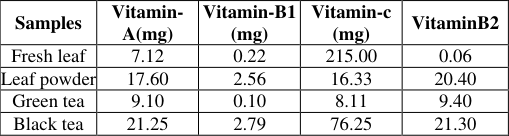 Table 2
Introduction
According to (Schimdt, et al 2005) tea is one of the most important and widely consumed beverages in the world and ranked 2 nd just after water. This beverage is prepared by brewing the processed tea leaves of camellia sinensis and now it has become the most popular, nonalcoholic caffeine containing beverage in the world (Kumar and Shruthi, 2014) [5] . Tea is helpful in protecting against neurological alterations that are induced by toxins present in the environment. Tea also contains catechin and theanine whose antioxidant properties helps in exhibiting the neuro-protective and free radical scavenging capabilities (Kakuda, 2002, Xu et al.2010) [4] . According to (Ravi Kumar, 2014) [5] . Tea is also prepared by brewing the mixtures of fruits, seed, herbs or plant extract of various plants. Moringa oliefera is a flowering plant which belongs to the family moringaceae and all of its parts are edible, healthy and nutritious. They are good source of antioxidants, proteins, vitamins and minerals and also moringa is low in fats and contains no harmful cholesterol (Kamal, 2008). Some of the research shows that moringa contains 25 times more iron than spinach, 15 times more potassium than in banana, 17 times more calcium than milk,10 times more vitamin A than carrort and contains 7 times higher vitamin C than in oranges. According to (Mustafa Taha, et al) Cinnamon is the bark part of the plant and it is one of the important and popular spices which is used in almost all over the world. It is not only used for cooking purposes but are also have beneficial medicinal properties and there are about 250 species of cinnamon are identified among the cinnamon genus. It is known for its distinct flavor and widely used in both sweet and savory dishes. Cinnamon is not only prized for its taste but also for its potential health benefits. It contains various antioxidants, including polyphenols, which have anti-inflammatory properties. Additionally, it is a good source of manganese, fiber, calcium and iron etc. They are more commonly used in cooking, while cinnamon sticks are often used in brewing teas, infusing liquids or for decorative purposes.
Ocimum sanctum is also known as Tulsi usually known for holy basil, it holds immense significance in ayurvedic medicine and is revered in Hindu culture for its medicinal properties. Tulsi is known for its numerous medicinal properties like it helps the body to adapt the stress and they are rich in anti-oxidants and essential oils. It is known for its anti-inflammatory, anti-microbial properties (Edoga, et al 2005) [1] . Tulsi has been used for centuries to treat various ailments, including respiratory dis-orders like-cough, colds and asthma. Tulsi is considered sacred in Hinduism and is often grown in households where it is revered and used in religious ceremonies. It is believed to purify the surroundings and is offered to deities in prayers. It can be consumed in various ways like chewing fresh leaves, brewed into tea or used in herbal preparations and supplements (Chatterjee Gautam, et al).
Green tea is a type of tea that is made from leaves of camelia Sinensis and buds that have not undergone the same withering and oxidation process which is used to make oolong teas and black teas. Green tea is originated in china and since then its production and manufacture has spread to other countries in East Asia. Green tea is rich in anti-oxidants, particularly polyphenols like catechins which are known for their potential health benefits. They may also help to reduce the risk of heart disease, improve brain function and aid in weight loss. It contains less caffeine than coffee but good enough to provide stimulating effect (Katiyar, sk et al).
Materials and Methods
Materials and Methods
Sample procurement
Fresh moringa leaves harvested from ITM University, Gwalior, cinnamon sticks were purchased from the local market and tulsi powder and green tea leaves are purchased from online market.
Sample Preparation Production of moringa leaves powder
Freshly harvested leaves of moringa oleifera have gone through dry washing and after that it goes for drying under the shredded sunlight for about 3-5 days then the dried leaves are gone for grinding to convert the dried leaves in powder form and the powdered material is properly sieved to get fine powdered material of moringa oleifera.
Production of cinnamon powder
The cinnamon sticks which is brought from the market is gently roasted in a pan to induce more color and flavor of the cinnamon and after roasting the cinnamon it goes for grinding in a mixture grinder to convert it in powder form properly which is to be mixed further with the powder of moringa oleifera.
Production of tulsi powder
Tulsi powder are collected from the market from a well registered brand and they are ready for blending with the powder of moringa oleifera.
Production of Green tea powder
Dried Green tea leaves are collected from the online market after that they are grinded in a mixture grinder properly to obtain its powder form. Sieving can be done to obtain fine powdered material of green tea.
Formulation of Moringa, cinnamon, green tea and tulsi powder
Powder of moringa, cinnamon, tulsi and green tea are properly blended in the possible ratio of 2:1:1:1. After getting uniformly mixed all the powders it can be filled in the required tea bags.
Result and Discussion
Chemical analysis of herbal tea produced with moringa. Cinnamon, tulsi and green tea powder Chemical analysis of herbal tea can be tested by performing several chemical tests like moisture content, ash content, fat content to know the quality and nutritional composition of the prepared herbal tea.
Proximate composition of powdered and fresh moringa oleifera Moisture content
It determines the amount of moisture present in the moringa herbal tea and it can be determined by placing the sample in hot air oven at about 108 degree celsius for about 6-7 hours. High percentage of moisture in the samples of tea will lead to quality deterioration (Muhammad, et al). The moisture content of the moringa herbal tea ranges from (12%-13%) it is an indication that shows that herbal tea has longer shelf life. According to Young Park we can calculate the moisture content of the sample by oven drying by using the formula Moisture content% = loss of weight * 100 Sample weight Fat content According to (Nielsen, 2017 et al) a traditional technique that can be used to extract lipid from the food sample named as soxhelet method. In this method the grounded sample are placed in a porous thimble and they have three chambers flask extraction chamber and condenser and when the flask is heated the solvent gets evaporated and then move up to the condenser and there they are collected in the extraction chamber by converting them into liquid form and when the solvent passes through the samples it extracts the fat and this continuous process helps in the extraction of fat from the material and this process can last to 7-24 hrs.
Formula for calculating fat% in the food sample is
Sensory evaluation of the prepared moringa herbal tea
According to Iwe, 2014 sensory properties can be determined by 9-point hedonic scale. A group of panelists evaluated the organoleptic attributes like color, flavor, aroma, taste etc of the tea sample and rate it individually on the basis of 9-point hedonic scale.
In terms of aroma, color, taste, flavor the treatment T4 picks up the highest value while others others pick up the less value during sensory analysis.
Composition of vitamins in moringa tea samples, fresh and powdered leaves
The composition of vitamin in moringa black tea, green tea, fresh and powdered leaves are listed in the table no-1. Vitamins are the organic compounds which are present in our diet. Black moringa leaves acquire the highest amount of vitamin-A content as compared to other samples and fresh moringa leaves acquire the least amount of vitamin-A content this will cause the higher amount of moisture in the present in the leaves. Green moringa acquires the lowest amount of vitamin B1 while black tea contains high amount of vitamin B1 as compared to other tea samples. Now in terms of riboflavin content moringa fresh leaves have the lowest amount of its content while black moringa tea has the highest amount of riboflavin content. In fresh moringa leaf least amount of ascorbic acid is present while fresh moringa leaves has the highest ascorbic acid content.
Determination of vitamin composition
The method of Pearson (1976) [16] is used to determine vitamin-A. The method of Barakat, et al (1973) [14] is used to determine vitamin-c. Thiamine is also determined by using the method of Pearson (1976) [16] . Niacin content is determined by using AOAC (2010).
Composition of minerals in moringa tea samples, fresh and powdered leaves
The composition of minerals in moringa black tea, green tea,f fresh and powdered leaves are listed in table no-2. In terms of mineral content moringa black tea has the highest percentage of all the minerals which will lead to the greater anount of ash content in it. The amount of calcium ions are higher in black tea followed by green tea while fresh moringa leaves have the least amount of calcium present in it and in terms of phosphorus and iron content the same pattern is observed.
Determination of mineral elements
Calcium, iron, phosphorous are the common and can be recognized as top elements found in moringa oleifera. They can be analyzed as follows Pearson (1976) [16] has described phenanthroline method that is used for the determination of iron content in given samples. Harbone (1973) described a method which is used to determine calcium. Spectrophotometre molybdate is a method to determine phosphorous content in the sample by Pearson (1976) [16] .
Conclusion
Moringa herbal tea are popularly recognized for their potential health benefits which makes them as a popular choice amongst herbal tea enthusiast. Moringa tea are heavily riched in vitamins like (A, C and B complex) and also rich in some essential minerals like (calcium, phosphorous and iron). They contain some essential anti-oxidants like flavonoids, quercetin and polyphenols which provides several health benefits to the body and thus helps to combat oxidative stress and provides overall health benefits. Regular consumption of moringa hebal tea will help to reduce the level of cholesterol from the body and lowers down the blood pressure and prevent them from heart diseases and thus it is an excellent addition to a healthy lifestyle.
Figures and tables from the paper
| samples | Moisture (g) | Fat (g) | Ash (g) |
|---|---|---|---|
| Fresh leaf | 70.40-71.63 | 1.4-1.7 | 4.4-5.6 |
| Leaf powder | 9.24-12.56 | 2.2-2.45 | 8.33-9.42 |
| Green tea | 10.40-11.22 | 2.77-2.79 | 9.23-9.57 |
| Cinnamon powder | 8.12-9.88 | 1.12-1.45 | 3.78-4.16 |
| Tulsi powder | 9.24-9.36 | 0.3-0.6 | 4.65-5.31 |
Table text extracted from the original PDF; superscript letters are shown inline. The original table image is below.
View original table image
| Sample | Calcium(mg) | Phosphorus(mg) | Iron(mg) |
|---|---|---|---|
| Fresh leaf | 462.45 | 75.60 | 8.35 |
| Leaf powder | 1983 | 218.12 | 28.44 |
| Green tea | 2036 | 222.13 | 30.35 |
| Black tea | 2059 | 226.10 | 33.12 |
Table text extracted from the original PDF; superscript letters are shown inline. The original table image is below.
View original table image
References
16 in the original paper- Edoga HO, Okwu DE, Mbaebie BO. Phytochemical constituents of some Nigerian medicinal plants. Afr J Biotechnol. 2005;4(7):685-688.
- Fahey JW. Moringa oleifera: a review of the medical evidence for its nutritional, therapeutic and prophylactic properties. Part 1. Trees for Life J. 2006;1:5-20.
- Iwe MO. Sensory Methods and Analysis. Enugu, Nigeria: Rejoint Communication Services Limited; 2014.
- Kakuda T. Neuroprotective effects of the green tea components theanine and catechins. Biol Pharm Bull. 2002;25(12):1513-1518.
- Kumar VP, Shruthi BS. Tea: an oral elixir. Sch Acad J Pharm. 2014;3(1):9-18.
- Muhammad A, Asif A, Anwaar A, Nauman K, Imran H, Iftikhar A. Chemical composition and sensory International Journal of Agriculture and Food Science https://www.agriculturaljournals.com evaluation of tea (Camellia sinensis) commercialized in Pakistan. Pak J Bot. 2013;45(3):901-907.
- Onwuka GI. Food Analysis and Instrumentation: Theory and Practice. Lagos, Nigeria: Naphtali Prints; 2005. p. 88-144.
- Okwu DE, Josiah C. Evaluation of the chemical composition of different Nigerian medicinal plants. Afr J Biotechnol. 2006;5(4):357-361.
- Ravikumar C. Review on herbal teas. J Pharm Sci Res. 2014;6(5):236-238.
- Schmidt M, Schmitz HJ, Bumgart A, Guedon D, Netsch MH, Schmidli C, Schrenk D. Toxicity of green tea extracts and their constituents in rat hepatocytes in primary culture. Food Chem Toxicol. 2005;43:307-314.
- Singh VP, Arulanantham A, Parisipogula V, Arulanantham S, Biswas A. Moringa oleifera: nutrientdense food source and world's most useful plant to ensure nutritional security, good health and eradication of malnutrition. Eur J Nutr Food Saf. 2018;8(4):204214.
- AOAC. Official Methods of Analysis. 18 th ed. Washington, DC: Association of Official Analytical Chemists; 2010.
- Barakat MZ, Shehab SK, Darwish N, Zahermy EI. Determination of ascorbic acid from plants. Anal Biochem. 1973;53:225-245.
- Harborne JB. Phytochemical Methods: A Guide to Modern Techniques of Plant Analysis. New York: Chapman and Hall; 1973. p. 267-270.
- Pearson D. Chemical Analysis of Foods. 6 th ed. Edinburgh: Churchill Livingstone; 1976.
- Prakash AO. Ovarian response to aqueous extract of Moringa oleifera during early pregnancy in rats. Fitoterapia. 1988;59:89-96.