
Research article · 2025 · Full text
International Journal of Agriculture and Food ScienceMarketing of button mushrooms in Badaun district, Uttar Pradesh: A socio-economic and marketing efficiency study
Volume 7(5) · Pages 199–201 · DOI: 10.33545/2664844x.2025.v7.i5c.398 ↗
Research areasAgricultural Economics and Practices
Abstract
Author-writtenThe marketing of button mushrooms (Agaricus bisporus) in Badaun District, Uttar Pradesh, presents an opportunity for smallholder farmers to diversify their income sources. This study examines the socio-economic profile of mushroom producers and the prevailing marketing channels in the region. Despite increasing demand for mushrooms due to their nutritional value, significant inefficiencies in the marketing system hamper the potential benefits to farmers. These include inadequate infrastructure, reliance on multiple intermediaries, and high post-harvest losses. The research identifies the costs associated with production, packaging, transportation, and retailing, revealing that marketing margins are higher in wholesale markets compared to direct-to-consumer sales. Data collected from 180 respondents highlights the challenges faced by producers, such as limited market access, price volatility, and consumer awareness. The study also evaluates the effectiveness of various marketing channels, including local retail markets, direct sales, and wholesale markets. By analyzing the price spread and the producer’s share in the final price, this paper underscores the disparities between what consumers pay and what producers receive. Based on the findings, recommendations are made to improve the marketing system, including better infrastructure, direct marketing strategies, and consumer education. Ultimately, the study aims to enhance the profitability and sustainability of button mushroom farming in Badaun District.
Summary
Source-checkedPlain-language reading of the full paper, prepared with AI and checked against the text. Each point links to the authors' own words.
Why it matters
- Cultivating button mushrooms in the Badaun District of Uttar Pradesh allows small-scale farmers to create additional sources of income. View evidence ↗
- While nutritional value has increased demand, farmers are limited by marketing inefficiencies such as poor infrastructure, high post-harvest losses, and a dependence on intermediaries. View evidence ↗
- Profitability for producers is reduced by price volatility, a lack of cold storage, and the use of multiple intermediaries. View evidence ↗
The question
- The study aims to evaluate existing marketing channels, analyze associated costs and margins, and identify constraints in the button mushroom marketing system. View evidence ↗
What they did
- The researchers used a structured questionnaire to collect data from 180 mushroom producers. View evidence ↗
- Data analysis was performed using descriptive statistical methods to determine cost and efficiency for each marketing channel. View evidence ↗
- The study utilized Acharya’s marketing efficiency formula and margin analysis as its primary analytical tools. View evidence ↗
What they found
- Middle-aged individuals (41-50 years) are the primary producers, making up 33.33% of the respondents. View evidence ↗
- Men dominate the cultivation phase of mushroom farming, representing 66.67% of the respondents. View evidence ↗
- Local retail markets are the most frequent marketing channel, used by 38.89% of producers. View evidence ↗
- The total marketing cost per unit is ₹95, with production (₹50) and transportation (₹20) being the highest expenses. View evidence ↗
- Wholesale markets have the highest marketing margin at ₹50, indicating that wholesalers capture a large portion of the final price. View evidence ↗
- Direct sales to consumers result in the lowest marketing margin (₹20), allowing producers to retain more of the final price. View evidence ↗
- Despite having the highest margins, wholesale markets are the most efficient channel with a marketing efficiency of 147.37%. View evidence ↗
What it means
- The authors recommend improving the marketing system through better infrastructure, the adoption of direct marketing strategies, and increased consumer education. View evidence ↗
- The authors conclude that while mushroom farming has growth potential, profitability and efficiency can be enhanced by improving marketing strategies. View evidence ↗
Visual summary
3 visualsIllustrations explain the paper; charts are replotted from the paper's own table values.
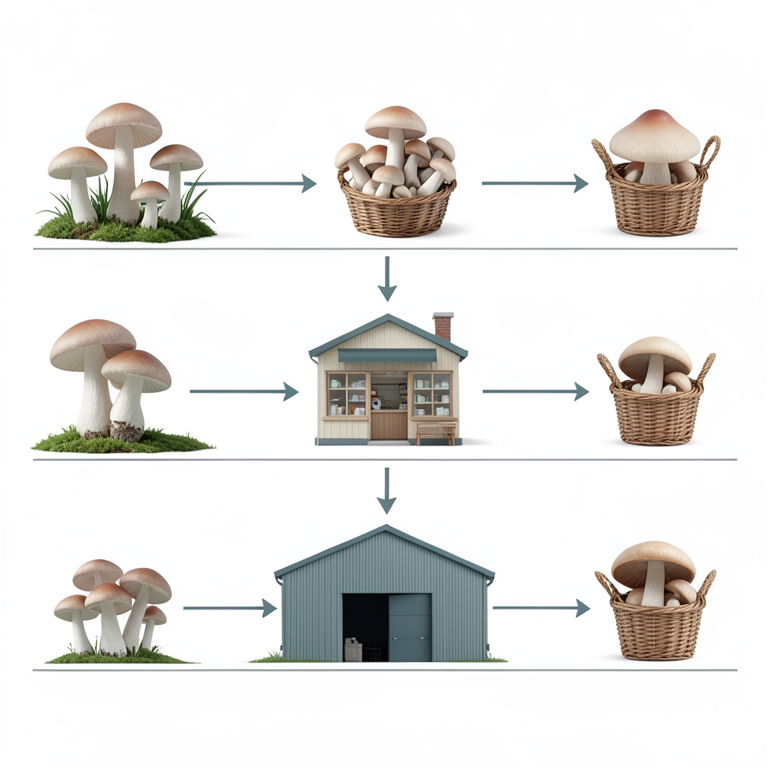
Comparison of Marketing Channels
AI-generated conceptual illustration (button mushrooms). It explains the idea and does not show study data.
View source evidence ↗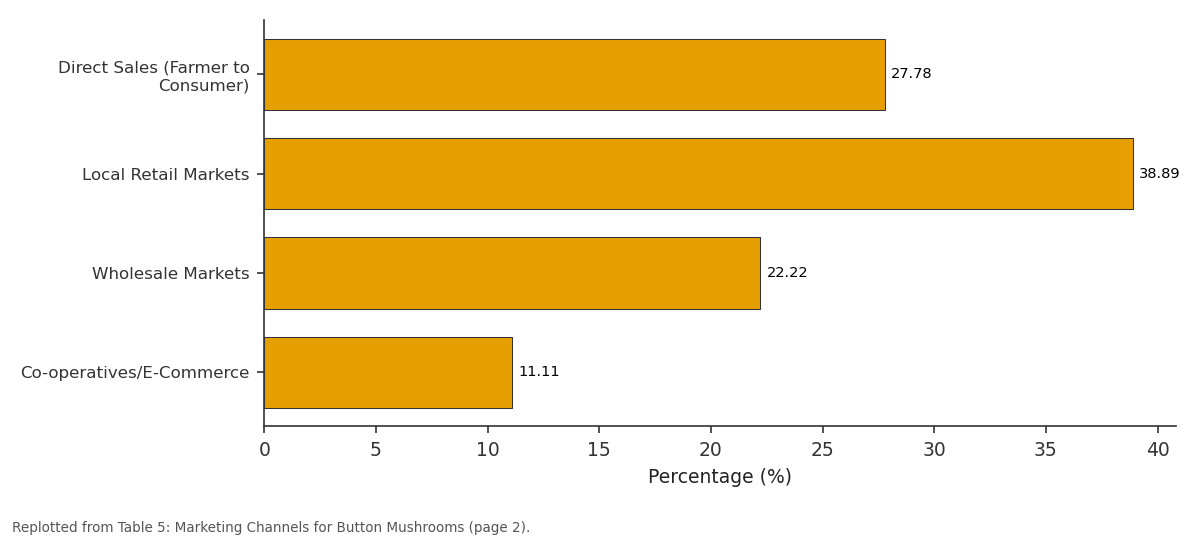
Percentage (%): Direct Sales (Farmer to... vs Local Retail Markets vs Wholesale Markets vs Co-operatives/E-Commerce
Replotted from Table 5 (page 2) of the original paper. Every bar is the paper's own table value.
View source evidence ↗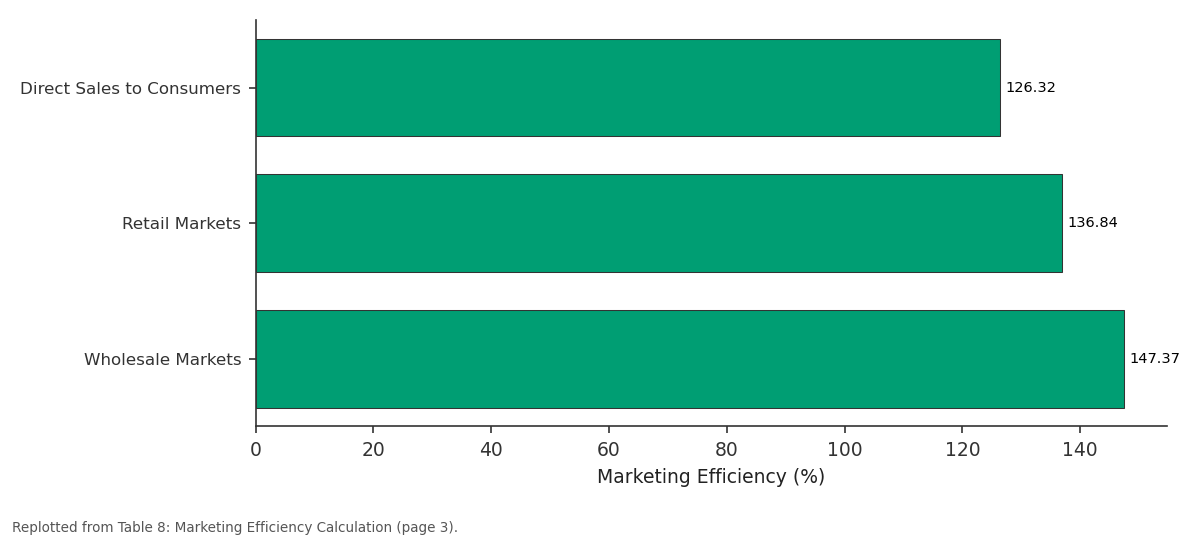
Marketing Efficiency (%): Direct Sales to... vs Retail Markets vs Wholesale Markets
Replotted from Table 8 (page 3) of the original paper. Every bar is the paper's own table value.
View source evidence ↗Figures & tables
From the original paper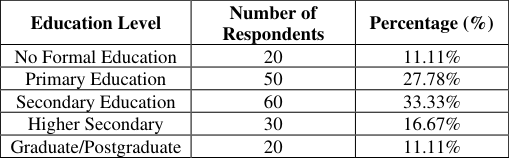 Table 3
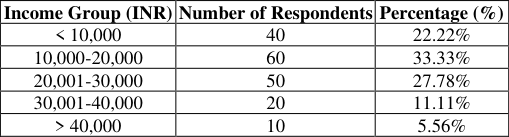 Table 4
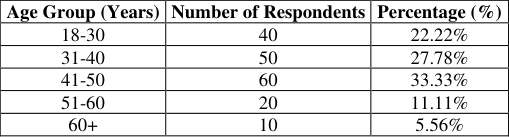 Table 1
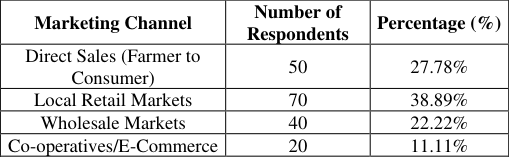 Table 5
 Table 2
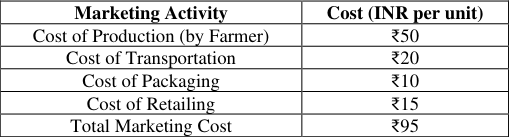 Table 6
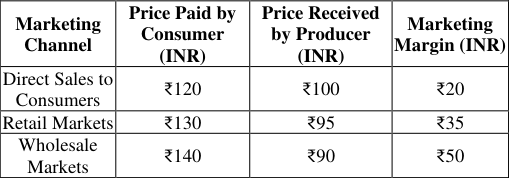 Table 7
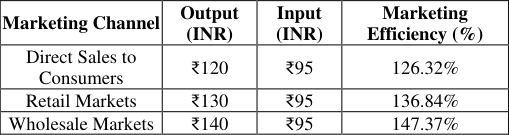 Table 8
Introduction
Button mushrooms (Agaricus bisporus) have become a valuable crop in India, offering economic opportunities for farmers in various regions, including Badaun District, Uttar Pradesh. Known for their nutritional benefits, mushrooms have gained popularity in both domestic and international markets. In Badaun, mushroom cultivation offers smallholder farmers an alternative source of income, yet challenges remain in marketing the produce. The marketing process is hindered by the lack of cold storage facilities, reliance on multiple intermediaries, and price volatility, which reduces the producer's profitability. The market structure is predominantly unorganized, with farmers primarily relying on local retail markets and wholesalers to sell their mushrooms. These intermediaries capture a significant portion of the final price, leaving farmers with only a small share of the consumer's rupee. The socio-economic characteristics of mushroom producers play a crucial role in shaping their ability to adapt to modern farming techniques and market demands. Many farmers in Badaun face challenges such as limited access to technology and capital, further complicating their marketing efforts. This study seeks to assess the current marketing channels for button mushrooms, analyze the costs and margins involved, and evaluate the constraints in the existing marketing system. By understanding these dynamics, the study aims to offer practical recommendations for improving marketing efficiency and enhancing the economic sustainability of mushroom farming in the region.
The survey focused on various aspects such as socioeconomic characteristics, marketing channels, costs, margins, and constraints faced by producers. Descriptive statistical methods were employed to analyze the data, and cost and efficiency measures were derived for each marketing channel. The research was conducted in Badaun District, which is known for its diverse agricultural activities, including button mushroom production. The district has seen a rise in mushroom farming in recent years due to favorable climatic conditions and government support programs. Younger farmers are engaged: A significant portion (22.22%) of respondents was between the ages of 18-30, which indicates the increasing appeal of mushroom farming among younger generations. This trend suggests that mushroom farming is seen as an innovative and profitable venture.
Analytical Tools
Analytical Tools
Gender Distribution of Respondents
Gender Distribution of Respondents
Discussion
Majority in lower-income groups: The majority of respondents (33.33%) earn between ₹10,000-20,000 per month, which is consistent with the profile of smallholder farmers. The relatively low income (compared to urban standards) indicates that mushroom farming is a supplementary source of income.
High income variability:
A small portion of respondents (5.56%) earn above ₹40,000, indicating the potential for high returns from mushroom farming, particularly when marketing is optimized.
Marketing Costs and Margins
The evaluation of marketing costs and margins helps identify the inefficiencies in the marketing structure.
Marketing Cost Distribution
Marketing Cost Distribution
Cost of Transportation ₹20
Cost of Transportation ₹20
Cost of Retailing ₹15
Cost of Retailing ₹15
Discussion
Total cost analysis: The total marketing cost per unit of button mushrooms is ₹95. The largest cost component is transportation (₹20), followed by production costs (₹50).
Packaging costs: Packaging costs (₹10) are relatively low, which could be an opportunity for producers to explore more sustainable and cost-effective packaging options.
Marketing Margin Calculation
Marketing Margin Calculation
Discussion
Wholesale markets: These channels have the highest marketing margin (₹50), suggesting that middlemen (wholesalers) capture a significant share of the consumer price.
Direct sales: Producers who sell directly to consumers retain more of the consumer price (₹20 margin). ). This suggests that wholesalers add value to the product, thus increasing efficiency in the process.
Marketing Efficiency and Price Spread
Marketing Efficiency and Price Spread
Conclusion
The socio-economic profile of mushroom farmers in Badaun district highlights key aspects of button mushroom production and marketing. A significant portion (33.33%) of farmers are in the 41-50 age group, indicating that middleaged individuals dominate the sector. However, the involvement of younger farmers (22.22% in the 18-30 age group) suggests growing interest in mushroom farming, signaling potential for future growth. Gender-wise, males are more involved in farming (66.67%), while females contribute significantly to post-harvest activities, such as packaging and retailing (33.33%).Most respondents (33.33%) have secondary education, providing basic skills for farming and financial management. However, only 11.11% have higher education, which may limit the adoption of advanced farming practices. In terms of income, the majority of respondents (33.33%) earn between ₹10,000-20,000 per month, indicating that mushroom farming is a supplementary source of income. A small percentage (5.56%) earn over ₹40,000, showing the potential for higher returns.Marketing channels are dominated by local retail markets (38.89%), followed by direct sales (27.78%) and wholesale markets (22.22%). The total marketing cost per unit is ₹95, with transportation being the largest expense (₹20). Marketing margins are highest in wholesale markets (₹50), while direct sales to consumers yield a lower margin (₹20). Despite higher margins in wholesale markets, marketing efficiency is greatest in these markets (147.37%), suggesting wholesalers play a significant role in adding value. Overall, mushroom farming has growth potential, but improving marketing strategies could enhance profitability and efficiency.
Figures and tables from the paper
| Education Level | Number of Respondents | Percentage (%) |
|---|---|---|
| No Formal Education | 20 | 11.11% |
| Primary Education | 50 | 27.78% |
| Secondary Education | 60 | 33.33% |
| Higher Secondary | 30 | 16.67% |
| Graduate/Postgraduate | 20 | 11.11% |
Table text extracted from the original PDF; superscript letters are shown inline. The original table image is below.
View original table image
| Income Group (INR) | Number of Respondents | Percentage (%) |
|---|---|---|
| < 10,000 | 40 | 22.22% |
| 10,000-20,000 | 60 | 33.33% |
| 20,001-30,000 | 50 | 27.78% |
| 30,001-40,000 | 20 | 11.11% |
| > 40,000 | 10 | 5.56% |
Table text extracted from the original PDF; superscript letters are shown inline. The original table image is below.
View original table image
| Age Group (Years) | Number of Respondents | Percentage (%) |
|---|---|---|
| 18-30 | 40 | 22.22% |
| 31-40 | 50 | 27.78% |
| 41-50 | 60 | 33.33% |
| 51-60 | 20 | 11.11% |
| 60+ | 10 | 5.56% |
Table text extracted from the original PDF; superscript letters are shown inline. The original table image is below.
View original table image
| Marketing Channel | Number of Respondents | Percentage (%) |
|---|---|---|
| Direct Sales (Farmer to Consumer) | 50 | 27.78% |
| Local Retail Markets | 70 | 38.89% |
| Wholesale Markets | 40 | 22.22% |
| Co-operatives/E-Commerce | 20 | 11.11% |
Table text extracted from the original PDF; superscript letters are shown inline. The original table image is below.
View original table image
| Gender | Number of Respondents | Percentage (%) |
|---|---|---|
| Male | 120 | 66.67% |
| Female | 60 | 33.33% |
Table text extracted from the original PDF; superscript letters are shown inline. The original table image is below.
View original table image
| Marketing Activity | Cost (INR per unit) |
|---|---|
| Cost of Production (by Farmer) | ₹50 |
| Cost of Transportation | ₹20 |
| Cost of Packaging | ₹10 |
| Cost of Retailing | ₹15 |
| Total Marketing Cost | ₹95 |
Table text extracted from the original PDF; superscript letters are shown inline. The original table image is below.
View original table image
| Marketing Channel | Price Paid by Consumer (INR) | Price Received by Producer (INR) | Marketing Margin (INR) |
|---|---|---|---|
| Direct Sales to Consumers | ₹120 | ₹100 | ₹20 |
| Retail Markets | ₹130 | ₹95 | ₹35 |
| Wholesale Markets | ₹140 | ₹90 | ₹50 |
Table text extracted from the original PDF; superscript letters are shown inline. The original table image is below.
View original table image
| Marketing Channel | Output (INR) | Input (INR) | Marketing Efficiency (%) |
|---|---|---|---|
| Direct Sales to Consumers | ₹120 | ₹95 | 126.32% |
| Retail Markets | ₹130 | ₹95 | 136.84% |
| Wholesale Markets | ₹140 | ₹95 | 147.37% |
Table text extracted from the original PDF; superscript letters are shown inline. The original table image is below.
View original table image
References
6 in the original paper- Ministry of Agriculture and Farmers Welfare. Report on Mushroom Cultivation and Marketing Practices in India. New Delhi: Government of India; 2020.
- National Horticulture Board. Mushroom Production and Market Development Guidelines. Gurgaon: NHB; 2018.
- Verma S, Tripathi R. Agricultural marketing infrastructure and farmer access in Uttar Pradesh: A district-level analysis. Indian J Agric Econ. 2021;76(2):187-195.
- Singh P, Khan A. Challenges and opportunities in agrimarketing for smallholders in Eastern Uttar Pradesh. J Rural Dev. 2019;38(4):421-434.
- Federation of Indian Chambers of Commerce and Industry (FICCI). Reducing Post-Harvest Losses: A Roadmap for Indian Agriculture. New Delhi: FICCI; 2020.
- Agri Watch Market Research. Trends in Horticultural Produce Marketing and Cold Chain Infrastructure. Mumbai: AgriWatch Publications; 2022.