
Research article · 2025 · Full text
International Journal of Agriculture and Food ScienceImpact of fruit wastes and rates on nutritional and phytochemical compositions of okra (Abelmoschus esculentus L.) in Ogbomoso and Oyo town, Oyo state, Nigeria
Volume 7(5) · Pages 168–172 · DOI: 10.33545/2664844x.2025.v7.i5c.392 ↗
Research areasAgricultural Practices and Plant Genetics
Abstract
Author-writtenThe study examined the effect of fruit waste types and rates on the mineral, nutritional and phytochemical composition of okra at Lautech Teaching and Research Farms of Ladoke Akintola University of Technology, Ogbomoso, and Federal College of Education (Special), Oyo. The treatments involved three waste types namely: cocoa pod, orange and plantain waste and five rates of application: 0, 25, 50, 75, and 100 kg N/ha. The factorial experiments were laid out in a Randomized Complete Block Design (RCBD) with three replicates. Seeds were sown two weeks after treatments application and agronomic practices such as weeding, thinning, control of pest and diseases were carried out to ensure optimum yield. Data obtained on mineral, nutritional and phytochemical compositions were subjected to the analysis of variance and the means were separated using least significant difference (LSD) at 5% probability level. The result revealed that location, fruit waste type and rate had significant (p≤0.05) effect on the mineral, nutritional and phytochemical compositions of okra. The mineral, nutritional and phytochemical compositions of okra were higher at Ogbomoso than Oyo. Cocoa waste gave highest crude fiber (21.17%), gross energy (283.19kcal), vitamin C (41.16g/100 g) contents as compared to plantain and orange wastes. Application of 75 kg N/ha gave highest calcium, organic matter and crude protein (583.61g/100 g, 88.80% and 23.01%) while control recorded the least. Therefore, sole application of 75 kg N/ha and cocoa pod waste and their combinations can be recommended for optimum mineral, nutritional and phytochemical compositions of okra in both locations.
Summary
Source-checkedPlain-language reading of the full paper, prepared with AI and checked against the text. Each point links to the authors' own words.
Why it matters
- Okra is valued for its health benefits, including anti-inflammatory, anti-cancer, and anti-diabetic properties. View evidence ↗
- Fruit wastes like cocoa pods, orange, and plantain residues are sustainable organic fertilizers that can improve soil fertility and crop growth. View evidence ↗
The question
- The study aimed to evaluate how different types and application rates of fruit wastes affect the mineral, nutritional, and phytochemical compositions of okra in Ogbomoso and Oyo, Nigeria. View evidence ↗
What they did
- The experiment tested three fruit waste types (cocoa pod, plantain, and orange) at five nitrogen application rates (0, 25, 50, 75, and 100 kg N/ha) across two locations. View evidence ↗
- The study used a 2 x 3 x 5 factorial experiment arranged in a Randomized Complete Block Design (RCBD) with three replicates. View evidence ↗
- Researchers harvested mature okra fruits, dried them, and performed laboratory analyses to measure proximate, nutritional, and antioxidant compositions. View evidence ↗
What they found
- Okra grown in Ogbomoso had higher concentrations of vitamin C (40.94 g/100 g), polyphenol (0.16 g/100 g), carotenoid (0.02 g/100 g), flavonoid (0.28 g/100 g), and isoquertin (0.03 g/100 g) compared to those from Oyo. View evidence ↗
- Ogbomoso okra had higher calcium (584.91 mg/100 g), iron (1.98 mg/100 g), phosphorus (71.69 mg/100 g), and zinc (1.70 mg/100 g), whereas Oyo okra had higher potassium (1457.50 mg/100 g) and sodium (74.69 mg/100 g). View evidence ↗
- The 100 kg N/ha rate yielded the highest potassium (1510 mg/100 g), sodium (77.08 mg/100 g), and phosphorus (72.23 mg/100 g), while the 75 kg N/ha rate yielded the highest calcium (583.61 mg/100 g) and zinc (1.74 mg/100 g). View evidence ↗
- Orange waste led to the highest organic matter (88.52%) and ash (6.90%); cocoa waste led to the highest fat (2.71%), crude fiber (21.17%), and gross energy (283.19 kcal); and plantain waste led to the highest moisture (11.72%) and crude protein (21.62%). View evidence ↗
- The 100 kg N/ha rate resulted in the highest fat (2.66%), crude fiber (21.37%), and gross energy (288.14 kcal), while the 75 kg N/ha rate resulted in the highest organic matter (88.80%). View evidence ↗
What it means
- The authors recommend using cocoa waste and an application rate of 75 kg N/ha, either alone or in combination, to optimize the mineral, nutritional, and phytochemical quality of okra. View evidence ↗
Visual summary
1 visualsIllustrations explain the paper; they do not show study data.
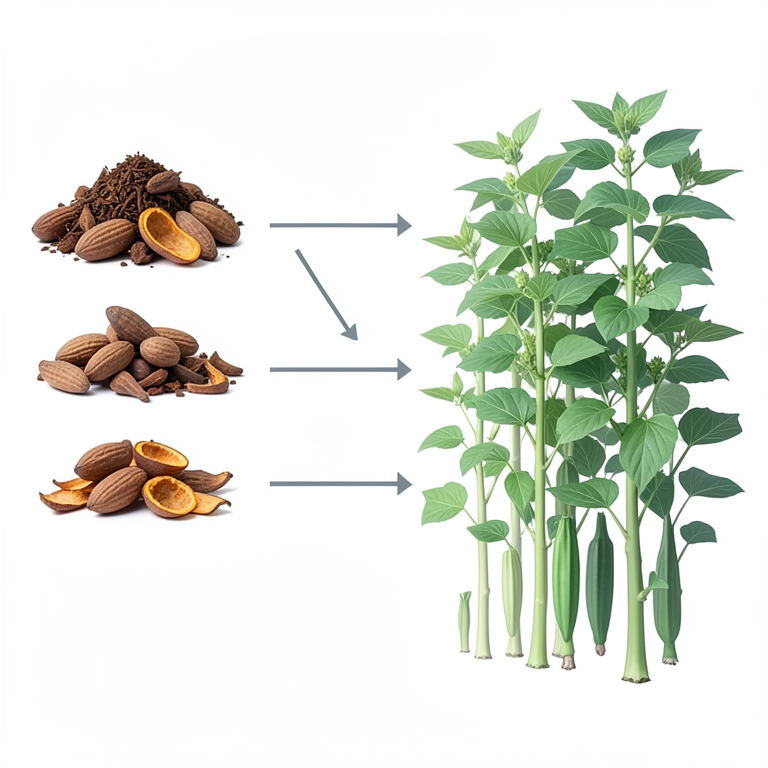
Experimental Treatment Matrix
AI-generated conceptual illustration (okra plants (Abelmoschus esculentus)). It explains the idea and does not show study data.
View source evidence ↗Figures & tables
From the original paper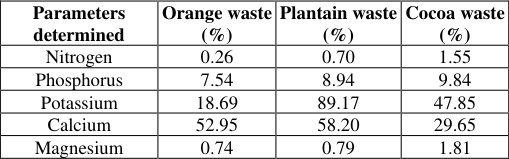 Table 1
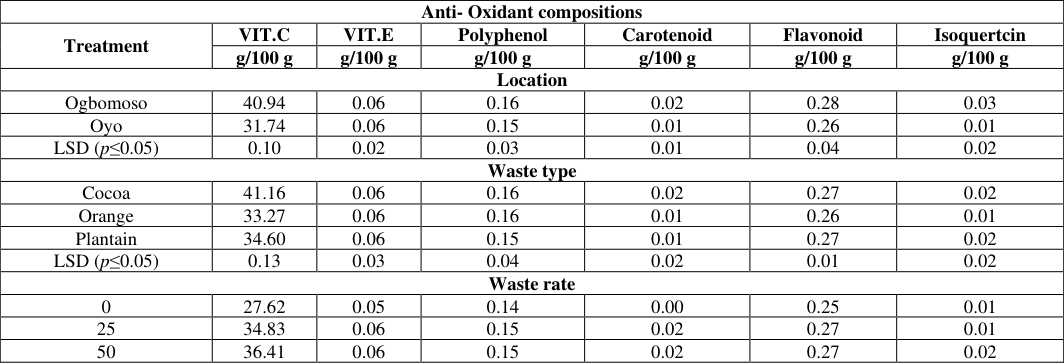 Table 2
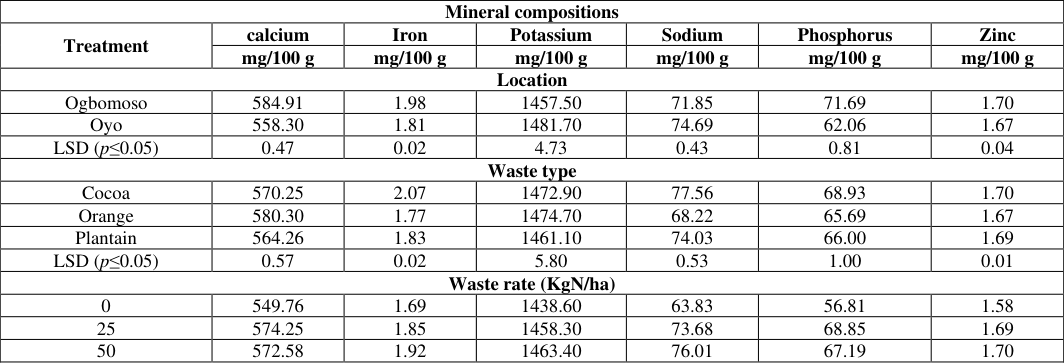 Table 3
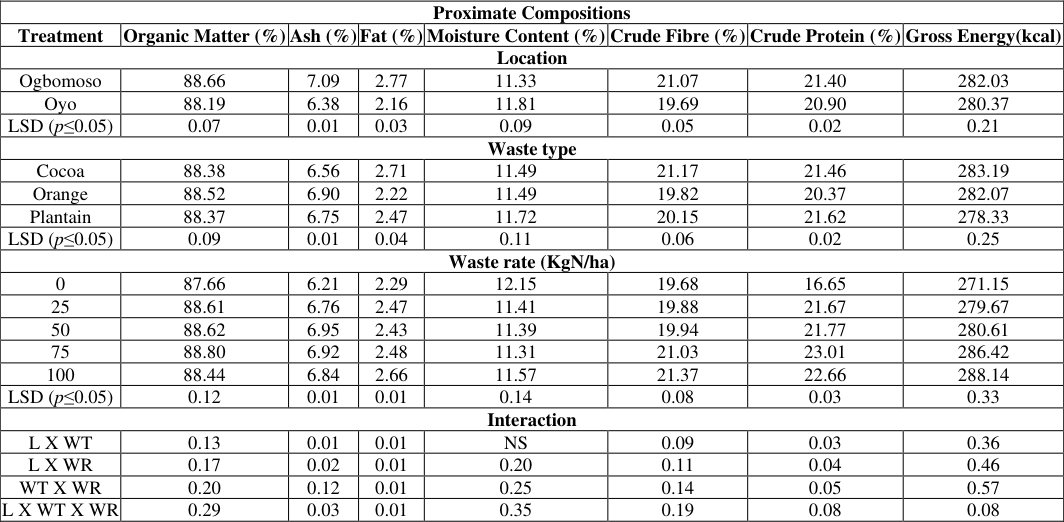 Table 4
Introduction
Okra (Abelmoschus esculentus (L.) Moench), also called lady's finger is believed to have originated in Ethiopia and is cultivated mainly for its tender, edible pods. Worldwide, okra is grown on nearly 2 million hectares, with an annual production of about 10 million tons. India ranks as the top producer, yielding approximately 6 million tons of fresh okra, while Nigeria follows with a production of around 2 million tons (Tiamiyu et al., 2012) [19] . Scientific research recognizes okra plants because they provide three major health benefits through their anti-diabetic effects and anti-cancer properties together with anti-inflammatory capabilities. Multiple antioxidant and anti-cancer properties together with anti-inflammatory benefits exist in okra as a result of its phenolic compound abundance (Woumbo et al., 2022) [20] . Large amounts of the phenolic compound's quercetin derivatives, catechin oligomers and hydroxycinnamic derivatives can be found in both okra pods and seeds. As per Woumbo et al., 2022 [20] the vitamin C (ascorbic acid) and vitamin A (beta-carotene) found in fresh okra pods function as antioxidants whereas they provide cancer protection. Organic fertilizer emerged from fruit wastes which form sustainable economic agricultural bye products because of their organic nature. These materials, such as plantain wastes, orange wastes, pineapple residues, and cocoa pods and so on, are rich in essential nutrients that enhance soil fertility and promote better crop growth. The utilization of waste materials minimized environmental waste while promoting sustainability in farming practices.
The application of organic fertilizers derived from fruit wastes has been shown to enhance the nutritional quality of okra by increasing its essential nutrient content (Adekiya et al, 2020) [2] . Plant development and fruit formation benefit from okra fertilized with fruit waste-based additives such as plantain residues because studies show these fertilizers enhance potassium and calcium content (Nweke et al, 2020) [14] . The research by Ibraheem et al. (2022) [10] showed cocoa pod compost application increased vitamin A and C in grown okra which improved its nutritional content. Research has not sufficiently explored the optimization of the okra nutritional value through environmentally friendly fertilizer implementation. In spite of the aforementioned growth promoting potentials of fruit wastes, there is scanty information on appropriate rates of fruit waste and its effects on okra performance. Therefore, it becomes imperative to assess the influence of fruit wastes and rates on mineral, nutritional and phytochemical compositions of okra in Ogbomoso and Oyo, Oyo State, Nigeria.
Materials and Methods
The experiments were carried out at the Teaching and Research Farm of Ladoke Akintola University of Technology, Ogbomoso, and the Research Farm of the Federal College of Education (Special), Oyo. Both locations fall within Nigeria's Guinea Savanna agro ecological zone. Ogbomoso is situated at a latitude of 8°10'N and a longitude of 4°10'E, with temperatures ranging from a minimum of 28°C to a maximum of 33°C, and an annual rainfall exceeding 1000mm (Olaniyi, 2006) [17] . The city of Oyo exists at 7°51'13.2''N 3°55'56.5''E where it encounters an equatorial climate which reveals wet and dry seasons together with significant relative humidity. The daily average temperature in Oyo typically varies between 25 °C and 35°C throughout the year (Geodatos, 2024) [9] . Sources of wastes, preparation for application and their nutrient contents were as reported by Kareem and Olaniyi (2025) [11] : Orange and plantain wastes were collected from the Owode open market in Oyo town, while cocoa pods were obtained from Ibafon village in Ogbomoso. The LD88 variety of okra, known for its excellent growth and yield performance (Akintokun et al., 2019) [5] , was procured from the National Horticultural Research Institute in Idi Ishin, Ibadan, Oyo State. To ensure purity, the collected wastes were manually sorted to remove impurities and then dried on a concrete floor for two weeks to reduce moisture content and extend shelf life. The dried wastes were milled into a powder using a small feed pellet plant equipped with a 600-1000 KG/H milling machine to increase the surface area for better utilization, and subsequently stored at room temperature (Mercy et al., 2014) [12] . The powdered fruit wastes were analyzed at the Institute of Agricultural Research and Training (IAR&T) in Ibadan to assess their nitrogen, phosphorus, and potassium composition. The result of the analysis is presented in Table1. [11] The treatments consisted of two locations, three types of fruit waste namely: (cocoa pod, plantain and orange waste), and five nitrogen application rates: 0, 25, 50, 75, and 100 kg N/ha. (Amina et al., 2023), resulting in a total of 30 treatment combinations. The experimental site was manually cleared and a total land area measured 32m × 5.6m was used. This was subdivided into three replicates, each containing 15 beds of 1.2m x 1.2m size and separated by a 1m spacing between and within the replicates. The 2 × 3 × 5 factorial experiment was laid out into a Randomized Complete Block Design (RCBD) with three replications. The treatments were applied to the respective plots two weeks before sowing and seeds were sowed at a spacing of 50cm × 50cm. Regular agronomic practices such as weeding, thinning, and pest and disease management were carried out to enhance okra performance. Mature table-size okra fruits were harvested, dried, and analyzed in the laboratory to determine their nutritional, antioxidant, and proximate compositions.
| Parameters determined | Orange waste (%) | Plantain waste (%) | Cocoa waste (%) |
|---|---|---|---|
| Nitrogen | 0.26 | 0.70 | 1.55 |
| Phosphorus | 7.54 | 8.94 | 9.84 |
| Potassium | 18.69 | 89.17 | 47.85 |
| Calcium | 52.95 | 58.20 | 29.65 |
| Magnesium | 0.74 | 0.79 | 1.81 |
Table text extracted from the original PDF; superscript letters are shown inline. The original table image is below.
View original table image
Statistical Analysis
Data collected were analyzed using analysis of variance with the aid of Genstat 5.2 and significant means were separated using least significant difference (LSD) at 5% probability level. The main and interaction effect of location, waste type and rate, and various interaction on anti-oxidant compositions of okra fruit is shown in table 2. Location had significant (p≤0.05) influence on anti-oxidant compositions of okra. Ogbomoso, recorded highest vit. C, polyphenol, carotenoid, flavonoid and isoquertin (40.94, 0.16, 0.02, 0.28 and 0.03 g/100 g) components while oyo gave the least values. Both locations had the same value (0.06 g/100 g) of vitamin E. The significant higher concentrations of vitamin C, polyphenols, carotenoid, flavonoids, and isoquercetin obtained from Ogbomoso okra fruits as compared to okra fruits from Oyo, underscore the potential nutritional superiority of Ogbomoso okra, which might be attributed to genetic, environmental, or agronomic factors specific to the region. Vitamin C functions as an essential antioxidant in human body which helps with immune responses as well as collagen production and iron utilization (Ahmed et al., 2022) [4] . The increased vitamin C content in Ogbomoso okra fruits makes them an attractive dietary option for protecting against oxidative stress and health improvement. Vitamin C is a vital antioxidant substance that supports immunity and builds collagen fibers and helps your body absorb iron (Ahmed et al., 2022) [4] . The high vitamin C content in Ogbomoso okra fruits indicates this variety could serve as an excellent nutritional source to fight oxidative stress and enhance general health. Plants treated with Cocoa waste recorded highest Flavonoid, Isoquertcin, vitamin C, polyphenol and carotenoid values of 0.27, 0.02, 41.16, 0.16 and 0.02 respectively. Cocoa, Orange and Plantain waste gave the same Vit. E value (0.06.). The research proved that various types of organic fertilizer affect okra phytochemical composition through their impacts on nutritional and functional properties. Data shows that okra treated with cocoa waste contains significantly greater vitamin C amounts which indicates its capability to strengthen antioxidant mechanisms. The identical flavonoid along with isoquercetin content between cocoa fertilizer and plantain fertilizer shows these treatments may produce comparable effects during compound biosynthesis. These organic wastes from cocoa orange and plantain display a consistent effect on fat-soluble vitamin E levels present in treated okra because this antioxidant supports membrane protection and skin health (Oluwafemi et al., 2020) [16] . The research shows cocoa waste provides better outcomes than other waste materials when it comes to improving the nutritional features in okra products mainly for vitamin C and polyphenols and carotenoids. Plantain and orange waste provided similar advantages to the tested phytochemicals along with vitamin E and flavonoids. Application of 100kgN/ha recorded highest highest vit. C., polyphenol and flavonoid values (43.05, 0.18 and 0.28 respectively) while control gave the least values. Study results show that the maximum phytochemical values for vitamin C polyphenols and flavonoids occur at the 100 kg N/ha waste rate which proves that adequate nutrient supply enables optimal okra antioxidant potential. Research findings show that homeostasis occurs with vitamin E and the shared isoquercetin amounts at 50% 75% and 100% because some nutrients reach their biosynthetic saturation point (Oluwafemi et al., 2020) [16] . There is no meaningful variation in vitamin E content at waste rates increasing from 25 to 100kgN/ha because the biosynthesis of this fat-soluble antioxidant appears to have reached its maximum levels. Results by Oluwafemi et al. (2020) [16] demonstrate that vegetables reach vitamin E stabilization when excess nutrient thresholds are exceeded. Analysis of the 0kgN/ha control condition demonstrates that fertilizer acts as a key factor for developing superior nutritional values and functional properties in okra. The research findings agree with past studies demonstrating how fertilizer application enhances vegetable phytochemical content (Adetunji et al., 2018; Ekanem et al., 2019) [2,8] . In Ogbomoso, lowest values (1457.50 mg/100 g and 71.85 mg/100 g) for and sodium respectively were noted Ogbomoso okra contains higher mineral contents which supports its overall advantageous nutritional value because of its superior antioxidant components. This reinforces the potential of Ogbomoso okra as a more mineral rich dietary source (Adebayo et al., 2020) [1] .
| Anti- Oxidant compositions | — | — | — | — | — | — |
|---|---|---|---|---|---|---|
| Treatment | VIT.C | VIT.E | Polyphenol | Carotenoid | Flavonoid | Isoquertcin |
| g/100 g | g/100 g | g/100 g | g/100 g | g/100 g | g/100 g | |
| Location | ||||||
| Ogbomoso | 40.94 | 0.06 | 0.16 | 0.02 | 0.28 | 0.03 |
| Oyo | 31.74 | 0.06 | 0.15 | 0.01 | 0.26 | 0.01 |
| LSD (p≤0.05) | 0.10 | 0.02 | 0.03 | 0.01 | 0.04 | 0.02 |
| Waste type | ||||||
| Cocoa | 41.16 | 0.06 | 0.16 | 0.02 | 0.27 | 0.02 |
| Orange | 33.27 | 0.06 | 0.16 | 0.01 | 0.26 | 0.01 |
| Plantain | 34.60 | 0.06 | 0.15 | 0.01 | 0.27 | 0.02 |
| LSD (p≤0.05) | 0.13 | 0.03 | 0.04 | 0.02 | 0.01 | 0.02 |
| Waste rate | ||||||
| 0 | 27.62 | 0.05 | 0.14 | 0.00 | 0.25 | 0.01 |
| 25 | 34.83 | 0.06 | 0.15 | 0.02 | 0.27 | 0.01 |
| 50 | 36.41 | 0.06 | 0.15 | 0.02 | 0.27 | 0.02 |
Table text extracted from the original PDF; superscript letters are shown inline. The original table image is below.
View original table image
Results and Discussion
Research indicates that Oyo okra is suitable for electrolyte replenishment because its elevated potassium and sodium levels support essential nerve signaling and fluid balance functions and muscle performance (Ekanem et al., 2019) [8] .
A minor elevation of sodium in Oyo okra should be considered by individuals dealing with hypertension while other consumers can incorporate it freely. The complex relationship between fertilizer use and geographic zone helps to explain how environmental elements affect the content of both minerals and phytochemicals found in okra Plants treated with Orange recorded highest value for calcium (580.30 bmg/100 g), and potassium (1474.50 mg/100 g) while cocoa produced highest value of iron (2.07 mg/100 g), sodium (77.56 mg/100 g), phosphorus (68.93 mg/100 g) and zinc (1.70 mg/100 g).Orange fertilizer contains elevated potassium and calcium concentrations which demonstrate its ability to enhance nutritional value in okra so plants obtain necessary elements that support bones plus electrolyte maintenance. The essential nutrients potassium and calcium together contribute to blood pressure regulation along with nerve function and muscle contraction while calcium remains vital for healthy bones and teeth development and enzymatic processes (Adebayo et al., 2020) [1] . The increased micronutrient content in okra caused by cocoa fertilizer treatment was attributed to its elevation of both sodium and zinc as well as phosphorus and iron amounts. The process of hemoglobin synthesis requires iron and its transport of oxygen through the body depends on this element but zinc is vital for immune health and proper functioning of enzymes. The vital functions of maintaining fluid balance along with energy metabolism result from sodium alongside phosphorus in the human body (Ekanem et al., 2019; Oluwafemi et al., 2020) [8,16] . Application rate of 100 kg N/ha recorded highest value for potassium (1510 mg/100 g), sodium (77.08 mg/100 g) and phosphorus (72.23 mg/100 g) but not significantly different from that of 75 kg N/ha which also recorded highest calcium (583.61) and zinc (1.74) contents. The least value of all the mineral components were produced at 0kgN/ha application. [1] . The nutrient levels measured in Ogbomoso okra surpass levels in other locations because the plant-growing conditions in the area effectively enhance the nutritional properties of this vegetable according to Owoade et al (2019) [18] . Plants treated with Orange waste gave the highest Organic matter (88.52) and Ash ( [16] . The research showed that fertilizer quantity directly affected okra nutrition levels because the 75% fertilizer application produced maximum organic matter (88.80%) alongside crude protein (21.62%). Soil fertility and nutrient availability together with water maintenance depend on organic matter because it stands as a fundamental soil component (Adebayo et al., 2020) [1] .
Conclusion
The result showed that location, fruit waste type and rate and interaction effects had significant (p≤0.05) influence on the anti-oxidants, nutritional and proximate compositions of okra Therefore, it can be concluded that Cocoa waste gave the highest nutritional and phytochemical composition of okra, while orange waste recorded the least values in both locations. The application of 75 kg N/ha rate irrespective of waste type gave optimum nutritional and phytochemical compositions. Therefore, sole application of cocoa waste and 75 kg N/ha rate of application, and their combination can be recommended for optimum mineral, nutritional and phytochemical compositions of okra at both locations.
Figures and tables from the paper
| Mineral compositions | — | — | — | — | — | — |
|---|---|---|---|---|---|---|
| Treatment | calcium | Iron | Potassium | Sodium | Phosphorus | Zinc |
| mg/100 g | mg/100 g | mg/100 g | mg/100 g | mg/100 g | mg/100 g | |
| Location | ||||||
| Ogbomoso | 584.91 | 1.98 | 1457.50 | 71.85 | 71.69 | 1.70 |
| Oyo | 558.30 | 1.81 | 1481.70 | 74.69 | 62.06 | 1.67 |
| LSD (p≤0.05) | 0.47 | 0.02 | 4.73 | 0.43 | 0.81 | 0.04 |
| Waste type | ||||||
| Cocoa | 570.25 | 2.07 | 1472.90 | 77.56 | 68.93 | 1.70 |
| Orange | 580.30 | 1.77 | 1474.70 | 68.22 | 65.69 | 1.67 |
| Plantain | 564.26 | 1.83 | 1461.10 | 74.03 | 66.00 | 1.69 |
| LSD (p≤0.05) | 0.57 | 0.02 | 5.80 | 0.53 | 1.00 | 0.01 |
| Waste rate (KgN/ha) | ||||||
| 0 | 549.76 | 1.69 | 1438.60 | 63.83 | 56.81 | 1.58 |
| 25 | 574.25 | 1.85 | 1458.30 | 73.68 | 68.85 | 1.69 |
| 50 | 572.58 | 1.92 | 1463.40 | 76.01 | 67.19 | 1.70 |
Table text extracted from the original PDF; superscript letters are shown inline. The original table image is below.
View original table image
| Proximate Compositions | — | — | — | — | — | — | — |
|---|---|---|---|---|---|---|---|
| Treatment | Organic Matter (%) | Ash (%) | Fat (%) | Moisture Content (%) | Crude Fibre (%) | Crude Protein (%) | Gross Energy(kcal) |
| Location | |||||||
| Ogbomoso | 88.66 | 7.09 | 2.77 | 11.33 | 21.07 | 21.40 | 282.03 |
| Oyo | 88.19 | 6.38 | 2.16 | 11.81 | 19.69 | 20.90 | 280.37 |
| LSD (p≤0.05) | 0.07 | 0.01 | 0.03 | 0.09 | 0.05 | 0.02 | 0.21 |
| Waste type | |||||||
| Cocoa | 88.38 | 6.56 | 2.71 | 11.49 | 21.17 | 21.46 | 283.19 |
| Orange | 88.52 | 6.90 | 2.22 | 11.49 | 19.82 | 20.37 | 282.07 |
| Plantain | 88.37 | 6.75 | 2.47 | 11.72 | 20.15 | 21.62 | 278.33 |
| LSD (p≤0.05) | 0.09 | 0.01 | 0.04 | 0.11 | 0.06 | 0.02 | 0.25 |
| Waste rate (KgN/ha) | |||||||
| 0 | 87.66 | 6.21 | 2.29 | 12.15 | 19.68 | 16.65 | 271.15 |
| 25 | 88.61 | 6.76 | 2.47 | 11.41 | 19.88 | 21.67 | 279.67 |
| 50 | 88.62 | 6.95 | 2.43 | 11.39 | 19.94 | 21.77 | 280.61 |
| 75 | 88.80 | 6.92 | 2.48 | 11.31 | 21.03 | 23.01 | 286.42 |
| 100 | 88.44 | 6.84 | 2.66 | 11.57 | 21.37 | 22.66 | 288.14 |
| LSD (p≤0.05) | 0.12 | 0.01 | 0.01 | 0.14 | 0.08 | 0.03 | 0.33 |
| Interaction | |||||||
| L X WT | 0.13 | 0.01 | 0.01 | NS | 0.09 | 0.03 | 0.36 |
| L X WR | 0.17 | 0.02 | 0.01 | 0.20 | 0.11 | 0.04 | 0.46 |
| WT X WR | 0.20 | 0.12 | 0.01 | 0.25 | 0.14 | 0.05 | 0.57 |
| L X WT X WR | 0.29 | 0.03 | 0.01 | 0.35 | 0.19 | 0.08 | 0.08 |
Table text extracted from the original PDF; superscript letters are shown inline. The original table image is below.
View original table image
References
20 in the original paper- Adebayo RT, Ajibola TA, Okoro SA. Antioxidant properties of vitamin C in plant-based foods: A review. J Agric Res Dev. 2020 Aug;15(2):45-55.
- Adetunji AI, Omotosho AA, Shittu OS. Effects of organic fertilizers on vegetable phytochemical content. Niger J Soil Sci. 2018 Jul 15;28(1):101-112.
- Adekiya AO, Ejue WS, Tajudeen OA, Akinpelu O. Effect of Organic Waste Fertilizers on Growth and Development of Okra (Abelmoschus esculentus). Int J Recycl Org Waste Agric. 2020 Sep;9(3):289-298.
- Ahmed T, Junaid M, Khan A. The role of vitamin C in health: A review. J Nutr Biochem. 2022 Mar;25(3):4552.
- Akintokun PO, Amuofi DU, Atayese MO, Adejuyigbe CO. Growth and yield of okra varieties as affected by rates of organo based foliar fertilizers in rain forest and savannah. J Agric Sci Environ. 2019;19(1/2):29-45.
- Amina IO, Bake ID, Omar AW. Effect of Different Rates of NPK 15:15:15 Fertilizer on Growth and Yield of Okra (Abelmoschus Esculentus (L.) Moench) in Mubi North Local Government Area of Adamawa State, Nigeria. Afr J Agric Sci Food Res. 2023 Nov 12;1(10):1-13.
- Borkow R, Schwartz R, Cherfas J. Orange peel as an organic amendment in soil fertility management. Hortic Res. 2021 May 10;8(3):190-198.
- Ekanem BE, Usoro IN, Okon MS. Role of polyphenols in health: Insights from vegetables. Afr J Nutr. 2019;14(3):89-96.
- Geodatos. Oyo, Nigeria geographic coordinates - Latitude & longitude. Geodatos Website; c2024 [cited 2025 May 13]. Available from: https://www.geodatos.net/en/coordinates/nigeria/oyo.
- Ibraheem MD, Ajibola OO, Lawal AM. The impact of cocoa pod husk compost on the growth, yield, and nutritional quality of okra. Nutr Cycling Agroecosystems. 2022 Jul;114(2):201-210.
- Kareem KO, Olaniyi JO. Influence of fruit wastes and rates on okra (Abelmoschus esculentus) growth and fruit yield in Ogbomoso and Oyo town, Oyo State, Nigeria. Int J Org Agric Res Dev. 2025 Jan;20(1):49-55.
- Mercy S, Mubsira BS, Jenifer I. Application of different fruit peels formulations as a natural fertilizer for plant growth. Int J Sci Technol Res. 2014 Feb;3(1):300-307.
- Nwafor OC, Aniebo EC, Umeh TC. The medicinal potential of flavonoids in vegetables. Pharmacogn Res. 2021 Jan-Mar;13(1):25-31.
- Nweke IA, Ijearu SI, Ibe KG, Ngonadi EN, Nworji MJ. Two Years Evaluation of Plantain and Banana Peels on Soil Properties and Dry Matter Yield of Okra in a Sandy Soil. Afr J Agric Food Sci. 2020 Aug;3(4):04082008.
- Okoro CJ, Adegboye T, Salami W. Polyphenols and flavonoids in Nigerian okra cultivars: Composition and health implications. Afr J Food Sci. 2021 Jun;15(6):200-209.
- Oluwafemi AT, Akinbode OM, Oladimeji SF. Effects of organic manure on the mineral content of vegetables. J Org Agric. 2020 Nov 1;12(4):67-75.
- Olaniyi JO, Akande MO, Adediran JA, Awodun MA. Effect of poultry manure and NPK fertilizer on soil chemical properties, growth and yield of okra (Abelmoschus esculentus L.) in two locations in rainforest zone of Nigeria. Afr J Food Agric Nutr Dev. 2006 Dec;8(8):755-763.
- Owoade FA, Akanbi WB, Olaniyi JO. Soil characteristics, growth, yield and nutritional content of three okra (Abelmoschus esculentus L. Moench) varieties as influenced by nitrogen fertilizer rates in Derived Savannah Agro Ecological zone of South Western Nigeria. Niger J Hortic Sci. 2019;24:88-96.
- Tiamiyu RA, Ahmed HG, Muhammad AS. Effect of Sources of Organic Manure on Growth and Yields of Okra (Abelmoschus esculentus L.) in Sokoto, Nigeria. Niger J Basic Appl Sci. 2012;20(3):213-216.
- Woumbo CY, Kuate D, Tamo DGM, Womeni HM. Antioxidant and antidiabetic activities of a polyphenol rich extract obtained from Abelmoschus esculentus (okra) seeds using optimized conditions in microwaveassisted extraction (MAE). Nutr Food Sci Technol. 2022 Jun 1;9(1):20-22.