
Research article · 2025 · Full text
International Journal of Geography Geology and EnvironmentProspects and potential of avocado plantation in the Indo- Myanmar region of Manipur
Volume 7(4) · Pages 04–11 · DOI: 10.22271/27067483.2025.v7.i4a.354 ↗
Research areasPlant Physiology and Cultivation StudiesIrrigation Practices and Water Management
Abstract
Author-writtenAvocado plantation in the Indo-Myanmar region of Manipur holds significant prospects due to favorable climatic conditions and increasing market demand. The region's suitability for avocado cultivation, coupled with the nutritional benefits of the fruit, suggests a promising future for the industry. However, challenges like pest control and market development need to be addressed for successful avocado cultivation. The avocado trees grown are all seedlings. Under normal conditions, each plant bears 150 to 200 fruits, and each fruit weighs about 0.33 kilograms. The existing scattered trees are classified into three categories, which the local people consider as local varieties: dark coppery-coloured fruits, round green-coloured fruits, and oval-shaped and small neck fruits. Up to the present time, no research work has been carried out on avocado in Indo- Myanmar villages. This paper attempts to study the prospects and potential of Avocado fruit plantation in the Indo-Myanmar region of Manipur. The region has great potential for growing avocado fruits on a large scale. It is because the geographical phenomena of the hill districts of Manipur, especially Tengnoupal district, which is bordered by foreign countries, has plenty of land to conduct the economically viable avocado fruits. There are good prospects for avocado production development in the country for two main reasons. One is that the nutritional value of the fruit is very high; it is very rich in vitamins as well as minerals. It is known that because of the dietary habits of the local people, vitamin and mineral deficiencies are quite common. Therefore, the development of avocado production will help the local people improve their nutritional standards. The second reason is that with the development of the hotel and tourist industry, there will be an increasing demand for this fruit by the tourists who will be visiting the country, and they already know its value. Therefore, the prospects of marketing locally appear to be good. However, at present, there is no single avocado farmland in this region other than the S.M. Lhangjol village Avocado farmland. The present study is formed to critically analyze the prospects and potential of avocado plantation in the Indo-Myanmar region. The primary data was collected through semi- structured interviews and a brief questionnaire.
Summary
Source-checkedPlain-language reading of the full paper, prepared with AI and checked against the text. Each point links to the authors' own words.
Why it matters
- The Indo-Myanmar region of Manipur is considered suitable for avocado cultivation, which could offer significant nutritional and industrial benefits. View evidence ↗
- Developing avocado production in this region could help local people improve their nutritional standards, as they often suffer from vitamin and mineral deficiencies. View evidence ↗
- Growth in the local hotel and tourism industry is expected to increase the market demand for avocados. View evidence ↗
The question
- The study aims to analyze the prospects and potential for establishing avocado plantations in the Indo-Myanmar region of Manipur. View evidence ↗
What they did
- The researchers collected primary data using a brief questionnaire and semi-structured interviews. View evidence ↗
- The study focused on the sample village of S.M. Lhangjol, located in southeastern Manipur near the Myanmar border. View evidence ↗
What they found
- In the region, avocado plants typically produce between 150 and 200 fruits per plant, with an average fruit weight of 0.33 kilograms. View evidence ↗
- In the sample village, 2,900 trees were planted over three years, but 881 died, representing a mortality rate of approximately one-third. View evidence ↗
- Tengnoupal district is identified as having ideal geographical features and favorable climatic conditions for large-scale avocado farming. View evidence ↗
- The soil in the border area has a pH level between 5 and 7, which is suitable for the growth of commercial fruits. View evidence ↗
- There is a total absence of educational institutions or agricultural classes specifically for avocado farming in the state and region. View evidence ↗
- Despite government announcements, no actual benefits or subsidies have reached avocado growers in the hill districts of Manipur. View evidence ↗
- Land ownership in the sample village is held by chiefs, meaning all farming activities require their specific approval. View evidence ↗
What it means
- The authors conclude that the government should provide immediate financial assistance to farmers to ensure the success of avocado farming in Manipur. View evidence ↗
- The authors recommend implementing regular awareness programs to educate farmers on the possibilities of avocado cultivation. View evidence ↗
- The study notes that the exact cause of the high tree mortality rate in the sample village could not be determined. View evidence ↗
Visual summary
1 visualsIllustrations explain the paper; charts are replotted from the paper's own table values.
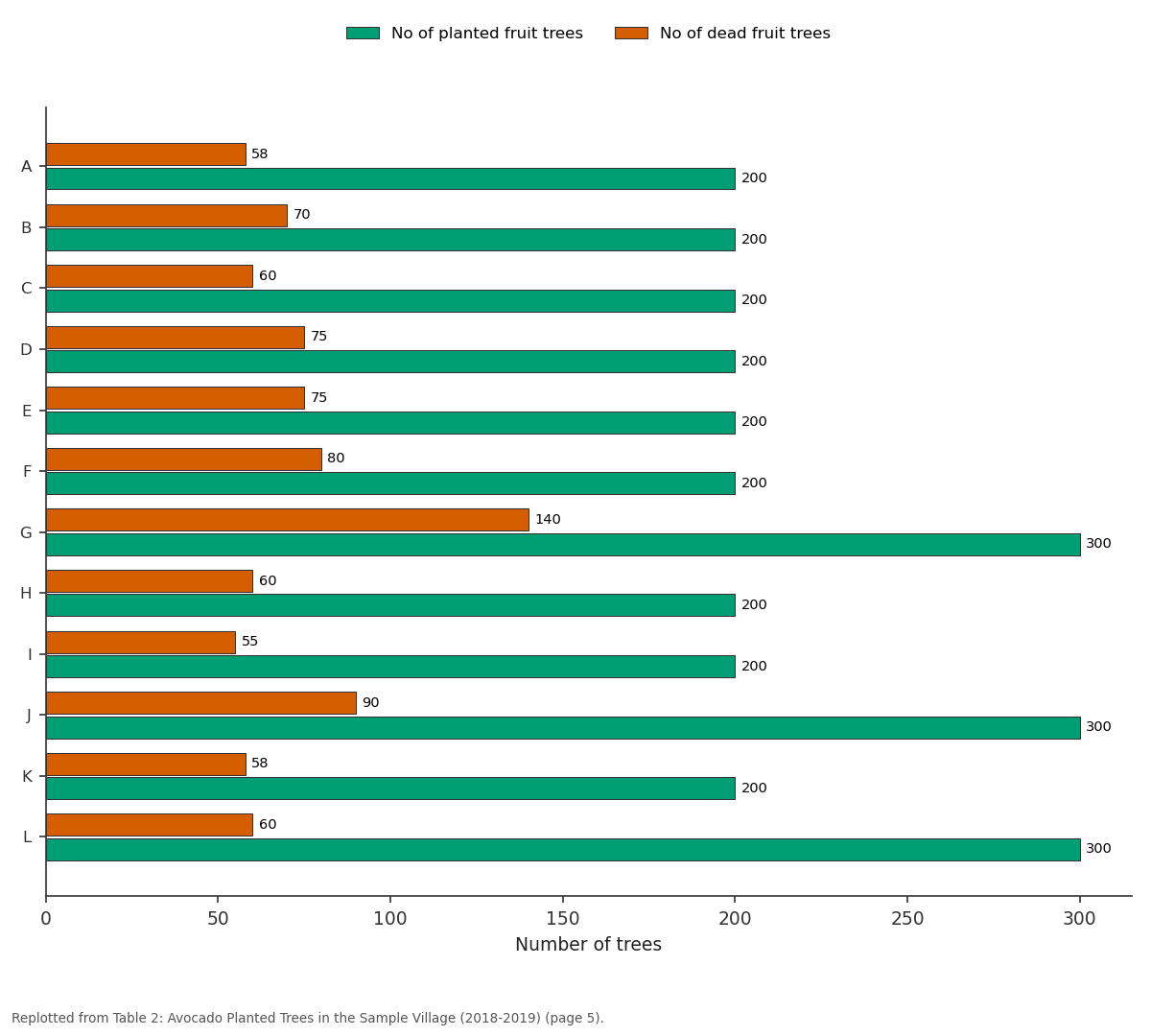
No of planted fruit trees and No of dead fruit trees: A vs B vs C vs D vs E
Replotted from Table 2 (page 5) of the original paper. Every bar is the paper's own table value.
View source evidence ↗Figures & tables
From the original paper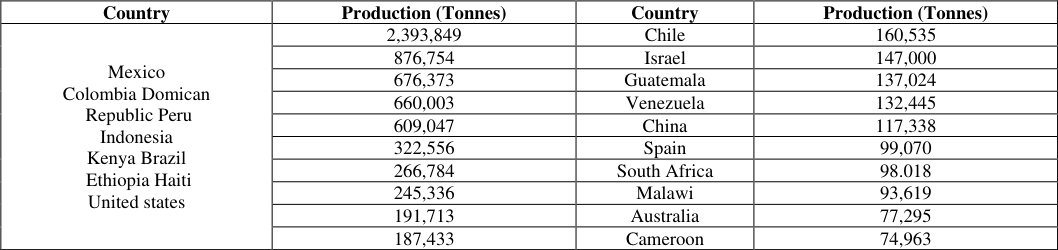 Table 1
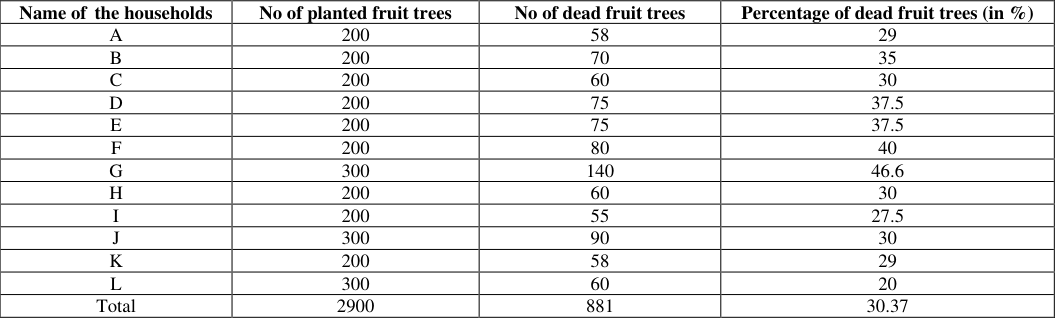 Table 2
Introduction
The avocado (Persea americana) tree is an edible fruit that is widely grown in the Western Hemisphere. It has greenish and yellowish flesh with a buttery consistency and a rich, nutty flavor. It was first domesticated in Mesoamerica more than 5,000 years ago in the highlands bridging South-Central Mexico and Guatemala. Therefore, avocado is purely a native of tropical America, which originated in Mexico and Central America. The early Spanish explorers and travelers recorded its cultivation from Mexico to Peru, but during this time, it was not in the West Indies. It was largely introduced into Jamaica in 1650 and into Southern Spain in 1601 (Tripathi et al, 2015) [1] . It was also reported in Zanzibar in 1892, in Florida, and California; this Avocado had been introduced in 1833 and 1856, respectively. This fruit has the most nutritional value of all fruits; as such, it is often known as the New World's most essential contribution to human nutrition. The pulp of these fruits contains as high as 4% fat (up to 30%) but is low in carbohydrates (Tripathi et al, 2019) [12] . The arrival of Avocado fruits and their plantation in India was during the early part of the nineteenth century. So, with the increasing demand for avocados for the Indian market, there is a growing interest in exploring the potential of avocado plantations in different regions of the country. Avocado was introduced into Myanmar over 60 years ago, and it was first planted at Pyin U Lwin (formerly known as Maymyo), which is a hilly resort with pleasant weather. Pyin U Lwin is situated to the east of Mandalay Its altitude is 1,165 metres, and the average annual rainfall is around 1500 millimeters. The minimum temperature is 9 ºC. The area of avocado was first expanded to the neighbouring towns of the northern Shan State and later to the Southern Shan State; also, to Kayah and Chin States. Geographically, all these states are in the hilly regions, which have relatively lower temperatures, with favourable annual rainfall distributed over five months, from mid-May to mid-October (Saidiksha et al., 2023) [16] . Avocado continues to be cultivated by farmers as backyard crops, and no commercial plantations exist in the country. In India, avocado is commonly propagated through seeds. The viability of seeds of avocado seeds is quite short (2 to 3 weeks), but this can be improved by storing the seeds in dry peat or sand at 5°C. Removal of the seed coat before sowing hastens germination. In Sikkim, all the trees grown are seedlings in origin. The seeds taken from mature fruits are sown directly in the nursery or polyethylene bags. When 6 -8 months old, the seedlings are ready for transplanting. Such seedling trees at 10-15 years produce 300 to 400 fruits. Vegetative propagation through budding or grafting has resultedin the establishment of selected varietal clones. At present, there is very little appreciation for this fruit by the local people, probably because they are not aware of its nutritional value (Geethu and Saji, 2022) [3] . Another obstacle to its development is the unavailability of superior commercial varieties. Presently, there is no definite governmental plan to strengthen the research and development of avocado in India.
Overview of Avocado Fruit Plantations in the World
The fruit Avocado is one of the most nutritious among the fruits, is originates in Central-South American countries. From the table below, we can see the trend and its level of production of avocados in the world. It is viewed that the maximum production of avocado and the lion's share of the world production came from these Central-South American countries. Here, it is observed that Mexico became the largest producer of avocados in the world with 2,393,849 tonnes in 2020, which is followed by Colombia, Dominican Republic, Peru, Indonesia, Kenya, Brazil, Ethiopia, etc., and Cameroon produces the smallest quantity (Ghosh, 2000) [5] . However, the production level of avocado fruits in Asian countries is moving at a slow pace compared to Western countries. As it is seen that countries like Indonesia, China, Israel, Vietnam, the Philippines, and Korea. Mexico supplies 45 percent of the international avocado market. Regarding the importing of avocado fruits U.S.E. ranks number one in the world. And at the same time, the top-ranking exporting countries of these fruits are Mexico, Peru, Colombia, and Chile (Tripathi et al, 2020). The oldest evidence of avocado presence in Mesoamerica is from 10,000 years ago in Coaxcatlán, Puebla (Mexico). People in Central America were tending wild avocados as early as 11,000 years ago and intentionally selecting larger, more robust fruits by 7,500 years ago. Avocados were first domesticated in tropical America, where they were cultivated as individual seedling trees before the Spanish conquest (Anu, Ann, Jyothi, and Suma, 2021) [6,19] . The plants did not receive serious horticultural attention until about 1900, when horticulturists found that the production of grafted trees was simple and allowed perpetuation of superior seedlings and the establishment of orchards. Flourishing avocado industries have since developed around the world in suitable climates. Mexico, the Dominican Republic, Peru, Indonesia, and Colombia were the top producers worldwide in 2020. The fruits are also grown commercially in Florida, California, Hawaii, Kenya, Haiti, Chile, South Africa, Brazil, and Australia, as well as on some Pacific islands and in several Mediterranean countries, including Israel. Horticulturally, avocados are divided into the Mexican (Persea americana, variety drymifolia), West Indian (P. americana, variety americana), and Guatemalan (P. americana, variety guatemalensis) races, with more than 1,000 cultivars between them (Tripathi et al, 2022) [14] . The Mexican race is native to Mexico and is characterized by the anise-like odour of the leaves and by small (weighing 90-240 grams [3-8 ounces]), thin-skinned fruits of rich flavour and excellent quality. Mexican avocados are the hardiest, growing in regions too cold for other types. The Guatemalan race, native to the highlands of Central America, is slightly less frost-resistant than the Mexican and produces fruits of medium to large size (240-1,000 grams), characterized by thick woody skins and a ripening season different from that of the others. Cultivation of the West Indian race, the most tropical, is limited in the United States to southern Florida. Hass avocado, the most popular cultivar in the United States, is a Mexican Guatemalan hybrid (Saidiksha et.al., 2023) [16] .
Status of Avocado Cultivation in India
American missionaries introduced the avocado to India a century ago but failed to popularize it among Indians, who were not impressed with the fruit's blandness. One of the earliest Indian places to have avocado trees was the Indian Institute of Horticultural Research (IIHR) at Hessarghatta, Bangalore, from where the institute authorities subsequently removed the trees. However, avocados had spread from IIHR to places near Bangalore, with growers using the tree's seeds to propagate it (IIHR New Letter, 2020) [7] . American missionaries continued bringing avocado trees into India during the first half of the twentieth century and introduced them at Coorg, Ooty, Kodaikanal, Palani, and other south Indian hilly areas suitable for their cultivation. As a result of the early foray of the fruit in the southern states, in 2021, most Indian avocado growers are in Tamil Nadu, Kerala, and Karnataka. In addition, growers in Maharashtra in the Nashik region have also cultivated avocados. Growers of avocados also grow them in Sikkim. Among the other northeastern states, in Mizoram, locals brought the fruit from Myanmar. They cultivated it and spread it to other neighboring states, with Manipur being a big grower of fruit now. Growers in Himachal Pradesh and Punjab have also attempted to grow avocado (Geethu and Saji, 2022) [3] . However, fruit does not tolerate frost in tropical and subtropical climates, with no dry heat favoring its growth. Thus, three south Indian states and Maharashtra remain the best places in India to grow avocados and manage logistics to deliver the fruit across the country. Avocado requires a tropical to sub-tropical humid climate with certain specific requirements for its different horticultural races and varieties. It can thrive well in climatic conditions ranging from true tropical to warmer parts of the temperate zone. Although sporadic occurrence of prolifically bearing avocado plants suggests that its cultivation holds potential in Himalayan regions within altitudinal ranges between 800 to 1600 m above msl, with an ideal temperature range of 12 to 30 °C, it can tolerate up to 38 -40 °C. The annual average rainfall should be around 700 -2000 mm (Ghosh, 2000) [5] . It is prone to damage due to characteristic hot, dry winds and frosts of northern India. Suitable for planting on a wide range of well-drained soil, and cannot withstand water, logging, or being extremely sensitive. Saline soil should be avoided, and the optimum pH range is 5 to 7. All three horticultural races, i.e., West Indian, Guatemalan, and Mexican, are adapted to tropical and sub-tropical conditions and have been tried in India. The cultivars of the West Indian race are grown in localized pockets in Maharashtra, Tamil Nadu, and Karnataka. In tropical and near-tropical areas, only the West Indian race is well-adapted, but its hybrids with Guatemalan perform well and in less tropical regions, hybrids of Guatemalan with Mexican race predominate since they combine the cold hardiness of the latter with the superior horticultural traits of both and bridge the two seasons of maturity. The Mexican race is cultivated on mid-altitude hills (pH 5-6) (Jayanthi, Tripathi, and Sankar, 2014) [8] . The fruit of the Mexican race is Small (250 g) fruit type, ripens 6 to 8 months after flowering. Fruits have thin, smooth skin with a large seed fitting loosely in the central cavity. Oil content is up to 30 percent in the fruits. Trees of this race are cold-hardy. The fruits of the Guatemalan race are large, weighing up to 600 g and borne on long stalks. The fruits ripen 9-12 months after flowering. Fruit skin is thick and often warty. Seeds held tightly in the hollow of the fruit are small. The oil content in fruits ranges between 8 and 15 per cent. The fruits of the West Indian race are medium in size, and the fruit skin is smooth, leathery, and glossy also cultivated avocados. Growers of avocados also grow them in Sikkim. Among the other northeastern states, in Mizoram, locals brought the fruit from Myanmar. They cultivated it and spread it to other neighboring states, with Manipur being a big grower of fruit now. Growers in Himachal Pradesh and Punjab have also attempted to grow avocado (Geethu and Saji, 2022) [3] . However, fruit does not tolerate frost in tropical and subtropical climates, with no dry heat favoring its growth. Thus, three south Indian states and Maharashtra remain the best places in India to grow avocados and manage logistics to deliver the fruit across the country. Avocado requires a tropical to sub-tropical humid climate with certain specific requirements for its different horticultural races and varieties. It can thrive well in climatic conditions ranging from true tropical to warmer parts of the temperate zone. Although sporadic occurrence of prolifically bearing avocado plants suggests that its cultivation holds potential in Himalayan regions within altitudinal ranges between 800 to 1600 m above msl, with an ideal temperature range of 12 to 30 °C, it can tolerate up to 38 -40 °C. The annual average rainfall should be around 700 -2000 mm (Ghosh, 2000). It is prone to damage due to characteristic hot, dry winds and frosts of northern India. Suitable for planting on a wide range of well-drained soil, and cannot withstand water, logging, or being extremely sensitive. Saline soil should be avoided, and the optimum pH range is 5 to 7. All three horticultural races, i.e., West Indian, Guatemalan, and Mexican, are adapted to tropical and sub-tropical conditions and have been tried in India. The cultivars of the West Indian race are grown in localized pockets in Maharashtra, Tamil Nadu, and Karnataka. In tropical and near-tropical areas, only the West Indian race is well-adapted, but its hybrids with Guatemalan perform well and in less tropical regions, hybrids of Guatemalan with Mexican race predominate since they combine the cold hardiness of the latter with the superior horticultural traits of both and bridge the two seasons of maturity. The Mexican race is cultivated on mid-altitude hills (pH 5-6) (Jayanthi, Tripathi, and Sankar, 2014) [8] . The fruit of the Mexican race is Small (250 g) fruit type, ripens 6 to 8 months after flowering. Fruits have thin, smooth skin with a large seed fitting loosely in the central cavity. Oil content is up to 30 percent in the fruits. Trees of this race are cold-hardy. The fruits of the Guatemalan race are large, weighing up to 600 g and borne on long stalks. The fruits ripen 9-12 months after flowering. Fruit skin is thick and often warty. Seeds held tightly in the hollow of the fruit are small. The oil content in fruits ranges between 8 and 15 per cent. The fruits of the West Indian race are medium in size, and the fruit skin is smooth, leathery, and glossy. Fruits are born on long stalks and require up to 9 months for ripening from the date of flowering. Its seeds are large, fitting loosely in the cavity (Ghosh, 2000) [5] .
Climate and Propagation
Climate is the most important natural phenomenon in which varieties of crops and fruits are supposed to be cultivated. Based on its environmental situation, such as soil fertility, temperature, and rainfall, and its landscape, the farmers should introduce an avocado plantation based on its climatic aspects. Thus, the study of geographical situations concerning climate and soil is a must to have experienced beforehand for the cultivation of commercial fruits or crops to gain more production. One must choose and sow the crops according to the suitability of the environmental conditions. Climatically, Avocado is a sub-tropical to tropical tree and can be grown successfully from the tropics to sub-tropics at a latitude of 350 in both hemispheres where the temperature is warm throughout the year with average monthly temperature exceeding 180C (Jayanthi and Rami Reddy, 2020) [9] . The ideal climatic condition for the cultivation of avocado in a successful manner is hot temperatures and high humidity all year round. Moreover, it has high quality in adaptation to soil types compared to other fruit plants in the world, as it can grow in most types of soil. The optimum range of pH value required by avocado is from 5 to 7. However, avocado cannot withstand waterlogging and is extremely sensitive to poor drainage. Besides, the cultivation of avocado fruits has fewer processes in seedling and making a pit for plantation, which is not too difficult to grow. As such, all farmers who are interested in practicing this avocado cultivation in places where land is available can afford this farming even if he is not very aware of the process of planting. In India, avocado is commonly propagated through seeds. The viability of avocado seeds of avocado quite short (2 to 3 weeks), but this can be improved by storing the seeds in dry peat or sand at 50 °C. Removal of the seed coat before sowing hastens germination. In India, most of the trees grown are seedlings in origin. The seeds taken from mature fruits are sown directly in the nursery or polyethylene bags. When 8-12 months old, the seedlings are ready for transplanting. The seedling trees took more time to start fruiting, and the yield and fruit quality are variable. Due to cross-pollination, there is great variability in the seedlings produced from seeds, it is impossible to obtain a genetically uniform plant as indicated for the formation of commercial orchards. These plants take a long time to produce the first crop, and the fruit quality is unreliable. Vegetative propagation of superior clones of avocado by budding or grafting is essential to avoid this problem. Experiments conducted with two method of grafting (veneerand cleft) and two methods of budding (T and patch) in all the months of the year at CHES (IIHR) Chettallirevealed that after 90 days of grafting, the mean percent success was highest inch left grafting (32.5%) while lower mean success was observed 8.3% in veneer grafting (8.3%), T-budding (7.5%), Patching budding (5.8%). Among different months, the highest mean success was recorded in September (32.5%), followed by 22.5% in March and August. Among the different combinations of months and propagation methods, the highest success (70%) was recorded in cleft grafting performed during September. This was closely followed by the same method done in March (60%). The success in cleft grafting is higher than the other three methods in all 12 months. The growth of the scion was also higher than in other methods. It was concluded that cleft grafting in September and March was most suitable for the multiplication of avocado (Tripathi and Kuranakaran, 2013) [17] . At the Fruit Research Station, Kallar, Tamil Nadu, layering as well as inarching gave up to 75 percent success, while in West Bengal, chip-budding is reported to be successful. In India, presently, there is no commercial nursery engaged in vegetative propagation of avocado, nor is there any initiative either at a governmental or private level to undertake nursery production of avocado planting material (Jayanthi and Rami Reddy, 2020) [9] .
Introduction of Avocado Fruits plantation in Manipur
The state of Manipur, located at the easternmost region of the country and sharing a border with a foreign nation, is falling short in comprehensive commercial fruit farming. Although avocado farming began in the southern states of India in 1912 and yields a significant amount annually, the people of Manipur, which shares a border with foreign nations, continue to fall behind in cultivating this highly valuable fruit. To be honest, during the survey, there was no avocado farming except for certain areas in Lhangjol village, situated around 30 kilometers from the border town of Moreh. The current situation in this context could be comprehended through brief discussions and interactions held with the respondents during the field survey in the selected village (The Sangai Express, 2025) [4] . They revealed openly that for a long time, they have been using the old traditional method of shifting cultivation to fulfill the family's needs in every way. And this was the sole method of agricultural practice conducted by the farmers in the village. Consequently, there is no extra crop production guaranteed to cover household expenses. Upon observing the scenario, it is understood that the farmers lack any understanding of the process related to the cultivation of commercial crops or fruit plantations and their significance, which would greatly contribute to improving the economic status. From interviews conducted with several respondents in the village, we learned that regarding avocado cultivation, no workshops or seminars have ever been organized by the relevant Authority in the area, specifically in the sample village (Rajendiran, and Chandrakant, 2020) [10] . Although they possess limited knowledge about cultivating this fruit, farmers who choose to engage in this type of farming work diligently and persistently. Additionally, there were no government or non-government organizations that provided information about the advantages of avocados for physical health and the potential income generation from this cultivation. This is among the primary reasons for the lack of cultivation practice and falling behind in Manipur, specifically in the Tengnoupal district (Sankar, kumar, and Karunakaran, 2015) [11] . Providentially, on July 12, 2019, the state Government officially declared its intention to offer benefits to the Avocado producers. The "Grow one million Avocado trees project 2019-21" was officially inaugurated by Action for Greening Manipur (AGM) at Kuki Inn Imphal by Adim Pamei, vice chairperson of the Manipur State Disaster Management Authority, during the inaugural function of Avocado under the guidance of Action for Greening Manipur to ensure its availability throughout the state. The state of Manipur is in the early phase of avocado farming since the state government has recently begun to disseminate information broadly regarding the importance of avocado cultivation, along with its advantages for both growers and the state. On the opening day of the avocado fruit plantation in the state, it is declared that every household must plant over 100 avocado trees to qualify as a beneficiary and receive special advantages offered by the government to the state's fruit growers (Rajendiran, and Chandrakant, 2020) [10] . Meanwhile, a stable committee or organization has been established to oversee this process for the effective execution of the avocado tree planting across the whole state of Manipur. Adim Pamei mentioned that the avocado produces fruit three years after being planted. Thus, to implement the Action for Greening Manipur, beneficiaries who plant over 100 Avocado trees and maintain them will receive rice from the Government every four months, and the Action for Greening Manipur, in partnership with the relevant Department, will also offer necessary assistance to the beneficiaries, he mentioned. Additionally, certificates will also be given to the farmers/beneficiaries who cultivate avocado trees. There are several facilities established by the state government to support farmers in the initial phase to cultivate more avocado trees for achieving Action for Greening Manipur (Tripathi et al, 2020) [18] .
The village known as S.M. Lhangjol is situated in the southeastern region of Manipur, approximately 35 kilometers from the border town of Moreh, which connects India and Myanmar. It is only a short distance of a few kilometers from the Asean National Highway No. 2. Previously, this National Highway was referred to as NH-39 and is frequently regarded as the lifeline of the entire state of Manipur, as various foreign goods and commodities have been imported via this highway for many years. The detour road began at New Mongjang Village along National Highway No. 2, passing through Champhai, Chatong, and Maipi villages before finally arriving at the interior village of S.M. Lhangjol. It took just one and a half hours to arrive at the village while riding bikes at a normal speed. This road was built as part of the Pradhan Mantri Gram Sadak Yojana (PMGSY) program, aimed at ensuring all-weather road access to the country's unconnected settlements. However, the procedure for constructing this road is still ongoing and may require several years to finish. For this reason, traveling on a bike or scooter to the village during the rainy season is somewhat challenging. The villager's exhibit great enthusiasm in all aspects of the work culture related to various types of commercial crops and fruits. Their primary livelihood is shifting cultivation, where they cultivate rice, the staple food for the community over many past years. Over time, the attitudes of the people have gradually evolved, and unlike in the past, the younger generation in the village has transitioned from rice cultivation to growing chili, Parkia (Jong Lha), lemon, banana, and various other fruits to support their socioeconomic livelihood. This fruit farming allowed the trees to reach their maximum size in other areas of the forest since it didn't require clearing the existing trees in different sections for cultivation. Simultaneously, different cash crop farming practices assist in generating income for various needs, including education, clothing, healthcare, and other religious activities. Therefore, the gradual methods of diverse fruit and crop cultivation in the village are significantly advantageous for the community. In addition, it contributed to the growth of the farming culture related to cash crops in the village and its vicinity. As time has gone by, people are becoming somewhat aware of it and are more inclined to introduce new cash crops or fruits in the village, leading them to start cultivating avocados there. Indeed, this village has become the top avocado fruit plantation in this area. The following are some of the avocado trees planted in the village so far for the last three years. The table above emphasizes the distribution, or the number of avocado trees planted in the selected village. To achieve the highest yield of fruit trees in the field, the villagers are divided into 12 groups. According to the categorization of the groups, the nursery plants are allocated to them. Thus, shortly after creating all the holes concerning the number of trees, they have only planted 2900 trees over the past three years. However, 881 dead plants were discovered after planting, indicating that one-third of the nursery plants died after being successfully planted. It is not easy to determine the cause of these dead trees, whether it arises from a malfunction in the planting process or from inadequate rainfall and warmth. However, the living trees that are greenening the field draw in people and evoke a sense of great joy or pleasure when they gaze at the field. From the start of this fruit's cultivation in the village, all labor tasks have been carried out by the farmers at their own expense.
There was no monetary support in this farming process for its smooth and successful execution. On the other hand, all the farmers persist in their work and maintain their hopes and ambitions regarding this fruit cultivation. Instead, they seek to gain more understanding about the cultivation of this fruit while simultaneously hoping to expand their own farmland in the future as well. It is also essential to point out that, regarding this avocado farming, there is no financial support or assistance from the state or Central government for the entire process of this plantation; all expenses are covered by their own funds and efforts. It is commendable that they accomplished everything on their own with determination to reach their objective. Despite receiving considerable criticism that dissuades them regarding the cultivation of this fruit, they remain unfazed and continue their efforts with confidence, hopes, and aspirations. To be honest, their determination is incredible as they proceed without any concerns about success or failure. They possess a strong dedication and desire to influence their future through this avocado farming. Additionally, because of their low costs and dedication to their work ethic, paired with their motivational spirit, they will soon reap the rewards, which would be remarkably significant and a catalyst in boosting their economy.
Issues and Challenges of Avocado Plantation in the
Sample Village: Although the villagers are deeply worried and have initiated this long-term commercial fruit cultivation to improve their socio-economic conditions, they have encountered numerous challenges throughout the growing process. Below are some of the significant issues they have faced during their efforts:
Selection of Quality Seed: In every type of fruit or crop farming, the primary concern for farmers should be choosing high-quality seeds. The fact that healthy seedlings lead to robust plants that yield more fruit is something one should grasp before buying seeds. Regarding the village fruits sample, it appears that they lack awareness of the various types and cannot accurately distinguish between all those seed varieties. They bought from various agents and suppliers, but they don't ask many questions regarding the quality of seeds or nursery plants that need to be prepared for planting. Consequently, if necessary, all farmers and the landowner should consult with experts and more knowledgeable individuals before commencing agricultural work, as it differs greatly from other seasonal crops such as rice, wheat, and maize (Whiley, Schaffer, and Wolstenholme, 2002) [15] . If the seed selection process fails, it could lead to significant long-term commercial farming failures. Simultaneously, all the physical and financial investments made during the entire farming process would be entirely wasted. Consequently, if feasible, they should seek advice from a recognized or established organization or relevant Agricultural department to ensure the farming project's success.
Education: To manage a large farm of diverse fruit crops, one must be at least educated or qualified, ensuring that they stay informed and updated on news and information relevant to enhancing fruit cultivation practices. Furthermore, there is a complete lack of schools and institutions providing agricultural classes for avocado farmers in both the state and the region. Sensitization programs, such as workshops or seminars, are essential for avocado growers, as they may face numerous unexpected challenges or issues during cultivation that can impede the entire planting process. Hence, to prevent these challenges, a facility must exist where farmers can receive consultation on the causes of the issues. About the sample village, there are no nearby locations to access these services (Geethu and Saji, 2022) [3] . This must be provided by the relevant authority or department to enhance their experiences related to avocado farming.
Land issues:
The problem of land is a shared challenge encountered by farmers when cultivating fruit plants in tribal communities. The land in the village entirely belongs to the chiefs, and the approval for cultivating both large and small plots for cash crops and fruit farming rests with their judgment. Thus, although many farmers aim to establish this long-term commercial agriculture in the village, numerous additional processes regarding land conditions must be discussed with the landowner or the village chief to determine if it will be a rented farm or an owned farm (Tripathi et al, 2022) [14] . Therefore, until this agreement is finalized, no one can initiate any farming activities, whether on a large or small scale, in the village.
Prospects and Potential of Avocado Plantation in The District:
The preceding description demonstrated that there are significant opportunities and potential for the widespread cultivation of avocado trees throughout the district and the entire state of Manipur. In contrast to other districts, Tengnoupal district boasts ideal geographical features, characterized by a naturally gentle slope across the landscape, and its climatic conditions are also highly favorable for promoting large-scale avocado cultivation.
The gently sloping alluvial plain in the border area near Myanmar remains untouched land for commercial agriculture, including the cultivation of avocado trees and other cash crops. The soil's fertility and its pH level in this area range from 5 to 7, allowing for the abundant growth of nearly all types of commercial fruits. Meanwhile, any natural disaster that could threaten the entire area often divides and disregards the region, protecting the existing crops from being uprooted. This is one of the benefits of this area for the future cultivation of cash fruits and crops in the region. Additionally, it is worth noting that the area is less susceptible to large landslides and mudflows, making it one of the most ideal locations for cultivating avocado farming. It is indeed fortunate to note that nature has endowed the Indo-Myanmar border regions with abundant land for cultivating various cash fruits and crops, allowing us to implement both short-term and long-term farming that can sustainably supportfamilies over time. Although this region has significant potential for expanding fruit plantations, people are lagging in aspects of fruit cultivation, and there are benefits to be gained from it. They must awaken and anticipate the geographical conditions in advance, striving to determine the optimal use of this potential to enhance the socio-economic conditions in the district through the cultivation of this fruit.
Implementation of Government Subsidies for Avocado
Plantation: Regarding the cultivation of avocado trees, there are currently no specific government policies or plans to enhance research and development of avocados in India. Despite the Manipur state government officially announcing on July 12, 2019, its intention to support avocado growers through the "Grow One Million Avocado Trees Project 2019-21" at Kuki Inn Imphal under the Action for Greening Manipur initiative, no benefits have been distributed to people for starting avocado plantations in the hill districts of Manipur. Additionally, for the implementation of the Action for Greening Manipur, the state government promised the citizens to supply rice to avocado cultivators every four months, along with other potential support that encourages the cultivation of this fruit. However, all these services that are meant to be accessible to farmers for cultivating these fruits have yet to reach the hilly regions, particularly in the Tengnoupal district. Even the sample village, known as the leading avocado cultivators in the entire district, lacks any understanding concerning the beneficiaries in this matter. Thus, to improve these services for avocado farmers in this selected village, all these essential facilities should be approved by the relevant department and executed to the highest extent. If the fruit growers utilize these facilities promptly, the information will spread widely, and it will play a crucial role in aiding the expansion of avocado fruit plantations throughout the district and the state. In addition, all financial assistance or funding meant for the owner and avocado growers should be provided quickly and directly to the proper person. Thus, individuals may be more motivated towards this work environment, aiding in the growth of avocado farming regions. It is also very important to provide additional dependable services by organizing more awareness programs on the possibilities of avocado tree farming regularly over time, allowing them to gain further knowledge about this cultivation.
Discussion
Our long-standing agro-forestry practices in Manipur, which have been in place for centuries, have largely become unsustainable due to gradual land degradation across all the hill areas. Due to therapid decline of the jhuming cultivation cycle caused by population pressure on land resources, it is essential to find alternative methods to mitigate this serious impact on land resources. To prevent relying on this conventional method of farming, it's essential to begin incorporating high-value trees such as avocado plants. The avocado is a highly valued fruit that contains various nutrients beneficial for our health in multiple ways. As a result, the cultivation of these fruits in our area will be advantageous and a decision we won't regret. Taking into account the geographical location of the district and its surroundings, the climate is very favorable for growing a larger variety of fruits, which could significantly enhance farming (Tripathi et al, 2015) [1] . Upon examining the socioeconomy of the sample village, it is a regrettable situation since a majority of the inhabitants continue to partake in this outdated method of farming. They have limited prospects for improving their economy besides Jhuming cultivation. Consequently, introducing and opting for various new fruit cultivations, such as avocado, which are commercially valuable and suited to the region's fertility, should be implemented on a larger scale to enhance the regional socioeconomy. Indeed, the entire Indo-Myanmar region possesses significant potential to expand fruit cultivation, allowing a large portion of the population to depend on this sector without engaging in other entrepreneurial activities.
Avocado cultivation provides significant assistance in rehabilitating damaged forest regions and can also act as a substantial source of income. Avocado contains a carotenoid called lutein that assists in guarding against prostate cancer and eye conditions such as cataracts and macular degeneration (Johnson, 2005) [20] . Avocado types with reduced core and shell percentages, like the quintal variety, are favored for oil extraction because of their high pulp yield. The conventional cold pressing technique for vegetable oils has been supplanted by solvent extraction, as some researchers indicated that a 59% yield in oil extraction was achieved from fleshy pulp with hexane, whereas using acetone as a solvent reduced this figure to approximately 12% (IIHR New Letter, 2020) [7] .
Conclusion
Despite numerous challenges, individuals who have chosen to cultivate these avocado fruits continue their efforts with unwavering commitment. They never considered the possibility of failing in cultivation, despite being the pioneers of this practice in the area. Furthermore, we can see their enthusiastic attitude as farmers look forward to generating a large quantity of avocado fruits in this region. The local community, particularly the avocado farmers, ought to receive assistance to boost this new agricultural practice in the area. Typically, avocado plants grown from seeds begin to produce fruit five to six years after planting, whereas grafted plants yield fruit sooner, in about three to four years. The typical yield of one avocado tree can reach up to 500 fruits annually. Therefore, it is crucial to emphasize sustainability to ensure that avocado farming stays feasible over time. Due to the area's considerable capacity to produce the largest volume of avocado goods. Thus, to fulfill the goals of avocado farming throughout the whole district and state of Manipur, the relevant department should offer prompt financial assistance to the avocado cultivators.
Figures and tables from the paper
| Country | Production (Tonnes) | Country | Production (Tonnes) |
|---|---|---|---|
| Mexico Colombia Domican Republic Peru Indonesia Kenya Brazil Ethiopia Haiti United states | 2,393,849 | Chile | 160,535 |
| 876,754 | Israel | 147,000 | |
| 676,373 | Guatemala | 137,024 | |
| 660,003 | Venezuela | 132,445 | |
| 609,047 | China | 117,338 | |
| 322,556 | Spain | 99,070 | |
| 266,784 | South Africa | 98.018 | |
| 245,336 | Malawi | 93,619 | |
| 191,713 | Australia | 77,295 | |
| 187,433 | Cameroon | 74,963 |
Table text extracted from the original PDF; superscript letters are shown inline. The original table image is below.
View original table image
| Name of the households | No of planted fruit trees | No of dead fruit trees | Percentage of dead fruit trees (in %) |
|---|---|---|---|
| A | 200 | 58 | 29 |
| B | 200 | 70 | 35 |
| C | 200 | 60 | 30 |
| D | 200 | 75 | 37.5 |
| E | 200 | 75 | 37.5 |
| F | 200 | 80 | 40 |
| G | 300 | 140 | 46.6 |
| H | 200 | 60 | 30 |
| I | 200 | 55 | 27.5 |
| J | 300 | 90 | 30 |
| K | 200 | 58 | 29 |
| L | 300 | 60 | 20 |
| Total | 2900 | 881 | 30.37 |
Table text extracted from the original PDF; superscript letters are shown inline. The original table image is below.
View original table image
References
20 in the original paper- Tripathi PC, Karunakaran G, Sakthivel T, Sankar V, Senthil Kumar R, Jayanthi Mala BR, et al. Avocado research at CHES Chettalli. In: Souvenir and Abstract of Brainstorming Session on Avocado, CHES Chettalli; 2015 May 27. p. 7-17.
- Subba S, et al. Introduction of avocado (Persea americana) fruits in Eastern Himalaya of India: A review. Int J Econ Plants. 2023;10(2):127-131.
- Geethu M, Gomez S. Biochemical and morphological characteristics of avocado genotypes in Kerala. J Appl Hortic. 2022;24(3):369-374.
- The Sangai Express E-Pao. The state government to provide benefits to avocado growers. 2025 Feb 6.
- Ghosh SP. Avocado production in India. In: Avocado Production in Asia and the Pacific. FAO Corporate Document Repository; 2000.
- Augustine AA, Bhaskar J, Suma A. Morphological diversity with respect to fruit characters of avocado (Persea americana Mill.) in High Ranges of Kerala. J Trop Agric. 2021;59(1):83-85.
- Indian Institute of Horticultural Research (IIHR). Arka Supreme: A new variety of avocado. IIHR News Lett. 2020;41(3):1.
- Jayanthi Mala BR, Tripathi PC, Sanganal S, Sankar V. Pollinators diversity and their role in the pollination of avocado (Persea americana Mill.). In: International Symposium on Conservation and Management of Pollinators for Sustainable Agriculture and Ecosystem Services; 2014 Sep 24-26; NASC Complex, Pusa, New Delhi.
- Jayanthi Mala BR, Rami Reddy PV. Diversity and abundance of insect pollinators on avocado (Persea americana Mill.) and rambutan (Nephelium lappaceum L.) and their contribution to fruit set. Pest Manag Hortic Ecosyst. 2020;26(1):76-82.
- Rajendiran S, Chandrakant MA. Nutrient management for avocado (Persea americana Miller). J Plant Nutr. 2020;43(1):138-147.
- Sankar V, Tripathi PC, Senthil Kumar R, Karunakaran G. Nutritional benefits of avocado: A review. In: Souvenir and Abstract of Brainstorming Session on Avocado, CHES Chettalli; 2015 May 27. p. 55-60.
- Tripathi PC, Karunakaran G. Standardization of time and method of propagation in avocado. J Appl Hortic. 2019;21(1):67-69.
- Tripathi PC, Karunakaran G, Sakthivel T, Sankar V, Senthilkumar R, Radhika V. Evaluation of avocado germplasm for yield and fruit characters. Int J Agric Sci. 2023;15(7):12535-12539.
- Tripathi PC, Karunakaran G, Sakthivel T, Sankar V, Senthil Kumar R. Advances in avocado cultivation in India. Tech Bull No. 2/2022. ICAR-IIHR, Bangalore; 2022. p. 1-32.
- Whiley AW, Schaffer B, Wolstenholme BN. The Avocado: Botany, Production and Uses. Wallingford, UK: CABI Publishing; 2002. p. 1-416.
- Saidiksha R, Patel N, Varma S. Cognitive and neurological outcomes of frontal lobe degeneration: A review. Indian Journal of Neuropsychology. 2023;18(1):34-42.
- Tripathi R, Kuranakaran R. Early markers of neurodegeneration in mild cognitive impairment. Journal of Clinical Neuroscience. 2013;20(5):627-632.
- Tripathi R, Mehta A, Banerjee S. Longitudinal analysis of brain atrophy in aging populations. International Journal of Geriatric Psychiatry. 2020;35(9):912-920.
- Anu P, Ann R, Jyothi M. Comparative study of neuroplasticity in children and adults. Neuroscience and Cognition Research. 2021;9(2):85-93.
- Johnson M. Mechanisms of cerebral degeneration and repair. Brain Research Reviews. 2005;48(3):342-356.