
Research article · 2025 · Full text
International Journal of Agriculture and Food ScienceComprehensive assessment of pasteurized milk quality in Pune City: A physicochemical and microbiological analysis
Volume 7(4) · Pages 260–264 · DOI: 10.33545/2664844x.2025.v7.i4d.361 ↗
Research areasMilk Quality and Mastitis in Dairy Cows
Abstract
Author-writtenThis study evaluates the physicochemical and microbiological quality of pasteurized milk from five dairies in Pune: Aarey, Chitale, Katraj, Nandan, and Sane. Fifteen samples (3 per dairy) were analyzed for pH, fat, protein, sugar, ash, water, and total solids, along with Direct Microscopic Count (DMC), Standard Plate Count (SPC), Methylene Blue Reduction Time (MBRT), and Phosphatase activity. Results showed pH values of 6.87-7.10 and specific gravity of 1.03-1.031. Fat ranged from 2.33% (Sane) to 3.80% (Chitale), protein from 2.83% to 3.40%, and sugar from 2.67% (Aarey) to 5.23% (Chitale). Water content was highest in Aarey (88.10%) and lowest in Sane (86.05%), inversely reflecting total solids. Ash ranged from 0.85% to 0.91%. Microbiologically, DMC and SPC were highest in Katraj (176.67×10³ cells/mL and 170.00×10³ CFU/mL) and lowest in Aarey and Sane. MBRT exceeded 6 hours for Chitale, Nandan, and Sane, indicating good quality. The Phosphatase test was positive only in Aarey, suggesting inadequate pasteurization. The findings reveal variability in milk quality across dairies and emphasize the need for stringent quality control to ensure consumer safety.
Summary
Source-checkedPlain-language reading of the full paper, prepared with AI and checked against the text. Each point links to the authors' own words.
Why it matters
- Milk is considered a nearly perfect food because it contains a unique set of essential nutrients. View evidence ↗
- Because milk is perishable, pasteurization is used to extend its shelf life and ensure it is safe for consumption. View evidence ↗
- There is a lack of localized research on how pasteurization is implemented and how effective it is in urban Indian cities like Pune. View evidence ↗
The question
- The study aims to assess the overall safety and quality of pasteurized milk available in Pune City. View evidence ↗
- The researchers sought to evaluate how effective pasteurization was at removing pathogens and how it affected the milk's chemical and microbiological properties. View evidence ↗
What they did
- The researchers measured physicochemical properties (pH, fat, protein, sugar, ash, water, and total solids) and microbiological indicators (DMC, SPC, MBRT, and phosphatase activity). View evidence ↗
- Specific analytical techniques were used, including Gerber's butyrometer for fat and Benedict's reagent titration for sugar. View evidence ↗
What they found
- Fat content varied by dairy, with the lowest being 2.33% in Sane milk and the highest being 3.80% in Chitale milk. View evidence ↗
- Sugar levels ranged from a minimum of 2.67% in Aarey samples to a maximum of 5.23% in Chitale samples. View evidence ↗
- Katraj dairy had the highest microbial load, with a Direct Microscopic Count of 176.67×10³ cells/mL and a Standard Plate Count of 170.00×10³ CFU/mL. View evidence ↗
- Milk from Chitale, Nandan, and Sane showed MBRT values exceeding 6 hours, which indicates good quality. View evidence ↗
- Only Aarey milk tested positive for phosphatase activity, which suggests that the pasteurization process was inadequate. View evidence ↗
- Sampling temperatures between 9.0°C and 16.3°C revealed inconsistencies in how the cold chain was managed. View evidence ↗
What it means
- The authors concluded that Chitale and Sane provided the safest and most nutritionally sound milk, while Aarey and Katraj showed signs of poor processing and contamination. View evidence ↗
- The authors recommend continuous surveillance, better cold chain maintenance, and strict adherence to pasteurization rules to protect public health. View evidence ↗
Visual summary
3 visualsIllustrations explain the paper; charts are replotted from the paper's own table values.
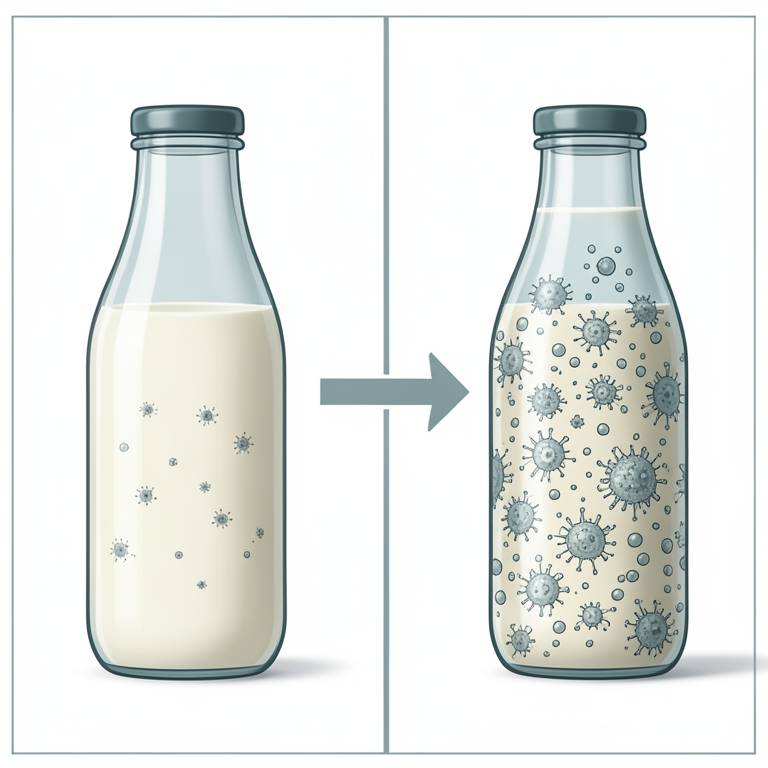
Pasteurization Quality Comparison
AI-generated conceptual illustration (pasteurized cow milk in glass bottles). It explains the idea and does not show study data.
View source evidence ↗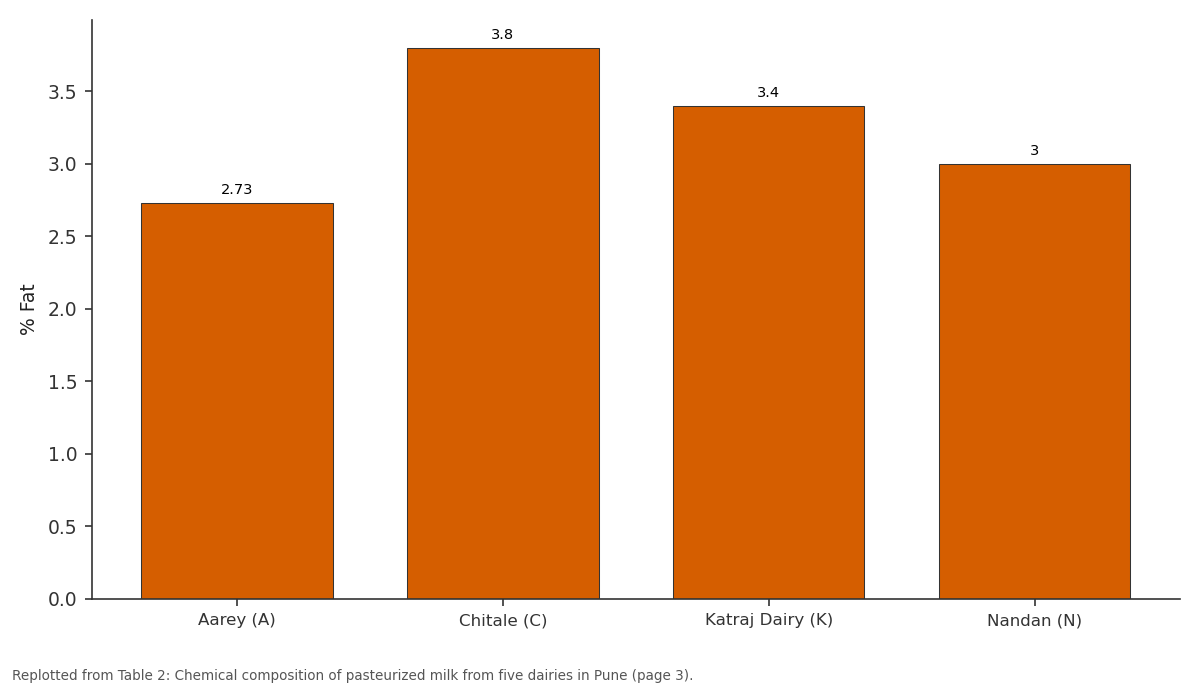
% Fat: Aarey (A) vs Chitale (C) vs Katraj Dairy (K) vs Nandan (N)
Replotted from Table 2 (page 3) of the original paper. Every bar is the paper's own table value.
View source evidence ↗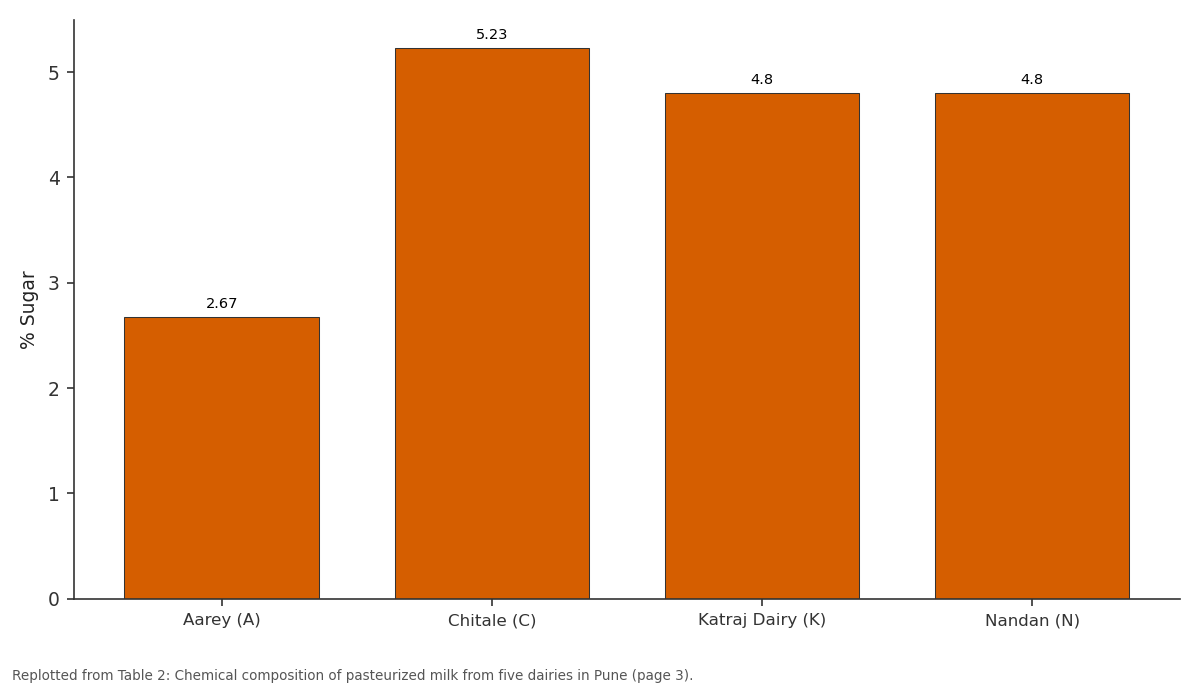
% Sugar: Aarey (A) vs Chitale (C) vs Katraj Dairy (K) vs Nandan (N)
Replotted from Table 2 (page 3) of the original paper. Every bar is the paper's own table value.
View source evidence ↗Figures & tables
From the original paper Table 1
 Table 2
 Table 3
Introduction
Milk is widely acknowledged as nature's most nearly perfect food due to its unique composition of essential nutrients (Wright & Huck, 2002) [36] . It serves as a dietary cornerstone across all age groups, valued for its nutritional richness and diverse culinary applications (Górska-Warsewicz et al., 2019) [12] . In addition to direct consumption, milk is utilized in beverages, baked goods, and as the foundational ingredient in dairy products such as cheese, yogurt, and butter. Its perishable nature, however, necessitates preservation methods such as pasteurization to ensure safety and extend shelf life (Kailasapathy, 2015) [19] . Milk contributes significantly to the intake of critical nutrients including calcium, vitamin D, phosphorus, and vitamin B12 often in a highly cost-effective manner (Drewnowski, 2011) [6] . Moreover, milk from non-cattle sources such as goat and camel also present unique nutritional benefits (Roy et al., 2020) [28] . The nutritional value of milk, however, can be compromised by microbial contamination, which poses serious health risks if left unaddressed. Pasteurization, the thermal treatment of milk to eliminate pathogenic microorganisms, is a standard process employed globally to safeguard public health. According to regulatory definitions, pasteurization involves heating milk to a specified temperature for a set duration to destroy all human pathogens without recontamination (Grade "A" Pasteurized Milk Ordinance, 2019; Monaci et al., 2006) [9,21] . There are two primary pasteurization methods: High-Temperature Short Time (HTST), where milk is heated to 72°C (161°F) for 15 seconds (Monaci et al., 2006) [21] , and Ultra-Heat Treatment (UHT), which involves heating milk to 140°C (284°F) for 4 seconds (Grade "A" Pasteurized Milk Ordinance, 2019) [9] . Despite its long-standing efficacy, variations in processing conditions, storage, and distribution necessitate ongoing evaluation of pasteurized milk's microbiological and physicochemical quality (Monaci et al., 2006) [21] .
This research focuses on assessing the safety and quality of pasteurized milk in Pune City, a rapidly growing urban hub with an increasing demand for safe dairy products. The study evaluates the efficacy of pasteurization in eliminating pathogenic microorganisms, its impact on physicochemical parameters such as fat, protein, sugar, and pH, and the microbiological profile of pasteurized milk using methods like SPC, DMC, MBRT, and the phosphatase test. Additionally, it examines the compliance of pasteurized milk with national and international quality standards. Through this multifaceted analysis, the research aims to contribute to food safety efforts, inform regulatory practices, and reinforce consumer confidence in the dairy sector of Pune City.
Review of Literature
Milk safety and quality have long been central concerns in public health, due to the risks associated with raw milk consumption. Numerous studies have documented the transmission of pathogens such as Escherichia coli O157:H7, Campylobacter spp., Listeria monocytogenes, and Salmonella enterica through unpasteurized milk (Headrick et al., 1998; Oliver et al., 2009; Mungai et al., 2015) [15,23,22] . These pathogens can cause severe illness, especially among children and immunocompromised individuals. For instance, an E. coli O157:H7 outbreak in 2005 led to 18 infections, including four cases of hemolytic uremic syndrome (Denny et al., 2008). Further research reinforces these concerns. Raw milk samples from dairy farms frequently harbor Listeria monocytogenes and Salmonella spp., highlighting microbiological risks (Jayarao & Henning, 2001) [18] . Moreover, the detection of antibiotic-resistant Salmonella strains in raw milk poses serious concerns for public health (LeJeune & Rajala-Schultz, 2009) [20] . A comprehensive review documented multiple milkborne disease outbreaks due to improper pasteurization and raw milk consumption (Robinson et al., 2020) [27] . Regulatory frameworks are vital to ensuring milk safety. The U.S. Food and Drug Administration (FDA) outlines pasteurization protocols and contamination control measures in its Milk Guidance Documents (FDA, 2021) [9] . Reviews also emphasize quality control mechanisms required to mitigate foodborne risks (Yilmaz & Güneş, 2018) [37] . Recent research highlights evolving threats to milk safety, including antimicrobial resistance and supply chain contamination (Garnier et al., 2022) [11] . Pasteurization, introduced in the early 20th century, remains a cornerstone of milk hygiene. According to the Grade "A" Pasteurized Milk Ordinance (2019) [9] , pasteurization is the process of heating milk to a minimum of 72°C for 15 seconds to eradicate human pathogens. The dual goals of pasteurization are to ensure microbial safety and extend shelf life by reducing spoilage organisms (LeJeune & Rajala-Schultz, 2009) [20] . While pasteurization offers significant advantages, there are ongoing concerns about its effects on the nutritional value and sensory characteristics of milk. Minor but measurable changes in color, flavor, and nutrient retention have been reported (Fakir et al., 2017) [7] . Moreover, improper handling post-pasteurization can lead to microbial recontamination, reinforcing the need for rigorous quality control (Hudson et al., 2003; Calahorrano-Moreno et al., 2022) [16,3] . Microbiological testing methods such as the Standard Plate Count (SPC), Direct Microscopic Count (DMC), Methylene Blue Reduction Test (MBRT), and phosphatase activity assays are widely used to assess microbial load and pasteurization adequacy (Hudson et al., 2003; Monaci et al., 2006) [16,21] . These techniques are critical to verifying compliance with regulatory and health standards. However, localized studies evaluating the implementation and efficacy of pasteurization processes are limited, especially in urban Indian contexts such as Pune. With rapid urbanization and changing supply chain dynamics, understanding how pasteurization is applied and monitored at the city level is crucial for ensuring public health. This research seeks to bridge that gap by evaluating the physicochemical and microbiological characteristics of pasteurized milk in Pune City. By comparing these findings with regulatory benchmarks, the study offers data-driven insights to guide dairy producers, public health authorities, and regulatory bodies in ensuring the safety and quality of milk for urban consumers.
Materials and Methods
Materials and Methods
Materials
The materials utilized in this study included Milk Agar (Atlas, 1983), stains, and reagents such as Hucker's Crystal Violet and Solution A (Crystal Violet Methylene Blue) and Solution B (Ammonium oxalate, Isoamyl Alcohol, 90% Ethanol, Concentrated Distilled Water). Quantitative Benedict's reagent, disodium phenyl phosphate substrate, Sodium carbonate powder, Sodium bicarbonate powder, 4-Nitrophenyl phosphate Disodium Salt GR, and necessary chemicals for solution preparation were also employed (Dairy Practices Council, 2014; Hadžić, Bačić, & Ahmetović, 2020) [4,13] .
Methods
Methods
Collection of Milk Samples
Samples of milk packaged in sterile polyethylene bags were obtained from various dairies in Pune. Only packages labeled as "pasteurized milk" were selected for the study. Three samples from each dairy were collected, including Chitale Dairy, Sane Dairy, Aarey Dairy, Katraj Dairy, and Nandan Dairy.
Determination of Physical Characteristics of Milk
Milk's physical characteristics are influenced by its composition and various external factors. As an emulsion, milk consists of fat globules dispersed in an aqueous phase containing proteins, lactose, and minerals, which collectively determine its physical state (Prasad et al., 2018; Walstra & Jenness, 1984) [25,35] . The color of milk varies due to factors such as breed, feed, and fat percentage, with carotenoids from feed contributing to a yellowish hue, while fat content affects opacity (Prasad et al., 2018; Singh, McCarthy, & Lucey, 1997) [25,31] . Additionally, milk's flavor results from a combination of sweet lactose, salty minerals, and other compounds, with aspects like feed, processing, and storage conditions playing a significant role in taste development (Prasad et al., 2018; Sherbon, 1988) [25,30] .
Determination of chemical characteristics of milk
The composition of milk is assessed through various analytical methods to determine its key components. Protein content is evaluated using the precipitation method, which isolates proteins from milk samples for quantification (Fox et al., 2015) [10] . The fat content is measured through Gerber's butyrometer method, a widely used technique that involves acid digestion and centrifugation for precise fat estimation (Sharma & Singh, 2018) [29] . The solids content is determined by weighing the milk sample before and after drying, allowing for the measurement of total solids present in the sample (Walstra et al., 2006) [34] . Sugar content is assessed using the titration method with Benedict's reagent, which reacts with milk sugars to provide an accurate concentration reading (Tamime, 2009) [33] . Lastly, ash content is evaluated by incinerating milk samples and weighing the residual minerals, offering insights into the composition of the milk (Panse et al., 2021) [24] .
Microbiological Tests
Various analytical methods were employed to assess the physical, chemical, and microbiological characteristics of pasteurized milk samples collected from different dairies. Direct Microscopic Count (DMC) was utilized to examine milk smears stained with methylene blue, allowing for microscopic evaluation of microbial presence (Jay et al., 2005) [17] . Standard Plate Count (SPC) enabled bacterial enumeration using sterile milk agar plates to determine microbial load (Richter et al., 2019) [26] . Methylene Blue Reduction Time (MBRT) test was conducted to evaluate microbial activity based on the rate of methylene blue reduction, offering insights into the overall milk quality (Farkye, 2016) [8] . The phosphatase test, both qualitative and quantitative, was performed to assess the efficiency of pasteurization by detecting residual enzyme activity (Adams & Moss, 2017) [1] . Additionally, Cornell's Method employed 4-Nitrophenyl phosphate Disodium Substrate solution to determine phosphatase activity, ensuring proper thermal processing (Haug et al., 2007) [14] . Lastly, a quantitative analysis was conducted using optical density measurements to quantify phenol concentration in milk samples, following a standardized protocol for precise evaluation (Singh et al., 2020) [32] . These methods were meticulously executed to ensure accurate assessment of milk quality and safety parameters.
Results
Results
Discussion
The evaluation of pasteurized milk samples from five major dairies in Pune Aarey, Chitale, Katraj, Nandan, and Sane provided significant insights into their quality, safety, and processing efficiency. All samples displayed a uniform cream-white color and normal consistency, reflecting standardized dairy processing methods and the absence of visible contaminants, which are crucial for consumer acceptance. The pH values ranged from 6.87 to 7.10, aligning with the standard range for pasteurized milk (6.6-6.9), indicating effective microbial control and preservation of milk quality. However, Nandan's slightly elevated pH (7.10) might suggest early spoilage or differences in processing techniques. Temperature variations at sampling, ranging from 9.0°C to 16.3°C, indicated some inconsistencies in cold chain management. While all samples remained below the critical spoilage threshold of 20°C, stricter temperature control is recommended to prevent microbial growth after pasteurization. Chemical composition analysis showed variations in fat content, with values ranging from 2.33% in Sane to 3.80% in Chitale, likely due to differences in milk sources (cow vs. buffalo), seasonal changes, or standardization practices. Protein levels remained within acceptable limits (2.83%-3.40%), ensuring adequate nutritional value. Sugar content was highest in Chitale and Sane, exceeding 5%, potentially due to higher lactose content or added sugars for taste enhancement. Water content varied slightly across samples but remained within standard limits (<88.5%), with Katraj Sane showing more concentrated formulations. Ash content, indicating mineral balance, remained consistent across all samples, suggesting no adulteration. Microbiological analysis revealed considerable variation in bacterial counts. Katraj and Aarey exhibited elevated microbial levels (DMC>170×10³/ml), hinting at postpasteurization contamination or inadequate processing. In contrast, Chitale and Sane maintained lower microbial counts, reflecting superior hygiene and cold chain management. MBRT values supported these findings, with Chitale, Nandan, and Sane showing MBRT>6.3 hours, indicating lower bacterial activity, while Aarey and Katraj had reduced MBRTs (< 6.2 hours), signifying higher bacterial loads and an increased risk of spoilage. The phosphatase test results further validated pasteurization efficiency, with all dairies except Aarey testing negative. Aarey's positive result suggests either under-pasteurization or enzyme reactivation from microbial contamination, raising significant safety concerns and necessitating regulatory intervention to ensure compliance with established safety standards.
Conclusion
While physical and chemical parameters largely adhered to national standards, microbiological assessment exposed disparities in hygiene and pasteurization effectiveness among the dairies. Chitale and Sane demonstrated the highest microbial safety and nutritional integrity, whereas Aarey and Katraj showed signs of microbial contamination and inadequate processing. The phosphatase-positive result for Aarey underscores the need for stricter thermal processing controls. These findings emphasize the importance of continuous surveillance, cold chain maintenance, and stringent adherence to pasteurization guidelines to safeguard public health. Consumer awareness, regulatory enforcement, and periodic quality audits are essential to ensure the consistent delivery of safe and nutritious milk in urban markets like Pune. This study offers a replicable model for city-wide milk quality monitoring and establishes baseline data for guiding future interventions, policy formulations, and consumer protection initiatives in India's expanding dairy sector.
Figures and tables from the paper
| Parameter | Aarey (A) | Chitale (C) | Katraj (K) | Nandan (N) | Sane (S) |
|---|---|---|---|---|---|
| Colour | Cream white | Cream white | Cream white | Cream white | Cream white |
| pH | 6.93 | 6.90 | 6.90 | 7.10 | 6.87 |
| Temperature (°C) | 15.3 | 9.0 | 11.0 | 16.3 | 10.0 |
| Flavor/Smell | Salty | Sweet | Sweet | Salty | Salty |
| Consistency | Normal | Normal | Normal | Normal | Normal |
| Specific Gravity | 1.030 | 1.031 | 1.031 | 1.031 | 1.031 |
Table text extracted from the original PDF; superscript letters are shown inline. The original table image is below.
View original table image
| Parameter | Aarey (A) | Chitale (C) | Katraj Dairy (K) | Nandan (N) | Sane (S) |
|---|---|---|---|---|---|
| % Water | 88.10 | 88.02 | 86.87 | 87.76 | 86.05 |
| % Total Solids | 13.57 | 12.31 | 14.12 | 12.59 | 14.28 |
| % Fat | 2.73 | 3.80 | 3.40 | 3.00 | 2.33 |
| % Protein | 3.40 | 2.83 | 3.00 | 3.14 | 2.90 |
| % Sugar | 2.67 | 5.23 | 4.80 | 4.80 | 5.07 |
| % Ash | 0.85 | 0.91 | 0.90 | 0.91 | 0.88 |
Table text extracted from the original PDF; superscript letters are shown inline. The original table image is below.
View original table image
| Test | Aarey (A) | Chitale (C) | Katraj (K) | Nandan (N) | Sane (S) |
|---|---|---|---|---|---|
| DMC (×10³ cells/mL) | 87.67 | 165.00 | 176.67 | 138.33 | 125.00 |
| SPC (CFU/mL ×10³) | 156.00 | 77.67 | 170.00 | 160.00 | 53.00 |
| MBRT (hours) | < 6.2 | > 7.3 | < 6.0 | > 7.0 | > 6.3 |
| Phosphatase Test | Positive | Negative | Negative | Negative | Mostly Negative (1+ 2−) |
Table text extracted from the original PDF; superscript letters are shown inline. The original table image is below.
View original table image
References
37 in the original paper- Adams MR, Moss MO. Food microbiology. 4 th Ed. Cambridge: Royal Society of Chemistry, 2017.
- Atlas RM. Microbiology: Fundamentals and applications. New York: Macmillan Publishing Company, 1983.
- Moreno CA, Parra GA, Escobar CG. Microbial recontamination and its control in pasteurized milk. Dairy Sci Technol. 2022;104(1):12-19.
- Dairy Practices Council. Guidelines for milk quality control tests. Bulletin No 60, 2014.
- Denny J, Bhat M, Eckmann K. Outbreak of Escherichia coli O157:H7 associated with raw milk consumption in the United States. Epidemiol Infect. 2008;136(1):115120.
- Drewnowski A. The cost of US foods as related to their nutritive value. Am J Clin Nutr. 2011;92(5):1181-1188.
- Fakir M, Rahman MM, Haque ME. Effects of pasteurization on the sensory and nutritional characteristics of milk. Int J Dairy Sci. 2017;12(1):1-7.
- Farkye NY. Microbiological tests for milk quality evaluation. San Luis Obispo: Dairy Science and Technology Department, Cal Poly State University, 2016.
- Food and Drug Administration (FDA). Grade "A" Pasteurized Milk Ordinance (2019 Revision). U.S. Department of Health and Human Services, 2021.
- Fox PF, Guinee TP, Cogan TM, McSweeney PLH. Fundamentals of cheese science. 2 nd Ed, New York: Springer, 2015.
- Garnier L, Valence F, Mounier J. Milk safety challenges: New insights into antimicrobial resistance and contamination routes. Int Dairy J. 2022;132:105962.
- Warsewicz GH, Rejman K, Laskowski W, Czeczotko M. Milk and dairy products and their nutritional contribution to the average Polish diet. Nutrients. 2019;11(8):1771.
- Hadžić A, Bačić E, Ahmetović N. Use of reagent-based testing in milk composition analysis. Acta Agric Serbica. 2020;25(50):23-31.
- Haug A, Høstmark AT, Harstad OM. Bovine milk in human nutrition: A review. Lipids Health Dis. 2007;6:25.
- Headrick ML, Korangy S, Bean NH, Angulo FJ, Altekruse SF, Klontz KC. The epidemiology of raw milk-associated foodborne disease outbreaks in the United States. J Am Vet Med Assoc. 1998;213(12):1707-1710.
- Hudson JA, Billington C, Cornelius AJ, Wilson T, On SL, Premaratne A. Microbiological quality of raw milk in New Zealand. Food Microbiol. 2003;20(2):255-262.
- Jay JM, Loessner MJ, Golden DA. Modern food microbiology. 7 th Ed. New York: Springer, 2005.
- Jayarao BM, Henning DR. Prevalence of foodborne pathogens in bulk tank milk. J Dairy Sci. 2001;84(10):2157-2162.
- Kailasapathy K. A review of milk preservation technologies. Int. J Dairy Technol. 2015;68(2):143-151.
- LeJeune JT, Rajala-Schultz PJ. Unpasteurized milk: A continued public health threat. Clin Infect Dis. 2009;48(1):93-100.
- Monaci L, Palmisano F, Pascale M. Pasteurization process control and milk safety: Analytical approaches. J Dairy Res. 2006;73(4):550-556.
- Mungai EA, Behravesh CB, Gould LH. Increased outbreaks associated with nonpasteurized milk, United States, 2007-2012. Emerg Infect Dis. 2015;21(1):119122.
- Oliver SP, Jayarao BM, Almeida RA. Foodborne pathogens in milk and the dairy farm environment: Food safety and public health implications. Foodborne Pathog Dis. 2009;6(7):793-806.
- Panse SN, Kulkarni RV, Gaikwad RV. Quantification of ash and mineral content in milk. Indian J Dairy Sci. 2021;74(2):193-198.
- Prasad L, Bera A, Ghosh MK. Composition, flavor and texture of milk. Indian J Dairy Technol. 2018;71(3):256-262.
- Richter RL, Ledford RA, Murphy SC. Standard methods for the examination of dairy products. 17 th Ed, Washington, DC: American Public Health Association, 2019.
- Robinson TJ, LeJeune J, Renter D. Raw milkassociated disease outbreaks: A review. J Food Prot. 2020;83(9):1521-1530.
- Roy A, Ghosh R, Mandal P. Nutritional profile of nonbovine milk: Camel, goat and others. Int J Dairy Technol. 2020;73(1):123-132.
- Sharma A, Singh R. Estimation of milk fat using Gerber method. J Dairy Vet Sci. 2018;8(3):555737.
- Sherbon JW. Milk flavor: Chemistry and quality. In: Robinson RK, editor. Modern dairy technology. Vol. 2. New York: Springer, 1988, p. 325-353.
- Singh H, McCarthy OJ, Lucey JA. Milk proteins and their functional properties. Food Rev Int. 1997;13(1):129-149.
- Singh AK, Kumar S, Yadav V. Spectrophotometric analysis of phenol in milk. Int. J Food Ferment Technol. 2020;10(2):141-146.
- Tamime AY. Milk processing and quality management. Oxford: John Wiley & Sons, 2009.
- Walstra P, Geurts TJ, Noomen A, Jellema A, van Boekel MAJS. Dairy technology: Principles of milk properties and processes. Boca Raton: CRC Press, 2006.
- Walstra P, Jenness R. Dairy chemistry and physics. New York: John Wiley & Sons, 1984.
- Wright AJ, Huck C. Milk and milk products human nutrition. Can J Diet Pract. Res. 2002;63(3):129-133.
- Yilmaz A, Güneş G. Milk safety and quality: Key issues and control mechanisms. Dairy Sci Technol. 2018;98(2):213-222.