
Research article · 2025 · Full text
International Journal of Agriculture and Food ScienceOrange jam production technology: A better way to cope up post-harvest losses as a business start-up
Volume 7(4) · Pages 197–200 · DOI: 10.33545/2664844x.2025.v7.i4c.354 ↗
Research areasRegional Development and Management StudiesInnovation and Socioeconomic DevelopmentBiotechnology and Related Fields
Abstract
Author-writtenJams are recommended by nutritionist for its health benefits including less cholesterol and fats, improves hair, skin and fingernail health, decreases blood pressure, reduces problem of constipation, reduces risk of heart attack and other health benefits. The preparation of jam also helps in decreasing the post-harvest losses. Here, preparation means value addition to fruits. As it has high health benefits on consumption and the demand of ready-to-eat food due to busy life schedule of the people in the city is rising, this project will not only provide advantage to health and environment but also help the growth of the economy in that place as it will generate employment to many people. The ready-to-eat food are always cheaper so people of different backgrounds will be able to purchase it. This project has a great market potential as there is a growing demand for healthier foods. It is also an easily accessible business as it is easy to sell and needs less investment. All over the project seems to be a profitable business as a start-up for agripreneurship.
Summary
Source-checkedPlain-language reading of the full paper, prepared with AI and checked against the text. Each point links to the authors' own words.
Why it matters
- Producing jam serves as a method of value addition to fruits, which helps reduce post-harvest losses. View evidence ↗
- Nutritionists recommend jams for various health benefits, including lower cholesterol and fats, improved skin and hair health, and reduced blood pressure. View evidence ↗
- Approximately 40% of horticultural produce in India is wasted because of a lack of processing facilities. View evidence ↗
The question
- The project aims to evaluate if orange jam production can provide health and environmental advantages while stimulating economic growth and employment. View evidence ↗
What they did
- The manufacturing process for 1kg of jam begins with harvesting and weighing 1kg of fully ripe fruit. View evidence ↗
- The economic viability was studied using a five-year plan assuming a plant capacity of 49,500 kg per year and a land area of 2,000 sq. ft. View evidence ↗
What they found
- Over a five-year period, the economic analysis showed a benefit-cost ratio of 1.27 and an Internal Rate of Return (IRR) of 68%. View evidence ↗
- The net income (in Rs. lakhs) starts at -26.41 in the first year and increases annually to 39.10 by the fifth year, totaling 76.67 lakhs. View evidence ↗
- Gross income (in Rs. lakhs) grows from 34.65 in the first year to 77.22 in the fifth year, with a five-year total of 277.20 lakhs. View evidence ↗
- Total variable costs (in Rs. lakhs) increase steadily from 29.34 in the first year to 38.11 in the fifth year. View evidence ↗
What it means
- The authors conclude that the jam business is profitable, with significant returns achievable within five years. View evidence ↗
- The authors state that expert planning and the right strategy are necessary for starting a fruit jam manufacturing industry. View evidence ↗
Visual summary
3 visualsIllustrations explain the paper; charts are replotted from the paper's own table values.
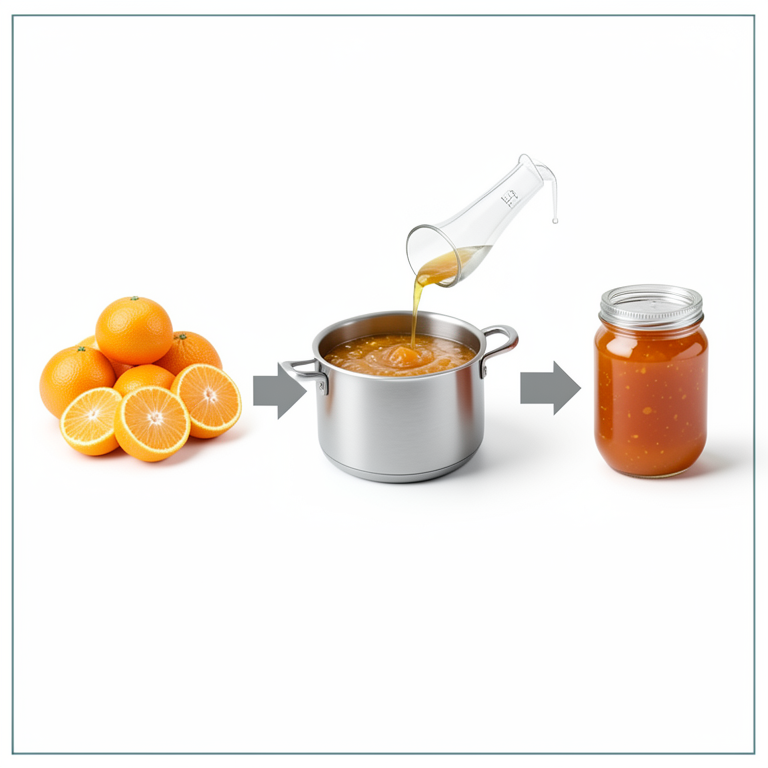
Orange Jam Production Workflow
AI-generated conceptual illustration (ripe oranges and orange jam production equipment). It explains the idea and does not show study data.
View source evidence ↗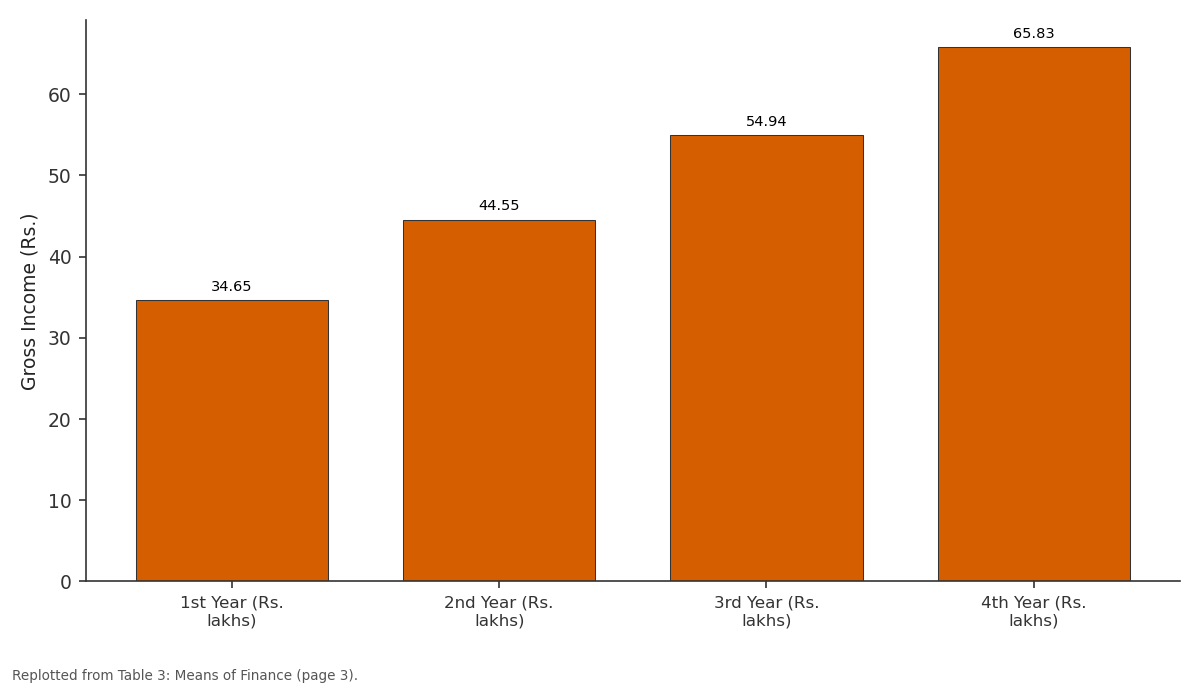
Gross Income (Rs.): 1st Year (Rs. lakhs) vs 2nd Year (Rs. lakhs) vs 3rd Year (Rs. lakhs) vs 4th Year (Rs. lakhs)
Replotted from Table 3 (page 3) of the original paper. Every bar is the paper's own table value.
View source evidence ↗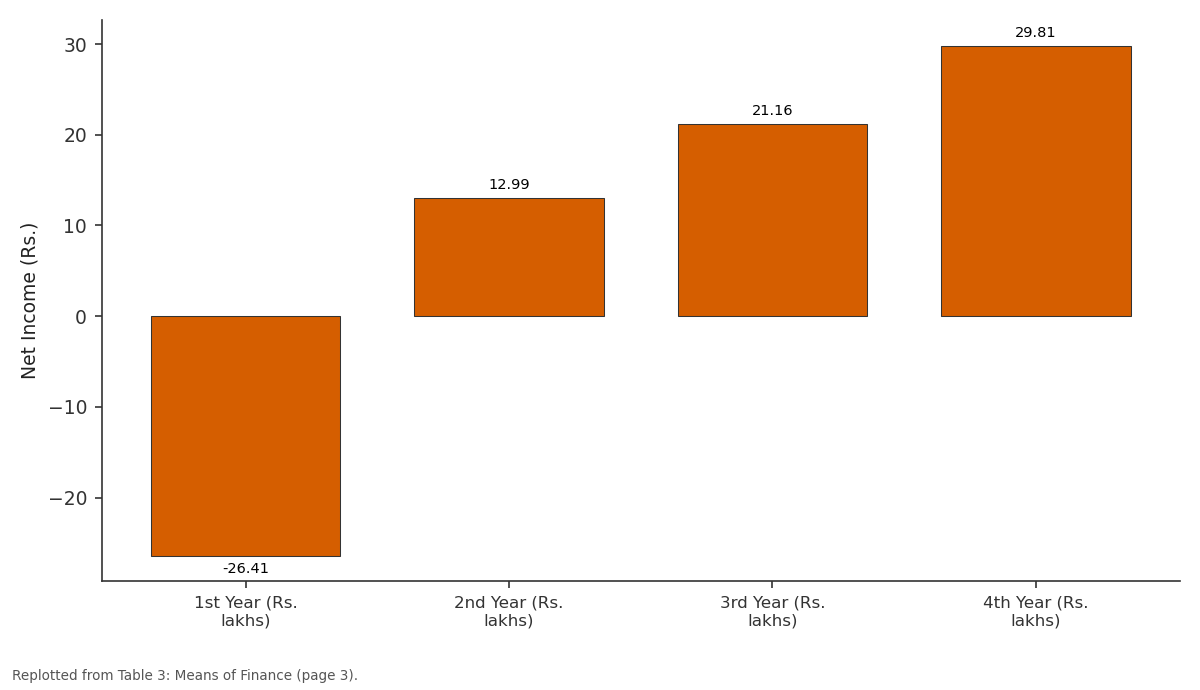
Net Income (Rs.): 1st Year (Rs. lakhs) vs 2nd Year (Rs. lakhs) vs 3rd Year (Rs. lakhs) vs 4th Year (Rs. lakhs)
Replotted from Table 3 (page 3) of the original paper. Every bar is the paper's own table value.
View source evidence ↗Figures & tables
From the original paper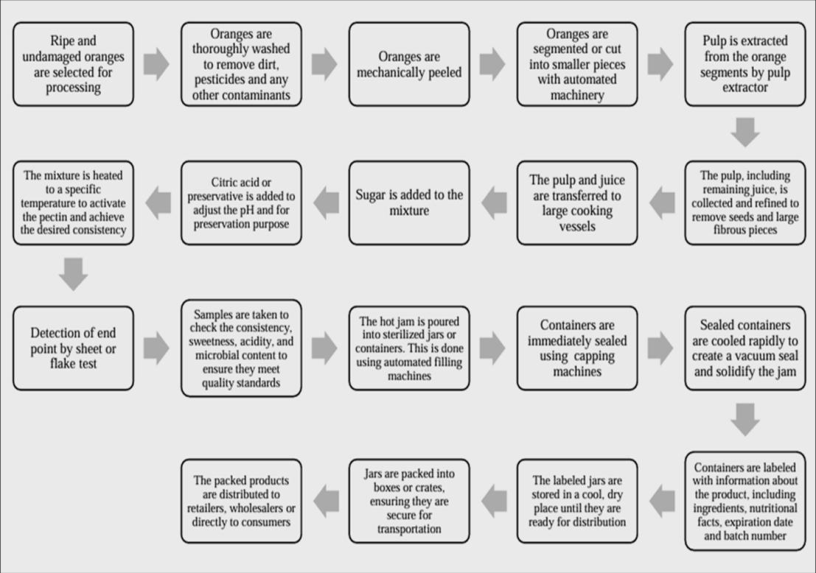 Figure 1
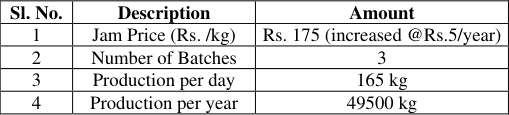 Table 1
 Table 2
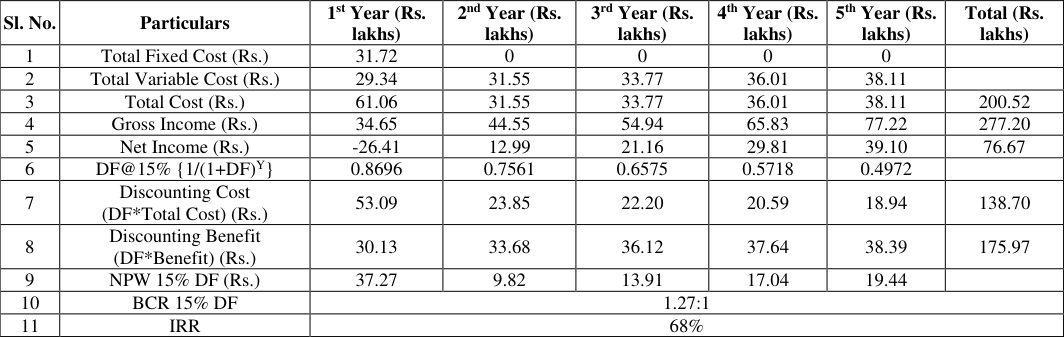 Table 3
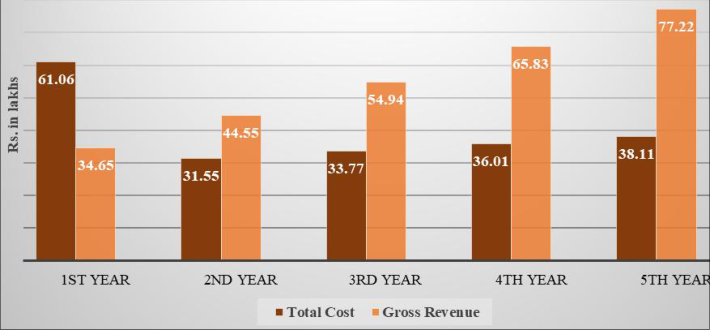 Figure 2
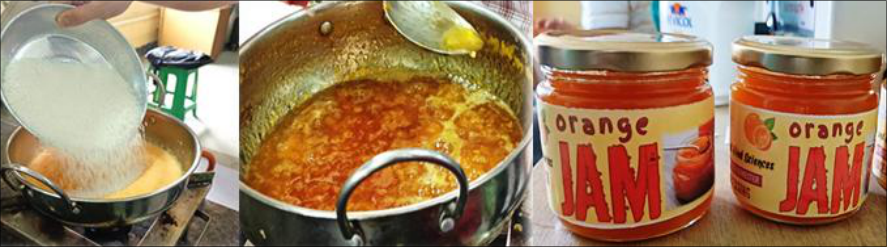 Figure 3
Introduction
Jam is a condiment which is usually made from fruits, sugar and pectin. Eating of fruit jams can boost the health of the heart by providing a range of vitamins, minerals, anti-oxidants and fibre. Therefore, the nutrient-rich jams can reduce the risk of potential cardiovascular diseases. This miraculous fibre is widely used in the food industry, especially in the production or manufacture of foods that allow our breakfasts, snacks and deserts to be more pleasurable. Due to rapid change in lifestyle, it led to the increased consumption of ready-toeat food. Currently the youths are consuming bread and jam regularly, especially for breakfast, as these do not require much time for preparation. This jam making can create economic opportunities at various levels. It can support fruit and vegetable growers and farmers by providing an additional market for their produce. It can also generate employment opportunities in the processing, packaging and distribution stages of the jam production chain. Additionally, if the project succeeds and gains popularity, it can contribute to the growth of the local food industry and boost the regional economy. Across the world, food-processing is considered to be a burgeoning sector because of its immense potential for growth and socio-economic impact. It not only leads to income generation but also helps in reduction of post-harvest losses, value addition in fruits and foreign exchange earnings and also amplifies manufacturing competitiveness.
Importance
Orange jam, like many fruit preserves, holds importance in several areas, spanning from nutritional benefits to cultural and practical uses. Here's a brief:
Nutritional Value
Oranges are well-known for their high vitamin C content, which is an important antioxidant that supports the immune system. While some of this vitamin C can be lost during the cooking process of jam making, orange jam still provides a source of this vital nutrient. It also contains other beneficial compounds, including potassium and certain B vitamins. The fiber present in oranges, some of which is retained in jam, can contribute to digestive health.
Prevention from unnecessary wastage
At present about 40% of Indian horticultural produces go waste due to lack of facilities. So, processing of fruits and vegetables offers immense scope for wastage minimization and value addition, thus, can generate significant income and employment in countries of agrarian economy. Fruits can be processed to produce various products like jam, jelly, squash, RTS, marmalades.
Culinary delicacy
Orange jam is a versatile ingredient that can be used in various culinary applications including spreading on bread, toast, and pastries; adding flavor to desserts and baked goods; Used as a glaze for meats and sauces.
Rapid Urbanization
This is expected to gush the sales of fruit jam and jellies. Urbanization has resulted in the establishment of modern café stores and mobile food trucks, which make use of the jams and jellies in sandwiches and lot of other dishes.
Cultural Significance
In many cultures, fruit preserves like orange jam hold a place in traditional cuisine and family recipes. Marmalade, which is a type of orange jam, has a strong cultural tie to places like the United Kingdom. In essence, orange jam is important for its ability to provide some nutritional benefits, extend the shelf life of a fruit, and add delicious flavor to a wide range of foods.
Materials and Methods
Materials and Methods
Raw Materials
Since, fruit is the primary raw material. Here, orange is the main raw material. Other raw materials required are sugar, citric acid and preservatives. Packaging materials like sterilized glass bottles, wooden crates, flexible containers are required.
Principal Equipment's
Pulper, Steam-jacketed Kettle, bottle washing machine, cap sealing machine.
Auxiliary Equipment's
All items like baby boiler, washing tank, weighing balance, sauce pan, knives, containers, storage tanks, burner, mixer grinder.
Manufacturing
Manufacturing
Results and Discussions
A five-year plan has been calculated and studied about the profit or return that we can get. Basic assumptions Total days in a year-300 days (120 working days in 1st year and remaining 180 days on preliminary and preoperative activities i.e. 40% production capacity in 1st year and it increases @10% per year) Total land area-2000 Sq. ft. Project life-5 years Batches per day-3 Working hours/day-8 hrs. (7hrs. for production and 1h for regular maintenance and other activities) Plant Capacity/year-49500 kg Raw materials-Orange, Sugar, Citric acid, Preservatives Electricity-60 KWh Packaging Material-Glass, fibre jars Here, the cash flow statement is provided for 5 years after considering and calculating all the requirements including taxes and current market rate of raw materials (according to Indian market value and rate). From the economic outlay we can see that, the benefit-cost ratio is 1.27, whereas, the Internal Rate of Return is 68% for a 5 years duration. Hence, a good profit can be achieved. So, from the above three tables we can conclude that Jam business is indeed a profitable business, within five years only we can get a good profit.
Here, a brief idea of total revenue and total cost is provided through bar graph.
Market Potential
The market potential of jam can vary depending on several factors such as consumer preferences, market trends and availability of similar products.
Growing demand for healthier food options-In truth, jams, in terms of taste and aesthetics, besides giving a very special touch to some meat, fish or dessert dishes, are very important for human health as they contain pectin which is probiotic action soluble fibre that has many benefits, namely to the digestive system, control of blood sugar levels and reduction of bad cholesterol levels. Many health-conscious customers have started to adopt them.
Easily Accessible Business
Jam processing factory can be easily set up with minimum capital and workforce. The raw materials are readily available and easily accessible in the market.
Easy to Sell
Due to rising demands and everyday use mainly in urban areas. It is easy to put jam on any platforms easily accessible by all. Nowadays, jams are sold on various online platforms like Amazon, Flipkart, Grofers and are available in grocery stores to shopping malls.
Tourism and Hospitality
The tourist destinations are increasing day by day and being a thriving hospitality industry, there may be opportunities to supply jams to hotels, restaurants, cafes and gift shops catering to tourists looking for locally produced goods.
Profitable Business
Indeed, jam industry is a profitable business. After going statistically, we can say that the demand for processed vegetable and fruit products is sure to multiply in the coming years. So, we can expect satisfactory returns from the jam-making business. Another primary reason is the changing food habits of people. Today, more and more individuals have started to consume easy snack items like bread in breakfast leading to increased consumption of spreads like jam.
Conclusion
Jam making is counted as a remunerative business in India. One of the best things about this business is that it requires low investment as compared to other food processing sectors. Additionally, we can consider the subsidies and allowances offered by the government for the food processing sector. Due to the growing customer demands, it has opened golden opportunities for both private and foreign players. India being the 2 nd largest global producer of fruits and vegetables, so people have a number of chances of starting a jam business industry by using varieties of fruits and vegetables. Right strategy and expert planning are necessary to start a fruit jam manufacturing industry. The chief consumers of jams are hotels, restaurants and households. The net production of vegetables and fruits in India is about 14 lakh tons approximately. Out of which, processed fruit pulp covers around 25%, while jams account for 10%. So, we can expect satisfactory returns from the jam-making business.
Acknowledgement
AcknowledgementAuthor would like to express gratitude towards the Department of Food Technology, School of Agriculture and Allied Sciences (SAAS), The Neotia University, Burdwan, West Bengal for providing the laboratory facilities along with the equipment's required for making of jam.
Figures and tables from the paper
| Sl. No. | Description | Amount |
|---|---|---|
| 1 | Jam Price (Rs. /kg) | Rs. 175 (increased @Rs.5/year) |
| 2 | Number of Batches | 3 |
| 3 | Production per day | 165 kg |
| 4 | Production per year | 49500 kg |
Table text extracted from the original PDF; superscript letters are shown inline. The original table image is below.
View original table image
| Sl. No. | Description | Amount (Rs. lakhs) |
|---|---|---|
| 1 | Total Financial Outley (TFO) | 61.06 |
| 2 | Bank Loan @75% | 45.79 |
| 3 | Margin Money @25% | 15.26 |
Table text extracted from the original PDF; superscript letters are shown inline. The original table image is below.
View original table image
References
4 in the original paper- Bera T, Khatun T, Mondal S, Maji S. Detailed project report on orange jam production. Conference paper. 2024.
- Adegbanke OR, et al. Comparism of composite jam produced from orange, apple and date powder with commercial jam with table sugar. Medicon Nutr Health. 2022;1(2):12-19.
- Firex. Industrial jam production: All the steps of the process [Internet]. 2024 [cited 2024]. Available from: https://www.firex.com/en/industrial-jam-productionsteps-of-the-process
- Deore N. Orange marmalade market report 2025 (Global Edition). Cogn Market Res. 2025;8 [cited 2025]. Available from: https://www.cognitivemarketresearch.com/orangemarmalade-market-report