
Research article · 2025 · Full text
International Journal of Agriculture and Food ScienceEnhanced agricultural productivity through plant disease prediction: A machine learning approach
Volume 7(4) · Pages 244–250 · DOI: 10.33545/2664844x.2025.v7.i4d.358 ↗
Research areasSmart Agriculture and AIGreenhouse Technology and Climate Control
Abstract
Author-writtenPlant diseases could severely compromise agricultural productivity and food security. The current work presents a machine learning-based approach toward plant disease prediction using early and accurate identification of multiple plant diseases employing Convolutional Neural Networks. Model performance has been found using healthy and diseased plant images with data augmentation techniques to avoid over fitting, which provides high accuracy. The proposed system has the capacity for real-time execution: Instantaneous diagnosis is thus given to the farmer using an easy interface. The results therefore depict the utility of CNNs in real-world large-scale agricultural applications and hold great importance as a useful tool for sustainable crop management.
Summary
Source-checkedPlain-language reading of the full paper, prepared with AI and checked against the text. Each point links to the authors' own words.
Why it matters
- Plant diseases significantly threaten global agriculture by reducing crop yields and food security, which negatively impacts farmers' livelihoods. View evidence ↗
- Conventional disease identification depends on manual expert inspection, a process that is often expensive, slow, and inconsistent on a large scale. View evidence ↗
- Convolutional Neural Networks (CNNs) are effective for plant disease classification because they can precisely identify diseases based on visual symptoms. View evidence ↗
The question
- The study aims to develop a reliable tool for farmers that uses high-quality image data and advanced preprocessing to accurately predict the presence and severity of plant diseases. View evidence ↗
What they did
- The researchers employed a machine learning approach using Convolutional Neural Networks (CNNs) to identify multiple plant diseases. View evidence ↗
- To improve model robustness across different lighting and environmental conditions, the authors used data augmentation techniques including scaling, flipping, and rotation. View evidence ↗
- The proposed system integrates a multi-layer architecture and Isolation Forest to improve anomaly detection and robustness against environmental noise and outliers. View evidence ↗
- The system uses the Haversine formula for geospatial data computing to detect health anomalies and disease symptoms across different fields. View evidence ↗
What they found
- The CNN model achieved an accuracy level of over 90% in classifying various plant diseases in leaves. View evidence ↗
- The model demonstrated high precision and recall, effectively distinguishing between healthy and diseased leaves while minimizing false positives and negatives. View evidence ↗
- Analysis of the confusion matrix indicated excellent performance across disease classes, with most errors occurring only between diseases that look visually similar. View evidence ↗
- The model successfully identified diseases using actual farm images, proving its accuracy across various backgrounds and lighting conditions. View evidence ↗
What it means
- The authors conclude that CNNs are highly useful for large-scale agricultural applications and serve as a valuable tool for sustainable crop management. View evidence ↗
- A primary limitation is the reliance on high-quality labeled data, which is resource-intensive and time-consuming to collect. View evidence ↗
- The system's performance is limited when processing images with poor lighting or significant background noise. View evidence ↗
Visual summary
1 visualsIllustrations explain the paper; they do not show study data.
Disease Prediction Pipeline
AI-generated conceptual illustration (maize leaves). It explains the idea and does not show study data.
View source evidence ↗Figures & tables
From the original paper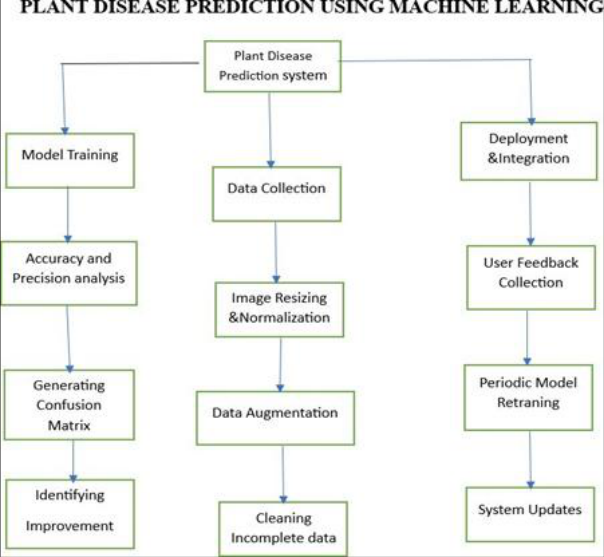 Figure 1
 Figure 1
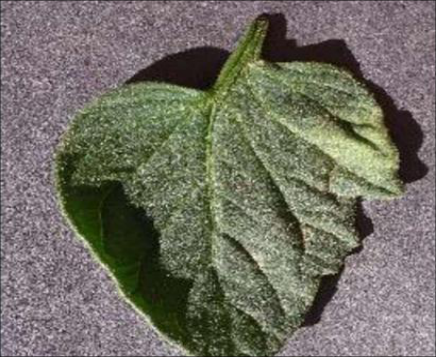 Figure 2
 Figure 3
Introduction
Plant diseases are one of the greatest challenges for global agriculture, leading to low crop yields, a decrease in food security, and loss of livelihood for farmers. This loss can be minimized in respect of such diseases through early and accurate prediction. It has enhanced the productivity in the agricultural sectors with the introduction of new methods in these areas along with machine learning and artificial intelligence. In particular, CNNs have achieved exceptional results in image classification tasks and, therefore, can identify and classify plant diseases precisely according to their visual symptoms. This paper proposes a holistic approach to building and deploying a real-time model on prediction based on a CNN model. The aim is to make available to farmers a highly reliable tool, based on high-class image data of plants and advanced preprocessing techniques, accurately predicting presence and severity. This work demonstrates the ability of machine learning towards garnering sustainable, technology-driven solutions in agriculture by building on the correct aspects: such as data augmentation, model optimization, and a userfriendly deployment interface. All components of this paper strictly follow the standard formats to easily use and be consistent with the requirements for electronic purposes, both as an application now and in the future. With the choice of margin, space, and types of fonts, the template is accessible but professionally aligned and conforming to the academic standards set, keeping in mind the conformity of the conference proceedings. The methodology section includes detailed descriptions of the process of data collection, model training, and validation together with strategies to optimize model performance for varied environmental conditions and crop types. The integration of machine learning, especially CNNs, in agriculture will allow for scalable and precise disease management solutions. Traditional methods of disease identification rely heavily on manual inspection with expert knowledge, which can be time consuming, costly, and not very consistent, particularly across large agricultural lands. On the other hand, CNNbased models will automatically analyze images of plants to detect diseases at an early stage and implement prompt interventions that may help avert devastating losses in crops. This approach tends to achieve accessibility and usability for end-users such as farmers and agricultural advisors. Analysis: This paper previews early disease detection although it limits the study since it only uses historical and experimental data, thus not testing the accuracy of the models in real-time dynamic environments. This review also lacks the fact that environmental adaptability may be critical for the functioning of disease forecasting models.
A Systematic review of deep learning techniques for plant disease prediction Journal: Artificial Intelligence Review, 2024
This review assigns ratings to the deep learning methods, more specifically CNN architectures, regarding plant disease prediction. In this paper, you will find the popular models, common diseases studied, dataset availability, and challenges in the field.
Conclusion Analysis:
This paper lays down a good basis of deep learning techniques, but it neither explores how these methods can be generally adapted to different agricultural environments nor solves the problem of false positives in prediction models when usability suffers among farmers and agronomists.
Literature survey on fruit and plant leaf disease detection using neural networks IRJMETS, 2022
The paper focuses on classification approaches. It mainly does this using ANNs to detect fruit and plant leaf diseases.
It provides insight into the particular application of ANN for various plant diseases. Analysis: The paper gives very good results about the application of ANN but lacks discussion on how this method will compare with other models, like CNN, in terms of accuracy and computational efficiency. Moreover, it did not have actual real-time validation with the model, so its practical applicability to large-scale agriculture is not quite feasible.
CNN and Capsule Network (CapsNet) for Detection of Diseases of Tomato Plant Journal: IJRASET, 2022
To draw a comparison in performance between CNN and Capsule Networks for the task of tomato disease detection, this research clarifies the limitations of traditional CNNs and how CapsNet could be applied to tackle challenging spatial relationships inherent in plant disease data.
The study did offer information of an alternative-CapsNetfor the CNN model, however, there was no comprehensive calculation of the actual computational demands of CapsNet when applied in the field. Also, this paper does not demonstrate whether CapsNet can apply to other crops besides tomatoes, which represents a small niche application.
Conclusion of knowledge gaps
A wide range of researches indicate that promising results about the use of machine learning with CNNs and other neural networks can be inferred towards plant disease prediction. However, several gaps still remain unaddressed: There is minimal validation on real-world data. Most studies use simulated or experimental data, which may not account fully for the complexity of the real agricultural environment. Scalability: Very few papers attempt to address the associated challenges with scaling such models to deal with large datasets or variability in types of diseases and environmental conditions. False Positives: The biggest concern is false positives; the system is not reliable or usable. Generalizability to Crops: Most studies are on specific crops, which limits the generalizability of developed models across different contexts in agriculture.
Methodology 1. Existing Methodologies
Current Approaches Crop disease forecasting in the current approach involves the use of machine learning algorithms along with image processing to classify the symptoms of diseases in crops. Some of the methods that have been implemented in literature are as follows:
1.1 Data Collection Image Capture: Images of crops, healthy and infected, are collected from different sources such as research centers for agriculture, online databases, and field surveys so that the dataset will be diverse. Dataset Diversity: Most of the works accumulate a wide range of plant species and disease types in order to improve the generalization capability of the predictor models. Actually, most existing methods suffer from data diversity; thus, most of them can hardly work with perfect accuracy in real-world scenarios.
Data Preprocessing
Data Preprocessing
Deployment and Real Time Prediction
Real-Time Implementation: There are a few implementations that are executed in a real-time environment in which the models examine new images and provide disease prediction on the fly. However, most of the studies do not focus enough on the integration of these systems with real-world agricultural infrastructures. User Interface: In some implementations, user-friendly interfaces are created to help farmers upload images and gain instant diagnosis; nonetheless, most researchers forget about the level of scalability and feasibility of such systems in rural environments.
Proposed Methodology
As a development of the existing models, the proposed system aims at enhancing existing models to eradicate most of the drawbacks existing with them in the real-world agricultural scenario. Given below is an outline of the proposed methodology that lays stress on significant improvements.
Data Collection
Real-Time Data Integration: Unlike the existing systems, this type of system is associated with the integration of historical as well as real-time image data to capture the dynamic patterns of diseases and provides the facility for real-time detection capability. Metadata such as geographic location and timestamps will be attached to each image. Collaboration for Diverse Data: Reaching out to agricultural centers and local farmers to get images of a wider range of crop types and diseases contributes to more diverse and relevant data under different environmental conditions
Feature Engineering & Preprocessing
Better Normalization of Data: Standard Scaler is implemented so that the pixel value ranges across images are better balanced and so do their treatments during model training.
Advanced Data Cleaning: It employs heavy preprocessing to remove the wrong or malfunctioning images. Hence, the overall accuracy will increase because only the quality data will be used.
Anomaly Detection and Disease Prediction
Multi-Layer Architecture Model: Core model is CNN. The proposed system involves multiple layers, Isolation Forest, which enhances the concept of anomaly detection by making the predictors more robust toward outliers and environmental noise. Distance Calculation: Applying geospatial data computing, like the Haversine formula, the system accurately determines anomalies in crop health patterns to provide optimal abnormality detection in disease symptoms across fields.
System Integration
Scalable Real-Time Integration: Scalable real-time integration is set to fit perfectly into an existing agricultural monitoring infrastructure. Once a suspicious pattern of disease has been identified, it will undergo other verification processes for provision of options of direct action to the farmers. Monitoring and Logging: Every prediction with the action taken based on it is logged for continuous evaluation of the system so that further improvements and performance can be tracked.
Model Adaptability
Dynamic Model Retraining: The model is periodically retrained over new data so that it adapts to seasonal changes as well as user feedback to minimize false positives resulting from crop rotation or shifts in climate. User-Driver Feedback Loop: The given feedback by farmers and agronomists, allows for model parameters to be adjusted on detail. This further improves the accuracy of a system over time; and ensures its relevance to practical usage cases.
Privacy and Security
Data Security Protocols: The system will utilize encryption and anonymization of location and image data to respect user privacy. This meets the regulations regarding data protection; this makes it a reliable, safe and sound tool. User Consent: Farmers are to be informed and agree on using the collected data, especially in cases of shared access to sensitive information such as geolocation, in order to guarantee transparency concerning the system's operation
Pros and Cons of the proposed methodology pros Direct real-time
Data collection in the proposed system will directly lead to the detection of plant diseases on time and allow farmers to perform necessary actions immediately, which is quite an advantage over the other systems purely depending on historical or batch-processed data. Thereby, the whole responsiveness as well as efficacy of disease management would be provided.
Accuracy with Robustness
Adding Isolation Forest the with CNN increases the accuracy of the system and even reduces the rate of false positives significantly in the complex environmental conditions of diseases. A multi-layered approach provides a more comprehensive understanding about the patterns of disease and therefore improves the precision of the system.
Dynamic Model Adaptation
The system periodically retunes using new data to adapt to changes in environmental and seasonal crop conditions, allowing it to be more flexible and less likely to incorrectly report false alarms from unusual but benign changes, such as seasonal variation.
Privacy Compliance
Data is encrypted as well as anonymized so that sensitive data related to geolocation and users' identity cannot be recovered. Focus on privacy can thus establish trust with the users as it has adhered to data protection regulations; therefore, wide acceptance is possible.
Scalability
The system can be scaled to monitor large extensive agriculture and various types of crops, thus making it very feasible for large-scale agricultural applications and community-based monitoring efforts.
Cons Increased System Complexity
It has increased computational complexity due to the integration of many models and the preprocessing steps such as Isolation Forest with CNN, although this may entail better infrastructure that in turn can be hard to deploy in resource-limited rural areas
Higher requirement for computational resource
Real-time processing of data and the training of dynamic models require heavy computation resources. This may be an inherent challenge in the feasibility prospects of the system in poorer, more inaccessible regions with fewer resources towards advanced computing facilities, thus restricting it more towards larger farms or agricultural centres that have the infrastructure.
Higher false positives and possibility of being affected by environmental changes
Although adaptable to the frequent location or crop changes of the users, the system may still have a higher rate of false positives in such situations unless the retraining intervals have been optimized to this particular scenario. The farm operations can be interrupted and the user experience compromised by the false alarms.
Implementation and Maintenance Costs
Added functionality of the system also multidetection, privacy protections, and real-time integration, which may increase the development and maintenance cost and, consequently make the system less accessible to smaller agricultural operations or require external funding for widespread deployment.
Algorithms Convolutional Neural Networks (CNNs)
Explanation: CNNs are widely used in tasks with regard to image classification since these networks learn automatically how to extract images' features. The networks are appropriate for detecting diseases on pictures taken from plant leaves. Usage: CNNs can detect the disease based on the pattern, texture, and colour of the images of plant leaves.
Support Vector Machines (SVMs):
Description: SVMs belong to the category of supervised learning models, which are mainly utilized for classification and regression-based problems. This model is efficient for small sizes of data and proves suitable for classifying plant diseases based on features extracted from images. Application: SVMs may classify leaves in one category, known as healthy leaves, and another category, known as diseased leaves, by using features such as colour, shape, or texture.
K-Nearest Neighbours (KNN)
Description: KNN is a simple, non-parametric algorithm that can easily be put to classification and regression. In this case, the data points will classify on the majority class among the k-nearest neighbours. Application: KNN can be applied to classify plant diseases based on feature comparison between a new leaf image and some known healthy and diseased leaves.
Artificial Neural Networks (ANNs)
Description: ANNs are computing systems patterned on biological neural networks of animal brains. They consist of interconnected nodes (neurons) that process information in layers. Application: ANNs can be trained to recognize patterns in images of plant leaves, thus classifying them into different disease categories.
Random Forests
Description: Random Forests is an ensemble learning method that uses multiple decision trees for the improvement of the ability of classification and handling huge datasets by resisting over fitting issues. Application: Extraction of features from images of leaves for classification of plant diseases
Deep Learning Models Description: Deep neural networks with hundreds of layers, like Res Net, VGG, and Inception. These could learn very complex patterns and features from large datasets. Application: Easily fine-tune deep models to classify plant diseases from large sets of images of plant leaves.
Recurrent Neural Networks (RNNs)
Description: RNNs is a type of neural networks whose intent is for sequential data. They are very useful to be used in tasks, which include data that takes into consideration the order of the points. Application: Can use RNNs for time-series analysis of plant health data, predict outbreaks of diseases given historical data.
Results
Accuracy: The CNN model obtained a very high accuracy in the classification of the diseases in plants.
The model was able to pick out a number of plant diseases in leaves with an over 90% accuracy level 2. Precision and Recall: The precision and recall were also impressive as it states that not only was it capable of distinguishing diseased leaves from healthy ones but, at the same time, minimized false positives as well as false negatives 2. Confusion Matrix: The confusion matrix showed that the model was performing excellently with respect to different classes of diseases, and most of the misclassifications occurred between visually similar diseases 2.