
Research article · 2025 · Full text
International Journal of Agriculture and NutritionSocioeconomic determinants of nutritional status amongst low income household in selected communities In Nsukka
Volume 7(4) · Pages 01–09 · DOI: 10.33545/26646064.2025.v7.i4a.213 ↗
Research areasFood Security and Health in Diverse Populations
Abstract
Author-writtenThis study explores the socioeconomic determinants of nutritional status among low-income households in selected communities in Nsukka, Nigeria. Using a cross-sectional survey design, data were collected from respondents and analysed through logistic regression models. The study examined the impact of household income, educational attainment, and occupational type on nutritional status, while controlling for variables such as dietary practices, age, gender, and digital access. Results revealed that household income had a significant but negative association with nutritional status, suggesting that income increases within poor households do not automatically translate to better nutrition. Educational attainment and occupation were not statistically significant predictors. However, balanced diet practices and digital access emerged as strong and consistent positive determinants of nutritional outcomes. Age also showed a modest positive influence, while gender and education were largely insignificant across models. The findings suggest that behavioural and informational interventions may be more effective than economic status alone in addressing nutritional challenges. Based on the results, the study recommends community-based nutrition education, the expansion of digital health platforms, integration of nutrition goals into poverty alleviation programs, and targeted early nutrition education for younger populations. These combined efforts can improve food security and nutritional health in similar low-income settings.
Summary
Source-checkedPlain-language reading of the full paper, prepared with AI and checked against the text. Each point links to the authors' own words.
Why it matters
- Malnutrition is a critical public health issue, contributing to 45% of all deaths in children under five years old. View evidence ↗
- Nigeria has the second-highest rate of childhood stunting globally, with 32% of children under five affected. View evidence ↗
- The impact of stunting extends beyond health to include poor cognitive and academic outcomes, potentially causing economic losses of up to 11% of GDP. View evidence ↗
The question
- The study aims to identify the socioeconomic factors that determine the nutritional status of low-income households in Nsukka, Nigeria. View evidence ↗
What they did
- Researchers used a cross-sectional survey design and analyzed the resulting data using logistic regression models. View evidence ↗
- The research was conducted within selected low-income communities in the Nsukka Local Government Area of Enugu State, Nigeria. View evidence ↗
- Participants were adults aged 18 and older who had lived in the community for at least one year and were responsible for household food purchasing and preparation. View evidence ↗
What they found
- Household income showed a significant negative association with nutritional status (Coef. = -0.5163, p = 0.0105), suggesting that small income increases in poor households do not automatically improve nutrition. View evidence ↗
- The regular consumption of a balanced diet was the strongest and most consistent predictor of positive nutritional status (Coef. = 1.48403, p < 0.001). View evidence ↗
- Digital access, defined as the frequency of internet use, was significantly and positively associated with nutritional outcomes (Coef. = 1.3685, p = 0.0024). View evidence ↗
- Age had a modest positive influence on nutritional status (Coef. = 0.48569, p = 0.0233), indicating that older individuals may have better nutritional awareness or more stable consumption habits. View evidence ↗
- Formal educational attainment was not a statistically significant predictor of nutritional status (Coef. = 0.2747, p = 0.2058). View evidence ↗
- The type of occupation did not have a significant relationship with nutritional wellbeing (Coef. = -0.1129, p = 0.4613). View evidence ↗
What it means
- The authors conclude that behavioral and informational factors have a more direct influence on nutritional status than socioeconomic status alone. View evidence ↗
- The study recommends promoting nutrition through behavior change education and digital platforms, and integrating nutrition goals into poverty alleviation programs. View evidence ↗
Visual summary
1 visualsIllustrations explain the paper; charts are replotted from the paper's own table values.
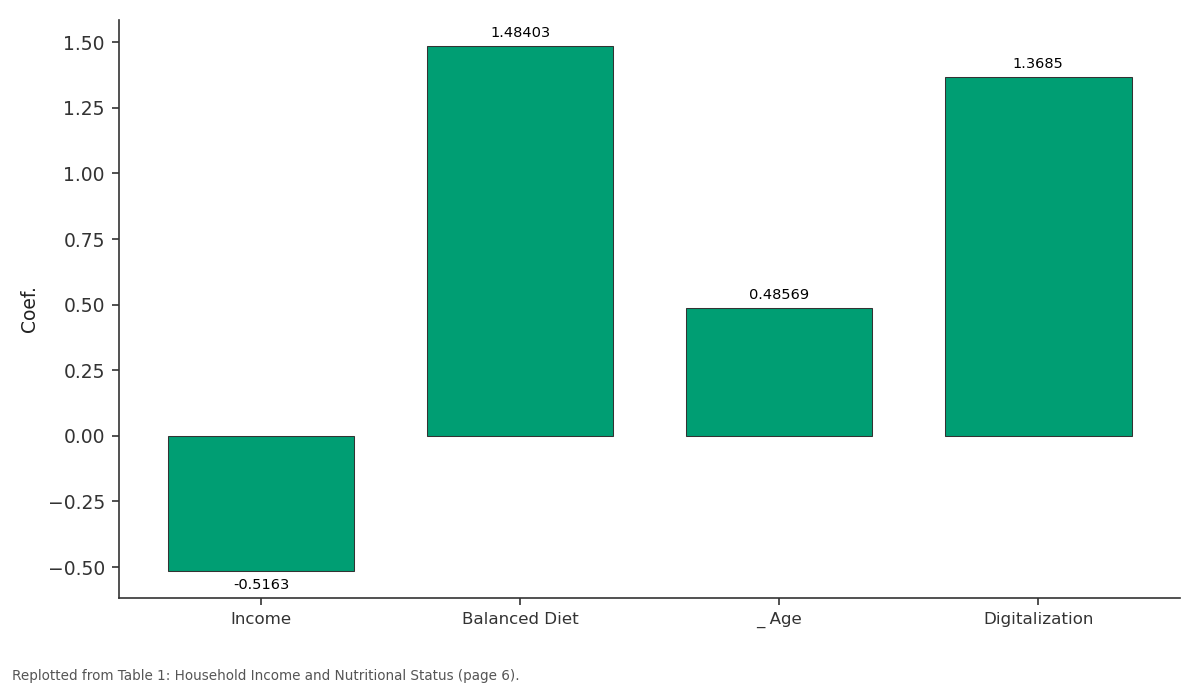
Coef.: Income vs Balanced Diet vs _ Age vs Digitalization
Replotted from Table 1 (page 6) of the original paper. Every bar is the paper's own table value.
View source evidence ↗Figures & tables
From the original paper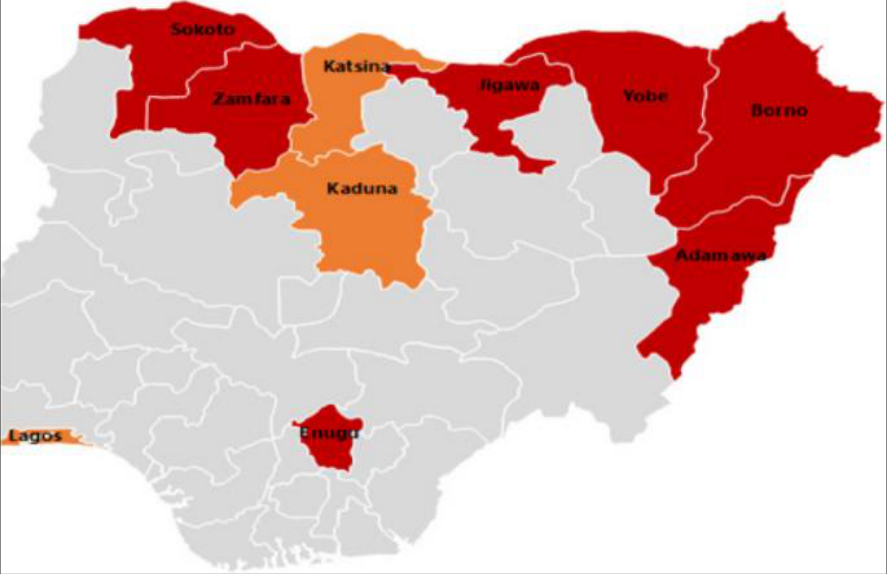 Figure 1
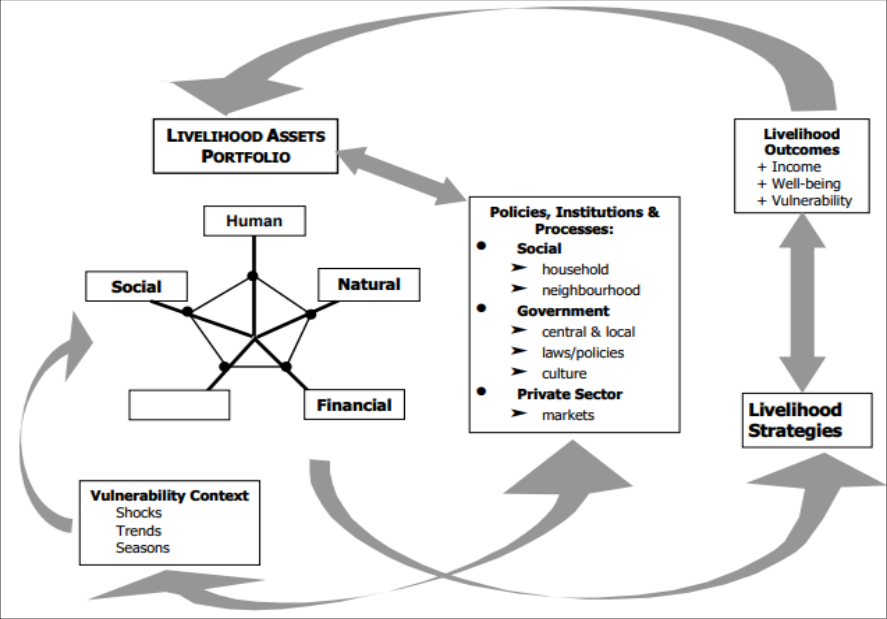 Figure 2
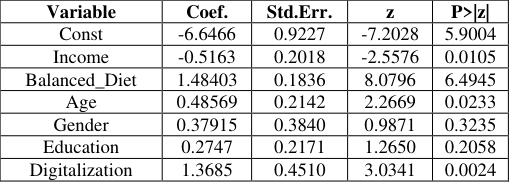 Table 1
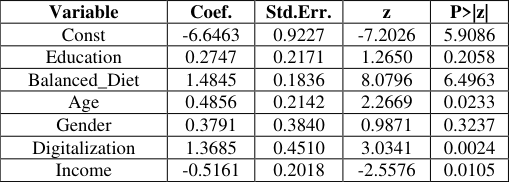 Table 2
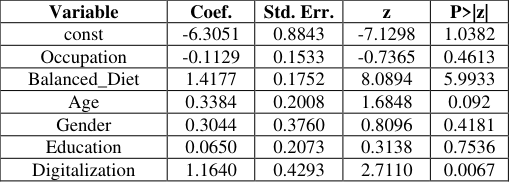 Table 3
Introduction
Malnutrition accounts for 45% of all fatalities in children under five, either directly or indirectly. 32 percent of children under five in Nigeria are stunted, making it the country with the second-highest frequency of stunted children worldwide (UNICEF, 2024) [32] . Severe acute malnutrition (SAM) affects an estimated 2 million children in Nigeria, yet only two out of ten of these children are now receiving treatment. The rate of acute malnutrition among women of reproductive age is 7% as well. With only 17% of infants being exclusively breastfed for the first six months of their lives, exclusive breastfeeding rates have not increased much over the previous ten years. Only 18% of kids between the ages of 6 and 23 months are given the bare minimum of good nutrition. Stunting and wasting are the two types of malnutrition that most commonly affect the northern Nigerian states. High rates of malnutrition provide serious obstacles to the nation's development and public health (UNICEF, 2024) [32] . Stunting is associated with poor cognitive development, poor academic achievement, and low productivity in adulthood, in addition to an increased risk of death. These factors all contribute to economic losses that are estimated to range up to 11% of GDP. Nigeria is rich in natural resources, including mineral deposits, a favorable climate for agriculture, and crude petroleum, according to data (Adeniyi, Ighalo, & Adeyanju, 2021) [2] . About 87 million of her 220 million people (39.5 percent) still live below the poverty level in 2023, though (Adeola, et al., 2022) [3] . The reason for this is that Nigeria does not have the necessary technologies to utilize these resources that may raise the welfare and level of living of its people. Nigeria's increasing levels of instability, war, and inflation have posed a threat to both local farmers and businesspeople and possible international investors, in addition to poor governance, egregious corruption, and mishandling of public monies (Yusuf & Mohd, 2023) [35] . Food shortages are one of the most noticeable effects on the economy, and they continue to fuel hunger, with an estimated 26.5 million people in the nation expected to experience severe hunger by 2024. Compared to the 18.6 million in the final quarter of 2023, this represents a significant increase (Wudil, Usman, Rosak-Szyrocka, Pilar, & Boye, 2022) [33] . About 2.2 million people have been displaced by the ongoing fighting in northeastern Nigeria, and 4.4 million more are food insecure in the states of Yobe, Adamawa, and Borno. Of these, around 3 million reside in Borno State, which is at the center of Nigeria's insurgency (Ofuani-Sokolo & Okunrobo, 2023) [22] . A significant portion of Nigeria's agricultural output comes from the northern region, which is vulnerable to recurring droughts. Nonetheless, recurring floods are common in the southern and central regions. Even if the government has implemented a number of measures to lessen the impact of these calamities, the negative consequences on agricultural productivity and the susceptibility of the rural population remain notable (Nemine, 2015) [19] . Data Acquisition for Integrated Flood Management, Early Warning System, Coordinated Multi-Sectoral Flood, Development and Management of Flood Plains, and a few more are among the important policies, according to the Water Ministry (Adefisoye & Arum, 2022) [1] . The study area, known as Nsukka, has a land area of 475 km2 and is situated between latitudes 6°30′ and 7°2′N and longitudes 7°7′ and 7°38′E. The majority of its settlements are rural, and the majority of its indigenous people are subsistence farmers (Agwu & Ighinosa, 2014) [4] . The food security of households in Nsukka has not been extensively studied. However, prior research found that 70% of people live below the $1.25 per day poverty line and that 69.2% of people live in poverty with low socioeconomic development (Ali & Agbiogwu, 2014) [6] . Poor food habits and undernutrition are common among low-income households in Nsukka, Nigeria. According to studies, these households frequently struggle to obtain a variety of nutrient-dense foods, which results in inadequate consumption of vital nutrients. This can lead to stunting (Low height for age), wasting (Low weight for height), and underweight, among other types of malnutrition. One of the oldest and most renowned universities in Nigeria is located at NLGA. According to Nzeagwu & Aleke, (2016) [21] , women's education and, indirectly, their degree of food security are positively impacted by the University of Nigeria Nsukka. Gender and household food security are still contentious issues. Nwuba, (2021) [20] found that despite the patriarchal and patrilineal culture of the area, which distributes family wealth to men and expects women to obtain wealth through their husbands or brothers, women in Nsukka, Nigeria, make noticeable contributions to the advancement and provision of their households. The Igbos, who are from the Southeast, believe that men should have control and that women should subject to men (Nduka & Ozioma, 2020) [18] . Men are distinguished by their capacity and pride in being the only breadwinners in the home. According to Ikwubuzo, (2012) [14] , they place a high cultural value on large households, whether they are nuclear or extended, as this can boost labor for agricultural output. Even though large households may have a detrimental effect on food security, they may also offer labor and financial benefits, particularly to rural households (Okonkwo, et al., 2021) [24] . Though it exists in every state, food insecurity is particularly severe in northern Nigeria (See Fig. 1). Approximately 40% of Nigeria's population, or over 80 million people, live in extreme food insecurity, with many of them suffering from chronic hunger and malnutrition (Wudil, Usman, Rosak-Szyrocka, Pilar, & Boye, 2022) [33] . The elderly, pregnant women, and children are among the most susceptible categories. Stunting and wasting, which are common in young children, disproportionately impact these groups (Thurstans, et al., 2022) [29] . However, compared to the southern half of the country, hunger and food insecurity are more prevalent in the northern section of Nigeria (Ogunniyi, et al., 2024) [23] . Drought, flooding, and soil erosion are a few of the factors contributing to hunger and food insecurity in Nigeria. Climate change is to blame for these catastrophes since it has affected food availability and agricultural output. Other factors include lack of access to markets and infrastructure, civic upheaval, rising unemployment, and conflicts. These make it more difficult for Nigerians to afford and acquire wholesome foods. The crisis in Ukraine, the recent flooding in several Nigerian states, the negative effects of heavy imports, and rising commodity prices and inflation may also be to blame (Manikas, Ali, & Sundarakani, 2023) [16] . Therefore, the 38.6% of Nigerians who were reported to be food insecure may not accurately reflect the situation today (Ogunniyi, et al., 2024) [23] .
Empirical Literature Review 2.1 Theoretical Framework 2.1.1The Sustainable Livelihood Framework
Robert Chambers is strongly linked to Sustainable Livelihoods (SL). He and Gordan Conway co-authored the seminal study, "Sustainable Rural Livelihoods: Practical Concepts for the 21 st Century," which was released by the Institute of Development Studies in 1992. As they point out, the Brundtland study Our Common Future (WCED, 1987), which was the outcome of an advisory panel to the World Commission on Environment and Development (WCED), foreshadowed the "turn" to sustainable livelihoods. Despite using the phrases "sustainable livelihood" and "livelihood," the Brundtland report does not define any of these concepts. The first UNDP Human Development Report (1990) is another important document that is occasionally credited with helping to lay out the sustainable livelihoods agenda (Solesbury, 2003) [28] . Similar to the Brundtland report, the 1990 HDR does not define the term and simply uses it in passing. However, these significant reports do offer two essential components: the idea of capacities and a concern for sustainability. More generally, opinions on development began to come together in the late 1980s, and many of these were mirrored in the SLA. Additionally, these were linked to commissions like the WCED and development organizations like the UNDP just as much as they were to scholars in the subject of development studies. As a result, the SLA draws from and is based on the prevalent development theory and practice of the era, which is important to keep in mind while analyzing some of the criticisms directed against the SLA. In its most basic form, the SLF sees individuals functioning in a vulnerable environment (refer to Figure 2). They have access to a variety of resources or povertyreduction elements in this setting, which derive their significance and worth from the dominant institutional, social, and organizational framework. This environment also affects livelihood strategies, which are the methods in which individuals' pool and utilize resources to achieve favorable livelihood outcomes that satisfy their personal livelihood goals. The accessibility and availability of resources, services, and opportunities all of which can be either favorably or unfavorably impacted by institutional procedures, social structures, or ecological factors are essential to the viability and efficacy of livelihood strategies. The SLF is capable of managing the intricate relationships between poverty results, livelihood initiatives, and local circumstances. Analysis of livelihoods is a crucial part of regulatory reform. Numerous scholars agree that the SLF is a good instrument for examining how rules affect the livelihoods of those living in urban settlements and offers a helpful conceptual foundation for comprehending urban poverty and the circumstances of those individuals. In reaction to external shocks and stresses like drought, civil unrest, failing policies, and anti-poor regulatory frameworks, it can be used to examine the coping and adaptation mechanisms that people and communities employ. McLeod, however, questions the usefulness of the SL theoretical approach for the impoverished. She highlights the ambiguity around the benefit the theory can provide as a tool for the urban poor, while acknowledging its usefulness for practitioners, development organizations, and academics attempting to comprehend the intricate dynamics of urban poverty. In actuality, there has been doubt on the usefulness of the theory "at the front line." According McLeod, (2001), if the conceptual framework on which it is founded is to be helpful to organizations of the urban poor, then the definitional process and the assessment of definitional legitimacy demand additional attention and investigation within SL theory.
Review of Empirical Studies
Baykeda, et al., (2024) [8] Examined patterns of extreme waste inequality in Ethiopia by assessing the geographical and socioeconomic differences among children under five.
The analysis was performed using the WHO Health Equity Assessment Tool. They employ both absolute and relative inequality metrics. This study demonstrates that socioeconomic factors, specifically wealth and education, have an impact on severe wasting in Ethiopian children under five. Children from low-income families and those whose mothers lack formal education are considerably more likely to suffer from severe wasting. Chekol, et al., (2022) [12] evaluated the causes of wasting in children between the ages of 6 and 59 months and addressed acute malnutrition in children as a public health issue. A community-based case-control study and simple random sample were employed among the ten kebeles in the Meet district. The study concludes that dietary diversity, the frequency of complementary feeding, and the prompt introduction of complementary meals are all nutritional determinants. Maternal decision-making about household spending is influenced by socioeconomic circumstances.
According to the results of this study, both have a major impact on waste among children under five in the Meet area of Northeast Ethiopia. The dietary effects of economic growth shocks on child wasting were investigated by (Headey & Ruel, 2022) [13] . They examine the processes that connect insufficient dietary diversity to economic shocks. The data was examined for patterns and trends using descriptive analysis techniques. Waste was shown by region and children age using non-parametric modeling. The study found that infections and a lack of dietary diversity were the main nutritional factors that contributed to waste. Among the socioeconomic variables are macroeconomic shocks, which disproportionately impact children in urban areas and raise the risk of waste because of heightened poverty and food insecurity during recessions. In order to identify the causes linked to child malnutrition in Pakistan, Siddiqa, Shah, Mayo-Gamble, & Zubair, (2023) [26] investigated the prevalence of stunting, defecation, and underweight in children. They utilized logistic regression models for both univariate and multivariable analysis, as well as secondary data analysis. They come to the conclusion that children who drank fresh milk had a lower chance of being labeled wasted (AOR, 0.514). Furthermore, compared to others, children from middle-class and upper-class families as well as those whose mothers had a college degree were less likely to be squandered. Amare, Benson, Fadare, & Oyeyemi, (2018) [7] investigated the factors that contribute to chronic malnutrition in northern Nigeria and how these factors differ depending on the region. The Nigeria Demographic and Health Survey databases from 2013 and 2018 provided the child-level data for the study, which included data on children ages 6 to 23 months. To conduct the examination, the researchers used regression-based methods and decomposition analysis.
According to the regression results, the nation's stunting was caused by a number of factors, including food diversity, water sanitation, information availability, child, parent, and household characteristics. These findings showed that the northern and southern regions of Nigeria differed significantly in the factors that contribute to undernutrition in early children. According to the decomposition study, the effects of the same factors of undernutrition on children's growth varies significantly between the northern portion of Nigeria and other parts of the country. A descriptive crosssectional study conducted by Alamu, Eyinla, Sanusi, & Maziya-Dixon, (2020) [5] evaluated the twofold burden of malnutrition in a subset of Akwa Ibom State's population. Mother-child pairings with children ages 6 to 59 months were the researchers' primary focus. A Chi-squared test of proportions was employed in the analysis of the 660 motherchild pairs that took part in the survey. According to the study, the population is burdened twice by the frequency of undernutrition in children under five and over nutrition in their mothers. The findings also revealed that 13.1% of the youngsters had wasting and 37.4% of the children were stunted. The findings showed that, out of the 660 moms, 9.0% were underweight, 23.3% were overweight, and 9.3% were obese. Singh, Srivastava, & Upadhyay, (2019) [27] also looked into the socioeconomic disparities in childhood malnutrition in India. According to the findings, 385 children in India were stunted and 35% were underweight. Stunting and underweight children were found to be negatively correlated with regions with high economic growth, and vice versa. Furthermore, mother height, education, and availability to clean drinking water all contributed to the disparities in malnutrition. Tigga, Sen, & Mondal, (2015) [30] Use the MUAC-for-Age cut-off to determine the prevalence of malnutrition (wasting) to examine the impact of sociodemographic and socioeconomic factors on waste. Using Anthropometric measurements, stratified random sampling, and a crosssectional study involving 1222 preschoolers. They found that maternal education, household income, birth order, and rural location are among the nutritional and social factors that contribute to underweight in children under five. The risk of underweight is greatly increased by illiteracy and poor income, underscoring the necessity of focused nutritional interventions for disadvantaged populations.
Gap in Literature
Although a number of studies have looked at food insecurity and malnutrition in Nigeria, there is still a huge lack of community-based, locally focused research that focuses on low-income households in Nsukka. The majority of regional and national research extrapolate results to larger populations, frequently ignoring the microeconomic, cultural, and dietary characteristics specific to the Nsukka region. Furthermore, despite their higher risk of malnutrition, there is a dearth of disaggregated data on the nutritional health of several demographic categories within these families, including elderly people, pregnant women, and children under five. Additionally underreported are the effects of regional farming methods, food costs, cultural dietary preferences, and educational attainment on nutrition. Furthermore, not much research has been done on how recent socioeconomic shifts like inflation, youth migration, or climate variability affect the availability of food and nutritional outcomes in this area. The development of efficient, focused interventions to enhance food security and health outcomes in Nsukka's low-income neighbourhoods is hampered by the absence of detailed, context-specific data.
Methodology 3.1 Study Area and Population
The study was conducted in selected low-income communities in Nsukka Local Government Area of Enugu State, Nigeria. Nsukka is a semi-urban area characterized by a mix of rural and peri-urban communities, with a large population of informal workers and subsistence households.
The target population consisted of low-income household heads and adult members who are primarily responsible for food purchasing and preparation within their families. The inclusion criteria were adults aged 18 years and above, residing in the selected communities for at least one year and willing to provide informed consent. Prior to the main survey, the instrument was pretested on 20 households in a similar but separate community to assess clarity and internal consistency. Necessary modifications were made based on the pilot results. Data collection was carried out by trained field assistants fluent in both English and the local dialect (Igbo), with ethical adherence to confidentiality and voluntary participation.
Sampling Technique
Sampling Technique
Logit Regression Modelling
To analyse the relationship between key socioeconomic variables and the nutritional status of low-income households in Nsukka, this study employed binary logistic regression modelling. The dependent variable, nutritional status, was recoded from a Likert scale response to a binary outcome:
1. 1 for respondents who reported having access to sufficient nutrition (Likert scores 4 or 5), 2. 0 for those who reported insufficient access (Likert scores 1 to 3).
Each model included both a main predictor corresponding to one of the research objectives and a set of control variables known to influence nutrition, including balanced diet practices, age, gender, educational level, and digital access.
Model 1: Impact of Household Income on Nutritional Status
This model assessed whether income level significantly affects the odds of having adequate nutrition.
β₁ (Income) tested the direct effect of income level on nutrition. Balanced diet and digitalization served as behavioural and informational controls. The model yielded a significant negative coefficient for income, suggesting that income alone may not guarantee better nutritional outcomes in a context of multidimensional poverty.
Model 2: Role of Educational Attainment in Influencing Nutrition
This model evaluated the contribution of formal education to dietary practice and knowledge.
β₁ (Education) was used to determine if higher educational levels correlate with improved nutrition. Other covariates included in the model helped control for alternative pathways through which education might influence dietary behaviour.
Although education had a positive coefficient, the result was not statistically significant, implying that formal education without contextual food access and knowledge application may have limited direct influence.
Model 3: Effect of Occupational Type on Nutritional Status
This model tested whether employment stability and occupation category affect nutritional status.
β₁ (Occupation) tested whether those engaged in more stable or formal employment had better nutritional outcomes. Balanced diet remained a strong predictor, while occupation showed a non-significant effect, likely due to the dominance of informal and unstable employment in the sampled communities.
Result and Discussions
The present study examined the socioeconomic determinants of nutritional status among low-income households in selected communities in Nsukka, employing logistic regression analysis to investigate the influence of household income, educational attainment, and occupational status. Each of these variables was analysed in the context of relevant controls including dietary practices, age, gender, and digital access. The findings offer meaningful insights into how these factors interact to shape nutritional outcomes in economically marginalized communities. The table 1 revealed that household income was negatively and significantly associated with nutritional status among low-income families (Coef. = -0.5163, p = 0.0105). This result initially appears counterintuitive, as one might expect higher income to be positively associated with better nutrition. However, the negative coefficient may reflect the complex realities of poverty in Nsukka. Among low-income populations, minor differences in income may not equate to differences in nutritional quality, especially when food prices are high or when income is diverted to non-food expenses such as rent, school fees, or health emergencies. This interpretation aligns with the work of Ivers and Cullen, who observed that among poor households, income alone does not guarantee better nutritional outcomes due to structural constraints and competing household demands. The study also found that dietary behavior, captured by regular consumption of a balanced diet, was a strong and statistically significant predictor of nutritional status (Coef. = 1.48403, p< 0.001). This finding resonates with previous literature emphasizing the centrality of dietary diversity in combating undernutrition. For instance, Arimond and Ruel demonstrated that dietary diversity was closely linked with child and household nutrition in multiple low-income countries. In Nsukka, where food availability may not be the primary challenge, the knowledge and practice of consuming balanced meals emerges as a key determinant. Interestingly, digital access, measured by frequency of internet use, was also found to be significantly associated with nutritional outcomes (Coef. = 1.3685, p = 0.0024). This finding underscores the role of information accessibility in promoting nutritional literacy. With the rise of mobile phones and digital platforms, individuals who regularly access the internet are more likely to encounter health and nutrition content that can positively influence their dietary choices. This is supported by the findings of Kim et al., who highlighted that digital health interventions in rural communities have the potential to bridge the information gap and improve health behaviors. Age also emerged as a significant variable (Coef. = 0.48569, p = 0.0233), suggesting that older individuals within these households may possess greater nutritional awareness or stability in food consumption practices. This is consistent with findings from Popkin et al., who noted that older adults in developing countries often exhibit more stable dietary habits due to accumulated experience, greater responsibility in household decision-making, and in some cases, greater respect for traditional nutrition practices. In contrast, gender and education did not show statistically significant effects in this model, indicating that other mediating factors may weaken their direct impact on nutrition among low-income groups. This supports the view of Senbanjo and Oshikoya, who argued that in resourcepoor settings, structural factors such as access to food, infrastructure, and healthcare often override personal attributes like education or sex in determining nutrition. In the second model, the effect of educational attainment on nutritional status was assessed. The coefficient for education was positive (0.2747) but not statistically significant (p = 0.2058), suggesting that formal education alone does not exert a strong direct influence on nutrition among lowincome households in Nsukka. This finding is important, as it challenges the assumption that increasing formal education will automatically lead to better nutritional outcomes. Several explanations can be offered for this observation. First, even among the educated poor, the lack of purchasing power or access to diverse foods may limit the practical application of nutritional knowledge. Second, the type and quality of education may not necessarily emphasize health literacy or nutrition unless such content is explicitly included. As indicated by Njuguna and Mberia (2019), education in sub-Saharan Africa often focuses on literacy and numeracy, with little emphasis on practical health education, unless supplemented by public health campaigns. Nonetheless, the model showed that balanced diet practices continued to be a strong and significant determinant (Coef. = 1.4845, p< 0.001), reaffirming earlier findings. Similarly, digital access again had a positive and statistically significant influence (Coef. = 1.3685, p = 0.0024). These findings highlight that even when education is present, it is the actual application of knowledge-whether through health behavior or digital exposure-that determines nutritional outcomes. This perspective is consistent with the work of Gillespie et al. (2013), who advocated for integrative approaches that combine education with behavioral change communication and digital interventions.
| Variable | Coef. | Std.Err. | z | P>|z| |
|---|---|---|---|---|
| Const | -6.6466 | 0.9227 | -7.2028 | 5.9004 |
| Income | -0.5163 | 0.2018 | -2.5576 | 0.0105 |
| Balanced Diet | 1.48403 | 0.1836 | 8.0796 | 6.4945 |
| _ Age | 0.48569 | 0.2142 | 2.2669 | 0.0233 |
| Gender | 0.37915 | 0.3840 | 0.9871 | 0.3235 |
| Education | 0.2747 | 0.2171 | 1.2650 | 0.2058 |
| Digitalization | 1.3685 | 0.4510 | 3.0341 | 0.0024 |
Table text extracted from the original PDF; superscript letters are shown inline. The original table image is below.
View original table image
Age also remained a significant predictor (Coef. = 0.4856, p = 0.0233), reinforcing its role as a mediator of experience and behavior. Gender and income, however, did not exhibit significant independent effects in this model, even though income was significant in the first model. This fluctuation suggests interdependencies between variables and the possibility that income's influence is moderated by factors such as education, household priorities, or gender roles. 3 analyzed the impact of employment type and occupational stability on nutritional status. The results showed that occupational category had a negative but nonsignificant coefficient (-0.1129, p = 0.4613), indicating no strong relationship between type of employment and nutritional wellbeing among respondents. This finding is aligned with the assertion by FAO (2015) that in the informal economy, employment type does not always translate into food security due to irregular income patterns, lack of social protection, and instability in food markets. In rural and peri-urban Nsukka, the majority of low-income earners are engaged in informal jobs such as subsistence farming, roadside vending, or daily wage labor. These occupations often lack structure, consistency, and protections such as health insurance or paid leave. Thus, nutritional decisions may depend more on day-to-day cash flow than on long-term employment status. This observation parallels the findings of Akinyemi et al., who emphasized the limitations of informal employment in addressing food insecurity in Nigeria. Once again, balanced diet practices were highly significant (Coef. = 1.4177, p< 0.001), confirming their critical importance. Digital access (Coef. = 1.1640, p = 0.0067) also remained a strong predictor, suggesting that access to online information and mobile tools continues to influence food choices across all occupational groups. Age showed marginal significance (Coef. = 0.3384, p = 0.092), indicating a persistent trend toward better nutrition with increasing age. Education, gender (Osabuohien JI et al, 2023) [34] , and occupation itself were all non-significant, reaffirming that what people eat (dietary behavior) and how informed they are (via digital means) are more decisive than the structural nature of their jobs. Synthesis and Implications Across all three models, one consistent finding stands out: the practice of eating a balanced diet is the strongest predictor of positive nutritional outcomes. This validates the broader literature on nutritionsensitive interventions, which emphasizes behavior change over economic inputs alone. It implies that while poverty alleviation remains important, interventions must go further by equipping individuals with the knowledge and behavioral tools needed to make better food choices, even within limited means. The consistent significance of digitalization across models highlights the transformative role of technology in nutrition and health promotion. In a digital age, smartphones and internet access provide a bridge to knowledge, community programs, and health innovations. This finding aligns with those of Dewi et al., who demonstrated that digital nutrition counseling significantly improved food intake patterns in rural Indonesian households. Additionally, age as a factor suggests the potential value in targeting younger individuals-especially adolescents and young parents-with digital and school-based nutrition interventions. These groups represent a demographic with growing digital exposure and long-term influence over household food practices. The insignificance of gender and education in most models should not be misinterpreted as irrelevance. Instead, it signals the need for a more nuanced understanding of how these variables operate within constrained environments. As argued by Nisbett et al. (2014), gender and education often interact with broader social and economic systems, and their influence may be diluted in low-resource settings unless supported by enabling environments and policies.
Conclusion and Policy Options
This study investigated the socioeconomic determinants of nutritional status among low-income households in selected communities in Nsukka, with a focus on household income, educational attainment, and occupational status. Through logistic regression analysis, the study examined the extent to which these socioeconomic factors influence nutritional outcomes, controlling for balanced dietary practices, age, gender, and access to digital resources. The insights generated from this research contribute significantly to the discourse on food security and public health in marginalized Nigerian communities and offer data-driven pathways for policy intervention. The findings clearly show that nutritional status is more directly influenced by behavioural and informational factors than by socioeconomic status alone. While income, education, and occupation are important, they did not independently or significantly predict nutritional outcomes in the models analysed-except for household income, which had a significant but negative relationship. This unexpected result suggests that in low-income populations, where income margins are narrow and expenditures are varied, increases in income may not automatically translate into better nutrition. The implications are that poverty alleviation programs should be paired with targeted nutritional education and support, to ensure that additional income is used in ways that improve health and well-being. Among all variables, the practice of consuming a balanced diet emerged as the most powerful and consistent predictor of positive nutritional status. This aligns with a growing body of literature that emphasizes the need for health and nutrition interventions that change food behavior and preferences, rather than relying solely on structural economic reforms. Moreover, the study found that access to digital resources-measured by frequency of internet usehad a statistically significant and positive effect on nutrition across all models. This suggests that when individuals have access to digital platforms, they are more likely to engage with health-related content, nutritional information, or community programs that improve their dietary choices. The implications for policy are profound, pointing toward the integration of mobile health (mHealth) and digital nutrition literacy initiatives into food and health security strategies. Another noteworthy finding was the positive influence of age on nutritional outcomes. Older individuals were more likely to maintain better nutritional status, possibly due to life experience, better food knowledge, or greater involvement in household decision-making. However, education and gender were not found to be significant determinants. While this might seem surprising, it emphasizes the need for context-specific strategies. In environments where resources are scarce and infrastructure is weak, even educated or empowered individuals may face constraints that limit their ability to act on their knowledge. In light of these findings, several recommendations are proposed: Promote nutrition through behavior change education, digital platforms, and youth-focused programs. Integrate nutrition goals into poverty alleviation schemes like food vouchers and cash transfers. Use schools and media to teach healthy eating habits early, and leverage digital tools to reach underserved communities with practical, affordable dietary guidance.
Acknowledgement
AcknowledgementWe will like to acknowledge the Tertiary Education Trust Fund (TETFUND) for providing the funding for the project.
Figures and tables from the paper
| Variable | Coef. | Std.Err. | z | P>|z| |
|---|---|---|---|---|
| Const | -6.6463 | 0.9227 | -7.2026 | 5.9086 |
| Education | 0.2747 | 0.2171 | 1.2650 | 0.2058 |
| Balanced Diet | 1.4845 | 0.1836 | 8.0796 | 6.4963 |
| _ Age | 0.4856 | 0.2142 | 2.2669 | 0.0233 |
| Gender | 0.3791 | 0.3840 | 0.9871 | 0.3237 |
| Digitalization | 1.3685 | 0.4510 | 3.0341 | 0.0024 |
| Income | -0.5161 | 0.2018 | -2.5576 | 0.0105 |
Table text extracted from the original PDF; superscript letters are shown inline. The original table image is below.
View original table image
| Variable | Coef. | Std. Err. | z | P>|z| |
|---|---|---|---|---|
| const | -6.3051 | 0.8843 | -7.1298 | 1.0382 |
| Occupation | -0.1129 | 0.1533 | -0.7365 | 0.4613 |
| Balanced Diet | 1.4177 | 0.1752 | 8.0894 | 5.9933 |
| _ Age | 0.3384 | 0.2008 | 1.6848 | 0.092 |
| Gender | 0.3044 | 0.3760 | 0.8096 | 0.4181 |
| Education | 0.0650 | 0.2073 | 0.3138 | 0.7536 |
| Digitalization | 1.1640 | 0.4293 | 2.7110 | 0.0067 |
Table text extracted from the original PDF; superscript letters are shown inline. The original table image is below.
View original table image
References
35 in the original paper- Adefisoye T, Arum I. Inter-agency collaboration and the dilemma of flood management and policy implementation in Nigeria. IKENGA Int. J Inst Afr Stud. 2022;22(3):1-26. https://doi.org/10.53836/ijia/2021/22/3/007
- Adeniyi A, Ighalo J, Adeyanju C. Materials-to-product potentials for sustainable development in Nigeria. Int J Sustain Eng. 2021;14(4):664-71. https://doi.org/10.1080/19397038.2021.1896591
- Adeola A, Akingboye A, Ore O, Oluwajana O, Adewole A, Olawade D. Crude oil exploration in Africa: socio-economic implications, environmental impacts, and mitigation strategies. Environ Syst Decis. 2022;42(1):26-50. https://doi.org/10.1007/s10669-02109827-x
- Agwu E, Ighinosa I. Biting patterns and seasonal variation in numbers of potential yellow fever mosquito vectors in urban and rural communities in Nsukka area of eastern Nigeria. Adv Sci Technol. 2014;8(2):53-63.
- Alamu E, Eyinla T, Sanusi R, Maziya-Dixon B. Double burden of malnutrition: evidence from a selected Nigerian population. J Nutr Metab. 2020;2020:5674279. https://doi.org/10.1155/2020/5674279
- Ali A, Agbiogwu O. Poverty and socio-economic development in Nsukka Local Government Area, Enugu State, Southeastern Nigeria. Innovare J Soc Sci. 2014;2(4):35-41.
- Amare M, Benson T, Fadare O, Oyeyemi M. Study of the determinants of chronic malnutrition in Northern Nigeria: quantitative evidence from the Nigeria Demographic and Health Surveys. Food Nutr Bull. 2018;39(2):296-314. https://doi.org/10.1177/0379572118768568
- Baykeda T, Negash W, Belachew T, Fetene S, Addis B, Kidie A, et al. Trends of socioeconomic and geographic inequalities in severe wasting among under-five children in Ethiopia from 2000 to 2019: using the WHO Health Equity Assessment Toolkit. Sci Rep. 2024;14(1):948.
- Becker S. Human capital: a theoretical and empirical analysis. J Polit Econ. 1964;70(5):9-42.
- Blair M. An economic perspective on the notion of human capital. In: The Oxford Handbook of Human Capital. Oxford: Oxford University Press; 2012.
- Chambers R, Conway G. Sustainable rural livelihoods: practical concepts for the 21 st century. IDS Discuss Pap. 1992, 296.
- Chekol Y, Arefaynie M, Kassa A, Alene T, Ngusie H, Amke H. Determinants of wasting among children aged 6-59 months in North-East Ethiopia: a communitybased case-control study. BMJ Open. 2022;12(8):e057887.
- Headey D, Ruel M. Economic shocks predict increases in child wasting prevalence. Nat Commun. 2022;13(1):2157.
- Ikwubuzo I. Family and the Igbo novel. Afr Stud Monogr. 2012;33(3):145-163.
- Lowe L, Schilderman L. The impact of policies, institutions and processes in urban upgrading. Paper presented at the International Workshop on Regulatory Guidelines for Urban Upgrading; 2001; Bourton-onDunsmore.
- Manikas I, Ali B, Sundarakani B. A systematic literature review of indicators measuring food security. Agric Food Secur. 2023;12(1):10. https://doi.org/10.1186/s40066-023-00415-7
- McLeod R. The impact of regulations and procedures on the livelihoods and asset base of the urban poor: a financial perspective. Paper presented at the International Workshop on Regulatory Guidelines for Urban Upgrading; 2001; Bourton-on-Dunsmore.
- Nduka U, Ozioma N. Chinua Achebe's Things Fall Apart and the role of women in Igbo traditional International Journal of Agriculture and Nutrition https://www.agriculturejournal.net religious culture. Open J Soc Sci. 2020;7(12):272-289. https://doi.org/10.4236/jss.2019.712020
- Nemine E. Flood disasters in Nigeria: farmers and governments' mitigation efforts. J Biol Agric Healthc. 2015;5(14):150-155.
- Nwuba M. Gender issues in the patriarchy of the Igbo culture of Southeastern Nigeria. Expos Times. 2021;132(11):477-485.
- Nzeagwu O, Aleke U. Household nutrition and food security in Obukpa rural community of Enugu State, Nigeria. Malays J Nutr. 2016;22(1):1-11.
- Ofuani-Sokolo A, Okunrobo H. An examination of the child's right to survival and development in NigeriaThe Boko Haram insurgency in context. Hung J Leg Stud. 2023;64(1):88-114. https://doi.org/10.1556/2052.2023.00445
- Ogunniyi A, Omotayo A, Olagunjo K, Rufai M, Salman K, Omotayo O. Evaluating the role of households' food security status and socioeconomic determinants on child mortality in Nigeria. Child Indic Res. 2024;17(4):1687-1714. https://doi.org/10.1007/s12187024-10134-5
- Okonkwo N, Obot A, Ude K, Onwuemelie C, Okechukwu F, Agianpuye R. Determinants of vulnerability of rural non-farm and farm households to food insecurity in South-East Nigeria. Glob J Agric Econ Extens Rural Dev. 2021;9(4):1-2.
- Schultz T. Investment in human capital. Am Econ Rev. 1961;51(1):1-17.
- Siddiqa M, Shah G, Mayo-Gamble T, Zubair A. Determinants of child stunting, wasting, and underweight: evidence from 2017 to 2018 Pakistan Demographic and Health Survey. J Nutr Metab. 2023;2023:2845133.
- Singh S, Srivastava S, Upadhyay A. Socio-economic inequality in malnutrition among children in India: an analysis of 640 districts from National Family Health Survey (2015-16). Int. J Equity Health. 2019;18:203. https://doi.org/10.1186/s12939-019-1093-0
- Solesbury W. Sustainable livelihoods: a case study of the evolution of DFID policy. London: Overseas Development Institute; 2003.
- Thurstans S, Sessions N, Dolan C, Sadler K, Cichon B, Isanaka E. The relationship between wasting and stunting in young children: A systematic review. Matern Child Nutr. 2022;e13246. https://doi.org/10.1111/mcn.13246
- Tigga P, Sen J, Mondal N. Association of some socioeconomic and socio-demographic variables with wasting among pre-school children of North Bengal, India. Ethiop J Health Sci. 2015;25(1):63-72.
- Ulrich D. A new mandate for human resource. Harv Bus Rev. 1998;76(1):124-34.
- UNICEF. The State of the World's Children 2024 [Internet]. New York: UNICEF; 2024 [cited 2025 Apr 18]. Available from: https://www.unicef.org/reports/state-of-worldschildren/2024
- Wudil A, Usman M, Rosak-Szyrocka J, Pilar L, Boye M. Reversing years for global food security: a review of the food security situation in Sub-Saharan Africa (SSA). Int. J Environ Res Public Health. 2022;19(22):14836. https://doi.org/10.3390/ijerph192214836
- Osabuohien JI, Eguaoje MR, Ogbe VE. Gender utilization of information communication technology (ICTs) among agriculture extension workers for community development in Edo state, Nigeria. Int J Agric Extension Social Dev 2023;6(1):10-14. DOI: 10.33545/26180723.2023.v6.i1a.163
- Yusuf A, Mohd S. Growth and fiscal effects of insecurity on the Nigerian economy. Eur J Dev Res. 2023;35(4):743-769. https://doi.org/10.1057/s41287-022-00531-3.