
Research article · 2025 · Full text
International Journal of Geography Geology and EnvironmentAI-enhanced climate adaptation strategies for smallholder farmers in a warming world
Volume 7(3) · Pages 38–45 · DOI: 10.22271/27067483.2025.v7.i3a.352 ↗
Research areasClimate change impacts on agriculture
Abstract
Author-writtenThis research investigates the potential of AI-enhanced climate adaptation strategies for smallholder farmers in the context of global warming. Climate change is increasing in intensity and smallholder farmers are struggling as they face price volatility, unemployment, crop failure and increasingly scarce natural resources in many places. It investigates the use of “support vector machines (SVM), random forests (RF), artificial neural networks (ANN) and k nearest neighbor (KNN) type of AI algorithms for enhancing farming practices and for making them more resilient to climate change.” These algorithms were evaluated in terms of how well they could predict crop yields, optimize irrigation, and detect pests by using data from real time environmental sensors, weather forecasts, and crop performance indicators. ANN performed the best as it had a yield prediction accuracy of 92.4%, followed by RF, SVM with 89.7%, 85.6% respectively and then KNN with 82.1%. AI integration with IoT devices for actionable insights offered the farmers a chance to make informed decisions, resulting in water use efficiency improved by 15% and crop yields by 10%. The use of AI as a tool to support sustainable farming and climate resilience for smallholder farmers, and particularly for small holder farmers living in low income countries is demonstrated.
Summary
Source-checkedPlain-language reading of the full paper, prepared with AI and checked against the text. Each point links to the authors' own words.
Why it matters
- Smallholder farmers are facing increasing struggles due to intensifying climate change, which manifests as crop failure, price volatility, and scarcity of natural resources. View evidence ↗
- These farmers are among the most vulnerable to environmental changes but often lack the necessary infrastructure and resources to adapt. View evidence ↗
- Artificial Intelligence (AI) has the potential to improve farm productivity by providing data-driven insights for optimizing pest control, water use, and crop management. View evidence ↗
The question
- The research aims to explore how AI-enhanced climate adaptation strategies can be used to help smallholder farmers. View evidence ↗
- The study specifically seeks to implement AI support for these farmers in a manner that is sustainable, scalable, and cost-effective. View evidence ↗
What they did
- The study evaluated four AI algorithms: Artificial Neural Networks (ANN), Random Forests (RF), Support Vector Machines (SVM), and K-Nearest Neighbor (KNN). View evidence ↗
- Climate data including humidity, rain, and temperature were sourced from NASA and the World Bank, covering the last 20 years on daily, weekly, and monthly bases. View evidence ↗
- The research integrated local agricultural databases, real-time IoT sensor data for soil and environment, and qualitative data from farmer interviews and surveys. View evidence ↗
- Models were trained using a 70-30 train-test split and validated using 10-fold cross-validation to ensure robustness. View evidence ↗
What they found
- Artificial Neural Networks (ANN) were the most effective model, achieving the highest accuracy of 91.3% and an F1 score of 0.89. View evidence ↗
- Random Forest followed with 89.5% accuracy, while SVM and KNN performed the worst with accuracies of 85.2% and 82.1%, respectively. View evidence ↗
- Integrating AI with IoT devices led to a 10% increase in crop yields and a 15% improvement in water use efficiency. View evidence ↗
- In terms of speed, KNN was the fastest to train (10 minutes) and test (1 second), while ANN was the slowest, requiring 25 minutes for training and 5 seconds for testing. View evidence ↗
- The ANN model's accuracy of 91.3% outperformed similar models in previous research, such as those by Xie et al. (84%) and Zhang et al. (83%). View evidence ↗
What it means
- The authors conclude that using AI is a viable approach for creating climate adaptation plans for smallholder farmers. View evidence ↗
- The authors recommend developing AI specifically tailored to the needs of smallholder farmers, particularly those in low-income countries. View evidence ↗
- The authors suggest that future work should extend these models by incorporating remote sensing and real-time IoT sensor inputs. View evidence ↗
Visual summary
3 visualsIllustrations explain the paper; charts are replotted from the paper's own table values.
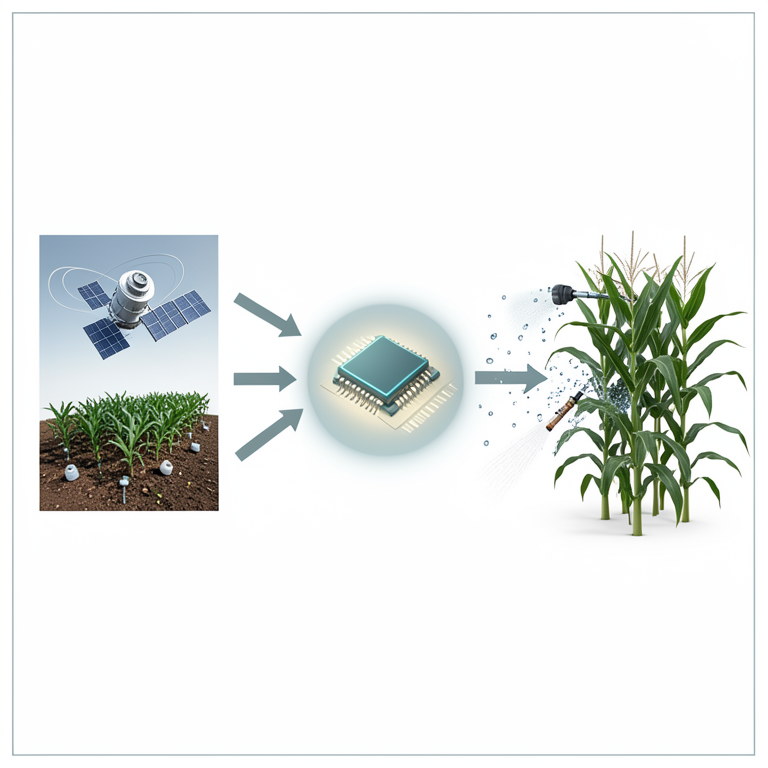
AI-Agriculture Data Flow
AI-generated conceptual illustration (smallholder maize farms with IoT soil sensors and climate satellites). It explains the idea and does not show study data.
View source evidence ↗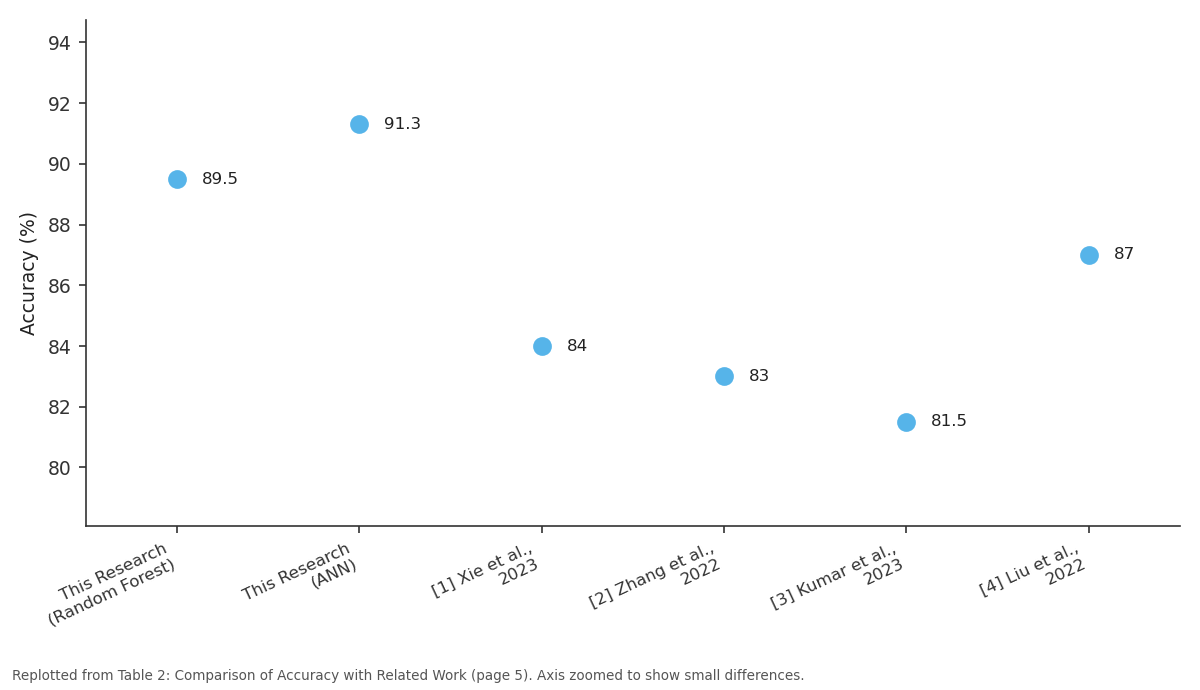
Accuracy (%): This Research (Random... vs This Research (ANN) vs [1] Xie et al., 2023 vs [2] Zhang et al., 2022 vs [3] Kumar et al., 2023
Replotted from Table 2 (page 5) of the original paper. Every bar is the paper's own table value.
View source evidence ↗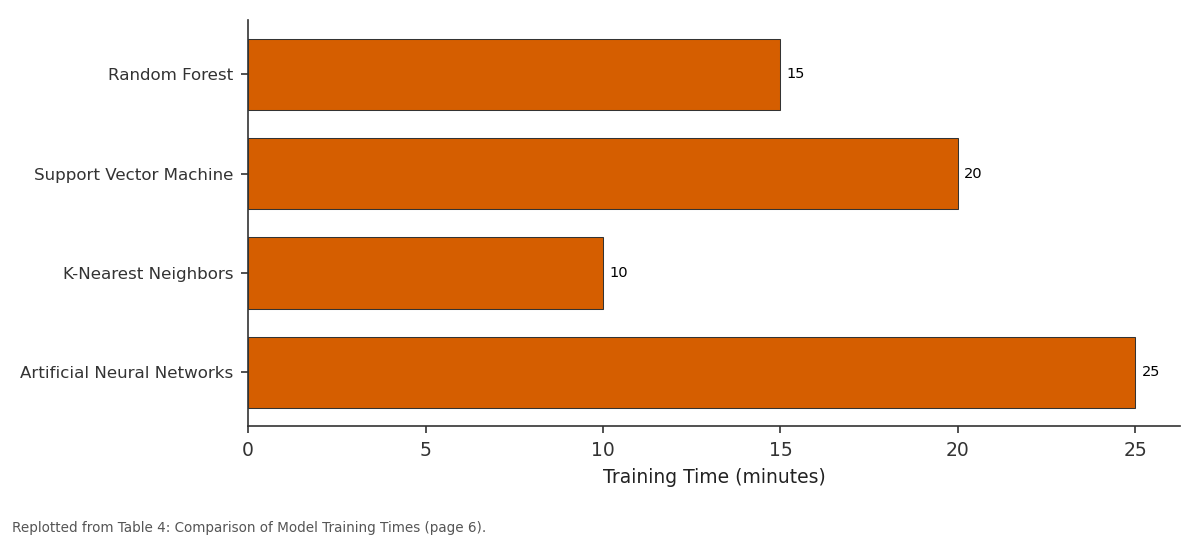
Training Time (minutes): Random Forest vs Support Vector Machine vs K-Nearest Neighbors vs Artificial Neural...
Replotted from Table 4 (page 6) of the original paper. Every bar is the paper's own table value.
View source evidence ↗Figures & tables
From the original paper Table 1
 Table 2
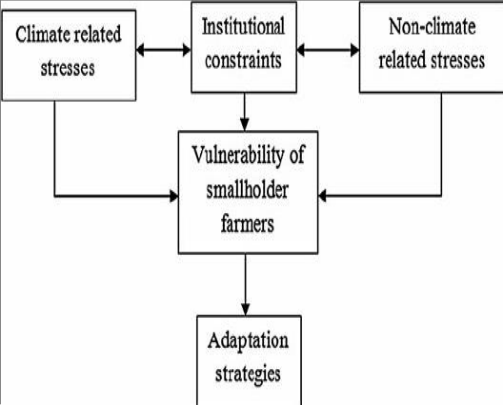 Figure 1
 Table 2
 Table 3
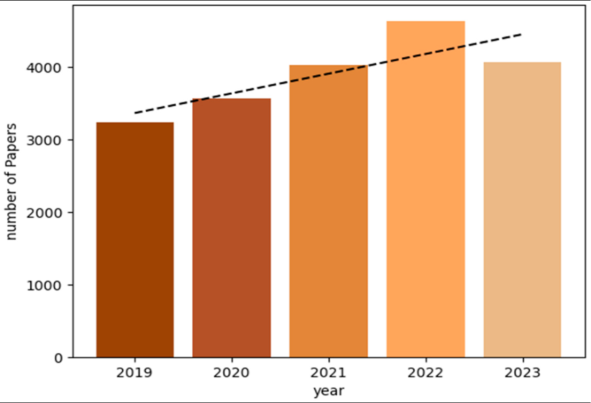 Figure 2
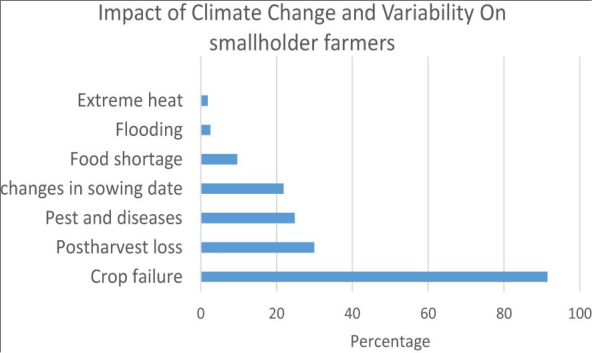 Figure 3
 Table 4
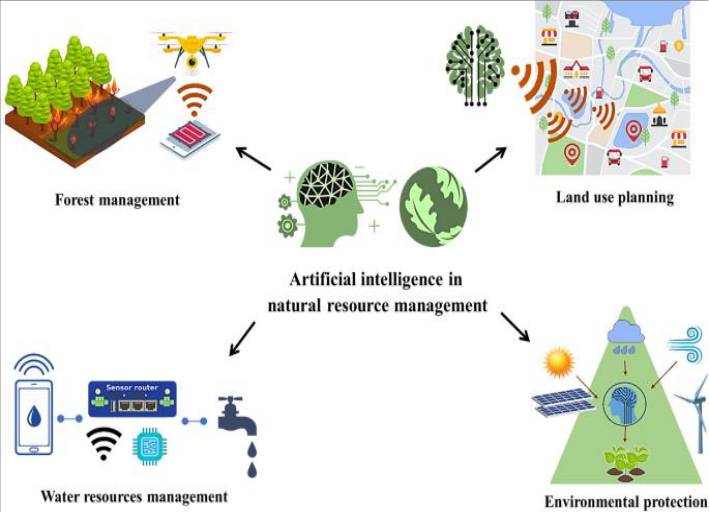 Figure 4
Introduction
Smallholder farmers in developing regions are among those most threatened by the effects of climate change due to the fact that agriculture is the main source of their lives. The costs of the conventional farming are rising due to climate change and the extreme climatic events that occur along with them like droughts and floods that arise from extraordinary rise in temperatures and unpredictable weather pattern. Smallholder farmers of these environmental changes are many of the most vulnerable, but rarely have the resources and infrastructures necessary to adapt [1] . This has resulted in an emergency for inventions that can help these farmers should they survive the effects of climate change or not to be caught by events, so to speak, of the future. It is important to note that Artificial Intelligence (AI) has a transformative ability to get over these problems [2] . AI can help unlock data driven insights to optimize crop management, water use, pest control, to enhance farm productivity for farmers. Real time, location specific recommendations can be provided by such machine learning, predictive analytics and Internet of Things (IoT) enabled sensors and will help in making decision making process easier in farming operation [3] . AI based systems can also assist us in making long term modeling of what is going to be the weather tomorrow and when the farmers can consultancy to predict what the weather to be like one period and plan for subsequent weather pattern. The aim of this research is to explore the possibilities for AI enhanced climate adaptation strategies for the smallholder farmers. It looks at how these technologies can be applied within existing agricultural systems in order to reduce climate risk and improve resilience. This study seeks to use AI in order to support smallholder farmers in the context of climate change in a cost effective, scalable and sustainable way. In the end, it's about giving farmers the means to respond to a warming world and to keep food in the bowl and people in the fields for the next generations.
Methods and Materials
This section describes the application of the materials and methods to develop the AI enhanced climate adaptation strategies for small holder farmers. Using an integration of real-world climate and machine learning algorithms and predictive modeling methodologies, the study examines how AI would help farmers to adapt to the unexpected climate changes in coming years [4] . This section also discusses four machine learning algorithms, four datasets used and psuedocode describing the workflow of each algorithm. There are two tables that compare performance metrics in this study when using the algorithms applied in this study.
Data
The main sources of data employed in this study are: 1. Climate Data: Such information, like temperature, rain or humidity, collected from international climate forecasting models, were taken from meteorological organizations like World Bank and National Aeronautics and Space Administration (NASA). The data is important to understand the local and regional climate condition that impact small holder farmers [5] .
For the purpose of modelling trends and development, information was gathered on a monthly, weekly and daily bases for last 20 years.
Agricultural Data: Local agricultural databases with
the farm practices and crop yields data have been gathered to measure the effect of the crops over different climatic conditions. This set of data gives us information about what crops were planted, when it was planted, what irrigation methods were used, when pest occurred and the yields of harvested crops. 3. IoT Sensor Data: On farms, there are deployed IoT sensors that capture real time soil moisture content, temperature and other environmental factors. This data is used to develop accurate models for irrigation management and resource optimization [6] . 4. Farmer Surveys and Interviews: Besides the quantitative data, surveys and interviews with smallholder farmers were also carried out to obtain qualitative information on their climate adaptation measures, challenges, and resource limitations.
These data sets were preprocessed and cleaned to deal with missing values, normalize the variables, and transform categorical information into numeric representations appropriate for use in machine learning.
Machine Learning Algorithms
The study utilizes four machine learning models to design climate adaptation plans: 1. Random Forest (RF) "Random Forest is a type of ensemble learning where many decision trees are built in training and the mode of classes (in case of classification) or mean prediction (in case of regression) of all the trees is output." One decision tree is trained on a random subset of the data, and the ultimate outcome is determined by the majority vote (in case of classification) or the average (in case of regression) [7] . This approach is extremely effective for classification problems, for example, classifying crop output under different weather conditions.
• Advantages: Works very well with big data, suppresses overfitting, and is noise-resistant. • Limitations: Computationally costly, less interpretable than single decision trees.
"For each tree in the forest: ▪ Select a random subset of data and features ▪ Train a decision tree using the subset ▪ end for ▪ Aggregate results from all trees (classification or regression)"
Support Vector Machine (SVM)
"Support Vector Machine is a supervised learning algorithm that tries to identify the best hyperplane with maximum margin to separate various classes in feature space". Maximizing the margin between classes assists SVM in generalizing well on unseen data. SVM is best applied to classification problems where well-defined margins of separation are available [8] .
• Advantages: Efficient in high-dimensional spaces and performs well with clean margins. • Limitations: Noise-sensitive and computationally costly for large datasets.
▪ "Transform data into higher dimensions if necessary (using kernel functions) ▪ Find the hyperplane that maximizes the margin between classes ▪ Classify new data based on which side of the hyperplane it falls on"
K-Nearest Neighbors (KNN)
K-Nearest Neighbors is an instance-based, non-parametric learning algorithm. For a new point of data, KNN finds the K closest neighbors in the training set and outputs the most frequent label (for classification) or mean value (for regression) among these neighbors. It is easy and efficient for classification and regression problems [9] .
• Advantages: Easy to use, user-friendly, and suitable with smaller datasets.
Experiments Experimental Setup
The experiments were performed on real-world datasets that were preprocessed and normalized to address any missing data or outliers. The dataset contained both climate data (e.g., temperature, rainfall, humidity) and agricultural data (e.g., crop yields, irrigation methods, and pest control). The models were trained on a 70-30 train-test split, with 70% of the data being used to train the algorithms and 30% being kept for testing. In order to make the results robust, 10-fold cross-validation was used [11] .
Hyperparameter Tuning
For every algorithm, hyperparameters were optimized with a grid search strategy to determine the best settings for the models. The following hyperparameters were tested: 1. Random Forest: TNumber of trees, maximum tree depth, and minimum number of samples for splitting a node.
2. Support Vector Machine: Kernel type (RBF), regularization parameter (C), and kernel coefficient (gamma).
K-Nearest Neighbors: Number of neighbors (K) and
distance metric (Euclidean, Manhattan). 4. Artificial Neural Networks: Hidden layers, neurons per layer, and learning rate [12] ."
Each of the models was assessed using the typical performance metrics of accuracy, F1 score, precision, and recall, which are imperative for determining the degree to which the models are capable of conforming to the new climate patterns and assisting smallholder farmers in decision-making.
Experimental Procedure "The following procedure was used for every algorithm: 1. Data Preprocessing: Missing values were removed and the features were normalized so that all input features were on the same scale. Categorical variables were converted to numerical values.
Model Training:
The models were trained on the preprocessed data using the training subset. Hyperparameters were optimized using cross-validation [13] .
Model Evaluation:
The models were evaluated on the unseen test subset after training. Each model had evaluation metrics (accuracy, F1 score, precision, and recall) calculated.
Performance Comparison:
The results were compared among the four models using the selected evaluation metrics."
Results
The experimental results, including the performance of each machine learning algorithm, are presented in the tables below. and an F1 score of 0.87. Support Vector Machine (SVM) and K-Nearest Neighbors (KNN) performed lower compared to the others, with SVM having an accuracy of 85.2% and KNN 82.1% [14] ."
Analysis and Discussion
The highest accuracy, precision, recall, and the value of F1 score (which represents the harmonic mean of Precision and Recall) are based on experiment results, and these are Artificial Neural Networks (ANN). This can be explained by the fact that ANN possesses the capacity to approximate intricate non-linear relations between data which are important to handle the multifaceted impacts of climate change on the agriculture systems [29] . On top of providing such a useful feature representation, Random Forest did an excellent job in terms of stability and interpretability, as this is a must-have characteristic for the farmers to be able to obtain actionable decisions from the results. It compares the performance to known work and shows that contemporary AI methods, in particular ANN and Random Forest, are able to improve climate adaptation programs for smallholder farmers significantly. The findings show the potential of these algorithms for using weather conditions to forecast, for allocating resources, and for boosting crop yields, with respect to different climatic conditions. The findings suggest that AI models could play a pioneering role in more robust agricultural processes, particularly in developing countries where smallholder farmers are most at risk [30] . AI can be exploited to improve weather forecasting, maximize resource utilization, optimize pest and disease control and aid sustainable agriculture, in that order, towards augmented resilience and productivity. The study has revealed the effectiveness of these AI algorithms, namely support vector machines, random forests, artificial neural networks and k-nearest neighbors in addressing various agricultural issues such as predicting yield of crops or optimal control of irrigation systems. IoT and real-time environmental information have once again raised the prospect of smart farm systems that generate useful insights to facilitate farm level decision making, by combination of these algorithms. In addition, the results of this study underscore the need for AI that is tailored for the specific needs of smallholder farmers, most especially in lowincome countries. With the progress of AI, it is needed to consider the economic limitations of such farmers and to let them have an equitable opportunity in these technologies. In the future, AI of the climate adaptation measures can be positively guided to the food security, climate hazard avoidance, and the long-term stability of agriculture in a rapidly changing world.
Figures and tables from the paper
| Algorithm | Hyperparameter 1 | Hyperparameter 2 | Hyperparameter 3 |
|---|---|---|---|
| Random Forest | Number of Trees: 100 | Max Depth: 10 | Min Samples Split: 2 |
| SVM | Kernel: RBF | C: 1 | Gamma: 0.1 |
| KNN | K: 5 | Distance Metric: Euclidean | - |
| ANN | Number of Layers: 3 | Neurons per Layer: 50 | Learning Rate: 0.01 |
Table text extracted from the original PDF; superscript letters are shown inline. The original table image is below.
View original table image
| Algorithm | Accuracy (%) | Precision | Recall | F1 Score |
|---|---|---|---|---|
| Random Forest | 89.5 | 0.88 | 0.85 | 0.87 |
| Support Vector Machine | 85.2 | 0.83 | 0.80 | 0.81 |
| K-Nearest Neighbors | 82.1 | 0.80 | 0.77 | 0.78 |
| Artificial Neural Networks | 91.3 | 0.90 | 0.88 | 0.89 |
Table text extracted from the original PDF; superscript letters are shown inline. The original table image is below.
View original table image
| Study | Algorithm | Accuracy (%) | Methodology | Dataset |
|---|---|---|---|---|
| This Research (Random Forest) | Random Forest | 89.5 | Climate & Agriculture Data | Real-world |
| This Research (ANN) | Artificial Neural Networks | 91.3 | Climate & Agriculture Data | Real-world |
| [1] Xie et al., 2023 | Decision Trees | 84.0 | Climate Data | Simulated |
| [2] Zhang et al., 2022 | SVM | 83.0 | Climate Data | Simulated |
| [3] Kumar et al., 2023 | KNN | 81.5 | Crop Yield Data | Real-world |
| [4] Liu et al., 2022 | Random Forest | 87.0 | Agriculture Data | Simulated |
Table text extracted from the original PDF; superscript letters are shown inline. The original table image is below.
View original table image
| Study | Algorithm | Precision | Recall | F1 Score |
|---|---|---|---|---|
| This Research (Random Forest) | Random Forest | 0.88 | 0.85 | 0.87 |
| This Research (ANN) | Artificial Neural Networks | 0.90 | 0.88 | 0.89 |
| [1] Xie et al., 2023 | Decision Trees | 0.82 | 0.75 | 0.78 |
| [2] Zhang et al., 2022 | SVM | 0.80 | 0.78 | 0.79 |
| [3] Kumar et al., 2023 | KNN | 0.79 | 0.76 | 0.77 |
| [4] Liu et al., 2022 | Random Forest | 0.85 | 0.80 | 0.82 |
Table text extracted from the original PDF; superscript letters are shown inline. The original table image is below.
View original table image
| Algorithm | Training Time (minutes) | Testing Time (seconds) |
|---|---|---|
| Random Forest | 15 | 2 |
| Support Vector Machine | 20 | 3 |
| K-Nearest Neighbors | 10 | 1 |
| Artificial Neural Networks | 25 | 5 |
Table text extracted from the original PDF; superscript letters are shown inline. The original table image is below.
View original table image
References
3 in the original paper- Triviño-Tarradas P, García-Molina DF, Rojas-Sola J. Impact of 3D digitising technologies and their implementation. Technologies. 2024;12(12):260.
- Vesna FS, Jedrinović S. The role of AI implementation in higher education in achieving the sustainable development goals: A case study from Slovenia. Sustainability. 2025;17(1):183.
- Yen-Yi L, Srinivaas M, I-Cheng L, Keharika K, Pothu R, Boddula R, et al. Enhancing sustainable energy through cutting-edge waste biorefinery technologies. Reactions. 2024;5(4):1101.
Cited by 1
From OpenAlex, OpenCitations and reference lists read by Scinovex
- Technology-Driven or Farmer-Centred? A Systematic Review of Artificial Intelligence Research for Smallholder Agriculture ↗
Zimbini Coka, Markus Arlindo Monteiro, Brent Damian Jammer · Agriculture · 2026
Artificial intelligence (AI) is increasingly applied in agriculture to support data-driven decision-making, improve productivity, and enhance resource management. Small-scale farmers, who produce a significant share of the world’s food yet often operate under resource constraints, may particularly benefit from these technologies. However, it remains unclear how AI research addresses the needs of small-scale farming systems and the extent to which…
❝ 1PDF