
Research article · 2025 · Full text
International Journal of Biology SciencesExploration of effect of different mulches on okra (Abelmoschus esculentus L.) variety Punjab Suhavani in sub-tropical regions of Punjab, India
Volume 7(4) · Pages 17–27 · DOI: 10.33545/26649926.2025.v7.i4a.322 ↗
Research areasAgricultural Practices and Plant GeneticsAgricultural Science and FertilizationIrrigation Practices and Water Management
Abstract
Author-writtenThe present research was carried out at Experimental Farm, Department of Agriculture, Sri Guru Granth Sahib World University, Fatehgarh Sahib, Punjab (India) during summer season of 2022. The maximum germination was recorded under the black polythene mulch (73.00%), followed by transparent polythene mulch (71.33%), silver polythene mulch (70.33%). Among all organic mulches the maximum germination was recorded under the treatment paddy straw mulch. The maximum fruit diameter 1.97 cm was recorded under the treatment black polythene mulch at par with silver polythene mulch (1.95 cm) followed by transparent polythene mulch (1.74 cm). Among all organic mulches maximum fruit diameter was recorded under sugarcane trash mulch (1.66 cm). The maximum fruit weight was also recorded under silver polythene mulch (16.73 g) followed by black polythene mulch (15.53 g) and transparent polythene mulch (13.73 g). The maximum fruit yield per hectare was observed under silver polythene mulch (31.40 tons hac-1) followed by black polythene much (27.78 tons hac-1), transparent polythene mulch (22.72 tons hac-1), rice husk mulch (18.57 tons hac-1) while minimum yield was recorded under control (11.01 tons hac-1). The chlorophyll content of leaves recorded maximum under the silver polythene mulch (3.84 mg 100 g-1) followed by black polythene mulch (2.77 mg 100 g-1), transparent polythene mulch (2.37 mg 100 g-1), sugarcane trash mulch (1.92 mg 100 g-1), while least was recorded under control (1.49 mg 100 g-1) The maximum soil temperature was recorded under the treatment silver polythene mulch (25.8 °C) and black polythene mulch (25.6 °C) which was followed sugarcane trash mulch (24.4°C) and paddy straw mulch (24.4 °C). The maximum net return was recorded under silver polythene mulch (Rs. 343000 hac-1) followed by black polythene mulch (Rs. 288700 hac-1), sugarcane trash mulch (Rs. 121600 hac-1) and was minimum recorded under the control (Rs. 85150 hac-1) and saw dust mulch (Rs. -184966 hac-1).
Summary
Source-checkedPlain-language reading of the full paper, prepared with AI and checked against the text. Each point links to the authors' own words.
Why it matters
- Okra is an economically important vegetable crop cultivated in tropical and sub-tropical regions globally. View evidence ↗
- Mulching is used to improve crop growth, yield, and quality by managing soil temperature, moisture, and weed suppression. View evidence ↗
The question
- The study aimed to provide technical information on how different organic and inorganic mulches affect the growth, yield, and quality of okra in the sub-tropical region of Punjab, India. View evidence ↗
What they did
- The research was conducted during the summer of 2022 at the Experimental Farm of Sri Guru Granth Sahib World University in Punjab, India. View evidence ↗
- The experiment used a Randomized Block Design with three replications and nine treatments, including various organic mulches (paddy straw, sugarcane trash, saw dust, rice husk, dry leaves), inorganic mulches (black, transparent, and silver polythene), and a control. View evidence ↗
- The researchers measured several growth and yield parameters, including germination percentage, plant height, leaf area, stem diameter, fruit dimensions, fruit weight, and total pod yield. View evidence ↗
What they found
- Black polythene mulch resulted in the highest germination rate (73.00%), while the control group had the lowest (61.00%). View evidence ↗
- Silver polythene mulch produced the maximum plant height (138.66 cm), significantly exceeding the control group (79.00 cm). View evidence ↗
- Black polythene mulch achieved the largest fruit diameter (1.97 cm), compared to the minimum of 1.29 cm in the control. View evidence ↗
- Silver polythene mulch yielded the highest fruit production (31.4 tonnes ha-1), while the control group yielded the least (11.01 tonnes ha-1). View evidence ↗
- Silver polyethylene mulch led to the highest leaf chlorophyll content (3.84 mg 100 g-1), whereas the control had the lowest (1.49 mg 100 g-1). View evidence ↗
- In June, silver polythene mulch resulted in the highest soil temperature (25.8 °C), while the control group had the lowest (21.9 °C). View evidence ↗
- Silver polythene mulch provided the highest net return (Rs. 3,43,000), while saw dust mulch resulted in a net loss (Rs. -1,84,966). View evidence ↗
What it means
- The authors concluded that both organic and inorganic mulches improve okra growth and yield, with silver polythene mulch being the most effective for yield, quality, and profit. View evidence ↗
Visual summary
3 visualsIllustrations explain the paper; charts are replotted from the paper's own table values.
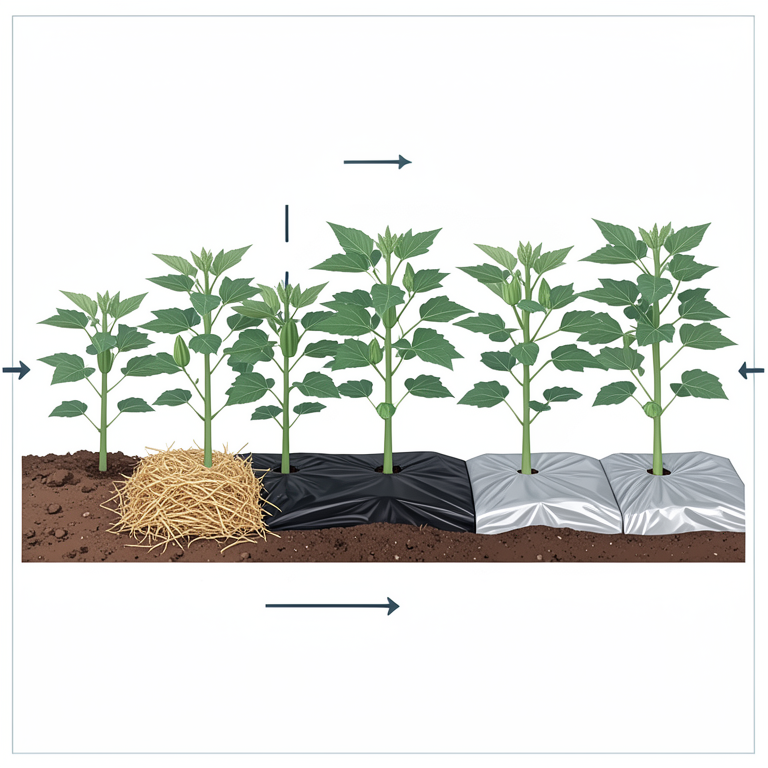
Comparison of Mulch Types on Okra Yield
AI-generated conceptual illustration (okra plants (Abelmoschus esculentus L.)). It explains the idea and does not show study data.
View source evidence ↗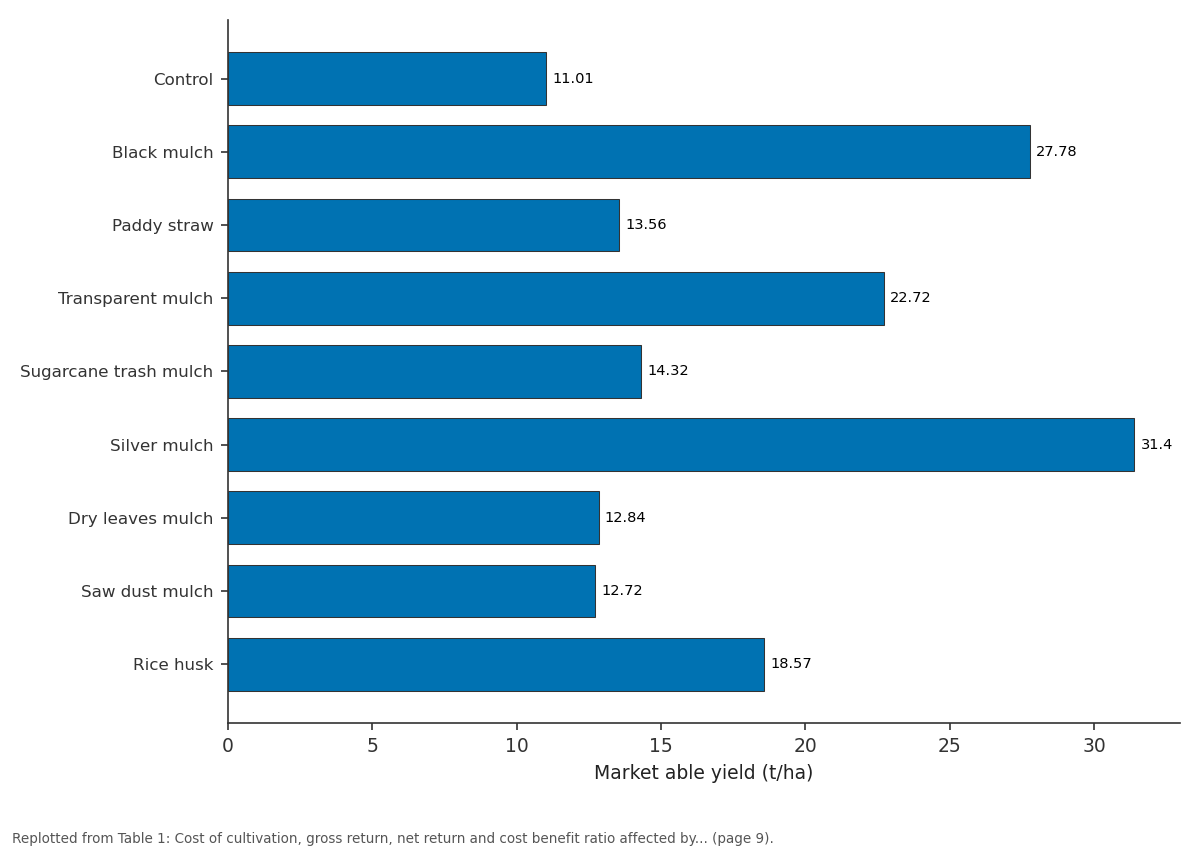
Market able yield (t/ha): Control vs Black mulch vs Paddy straw vs Transparent mulch vs Sugarcane trash mulch
Replotted from Table 1 (page 9) of the original paper. Every bar is the paper's own table value.
View source evidence ↗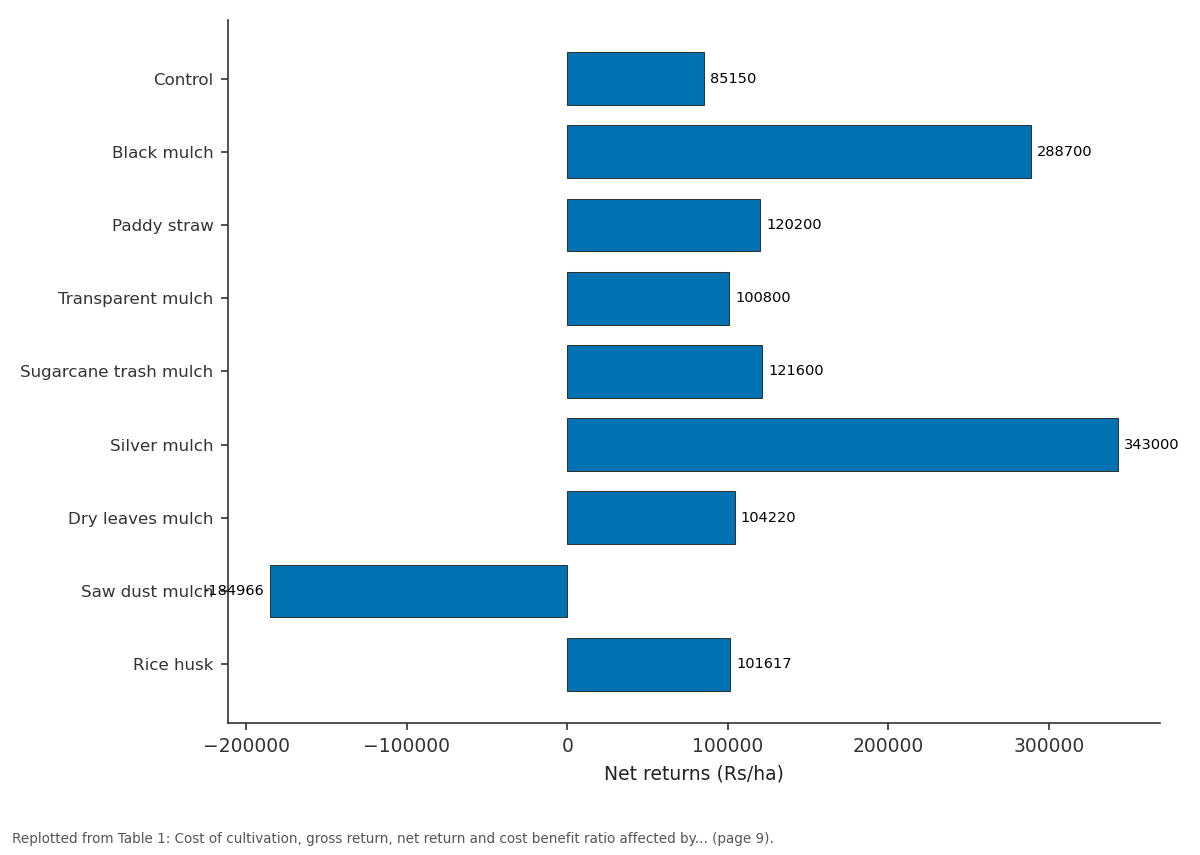
Net returns: Control vs Black mulch vs Paddy straw vs Transparent mulch vs Sugarcane trash mulch
Replotted from Table 1 (page 9) of the original paper. Every bar is the paper's own table value.
View source evidence ↗Figures & tables
From the original paper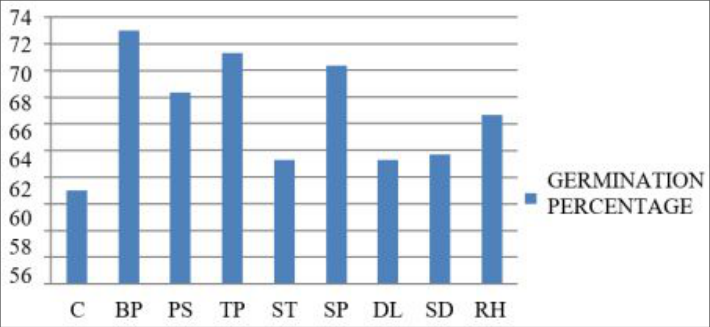 Figure 1
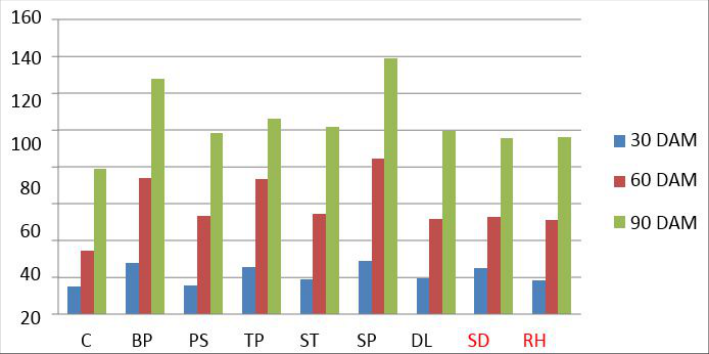 Figure 2
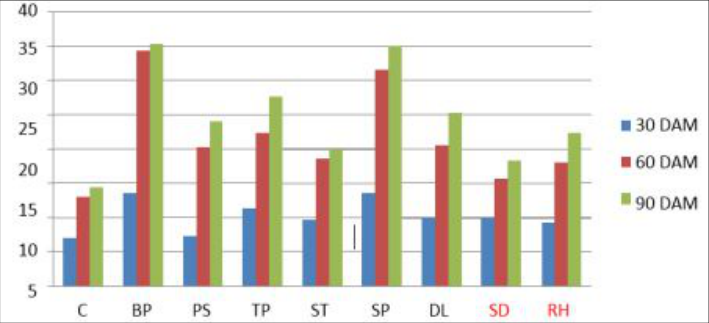 Figure 3
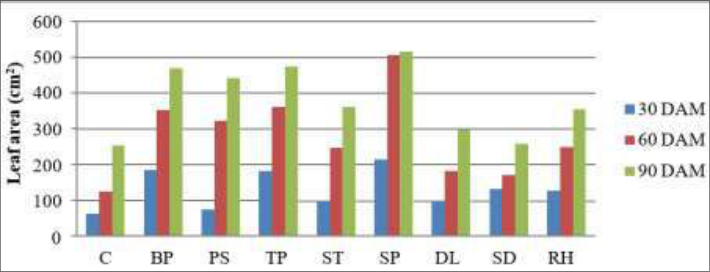 Figure 4
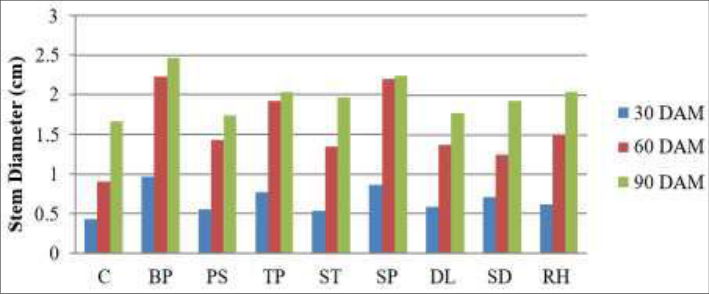 Figure 5
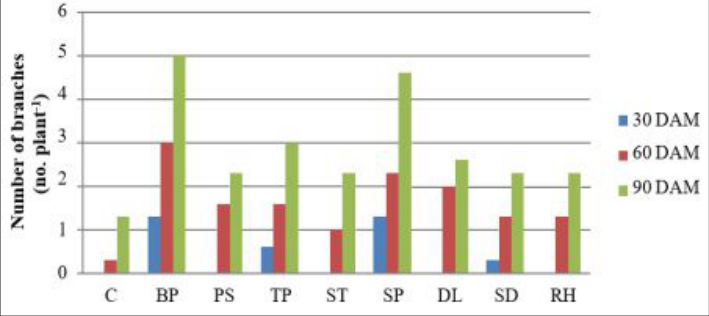 Figure 6
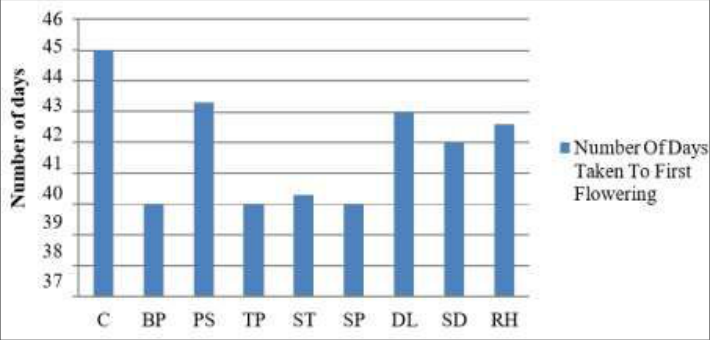 Figure 7
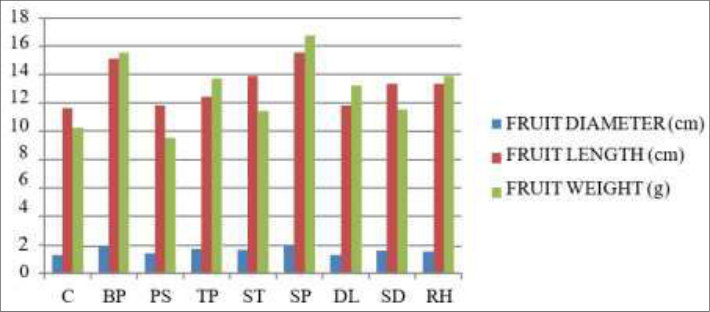 Figure 8
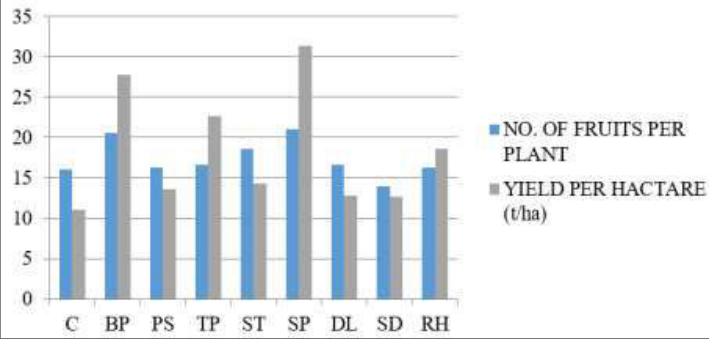 Figure 9
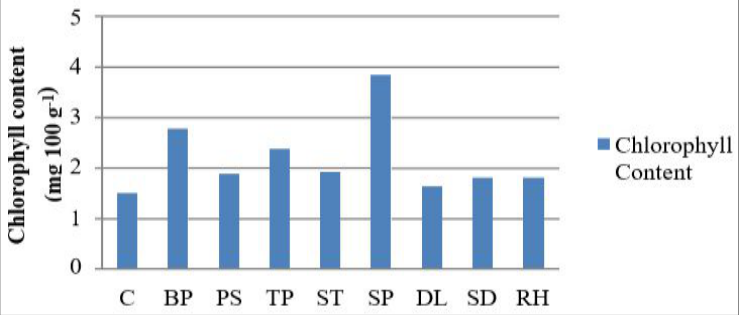 Figure 10
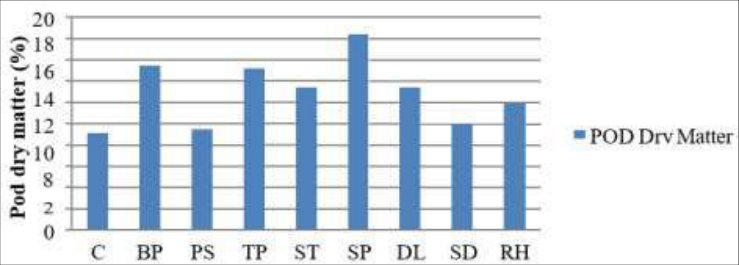 Figure 11
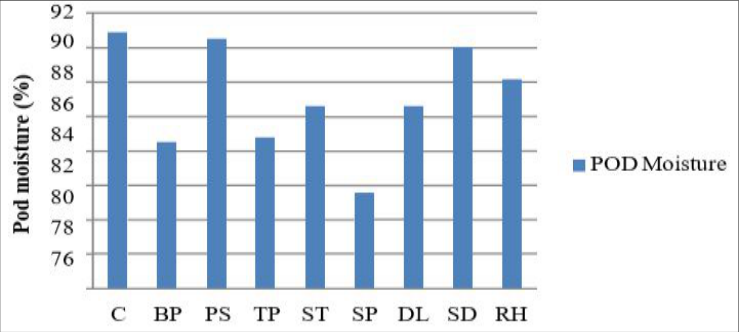 Figure 12
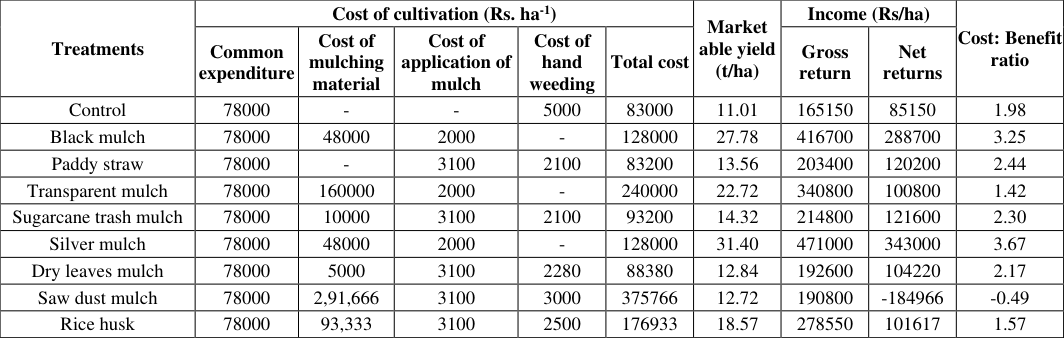 Table 1
Introduction
Okra (Abelmoschus esculentus L.) is an economically essential vegetable crop grown in tropical and sub-tropical regions of the world, belongs to family Malvaceae. This crop is suitable for cultivation as a garden crop in addition to on big industrial farms. Okra flora are grown commercially in many nations together with India, Japan, Turkey, Iran, Western Africa, Yugoslavia, Bangladesh, Afghanistan, Pakistan, Myanmar, Malaysia, Thailand, Brazil, Ethiopia, Cyprus and in the Southern United States (Singh et al 2014) [21] . In India, it is cultivated over an area of 5.33 lakh hectare with annual production of 63.46 lakh MT. The major okra growing states in India are Andhra Pradesh (20%), West Bengal (15%), Bihar (14%), Odisha (11%) and rest in other states (Dhaliwal, 2020) [9] . In Punjab, the Okra is grown in an area of 5.31 thousand hectares. The annual production is 54.88 thousand tones with the average productivity of 103.44 q ha -1 (Anonymous, 2021) [5] . Mulching is the practice of covering the ground to make more favorable condition for plant growths, development and efficient crop production. Natural mulches such as leaf, straw, dead leaves and compost have been used for centuries. Mulching effectively manipulates crop growing environment leading to better growth, yield and improved quality of the product with the aid of suppressing weeds, ameliorating soil temperature, protecting soil moisture, decreasing soil erosion, improving soil structure. (Awodoyin et al 2010) [6] .
The studies on the effect of different organic and inorganic mulches on okra were not undertaken in this region, such studies would provide much needed information for boosting their productivity and production, thus the results of present research will provide technical information on the effect of different type of mulches on growth, yield, and quality of okra.
Materials and Methods
Experimental location: The present research was carried out at Experimental Farm, Department of Agriculture, Sri Guru Granth Sahib World University, Fatehgarh Sahib, Punjab during summer season of 2022.
Experimental details
The field experiment was laid out in Randomized Block Design (RBD). To minimize the errors the treatments were replicated three times. In this experiment nine treatments were selected for study which consisted of various types of mulches viz, paddy straw, sugarcane trash, black polythene mulch, transparent polythene mulch, silver polythene mulch, saw dust, rice husk, dry leaves and control. The size of each plot was 2.5 m x 2.5 m (6.25 m 2 ). The okra crop was sown in month of March and the data recorded at 30 days interval (30, 60 and 90 DAS).
Soil analysis:
The soil sample from the field was collected to check the initial fertility status of soil before preparing the field and sowing of crop. The soil samples were sent to Krishi Vigyan Kendra Fatehgarh Sahib for analysis. Soil pH, soil EC, available organic carbon, nitrogen phosphorous and potash was analysed.
Growth parameters : Growth parameters such as germination percentage (%), plant height (cm), plant height (cm), number of Leaves, leaf area (cm 2 ), stem diameter (cm), number of branches plant, fruit diameter (cm), fruit length (cm), fruit weight (g), Number of pods plant and Pod yield (t ha -1 ) were studied at different intervals.
Leaf chlorophyll (a+b) was measured at 60 days after sowing. Leaf chlorophyll (a+b) was measured using the method of Yoshida et al (1976) [24] .
Results and Discussion
The experiment was carried out during the 2021-2022 at Experimental Farm, Sri Guru Granth Sahib World University, Fatehgarh Sahib, Punjab, India. It is evident from data in Fig. 1 that the application of different organic and inorganic mulching significantly increased the germination percentage over the control. The maximum germination percentage was recorded under black polythene mulch. Among organic mulches maximum germination percentage was recorded under the paddy straw mulch. The maximum germination percentage (73.00%) was recorded under black polythene mulch followed by transparent polythene mulch (71.33%), silver polythene mulch (70.33%), paddy straw mulch (68.33%), rice husk (66.66%), saw dust (63.66%), sugarcane trash mulch (63.33%), dry leaves mulch (63.33%), while minimum germination percentage was recorded under the treatment control (61.00%). The average germination percentage was recorded 66.70%. It might be due to good soil moisture availability which leads to more availability of water for softening seed coat and good micro climate which leads to increase embryo germination. The results are in conformity to that with Aniekwe (2013) [3] who revealed that the good temperature modulation by the black plastic mulch resulted in the high percentage germination rate observed in both years (90% in 2008 and 86% in 2009). The lower germination was reported in the unmulched plots (control). Abu-Bakr et al (2003) [1] carried out a study to evaluate the effects of black, clear and green plastic mulches on growth and yield of okra (Abelmoschus esculentus L.) during winter and concluded that the seedling emergence percentage was significantly higher in the mulched plots. It was 20.8%, 16.6% and 15.2% more in the clear, green and black mulches compared to the control, respectively.
The data regarding plant height influenced by different mulching material presented graphically in Fig. 2 revealed that plant height (at 30, 60 and 90 DAS) increased significantly due to mulch over no mulching (control). At 30 days after mulching, the highest plant height was recorded under the silver polythene mulch (29.23 cm), at par with black polythene mulch (27.83 cm), followed by transparent polythene mulch (25.63 cm), saw dust (24.73 cm), dry leaves (19.43 cm), sugarcane trash (18.96 cm) rice husk (18.43 cm), paddy straw (15.70 cm) and the minimum plant height was recorded under control (15.20 cm). However, height with paddy straw was at par with the control. At 60 days after mulching, maximum plant height was observed under silver polythene mulch (84.66 cm) followed by black polythene mulch (73.66 cm), transparent polythene mulch (73.00 cm), sugarcane trash (54.33 cm), paddy straw (53.33 cm), saw dust (52.66 cm), dry leaves (52.00 cm), rice husk (51.00 cm) while minimum plant height was recorded under control (34.33 cm). Similar results were found at 90 days of mulching, all organic and inorganic mulches showed significant difference, the maximum plant height was observed under the silver polythene mulch (138.66 cm) followed by black polythene mulch (127.66 cm), transparent polythene mulch (106.00 cm), sugarcane trash (101.66 cm), dry leaves (99.33 cm), paddy straw (98.33 cm), rice husk (96.33 cm), saw dust (95.16 cm) and minimum plant height was recorded under the treatment control (79.00 cm). The average plant height was 104.68 cm. The data showed that all the three polythene mulches performed better than organic mulches. All the organic mulches showed the similar effect on plant height and also at par with each other but all the organic and inorganic mulches showed significant increase in plant height over control. The results were in accordance with Puri et al (2022) [19] who concluded that the all mulching treatments significantly increased plant height over control with maximum plant height (148.7 cm) recorded with silver plastic mulch due to retention of moisture. The availability of moisture also led to better uptake of nutrients for correct bloom, development of flora and resulted higher growth of plant. Anjali et al (2019) [4] also revealed that among all the treatments silver polythene mulch showed significantly highest plant height (114.93 cm). From study of data presented in Fig. 3 it is observed that at 30 days after mulching maximum number of leaves were recorded under the treatment black polythene mulch (13.6 leaves plant -1 ) and silver polythene mulch (13.6 leaves plant - 1 ), followed by transparent polythene mulch (11.3 leaves plant -1 ), dry leaves mulch (10.0 leaves plant -1 ), saw dust mulch (10.0 leaves plant -1 ), sugarcane trash (9.6 leaves plant -1 ), rice husk (9.3 leaves plant -1 )and paddy straw (7.3 leaves plant -1 ) while the minimum number of leaves were counted under the treatment control (7.0 leaves plant -1 ). At 60 days after mulching the maximum number of leaves was counted under the treatment black polythene mulch (34.3 leaves plant -1 ) followed by silver polythene mulch (31.6 leaves plant -1 ), transparent polythene mulch (22.3 leaves plant -1 ), dry leaves (20.6 leaves plant -1 ),paddy straw (20.3 leaves plant -1 ), sugarcane trash (18.6 leaves plant -1 ), rice husk (18.0 leaves plant -1 ), saw dust (15.6 leaves plant -1 ) and minimum leaf number was recorded under control (13.0 leaves plant -1 ).
It was inferred from data showed in Fig 3 that different mulching material significantly increased the number of leaves at 90 days after mulching. The maximum number of leaves were recorded under the black polythene mulch (35.3 leaves plant -1 ) which is closely related to silver polythene mulch (35.0 leaves plant -1 ) followed by transparent polythene mulch (27.6 leaves plant -1 ), dry leaves (25.3 leaves plant -1 ), paddy straw (24.3 leaves plant -1 ), rice husk (22.3 leaves plant -1 ), sugarcane trash (20 leaves plant -1 ), saw dust (18.3 leaves plant -1 ) and minimum number of leaves were recorded under the treatment control (14.3 leaves plant -
1
). The results were in conformity with Puri et al (2022) [19] concluded that the maximum number of leaves (42.5 leaves plant -1 ) were recorded under silver plastic mulch, while least were recorded under control. Akhila et al (2018) [2] observed that the maximum number of leaves were noticed under black polythene mulch (21 leaves plant -1 ) followed by control (19 leaves plant -1 ) and coconut coir mulch (17 leaves plant -1 ) while minimum was recorded under the treatment shade with plastic mulch (13 leaves plant -1 ). It is inferred from data presented in Fig. 4 that the application of different mulching material significantly increased the leaf growth over the control. At 30 days after mulching the maximum leaf area was recorded under silver polythene mulch (215.21 cm 2 ) followed by black polythene mulch (184.79 cm 2 ), transparent polythene mulch (183.01 cm 2 ), saw dust (132.19 cm 2 ), rice husk (126.44 cm 2 ), sugarcane trash (98.12 cm 2 ), dry leaves (95.17 cm 2 ), paddy straw mulch (73.81 cm 2 ) and minimum was recorded under control (62.14 cm 2 ). At 60 days after mulching the maximum leaf area was recorded under the silver polythene mulch (506.00 cm 2 ), followed by transparent polythene mulch (362.00 cm 2 ), black polythene mulch (352.08 cm 2 ), paddy straw mulch (324.40 cm 2 ), rice husk (248.30 cm 2 ), sugarcane trash mulch (247.08 cm 2 ), dry leaves mulch (183.25 cm 2 ) and saw dust (171.58 cm 2 ) while minimum leaf area was recorded under the control (124.30 cm 2 ). It is evident from the data presented in Fig. 4 that the maximum leaf area at 90 days after mulching was recorded under black polythene mulch (515.60 cm 2 ), followed by black polythene mulch (469.00 cm 2 ), transparent polythene mulch (475.60 cm 2 ), paddy straw mulch (442.30 cm 2 ), sugarcane trash mulch (361.36 cm 2 ), rice husk (355.00 cm 2 ), dry leaves mulch (298.30 cm 2 ), saw dust (257.60 cm 2 ) and was minimum recorded under the treatment control (255.00 cm 2 ). The maximum leaf area under inorganic mulches might be due to good soil moisture availability which might have increased the root growth, nutrient uptake and photosynthesis and ultimately the leaf area of plant. Olabode et al (2007) [16] stated that the highest leaf area per plant was recorded under plastic mulch followed by grass mulch. It is evident from data presented in Fig. 5 that different mulching material increased the stem diameter over the control. The maximum stem diameter at 30 days after mulching was recorded with black polythene mulch (0.97 cm), followed by silver polythene mulch (0.86 cm), transparent polythene mulch (0.77 cm), saw dust mulch (0.71 cm), rice husk (0.61 cm), dry leaves mulch (0.59 cm), paddy straw mulch (0.55 cm), sugarcane trash mulch (0.53 cm) and minimum stem diameter was recorded under control (0.43 cm). At 60 days after mulching, the maximum stem diameter was recorded under black polythene mulch (2.23 cm), followed by silver polythene mulch (2.20 cm), transparent polythene mulch (1.92 cm), rice husk (1.50 cm), paddy straw mulch (1.43 cm), dry leaves mulch (1.37 cm), sugarcane trash mulch (1.35 cm) and saw dust (1.25 cm) while minimum stem diameter was recorded under control (0.90 cm). After 90 days of mulching the maximum stem diameter was recorded under black polythene mulch (2.47 cm), followed by silver polythene mulch (2.24 cm), transparent polythene mulch (2.04 cm), rice husk mulch (2.03 cm), sugarcane trash mulch (1.97 cm), saw dust mulch (1.92 cm), dry leaves mulch (1.77 cm), paddy straw mulch (1.74 cm) and the minimum was recorded under the control (1.66 cm). The perusal of data present in Fig. 6 revealed that different organic and inorganic mulching treatments showed the significant difference among number of branches. The maximum number of branches were recorded under the black polythene mulch and silver polythene mulch while the minimum branch count were recorded under the treatment control. At 30 days after mulching the recorded data shows that maximum number of branches were noted similar in both black polythene mulch and silver polythene mulch (1.3 branches plant -1 ) followed by transparent polythene mulch (0.6 branches plant -1 ) and saw dust mulch (0.3 branches plant -1 ). Among remaining mulching treatments no side branches were found at 30 days after mulching. After 60 days of mulching it is inferred from the recorded data that the maximum branch count was found under black polythene mulch (3.0 branches plant -1 ) which is closely related to silver polythene mulch (2.3 branches plant -1 ), followed by dry leaves mulch (2.0 branches plant -1 ), transparent polythene mulch (1.6 branches plant -1 ), paddy straw mulch (1.6 branches plant -1 ), saw dust (1.3 branches plant -1 ), rice husk (1.3 branches plant -1 ) and sugarcane trash
(1.0 branches plant -1 ) while the minimum were under the control (0.3 branches plant -1 ). At 90 days after mulching the maximum number of branches was noticed under the treatment black polythene mulch (5.0 branches plant -1 ) at par with silver polythene mulch (4.6 branches plant -1 ), followed by dry leaves (2.6 branches plant -1 ) and paddy straw mulch (2.3 branches plant -1 ) while the minimum number of branches was recorded under the treatment control (1.3 branches plant -1 ). The results were same as findings of Mahadeen (2014) [15] who examined the effect of black polythene mulch on growth and yield of okra and stated that maximum number of branches were recorded under the treatment black polythene mulch (14.9 branches plant -1 ) while minimum was recorded under treatment control (11.4 branches plant -1 ). Anjali et al (2019) [4] studied the effect of different types of mulches on growth, yield and quality of okra (Abelmoschus esculentus L.). The results revealed that among all the treatments silver polythene mulch showed significantly highest number of branches (3.13 branches plant -1 ). Under the control the flowering delayed due to poor growth of plants. Abu-Bakr et al (2003) [1] carried out a study to evaluate the effects of black, clear and green plastic mulches on growth and yield of okra (Abelmoschus esculentus L.) during winter and concluded that plastic mulch resulted in earlier flowering. The appearance of the first flower was 13.1, 8.5 and 7.6 days earlier in the black, green and clear mulches, respectively, compared to the control. Mahadeen (2014) [15] examined the effect of black polythene mulch on growth and yield of okra and stated that the flowering occurs in 44.4 days after sowing under black polythene mulch while under the treatment control flowering occurs after 48 days after sowing. The perusal of data depicted in Fig. 8 showed that the maximum fruit diameter was recorded under the inorganic mulches while all the organic mulches also performed well and have significantly higher fruit diameter than control. The minimum fruit diameter was recorded under control. Among all organic mulches maximum fruit diameter was recorded under the treatment sugarcane trash mulch and saw dust mulch. The maximum fruit diameter was recorded under black polythene mulch (1.97 cm), at par with silver polythene mulch (1.95 cm), followed by transparent polythene mulch (1.74 cm), sugarcane trash mulch (1.66 cm) or saw dust mulch (1.61 cm), rice husk mulch (1.52 cm), paddy straw mulch (1.40 cm), dry leaves mulch (1.30 cm) and minimum fruit diameter was recorded under control (1.29 cm), whereas paddy straw and dry leaves mulches were at par with control. The results were in conformity with Bhutia et al. (2017) [7] who recorded maximum fruit diameter under black polythene mulch (4.95 cm), followed by green plastic mulch (4.75 cm) and minimum under organic mulch (4.51 cm).
It is evident from data present in Fig. 8 the application of different organic and inorganic mulches influenced the fruit length of okra. The maximum fruit length was recorded under silver polythene mulch and black polythene mulch while minimum fruit length was recorded under control. The maximum fruit length of 15.56 cm was recorded under the treatment silver polythene mulch, at par with black polythene mulch (15.10 cm), followed by sugarcane trash mulch (13.90 cm), saw dust mulch (13.33 cm), rice husk mulch (13.33 cm), transparent polythene mulch (12.46 cm), dry leaves mulch (11.83 cm) and paddy straw mulch (11.83 cm) while minimum fruit length was recorded under control (11.66 cm), while paddy straw and dry leaves mulch were at par with control. The results were in accordance with Puri et al. (2022) [19] who concluded that silver mulch treatment produced maximum average fruit length (12.54 cm) than other treatments.
From the study of data present in Fig. 8, it is clear that the different mulching treatments influenced the fruit weight.
The fruit weight ranged from 9.53 g to 16.73 g. The maximum fruit weight was recorded under the treatment silver polythene mulch (16.73 g), at par with black polythene mulch (15.53 g), followed by rice husk (13.90 g), transparent polythene mulch (13.73 g), dry leaves mulch (13.20 g), saw dust (11.53 g), sugarcane trash (11.43 g) and control (10.26 g), whereas paddy straw, sugarcane trash and saw dust mulches were at par with control. From study of data it is found that the rice husk mulch performed better than other organic mulches in terms of fruit weight. Kim et al. (2016) [13] concluded that the fruit weight was 16.9 g in black polythene mulch which was highest for that period. Abu-Bakr et al. (2003) [1] concluded that plastic mulch significantly increased the number of pods per plant, average pod weight and total yield, compared to the control, with no significant difference between the clear and green transparent mulches. The maximum average pod weight was observed in the black mulch (6.91 g) followed by green mulch, clear mulch and weeded control (6.60 g, 6.49 g and 6.21 g, respectively).
It is evident from data present in Fig. 9 that the maximum number of fruits was observed under the silver polythene mulch and black polythene mulch. Among all organic mulches maximum number of fruits were noticed in sugarcane trash mulch. The maximum number of pods plant - 1 (21.00 fruits plant -1 ) were recorded under silver polythene mulch almost similar in black polythene mulch (20.60 fruits plant -1 ) followed by sugarcane trash mulch (18.60 fruits plant -1 ), transparent polythene mulch and dry leaves mulch (16.60 fruits plant -1 ), paddy straw mulch and rice husk (16.30 fruits plant -1 ) and control (16.00 fruits plant -1 ) while minimum number of fruits were recorded under the saw dust mulch (14.00 fruits plant -1 ). The average number of fruits were recorded 17.37 fruits per plant. The results were in accordance with Anjali et al. (2019) [4] who conducted a field experiment to study the effect of different type of
International Journal of Biology Sciences https://www.biologyjournal.net mulches on growth, yield and quality parameters of okra (Abelmoschus esculentus L.). The result showed that maximum number of pods per plant (15.15 pods plant -1 ) were recorded in silver polythene mulch. Other yield and growth characters are also recorded highest under silver polythene mulch. Patel et al (2009) [18] studied the effect of drip irrigation, mulch and nitrogen fertigation on yield and yield attributes of okra (Abelmoschus esculentus L.) and concluded that maximum number of pods (24.36) was recorded under black polythene mulch.
The data regarding fruit yield of okra as influenced by different organic and inorganic mulching material depicted graphically in Fig. 9 revealed that artificial material mulches proved significantly better than organic mulches in terms of their effect on fruit yield ha -1 . The maximum yield was recorded with silver polythene mulch (31.4 tonnes ha -1 ), followed by black polythene mulch (27.78 tonnes ha -1 ), transparent polythene mulch (22.72 tonnes ha -1 ), rice husk mulch (18.57 tonnes ha -1 ), sugarcane trash mulch (14.32 tonnes ha -1 ), paddy straw mulch (13.56 tonnes ha -1 ), dry leaves mulch (12.84 tonnes ha -1 ) and saw dust (12.72 tonnes ha -1 ) while minimum yield per hactare was recorded under the control (11.01 tonnes ha -1 ). However, paddy straw mulch, sugarcane trash, dry leaves mulch and saw dust were at par in respect of pod yield. Moreover, dry leaves mulch and saw dust mulch did not increase pod yield significantly over the control. Therefore, the highest yield was obtained with silver polythene mulch, followed by black polythene mulch whereas organic mulch proved inferior to artificial material mulches. Among the organic mulches, rice husk mulch was found superior to sugarcane trash and paddy straw mulches. Maximum yield under the silver polythene mulch might be due to better moisture retention and reflective effect, which in turn increased the flower primordial growth, production of more carbohydrates and absorption of nutrients which ultimately led to increase in fruit yield. The results are in accordance with Jha et al (2018) [11] who also obtained the highest yield (8104 kg ha -1 ) under silver plastic mulch. Puri et al (2022) [19] also recorded maximum yield under the silver polythene mulch followed by black polythene mulch, rice straw mulch and rice husk mulch. The data presented in Fig. 10 related to chlorophyll content of leaves revealed significant differences due to the various mulch treatments. The results indicate that the highest chlorophyll content in leaves (3.84 mg 100 g -1 ) was recorded with silver polyethylene mulch and was significantly superior over rest of the treatments under study. The lowest (1.49 mg 100 g -1 ) chlorophyll content was recorded in control. It might be due to good soil moisture availability which leads to better growth of roots and nutrients uptake which resulted into better plant growth and increase in chlorophyll content. Panchal et al. (2001) [17] noticed that black polythene mulch was found best for total chlorophyll content among the organic and inorganic mulches. Shivaraj et al. (2018) [20] also found that the
Chlorophyll -a Chlorophyll -b were more in white on black plastic color mulch followed by silver on black plastic color mulch and black plastic color mulch as compared with control bed. A perusal of data in Fig. 11 revealed that different organic and inorganic mulching treatments showed the significant difference among pod dry matter. Maximum pod dry matter (%) was recorded under the silver polythene mulch (18.43%), followed by black polythene mulch (15.46%), transparent polythene mulch (15.21%), dry leaves (13.41%) and sugarcane trash (13.40%). Minimum pod dry matter was recorded in control (9.10%). Kareem et al (2012) [12] stated all mulched plots had maximum fresh and dry pod weight with plastic mulched plot having the highest value. However, the unweeded plot had the least pod biomass value.
It is inferred from data present under Fig. 12 that different organic and inorganic mulches influence the pod moisture. Maximum pod moisture per cent was recorded under the treatment control (90.90%), followed by paddy straw (90.54%), saw dust (90.04%), rice husk (88.14%) and black polythene mulch (84.54%) while minimum pod moisture was recorded under the treatment silver polythene mulch (81.57%). In the month of March maximum soil temperature was recorded under the silver polythene mulch (20.7 °C), followed by black polythene mulch (20.5 [13] found that black coloured mulching material showed the highest average temperature of 23.1 °C. Abu-Bakr et al (2003) [1] concluded that the soil temperature was significantly higher under the plastic mulches than the control. It increased by 5.6 °C, 5.2 °C and 3.9 °C in the morning and 6.1 °C, 5.7 °C and 3.3 °C at mid-day under the clear, green and black mulches, respectively as compared to the control. Plastic mulches absorb comparatively large amounts of the incoming radiation and transmit a considerable part of it to the soil underneath (Tarara, 2000) [22] . Harender and Bhardwaj (2000) [10] reported that the mulching with transparent polythene increases the temperature of soil in vegetables. The temperature was 4 °C higher in mulched plots compared to un-mulched plots.
In the month of March, the maximum soil moisture was recorded under the black polythene mulch (12.94%) followed by transparent polythene mulch (11.98%), silver polythene mulch (10.86%), dry leaves mulch (10.62%), saw dust mulch (9.95%), sugarcane trash mulch (9.94%), rice husk mulch (9.84%), paddy straw mulch (9.30%) and the minimum soil moisture was recorded under treatment control (9.19%). In the month of April, the maximum soil moisture was recorded under the black polythene mulch (12.48%), followed by transparent polythene mulch (11.86%), dry leaves (10.37%), silver polythene mulch (10.36%), saw dust mulch (10.30%), sugarcane trash (10.02%), rice husk (9.8%), paddy straw (9.68%) and least soil moisture was found under control (9.20%). In May month, the maximum recorded soil moisture was 12.84% under the black polythene mulch followed by transparent polythene mulch (11.68%), silver polythene mulch (11.35%), dry leaves (10.61%), sugarcane trash (10.11%), saw dust (9.73%), rice husk (9.63%) and paddy straw (9.55%) while least was recorded in the control (9.33%). In the month of June the maximum soil moisture was recorded under the transparent polythene mulch (12.75%) which is at par with black polythene mulch (12.34%) followed by silver polythene mulch (10.73%), dry leaves mulch (10.66%), saw dust mulch (10.27%), sugarcane trash (9.80%), rice husk (9.66%) and paddy straw (9.54%) while least was recorded in the control (8.82%). Akhila et al. (2018) [2] observed the maximum soil moisture under black plastic mulch (17.53%), followed by that under coconut coir (16.24%), polythene mulch (16.5%) and least was found under the treatment control (14.23%). Bhutia et al. (2017) [7] concluded that highest soil moisture content at final harvest was recorded with black plastic mulch (14.22%), followed by that under green plastic mulch (13.62%) and organic mulch (12.94%). These were all significant over control (11.22%). Abu-Bakr et al. (2003) [1] reported that soil moisture at 10-20 cm soil depth was increased 2.05, 1.98 and 1.96 per cent by the black, clear and green mulches respectively over the control. Although moisture content under black mulch was always higher than that under clear and green mulches, the differences was not significant at any soil depth. Highest pH of soil (7.61) was recorded in treatment transparent polythene mulch and lowest (7.20) soil pH was recorded in treatment control. The soil pH of experimental plot before planting was (7.15). From study of data presented in Table 1, it is clear that the maximum gross return was found under silver polythene mulch (Rs. 4,71,000), followed by black polythene mulch (Rs. 4,16,700) and transparent polythene mulch (Rs. 3,40,800). Among all organic mulches maximum gross return was found under the sugarcane trash mulch (Rs. 2,14,800), followed by paddy straw mulch (Rs. 2,03,400). The minimum gross return was recorded under the treatment control (Rs. 1, 65, 150). Christopher (2003) [8] revealed that plastic mulching recorded higher gross returns of Rs. 90,600 ha -1 as compared to Rs. 74,600 ha -1 under unmulched control. The higher gross returns recorded under plastic mulching was due to significantly higher yield recorded in this treatment.
| Treatments | Cost of cultivation (Rs. ha-1) | — | — | — | — | Market able yield (t/ha) | Income (Rs/ha) | — | Cost: Benefit ratio |
|---|---|---|---|---|---|---|---|---|---|
| Common expenditure | Cost of mulching material | Cost of application of mulch | Cost of hand weeding | Total cost | Gross return | Net returns | |||
| Control | 78000 | - | - | 5000 | 83000 | 11.01 | 165150 | 85150 | 1.98 |
| Black mulch | 78000 | 48000 | 2000 | - | 128000 | 27.78 | 416700 | 288700 | 3.25 |
| Paddy straw | 78000 | - | 3100 | 2100 | 83200 | 13.56 | 203400 | 120200 | 2.44 |
| Transparent mulch | 78000 | 160000 | 2000 | - | 240000 | 22.72 | 340800 | 100800 | 1.42 |
| Sugarcane trash mulch | 78000 | 10000 | 3100 | 2100 | 93200 | 14.32 | 214800 | 121600 | 2.30 |
| Silver mulch | 78000 | 48000 | 2000 | - | 128000 | 31.40 | 471000 | 343000 | 3.67 |
| Dry leaves mulch | 78000 | 5000 | 3100 | 2280 | 88380 | 12.84 | 192600 | 104220 | 2.17 |
| Saw dust mulch | 78000 | 2,91,666 | 3100 | 3000 | 375766 | 12.72 | 190800 | -184966 | -0.49 |
| Rice husk | 78000 | 93,333 | 3100 | 2500 | 176933 | 18.57 | 278550 | 101617 | 1.57 |
Table text extracted from the original PDF; superscript letters are shown inline. The original table image is below.
View original table image
From the perusal of data in Table 1. It is obvious that the maximum net return was found under silver polythene mulch (Rs. 3,43,000), followed by black polythene mulch (Rs. 2,88,700), sugarcane trash mulch (Rs. 1,21,000), paddy straw mulch (Rs. 1,20,000), dry leaves mulch (Rs.1,04,220), rice husk mulch (Rs. 1,01,617), transparent polythene mulch (Rs. 1,00,800) and control (Rs. 85,150) while minimum net return was recorded under the treatment saw dust mulch (Rs.
-1,84,966). The net return was found minimum under the treatments saw dust due to higher mulching cost. Christopher (2003) [8] revealed that plastic mulch produced higher net return of Rs. 74,600 ha -1 compared to control (Rs. 64,600 ha -1 ). The budgetary analysis revealed that the mulch with Azadirachta indica gave the highest net income, followed by the plastic mulch while the least income was obtained from the control (Lbe et al 2012) [14] .
It is evident from the data in Table 1., that maximum costbenefit ratio was recorded under silver polythene mulch (3.67), followed by black polythene mulch (3.25), paddy straw mulch (2.44), sugarcane trash mulch (2.30), dry leaves mulch (2.17), control (1.98), rice husk (1.57) and transparent polythene mulch (1.42) while minimum cost benefit was recorded under treatment saw dust mulching (-0.49). Among all inorganic mulches the silver polythene mulch recorded maximum cost benefit ratio while among all the organic mulches the maximum cost benefit ratio was found under paddy straw mulching and sugarcane trash mulch. Tiwari et al (2021) [23] achieved maximum average benefit cost ratio by mulching with black polythene sheet (4.56), followed by mulching with paddy straw (3.77) and with sugarcane leaves (3.69) and minimum under control.
Conclusion
From the results of the present experiment on okra it can be concluded that mulching with the inorganic or organic material were beneficial in improving the growth and yield of okra. The highest fruit yield, quality and net profit from the crop was obtained with the silver polythene mulch, followed by black polythene mulch.
Figures and tables from the paper
References
21 in the original paper- Abu-Bakr A, Abu-Goukh MM, El-Balla. Use of plastic mulch for better performance and yield of okra during winter in Sudan. Univ Khartoum J Agric Sci. 2003, 11(2).
- Akhila P, Meena S, Rao CHNVS, Kumar D, Gopi B, Tejaswini V. Comparison of growth and yield performance of okra crop under mulching system. Int. J Curr Microbiol Appl Sci. 2018;7(10):3670-3679.
- Aniekwe NL. Comparative effect of organic and plastic mulches on the environment, growth and yield of okra in a derived Salianna zone of Nigeria. Int. J Sci Res. 2013;4(1):2319-2364.
- Anjali P, Masaye SS, Sharman DK, Krishana C. Effect of different type of mulching on growth, quality and yield of okra (Abelmoschus esculentus L.). Curr Hortic. 2019;7(1):50-52.
- Awodoyin RO, Ogbeide FI, Oluwole O. Effects of three mulch types on the growth and yield of tomato (Lycopersicon esculentum Mill.) and weed suppression in Ibadan, rainforest-savanna transition zone of Nigeria. Trop Agric Res Ext. 2010, 10.
- Bhutia TL, Singh SH, Reddy KCS. Effect of mulching and nitrogen on growth, yield and economics of okra (Abelmoschus esculentus L.). Ecol Environ Conserv. 2017;23(2):826-32.
- Christopher LA. Effect of mulching and irrigation regimes on chillies (Capsicum annuum L.). Agric Sci Digest. 2003;23(3):208-210.
- Harender R, Bhardwaj ML. Soil solarization for controlling soil born pathogen in vegetable crops. Indian J Agric Sci. 2000;70(5):305-307.
- Jha RK, Neupane RB, Khatiwada A, Pandit S, Dahal BJ. Effect of different spacing and mulching on growth and yield of okra (Abelmoschus esculentus L.) in Chitwan, Nepal. J Agric Nat Resour. 2018;1(1):168178.
- Kareem KT, Alamu OO, Egberongbe RK, Arogundade O. Effect of different mulch materials on the incidence and severity of okra mosaic virus (OMV) in okra. J Appl Hortic. 2012;14(1):51-55.
- Kim CH, Jeon SH, Seong KC, Moon DK, Jung YB, Lin CK, et al. Effect of mulching material on growth and yield of okra (Abelmoschus esculentus Monech L.) in Korea. J Korean Soc Int Agric. 2016;28(1):101-107.
- Lbe RB, Alamu OO, Olaniyi OW. Economic analysis of effect of mulch on weed control and yield of okra (Abelmoschus esculentus Monech L.). Afr J Online. 2012, 17(1).
- Mahadeen AY. Effect of polyethylene black plastic mulch on growth and yield of two summer vegetable crops under rain-fed conditions under semi-arid region conditions. Am J Agric Biol Sci. 2014;9(2):202-207.
- Olabode OS, Ogunyemi S, Adesina GO. Response of okra (Abelmoschus esculentus (L.) Moench) to weed control by mulching. J Food Agric Environ. 2007;5(34):324-326.
- Panchal SC, Bhatnagar R, Momin RA, Chauhan NP. Influence of cultural practices on quality of green and red chilli fruits. Indian J Agric Biochem. 2001;14:2124.
- Patel DB, Patel RH, Patel RB. Effect of drip irrigation, mulch and nitrogen fertigation on yield and yield attributes of okra (Abelmoschus esculentus L. Moench). Indian J Agric Sci. 2009;79(1):12-15.
- Puri P, Dhungana B, Adhikari A, Chaulagain M, Oli D, Shrestha B. Effect of mulching material on the vegetative growth and yield of okra (Abelmoschus International Journal of Biology Sciences https://www.biologyjournal.net esculentus L. var. US 7109) in Bharatpur, Chitwan. Sustain Food Agric. 2022;28(1):101-107.
- Shivaraj SP, Balakrishnan GV, Srinivas R, Kavita K, Patil RP. Effect of colour plastic mulching on plant growth parameters of okra (Abelmoschus esculentus) crop under different levels of drip irrigation. Int. J Curr Microbiol Appl Sci. 2018;7(2):3440-3447.
- Singh P, Chauhan V, Tiwari BK, Chauhan SS, Simon S, Bilal S, et al. An overview on okra (Abelmoschus esculentus) and its importance as a nutritive vegetable in the world. Int. J Pharm Biol Sci. 2014;4(2):227-233.
- Tarara JM. Microclimate modification with plastic mulch. Hortic Sci. 2000;35(2):169-180.
- Tiwari DK, Gangwar SK, Singn RP, Mishra PK, Singh RP. On field assessment of mulching material for weed control and its impact on yield and economics of okra (Abelmoschus esculentus L. Moench). Indian J Ext Educ. 2021;57(2):157-61.