
Research article · 2025 · Full text
International Journal of Biology SciencesImpact of hematological and biochemical imbalances on early aging in adults aged 50 and above in five localities of Western Cameroon
Volume 7(4) · Pages 12–16 · DOI: 10.33545/26649926.2025.v7.i4a.321 ↗
Research areasAging, Elder Care, and Social Issues
Abstract
Author-writtenBackground: Aging is accompanied by biological changes that may accelerate the onset of diseases. In sub-Saharan Africa, elderly populations are particularly vulnerable to hematological and biochemical imbalances, which can serve as markers of early aging. This study examines the interactions between hemoglobin, creatine kinase (CK), and lymphocytes in elderly individuals from five localities in Western Cameroon (Bafang, Bafoussam, Baham, Bandjoun, and Dschang). Objective: To assess the association between anemia, hyperCKemia, hypoCKemia, and early aging in this population, taking into account sex-and locality-based variations, and to analyze the impact of these imbalances on the health of the elderly. Methods: A cross-sectional study was conducted on 768 participants aged 50 and above. Hemoglobin, CK, and lymphocyte levels were measured. Statistical analyses, including the Chi-square test and correlation analyses, were performed to identify associations between these biological parameters and demographic factors. Results: The study highlights a significant prevalence of anemia, hyperCKemia, and hypoCKemia, with notable differences based on sex and locality. A strong correlation was observed between CK and hemoglobin levels, suggesting an interaction between muscle metabolism and hematological status, exacerbated by early aging. Conclusion: These findings underscore the need for targeted medical monitoring of elderly populations to prevent complications related to hematological and biochemical imbalances. Early management of these anomalies could help mitigate the effects of early aging, particularly in resource-limited settings.
Summary
Source-checkedPlain-language reading of the full paper, prepared with AI and checked against the text. Each point links to the authors' own words.
Why it matters
- Biological changes during aging can speed up the onset of diseases, and in sub-Saharan Africa, hematological and biochemical imbalances are key markers of early aging in the elderly. View evidence ↗
- Hemoglobin is essential for oxygen transport; abnormal levels, such as anemia or erythrocytosis, are linked to cardiovascular risks and increased frailty. View evidence ↗
- Creatine kinase (CK) serves as a biomarker for muscle metabolism, where abnormal levels can indicate inflammatory processes, metabolic disorders, or muscle degeneration. View evidence ↗
The question
- The study aims to examine how hemoglobin, lymphocytes, and creatine kinase (CK) interact in elderly people across five specific localities in Western Cameroon. View evidence ↗
- The objective is to analyze the association between early aging and imbalances like anemia, hyperCKemia, and hypoCKemia, while considering variations by sex and locality. View evidence ↗
What they did
- The cross-sectional study recruited 768 participants aged 50 and above, divided by sex and four age brackets ranging from 50 to 80+ years. View evidence ↗
- Researchers collected blood samples to measure lymphocyte counts, CK concentrations, and hemoglobin levels. View evidence ↗
- The study used correlation analyses and Chi-square tests to identify associations between demographic factors and biological parameters. View evidence ↗
What they found
- Among individuals with normal CK levels, Bafoussam had the highest anemia rate at 58.6% (43 cases). View evidence ↗
- In the hypoCKemia category, Bafang showed the highest anemia prevalence at 37.1% (13 cases). View evidence ↗
- Better hemoglobin regulation was observed in Bandjoun (53.6%, 56 cases) and Dschang (51.5%, 80 cases) within the hypoCKemia group. View evidence ↗
- Erythrocytosis was rare overall, though the highest rates in the hypoCKemia subcategory were found in Dschang (10.3%) and Bafang (9.5%). View evidence ↗
- A strong correlation between hemoglobin and CK levels suggests that early aging exacerbates the interaction between hematological status and muscle metabolism. View evidence ↗
What it means
- The authors conclude that targeted medical monitoring is necessary for the elderly to prevent complications arising from biochemical and hematological imbalances. View evidence ↗
- Integrating biochemical and nutritional screening into geriatric care is recommended to improve the management of these conditions in sub-Saharan Africa. View evidence ↗
- The authors state that longitudinal studies are required to establish causal relationships between aging processes, anemia, and CK levels. View evidence ↗
Visual summary
2 visualsIllustrations explain the paper; charts are replotted from the paper's own table values.
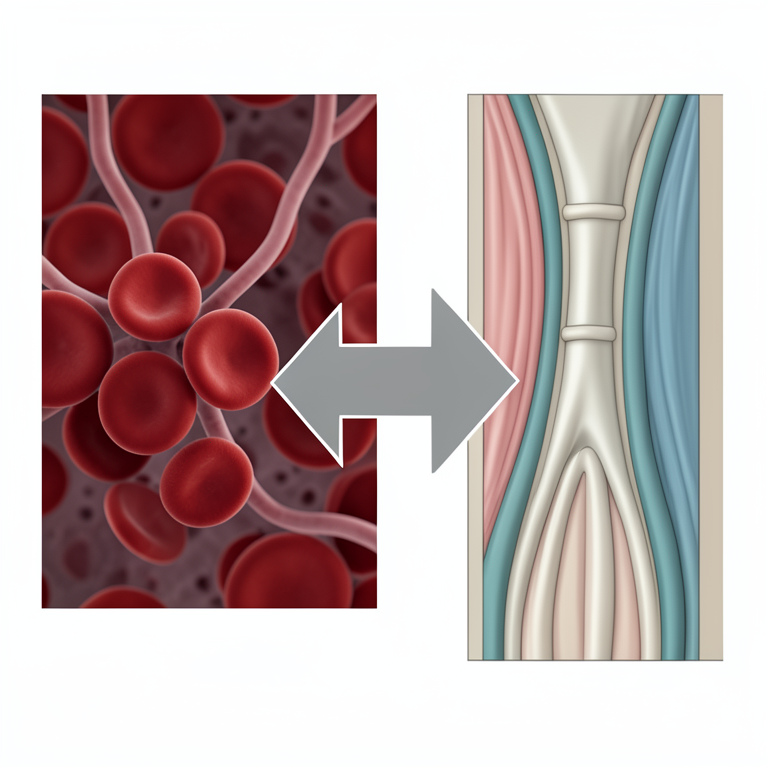
Interaction of Muscle and Blood Markers
AI-generated conceptual illustration (human blood cells and skeletal muscle tissue). It explains the idea and does not show study data.
View source evidence ↗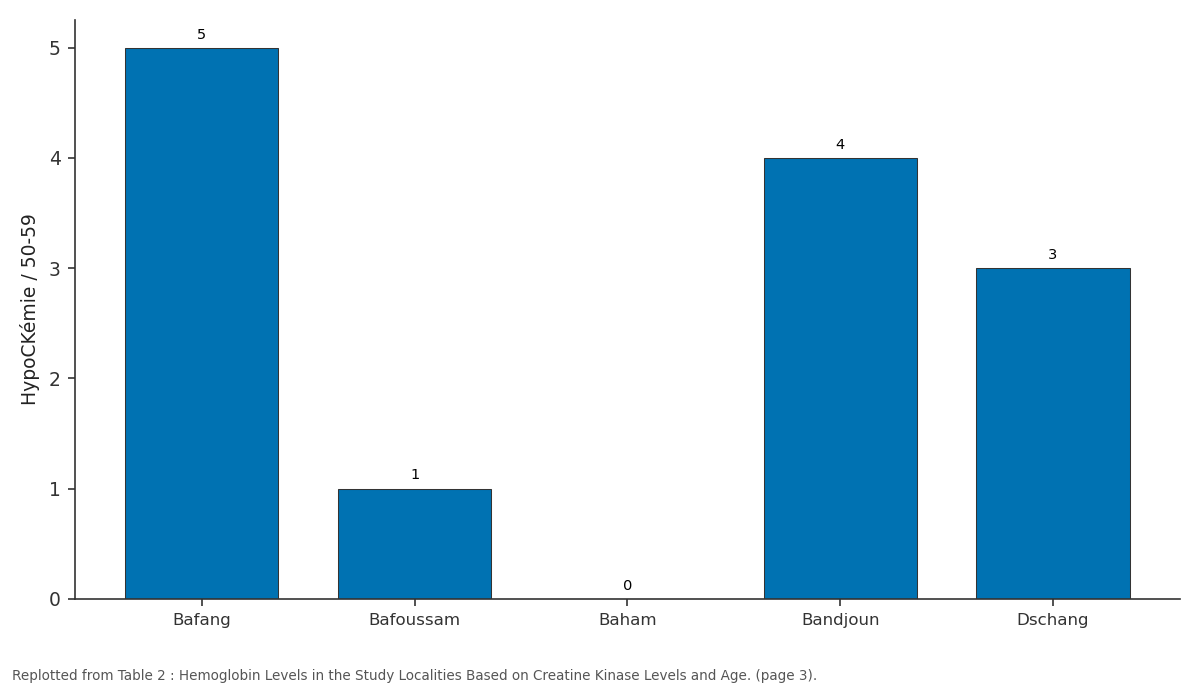
HypoCKémie / 50-59: Bafang vs Bafoussam vs Baham vs Bandjoun vs Dschang
Replotted from Table 2 (page 3) of the original paper. Every bar is the paper's own table value.
View source evidence ↗Figures & tables
From the original paper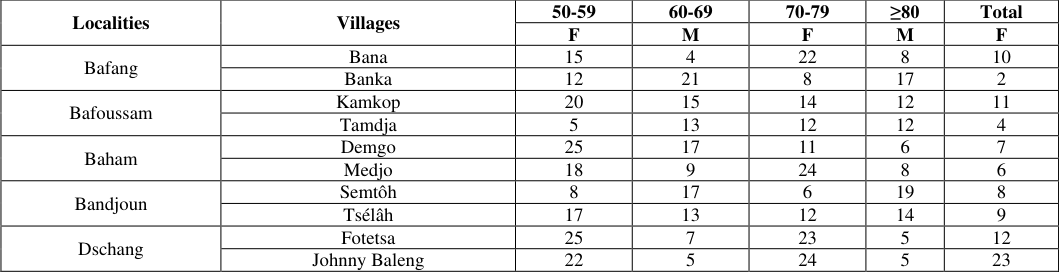 Table 1
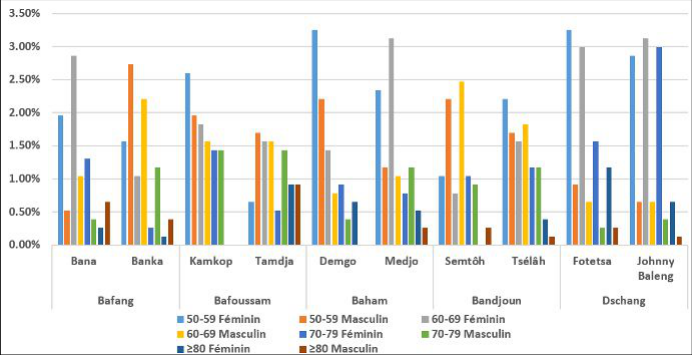 Figure 1
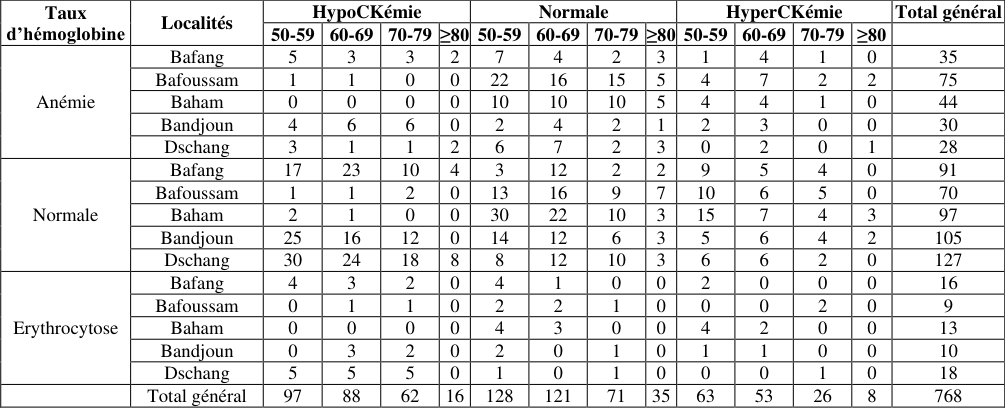 Table 2
Introduction
Aging is accompanied by various physiological changes, including alterations in hematological and biochemical parameters, which may predispose individuals to chronic conditions such as anemia and metabolic imbalances (Ferrucci et al., 2020) [3] . In sub-Saharan Africa, where healthcare access remains limited, these imbalances are often underdiagnosed, exacerbating the vulnerability of older populations (Ataklte et al., 2015) [1] . Hemoglobin levels play a crucial role in oxygen transport, and deviations from normal values such as anemia and erythrocytosis-are associated with adverse health outcomes, including increased frailty and cardiovascular risks (Penninx et al., 2016) [6] . Similarly, creatine kinase (CK) is an important biomarker of muscle metabolism, and its variations (hyperCKemia and hypoCKemia) may reflect underlying muscle degeneration, metabolic disorders, or inflammatory processes (Nagasawa et al., 2019) [5] . Previous studies have highlighted the relationship between CK levels and hematological profiles, particularly in aging populations (Cesari et al., 2014) [2] . However, the interplay between hemoglobin and CK levels in sub-Saharan populations remains poorly documented. This study aims to explore the association between anemia, CK variations, and aging in five localities of the West Region of Cameroon, taking into account geographic and demographic differences.
By investigating these interactions, we seek to provide insights into the biological mechanisms contributing to early aging and potential risk factors for age-related diseases.
Methodology Study Design
This study was conducted in five localities: Bafang, Bafoussam, Baham, Bandjoun, and Dschang. A total of 768 participants aged 50 years and older were recruited and categorized into four age groups (50-59, 60-69, 70-79, and ≥80 years), as well as by sex.
Data Collection
Blood samples were collected to measure hemoglobin levels, creatine kinase (CK) concentrations, and lymphocyte counts. Hemoglobin status was classified into three categories: anemia, normal, and erythrocytosis. CK levels were categorized as hypoCKemia, normal, and hyperCKemia.
Statistical Analysis
Data analysis was conducted using SPSS and XLSTAT software. The following analytical approaches were employed
Pearson Correlation Tests
Associations between electrolyte levels, age, gender, and localities were assessed using Pearson correlation coefficients. À significance threshold of p<0.05 was applied.
Cross-Tabulation Analysis
Dynamic cross-tabulation tables were used to explore associations between categorical variables, such as hemoglobin levels, CK concentrations, and demographic variables, age groups, gender, and geographical localities.
These combined methods ensured a robust and comprehensive analysis of the relationships between the measured parameters and the demographic characteristics of the study population.
Résultats Study Population Characteristics
A total of 768 participants were included in the study (451 women, 317 men), with a female dominance of 58.7%.
Geographical Distribution
Geographical Distribution
Prevalence Trends
Women represented the majority of participants across all localities. Age distribution varied significantly depending on the region. [5,2] .
Anemia and CK Variations
The predominance of anemia among individuals with normal CK levels may be explained by multiple factors, including nutritional deficiencies, chronic inflammation, and age-related hematopoietic decline. Studies have shown that anemia is prevalent in elderly populations, particularly in low-resource settings, where dietary iron, vitamin B12, and folate deficiencies contribute to its development (Guralnik et al., 2004) [4] . Furthermore, anemia has been associated with increased frailty and reduced functional capacity, which could explain the lower prevalence of anemia in hypoCKemic individuals, as muscle degradation might be more advanced in this group (Ferrucci et al., 2020) [3] . On the other hand, hyperCKemia has been linked to inflammatory processes and muscular stress, potentially contributing to altered erythropoiesis (Cesari et al., 2014) [2] . The presence of anemia in individuals with elevated CK levels suggests a possible interplay between muscle metabolism and hematopoiesis, reinforcing the hypothesis that systemic inflammation may mediate these effects (Penninx et al., 2016) [6] .
Geographic Variations and Hemoglobin Regulation
The distribution of hemoglobin levels varied significantly across the five localities. Dschang and Baham exhibited better hemoglobin regulation, particularly in the hypoCKemia and normal CK groups, suggesting that environmental or lifestyle factors may influence these biomarkers. Prior research has highlighted the role of altitude, diet, and healthcare access in modulating hemoglobin levels (Ataklte et al., 2015) [1] . The relatively lower anemia prevalence in these areas could be attributed to differences in dietary habits, access to healthcare, or genetic adaptations to altitude. Conversely, Bafoussam had the highest anemia prevalence among individuals with normal CK levels, possibly indicating disparities in health conditions, nutritional intake, or chronic disease burden. Similar findings have been reported in studies analyzing urban-rural differences in anemia prevalence, where urban populations often experience higher rates of anemia due to lifestyle and dietary transitions (Guralnik et al., 2004) [4] .
Erythrocytosis and CK Status
Erythrocytosis was rare across all categories, particularly in the normal CK and hyperCKemia groups. This finding is consistent with previous studies suggesting that erythrocytosis is less prevalent in aging populations, as the physiological capacity for erythropoiesis declines with age (Nagasawa et al., 2019) [5] . The low prevalence of erythrocytosis in hyperCKemic individuals further supports the notion that muscle metabolism alterations do not strongly influence red blood cell production in elderly populations.
Conclusion
These results highlight the complex interactions between hematological and biochemical parameters in aging populations. The observed geographic variations emphasize the importance of local health policies and targeted interventions to address anemia and metabolic imbalances.
Further longitudinal studies are needed to clarify the causal relationships between CK levels, anemia, and aging processes. The integration of nutritional and biochemical screening in geriatric care could improve early detection and management of these conditions, ultimately reducing the burden of age-related diseases in sub-Saharan Africa.
Recommendations and Perspectives
Based on these findings, several recommendations can be made to improve the management of anemia and metabolic imbalances in aging populations :
Integration of Geriatric Care Services :
Strengthening healthcare systems by integrating specialized geriatric services focused on hematological and metabolic health can improve the overall quality of life for elderly individuals. 6. Investigation of Inflammatory Pathways: Given the potential role of inflammation in CK variations and anemia, further studies should examine the involvement of inflammatory markers such as C-reactive protein and interleukin-6 (IL-6) in aging populations.
Acknowledgement
Acknowledgments :The authors would like to thank all participants and local health authorities for their support.
Figures and tables from the paper
| Localities | Villages | 50-59 | 60-69 | 70-79 | ≥80 | Total |
|---|---|---|---|---|---|---|
| F | M | F | M | F | ||
| Bafang | Bana | 15 | 4 | 22 | 8 | 10 |
| Banka | 12 | 21 | 8 | 17 | 2 | |
| Bafoussam | Kamkop | 20 | 15 | 14 | 12 | 11 |
| Tamdja | 5 | 13 | 12 | 12 | 4 | |
| Baham | Demgo | 25 | 17 | 11 | 6 | 7 |
| Medjo | 18 | 9 | 24 | 8 | 6 | |
| Bandjoun | Semtôh | 8 | 17 | 6 | 19 | 8 |
| Tsélâh | 17 | 13 | 12 | 14 | 9 | |
| Dschang | Fotetsa | 25 | 7 | 23 | 5 | 12 |
| Johnny Baleng | 22 | 5 | 24 | 5 | 23 |
Table text extracted from the original PDF; superscript letters are shown inline. The original table image is below.
View original table image
| Taux d’hémoglobine | Localités | HypoCKémie | — | — | — | Normale | — | — | — | HyperCKémie | — | — | — | Total général |
|---|---|---|---|---|---|---|---|---|---|---|---|---|---|---|
| 50-59 | 60-69 | 70-79 | ≥80 | 50-59 | 60-69 | 70-79 | ≥80 | 50-59 | 60-69 | 70-79 | ≥80 | |||
| Anémie | Bafang | 5 | 3 | 3 | 2 | 7 | 4 | 2 | 3 | 1 | 4 | 1 | 0 | 35 |
| Bafoussam | 1 | 1 | 0 | 0 | 22 | 16 | 15 | 5 | 4 | 7 | 2 | 2 | 75 | |
| Baham | 0 | 0 | 0 | 0 | 10 | 10 | 10 | 5 | 4 | 4 | 1 | 0 | 44 | |
| Bandjoun | 4 | 6 | 6 | 0 | 2 | 4 | 2 | 1 | 2 | 3 | 0 | 0 | 30 | |
| Dschang | 3 | 1 | 1 | 2 | 6 | 7 | 2 | 3 | 0 | 2 | 0 | 1 | 28 | |
| Normale | Bafang | 17 | 23 | 10 | 4 | 3 | 12 | 2 | 2 | 9 | 5 | 4 | 0 | 91 |
| Bafoussam | 1 | 1 | 2 | 0 | 13 | 16 | 9 | 7 | 10 | 6 | 5 | 0 | 70 | |
| Baham | 2 | 1 | 0 | 0 | 30 | 22 | 10 | 3 | 15 | 7 | 4 | 3 | 97 | |
| Bandjoun | 25 | 16 | 12 | 0 | 14 | 12 | 6 | 3 | 5 | 6 | 4 | 2 | 105 | |
| Dschang | 30 | 24 | 18 | 8 | 8 | 12 | 10 | 3 | 6 | 6 | 2 | 0 | 127 | |
| Erythrocytose | Bafang | 4 | 3 | 2 | 0 | 4 | 1 | 0 | 0 | 2 | 0 | 0 | 0 | 16 |
| Bafoussam | 0 | 1 | 1 | 0 | 2 | 2 | 1 | 0 | 0 | 0 | 2 | 0 | 9 | |
| Baham | 0 | 0 | 0 | 0 | 4 | 3 | 0 | 0 | 4 | 2 | 0 | 0 | 13 | |
| Bandjoun | 0 | 3 | 2 | 0 | 2 | 0 | 1 | 0 | 1 | 1 | 0 | 0 | 10 | |
| Dschang | 5 | 5 | 5 | 0 | 1 | 0 | 1 | 0 | 0 | 0 | 1 | 0 | 18 | |
| Total général | 97 | 88 | 62 | 16 | 128 | 121 | 71 | 35 | 63 | 53 | 26 | 8 | 768 |
Table text extracted from the original PDF; superscript letters are shown inline. The original table image is below.
View original table image
References
6 in the original paper- Ataklte F, Erqou S, Kaptoge S, Taye B, EchouffoTcheugui JB, Kengne AP. Burden of undiagnosed hypertension in sub-Saharan Africa: a systematic review and meta-analysis. Hypertension. 2015;65(2):291-298.
- Cesari M, Kritchevsky SB, Penninx BW, Nicklas BJ, Simonsick EM, Newman AB, et al. Prognostic value of usual gait speed in well-functioning older peopleresults from the Health, Aging and Body Composition Study. Journal of the American Geriatrics Society. 2014;53(10):1675-1680.
- Ferrucci L, Baroni M, Ranchelli A, Lauretani F, Maggio M, Mecocci P, et al. Interaction between bone and muscle in older persons with mobility limitations. Current Pharmaceutical Design. 2020;20(19):31783197.
- Guralnik JM, Eisenstaedt RS, L, Klein HG, Woodman RC. Prevalence of anemia in persons 65 years and older in the United States: evidence for a high rate of unexplained anemia. Blood. 2004;104(8):22632268.
- Nagasawa H, Inoue H, Nishi M, Uchiyama T, Kondo T, Tanaka H. Biomarkers of muscle aging: A systematic review. Biogerontology. 2019;20(4):497-522.
- Penninx BW, Pahor M, Cesari M, Corsi AM, Woodman RC, Bandinelli S, et al. Anemia is associated with disability and decreased physical performance and muscle strength in the elderly. Journal of the American Geriatrics Society. 2016;52(7):1106-1114.