
Research article · 2025 · Full text
International Journal of Veterinary Sciences and Animal HusbandryUse of hydrogen peroxide and normal saline flushing in clearing feline urethral obstruction: A retrospective study of 30 cases
Volume 10(4) · Pages 148–150 · DOI: 10.22271/veterinary.2025.v10.i4c.2190 ↗
Research areasVeterinary Medicine and SurgeryUrological Disorders and TreatmentsThermal Regulation in Medicine
Abstract
Author-writtenUrethral obstruction is a life-threatening urological emergency in male cats. This study investigates the efficacy of hydrogen peroxide and normal saline (1:1) flushing via penile catheter as a treatment modality for clearing urethral obstruction in tom cats. A retrospective study of 30 intact male cats with urethral obstruction was conducted, and success rate of 96.7% was recorded. The procedure is minimally invasive, with no complications recorded.
Summary
Source-checkedPlain-language reading of the full paper, prepared with AI and checked against the text. Each point links to the authors' own words.
Why it matters
- Urethral obstruction in male cats is a severe emergency that can lead to death, bladder rupture, or acute kidney injury if not treated quickly. View evidence ↗
- Male cats are more susceptible to these obstructions than females because their urethras are narrower and longer. View evidence ↗
- Hydrogen peroxide may help clear urinary obstructions because its effervescent properties can mechanically dissolve and dislodge debris. View evidence ↗
The question
- The study aimed to assess how safe and effective a flushing mixture of normal saline and hydrogen peroxide is for clearing urethral obstructions in male cats. View evidence ↗
What they did
- The retrospective study included 30 male cats treated at the Veterinary Poly Clinic in Nellore, Andhra Pradesh, between May and September 2024. View evidence ↗
- Cats were included if they showed clinical signs of obstruction, including a distended bladder, anuria, stranguria, and excessive licking of the perineal area. View evidence ↗
- The treatment involved flushing the urethra with a 1:1 mixture of sterile normal saline and 3% hydrogen peroxide, letting the solution dwell for one minute. View evidence ↗
- If the flushing mixture failed to clear the obstruction, a no 3 tom catheter was used for urethral catheterization. View evidence ↗
What they found
- The flushing procedure successfully cleared the obstruction in 96.7% (29 out of 30) of the cats, resulting in immediate urine flow. View evidence ↗
- Hematuria was the most frequent finding, occurring in 26 cases, which suggested the presence of hemorrhagic cystitis. View evidence ↗
- A pasty white plug at the penile orifice was identified as the primary cause of obstruction in 22 of the cases. View evidence ↗
- No complications were recorded during monitoring, and all cats recovered without the obstruction recurring for six months. View evidence ↗
What it means
- The authors conclude that flushing with a 1:1 mixture of 3% hydrogen peroxide and normal saline is a safe, effective, and minimally invasive way to manage urethral obstructions in male cats. View evidence ↗
- The authors state that larger sample sizes are needed in future studies to validate these results and investigate long-term outcomes. View evidence ↗
Visual summary
1 visualsIllustrations explain the paper; they do not show study data.
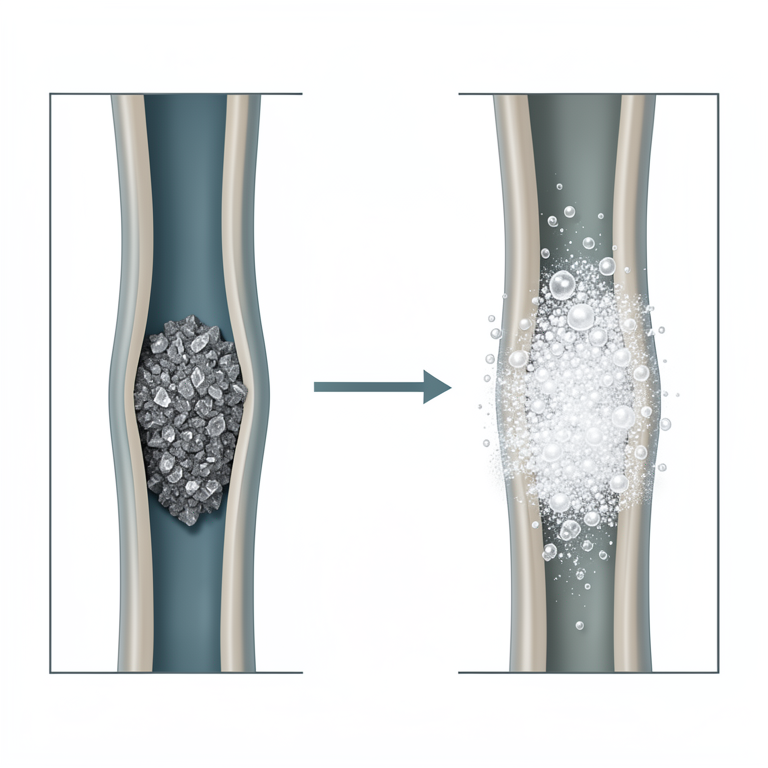
Mechanism of Effervescent Flushing
AI-generated conceptual illustration (feline urethra). It explains the idea and does not show study data.
View source evidence ↗Figures & tables
From the original paper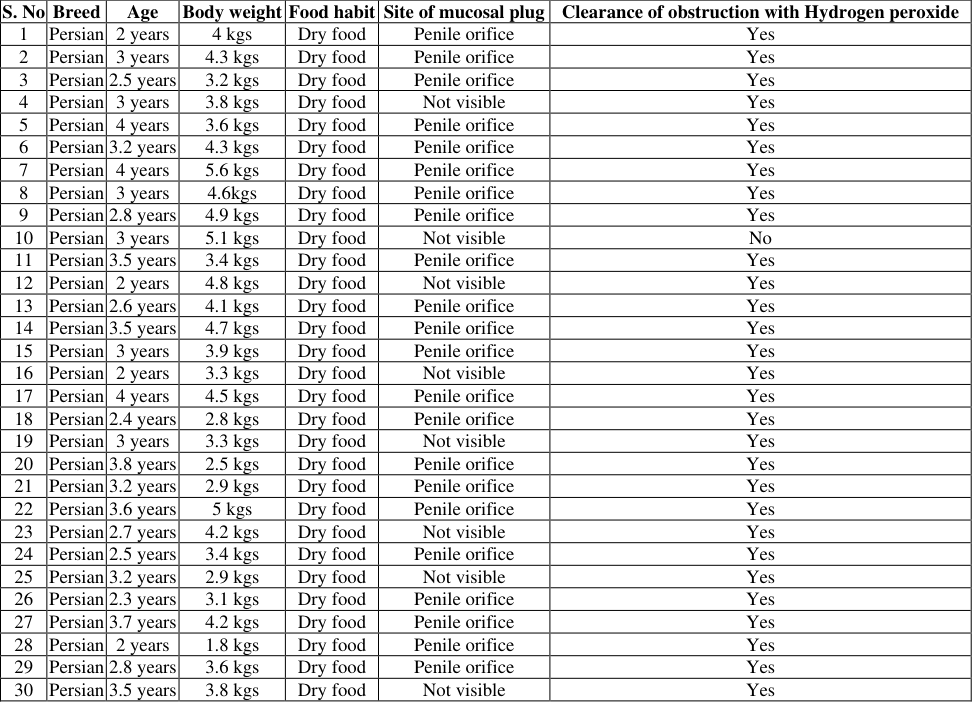 Table 1
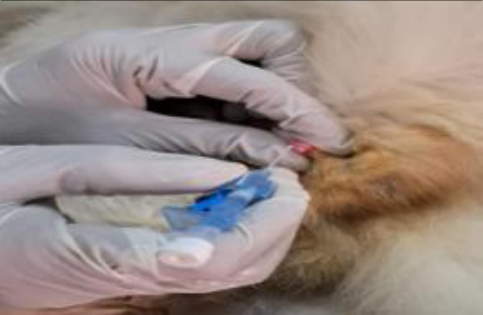 Figure 1
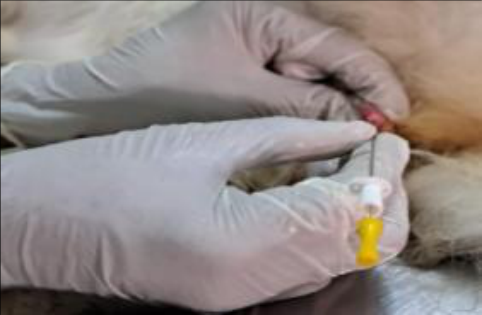 Figure 2
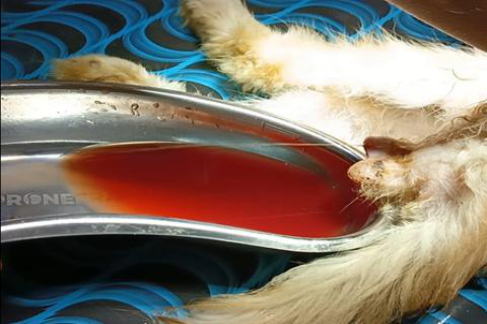 Figure 4
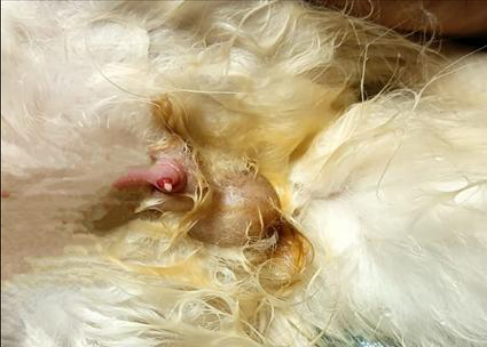 Figure 5
Introduction
Feline urethral obstruction is a common and severe urological emergency in male cats, often resulting in acute kidney injury, bladder rupture, and death if not addressed promptly. The obstruction is frequently caused by a variety of factors, including urethral mucus plugs, calculi, stricture, or neoplasia (Pachtinger, 2020) [3] . Male cats are particularly prone to urethral obstructions due to their longer and narrower urethra compared to females (George and Grauer, 2017) [1] . In addition, diet plays a significant role in the development of urethral obstructions, with dry food diet contributing to a reduced water intake and increased risk of urolithiasis (Segev et al., 2011) [4] . Traditional management of feline urethral obstruction generally involves catheterization, but there is growing interest for exploring less invasive techniques for clearing obstructions in feline practitioners. Hydrogen peroxide has been suggested as a potential aid for breaking down obstructions in the urinary tract due to its effervescent property, which help to mechanically dislodge and dissolve debris (Xu et al., 2020) [5] . The combination of hydrogen peroxide and normal saline for flushing is being explored as a less invasive, effective treatment for feline urethral obstruction. This study aims to evaluate the safety, effectiveness, and complications associated with hydrogen peroxide and normal saline flushing for clearing urethral obstruction in male cats.
Materials and Methods
30 male cats presented with symptoms of urinary obstruction to Veterinary Poly Clinic, Nellore, Andhra Pradesh during the period from May 2024 to September 2024 were included in the study. The details of the cases are presented in Table .1. The inclusion criteria for the study were male cats presenting with clinical signs of urethral obstruction such as anuria, stranguria, excessive perineal licking, and distended urinary bladder. Exclusion criteria included cats with a history of bladder rupture, neoplastic conditions, or prior urethral surgeries. Each animal was sedated using xylazine @1mg/kg b.wt I/M and atropine @0.045 mg/kg b.wt I/M to facilitate intervention, with additional ketamine @ 22 mg/kg b.wt I/M administered for analgesia as and when required. The animals were positioned in lateral recumbency, and the preputial hair was clipped and prepped for intervention.
A 22 G I.V. cannula lubricated with sterile 2% lignocaine gel was inserted into the tip of the urethra (Figure 1). The needle was withdrawn and the urethra was flushed with a 1:1 mixture of 3% hydrogen peroxide and sterile normal saline, allowing the solution to dwell for one minute before further advancement. In cases where hydrogen peroxide and saline infusion failed to relieve the obstruction, urethral catheterization was performed using no 3 tom catheter (Figure 2). The urethral catheter was secured with stay sutures to prevent dislodging. After the obstruction was cleared, the urinary bladder was flushed multiple times with Normal Saline till returning fluid was normal in color. Diluted Metronidazole was injected into the urinary bladder at the end of flushing. Post-procedural care included isotonic crystalloid fluid therapy @ 10ml/kg b.wt I/V, Inj.meloxicam @ 0.2 mg/kg b.wt s/c for 3 days, Inj.amoxicillin and sulbactam @15mg/kg I/M for 5 days and advised to use Reno protective syrup Advaren @ 0.5ml/kg b.wt 1 Syp.Advaren, SAVAVET, Lalwani Plaza, Viman Nagar, Pune, India, 411014
Results
The 30 cats treated with hydrogen peroxide and saline flushing, 96.7% (N=29) showed successful clearance of the obstruction, with immediate urine outflow following the procedure (Figure 4). During the study, the most common finding was the presence of hematuria in 26 cases, suggesting hemorrhagic cystitis. In 22 cases, pasty white plug was observed at the penile orifice, which was identified as the primary cause of the obstruction (Figure 5). In the other seven cases, the mucosal plug was not visible. In all 29 cases, the obstruction was cleared without the need for further surgical intervention, and the cats were monitored for any complications and none were recorded. All cases recovered uneventfully without recurrence for a period of six months.
Discussion
This study demonstrated a high success rate (96.7%) of clearing urethral obstruction in male cats using hydrogen peroxide and saline flushing, which is consistent with Xu et al. (2020) [5] . Murphy and Friedman (2019) ascribed the mechanical disruption of obstructions to hydrogen peroxide's effervescence, which aligns with our observations of relieving obstruction. Pachtinger (2020) [3] recommended the use of saline to aid in the flushing and removal of debris, which was corroborated by our results. The presence of pasty material at the urethral opening observed in 22 cases is consistent with Pachtinger (2020) [3] , who informed that mucus plugs are a significant contributor to urethral obstruction in male cats. This pasty material, likely a combination of mucus and cellular debris, is known to block the urethra and can be effectively dislodged by the effervescence created by hydrogen peroxide (Murphy and Friedman, 2019). Despite causing mild irritation to mucous membranes, hydrogen peroxide facilitates the breakdown of obstructions through its effervescent property as observed in this study. The success rate observed in this study is promising and suggests that hydrogen peroxide and saline flushing could be a viable, minimally invasive alternative to traditional methods. Future studies with larger sample sizes are needed to confirm these findings and explore the long-term outcomes of this technique.
Conclusion
Use of 3% hydrogen peroxide and normal saline (1:1), flushing via penile catheterization offers a safe, effective, and minimally invasive approach to manage urethral obstruction in male cats. With a high success rate and minimal complications, this technique is a valuable alternative to more invasive surgical interventions. Further studies with larger sample sizes are necessary to validate these findings and explore the long-term outcomes of this treatment.
Figures and tables from the paper
| S. No | Breed | Age | Body weight | Food habit | Site of mucosal plug | Clearance of obstruction with Hydrogen peroxide |
|---|---|---|---|---|---|---|
| 1 | Persian | 2 years | 4 kgs | Dry food | Penile orifice | Yes |
| 2 | Persian | 3 years | 4.3 kgs | Dry food | Penile orifice | Yes |
| 3 | Persian | 2.5 years | 3.2 kgs | Dry food | Penile orifice | Yes |
| 4 | Persian | 3 years | 3.8 kgs | Dry food | Not visible | Yes |
| 5 | Persian | 4 years | 3.6 kgs | Dry food | Penile orifice | Yes |
| 6 | Persian | 3.2 years | 4.3 kgs | Dry food | Penile orifice | Yes |
| 7 | Persian | 4 years | 5.6 kgs | Dry food | Penile orifice | Yes |
| 8 | Persian | 3 years | 4.6kgs | Dry food | Penile orifice | Yes |
| 9 | Persian | 2.8 years | 4.9 kgs | Dry food | Penile orifice | Yes |
| 10 | Persian | 3 years | 5.1 kgs | Dry food | Not visible | No |
| 11 | Persian | 3.5 years | 3.4 kgs | Dry food | Penile orifice | Yes |
| 12 | Persian | 2 years | 4.8 kgs | Dry food | Not visible | Yes |
| 13 | Persian | 2.6 years | 4.1 kgs | Dry food | Penile orifice | Yes |
| 14 | Persian | 3.5 years | 4.7 kgs | Dry food | Penile orifice | Yes |
| 15 | Persian | 3 years | 3.9 kgs | Dry food | Penile orifice | Yes |
| 16 | Persian | 2 years | 3.3 kgs | Dry food | Not visible | Yes |
| 17 | Persian | 4 years | 4.5 kgs | Dry food | Penile orifice | Yes |
| 18 | Persian | 2.4 years | 2.8 kgs | Dry food | Penile orifice | Yes |
| 19 | Persian | 3 years | 3.3 kgs | Dry food | Not visible | Yes |
| 20 | Persian | 3.8 years | 2.5 kgs | Dry food | Penile orifice | Yes |
| 21 | Persian | 3.2 years | 2.9 kgs | Dry food | Penile orifice | Yes |
| 22 | Persian | 3.6 years | 5 kgs | Dry food | Penile orifice | Yes |
| 23 | Persian | 2.7 years | 4.2 kgs | Dry food | Not visible | Yes |
| 24 | Persian | 2.5 years | 3.4 kgs | Dry food | Penile orifice | Yes |
| 25 | Persian | 3.2 years | 2.9 kgs | Dry food | Not visible | Yes |
| 26 | Persian | 2.3 years | 3.1 kgs | Dry food | Penile orifice | Yes |
| 27 | Persian | 3.7 years | 4.2 kgs | Dry food | Penile orifice | Yes |
| 28 | Persian | 2 years | 1.8 kgs | Dry food | Penile orifice | Yes |
| 29 | Persian | 2.8 years | 3.6 kgs | Dry food | Penile orifice | Yes |
| 30 | Persian | 3.5 years | 3.8 kgs | Dry food | Not visible | Yes |
Table text extracted from the original PDF; superscript letters are shown inline. The original table image is below.