
Research article · 2025 · Full text
International Journal of Agriculture and Food SciencePreparation of aonla based RTS beverage blended with moringa and beet root
Volume 7(4) · Pages 97–103 · DOI: 10.33545/2664844x.2025.v7.i4b.339 ↗
Research areasFood Science and Nutritional StudiesHibiscus Plant Research StudiesNatural Products and Biological Research
Abstract
Author-writtenThe present investigation entitled “Aonla and Moringa beverage and its keeping quality during storage” was carried out due to its importance for development of processed products. The work was carried out in the Fruit Technology Laboratory at the Department of Horticulture, Chaudhary Charan Singh Haryana Agricultural University, Hisar. Fruit beverages are becoming more popular in comparison to synthetic beverages/drinks since they are more nutritious. Blending aonla juice with Moringa, beetroot and other fruits and veggies, can improve the therapeutic and nutritive value of aonla, resulting in an excellent healthy drink with good taste and flavour. Processed products can help to increase consumer preference for natural immune booster ingredients products RTS made with 50:25:25 aonla juice, moringa extract and beet root was found to keep colour, flavour, taste and other quality characteristics the best for three months of room temperature storage, followed by RTS made with 25:75 aonla juice and moringa extract. Blending of aonla juice, moringa juice and beet-root juice in RTS can be a good source for immune-booster drink as it possesses various health benefiting effects.
Summary
Source-checkedPlain-language reading of the full paper, prepared with AI and checked against the text. Each point links to the authors' own words.
Why it matters
- Aonla has a very short shelf life, remaining marketable for only 5-6 days after harvest and available only from October to January. View evidence ↗
- Blending aonla with ingredients like moringa and beetroot can enhance its nutritional and therapeutic value while improving taste and flavor. View evidence ↗
The question
- The study aimed to investigate the development and storage quality of a beverage made from aonla and moringa. View evidence ↗
What they did
- Ready-to-Serve (RTS) beverages were formulated using various concentrations of aonla juice, moringa extract, and beetroot extract, standardized to 10% total soluble solids (TSS) and 0.3% acidity. View evidence ↗
- The beverages were stored in 250 ml bottles at room temperature for three months, with quality observations recorded every 15 days. View evidence ↗
- Five treatments were tested: a 100% aonla control, three aonla-moringa blends (75:25, 50:50, 25:75), and one triple blend of aonla, moringa, and beetroot (50:25:25). View evidence ↗
What they found
- On a mean basis, the 50:25:25 blend had the lowest acidity (0.34%), whereas the 100% aonla control had the highest (0.40%). View evidence ↗
- The 50:25:25 blend achieved the highest mean TSS:acid ratio (30.40), while the control had the lowest (26.11). View evidence ↗
- The 50:25:25 blend had the highest mean total sugar (10.49%), compared to the control's minimum of 8.48%. View evidence ↗
- The 100% aonla control retained the most ascorbic acid (59.9 mg/100 ml), while the 25:75 aonla-moringa blend retained the least (25.42 mg/100 ml). View evidence ↗
- The 50:25:25 blend had the lowest tannin content (0.16%) regardless of storage time. View evidence ↗
- The 50:25:25 blend received the highest mean organoleptic score (8.0), while the 100% aonla control received the lowest (6.9). View evidence ↗
What it means
- The authors concluded that the 50:25:25 blend of aonla, moringa, and beetroot best preserved quality characteristics over three months of room temperature storage. View evidence ↗
- The authors recommend the blend of aonla, moringa, and beetroot as a beneficial immune-booster drink. View evidence ↗
Visual summary
3 visualsIllustrations explain the paper; charts are replotted from the paper's own table values.
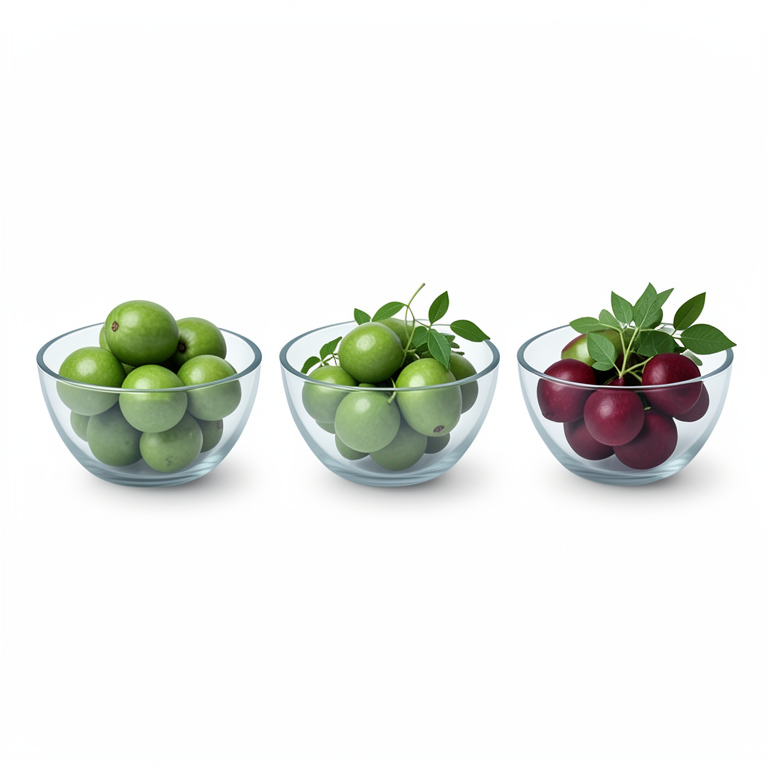
Beverage Blend Composition
AI-generated conceptual illustration (Aonla (Indian gooseberry), moringa leaves, and beetroot). It explains the idea and does not show study data.
View source evidence ↗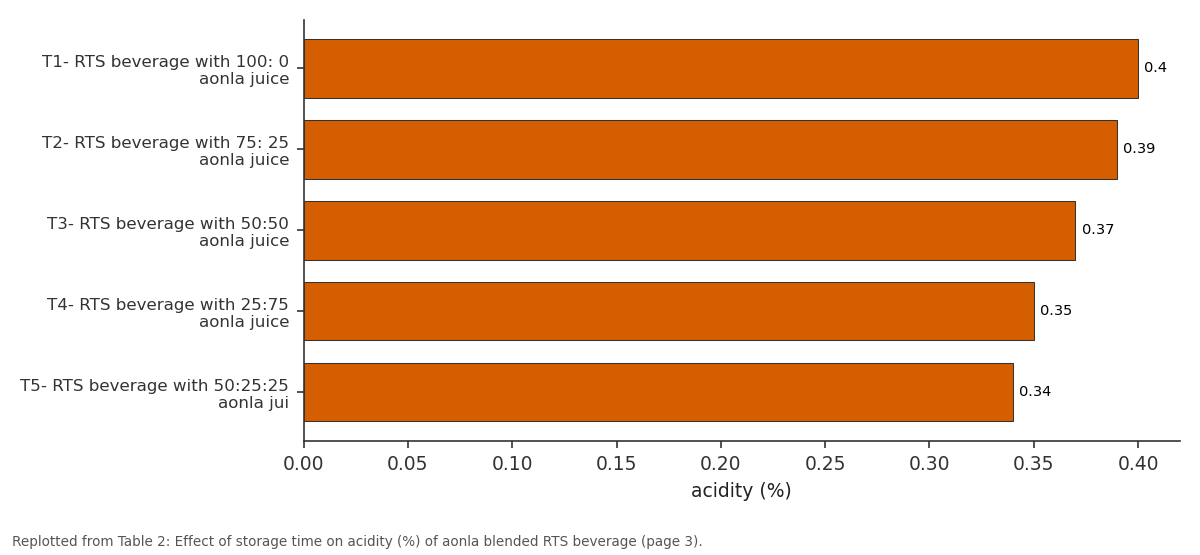
Mean: T1- RTS beverage with... vs T2- RTS beverage with... vs T3- RTS beverage with... vs T4- RTS beverage with... vs T5- RTS beverage with...
Replotted from Table 2 (page 3) of the original paper. Every bar is the paper's own table value.
View source evidence ↗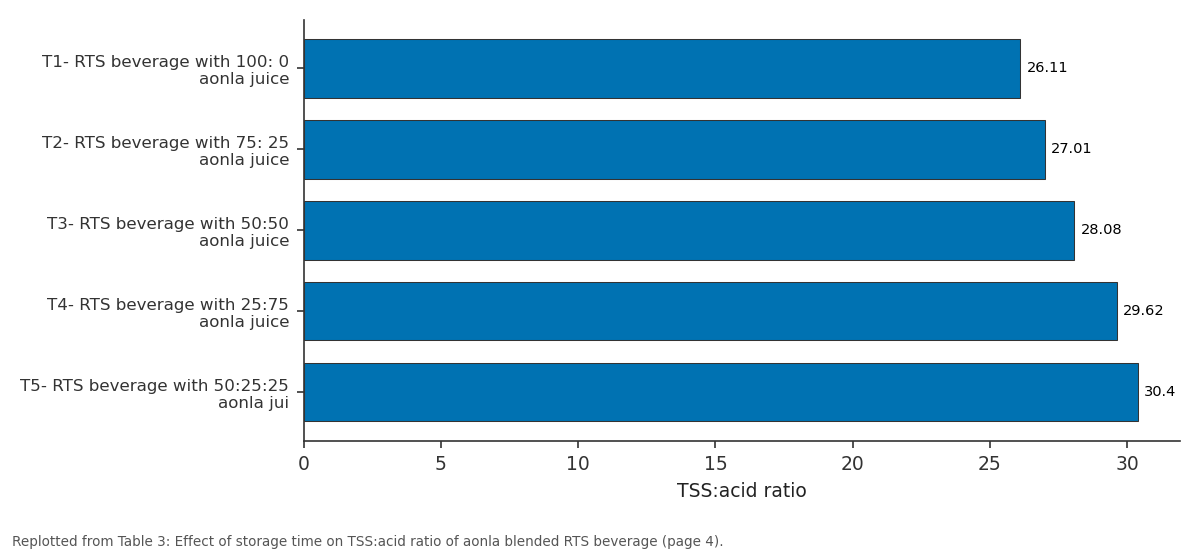
Mean: T1- RTS beverage with... vs T2- RTS beverage with... vs T3- RTS beverage with... vs T4- RTS beverage with... vs T5- RTS beverage with...
Replotted from Table 3 (page 4) of the original paper. Every bar is the paper's own table value.
View source evidence ↗Figures & tables
From the original paper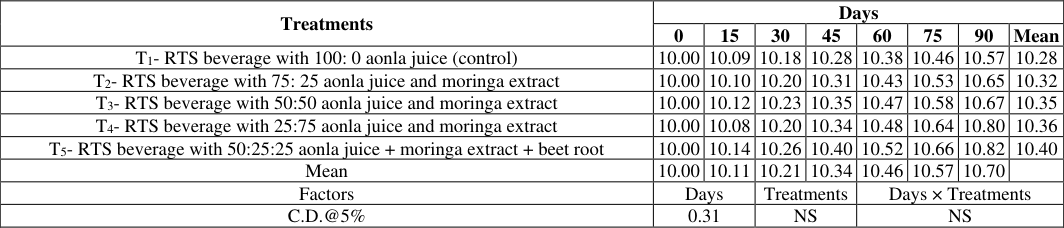 Table 1
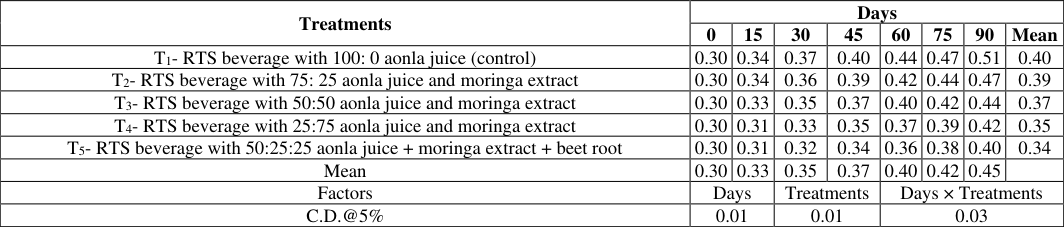 Table 2
 Table 3
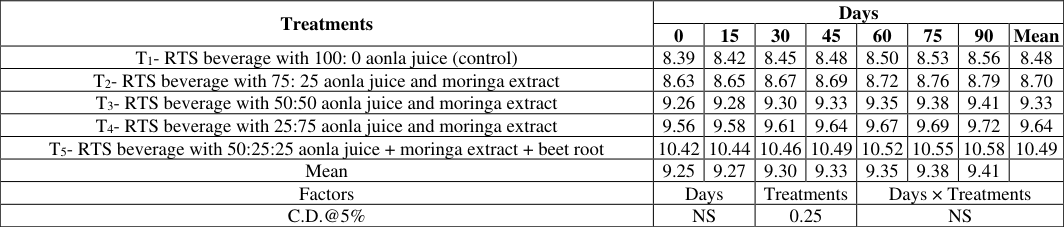 Table 4
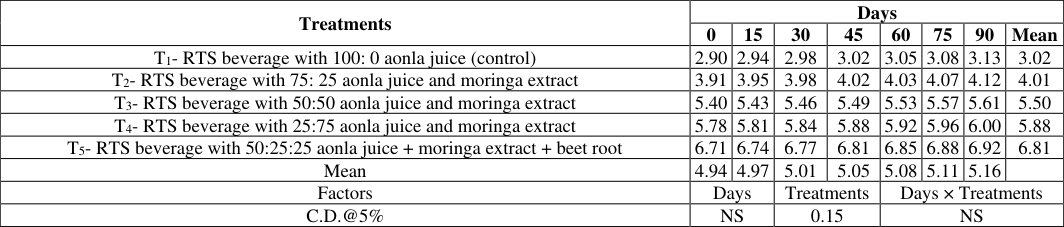 Table 5
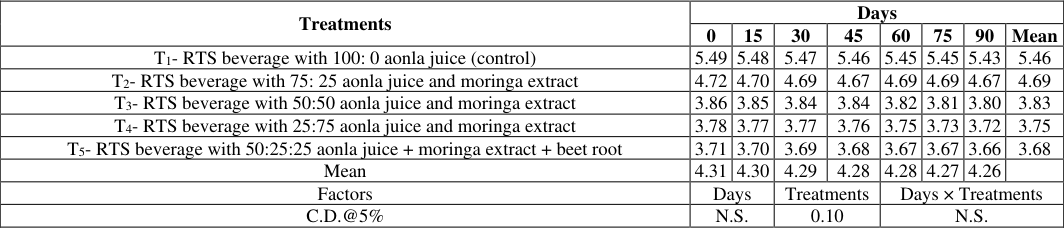 Table 6
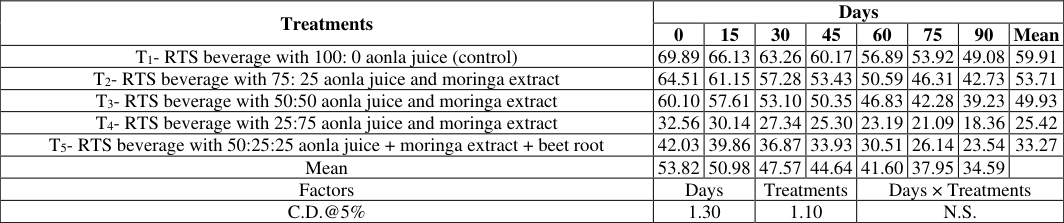 Table 7
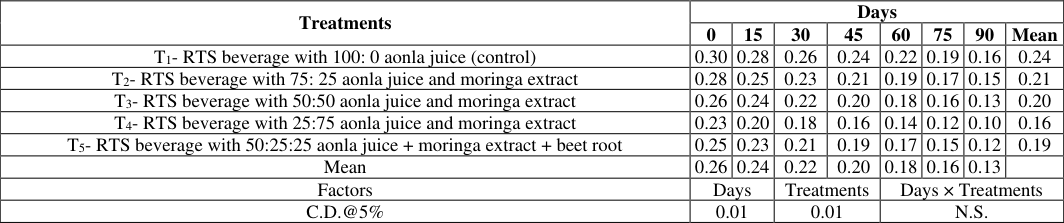 Table 8
 Table 9
Introduction
Aonla (Phyllanthus emblica L. Syn Emblica officinalis Gaertn.) is a minor fruit having commercial value and belongs to the Phyllanthaceae family. Indian Gooseberry, Amla, Nelli and Amalakki are some of the other names for it. Because of its nutraceutical benefits, this is also known as the "Wonder Fruit for Health." It is grown in India, Pakistan, Sri Lanka, Malaysia and China and is native to the Indian subcontinent. Although aonla is a subtropical fruit, it may be cultivated in both tropical and arid climates. This fruit is hardy and can thrive in a variety of climatic and soil conditions. In India it is cultivated in Gujarat, Maharashtra, Rajasthan, Haryana, Andhra Pradesh, Karnataka, Tamil Nadu, Punjab, and Himachal Pradesh and in the Aravali region. The area under aonla cultivation is growing fast. Aonla is currently cultivated on 50,000 acres of land, with production of 1.75 lakh tonnes (Singh et al., 2020) [23] This fruit is rich in high in vitamin C content and in terms of vitamin C concentration; it is second after the Barbados cherry. Depending on the cultivar and location, it contains 300-1000 mg of ascorbic acid per 100 mg edible amount (Manny and Shadakshara Swamy, 1997) [16] . Fiber (0.8-2.0%), total soluble solids (10-12˚B), phenols (2-3%) and pectin (2.4-3.1%) are also found in amla fruit (Singh et al., 1987) [24] . Aonla is an important component of the Ayurvedicand Unani medical systems in India. Anemia, bronchitis, skin disease, scurvy, diabetes, diarrhea, dysentery, dyspepsia, headache, jaundice, haemorrhages and other diseases cure from it. Antibacterial, antipyretic, anti-carcinogenic, antiviral and expectorant properties are also present. The fruit has a short shelf life and is only accessible in market from October to January. It can only be stored for 5-6 days after harvesting. By adding value to it, users can extend its storage life. Aonla has an astringent flavour and hence it is not consumed as a table fruit. The fruit is commonly used after being processed into candy, murabba, pickles, herbal squash, herbal jam, chayvanprash and Ready to Serve (RTS) beverages. Triphla is a significant ayurvedic medicine for the treatment of stomach and eye disorders and dried aonla powder is one of the key constituents of Triphla (Sethi, 1986) [18] . However, the proper consideration of this fruit's use in appropriate beverages has yet to be given.
Fruit beverages are becoming more popular in comparison to synthetic beverages/drinks since they are more nutritious. So, there is a need to prepare various aonla based beverages (RTS) that may be mixed with various fruits to reduce astringency and also adding a pleasant flavor to beverages. Nectar, RTS beverage can be made by blending two or more fruit juices/pulp in various quantities, according to Attri et al., (1998) [1] and Langthasa (1999) [15] . RTS is a type of fruit beverage that contains at least 10% fruit juice, 10% total soluble solids and 0.3% acidity (F.P.O.1955). Blending aonla juice with Moringa, beetroot and other fruits and veggies, can improve the therapeutic and nutritive value of aonla, resulting in an excellent healthy drink with good taste and flavour. Moringa/Drumstick (Moringa oleifera Lam.) is a perennial multipurpose vegetable extensively grown in India and belongs to the Moringaceae family. "Sahjan" is the popular name for it. It is eaten for its delicate leaves and immature or half ripe fruits. It also has a number of medical properties. It is a good source of crude protein and amino acids. Calcium (3.65%), phosphorus (0.3%), magnesium (0.5%), potassium (1.5%), sodium (0.164%), sulphur (0.63%), zinc (13.03 mg/kg), copper (8.25%), manganese (86.8 mg/kg), iron (490 mg/kg) and selenium (363 mg/kg) are the minerals found in the dried leaves. It is currently regarded as a super food because of its nutritional and therapeutic properties (Moyo et al., 2011) [17] . The plant's leaves roots, seeds, bark, fruit, flowers and immature pods act as cardiac and circulatory stimulants. Various antitumor, antipyretic, antiepileptic, anti-inflammatory, antiulcer, antispasmodic, antihypertensive, cholesterol lowering, antioxidant, antidiabetic, antibacterial and antifungal properties are all found in moringa (Bukar et al., 2010) [3] . It may be used in natural food preservatives because of its antibacterial and antifungal characteristics. Beet root (Beta vulgaris L.) belongs to Chenopodiaceae family has a large concentration of biologically active chemicals such as betalains, carotenoids, phenols, Bvitamins (B1, B2, B3, B6 and B12), folate minerals, fibers, as well as low-energy carbohydrates and inorganic nitrate. Various antioxidants, anti-depressant, anti-microbial, antifungal, anti-inflammatory, diuretic, expectorant carminative, hepatoprotective and cardiovascular health protector are the medical properties of this plant. Aonla blended RTS beverages will bring product versatility and benefits to health-conscious consumers that aonla alone could not provide. Combining these products can help to increase consumer preference for natural immune booster ingredients products. There is little scientific research on the use of aonla in conjunction with moringa, honey and garlic as natural preservatives. As a result, the current research can provide important information about preservation of aonla using natural pre-servatives and preparation of aonla blended beverages. Kharode et al., (2019) [12] prepared a healthy drink made up of beetroot, moringa leaves and pineapple. They found that a 25:15:60 concentration of beetroot, moringa leaves and pineapple was best for making a blended health drink beverage that could be stored for 10 weeks at refrigeration temperature (4°C) and 6 weeks at room temperature with sodium benzoate. Surya et al., (2020) [25] developed aonla ready to serve beverage fortified with different concentration levels of dietary fiber extracted from the amla fruit (0.5%, 1% and 3%). The sensory features and physical aspects such as pH, total soluble solids, acidity, ascorbic acid, total sugar, reducing sugar and total dietary fiber of RTS beverages enriched with 0.5% dietary fiber were found to be the best. The RTS beverages had good sensory features, a low microbiological load and a fair level of dietary fiber after being kept refrigerated for 45 days.
Materials & Methods
The present investigation entitled "Aonla and Moringa beverage and its keeping quality during storage" was carried out in the Fruit Technology laboratory of the Department of Horticulture, Chaudhary Charan Singh Haryana Agricultural University, Hisar. Fully ripe aonla fruit cv. Chakaiya was obtained from the Department of Horticulture CCS Haryana Agricultural University's orchard in Hisar, as well as moringa and beet root (all local) were procured from the market. The uniform size fruits based on free of injury and bruising were selected. The RTS beverage was prepared with different concentration of pure extract aonla juice and water extract of moringa and beetroot and maintained with 10% TSS and 0.3% acidity, as per FPO specifications.Three replications of each treatment were prepared and the prepared items were kept in 250 ml bottles and stored at room temperature for three months. Observations were taken at 15 days intervals.
Extraction of juices Aonla juice
Firm ripe uniform aonla fruits free from disease and pest were selected for the research purpose. Fruits were weighed and given through water wash in running water. The fruits were put into multipurpose fruit juicer. The multipurpose fruit juicer separated the pulp, seeds and the aonla fruit. Then the extracted pulp was put into the centrifuge machine, where the machine extracted the juice and separated the unwanted part. The juice was strained through double layered muslin cloth and juice was collected.
Moringa aqueous leaf extract
Fresh moringa leaves free from disease and pest were collected. The leaves were weighed and given through water wash in running water. Then the leaves were put into blender with some amount of water to get aqueous moringa leaf extract. The aqueous moringa leaf extract was strained through double layered muslin cloth and juice was collected.
Beetroot extract: Fresh firm ripe uniform beetroot free from disease and pest were collected. Then the beetroot was put into blender with some amount of water to get beetroot extract. The extract was strained through double layered muslin cloth and juice was collected.
Biochemical analysis of aonla beverages
The following observations were taken at 15 days interval: 1. Total Soluble Solid (°Brix) 2. Acidity (%) 3. TSS: Acid Ratio 4. Ascorbic acid (mg/100 ml) 5. Total Sugar (%) 6. Reducing Sugar (%) 7. Non-Reducing Sugar (%) 8. Tannin Content (%) 9. Organoleptic Rating
Experimental Results & Discussion
The present investigation entitled "Aonla and Moringa beverage and its keeping quality during storage" was carried out in the Fruit Technology Laboratory at the Department of Horticulture, Chaudhary Charan Singh Haryana Agricultural University, Hisar. Aonla juice was blended in various ratios with moringa and beetroot juices to pre-pare. Ready To-Serve (RTS) beverage as per the FPO specifications and kept at room temperature for three months.
Total soluble solids
The information on blending aonla juice for preparing RTS and its effect on total soluble solids up to three months of room temperature storage has been presented in Tables 1. The TSS content was initially fixed at 10% as per the FPO specifications; however after three months of storage, it increased to maximum (10.70°B) irrespective of treatments when considered on mean basis. RTS prepared with 50:25:25 aonla juice + moringa extract + beet root had the highest TSS (10.40°B), followed by RTS made with 25:75 aonla juice and moringa extract (10.36°B). Regardless of storage time, RTS prepared with 100:0 aonla juice (control) had the lowest TSS (10.28°B). The interaction between treatment and storage period was found to be nonsignificant. The rise in TSS may be caused by the partial hydrolysis of polysaccharides like starch, hemicelluloses and pectic materials into simple soluble molecules. Similar results were also reported by Jain and Meena (2013) [10] in aonla-kinnow mandarin blended RTS, Shere et al., (2008) [20] in aonla RTS and Kumar et al., (2010) [13] in aonlaguava blended RTS.
Acidity
The information on blending aonla juice for preparing RTS and its effect on the acidity up to three months of room temperature storage has been presented in Tables 2. The acidity content of RTS was initially kept at 0.30% as per FPO specifications, but after three months of storage, it grew to a maximum of (0.45%) irrespective of the treatments. Among the treatments, RTS prepared with 50:25:25 aonla juice + moringa extract + beet root had the lowest acidity (0.34%) of all the treatments when the acidity was considered on a mean basis. The RTS prepared with 100:0 aonla juice (control) had the highest acidity (0.40%), followed by RTS prepared with 75:25 aonla juice and moringa extract (0.35%). Pectic compounds have been shown to increase the acidity of fruit products; hence, the breakdown of pectic substances in pulp/juice into soluble solids might have contributed to an increase in acidity of aonla RTS. Gaikwad et al., (2013) [8] in aonla and ginger RTS, Shere et al., (2008) [20] in aonla RTS and Kanchana et al., (2007) [11] in tamarind RTS have similarly noted an increase in acidity with storage time.
TSS acid ratio
The information on blending aonla juice for preparing RTS and its effect on the percentage of TSS acid ratio up to three months of room temperature storage has been presented in Tables 3.
The observation of the data shows that, regardless of the treatments, the TSS acid ratio of RTS declined with increasing storage time during the three months of storage. On a mean basis, the RTS prepared with 50:25:25 aonla juice + moringa extract + beet root had the highest TSS acid ratio (30.40) followed by RTS prepared with 25:75 aonla juice and moringa extract (29.62). The RTS prepared with 100:0 aonla juice (control) had the lowest TSS acid ratio (26.11), regardless of the storage period.
Total sugar: The information on blending aonla juice for preparing RTS and its effect on total sugar up to three months of room temperature storage has been presented in Tables 4. It was found that the total sugar increased from 9.25 to 9.41% with an increase in storage period. The RTS prepared with juice 50:25:25 aonla juice + moringa extract + beet root had the highest total sugar level (10.49%), followed by the RTS made with 25:75 aonla juice and moringa extract (9.64%). During the three months storage period of RTS, the minimum total sugar (8.48%) was found in control with 100:0 aonla juice. The interaction between treatment and storage period was found to be nonsignificant. Hydrolysis of polysaccharides like starch, hemicelluloses and pectic compounds into simple sugars might be responsible for this. Deka et al., (2004) [6] in a beverage with lime, aonla spices and Deka et al., (2005) [5] in a beverage with mango and pineapple spices and Sindumathi and Premalatha (2013) [21] in flavoured papayapine-apple blended RTS observed a similar increase in total sugars with increase in storage period.
Reducing sugars: The information on blending aonla juice for preparing RTS and its effect on the reducing sugar up to three months of room temperature storage has been presented in Tables 5.
According to the data, regardless of treatments, the reducing sugar increased from 4.94% to 5.16% as the storage period increased. On a mean basis, RTS prepared with 50:25:25 aonla juice + moringa extract + beet root had the highest amount of reducing sugar (6.81%), followed by RTS prepared with 25:75 aonla juice and moringa extract (5.88%). RTS prepared with 100: 0 aonla juice (control) had the lowest reducing sugar con-tent (3.02%) among the treatments. A likely interpretation for the rise in reducing sugars during storage might be due to the hydrolysis of sugars by acids which may have led to the conversion of disaccharides to mono saccharides (Aruna et al., 1997) [2] . Similar trends of rise in reducing sugars found in lime-aonla spiced beverage by Deka et al., (2004) [6] , mango-pineapple spiced beverage by Deka et al., (2005) [5] and in aonla-guava blended beverages by Kumar et al., (2010) [13] .
Non-reducing sugar
The information on blending aonla juice for preparing RTS and its impact on non-reducing sugar up to three months of room temperature storage has been presented in Tables 6.
According to the results, the non-reducing sugar decreased from 4.31% to 4.26% as the storage period increased irrespective of the treatments. Among the treat-ments on a mean basis, RTS prepared with 100:0 aonla juice (control) had the highest non-reducing sugar content (5.46%), followed by RTS prepared with 75: 25 aonla juice and moringa extract (4.69%). RTS prepared with 50:25:25 aonla juice + moringa extract + beet root had the lowest nonreducing sugar content (3.68%). Since the increase in reducing sugars was proportional to the decrease in nonreducing sugars, the decrease in non-reducing sugars might be result of non-reducing sugars being inverted. Same decreasing trend in non-reducing sugars during storage has also been reported by Singh et al., (2007) [22] in guava blended beverages and Kumar et al., (2010) [13] in aonlaguava blended bever-ages.
Ascorbic acid
The information on blending aonla juice for preparing RTS and its effect on ascorbic acid content up to three months of room temperature storage has been pre-sented in Tables 7.
The ascorbic acid content of RTS prepared from various blends drastically reduced from 53.82 mg/100 ml to 34.59 mg/100 ml with increasing storage time, regardless of treatments. On a mean basis, RTS prepared with 100:0 aonla juice retained the most ascorbic acid (59.9 mg/100 ml), followed by RTS prepared with 75:25 aonla juice and moringa extract (53.71mg/100 ml). The least ascorbic acid (25.42 mg/100 ml) is recorded in RTS prepared with 25:75 aonla juice and moringa extract among the treatments.
Treatments' interactions with storage times were found to be non-significant. The drop in ascorbic acid during the period of three months of storage could be attributed due to ascorbic acid being oxidized by oxygen trapped in glass bottles. Similar changes in ascorbic acid content have been observed in aonla RTS beverages by Kumar and Singh (2001) [14] and Shere et al., (2008) [20] , in papaya and guava RTS beverages by Tiwari (2000) [26] , in tamarind RTS beverages by Kanchana et al., (2007) [11] and in guava and papaya RTS beverages by Sharma et al., (2008) [19] .
Tannin content
The information on blending aonla juice for preparing RTS and its effect on tannin content up to three months of room temperature storage has been presented in Tables 8. Analysis of the data reveals that, the tannin content of RTS beverage decreased continuous from 0.26% to 0.13% during three months of storage as the time period in-creased irrespective of the treatments. Among the treatments on mean basis the RTS pre-pared with 100:0 aonla juice had the highest tannin content 0.24%, followed by the RTS prepared with 75:25 aonla juice and moringa extract, where 0.21% tannin content was recorded. Regardless of the storage time, the RTS prepared with 50:25:25 aonla juice + moringa extract + beet root had the lowest tannin content (0.16%). Treatments' interactions with storage times were found to be non-significant. Due to the high volatility of phenolic compounds and easiness of oxidation, the tannin content of aonla RTS might be decreased during the course of three months of storage. Deka et al., (2004) [6] in limeaonla spiced beverage, Deka et al., (2005) [5] in mangopineapple spiced beverage and Sharma et al., (2008) [19] in guava-papaya RTS beverage all noted the similar decreasing tendency of tannin content during storage.
Organoleptic rating
The information on blending aonla juice for preparing RTS and its effect on organoleptic score up to three months of room temperature storage has been presented in Tables 9.
Analysis of the data reveals that regardless of the treatments, the organoleptic score reduced with increasing storage time.
After three months of storage, the organoleptic score reduced from 8.1 to 7.0. However, when the organoleptic score was estimated on a mean basis, the maximum organoleptic score (8.0) was recorded in RTS prepared with 50:25:25 aonla juice + moringa extract + beet root, followed by RTS prepared with 25:75 aonla juice and moringa extract, in which a score 7.8 was observed. The minimum organoleptic score (6.9) was noted in RTS prepared with 100:0 aonla juice regardless of storage period. Irrespective of the treatments, the data on the organoleptic score of the aonla RTS beverage (Table - 18) shows that the score declined as the storage period increased. During storage, the product's decrease in organoleptic quality or storage stability is noticeable. Temperature plays a significant effect in the product's induction of specific biochemical changes that result in the production of off-flavour and discoloration, obscuring the product's original taste, flavour and colour. The findings of Jain and Khurdiya (2004) [9] also support the finding that RTS beverage of blended aonla loses organoleptic quality when kept at room temperature. The similar results were reported in mango-pineapple spiced RTS beverage by Deka et al., (2005) [5] and in RTS beverage from drained aonla syrup by Chandan et al., (2012) [4] .
Summary & Conclusion
A slight increase in TSS content of RTS beverage was recorded up to three months of storage at room temperature, regardless of the various treatments. RTS prepared with 50:25:25 aonla juice + moringa extract + beet root had the highest TSS. RTS prepared with 100: 0 aonla juice (control) had the lowest TSS. The acidity of RTS beverage increased with increasing storage time, irre-spective of the various treatments. RTS prepared with 50:25:25 aonla juice + moringa extract + beet root had the lowest acidity of all the treatments. The RTS prepared with 100:0 aonla juice (control) had the highest acidity. With increase in storage periods, total sugar content of the RTS beverage increased significantly. The RTS prepared with 50:25:25 aonla juice + moringa extract + beet root had the highest total sugars level. During the three months storage period of RTS, the minimum total sugars were recorded in control where 100:0 aonla juice (control) was used. The reducing sugars in RTS beverages increased with increasing storage time, irrespective of the various treatments. RTS prepared with 50:25:25 aonla juice + moringa ex-tract + beet root had the maximum amount of re-ducing sugars. RTS prepared with 100: 0 aonla juice (control) had the mini-mum reducing sugar content. As storage time increased, the non-reducing sugars in RTS beverages decreased. RTS prepared with 100: 0 aonla juice (control) had the highest non-reducing sugar content. Regardless of storage time, RTS prepared with 50:25:25 aonla juice + moringa extract + beet root had the lowest non-reduc-ing sugar content.
The ascorbic acid content of RTS beverages decreased as storage time increased, irrespective of the various treatments. RTS prepared with 100:0 aonla juice (control) retained the most ascorbic acid, whereas RTS prepared with juice with 25:75 aonla juice and moringa extract, regardless of storage period, retained the least ascorbic acid. The tannin content of RTS beverage reduced with increasing storage time, regardless of the various treatments. Among the treatments, the maximum tan-nin content was recorded in RTS prepared with 100:0 aonla juice (control). Regardless of the storage time, the RTS prepared with 50:25:25 aonla juice + moringa extract + beet root had the lowest tannin content. The organoleptic score dropped as the storage period lengthened, irrespective of the various treatments. The maximum organoleptic score was recorded in RTS prepared with 50:25:25 aonla juice + moringa extract + beet root. The minimum organoleptic score was noted in RTS prepared with 100:0 aonla juice (control) during three months of storage period. RTS made with 50:25:25 aonla juice, moringa extract and beet root was found to keep colour, flavour, taste and other quality characteristics the best for three months of room temperature storage, followed by RTS made with 25:75 aonla juice and moringa extract. Blending of aonla juice, moringa juice and beet-root juice in RTS can be a good source for immune-booster drink as it possesses various health benefiting effects.
Figures and tables from the paper
| Treatments | Days | — | — | — | — | — | — | — |
|---|---|---|---|---|---|---|---|---|
| 0 | 15 | 30 | 45 | 60 | 75 | 90 | Mean | |
| T1- RTS beverage with 100: 0 aonla juice (control) | 10.00 | 10.09 | 10.18 | 10.28 | 10.38 | 10.46 | 10.57 | 10.28 |
| T2- RTS beverage with 75: 25 aonla juice and moringa extract | 10.00 | 10.10 | 10.20 | 10.31 | 10.43 | 10.53 | 10.65 | 10.32 |
| T3- RTS beverage with 50:50 aonla juice and moringa extract | 10.00 | 10.12 | 10.23 | 10.35 | 10.47 | 10.58 | 10.67 | 10.35 |
| T4- RTS beverage with 25:75 aonla juice and moringa extract | 10.00 | 10.08 | 10.20 | 10.34 | 10.48 | 10.64 | 10.80 | 10.36 |
| T5- RTS beverage with 50:25:25 aonla juice + moringa extract + beet root | 10.00 | 10.14 | 10.26 | 10.40 | 10.52 | 10.66 | 10.82 | 10.40 |
| Mean | 10.00 | 10.11 | 10.21 | 10.34 | 10.46 | 10.57 | 10.70 | |
| Factors | Days | Treatments | Days × Treatments | |||||
| C.D.@5% | 0.31 | NS | NS |
Table text extracted from the original PDF; superscript letters are shown inline. The original table image is below.
View original table image
| Treatments | Days | — | — | — | — | — | — | — |
|---|---|---|---|---|---|---|---|---|
| 0 | 15 | 30 | 45 | 60 | 75 | 90 | Mean | |
| T1- RTS beverage with 100: 0 aonla juice (control) | 0.30 | 0.34 | 0.37 | 0.40 | 0.44 | 0.47 | 0.51 | 0.40 |
| T2- RTS beverage with 75: 25 aonla juice and moringa extract | 0.30 | 0.34 | 0.36 | 0.39 | 0.42 | 0.44 | 0.47 | 0.39 |
| T3- RTS beverage with 50:50 aonla juice and moringa extract | 0.30 | 0.33 | 0.35 | 0.37 | 0.40 | 0.42 | 0.44 | 0.37 |
| T4- RTS beverage with 25:75 aonla juice and moringa extract | 0.30 | 0.31 | 0.33 | 0.35 | 0.37 | 0.39 | 0.42 | 0.35 |
| T5- RTS beverage with 50:25:25 aonla juice + moringa extract + beet root | 0.30 | 0.31 | 0.32 | 0.34 | 0.36 | 0.38 | 0.40 | 0.34 |
| Mean | 0.30 | 0.33 | 0.35 | 0.37 | 0.40 | 0.42 | 0.45 | |
| Factors | Days | Treatments | Days × Treatments | |||||
| C.D.@5% | 0.01 | 0.01 | 0.03 |
Table text extracted from the original PDF; superscript letters are shown inline. The original table image is below.
View original table image
| Treatments | Days | — | — | — | — | — | — | — |
|---|---|---|---|---|---|---|---|---|
| 0 | 15 | 30 | 45 | 60 | 75 | 90 | Mean | |
| T1- RTS beverage with 100: 0 aonla juice (control) | 33.33 | 29.68 | 27.51 | 25.69 | 23.59 | 22.26 | 20.72 | 26.11 |
| T2- RTS beverage with 75: 25 aonla juice and moringa extract | 33.33 | 29.71 | 28.33 | 26.23 | 24.83 | 23.93 | 22.67 | 27.01 |
| T3- RTS beverage with 50:50 aonla juice and moringa extract | 33.33 | 30.67 | 29.24 | 27.75 | 26.17 | 25.00 | 24.42 | 28.08 |
| T4- RTS beverage with 25:75 aonla juice and moringa extract | 33.33 | 32.52 | 30.91 | 29.29 | 28.32 | 27.28 | 25.71 | 29.62 |
| T5- RTS beverage with 50:25:25 aonla juice + moringa extract + beet root | 33.33 | 32.70 | 32.05 | 30.59 | 29.22 | 27.84 | 27.04 | 30.40 |
| Mean | 33.33 | 31.05 | 29.61 | 27.91 | 26.43 | 25.26 | 24.11 |
Table text extracted from the original PDF; superscript letters are shown inline. The original table image is below.
View original table image
| Treatments | Days | — | — | — | — | — | — | — |
|---|---|---|---|---|---|---|---|---|
| 0 | 15 | 30 | 45 | 60 | 75 | 90 | Mean | |
| T1- RTS beverage with 100: 0 aonla juice (control) | 8.39 | 8.42 | 8.45 | 8.48 | 8.50 | 8.53 | 8.56 | 8.48 |
| T2- RTS beverage with 75: 25 aonla juice and moringa extract | 8.63 | 8.65 | 8.67 | 8.69 | 8.72 | 8.76 | 8.79 | 8.70 |
| T3- RTS beverage with 50:50 aonla juice and moringa extract | 9.26 | 9.28 | 9.30 | 9.33 | 9.35 | 9.38 | 9.41 | 9.33 |
| T4- RTS beverage with 25:75 aonla juice and moringa extract | 9.56 | 9.58 | 9.61 | 9.64 | 9.67 | 9.69 | 9.72 | 9.64 |
| T5- RTS beverage with 50:25:25 aonla juice + moringa extract + beet root | 10.42 | 10.44 | 10.46 | 10.49 | 10.52 | 10.55 | 10.58 | 10.49 |
| Mean | 9.25 | 9.27 | 9.30 | 9.33 | 9.35 | 9.38 | 9.41 | |
| Factors | Days | Treatments | Days × Treatments | |||||
| C.D.@5% | NS | 0.25 | NS |
Table text extracted from the original PDF; superscript letters are shown inline. The original table image is below.
View original table image
| Treatments | Days | — | — | — | — | — | — | — |
|---|---|---|---|---|---|---|---|---|
| 0 | 15 | 30 | 45 | 60 | 75 | 90 | Mean | |
| T1- RTS beverage with 100: 0 aonla juice (control) | 2.90 | 2.94 | 2.98 | 3.02 | 3.05 | 3.08 | 3.13 | 3.02 |
| T2- RTS beverage with 75: 25 aonla juice and moringa extract | 3.91 | 3.95 | 3.98 | 4.02 | 4.03 | 4.07 | 4.12 | 4.01 |
| T3- RTS beverage with 50:50 aonla juice and moringa extract | 5.40 | 5.43 | 5.46 | 5.49 | 5.53 | 5.57 | 5.61 | 5.50 |
| T4- RTS beverage with 25:75 aonla juice and moringa extract | 5.78 | 5.81 | 5.84 | 5.88 | 5.92 | 5.96 | 6.00 | 5.88 |
| T5- RTS beverage with 50:25:25 aonla juice + moringa extract + beet root | 6.71 | 6.74 | 6.77 | 6.81 | 6.85 | 6.88 | 6.92 | 6.81 |
| Mean | 4.94 | 4.97 | 5.01 | 5.05 | 5.08 | 5.11 | 5.16 | |
| Factors | Days | Treatments | Days × Treatments | |||||
| C.D.@5% | NS | 0.15 | NS |
Table text extracted from the original PDF; superscript letters are shown inline. The original table image is below.
View original table image
| Treatments | Days | — | — | — | — | — | — | — |
|---|---|---|---|---|---|---|---|---|
| 0 | 15 | 30 | 45 | 60 | 75 | 90 | Mean | |
| T1- RTS beverage with 100: 0 aonla juice (control) | 5.49 | 5.48 | 5.47 | 5.46 | 5.45 | 5.45 | 5.43 | 5.46 |
| T2- RTS beverage with 75: 25 aonla juice and moringa extract | 4.72 | 4.70 | 4.69 | 4.67 | 4.69 | 4.69 | 4.67 | 4.69 |
| T3- RTS beverage with 50:50 aonla juice and moringa extract | 3.86 | 3.85 | 3.84 | 3.84 | 3.82 | 3.81 | 3.80 | 3.83 |
| T4- RTS beverage with 25:75 aonla juice and moringa extract | 3.78 | 3.77 | 3.77 | 3.76 | 3.75 | 3.73 | 3.72 | 3.75 |
| T5- RTS beverage with 50:25:25 aonla juice + moringa extract + beet root | 3.71 | 3.70 | 3.69 | 3.68 | 3.67 | 3.67 | 3.66 | 3.68 |
| Mean | 4.31 | 4.30 | 4.29 | 4.28 | 4.28 | 4.27 | 4.26 | |
| Factors | Days | Treatments | Days × Treatments | |||||
| C.D.@5% | N.S. | 0.10 | N.S. |
Table text extracted from the original PDF; superscript letters are shown inline. The original table image is below.
View original table image
| Treatments | Days | — | — | — | — | — | — | — |
|---|---|---|---|---|---|---|---|---|
| 0 | 15 | 30 | 45 | 60 | 75 | 90 | Mean | |
| T1- RTS beverage with 100: 0 aonla juice (control) | 69.89 | 66.13 | 63.26 | 60.17 | 56.89 | 53.92 | 49.08 | 59.91 |
| T2- RTS beverage with 75: 25 aonla juice and moringa extract | 64.51 | 61.15 | 57.28 | 53.43 | 50.59 | 46.31 | 42.73 | 53.71 |
| T3- RTS beverage with 50:50 aonla juice and moringa extract | 60.10 | 57.61 | 53.10 | 50.35 | 46.83 | 42.28 | 39.23 | 49.93 |
| T4- RTS beverage with 25:75 aonla juice and moringa extract | 32.56 | 30.14 | 27.34 | 25.30 | 23.19 | 21.09 | 18.36 | 25.42 |
| T5- RTS beverage with 50:25:25 aonla juice + moringa extract + beet root | 42.03 | 39.86 | 36.87 | 33.93 | 30.51 | 26.14 | 23.54 | 33.27 |
| Mean | 53.82 | 50.98 | 47.57 | 44.64 | 41.60 | 37.95 | 34.59 | |
| Factors | Days | Treatments | Days × Treatments | |||||
| C.D.@5% | 1.30 | 1.10 | N.S. |
Table text extracted from the original PDF; superscript letters are shown inline. The original table image is below.
View original table image
| Treatments | Days | — | — | — | — | — | — | — |
|---|---|---|---|---|---|---|---|---|
| 0 | 15 | 30 | 45 | 60 | 75 | 90 | Mean | |
| T1- RTS beverage with 100: 0 aonla juice (control) | 0.30 | 0.28 | 0.26 | 0.24 | 0.22 | 0.19 | 0.16 | 0.24 |
| T2- RTS beverage with 75: 25 aonla juice and moringa extract | 0.28 | 0.25 | 0.23 | 0.21 | 0.19 | 0.17 | 0.15 | 0.21 |
| T3- RTS beverage with 50:50 aonla juice and moringa extract | 0.26 | 0.24 | 0.22 | 0.20 | 0.18 | 0.16 | 0.13 | 0.20 |
| T4- RTS beverage with 25:75 aonla juice and moringa extract | 0.23 | 0.20 | 0.18 | 0.16 | 0.14 | 0.12 | 0.10 | 0.16 |
| T5- RTS beverage with 50:25:25 aonla juice + moringa extract + beet root | 0.25 | 0.23 | 0.21 | 0.19 | 0.17 | 0.15 | 0.12 | 0.19 |
| Mean | 0.26 | 0.24 | 0.22 | 0.20 | 0.18 | 0.16 | 0.13 | |
| Factors | Days | Treatments | Days × Treatments | |||||
| C.D.@5% | 0.01 | 0.01 | N.S. |
Table text extracted from the original PDF; superscript letters are shown inline. The original table image is below.
View original table image
| Treatments | Days | — | — | — | — | — | — | — |
|---|---|---|---|---|---|---|---|---|
| 0 | 15 | 30 | 45 | 60 | 75 | 90 | Mean | |
| T1- RTS beverage with 100: 0 aonla juice (control) | 7.5 | 7.3 | 7.2 | 6.9 | 6.7 | 6.5 | 6.3 | 6.9 |
| T2- RTS beverage with 75: 25 aonla juice and moringa extract | 7.9 | 7.7 | 7.5 | 7.2 | 7.1 | 7.0 | 6.9 | 7.3 |
| T3- RTS beverage with 50:50 aonla juice and moringa extract | 8.1 | 8.0 | 7.8 | 7.6 | 7.4 | 7.2 | 7.0 | 7.6 |
| T4- RTS beverage with 25:75 aonla juice and moringa extract | 8.4 | 8.2 | 8.0 | 7.9 | 7.7 | 7.4 | 7.2 | 7.8 |
| T5- RTS beverage with 50:25:25 aonla juice + moringa extract + beet root | 8.7 | 8.5 | 8.3 | 8.0 | 7.8 | 7.6 | 7.4 | 8.0 |
| Mean | 8.1 | 7.9 | 7.8 | 7.5 | 7.3 | 7.1 | 7.0 |
Table text extracted from the original PDF; superscript letters are shown inline. The original table image is below.
View original table image
References
24 in the original paper- Attri BL, Lal BB, Joshi VK. Physico-chemical characteristics, sensory quality and storage behaviour of sand pear juice blended with temperate fruit juice/pulp. Indian Food Packer. 1998;52(6):36-42.
- Aruna K, Vimala V, Giridhar N, Rao DG. Studies on preparation and storage of nectar prepared from papaya (Carica papaya L.). Beverage of Food World. 1997;24(1):29-32.
- Bukar A, Uba A, Oyeyi T. Antimicrobial profile of Moringa oleifera Lam. ex-tracts againstsome foodborne microorganisms. Bayero Journal of Pure and Applied Sciences. 2010;3(1):43-48.
- Chandan K, Rokhade AK, Srinivasulu GB. Preparation of aonla RTS bever-age from drained syrup. International Journal of Processing and Post-Harvest Technology. 2012;3(2):296-301.
- Deka BC, Vijay S, Ananta S. Changes in quality of mango-pineapple spiced beverages during storage. Indian Journal of Horticulture. 2005;62(1):71-75.
- Deka BC, Vijay S, Poonam S, Srivasta VK. Physicochemical changes of lime-aonla spiced beverage during storage. Journal of Food Science and Technology. Mysore. 2004;41(3):329-332.
- FPO. Fruit products order, Ministry of Agriculture, Govt. of India 2006. 4 th ed. Delhi: International Law Book Co; c1955.
- Gaikwad KK, Singh S, Shakya BR. Studies on the development and shelf life of low calorie herbal aonlaginger RTS beverage by using artificial sweeteners. Journal of Food Processing Technology. 2013;4(1):200(1-4).
- Jain SK, Khurdiya DS. Vitamin C enrichment of fruit juice based ready to serve beverages through blending of Indian gooseberry (Emblica officinalis. Gaertn) juice. Plant Foods for Human Nutrition. 2004;59(2):63-66.
- Jain SK, Meena P. Studies on the standardization of blended aonla kinnow mandarin RTSbeverage. The Asian Journal of Horticulture. 2013;8(2):605-608.
- Kanchana S, Vanithasari J, Banumathi P, Kumar S. Processing of Tamarind Ready to serve Beverage. Beverages and Food World. 2007;34(7-12):71-72.
- Kharode RH, Yogita C, Gaikwad MP, Hiremath AJ, Sahoo AK. De-velopment of health drink from fruit and vegetables (Beetroot, Pineapple and Moringa leaves). The Pharma Innovation Journal. 2019;8(4):776780.
- Kumar S, Godara RK, Sharma RK, Kumar S. Quality evaluation of ready to serve (RTS)from different blends of aonla. Haryana Journal of Horticultural Sciences. 2010;39(3-4):260-262.
- Kumar S, Singh IS. Storage studies on aonla fruit products at ambient temperature. Progressive Horticulture. 2001;32(2):169-173.
- Moyo B, Masika PJ, Hugo A, Muchenje V. Nutritional characterization of Moringa (Moringa oleifera Lam.) leaves. African Journal of Biotechnology. 2011;10(60):12925-12933.
- Sethi V. Effect of blanching on drying of aonla. Indian Food Packer. 1986;40(4):7-10.
- Sharma I, Kaul RK, Bhat A. Effect of different treatment combinations of guava and papaya on quality and storability of ready-to-serve beverages. Journal of Research, SKUAST. 2008;7(1):1-8.
- Shere PD, Rodge AB, Shere DM. Preparation and storage studies of aonla RTS beverage. Beverage and Food World. 2008;35:63-64.
- Sindumathi G, Premalatha MR. Development and storage studies of nat-urally flavored papaya-pineapple blended Ready-to-Serve (RTS) beverages. International Journal of Science and Research. 2013;4(2):856-860.
- Singh SK, Sharma HP, Singh J, Kumar V. Evaluation of physico-chemical and sensoryqualities of mixed fruit squash. Environment and Ecology. 2007;25(4):1040.
- Singh A, Singh S, Saroj PL. Scientific cultivation of aonla. Kerala Karshakan e-Journal. 2020;8:40-48.
- Singh BP, Singh IP, Singh SP, Kumar KA. Physicochemical composition of differentcultivars of Aonla. Indian Food Packer. 1987;41:7-10.
- Surya N, Poornakala SJ, Kanchana S, Hemalatha G. Development of Amla (Emblica officinalis Gaertn.) ready to serve beverage fortified with dietary fiber. Emergent Life Sciences Research. 2020;6(1):6-15.
- Tiwari RB. Studies on blending of guava and papaya pulps for RTS beverage. Indian Food Packer. 2000;54(2):68-72.