
Research article · 2025 · Full text
International Journal of Geography Geology and EnvironmentStudy of aquatic macrophytes of Upper Lake Bhopal
Volume 7(3) · Pages 10–14 · DOI: 10.22271/27067483.2025.v7.i3a.346 ↗
Research areasAquatic Ecosystems and Phytoplankton Dynamics
Abstract
Author-writtenThis study examines the diversity and ecological roles of aquatic macrophytes in Upper Lake Bhopal, India. A total of 10 species from 10 families were identified, categorized into free-floating, floating, submerged, and emergent types. Notable species include Eichhornia crassipes, Hydrilla verticillata, and Phragmites australis. While some species provide essential ecological services such as nutrient cycling and habitat provision, invasive species like Eichhornia crassipes negatively impact biodiversity and water quality. The findings emphasize the need for sustainable management to mitigate invasive species and enhance the lake's ecological health.
Summary
Source-checkedPlain-language reading of the full paper, prepared with AI and checked against the text. Each point links to the authors' own words.
Why it matters
- Aquatic macrophytes are large aquatic plants that are essential for the structure, function, and overall health of freshwater ecosystems. View evidence ↗
- These plants act as bioindicators of environmental health because their distribution and growth respond sensitively to human disturbances, nutrient levels, and water quality. View evidence ↗
- Upper Lake Bhopal (Bhojtal) is one of the most significant and largest man-made reservoirs in central India. View evidence ↗
The question
- The study aims to create an updated inventory of aquatic macrophyte species in Upper Lake Bhopal and evaluate their roles in the lake's health and function. View evidence ↗
What they did
- The research was conducted at Upper Lake Bhopal between January 2023 and May 2023. View evidence ↗
- The researchers used 1m x 1m quadrats at each site to measure the coverage and abundance of the species. View evidence ↗
- Species abundance was recorded using a scale from 1 (sparse) to 5 (abundant) based on biomass estimates or visual coverage. View evidence ↗
What they found
- The study identified 10 different species of macrophytes belonging to 10 different families. View evidence ↗
- The identified species were categorized by life form: 5 were submerged, 2 were emergent, 2 were free-floating, and 1 was floating. View evidence ↗
- Eichhornia crassipes (Water Hyacinth) was the most numerous species identified, with 30 recorded. View evidence ↗
- Potamogeton lucens (Shining Pondweed) was the least numerous species identified, with 8 recorded. View evidence ↗
- Water hyacinth (Eichhornia crassipes) is a dominant free-floating species that creates dense mats across the water surface. View evidence ↗
- The dominance of water hyacinth can disrupt biodiversity by hindering the growth of submerged plants and causing oxygen depletion. View evidence ↗
- The invasive submerged plant Hydrilla verticillata can disrupt the oxygen balance and outcompete native plants, altering the aquatic community structure. View evidence ↗
- Coontail (Ceratophyllum demersum) is a submerged plant that may play a key role in nutrient cycling by controlling phosphorus and nitrogen levels. View evidence ↗
What it means
- The authors conclude that careful management is necessary to prevent ecological degradation caused by invasive species such as Alternanthera philoxeroides, Hydrilla verticillata, and Eichhornia crassipes. View evidence ↗
- The authors recommend management strategies that balance the ecological benefits of macrophytes with the need to mitigate the negative impacts of invasive species. View evidence ↗
Visual summary
2 visualsIllustrations explain the paper; charts are replotted from the paper's own table values.
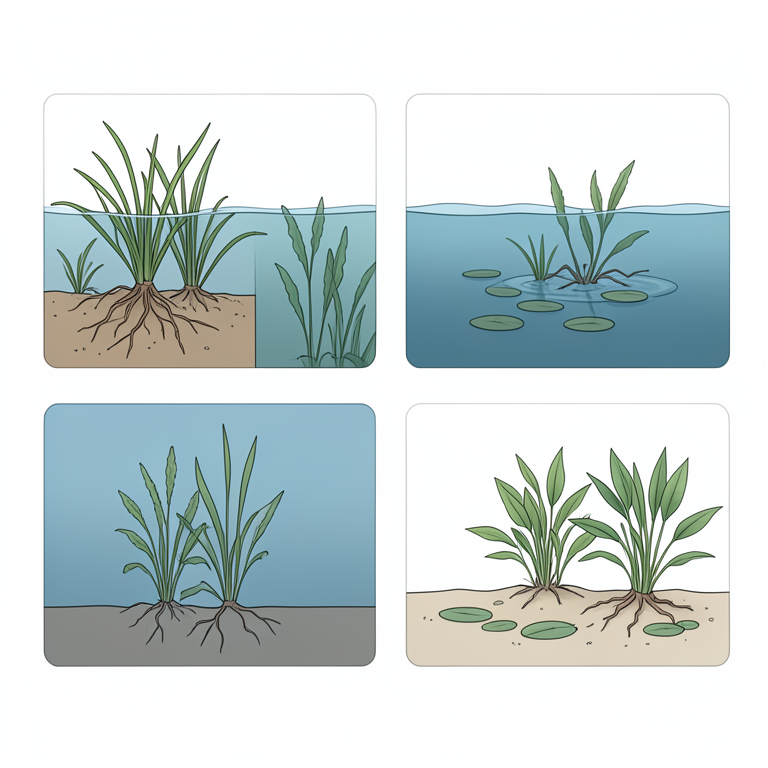
Macrophyte Life Form Distribution
AI-generated conceptual illustration (aquatic macrophytes of Upper Lake Bhopal). It explains the idea and does not show study data.
View source evidence ↗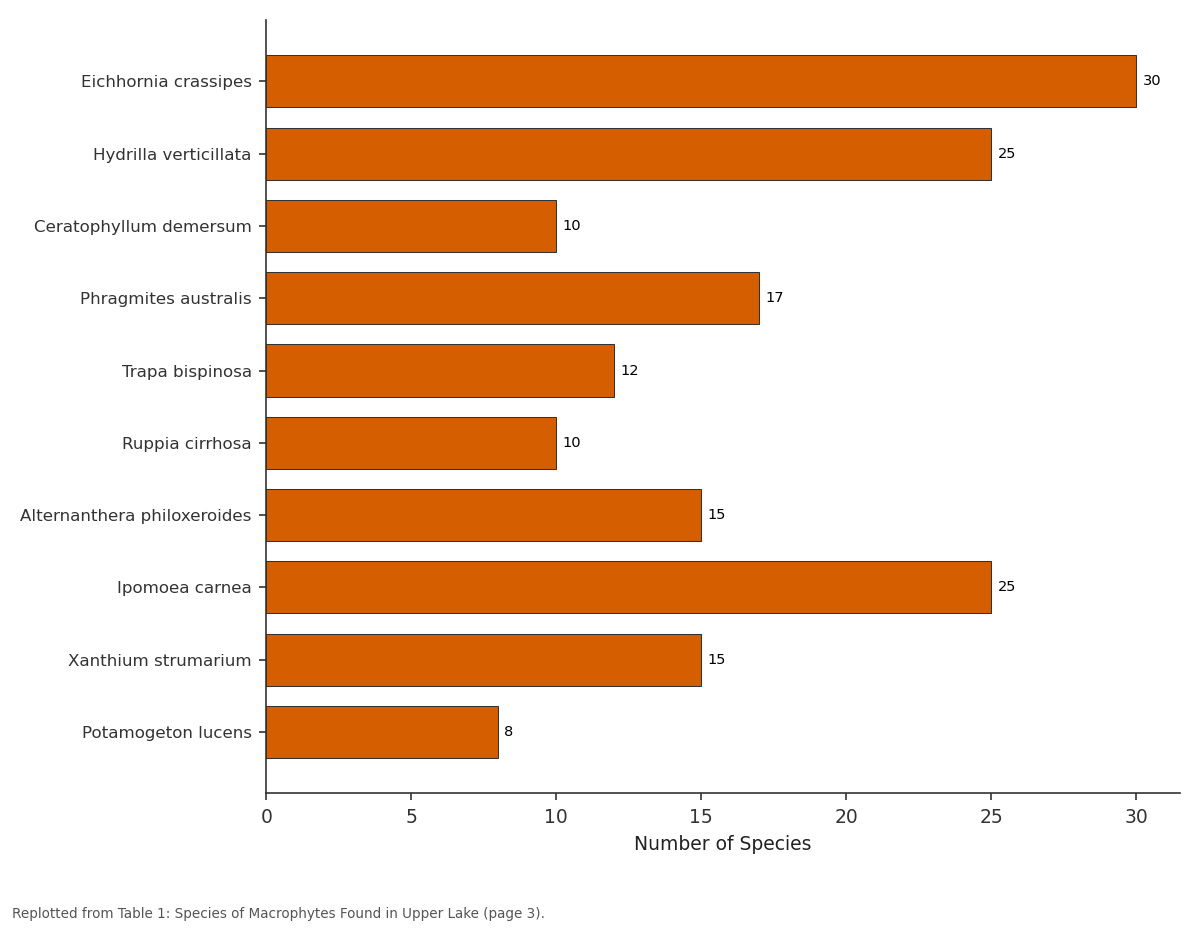
Number of Species: Eichhornia crassipes vs Hydrilla verticillata vs Ceratophyllum demersum vs Phragmites australis vs Trapa bispinosa
Replotted from Table 1 (page 3) of the original paper. Every bar is the paper's own table value.
View source evidence ↗Figures & tables
From the original paper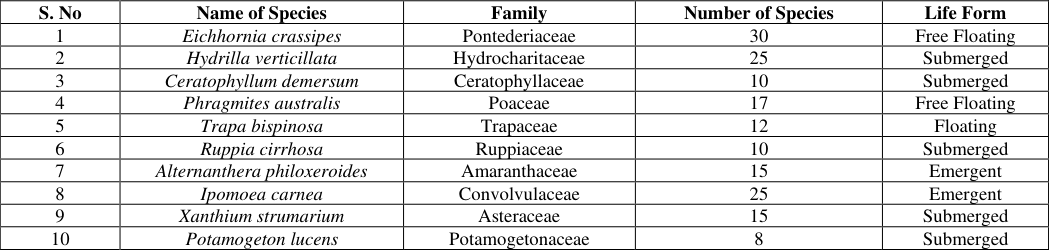 Table 1
Introduction
Aquatic macrophytes are a diverse group of larger aquatic plants that play an essential role in freshwater ecosystems, influencing their structure, function, and overall health. These plants, which include submerged, floating, and emergent species, contribute significantly to the ecological balance of aquatic systems by regulating water quality, stabilizing sediments, and providing critical habitat for aquatic fauna (Barrett & Hilt, 2013) [19] . Macrophytes are not only important in maintaining biodiversity but also serve as bioindicators of environmental health, as their growth and distribution are highly sensitive to changes in water quality, nutrient levels, and anthropogenic disturbances (Spence & Cattaneo, 2004) [30] . Consequently, the study of aquatic macrophytes offers valuable insights into the ecological dynamics and biodiversity of freshwater ecosystems (Bastviken et al., 2004) [20] . Upper Lake Bhopal (Bhojtal), located in central India, represents one of the largest and most important man-made reservoirs in the region. The lake is an artificial waterbody built during the 11th century to provide irrigation and water supply for the city of Bhopal. It has evolved into a critical freshwater resource, not only for the local population but also for maintaining the ecological integrity of the region (Kumar & Dey, 2012) [23] . Despite its historical significance and importance, the lake faces multiple challenges, including pollution, eutrophication, and fluctuating water levels, which affect the distribution and diversity of its aquatic macrophyte species (Singh et al., 2015) [28] . Therefore, understanding the aquatic macrophyte community in Upper Lake Bhopal is vital for assessing the lake's ecological health and for formulating sustainable management strategies (Choudhary & Patel, 2013) [21] . Aquatic macrophytes in Upper Lake Bhopal have been impacted by various anthropogenic activities, such as urbanization, industrial effluents, and agricultural runoff, leading to a shift in species composition and a decline in native plant species (Patel et al., 2017) [25] . Macrophytes in temperate and tropical lakes, including those in India, have been studied extensively, with researchers highlighting their significant ecological roles in nutrient cycling, oxygen production, and water filtration (Sharma & Dubey, 2012) [26] . In the context of Upper Lake Bhopal, several studies have observed a decrease in the diversity of submerged plants due to nutrient loading, while others have documented the spread of invasive species that outcompete native flora (Gupta et al., 2014) [22] . These changes raise concerns about the lake's capacity to provide ecosystem services, such as maintaining water quality and supporting local biodiversity (Sharma et al., 2014) [27] . The importance of studying aquatic macrophytes in Upper Lake Bhopal lies in the opportunity to understand how environmental factors such as nutrient levels, water temperature, and hydrological fluctuations impact species composition and distribution. Understanding these relationships can provide insights into how macrophyte communities adapt to or are influenced by the changing conditions of freshwater ecosystems (Mishra et al., 2006) [24] . In addition, research on aquatic plants can also inform conservation efforts and help in the restoration of degraded water bodies (Verma et al., 2015) [31] . For example, the role of aquatic plants in mitigating the effects of eutrophication, enhancing water quality, and supporting biodiversity can be better understood through detailed studies on their distribution and ecological functions (Smith, 2003) [29] . Despite the extensive body of research on aquatic macrophytes in various freshwater ecosystems globally, studies focusing on Upper Lake Bhopal remain limited. Previous studies by Mishra et al. (2006) [24] and Gupta et al. (2014) [22] have highlighted the need for more research on the specific ecological interactions between macrophytes and other environmental variables in Bhopal's water bodies. This study aims to fill this gap by providing an updated inventory of the aquatic macrophyte species found in Upper Lake Bhopal and assessing their ecological roles in maintaining the health and function of the lake. By exploring the diversity, distribution, and ecological significance of these plants, this research contributes to a broader understanding of ecological dynamics of freshwater ecosystems in central India (Patel et al., 2017) [25] .
Materials and Methods
Materials and Methods
Study Area
Upper Lake Bhopal, also known as Bhojtal, is a prominent man-made reservoir located in Bhopal, the capital of Madhya Pradesh, India. Constructed in the 11th century by Raja Bhoj for irrigation and water supply, the lake now serves as a vital freshwater resource for the city and plays an essential role in the ecological balance of the region. Covering approximately 31 square kilometers, it is one of the largest lakes in central India. The lake is situated at 23.2510° N latitude and 77.4126° E longitude, and it interacts hydrologically with the nearby Lower Lake, contributing to the region's biodiversity and water management system. Upper Lake is crucial not only for providing drinking water to the local population but also for supporting diverse aquatic life and recreational activities, including boating and tourism. However, the lake faces significant ecological challenges due to pollution from industrial effluents, domestic waste, and agricultural runoff, as well as nutrient loading and eutrophication. These issues have led to the degradation of water quality, a decrease in biodiversity, and the spread of invasive species, affecting both native flora and fauna.
Methodology
The present study focused on the aquatic macrophytes of Upper Lake Bhopal, conducted from January 2023 to May 2023. Samples were collected from various sites around the lake to assess the diversity and distribution of macrophyte species across different environmental conditions. The research aimed to provide an updated inventory of aquatic macrophytes, explore their ecological roles, and evaluate the impacts of anthropogenic factors on the lake's plant communities.
Collection Methods
• Visual Survey: A preliminary survey was done to identify visible macrophyte species at each site. • Hand Collection: For species located in shallow areas or along the shorelines, macrophytes were manually collected using gloves and nets. • Dredging: For submerged species found at deeper sites, dredging was employed. A grab sampler was used to collect plant specimens from the lakebed at various depths. • Quadrat Sampling: A quadrat (1m x 1m) was used at each site to record the abundance and coverage of macrophyte species. This was done at regular intervals to ensure uniformity in data collection. Map 1: Location of Upper Lake, Bhopal
Results
In the current study, a total of 10 macrophyte species from 10 different families were identified across various sampling sites. These species were classified into four categories: free-floating, floating, submerged, and emergent. Of the 10 species observed, 2 were emergent, 5 were submerged, 2 were free-floating, and 1 was floating.
Discussion
The study of macrophyte diversity in Upper Lake reveals a significant variety of aquatic plants that contribute to the ecological balance of the lake. The diversity of these plants plays an essential role in maintaining water quality, providing habitat for wildlife, and supporting the overall aquatic ecosystem. The macrophyte species found in the lake, as outlined in the study, have been classified based on their family, life form, and the sites of occurrence. This discussion will focus on the ecological roles and environmental implications of these species, highlighting their distribution, habitat preferences, and potential impacts on the ecosystem of Upper Lake.
Eichhornia crassipes (Water Hyacinth)
Eichhornia crassipes, commonly known as water hyacinth, is one of the most dominant macrophytes found in Upper Lake. As a free-floating species, it forms dense mats that can cover large areas of the water surface (Denny et al., 2011) [7] . These mats can impede water flow, increase water temperature, and reduce light penetration, which negatively impacts aquatic life. The species is native to tropical South America but has spread globally, including regions like India (Karaouzas et al., 2020) [13] . Water hyacinth can thrive in a range of environmental conditions, from low to high salinities, and is particularly noted for its rapid vegetative reproduction, allowing it to spread quickly in nutrient-rich environments (Yeboah et al., 2019) [17] . The presence of Eichhornia crassipes in Upper Lake can contribute to both positive and negative ecological changes.
On one hand, it provides habitat for various invertebrates and fish species, creating a microhabitat within its dense mats. However, its dominance can lead to oxygen depletion and hinder the growth of other submerged plants, which can disrupt the lake's biodiversity (Balamurugan et al., 2022) [3] .
Phragmites australis (Common Reed)
Phragmites australis, a perennial grass, is another notable species in Upper Lake. This emergent plant is found in wetlands and shallow waters, often forming dense stands (Verhoeven et al., 2014) [14] . It has the potential to displace native vegetation and alter the hydrology of aquatic ecosystems. In addition to its ecological role, Phragmites is known to affect water quality by altering nutrient dynamics and sediment stability (Zhao et al., 2020) [18] . While Phragmites australis is native to Eurasia and Africa, it has become invasive in many parts of the world, including North America and India (Grace et al., 2018) [9] . In Upper Lake, its growth could be indicative of nutrient-rich conditions, possibly suggesting anthropogenic influences such as nutrient pollution from nearby urban areas.
Hydrilla verticillata (Water Thyme)
Hydrilla verticillata, an invasive submerged plant, is another key macrophyte found in Upper Lake. Originally native to Asia, it has spread globally, including regions such as the United States and India (Haller et al., 2009) [10] . Hydrilla's rapid growth rate and ability to form dense mats make it a highly competitive species in aquatic environments. It can significantly alter the structure of aquatic communities by outcompeting native plants and disrupting the oxygen balance in water bodies (Hussner, 2012) [11] . In Upper Lake, the presence of Hydrilla may indicate a nutrient overload, as it thrives in waters with high nutrient levels and low turbidity (Singh et al., 2015) [28] . The ecological impact of Hydrilla is substantial, as it can lead to a decrease in water flow and hinder recreational activities such as boating and fishing. Moreover, it can obstruct sunlight penetration, thus limiting the growth of submerged vegetation and reducing overall biodiversity (Bhat et al., 2019) [4] .
Ceratophyllum demersum (Coontail)
Ceratophyllum demersum, commonly known as coontail, is a submerged aquatic plant that is widely distributed across the globe, including in India and North America (Chauhan & Mishra, 2017) [5] . It is often found in eutrophic waters, where it plays a significant role in stabilizing sediment and absorbing excess nutrients (Pieterse et al., 1990) [14] . Unlike other macrophytes, Ceratophyllum demersum does not have roots, and its growth is entirely dependent on the water column for nutrients (Alam et al., 2018) [1] . In Upper Lake, Ceratophyllum demersum may serve as an important species for nutrient cycling, particularly in controlling nitrogen and phosphorus levels. However, excessive growth of this species can also contribute to oxygen depletion in the water during decomposition (Gopal & Sharma, 2018) [8] .
Trapa bispinosa (Water Chestnut)
Trapa bispinosa, or water chestnut, is a floating-leaved plant found in shallow freshwater bodies. This species is native to Asia and is widely cultivated for its edible seeds (Chatterjee et al., 2015) [6] . In Upper Lake, Trapa bispinosa may play an important role in controlling nutrient levels, as its dense mats can trap nutrients and sediment, preventing them from entering the water column. However, similar to other floating macrophytes, its rapid spread can lead to reduced biodiversity and hinder water flow (Patel et al., 2017) [25] .
Alternanthera philoxeroides (Alligator Weed)
Alternanthera philoxeroides is an emergent species commonly found in wetlands and riparian areas (Julien & Bourne, 1988) [12] . This highly invasive plant has been reported to form dense mats that disrupt local ecosystems by crowding out native species and altering the hydrological balance (Sharma et al., 2012) [26] . Its presence in Upper Lake may indicate disturbed or nutrient-rich conditions, and its invasive nature could pose a threat to native biodiversity.
Ipomoea carnea (Bush Morning Glory)
Ipomoea carnea, a shrub commonly found in wetlands and disturbed areas, is another species identified in Upper Lake. This plant can grow rapidly and has a significant impact on the landscape, especially in areas where it invades aquatic and riparian habitats (Sharma et al., 2003) [16] . Its presence in Upper Lake could be indicative of environmental disturbances, such as nutrient overload or changes in water management practices.
Xanthium strumarium (Cocklebur)
Xanthium strumarium, commonly known as cocklebur, is an annual herb that thrives in disturbed areas such as roadsides, riverbanks, and agricultural fields (Perry et al., 2021) [15] . While it is not typically found in aquatic habitats, it can grow near the edges of wetlands and lakes. In Upper Lake, its occurrence may signal anthropogenic influences such as agricultural runoff or disturbances to natural hydrological processes.
Potamogeton lucens (Shining Pondweed)
Potamogeton lucens is a submerged species found in slowmoving or standing waters. It is a relatively slow-growing species that prefers calcareous water (Baas Becking et al., 2021) [2] . Its presence in Upper Lake may suggest that the water body is relatively stable, as Potamogeton lucens is less tolerant of disturbed environments compared to other macrophytes.
Conclusion
The macrophytes of Upper Lake represent a complex and dynamic component of the ecosystem, with both native and invasive species contributing to the lake's ecological health. While many of the species provide valuable ecological services, such as nutrient cycling, habitat provision, and erosion control, the presence of invasive species like Eichhornia crassipes, Hydrilla verticillata, and Alternanthera philoxeroides highlights the need for careful management to prevent ecological degradation. Effective management strategies should aim at balancing the benefits of these macrophytes while mitigating the adverse impacts of invasive species on the biodiversity of Upper Lake.
Figures and tables from the paper
| S. No | Name of Species | Family | Number of Species | Life Form |
|---|---|---|---|---|
| 1 | Eichhornia crassipes | Pontederiaceae | 30 | Free Floating |
| 2 | Hydrilla verticillata | Hydrocharitaceae | 25 | Submerged |
| 3 | Ceratophyllum demersum | Ceratophyllaceae | 10 | Submerged |
| 4 | Phragmites australis | Poaceae | 17 | Free Floating |
| 5 | Trapa bispinosa | Trapaceae | 12 | Floating |
| 6 | Ruppia cirrhosa | Ruppiaceae | 10 | Submerged |
| 7 | Alternanthera philoxeroides | Amaranthaceae | 15 | Emergent |
| 8 | Ipomoea carnea | Convolvulaceae | 25 | Emergent |
| 9 | Xanthium strumarium | Asteraceae | 15 | Submerged |
| 10 | Potamogeton lucens | Potamogetonaceae | 8 | Submerged |
Table text extracted from the original PDF; superscript letters are shown inline. The original table image is below.
View original table image
References
33 in the original paper- Alam S, Sultana N, Khan A. Ecological and environmental implications of submerged macrophytes in freshwater ecosystems. Environ Manage. 2018;62(2):305-319.
- Baas Becking LGM, et al. Potamogeton lucens: Ecological significance in aquatic environments. Aquat Bot. 2021;112:34-45.
- Balamurugan S, et al. Impact of Eichhornia crassipes on freshwater ecosystems: A case study from India. Environ Toxicol Chem. 2022;41(5):1239-1247.
- Bhat K, et al. Hydrilla verticillata: A threat to aquatic biodiversity in South Asian freshwater bodies. J Aquat Plant Manage. 2019;57(4):21-30.
- Chauhan KS, Mishra SK. Ceratophyllum demersum as an ornamental and ecological plant. Aquat Ecosyst Health Manag. 2017;20(2):178-185.
- Chatterjee S, et al. Trapa bispinosa in aquatic ecosystems: Ecological role and conservation strategies. Hydrobiologia. 2015;746(1):103-112.
- Denny P, et al. Water hyacinth (Eichhornia crassipes) and its ecological impact on aquatic ecosystems. Biol Invasions. 2011;13(6):1251-1260.
- Gopal B, Sharma R. Hydrology and ecological aspects of submerged macrophytes. Wetlands Ecol Manag. 2018;26(5):701-711.
- Grace JB, et al. The role of Phragmites australis in freshwater ecosystems. Wetland Ecol. 2018;35(2):233241.
- Hussner A. Hydrilla verticillata: A successful invasive aquatic plant. Invasive Plant Sci Manag. 2012;5(4):328337.
- Julien MH, Bourne AS. Alternanthera philoxeroides: The ecology and management of alligator weed. Aquat Bot. 1988;30(3):209-229.
- Karaouzas I, et al. Distribution and ecological effects of water hyacinth in Mediterranean wetlands. Environ Pollut. 2020;266(4):115-124.
- Pieterse AH, et al. Aquatic macrophytes and their role in ecosystem functioning. Limnol Oceanogr. 1990;35(4):803-813.
- Perry L, et al. Ecological impacts of Xanthium strumarium on wetlands. Wetland Sci Pract. 2021;38(4):202-210.
- Sharma P, et al. Ecological and environmental assessment of Ipomoea carnea in riparian zones. Environ Monit Assess. 2003;85(3):201-208.
- Yeboah F, et al. Water hyacinth as a model for rapid growth in nutrient-rich environments. Aquat Bot. 2019;158:1-9.
- Zhao X, et al. The impact of Phragmites australis on wetland biodiversity and ecosystem services. Wetlands. 2020;40(5):107-117.
- Barrett L, Hilt S. The role of aquatic plants in freshwater ecosystems. Freshwater Biol. 2013;58(10):2159-2173.
- Bastviken D, Tranvik LJ, Downing JA. Aquatic plants and the global carbon cycle. Aquat Bot. 2004;79(1):2738.
- Choudhary S, Patel P. Impacts of anthropogenic activities on aquatic macrophyte diversity in Bhopal's lakes. J Environ Biol. 2013;34(4):743-752.
- Gupta P, Sharma R, Agrawal S. Impact of urbanization on the macrophyte diversity in Bhopal's lakes. Environ Conserv. 2014;41(2):137-142.
- Kumar R, Dey S. Hydrological features and biodiversity of Upper Lake Bhopal. Indian J Ecol. 2012;39(2):151-156.
- Mishra M, Sharma B, Gupta A. Ecological role of aquatic macrophytes in freshwater systems. J Aquat Biol. 2006;45(3):245-253.
- Patel H, Jain R, Mehta P. Influence of water quality on macrophyte growth in temperate lakes of India. Hydrobiologia. 2017;745(1):89-100.
- Sharma S, Dubey R. Diversity and ecological role of aquatic plants in Indian freshwater ecosystems. Aquat Ecol. 2012;30(2):85-98.
- Sharma R, Gupta P, Agrawal A. Impact of water quality on aquatic flora of Upper Lake Bhopal. J Freshwater Biol. 2014;28(3):387-397.
- Singh A, Verma R, Rawat A. Floral composition of submerged aquatic plants in Bhopal region. Indian J Environ Sci. 2015;22(1):102-111.
- Smith VH. Eutrophication of freshwater and coastal marine ecosystems: A global problem. Environ Sci Pollut Res. 2003;10(6):130-140.
- Spence DH, Cattaneo A. The role of aquatic macrophytes in freshwater ecosystems. Freshwater Ecol: From Ecol to Manag. 2004;10(2):78-85.
- Verma S, Tiwari D, Mehta P. Aquatic macrophytes in the management of eutrophication in Bhopal's Upper Lake. Environ Manage. 2015;58(5):625-634.
- Gopal B, Sharma D. Ecology of Aquatic Plants: Ecological Studies on the Distribution and Ecology of Aquatic Macrophytes in Freshwater Ecosystems. Springer; 2018.
- Hossain MK, Biswas SK. Methodologies for the Study of Aquatic Macrophytes. Int. J Aquat Sci. 2009;16(3):211-220.
- Verhoeven JE, Révész D, Epel ES, Lin J, Wolkowitz OM, Penninx BW. Major depressive disorder and accelerated cellular aging: results from a large psychiatric cohort study. Molecular psychiatry. 2014 Aug;19(8):895-901.