
Research article · 2025 · Full text
International Journal of Advanced Chemistry ResearchRecent developments in water purification
Volume 7(3) · Pages 24–28 · DOI: 10.33545/26646781.2025.v7.i3a.266 ↗
Research areasMembrane Separation TechnologiesWater Quality Monitoring and AnalysisWater-Energy-Food Nexus Studies
Abstract
Author-writtenDay by day problem of water scarcity and water contamination is rising due to the rapid population growth, climatic change and urbanization. The greater use of fresh water in agricultural, industrial and domestic use has led to its depletion. Further, alteration in rainfall and melting of glaciers by the climate change further enhance fresh water depletion. Water contamination is continuously increasing from textile, paper industries agriculture runoff, and irrigation practices that leads to discharge of dyes, chemicals, heavy metals, pesticides, fertilizer, pharmaceutical, microplastic and perfluoroalkyl sunstance into the water. To tackle with these problems, advanced water purification technology have been evolved that are much better than the traditional methods in terms of cost, design of equipment less use of toxic materials and greater removal efficiency. This review discussed the most recent and advanced techniques used in water purification Advanced Hybrid oxidation system, Advanced filtration techniques by using novel materials Advanced Membrane technology, Plasma-Based Water Purification, AI-Driven Smart Water Purification Systems and Microbial Fuel Cells (MFCs) for water purification.
Summary
Source-checkedPlain-language reading of the full paper, prepared with AI and checked against the text. Each point links to the authors' own words.
Why it matters
- Water scarcity and contamination are increasing global problems driven by urbanization, climate change, and rapid population growth. View evidence ↗
- Contamination is caused by industrial discharges (textile, paper) and agricultural runoff, introducing pollutants such as heavy metals, microplastics, and pharmaceuticals into water sources. View evidence ↗
- Advanced purification technologies are being developed to replace traditional methods, offering better cost-efficiency, safer materials, and higher pollutant removal rates. View evidence ↗
The question
- The aim of this review is to discuss recent advanced water purification techniques, including hybrid oxidation, novel filtration, membrane technology, plasma-based systems, AI-driven systems, and microbial fuel cells. View evidence ↗
What they did
- The authors conducted a review of current literature to synthesize developments in various advanced water purification technologies. View evidence ↗
What they found
- Advanced hybrid oxidation systems, which combine multiple processes, improve pollutant removal efficiency while reducing energy use and toxic by-products. View evidence ↗
- A biomass framework made of cellulose and chitin (Ct-Cel) effectively removes several types of microplastics, including polystyrene and polypropylene. View evidence ↗
- Biodegradable chitin-based sponges containing graphene oxide and oxygen-doped carbon nitride can be reused for up to 3 cycles to remove microplastics. View evidence ↗
- Metal-organic frameworks (MOFs) are versatile materials that remove heavy metals, biological organisms, and organic/inorganic compounds via filtration, adsorption, and photocatalysis. View evidence ↗
- Aquaporin-based biomimetic membranes use proteins to selectively transport water, which is expected to improve seawater desalination through better salt rejection. View evidence ↗
- Non-thermal plasma technology using a gliding arc plasma (GAP) system achieved approximately 90% degradation of long-chain PFAS within one hour. View evidence ↗
- AI-driven systems use machine learning algorithms (such as Neural Networks and Random Forest) and spectroscopic analysis to monitor water quality in real-time. View evidence ↗
- Microbial Fuel Cells (MFCs) provide a dual benefit by using the metabolism of active bacteria to purify wastewater while simultaneously generating electricity. View evidence ↗
What it means
- The authors conclude that the future secure water supply depends on the continued research, implementation, and integration of these advanced purification technologies. View evidence ↗
Visual summary
1 visualsIllustrations explain the paper; they do not show study data.
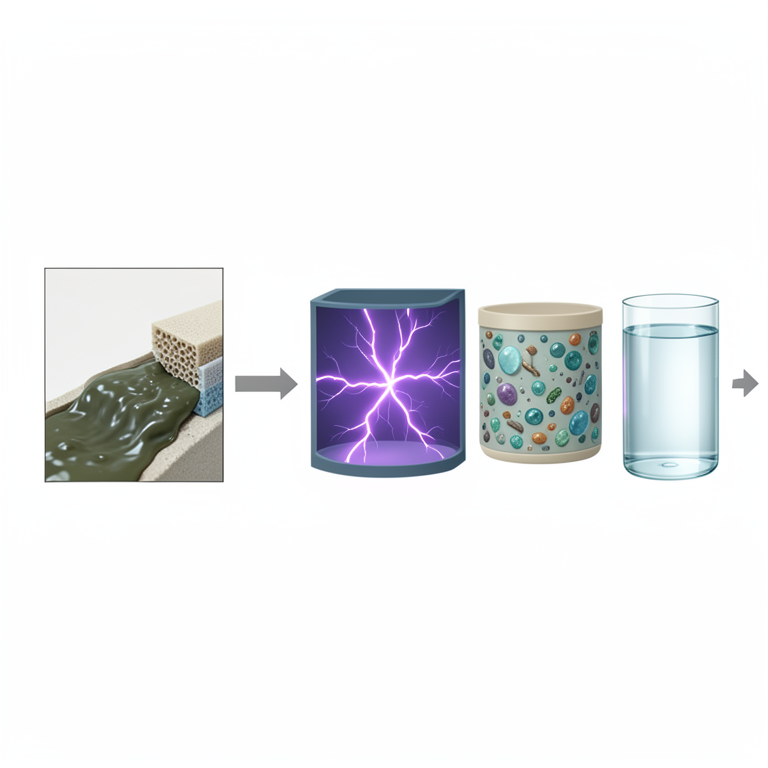
Overview of Advanced Water Purification Technologies
AI-generated conceptual illustration (Water purification systems including membranes, plasma reactors, and microbial fuel cells). It explains the idea and does not show study data.
View source evidence ↗Figures & tables
From the original paper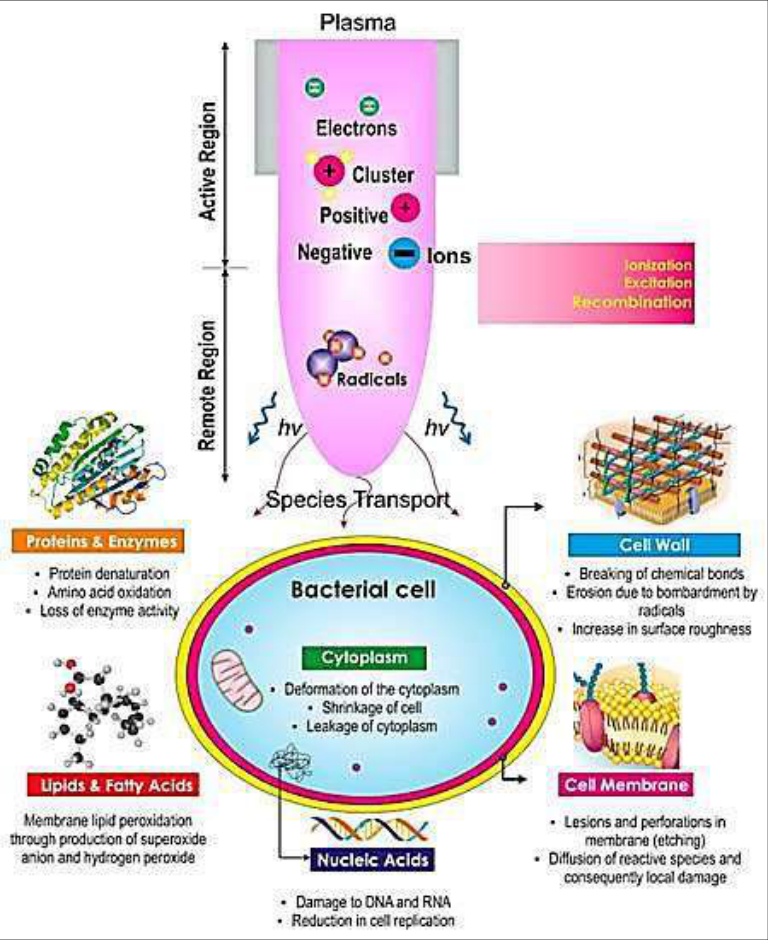 Figure 1
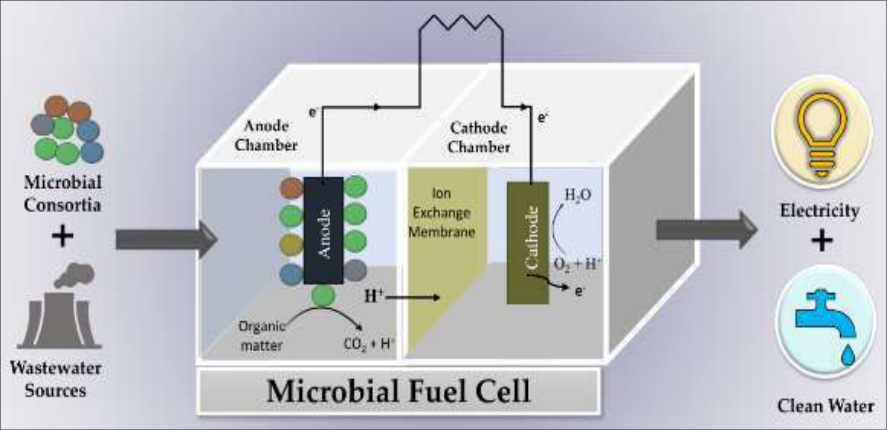 Figure 2
Introduction
Ensuring access to safe water is crucial for multiple aspects of living things survival, as it is vital for fostering economic development, promoting environmental sustainability. Additionally it preserve biodiversity, support ecosystem and regulate rainfall. However, this fundamental resource is rapidly declining day by day due to various factors. These include increasing population, climatic change, industrial waste, and rising global demands that lead to water scarcity and contamination. Both these issues stem from natural as well human human-induced factors. Rapid population growth, poor irrigation practices, excessive agriculture, and industrial and domestic use put immense pressure on the underground reservoirs. Alterations in rainfall, prolonged droughts, and accelerating melting glaciers due to climatic change further worsen the crisis of water scarcity. Water contamination results from industrial waste releasing toxic chemicals, dyes, and heavy metals, agricultural runoff introducing pesticides, herbicides, and fertilizers, and untreated wastewater carrying viruses, bacteria, and pathogens. Many of these pollutants like heavy metals, pharmaceuticals, microplastics, and perfluoroalkyl substances (PFAS) are difficult to detect and raise significant environmental and health risk issues. Consequently, strict control of pollution and recent advancements in water-based technologies have been crucial to meet the growing demand for preserving water. Recent modern water purification technologies have been developed that are far better than traditional chemical and filtration methods. These innovative solutions offer enhanced pollutant removal efficiency, low cost, and greater environmental sustainability. Consuming less energy can be used for both large and small scale application, these advanced techniques reduce pollution to many folds by utilizing nontoxic hazardous materials, some of the most advanced techniques are:
Advanced Hybrid oxidation system
This water purification technology combines different advance oxidation process for the greater degradation of pollutants. The integration of these multiple processes results in greater pollutant removal efficiency, less toxic byproducts production and reduces energy consumption rate. Barazeh and others discussed an advanced oxidation process that used H2O2 and UV light together to treat organic contaminants [Barazeh et al., 2015] [1] . A study published in environmental science and pollution research international discussed the degradation of stubborn pollutants like micropollutants and pathogens using advanced oxidation processes. Ozonation when integrated with additional technologies like UV, hydrogen peroxide, catalysts, and biological treatments provides a sustainable approach for greater degradation of pollutants [Mahmoodi & Pishbin., 2025] [3] . Additionally, kim and group introduces an innovative oxidation process of electro-chemical desalination system integration. The efficiency of water treatment process is enhanced much more, using this synergistic effect of innovative system. This hybrid system combines an oxidant-generating anode that facilitates cation removal and pollutant oxidation with cation-selective battery material and a desalination component. [Kim et al., 2018] [4] .
Advanced filtration techniques by using novel materials
Advanced filtration techniques using novel materials have been developed to enhance water purification. Minimizing microplastic pollution seems to be very difficult and challenging especially those smaller than 3 µm [Sun et al., 2021] [7] . They pose adverse impact on aquatic life and thus disrupt the ecosystem. To tackle this problem, advance filtration techniques using bioinspired materials has emerged as an innovative solution that mimics the natural bioinspired filtration systems. These systems have high adsorption capacity and selective permeability that effectively remove microplastics from water resources. Furthermore, these utilize natural materials, minimizing the use of chemicals and offering an ecofriendly and effective solution for reducing microplastic pollution. Wu and others developed a adsorbent supra-molecular self-assembly of cellulose and very known chitin. Due to multiple intermolecular interactions between different microplastic and Ct-Cel, this functional biomass framework effectively removes various microplastics like polystyrene, polymethyl methacrylate, polypropylene, and polyethylene terephthalate, and thus proves a promising material for microplastic removal [Wu et al., 2024] [6] . The Journal of Hazardous Materials published a study that created novel chitin-based sponges made of graphene oxide (GO) and oxygen-doped carbon nitride (O-C3N4) that efficiently eliminate various functionalised microplastics, such as polystyrene (PS), carboxylate-modified polystyrene (PS-COOH), and amine-modified polystyrene (PS-NH2). The adsorption process is driven by electrostatic forces, hydrogen bonding, and π-π interactions. This biodegradable materials prove a sustainable approach for microplastic removal and can be reuse up to 3 cycles [Sun et al., 2021] [7] . Metal organic frameworks are class of solid crystalline materials that are formed when metal ions coordinated with organic ligands [Li et al., 2023] [8] . Their unique properties like porous structure, functionally active sites, tunable pore channels and good thermal stability and high surface area make them an ideal candidate not for the effective pollutants removal but also a versatile material in other applications. MOFs effectively remove these pollutants like organic and inorganic compounds, heavy metals, and biological organisms by the processes like adsorption, photocatalysis and filtration [Rasheed et al., 2020; Wibowo et al., 2021] [9,10] . Sanchez-Cano, and others developed an iron based metal-organic frameworks (MOFs) MIL-88B-NH 2 that effectively eliminates chlorite and chlorate from fresh water [Sanchez-Cano, et al., 2024] [11] .
Advanced Membrane technologies
Advancement in membrane technology has emerged as an innovative solutions to address the potential challenges faced in desalination and water purification. Different type of membrane has developed like covalent organic framework membrane, polymeric membranes with integrated nanoparticles, aqua based biomimetic membranes nano-composites, bio-mimetic, composites of thin-film, hybrids, and forward osmosis membranes, that can be used in various industries [Yuan et [13,14,19,16] Among these the most recent and advanced techniques is Aquaporin-Based Biomimetic Membranes that has the efficiency for enhancing water purification processes. Aquaprotein are the membrane proteins that acts as a channel for the rapid and selective transport of water molecules across the cell membranes [Takata et al., 2004] [17] . These Aquaproteins are integrated into polymeric membrane through various fabrication techniques that enhance water purification and are presumed to increase sea-water de-salination by salt rejection. [Habel et al., 2015 and Li et al., 2019] [18,19] .
Plasma-Based Water Purification
Plasma methods are used to degrade the most recalcitrant class of compounds polyfluoroalkyl substances (PFAS) in water. These are difficult to degrade by traditional methods but eco-friendly plasma based method proven to be very helpful. The plasma based process generates reactive oxygen species like hydroxyl radicals, ozone, and UV photons, used for breaking of organic pollutants, and for killing of pathogens. Lewis and others explores a novel plasma based method for degrading Poly-and per-fluoroalkyl substances also abbreviated as PFAS in water. The non-thermal plasma technology utilizes a reversal vortex gliding arc plasma (GAP) system with air, N 2 and O 2 gases, for degradation of long chain PFAS. About 90% degradation was achieved in one hour of treatment [Lewis et al., 2020] [20] . Palma and other study the breaking of the three namely, perfluorooctanoic acid (PFOA), perfluorohexanoic acid (PFHxA) and pefluorooctanesulfonic acid (PFOS) in different water matrices by non-thermal plasma generator. In this study a high-energy plasma discharges leads to the production of reactive species in the liquid phase (hydroxyl radical, hydrogen peroxide) and in the gas phase (ozone, NO x ) that are used for degradation [Palma et al., 2021] [20] .
AI-Driven Smart Water Purification Systems
The discovery of various Al technologies help in waste water treatment for water quality determination, coagulation/flocculation, disinfection, membrane filtration, desalination, modeling wastewater treatment plants, prediction of membrane fouling, heavy metals removal, and monitoring of biological oxygen demand (BOD) and chemical oxygen demand (COD) levels [Safeer et al., 2022] [23] . A review published in environmental chemistry letters study the optimisation of pharmaceutical wastewater treatment systems through the application of AI and machine learning. It focusses on biological treatment, disinfection, renewable energy, block chain technology, big data, machine learning algorithms, cyber-physical systems, automated smart grid power distribution networks, and water quality. [Ganthavee & Trzcinski., 2024] [24] . A new process for assessing quality of water using latest artificial intelligence (AI) technologies with integrated sensor system. This whole system has the ability to distinguish among clean-unclean, contaminated-non contaminated, and UVdisinfected-affected water samples, hence detect variations in the quality of H 2 O. It employs spectroscopic analysis for real-time monitoring applying machine learning algorithms like Random Forest, SVM, and Neural Networks for accurately classify spectral data [Durgun., 2024] [12] .
Microbial Fuel Cells (MFCs) for Water Purification
Microbial fuels emerged as an innovative solution for the purification of water. In this technology electricity is generated by the metabolic of chemically active bacteria that is used for purifying waste water [Obileke et al., 2021]. Recent advancement has taken place to enhance the efficiency of this technology. A study by Bhowmick and others explored the integration of MFC with activated carbon/TiO₂ cathodes and membrane bioreactors that enhance pollutant degradation efficiency, and bioelectricity generation [Bhowmick et al., 2019] [22] . Furthermore, Microbial Fuel calls offer a sustainable approach for degradation of pollutants and electricity generation by the chemically active bacteria. The integration, implementation and continuous research in these advanced technologies can be extended further in the future for meeting the requirement of secure water supply.
Figures and tables from the paper
References
25 in the original paper- Barazeh JM, Hennebel T, Jasper JT, Sedlak DL. Modular advanced oxidation process enabled by cathodic hydrogen peroxide production. Environ Sci Technol. 2015;49(12):7391-7399.
- Barjasteh A, Dehghani Z, Lamichhane P, Kaushik N, Choi EH, Kaushik NK. Recent progress in applications of non-thermal plasma for water purification, biosterilization, and decontamination. Appl Sci. 2021;11(8):3372. DOI:10.3390/app11083372.
- Mahmoodi M, Pishbin E. Ozone-based advanced oxidation processes in water treatment: recent advances, challenges, and perspective. Environ Sci Pollut Res. 2025:1-40.
- Kim S, Kim C, Lee J, Kim S, Lee J, Kim J, et al. Hybrid electrochemical desalination system combined with an oxidation process. ACS Sustainable Chem Eng. 2018;6(2):1620-1626.
- Malik S, Kishore S, Dhasmana A, Kumari P, Mitra T, Chaudhary V, et al. A perspective review on microbial fuel cells in treatment and product recovery from wastewater. Water. 2023;15(2):316. DOI:10.3390/w15020316.
- Wu Y, Chen S, Wu J, Liu F, Chen C, Ding B, et al. Revivable self-assembled supramolecular biomass fibrous framework for efficient microplastic removal. Sci Adv. 2024;10(48):eadn8662.
- Sun C, Wang Z, Zheng H, Chen L, Li F. Biodegradable and re-usable sponge materials made from chitin for efficient removal of microplastics. J Hazard Mater. 2021;420:126599.
- Li W, Xu P, Wang Z, He Y, Qin H, Zeng Y, et al. MOFs meet membrane: application in water treatment and separation. Mater Chem Front. 2023;7(21):51405170.
- Rasheed T, Hassan AA, Bilal M, Hussain T, Rizwan K. Metal-organic frameworks based adsorbents: A review from removal perspective of various environmental contaminants from wastewater. Chemosphere. 2020;259:127369.
- Wibowo A, Marsudi MA, Pramono E, Belva J, Parmita AW, Patah A, et al. Recent improvement strategies on metal-organic frameworks as adsorbent, catalyst, and membrane for wastewater treatment. Molecules. 2021;26(17):5261.
- Sanchez-Cano G, Cristobal-Cueto P, Saez L, Lastra A, Martin-Calvo A, Gutiérrez-Sevillano JJ, et al. Drinking water purification using metal-organic frameworks: removal of disinfection by-products. Chem. 2024.
- Durgun Y. Real-time water quality monitoring using AI-enabled sensors: detection of contaminants and UV disinfection analysis in smart urban water systems. J King Saud Univ Sci. 2024;36(9):103409.
- Yuan S, Li X, Zhu J, Zhang G, Van Puyvelde P, Van der Bruggen B. Covalent organic frameworks for membrane separation. Chem Soc Rev. 2019;48(10):2665-2681.
- Khdary NH, Almuarqab BT, El Enany G. Nanoparticleembedded polymers and their applications: A review. Membranes. 2023;13(5):537.
- Li Y, Qi S, Tian M, Widjajanti W, Wang R. Fabrication of aquaporin-based biomimetic membrane for seawater desalination. Desalination. 2019;467:103-112.
- Foorginezhad S, Zerafat MM, Ismail A, Goh PS. Emerging membrane technologies for sustainable water treatment: a review of recent advances. Environ Sci: Adv. 2025.
- Takata K, Matsuzaki T, Tajika Y. Aquaporins: water channel proteins of the cell membrane. Prog Histochem Cytochem. 2004;39(1):1-83.
- Habel J, Hansen M, Kynde S, Larsen N, Midtgaard SR, Jensen GV, et al. Aquaporin-based biomimetic polymeric membranes: approaches and challenges. Membranes. 2015;5(3):307-351.
- Li Y, Qi S, Tian M, Widjajanti W, Wang R. Fabrication of aquaporin-based biomimetic membrane for seawater desalination. Desalination. 2019;467:103-112.
- Lewis AJ, Joyce T, Hadaya M, Ebrahimi F, Dragiev I, Giardetti N, et al. Rapid degradation of PFAS in aqueous solutions by reverse vortex flow gliding arc plasma. Environ Sci: Water Res Technol. 2020;6(4):1044-1057.
- Palma D, Papagiannaki D, Lai M, Binetti R, Sleiman M, Minella M, et al. PFAS degradation in ultrapure and groundwater using non-thermal plasma. Molecules. 2021;26(4):924.
- Bhowmick GD, Das S, Ghangrekar MM, Mitra A, Banerjee R. Improved wastewater treatment by combined system of microbial fuel cell with activated carbon/TiO2 cathode catalyst and membrane bioreactor. J Inst Eng India Ser A. 2019;100:675-682.
- Safeer S, Pandey RP, Rehman B, Safdar T, Ahmad I, Hasan SW, et al. A review of artificial intelligence in water purification and wastewater treatment: recent advancements. J Water Process Eng. 2022;49:102974.
- Ganthavee V, Trzcinski AP. Artificial intelligence and machine learning for the optimization of pharmaceutical wastewater treatment systems: a review. Environ Chem Lett. 2024;22(5):2293-2318.
- Obileke K, Onyeaka H, Meyer EL, Nwokolo N. Microbial fuel cells, a renewable energy technology for bio-electricity generation: A mini-review. Electrochem Commun. 2021;125:107003.
Cited by 1
From OpenAlex, OpenCitations and reference lists read by Scinovex
- Present Status of Aeration ↗
Frank E. Hale · American Water Works Association · 1932
❝ 4