
Research article · 2022 · Full text
International Journal of Geography Geology and EnvironmentStudy of zeolites and associated secondary minerals in deccan trap province of Marathwada region
Volume 4(2) · Pages 195–201 · DOI: 10.22271/27067483.2022.v4.i2b.343 ↗
Research areasMineral Processing and GrindingEnvironmental and Analytical Chemistry StudiesAnimal Diversity and Health Studies
Abstract
Author-writtenThe Deccan Trap Province of the Marathwada region in India is a geologically significant area known for its extensive basaltic lava flows, which host a diverse range of zeolites and associated secondary minerals. This study aims to explore the mineralogical composition, formation processes, and economic significance of zeolites in this region. Zeolites, a group of hydrated aluminosilicates, are formed primarily through secondary alteration processes in basaltic rocks, influenced by hydrothermal activity and groundwater interactions. Common zeolite minerals identified in the region include stilbite, heulandite, clinoptilolite, mordenite, and natrolite, often occurring in vesicular cavities and amygdaloidal basalt formations. These minerals exhibit remarkable adsorption, ion-exchange, and catalytic properties, making them valuable for industrial applications such as water purification, petrochemical refining, agriculture, and environmental remediation. Additionally, associated secondary minerals like calcite, quartz, and apophyllite further enrich the mineralogical diversity of the Deccan basalts. The study highlights the geochemical conditions favoring zeolite formation and evaluates their potential for commercial exploitation. The widespread occurrence of high-quality zeolites in the Marathwada region presents economic opportunities, particularly in the construction, pharmaceutical, and environmental sectors. Understanding the geological controls on zeolite formation can aid in their sustainable extraction and utilization. This research contributes to the broader understanding of secondary mineralization in volcanic terrains and its industrial relevance, emphasizing the importance of the Deccan Traps as a globally significant geological province.
Summary
Source-checkedPlain-language reading of the full paper, prepared with AI and checked against the text. Each point links to the authors' own words.
Why it matters
- The Marathwada region of India's Deccan Trap Province is geologically important due to its vast basaltic lava flows containing various zeolites and secondary minerals. View evidence ↗
- Zeolites are hydrated aluminosilicates that form in basaltic rocks through groundwater interactions and hydrothermal secondary alteration. View evidence ↗
- Zeolites are valuable for environmental management because they can remove ammonia, fluoride, and heavy metals from water via cation exchange and selective adsorption. View evidence ↗
The question
- The study aims to investigate the formation processes, economic value, and mineralogical makeup of zeolites in the Marathwada region. View evidence ↗
What they did
- X-ray diffraction (XRD) was used as a standard method to identify the crystalline phases of the mineral samples. View evidence ↗
- Scanning electron microscopy (SEM) was employed to provide high-resolution imaging of the secondary minerals and zeolites. View evidence ↗
- Energy-dispersive spectroscopy (EDS) was used to determine the elemental composition, specifically identifying elements like aluminum (Al) and silicon (Si). View evidence ↗
- Optical petrography and thin section analysis were used to examine the textural and mineralogical relationships of zeolites within the basalt. View evidence ↗
What they found
- The study identified stilbite, natrolite, mordenite, clinoptilolite, and heulandite as common zeolites, typically found in amygdaloidal basalt and vesicular cavities. View evidence ↗
- Zeolites in the Marathwada formations are low-temperature minerals that typically precipitate at temperatures below 200 °C. View evidence ↗
- The mineralogical diversity of the basalts is further increased by associated secondary minerals, including quartz, calcite, and apophyllite. View evidence ↗
- Stilbite is commonly found in fractures and vesicular cavities and is suitable for soil amendments and water purification. View evidence ↗
- Heulandite is abundant in amygdaloidal basalts and can be used for wastewater treatment and as a catalyst. View evidence ↗
- Clinoptilolite occurs in zones of hydrothermal alteration and is used in agriculture and ion-exchange applications. View evidence ↗
- Mordenite is found in cavities as fine fibrous forms and is used for thermal insulation and gas separation. View evidence ↗
- Natrolite is observed in basaltic amygdules and is used for industrial filters and water softening. View evidence ↗
What it means
- The authors conclude that the Deccan Trap formations are a globally significant mineralogical site, requiring continued research and responsible management for sustainable use. View evidence ↗
- The authors state that understanding the formation mechanisms and geological controls of these minerals will allow for more efficient industrial application and extraction. View evidence ↗
Visual summary
1 visualsIllustrations explain the paper; they do not show study data.
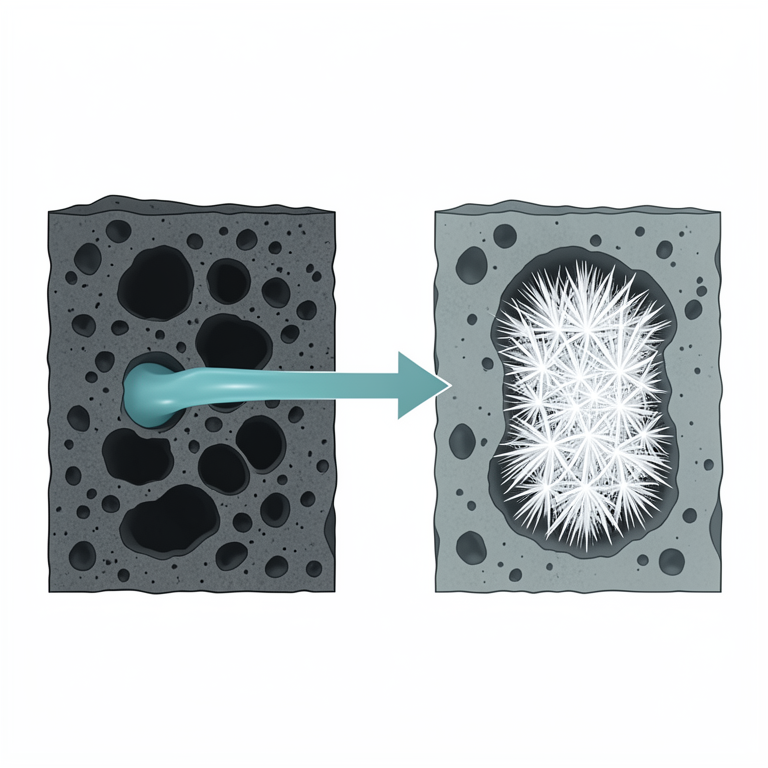
Zeolite Formation Process
AI-generated conceptual illustration (Basaltic rock with zeolite crystals in vesicular cavities). It explains the idea and does not show study data.
View source evidence ↗Figures & tables
From the original paper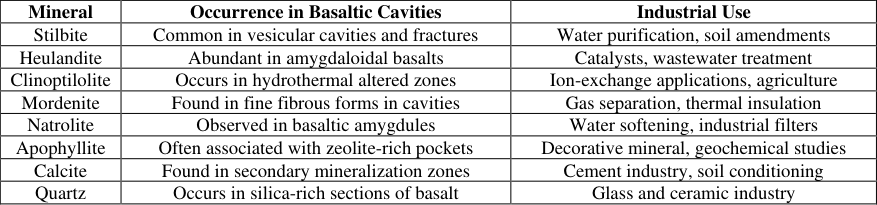 Table 1
 Table 2
Introduction
The Marathwada region in India hosts a large number of basaltic lava flows referred to as the Deccan Trap Province and secondary mineralization has occurred in these, along with associated zeolites and secondary minerals. Hydrated aluminosilicates group of secondary products as zeolites occur in basaltic rocks during hydrothermal alteration, weathering, and processes of post-volcanic origin. These minerals were present in the vesicular cavities, fractures, and amygdaloidal structures of basalt, which is a clear evidence of important fluid rock interaction processes at the time of and post cooling of magma flows. Other secondary minerals often associated with natural zeolites are apophyllite, quartz, calcite, and chalcedony (as basic companion minerals). They are heulandite, stilbite, clinoptilolite, and mordenite. The crystallographic and chemical characteristics are peculiar to these minerals, and they influence how they occur and distribute, and their industrial utility. Thus, study of zeolites in the Marathwada region is not only important to understand the mineralogical evolution of Deccan Traps, but is also essential to the assessment of their potential applications in water purification, agriculture and environmental remediation. Zeolites are formed together with other associated minerals under the control of geochemical environment such as temperature, pH, fluid composition and host rock permeability. Structural and compositional variations of these secondary minerals have been studied by various techniques such as X-ray diffraction (XRD), scanning electron microscopy (SEM) and energy-dispersive spectroscopy (EDS). Zeolites have high cation exchange capacity and adsorption properties which makes use of them attractive for many industrial and environmental applications. Their distribution within various basaltic flows of Marathwada region are studied to reconstruct the paleo hydrothermal condition as well as to evaluate their economic significance. In addition, the association of zeolites with minerals such as apophyllite and calcite contributes to a complete insight into the secondary mineralization processes in the Deccan Traps. The purpose of this research is to investigate the mineralogical characteristics, formation mechanisms, and possible applications of zeolites and associated mineral products and for both Geological and applied scientific fields.
Overview of the Deccan Trap Province
One of the largest volcanic provinces of the world is situated in the Deccan Trap Province located in western and central India covering an approximate 500,000 square kilometer area. The thick sequences of basaltic lava flows that compose it are experiencing formation during late Cretaceous-early Paleogene period around 65-66 million years ago. These massive flood basalt eruptions have been taken as evidence that these volcanic periods were triggered by large amounts of mantle plume activity. Layered structure with several lava flows piled on top of each other have created steps to the overall topography, and this is the typical example in the Deccan Traps. It spreads across Maharashtra, Madhya Pradesh, Gujarat, Karnataka, Andhra Pradesh; though it is more prominent in the Western Ghats and Marathwada. These lava flows have basaltic composition ranging from conditions of varying degrees of weathering and hydrothermal alteration that resulted in the formation of secondary minerals like zeolites, calcite, quartz and apophyllite. The deposition of these minerals, mainly in vesicular cavities and fractures, is important for reconstructing post-volcanic processes and fluid rock interaction.
The Deccan Traps have profound geologic significance in studying continental flood basalt provinces and their effect on global climates and mass extinction events. It has been hypothesized that the release of volcanic gases like sulfur dioxide and carbon dioxide during Deccan volcanism was the cause of climatic changes and the Cretaceous-Paleogene (K-Pg) mass extinction. The textural features like compact, vesicular or amygdaloidal basalt have an influence on porosity and permeability of the Deccan basalt formations. Marathwada is considered an important groundwater resource in semi-arid region and the province has important aquifers also. The basalts contain zeolites and other secondary minerals which improve water quality in an ionexchange process. Moreover, there exists an economic potential for the Deccan Traps as construction materials, soil conditioners and as a water purification agent. The Deccan Trap Province holds important revelation in volcanic and hydrothermal process other than importance in environmental sustainability and resource management.
Importance of zeolites and secondary minerals
Their unique physicochemical properties make zeolites and associated secondary minerals play an important role in applications of geological, environmental, and industrial significance. Such minerals are formed mainly from hydrothermal alteration of basaltic rocks, display high porosity and ion exchange capacity and adsorption capacity, and have many uses. Zeolites thus improve water quality in groundwater management where they remove heavy metals, fluoride, ammonia, etc. by their selective adsorption and cation exchange. However, their presence in basaltic aquifers including those of the Deccan Trap Province enhances water retention and filtration processes which ensure provision of sustainable water resources. Zeolites serve as soil conditioners in agriculture, increasing attainment of nutrients and retention of moisture, thus improving crop production. Due to their molecular sieve properties, they are widely employed in catalysis, wastewater treatment and gas separation industrially. Furthermore, geological studies benefit from secondary minerals such as apophyllite, calcite, and quartz that offer information concerning hydrothermal conditions in the past and subsequent post volcanic alteration. Also of economic importance are these minerals since they are used as lining in the construction industry in lightweight aggregates and as raw materials in cement production. The investigation of zeolites, their associated minerals and utilization are all important in gaining an understanding of secondary mineralization processes in volcanogenic terrains, as well as potential economic resources and the applications that zeolites and associated minerals offer in environmental sustainability. Through their multifunctional properties, they prove to be indispensable to environmental conservation efforts, scientific and industrial processes.
Geological Setting of the Deccan Trap Province Origin and Extent of Deccan Basalts
Onset of the Deccan Traps, one of the world's largest continental flood basalt provinces, was after the Late Cretaceous to early Paleogene period about 65-66 Ma. Extensive volcanic eruptions as a result of mantle plume activity generated this vast volcanic province characterized by vast areas covered by large scale basaltic lava flows in western and central India. Reunion hotspot is associated with Deccan volcanic activity, which is characterised by large outpourings of large volumes of low viscosity basaltic magma which caused accumulation of thick lava sequences. Total estimated volume of these basalts exceeds one million cubic kilometers and thus classifies these basalts as Earth's most significant flood basaltive events. Eruption of these basalts is thought to have contributed K-Pg mass extinction, along with Chicxulub impact, by releasing huge volume of volcanic gases that affected the global climate change. The extent of the present Deccan Trap Province covers nearly 500,000 square kilometers in the present states of Maharashtra, Madhya Pradesh, Gujarat, Karnataka and part of Andhra Pradesh, with a concentration of outcrop in the Western Ghats. The basalts generally occur as several stacked flows having a step-like topography. There are other features evident in some of these lava flows that include compact, vesicular and amygdaloidal basalt which impart different geological and hydrogeological properties. These basaltic formations are very weathered over time to develop secondary minerals such as zeolites, quartz, calcite, and apophyllite. Thus, these minerals in vesicles and fractures inform about post volcanic processes and hydrothermal alterations. The Deccan Traps too are important aquifers and play a key role in storing and conveying groundwater in Marathwada, for instance, where fractured basalt formations store and transmit groundwater. The origin and extent of Deccan basalts is helpful in reconstructing past volcanic events, its environmental impact, and its use in natural resource management.
Lithological Characteristics of Marathwada Region
In the central part of the Deccan Trap Province, i.e., the Marathwada region, there is influence of Deccan basaltic lava flows on the local lithology. The region is essentially formed by layered basaltic sequences, with massive, vesicular and amygdaloidal basalt formations. The reason for this characteristic step-like topography is the fact that these lithologies were formed by a succession of volcanic eruptions, each eruption depositing its layer of lava, which added to what was already there. The mechanic of groundwater storage and movement is strongly influenced by the presence of columnar jointing, fractures and vesicular structures in the basaltic formations. The most dominate Rock type in case of MARATHWADA region is massive basalts and are dense, fine grained, low porosity rocks. However, these formations provide structural support to the region but have poor groundwater storage potential because of the compact nature. On the other hand, vesicular basalts contain numerous cavities of entrapped gases produced as they solidifiy. Interconnected these cavities improve permeability and serve as the primary groundwater reservoir. With the aging of these vesicular structures, they have been filled with secondary minerals such as zeolites, calcite and quartz via hydrothermal and weathering processes, changing their composition and porosity. Basalts from the amygdaloidal type, that is, from the mineralfilled vesicles, are also very common and are important hydrogeological components. Besides basaltic flows, lateritic formations as well as soil profiles developed, due to prolonged weathering, are found here. They are rich in iron and aluminum oxides and signify the intense chemical weathering under the tropical climatic conditions. The diversity of the lithology in the Marathwada region plays a vital role in the groundwater potential, soil fertility and the location of mineral resources in this area. The region's hydrogeological properties are improved through the secondary mineralization of zeolites and associated minerals thus enhancing water retention and filtration capacity. These lithological characteristics need to be known for successful groundwater management, agriculture practices, and mineral exploration of Deccan Trap Province.
Tectonic
and Hydrothermal Influences on Mineralization Tectonic activities and hydrothermal process is the main reason why zeolites and associated secondary minerals formation in the Deccan Trap Province. Regional and global plate movements on the Deccan volcanic province, including several episodes of tectonic stress, have been reflected in successive episodes of fracture, fault and joint development within basaltic formations. Such structural features have been critical in promoting fluid circulation and secondary mineralization processes. Post eruption faulting and fracturing in the Deccan basalts have increased permeabiliy within the basalt, and hydrothermal fluids are allowed to percolate through the rock matrix. These fluids are rich in silica, aluminum and other dissolved ions which precipitate secondary minerals in vesicular cavities, fractures and interstitial spaces. Marathwada basaltic formations bear evidences of extensive hydrothermal alterations consisting of zeolites like mordenite, heulandite, stilbite and clinoptilolite. They are low-temperature minerals that usually precipitate at temperatures below 200 °C during which circulating fluids interact with the host rocks changing the mineralogical composition of the rock. This is indicated by the presence of mineral filled amygdaloid basalts in a widespread occurrence. Zeolites are commonly associated with apophyllite, calcite, and quartz, which suggest mineralizations under varying fluid chemistries. These minerals are precipitated depending on fluid temperature, pH, pressure conditions, and availability of precursor elements. Geochemical characteristics of groundwater are also influenced by the hydrothermal activity, when zeolites improve a water quality as they serve as a natural ion exchanger. Further, uplift and subsidence of the Deccan Trap Province have also played role in the structural evolution and mineralization pattern. Differential weathering due to tectonic forces has exposed much older basaltic formations, and facilitated secondary mineral deposition in fractures formed in very recent times. The tectonic and hydrothermal processes that occurred in the Deccan basalts not only influence their mineralogical diversity but have also economic and environmental consequences. Investigation ofusinessesby these influences illuminates paleo-hydrothermal conditions, mineral resource potential, and geologic history of one of the largest volcanic provinces in the world.
Formation and Occurrence of Zeolites and Secondary Minerals
Secondary minerals which may accompany zeolites in the Deccan Trap Province usually result from hydrothermal alteration, post-magmatic processes, and weathering of basaltic lava flows. The interaction between circulating fluids and basaltic host rock leads to development of these minerals within vesicular cavities, fractures and amygdaloidal structures. The waters that percolate through the rock matrix of the volcano are hydrothermal, rich in silica, aluminum, and alkali elements, and like the lava, form zeolites, namely heulandite, stilbite, clinoptilolite, and mordenite. These minerals form at low temperatures (less than 200°C) under slightly alkaline to neutral pH. The mineralization can also be highly influenced by the presence of volatile components such as water vapor and carbon dioxide within the cooling lava, which increases permeability and fluid rock interaction. Zeolites are often associated with secondary minerals like apophyllite, quartz, calcite and chalcedony, showing multiple hydrothermal activity phases. The factors influencing the mineralization process include fluid composition, temperature gradients, host rock porosity as well as duration of the hydrothermal alteration. Gas bubble containing (initially) amygdaloidal basalts are perfect localization of zeolite crystallization, since they are gradually filled with mineral rich solutions. Depending on the chemical environment -specifically the availability of cations such as calcium, sodium and potassium -zeolites tend to take on a specific type in these vesicles. Zeolites and secondary minerals are widespread when occurring in the Deccan Trap Province, especially in areas where the basaltic flow is highly vesicular. The Marathwada region, along with parts of Maharashtra, Gujarat, and Madhya Pradesh, exhibits significant deposits of zeolites within amygdaloidal and fractured basalts. Basically, they occur mainly in those areas where postvolcanic hydrothermal activity was intense, and the water in contact with the rocks, causing a great deal of secondary mineralization. Field studies have shown that the concentration of zeolites is not constant but varies from one lava flow to another, the higher concentration being in those flows more altered. Mineral assemblages in different stratigraphic layers of the Deccan basalts vary, which is attributed to differences in the eruption history, cooling rates, and post depositional processes. Basaltic dikes and sills contain zeolites also, because mineral deposition along fracture zones resulted from hydrothermal fluid circulation in these rocks. Secondary minerals play an important role in economic and environmental sense, where they improve groundwater quality, are available as valuable industrial materials, and are a source of soil fertility. Because of their widespread occurrence and great applicability, their study is indispensable in both geological and applied sciences.
Analytical Techniques and Methodology
A combination of advanced analytical techniques, such as mineralogical composition, structural characteristics, and geochemical properties of zeolites and associated secondary minerals of the Deccan Trap Province is needed. XRD analysis is a standard method of which the goal is to determine the crystalline phases present in mineral samples. The processes of XRD are to direct X-rays at powdered mineral specimens and measure the diffraction patterns resulting from interaction of X-rays with the crystal lattice. Since the diffraction pattern is specific for each mineral, zeolites can be precisely identified, such as heulandite, stilbite, clinoptilolite, mordenite and associated minerals including apophyllite, quartz and calcite. This technique provides information on the degree of crystallinity, the unit cell dimensions and possible structural variations smaller than the unit cell within zeolite species. Due to the characteristics of some zeolite types having similar physical properties but different structural configurations, the XRD analysis is particularly helpful. Furthermore, it assists in determining the purity of zeolite samplesand this pureness is very important when one wants to use zeolite in catalytic, water purification and agricultural applications. Si, Al, and other elements were also determined by energydispersive spectroscopy (EDS), which is useful for characterizing zeolites and secondary minerals and provides the elemental composition of samples. High-resolution imaging of zeolites and secondary minerals is also provided by scanning electron microscopy (SEM). The surface morphology, as well as crystal growth patterns, can be visualised using SEM at, of the order, micro and nanometer scale. SEM is used to observe well defined crystal habits of zeolites that may exhibit tabular, fibrous or platy structures. Semi quantitative analysis of elemental composition coupled SEM provides elemental composition identification and ratios for key elements including silicon (Si), aluminum (Al), calcium (Ca), the molar column of which is large enough to be detected by SEM without EDS, as well as potassium (K), sodium (Na), and magnesium (Mg) which go along with zeolite formation. Thin section analysis and optical petrography together with these techniques also provide information regarding mineralogical and textural relationships of zeolites within basaltic rock matrices. Thin section analysis is the examination of rock slices under a polarizing microscope in order to identify mineral assemblages, grain boundaries and mineral alteration. It is extremely useful in the study of amygdaloidal basalts that contain zeolites and other secondary minerals filling vesicles and fractures. Chemical composition cannot always differentiate between similar mineral phases, however, optical properties such as birefringence, extinction angles, and pleochroism will provide a way of telling them apart. However, by combining XRD with SEM-EDS and optical petrography, a complete description of the zeolite mineralogy system can be gained, which allows subsequent studies on zeolite arrangement, occurrence and industrial applications.
Geochemical Properties and Environmental Significance
The various geochemistry signatures of Zeolites and associated secondary minerals in Deccan Trap Province determine its formation, stability and functionality. Zeolites are hydrated aluminosilicates having a framework structure made up from SiO₄ and AlO₄ tetrahedra linked together through sharing of oxygen atoms to form a porous network suitable for ion exchange and adsorption. The chemical composition of zeolites depends on the type of zeolite and key elements are silicon (Si), aluminum (Al), calcium (Ca), potassium (K), sodium (Na), and magnesium (Mg) which appear critical to the structural and functional properties. Zeolites generally have a high cationexchange capacity (CEC) and readily adsorb and release cations and therefore are good heavy metal and ammonium, as well as many other contaminant removers from water and soil. In addition, they have a thermal stability and are resistant to acidic or alkaline environments and therefore are likely to survive in geological settings. Geochemical variations in an associated secondary mineral assemblage, including apophyllite, calcite, and quartz are also affected by hydrothermal alteration, pH, and fluid rock interactions. Their geochemical composition gives information on the paleo hydrothermal conditions under which they were formed so as to possibly reconstruct the post volcanic evolution of the Deccan basaltic terrain. Zeolites have substantial environmental significance with regard to the groundwater quality enhancement, pollution control and sustainable agriculture. Also, the use of zeolites in removing toxic elements (lead, arsenic, fluoride) from contaminated water sources improves drinking water safety due to the capability to adsorb and ion-exchange. Natural water filtration processes and groundwater recharge and storage capacity are enhanced by their presence in basaltic aquifers. Zeolites are used as soil conditioners, improving moisture retention, availability of nutrients, pH balance and thus promoting healthy crop growth, while reducing the need for chemical fertilizers in agriculture. Moreover, zeolites are applied in the purification of industrial wastewater, in gas separation and as catalysts, which proves their variability in environmental management. Usage of zeolites for the sustainable use in pollution mitigation and resource conservation is in concert to the world efforts to reduce environmental degradation. The first step for the application of zeolites and secondary minerals in environmental sustainability, resource management and industrial processes in Deccan Trap province is to understand geochemical properties of zeolites and secondary minerals.
Economic and Industrial Potential of Zeolites
Microporous aluminosilicate minerals (zeolites) have unique adsorption, ionexchange and catalytic properties which make them of great economic and industrial potential. These materials are widely used in petrochemicals, water purification, agriculture, environmental protection industries, and other industries. Zeolites play an efficient role as catalysts in the petrochemical industry, especially in the fluid catalytic cracking (FCC) process which improves fuel quality and increases gasoline production. Their selective adsorption of molecules makes them crucial for purposes such as removing CO₂, H₂S, and moisture from natural gas. Zeolites are also used in the water treatment industry due to their ion exchange properties that aid in removing heavy metals and ammonium from the wastewater thereby lowering the pollution levels. Moreover, agriculture is benefited from zeolites due to their capability to increase soil fertility, increase water retention and act as the carriers of the slow release fertilizers leading to the increase of the crop yield while reducing the pollution in the environment. The increasing use of zeolites for sustainable technologies is opening up new economic opportunities for them beyond conventional applications. As industries look for ways to cut greenhouse gas emissions, their participation in carbon capture and storage (CCS) is gaining recognition. Zeolites are used in the place of environmentally damaging phosphates in the detergent industry, making sure cleaning solutions will be green. Zeolite-based materials find applications in construction sector as, lightweight concrete and insulation materials for building, to enhance energy efficiency. Moreover, their application in medical and pharmaceutical industries, particularly in drug delivery and detoxification, highlights their growing commercial significance. Advancements in nanotechnology and material science will boost the global zeolite market growth on the basis of increasing demand for sustainable and efficient industrial processes. Looking ahead, the zeolites will continue as an important resource to industries as it provides innovative, yet cost effective and green approach for the solution of the arising processed technology related issues, thus contributing to economic growth and environmental sustainability. The commercial importance of each of these minerals derives from their unique adsorption and ion exchange properties, which results in their usefulness in various industries. Stilbite is a soft and fibrous mineral with white to pink color which is used in agriculture to enhance soil fertility as well as in wastewater treatment as a pollutant remover. Characterized by tabular, transparent to white crystals, heulandite is very important to the petrochemical refining and catalysis fields in improving fuel processing efficiency.
Results and Discussion
Microporous zeolite clinoptilolite is widely used in such fields of air purification and gas separation as it has high ion exchange capacity and can remove toxins and ammonia with high efficiency. Mordenite is a fibrous white to yellow substance, that is tough, which is used in filtration plants and is utilized in industrial insulation and filtration systems to separate NO hydrocarbons. In the field of water purification systems and ceramic manufacturing, it is applied as a material for producing heat resistant materials; and natrolite is recognized by columnar or acicular structure. Such zeolites play a major role in the development of the sustainable environmental solutions, industrial technologies and effective exploitation of resources, so that they are significant for most of the global industries.
Conclusion
The study of zeolites and associated secondary minerals in the Deccan Trap Province of Marathwada highlights their mineralogical diversity, geological significance, and industrial potential.
Figures and tables from the paper
| Mineral | Occurrence in Basaltic Cavities | Industrial Use |
|---|---|---|
| Stilbite | Common in vesicular cavities and fractures | Water purification, soil amendments |
| Heulandite | Abundant in amygdaloidal basalts | Catalysts, wastewater treatment |
| Clinoptilolite | Occurs in hydrothermal altered zones | Ion-exchange applications, agriculture |
| Mordenite | Found in fine fibrous forms in cavities | Gas separation, thermal insulation |
| Natrolite | Observed in basaltic amygdules | Water softening, industrial filters |
| Apophyllite | Often associated with zeolite-rich pockets | Decorative mineral, geochemical studies |
| Calcite | Found in secondary mineralization zones | Cement industry, soil conditioning |
| Quartz | Occurs in silica-rich sections of basalt | Glass and ceramic industry |
Table text extracted from the original PDF; superscript letters are shown inline. The original table image is below.
View original table image
| Zeolite Type | Physical Properties | Industrial Application |
|---|---|---|
| Stilbite | Soft, fibrous, white to pink | Used in agriculture and wastewater treatment |
| Heulandite | Tabular, transparent to white | Applied in petrochemical refining and catalysis |
| Clinoptilolite | Microporous, high ion-exchange capacity | Used for air purification and gas separation |
| Mordenite | Fibrous, tough, white to yellow | Industrial insulation and filtration systems |
| Natrolite | Columnar, acicular, white | Water purification and ceramic manufacturing |
Table text extracted from the original PDF; superscript letters are shown inline. The original table image is below.
View original table image
References
14 in the original paper- Nagaiah E, Sonkamble S, Mondal NC, Ahmed S. Natural zeolites enhance groundwater quality: evidences from Deccan basalts in India. Environmental Earth Sciences. 2017;76:1-17.
- Golekar RB, Patil SN, Mrunali J, Aakanksha V, Pooja K, Ambure RR, et al. Chemico-Mineralogical and petrographical study of natural zeolites and apophyllite in basalts from deccan trap, Northern Maharashtra (India). Bulletin of Pure & Applied Sciences-Geology. 2018;37(1):1-17.
- Kumar A, Shrivastava JP. Secondary silicates as a barrier to carbon capture and storage in Deccan basalt. Acta Geologica Sinica-English Edition. 2020;94(3):861-876.
- Kumar A, Shrivastava JP. Secondary silicates as a barrier to carbon capture and storage in Deccan basalt. Acta Geologica Sinica-English Edition. 2020;94(3):861-876.
- Ottens B, Götze J, Schuster R, Krenn K, Hauzenberger C, Zsolt B, et al. Exceptional multi stage mineralization of secondary minerals in cavities of flood basalts from the Deccan Volcanic Province, India. Minerals. 2019;9(6):351.
- Kumar D, Rao VA, Nagaiah E, Raju PK, Mallesh D, Ahmeduddin M, et al. Integrated geophysical study to decipher potential groundwater and zeolite-bearing zones in Deccan Traps. Current Science. 2010, 803814.
- Parthasarathy G. Effect of high-pressures on the electrical resistivity of natural zeolites from Deccan Trap, Maharashtra, India. Journal of Applied Geophysics. 2006;58(4):321-329.
- Ottens B, Gaines RV, Kothavala RZ, Currier RH, Wilson WE. Minerals of the Decan Traps, India. Mineralogical Record. 2003;34(1):4.
- Bhattacharyya T, Chandran P, Ray SK, Pal DK, Mandal C, Mandal DK, et al. Distribution of zeolitic soils in India. Current Science. 2015:1305-1313.
- Rani N, Shrivastava JP, Bajpai RK. Deccan Trapsassociated obsidian glass: A nuclear waste containment. Current Science. 2013, 371-379.
- Parthasarathy G, Choudary BM, Sreedhar B, Kunwar AC, Srinivasan R. Ferrous saponite from the Deccan Trap, India, and its application in adsorption and reduction of hexavalent chromium. American Mineralogist. 2003;88(11-12):1983-1988.
- Randive K, Chaudhary S, Dandekar S, Deshmukh K, Peshve D, Dora ML, et al. Characterisation and genesis of the chalcedony occurring within the Deccan lava flows of the LIT hill, Nagpur, India. Journal of Earth System Science. 2019;128:1-12.
- Ottens B. Calcite from the Deccan: Traps of India. Rocks & Minerals. 2005;80(2):94-107.
- Kumar A, Shrivastava JP. Carbon capture induced changes in Deccan basalt: A mass-balance approach. Greenhouse Gases: Science and Technology. 2019;9(6):1158-1180.
Cited by 1
From OpenAlex, OpenCitations and reference lists read by Scinovex
- Characterizing the architecture of Deccan basalt flows for subsurface CO2 storage: A 3D digital outcrop analogue approach ↗
Debasmita Datta, Pankaj Khanna, S. Devi Kala, Samuel T. Thiele, Salim Akhtar · Marine Geoscience and Energy Resources · 2026
❝ 0