
Research article · 2025 · Full text
International Journal of Veterinary Sciences and Animal HusbandrySupplementation of poly herbal and brown sea weed on carcass characteristics and serum biochemistry in broiler chickens
Volume 10(3) · Pages 355–357 · DOI: 10.22271/veterinary.2025.v10.i3f.2158 ↗
Research areasAnimal Nutrition and Physiology
Abstract
Author-writtenA biological study was carried out to investigate the effect of dietary incorporation of polyherbal and brown sea weed on the performance, carcass characteristics and serum biochemistry in broilers. A total of 360 newly hatched straight run broiler chicks were randomly divided into three treatment groups with three replicates of 40 chicks each per treatment. The chicks were fed with four experimental diets; Control diet, Control + 0.01% Poly herbal (T1), Control+ 0.1% brown sea weed (T3). The experiment was carried out for six weeks with standard managemental Practices. The eviscerated carcass weight, giblet weight and Ready-to-cook yield showed significantly (p
Summary
Source-checkedPlain-language reading of the full paper, prepared with AI and checked against the text. Each point links to the authors' own words.
Why it matters
- The poultry industry is a rapidly expanding part of the agricultural sector, with a total population exceeding 729.20 million. View evidence ↗
- While antibiotics are commonly used in poultry feed for health and disease protection, there is a current search for alternative growth promoters to reduce their usage. View evidence ↗
- Brown seaweed is rich in vitamins, balanced essential amino acids, and various bioactive components necessary for health and production. View evidence ↗
The question
- The study aimed to determine if supplementing broiler diets with poly herbal and seaweed influences their carcass characteristics and serum biochemical parameters. View evidence ↗
What they did
- The experiment used 360 day-old straight run commercial broiler chicks, randomly divided into three treatment groups with three replicates of 40 chicks per treatment. View evidence ↗
- The birds were fed a pre-starter, starter, and finisher diet for 42 days, with experimental groups receiving either 0.01% poly herbal or 0.1% seaweed supplementation. View evidence ↗
- At the end of the trial, 9 birds per treatment were randomly selected and slaughtered after a 12-hour fast to measure weights including pre-slaughter, debleeding, eviscerated, ready-to-cook, and giblet weights. View evidence ↗
- Serum biochemical tests were performed using commercial kits to measure total protein, total cholesterol, triglycerides, glucose, albumin, urea, creatinine, ALT, and AST. View evidence ↗
What they found
- Birds fed with 0.01% poly herbal supplementation showed significantly higher eviscerated carcass weight (1576.78 g), giblet weight (91.00 g), and ready-to-cook yield (1627.89 g) compared to other groups (p<0.05). View evidence ↗
- No significant differences were observed between treatment groups regarding pre-slaughter weight and debleeding weight. View evidence ↗
- Intestinal length was significantly higher (p<0.05) in the T2 treatment group compared to others. View evidence ↗
- The inclusion of poly herbal and seaweed in the diet significantly reduced serum total protein, glucose, and cholesterol levels (p<0.05). View evidence ↗
- No significant differences were found in serum triglycerides, ALT, AST, albumin, urea, or creatinine across the treatment groups. View evidence ↗
What it means
- The authors concluded that dietary incorporation of poly herbal and seaweed is beneficial for broiler chickens, as it reduces serum cholesterol and improves carcass characteristics, specifically eviscerated carcass weight and ready-to-cook yield. View evidence ↗
Visual summary
1 visualsIllustrations explain the paper; they do not show study data.
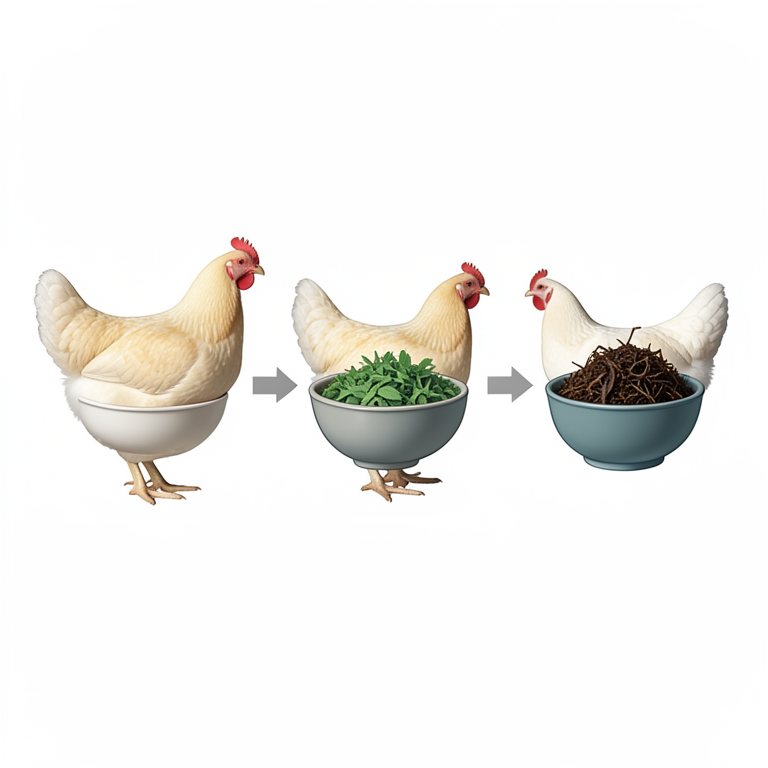
Experimental Group Layout
AI-generated conceptual illustration (broiler chickens). It explains the idea and does not show study data.
View source evidence ↗Introduction
Poultry industry has established its position as a faster growing segment in the agricultural sector with the total poultry population of over 729.20 million. In recent years, there has been tremendous growth (12 percent annual growth rate) in Indian broiler industry. India ranks third in egg and fifth in meat production. About 5.23 and 2.50% of world's egg and meat production was contributed by India. Broiler meat is a quality item in human diet, which contributes around 35 percent of the total animal protein. Profitable broiler farming is highly specialized business which is affected by a large number of factors. Feeding management is one of the most important aspects in broiler production. The poultry sector is using various synthetic components for improvement of bird's production performance, meat quality and control of diseases. Maintenance of health and protection against diseases addition of antibiotics in to the poultry feed is commonly practised, nowadays for reducing the usage of antibiotics, we are searching for alternative antibiotics growth promotors (Yadav et al., 2016) [1] such as enzymes, pro and prebiotics, photobiotic in the mono gastric animal's diet (Wink, 2003) [2] . Brown Sea weed have a wide range of bioactive components (Wijesekara et al. 2011) and rich in vitamins and balanced essential amino acids which are essential for production and health. With many biological activities like antioxidant (Chandini et al. 2008) [4] , anti-viral (Artan et al. 2008) [3] , antiinflammatory (Kim et al. 2009) [5] . In the present study, the supplementation of poly herbal and seaweed is assessed whether they could influence the serum biochemical parameters and carcass characteristics in broilers.
Materials and Methods Location and climate
A biological experiment was designed and conducted during the month of April and May 2024 at (10°39'42.1"N 77°09'37.0"E) Livestock Farm Complex, Veterinary College and Research Institute, Udumalpet, Tirupur, Tamil Nadu.
Biological experiment Period of study
The experiment was conducted in broilers from day old to five weeks of age.
Experimental birds
One day-old straight run broiler chicks obtained from a commercial broiler hatchery at Coimbatore were utilized for the biological trial.
Experimental design
An experiment was conducted by using 360-day old straight run commercial broiler chicks. These chicks were randomly divided into three treatment groups with three replicates of 40 chicks each per treatment. All the birds were reared under standard management practices up to six weeks of age. The experimental feed was prepared by adding Poly herbal (0.01%), Seaweed (0.1%) as detailed below all treatment groups were fed with treated broiler pre-starter, starter and finisher diet (BIS, 2007) up to the end of the experimental period (42 days). The treatment groups of the experiment were as follows:
The treatment groups of the experiment were as follows:
S. No Dietary Treatment
No. of birds/Treatment 1 Control (basal diet) 120 2
Basal diet + Poly herbal (0.01%) 120 3
Basal diet + Seaweed (0.1%) 120
Collection of data At the end of the feeding trail 9 birds/ treatment were randomly selected, weighed and slaughtered by cervical cutting after 12h fast. After slaughter pre-slaughter weight, debleeding weight, eviscerated weight, ready to cook weight, giblet weight was recorded.
Carcass characteristics
At the end of the experimental period (42 nd day), totally 9 birds per treatment group were randomly selected, blood samples were collected for analysing the serum biochemical parameters and slaughtered as per the method of Arumugam and Panda (1970) [14] . The pre-slaughter weight, de-bleeding weight, eviscerated carcass weight; giblets weight (Heart without pericardium, liver without gall bladder), ready-tocook yield were recorded.
Biochemical profile
Separated serum was subjected to blood biochemical test, viz. serum total protein, total cholesterol, triglycerides, glucose, albumin, urea, creatinine, alanine transaminase, (ALT) and aspartate transaminase (AST) by using standard commercial kits (Cogent, SPAN diagnostic Ltd, India) (Kumar and Krupakaran 2014) [15] .
Statistical analyses
The data obtained were subjected to one-way ANOVA using SPSS version 20.0 and the means were compared for significance using Tukey's multiple range test.
Results and Discussion
Results and Discussion
Carcass characteristics
The carcass characteristics were influenced by dietary supplementation of polyherbal and brown sea weed at the sixth week of age as presented in Table 1. The eviscerated carcass weight (1576.78 g), giblet weight (91.00 g) and Ready-to-cook yield (1627.89 g) were significantly (p<0.05) higher in birds fed with 0.01% poly herbal supplemented treatment group and there was no significant difference noticed in pre-slaughter weight and de bleeding weight. The result was in accordance with the findings of Chavan et al., 2022 [16] . They reported that supplementation of different levels (0.07%, 0.1% and 0.13%) brown sea weed to broilers diet showed significantly (p<0.05) higher values of eviscerated yield, ready-to-cook yield and giblet weight. Addition of Brown sea weed in to the broiler diets significantly improved broiler carcass traits Kumar, 2018 [6] ; Mohammdigheisar et al. 2020 [8] ; broiler quail (Hafsa et al.
2019) [7] and Turkey (Abdel-Ghany et al. 2020) [19] . Based on the results of present study higher value of carcass trait might be due to presence of secondary metabolites, which might be helpful for ideal environment to the gastro intestinal tract, increasing intestinal cell permeability for better utilization of nutrients, in that way increasing body weight and carcass trait.
The result was contrary to the finding of Mahata et al., 2023 [10] .
Intestinal length
The mean (±SE) intestinal length at the 6 th week of age as influenced by dietary supplementation of polyherbal and brown sea weed as furnished in Table 3. Intestinal length differs significantly (p<0.05) between the dietary treatment group. The higher in T 2 treatment group.
Serum biochemical
The findings related to serum biochemical are present in table 4. Dietary inclusion of poly herbal and seaweed significantly (p<0.05) reduced total protein, glucose and cholesterol and there was no significant difference observed in triglycerides, ALT, AST, Albumin, urea and creatinine. In our result was similar with the finding of Kumar, 2018 [6] and Chavan et al., 2022 [16] . They supplemented different levels (1%, 2%, 3% and 4%) brown sea weed to broiler diet and observed that higher dose of brown sea weed fed group showed significantly (p<0.05) reduced plasma cholesterol level. Brown sea weed had the properties of hypocholesterolemic activity due the presence of active ingredients such as saponin, hemicellulose, tannin etc. which may be helpful to reduce the blood cholesterol level by bile salts inhibition (Mukhtar, et al., 2013a) [9] . Supplementation of Licorice in drinking water to broilers reduced cholesterol level (Naser, et al., 2017 and Sharifi, et al., 2013) [11,12] . Licorice having the properties of inhibition of lipid peroxidation, lipoxygenease and cyclooxygenase enzyme activities as well as reduction of LDL oxidation. It contains active components of saponin and pytosteroids reduce the level of LDL associated carotenoids, inhibit the formation of lipid peroxidase and enhance the conversion of cholesterol to bile acids. Our findings contradicts with that of Mukhtar et al., 2013a [9] ; Choi et al., 2014 [17] , who reported that increased level of glucose and total protein in broilers. Supplementation of Licorice powder (0.5%, 1%, 1.5% and 2%) to layers did not show any significant result in blood parameters (Shahryar et al., 2018) [13] .
Conclusion
From the current study, it could be concluded that dietary incorporation of poly herbal and seaweed reduced serum cholesterol level, improved carcass characteristics exhibited beneficial effect on reducing serum cholesterol, higher eviscerated carcass weight percentage and ready to cook yield in broiler chickens.
References
18 in the original paper- Yadav AS, Kolluri G, Gopi M, Karthik K, Singh Y. Exploring alternatives to antibiotics as health-promoting agents in poultry-A review. Journal of Experimental Biology. 2016;4(3s):368-383.
- Wenk C. Herbs and botanicals as feed additives in monogastric animals. Asian-Australasian Journal of Animal Sciences. 2003;16(2):282-289.
- Artan M, Li Y, Karadeniz F, Lee SH, Kim MM, Kim SK. Anti-HIV-1 activity of phloroglucinol derivative, 6,6′- bieckol, from Ecklonia cava. Bioorganic and Medicinal Chemistry. 2008;16(17):7921-7926.
- Chandini SK, Ganesan P, Bhaskar N. in vitro antioxidant activities of three selected brown seaweeds of India. Food Chemistry. 2008;107(2):707-713.
- Kim Y, Jin J, Yang HS. Effect of dietary garlic bulb and husk on the physicochemical properties of chicken meat. Poultry Science. 2009;88(2):398-405.
- Kumar KA. Effect of Sargassum wightii on growth, carcass, and serum qualities of broiler chickens. Open Access Journal of Veterinary Science and Research; 2018.
- Hafsa SH, Zeweil HS, Zahran SM, Ahmed MH, Dosoky W, Rwif NA. Effects of dietary supplementation with green and brown seaweeds on laying performance, egg quality, blood lipid profile, and antioxidant capacity in laying Japanese quail. Egyptian Poultry Science Journal. 2019;39(1):41-59.
- Mohammdigheisar M, Shouldice VL, Sands JS, Lepp D, Diarra MS, Kiarie EG. Growth performance, breast yield, gastrointestinal ecology, and plasma biochemical profile in broiler chickens fed multiple doses of a blend of red, brown, and green seaweeds. British Poultry Science. 2020;61(5):590-598.
- Mahata ME, Rizal Y, Zurmiati RS, Limbong IFS, Saputri D. Impact of utilization of brown seaweed Sargassum crassifolium in broilers diet as a substitution of traditional feed ingredients. Journal of Animal Health Production. 2023;11(4):404-409.
- Naser M, Shahab G, Mahmood H. Drinking water supplementation of licorice (Glycyrrhiza glabra L. root) extract as an alternative to in-feed antibiotic growth promoter in broiler chickens. GSC Biological and Pharmaceutical Sciences. 2017;1:20-28.
- Sharifi SD, Saeedeh H, Khorsandi A, Khadem A, Salehim A, Moslehi HR. The effect of four medicinal plants on the performance, blood biochemical traits, and ileal microflora of broiler chicks. Veterinary Archives. 2013;83:69-80.
- Sahryar HA, Ahmadzadeh A, Nobakht A. Effects of different levels of licorice (Glycyrrhiza glabra) medicinal plant powder on performance, egg quality, and some of serum biochemical parameters in laying hens. Iranian Journal of Applied Animal Science. 2018;8:119-24.
- Arumugan MP, Panda B. Processing and inspection of poultry. Indian Veterinary Research Institute, Izatnagar, Uttar Pradesh. 1970.
- Kumar A, Krupakaran P. Comparative study on physicmorphological characteristics of semen from Murrah buffaloes and Jersey crossbred cattle. CIB Tech Journal of Bio-Protocols. 2014;3:12-14.
- Chavan V, Kulkarni RC, Awandkar SP, Chavhan SG, Gaikwad NZ, Suryawanshi RD, et al. Effect of dietary supplementation of brown seaweed on performance of broiler chicken. Indian Journal of Animal Science. 2022;92(8):999-1005.
- Choi YJ, Lee SR, Oh JW. Effects of dietary fermented seaweed and seaweed fusiforme on growth performance, carcass parameters, and immunoglobulin concentration in broiler chicks. Asian-Australasian Journal of Animal Sciences. 2014;27(6):862.
- Wijesekara I, Pangestuti R, Kim SK. Biological activities and potential health benefits of sulfated polysaccharides derived from marine algae. Carbohydrate Polymers. 2011;84(1):14-21.
- Abdel-Ghany HM, Salem ME. Effects of dietary chitosan supplementation on farmed fish; a review. Reviews in Aquaculture. 2020 Feb;12(1):438-452.