
Research article · 2025 · Full text
International Journal of Biology SciencesEffects of copper Sulphate and Direct Blue-218 on growth, morphology and reproduction of Daphnia magna
Volume 7(3) · Pages 31–38 · DOI: 10.33545/26649926.2025.v7.i3a.315 ↗
Research areasAquatic Ecosystems and Phytoplankton Dynamics
Abstract
Author-writtenThe present study is aimed to evaluate toxic effects stimulated by copper-complexed dye DB-218 and CuSO4 on D. magna. Acute toxicity tests and Chronic toxicity tests were performed in accordance with OECD guidelines no 202 and 211 respectively. Atomic adsorption spectroscopy revealed presence of 0.421mg of copper in per gram of Direct Blue-218. The LC50 values of DB-218 and CuSO4 were found to be 1mg-L and 0.0008 mg-L respectively at 48 hours. Morphological deformity in daphnids as swelling in carapace, distortion of gut was highly pronounced in higher concentrations of the test substances. Long term exposure affected all aspects of reproduction in D. magna at environmental concentrations higher than 0.1mg-L and 0.0001mg-L for DB-218 and CuSO4 respectively. However, the overall effects of DB-218 on reproduction were lower than CuSO4 which unquestionably indicate CuSO4 is more lethal than DB-218.
Summary
Source-checkedPlain-language reading of the full paper, prepared with AI and checked against the text. Each point links to the authors' own words.
Why it matters
- Azo dyes are the most widely used class of dyes across numerous industries, including textiles, pharmaceuticals, and food production. View evidence ↗
- Water pollution is significantly driven by the annual discharge of over 100 tons of dyes and contamination from heavy metals resulting from both natural and human activities. View evidence ↗
- There is a lack of comparative data regarding the toxicities of dyes versus heavy metals when tested under the same conditions. View evidence ↗
The question
- The study aims to evaluate the environmental safety and toxic effects of copper sulphate (CuSO4) and the copper-complexed dye Direct Blue-218 (DB-218) on the water flea Daphnia magna. View evidence ↗
What they did
- The researchers conducted acute and chronic toxicity tests following OECD guidelines 202 and 211. View evidence ↗
- Acute tests used seven concentrations of DB-218 (1 to 64 mg-L) and CuSO4 (0.000420 to 0.002688 mg-L), with three replicates and a control group. View evidence ↗
- The chronic study measured reproduction (fecundity), body length (growth), and survival (longevity). View evidence ↗
What they found
- Atomic absorption spectroscopy showed that Direct Blue-218 contains 0.421 mg of copper per gram of dye. View evidence ↗
- Acute exposure caused gut distortion in DB-218 at 32 mg-L, while CuSO4 caused both carapace swelling and gut distortion at concentrations above 0.0008 mg-L. View evidence ↗
- The highest tested concentrations significantly reduced reproduction, with total offspring dropping to 33.6±0.57 for DB-218 (0.8 mg-L) and 8±2 for CuSO4 (0.0008 mg-L). View evidence ↗
- Chronic mortality was higher in the CuSO4 group (up to 33.3%) compared to the DB-218 group (up to 19.3%). View evidence ↗
What it means
- The authors conclude that CuSO4 is significantly more lethal than DB-218, as it had a more severe impact on the reproduction of D. magna. View evidence ↗
- The authors state that more evidence is needed to fully understand the link between copper's impact on the immune system and the survival of D. magna. View evidence ↗
Visual summary
2 visualsIllustrations explain the paper; charts are replotted from the paper's own table values.
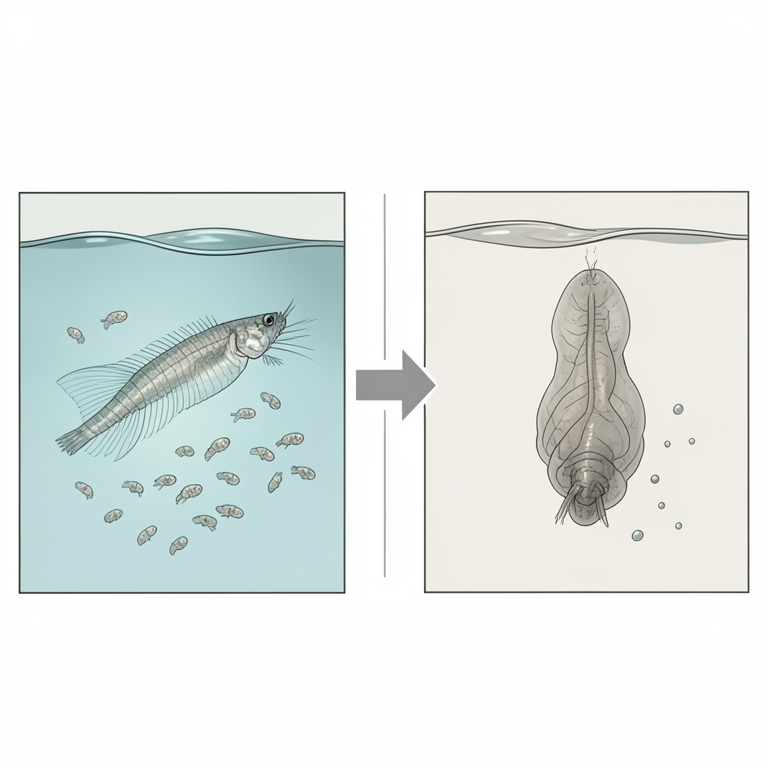
Comparative Toxicity
AI-generated conceptual illustration (Daphnia magna (water fleas)). It explains the idea and does not show study data.
View source evidence ↗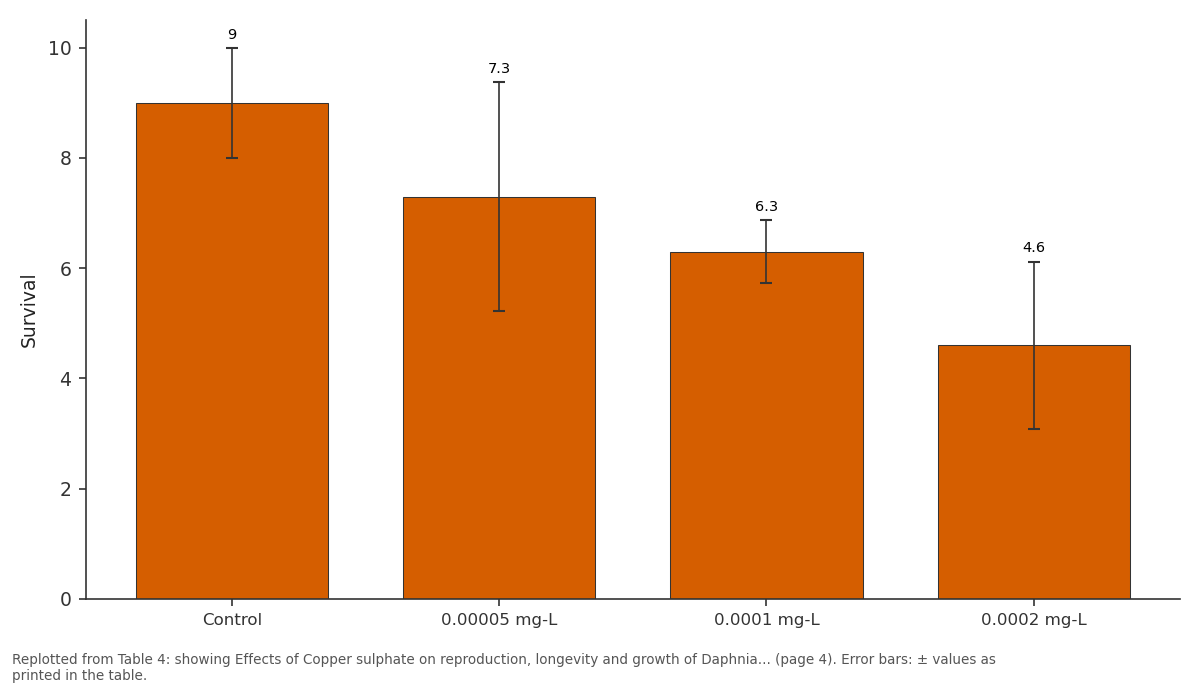
Survival: Control vs 0.00005 mg-L vs 0.0001 mg-L vs 0.0002 mg-L
Replotted from Table 4 (page 4) of the original paper. Every bar is the paper's own table value.
View source evidence ↗Figures & tables
From the original paper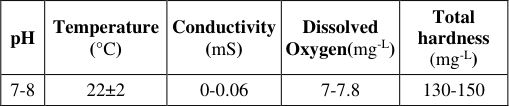 Table 1
 Table 2
 Table 3
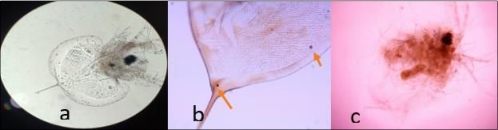 Figure 1
 Table 4
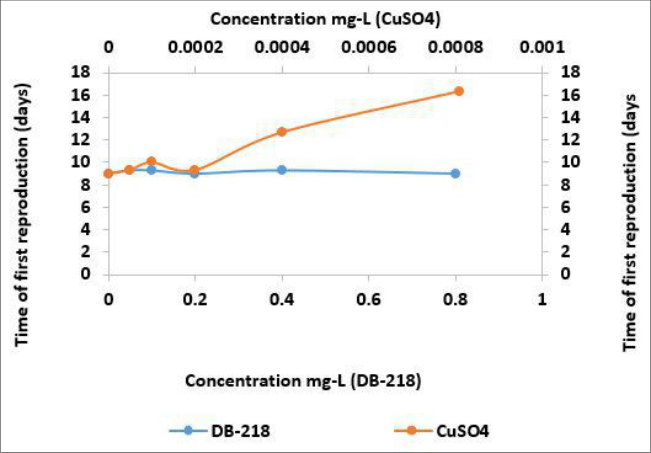 Figure 2
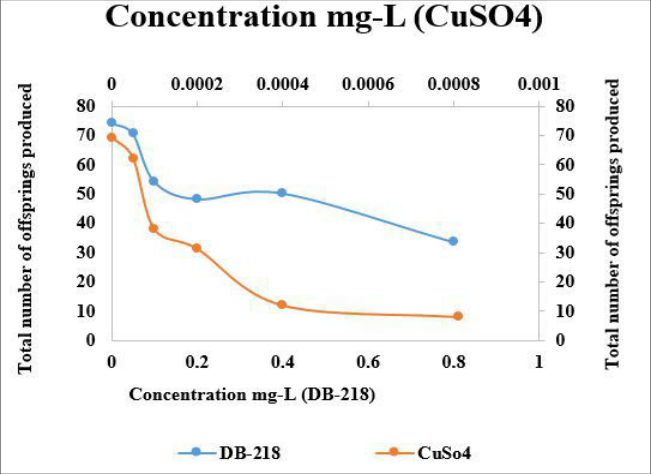 Figure 2
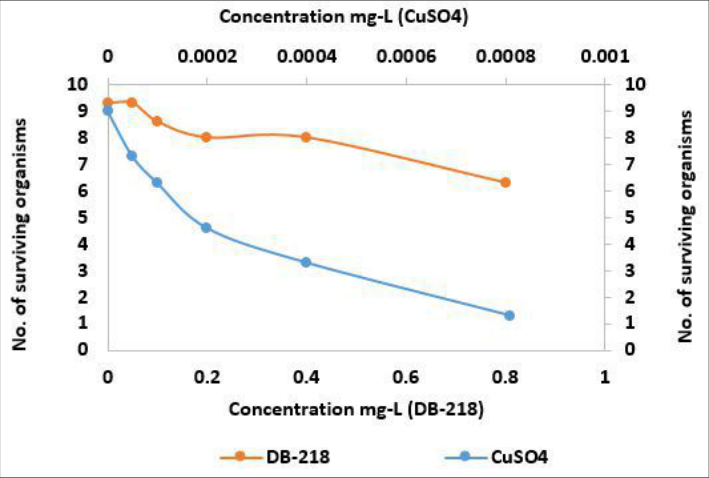 Figure 2
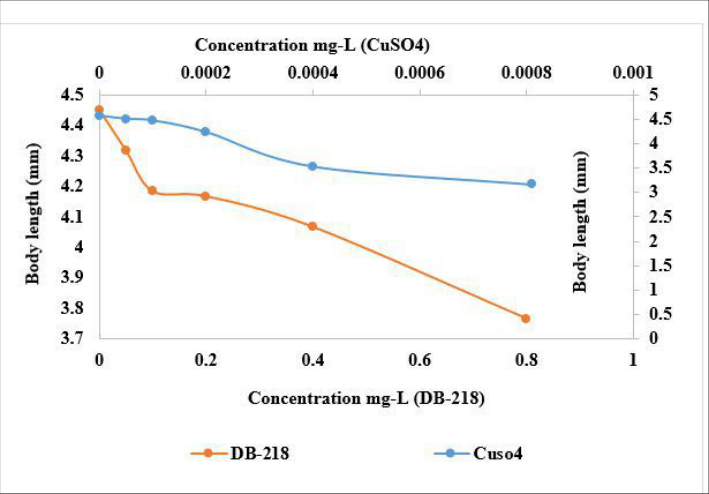 Figure 2
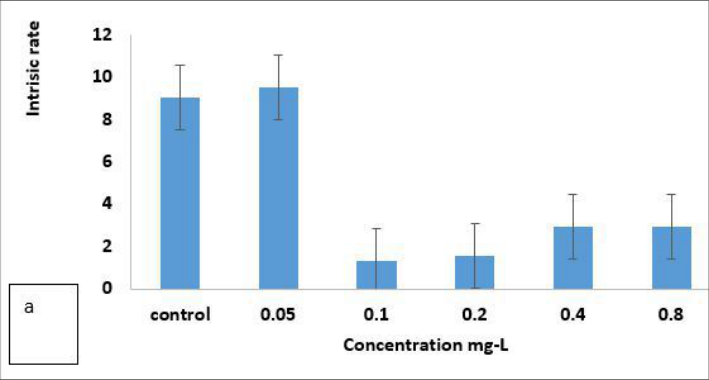 Figure 2
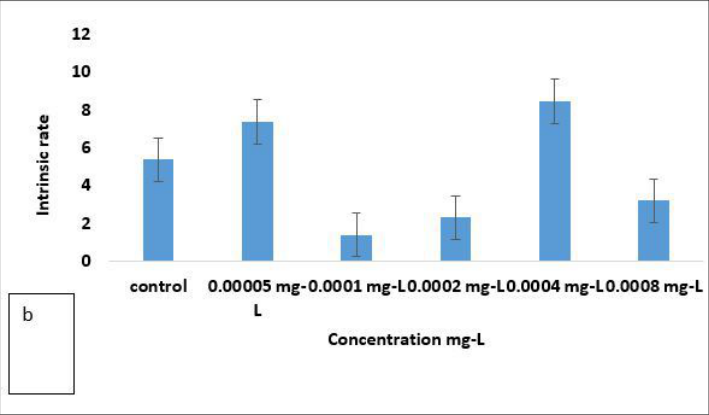 Figure 3
Introduction
During the onset of nineteenth century, infusion of dyes exclusively occurred from natural sources, (animals or vegetables). With the passage of time the dye extraction from natural sources came to halt and was overtaken completely by synthetic sources in twentieth century (de campos et al. 2013) [12] . Rapid industrialization and market demands being the major causes for the substitution. Among dyes azo dyes form the largest class used in varied domains (such as textile industry, leather tanning industry, hair colourings, wood staining, agricultural, biological, paper production, food, colour photography, pharmaceuticals and medicine, cosmetic, and chemical research) (Jagruti, 2015) [20] . About 60% to 80% of azo dyes have been found carcinogenic to humans including Direct Black 38 (Benkhaya et al. 2020; Berradi et al. 2019) [7,8] . Being inexpensive direct dyes are applied on wide range of materials including cellulose paper, leather, polyamide (Benkhaya et al. 2020) [7] . Seventy five percent of direct dyes are used to dye cotton or viscose alone (Ouslimani and Boureghda, 2018) [28] . On the other hand, there is the growth in diminution of water resources (Vakili et al. 2019) [37] . In aquatic bodies, more than 100 tons of dyes are discharged every year (Yagub et al. 2012) [40] . The prominent contributors to water pollution also include heavy metals contamination which occurs through various man-made activities such as mining and smelting operations besides natural phenomena (weathering and volcanic eruptions). Some well-known toxic heavy metals are cadmium, lead, copper, mercury, zinc, arsenic, and aluminium (Verma and Dwivedi, 2013) [39] . Heavy metals are non-biodegradable in nature and gradually pile up in living beings eventually become toxic (Fu and Wang, 2011) [17] . The inappropriate treatment of toxic effluents that are discharged from textile industries into natural water bodies raise havoc among various ecological receptors. Relatively less data is available of certain selected dyes only concerning their toxicological/ecotoxicological studies which demands further assessment of dyes for the betterment of ecological receptors. Moreover, little information is available for the intercomparison of dye and heavy metal toxicities which also demands test results under unified conditions. The primary objective of this investigation is to assess the environmental safety of CuSO 4 and DB-218 with respect to D. magna which is utilized in toxicity bioassays.
Materials and methods
Chemicals: Analytical grade of dye Direct Blue-218 (DB-218) was purchased from Karsandas Mavji Dye Manufacturer (India) as fine dark blue pure powder. Copper sulphate pentahydrate was purchased from Thermo Fisher Scientific (India) as bright blue small crystals. Yeast Extract Powder was purchased from Molychem (India).
Preparation of Daphnia magna culture
Commonly known as Water flea, D. magna -a freshwater Zooplanktonic organisms belonging to subphylum crustacea of phylum Arthropoda were obtained from Dal Lake of Srinagar, Jammu and Kashmir. Daphnids were collected in early morning to ensure maximum catch (Munirasu et al. 2016) [24] with the help of zooplankton net of 0.04mm (Khan et al, 2020) [30] . After isolating Daphnids from other zooplanktons, D. magna was subjected to species identification on the basis of specific morphological characteristics. Cultures of Daphnia magna, each containing ten adult females were maintained in 400ml of double distilled water. The pH of the cultures was maintained and at 22±2°C under cool light with 12-h light:12-h dark photoperiod (Table-1). D. magna was given yeast extract as feed regularly (Turcihan et al. 2022) [36] (0.1 and 0.2 mg C/Daphnia/day OECD-2012) [25,26] . Dead daphnids or impurities if any settled at the bottom of the culture chambers were removed carefully.
Physico-Chemical parameters of Cultures and Data Analysis
Water quality parameters such Temperature, pH and Conductivity were monitored regularly using digital thermometer (HTC DT-1), digital pH meter (Systronics-802) and digital conductivity meter (Systronics-307). Other parameters such as, Dissolved oxygen, Total alkalinity, Hardness (as CaCO 3 ) were monitored every third day before medium renewal using titration method as described in APHA 2005. LC 50 Values were computed by Probit analysis. One-way ANOVA was used to analyze the statistical difference between the controls and test substance concentrations at p<0. 05 [4,38,5] . Subsequently the working concentrations of the test substances were conceptualized on its basis. The acute test was executed by following OECD Guideline 202 [25,26] .
Full life-cycle test
To estimate the effect of DB-218 and CuSO 4 on the reproductive output of Daphnia magna, the 21-days chronic toxicity tests were performed in accordance with guideline no. 211 of OECD [25,26] . The analysed endpoints were: fecundity (number of neonates produced), growth (body length of organisms) and longevity (surviving organisms). The wellfed healthy neonates less than 24 hours old from the maintained cultural stocks were used for the test. Five different concentrations of DB-218 (0.5,0.1,0.2,0.4,0.8 mg -L ) and CuSO 4 test solutions (0.00005, 0.0001,0.0002,0.0004 and 0.0008 mg -L ) were used based on the outcome of acute toxicity test in a geometric concentration of 2 and three replicates for each treatment and two blank controls to resolute accuracy of test were conducted. The test was conducted in vessels containing 100ml test solution and a total of ten neonates were placed in each test concentration. Feeding in test vessels was regularized and the test substances were renewed thrice in a week. Temperature, and pH values were measure weekly; the test was carried out at 20±2°C under 12-h light:12-h dark photoperiod, the pH of test solution ranged from 6.84-7.05 (DB-218) and 6.78-7.0 (CuSO 4 ) from lowest to highest concentration of solutions. Finally, micrometry was performed at the end of experiment to measure body length (from the helmet to the front end of the tail spine, excluding the tail spine) of organisms. Each test organism was measured thrice (Li et al. 2023) [23] .
Results and Discussion
Results and Discussion
Atomic absorption analysis
To quantify the amount of copper present in the dye, atomic adsorption spectroscopy was employed which revealed presence of 0.421mg of copper in per gram of dye.
Acute Toxicity Assay Effect on Mobility of D. magna
During the acute toxicity test of the dye DB-218 no lethal effects were observed in concentrations 1mg -L , 2mg -L and 100% immobility or mortality were observed in concentrations 8mg -L , 32mg -L , 64 mg -L , whereas 83.3% and 16.6% immobility or mortality were observed in concentrations 16mg -L and 4mg -L respectively. Also, 0% mortality in control group confirmed accuracy of test. Immobility was induced in D. magna in dose-dependent manner which could be attributed to the geometric increase in the concentration of copper in the dye. The results indicate that the LC 50 of Direct Blue-218 for D. magna is 7 mg -L at 24 h and 1 mg -L at 48 h. The azo dye-induced toxicity is significantly influenced by the chemical makeup of the dye, commercial formulations, impurities, physical interactions, breakdown of byproducts that have the potential to cause cancer (Øllgaard et al. 1999) [27] and light penetration (Baumer, 2018) [6] . In parallel investigation of acute toxicity on D. magna using Copper sulphate of five different concentrations, the LC 50 values for copper sulphate ranged from 2.5 mg -L at 24 h to 0.0008 mg -L at 48 h. Mortality was observed in wide range of concentrations ranging from lowest (0.000420 mg -L ) to highest (0.002688 mg -L ). Apparently, a decrease in temperature render D. magna more sensitive to Cu exposure (Bae et al. 2016) [3] which resulted in widened mortality across all test series. Furthermore, conspicuously nether LC 50 values classify each test substances very toxic which resulted in inevitable mortality of D. magna (Kahru and Dubourguier, 2010) [21] . The structural deformity in D. magna as a result of acute exposure to DB-218 and CuSO 4 such as swelling in carapace, gut distortion was evident in higher concentrations of the direct blue-218 (Fig1a) which exhibits the high intensity of toxin in higher concentration (32mg -L ). Moreover, swelling in carapace and distortion in the gut of D. magna was evident in all concentrations of copper sulphate solution beyond 0.0008 mg -L , (Fig1a,c) further supporting the interpretation that copper sulphate in pure form is highly toxic to D. magna.
Effect on morphology of Daphnia magna
Various important key organismic processes such as embryo production, development, and growth actively involve stored lipids in D. magna (Fuertes et al. 2018) [18] . These lipid droplets are spherical in appearance (Cui et al. 2017) [11] . One of the causes of the carapace swelling could be due to the accumulation of lipid droplets under carapace which the organism displays in hostile environment (such as toxicity) (Asghari et al. 2012) [2] . The small bubblelike structures or lipids under the carapace of D. magna has been reported by Fuertes et al. 2018 [18] . Typically, they are neutral lipids such as cholesteryl esters and triacylglycerol encompassed by cholesterol and phospholipid. The appearance of lipid droplets is a sensitive characteristic that indicates the organism may be in a hazardous state. As a result, this issue may have a deleterious impact on D. magna development, molting regulation, and reproduction (Khoshnamvand et al. 2020) [22] . An increase in size of lipid droplet while encountering chemical stress in D. magna was evident similar to observations made by (Artal et al. 2013) [1] , Tavares et al., 2014 [35] , Cui et al. 2017 [11] in their study. The distortion of gut can be attributed to accumulation of dye metabolites the gut of D. magna. Various other metabolites such as Copper ions can reach the cytoplasm after passing through cell membranes. This passage can generate reactive oxidative species (ROS), leading to oxidative stress (Rasera et al. 2019) [32] . This in turn can induce damage to biological structures, such as DNA, lipoproteins, organelles (Sadeq and Beckerman 2019) [31] mitochondrial damage, and inevitably cell apoptosis. Moreover, the higher toxicity could be ascribed to their greater solubility, which increased Cu availability in the media (Rasera et al. 2019) [32] . Previous studies have shown that D. magna tissues may absorb nano-and microplastics from the gastrointestinal tract (Schür et al. 2019) [33] . Similarly, the obstruction of gut cells on account of positive charge of gold nanoparticles at molecular level in D. magna has been reported (Dominguez et al. 2015) [15] . Hence the overall mechanism of toxicity is clearly intracellular.
Chronic Assay
Effect on Reproduction D. magna from all treatments and controls had varying broods, with the first reproduction occurring when the animals were 9 to 10 days old in DB-218 and 9 to 16 days old in CuSO 4 (Fig2a) (Table 2 and4). D. magna in CuSO 4 generated five broods in the control and 0.00005mg -L concentrations, four broods in 0.0001 mg -L , one brood in 0.0008mg -L , and three broods in the other concentrations. Whereas D. magna generated four broods in all concentrations of DB-218 except for the lowest concentration (0.5 mg -L ) and control which generated five broods. During the chronic toxicity test an increase in the number of first brood neonates and total offspring produced by D. magna was found followed by a decrease with increasing concentration of both DB-218 and CuSO 4 . The lowest concentration of DB-218 (0.05 mg -L ) and CuSO 4 (0.00005 mg -L ) exhibited highest number of total offspring produced (70.6±4.72 in DB-218 and 62.3±2.51 in copper sulphate) which were not statistically different from controls (p< 0.05) (Table-3, 5) thus these concentrations had no effect on Daphnia magna reproduction. The NOEC values were 0.05 mg -L and 0.00005 mg -L for DB-218 and CuSO4 respectively (Table 2 and4). On the other hand, in highest concentration of DB-218 (0.8 mg -L ) and copper sulphate (0.0008 mg -L ) lowest number of total offspring produced (33.6±0.57 in DB-218 and 8±2) was observed which varied significantly from the control group and other exposure groups (p< 0.05) (Fig2b). Upon comparing the data, the overall reproductive performance of Daphnia magna was more affected by copper sulphate exposure. The intrinsic growth rate showed an increasing trend in control and 0.05 mg -L followed by a sharp decrease in 0.1 mg -L and 0.2 mg -L which further sightly increased in 0.4 mg -L thereafter remain unchanged in 0.8 mg - L of DB-218, whereas the intrinsic growth rate of D. magna in copper sulphate was higher in groups 0.00005 mg -L , 0.0004 mg -L and lower in groups 0.0001 mg -L ,0.0002 mg -L and 0.0008 mg -L (Fig3a,b). Long-term exposure resulted in strong, contrasted impacts, with daphnids subjected to sublethal concentrations of DB -218 and Copper sulphate displaying delayed maturation, less neonates produced, and consequently considerable reductions in intrinsic rate of natural increase(r), when compared to control daphnids (Pestana et al. 2010) [29] . As the concentration of DB-218 increased, a decrease in the number of neonates produced, smaller brood size, and reduced neonate number were observed compared to the control group. These disparate effects point to the involvement of distinct toxicity mechanisms, such as increased metabolic cost, reduced energy acquisition (potentially via inhibition of digestive enzyme activity), and targeted inhibition of reproduction (apparently via inhibition of vitellogenesis) (De Schamphelaere, 2007) [14] . Moreover, the decreased number of neonates produced, reduced brood size, and smaller neonate size compared to the control group observed in our study indicate that DB-218 exposure can lead to population decline. These disparate effects point to the involvement of distinct toxicity mechanisms, such as increased metabolic cost, reduced energy acquisition (potentially via inhibition of digestive enzyme activity), and targeted inhibition of reproduction (apparently via inhibition of vitellogenesis) (De Schamphelaere, 2007) [14] . Furthermore, the overall decreased reproductive output can also be explained by the presence of Cu 2+ in dye whose exposure even at lowest concentration (0.006 mg -L ) causes immunological suppression in D. magna (Heinlaan et al. 2008) [19] . In case of daphnids exposed to various concentrations of copper sulphate. It is evident as the concentration of copper sulphate increased, a decrease in the number of neonates produced, smaller brood size, and reduced neonate number were observed compared to the control group. Smaller Cladocera's may absorb particles and ions more quickly than larger animals due to their increased respiration and circulation rates (Song et al. 2015) [34] . The reduction in reproduction of D. magna with increasing concentrations of copper is in agreement with outcome Sadeq and Beckerman (2019) [31] . These findings also imply that D. magna during long term exposure responded to varying temperatures by directing more energy into defence systems rather than growth and reproduction. Additionally, oxidative damage at high temperatures increases the possibility of decreased offspring fitness (Bae et al. 2016) [3] . Furthermore, the occurrence of increased total reproduction value in initial sub-lethal doses of CuSO4 may be classified as hormesis i.e. an effect which occurs when toxic substances have a stimulatory effect on organisms at sub-lethal concentrations (Bodar et al. 1988) [9] . The formation of hazardous chemicals, primarily aromatic amines, during the enzymatic breakdown of azo dyes is the primary issue of toxicity as they are mutagenic (Brüschweiler and Merlot, 2017) [10] . Whereas Cu ions could be introduced into cells and stored in the soft sections of daphnids particularly intestine and appendages resulting in an intracellular toxicity mechanism (Rasera et al. 2019) [32] . It was validated through RT-PCR, an exposure to copper decreased the expression of genes namely DV437823 and DV437821 in D. magna, which may have a potential role in generating immunological response. Both these genes code for the proteins that are related to â-1, 3-glucan binding proteins and lectins. These proteins take charge in recognizing infections and act initially in a chain reaction that activates two important systems (prophenoloxidase system as well as complement-like system) which are implicated in the arthropod immune response (innate). In order to comprehend completely how copper impacts the immune system of D. magna which affects its survival more evidence of this linkage is required.
| Parameter | control | 0.05 mg-L | 0.1 mg-L | 0.2 mg-L | 0.4 mg-L | 0.8 mg-L |
|---|---|---|---|---|---|---|
| Time of first reproduction | 9±1 | 9.3±0.57 | 9.3 ±0.57 | 9±0 | 9.3± 0.57 | 9±1 |
| Maximum growth (mm) | 4.45±0.30 | 4.31±0.07 | 4.18±0.16 | 4.16±0.11 | 4.06±0.05 | 3.76±0.152 |
| Survival | 9.3±1.52 | 9.3±0.57 | 8.6±1.52 | 8±3 | 8±1 | 6.3±1.52 |
| Total reproduction | 74.3±4.16 | 70.6±4.72 | 54.3±13.86 | 50.3±7.37 | 48.3±2.88 | 33.6±0.57 |
Table text extracted from the original PDF; superscript letters are shown inline. The original table image is below.
View original table image
Effect on Survival
Effect on Survival
Effect on Body Length
The final body length measured at the end of experiment showed variations in all test series of DB-218 and copper sulphate was observed to be shorter in higher concentrations of DB-218 (3.76±0.152 in 0.8 mg -L ) and copper sulphate (3.16±0.20 in 0.0008 mg -L ) than the controls (4.45±0.30 in DB-218, 4.56±0.32 in copper sulphate) (Table 2 and4) (Fig2d). In chronic toxicity assessments, various toxicity pathways can be linked to biological properties including impacts on digestive enzyme activity may be associated to suppression of energy consumption and acquisition, altering the amount of food consumed and, as a result, interfering with adult organism length (Flohr et al. 2012) [16] . Additionally, digestion is intimately connected to storage cells, which generate lipid and carbohydrate reserves, potentially impacting energy metabolism. The midgut of Daphnia magna plays a pivotal role in copper retention and metabolism. Toxic heavy metals that enter aquatic animals through their alimentary canal can lead to decreased nutrient transport across epithelial cells, thereby exacerbating their detrimental effects, thereby exacerbating their detrimental effects (De Coen et al. 1997) [13] .
Figures and tables from the paper
| ANOVA | SS | DF | MS | F (DFn, DFd | P Value |
|---|---|---|---|---|---|
| Treatment (between columns) | 3422 | 5 | 684.3 | F (5,12) =13.92 | 0.0001 |
| Residual (within columns) | 590.0 | 12 | 49.17 | ||
| Total | 4012 | 17 |
Table text extracted from the original PDF; superscript letters are shown inline. The original table image is below.
View original table image
| Parameter | Control | 0.00005 mg-L | 0.0001 mg-L | 0.0002 mg-L | 0.0004 mg-L | 0.0008mg-L |
|---|---|---|---|---|---|---|
| Time of first reproduction | 9±0 | 9.3±0.57 | 10 ±1 | 9.3±0.57 | 12± 1.52 | 16±0.57 |
| Maximum growth (mm) | 4.56±0.32 | 4.5±0.26 | 4.46±0.25 | 4.23±0.25 | 3.53±0.15 | 3.16±0.20 |
| Survival | 9±1 | 7.3±2.08 | 6.3±0.57 | 4.6±1.52 | 3.3±2.08 | 1.3±1.52 |
| Total reproduction | 69.3 ±5.13 | 62.3 ±2.51 | 38±2 | 31.3±10.26 | 12±6 | 8±2 |
Table text extracted from the original PDF; superscript letters are shown inline. The original table image is below.
View original table image
References
40 in the original paper- Artal MC, Holtz RD, Kummrow F, Alves OL, Umbuzeiro Gde A. The role of silver and vanadium release in the toxicity of silver vanadate nanowires toward Daphnia similis. Environ Toxicol Chem. 2013;32:908-912. doi:10.1002/etc.2128
- Asghari S, Johari SA, Lee JH, et al. Toxicity of various silver nanoparticles compared to silver ions in Daphnia magna. J Nanobiotechnol. 2012;10:14. doi:10.1186/1477-3155-10-14
- Bae E, Samanta P, Yoo J, Jung J. Effects of multigenerational exposure to elevated temperature on reproduction, oxidative stress, and Cu toxicity in Daphnia magna. Ecotoxicol Environ Saf. 2016;132:366371. doi:10.1016/j.ecoenv.2016.06.034
- Bae JS, Freeman HS, El-Shafei A. Metallization of nongenotoxic direct dyes. Dyes Pigments. 2003;57(2):121129. doi:10.1016/S0143-7208(02)00120-1
- Bagherian G, Arab CM, Shariati EH, Ashrafi M. Determination of copper (II) by flame atomic absorption spectrometry after its preconcentration by a highly selective and environmentally friendly dispersive liquidliquid microextraction technique. J Anal Sci Technol. 2019;10:1-11. doi:10.1186/s40543-019-0164-6
- Baumer JD, Valério A, de Souza SMGU, Erzinger GS, Furigo JA, de Souza AAU. Toxicity of enzymatically decolored textile dyes solution by horseradish peroxidase. J Hazard Mater. 2018;360:82-88. doi:10.1016/j.jhazmat.2018.07.102
- Benkhaya S, M'rabet S, El Harfi A. A review on classifications, recent synthesis and applications of textile dyes. Inorg Chem Commun. 2020;115:107891. doi:10.1016/j.inoche.2020.107891
- Berradi M, Hsissou R, Khudhair M, Assouag M, Cherkaoui O, El Bachiri A, et al. Textile finishing dyes and their impact on aquatic environments. Heliyon. 2019;5(11):e02711.
- Bodar CWM, Van Leeuwen CJ, Voogt PA, Zandee DI. Effect of cadmium on the reproduction strategy of Daphnia magna. Aquat Toxicol. 1988;12(4):301-309. doi:10.1016/0166-445X(88)90058-6
- Brüschweiler BJ, Merlot C. Azo dyes in clothing textiles can be cleaved into a series of mutagenic aromatic amines which are not regulated yet. Regul Toxicol Pharmacol. 2017;88:214-226. doi:10.1016/j.yrtph.2017.06.012
- Cui R, Kim SW, An YJ. Polystyrene nanoplastics inhibit reproduction and induce abnormal embryonic development in the freshwater crustacean Daphnia galeata. Sci Rep. 2017;7(1):12095. doi:10.1038/s41598017-12299-2
- De Campos VCB, Marin-Morales MA. Azo dyes: characterization and toxicity-a review. Textiles Light Ind Sci Technol. 2013;2(2):85-103.
- De Coen WM, Janssen CR. The use of biomarkers in Daphnia magna toxicity testing II. Digestive enzyme activity in Daphnia magna exposed to sublethal concentrations of cadmium, chromium and mercury. Chemosphere. 1997;35(5):1053-1067. doi:10.1016/S0045-6535(97)00172-0
- De Schamphelaere KAC, Forrez I, Dierckens K, Sorgeloos P, Janssen CR. Chronic toxicity of dietary copper to Daphnia magna. Aquat Toxicol. 2007;81(4):409-418. doi:10.1016/j.aquatox.2007.01.002
- Dominguez GA, Lohse SE, Torelli MD, Murphy CJ, Hamers RJ, Orr G, Klaper RD. Effects of charge and surface ligand properties of nanoparticles on oxidative stress and gene expression within the gut of Daphnia magna. Aquat Toxicol. 2015;162:1-9. doi:10.1016/j.aquatox.2015.02.015
- Flohr L, CastilhosJúnior ABD, Matias WG. Acute and chronic toxicity of soluble fractions of industrial solid wastes on Daphnia magna and Vibrio fischeri. Sci World J. 2012;2012:643904. doi:10.1100/2012/643904
- Fu F, Wang Q. Removal of heavy metal ions from wastewaters: a review. J Environ Manag. International Journal of Biology Sciences https://www.biologyjournal.net 2011;92(3):407-418. doi:10.1016/j.jenvman.2010.11.011
- Fuertes I, Jordão R, Casas J, Barata C. Allocation of glycerolipids and glycerophospholipids from adults to eggs in Daphnia magna: perturbations by compounds that enhance lipid droplet accumulation. Environ Pollut. 2018;242:1702-1710. doi:10.1016/j.envpol.2018.07.102
- Heinlaan M, Ivask A, Blinova I, Dubourguier HC, Kahru A. Toxicity of nanosized and bulk ZnO, CuO and TiO2 to bacteria Vibrio fischeri and crustaceans Daphnia magna and Thamnocephalus platyurus. Chemosphere. 2008;71(7):1308-1316. doi:10.1016/j.chemosphere.2007.11.047
- Jagruti B. Evaluation of azo dye toxicity using some haematological and histopathological alterations in fish Catla catla. Int J Environ Ecol Eng. 2015;9(5):458-461.
- Kahru A, Dubourguier HC. From ecotoxicology to nanoecotoxicology. Toxicol. 2010;269(2-3):105-119. doi:10.3390/toxics11070594
- Khoshnamvand M, Ashtiani S, Liu J. Acute toxicity of gold nanoparticles synthesized from macroalga Saccharina japonica towards Daphnia magna. Environ Sci Pollut Res. 2020;27:22120-22126. doi:10.1007/s11356-020-08770-9
- Li S, Cui Y, Wen M, Ji G. Toxic Effects of Methylene Blue on the Growth, Reproduction and Physiology of Daphnia magna. Toxics. 2023;11(7):594.
- Munirasu S, Uthayakumar V, Arunkumar P, Ramasubramanian V. The effect of different feeds such as Chlorella vulgaris, Azolla pinnata and yeast on the population growth of Daphnia magna commonly found in freshwater systems. Int J Fish Aquat Stud. 2016;4(6):5-10.
- OECD. Guidelines for the testing of chemicals: Daphnia sp., acute immobilization test. Paris, France: Organization for Economic Cooperation and Development; Test No. 202, 2004.
- OECD. Test No. 211: Daphnia magna Reproduction Test. Paris, France: OECD; 2012.
- Øllgaard H, Frost L, Galster J, Hansen OC. Survey of azo-colorants in Denmark: Consumption, use, health and environmental aspects. Ministry of Environment and Energy, Denmark, Danish Environmental Protection Agency; 1999. p. 210.
- Ouslimani N, Boureghda MZM. Removal of direct dyes from wastewater by cotton fiber waste. Int J Waste Resour. 2018;8(330):2. doi:10.4172/22525211.1000330
- Pestana JL, Loureiro S, Baird DJ, Soares AM. Pesticide exposure and inducible antipredator responses in the zooplankton grazer, Daphnia magna Straus. Chemosphere. 2010;78(3):241-248. doi:10.1016/j.chemosphere.2009.10.066
- Khan MA, Hasan MM, Sumon KA, Rashid H. Culture of freshwater zooplankton Daphnia magna fed with different feed combinations. Bangladesh J Fisheries. 2020;32(1):55-59. Available from: https://ssrn.com/abstract=3656538
- Sadeq SA, Beckerman AP. The chronic effects of copper and cadmium on life history traits across Cladocera species: a meta-analysis. Arch Environ Contam Toxicol. 2019;76:1-16. doi:10.1007/s00244-018-0555-5
- Rasera SJR, Neto ASA, Monteiro RTR, Van-Gestel CA, De-Carvalho HWP. Toxicity, bioaccumulation and biotransformation of Cu oxide nanoparticles in Daphnia magna. Environ Sci Nano. 2019;6(9):2897-2906. doi:10.1039/C9EN00280D
- Schür C, Rist S, Baun A, Mayer P, Hartmann NB, Wagner M. When fluorescence is not a particle: the tissue translocation of microplastics in Daphnia magna seems an artifact. Environ Toxicol Chem. 2019;38(7):1495-1503. doi:10.1002/etc.4436
- Song L, Vijver MG, deSnoo GR, Peijnenburg WJ. Assessing toxicity of copper nanoparticles across five cladoceran species. Environ Toxicol Chem. 2015;34(8):1863-1869. doi:10.1002/etc.3000
- Tavares KP, deOliveira ÁC, Vicentini DS, Melegari SP, Matias WG, Barbosa S, Kummrow F. Acute toxicity of copper and chromium oxide nanoparticles to Daphnia similis. Ecotoxicol Environ Contam. 2014;9(1):43-50. doi:10.5132/eec.2014.01.006
- Turcihan G, Isinibilir M, Zeybek YG, Eryalçın KM. Effect of different feeds on reproduction performance, nutritional components and fatty acid composition of cladocer water flea (Daphnia magna). Aquacult Res. 2022;53(6):2420-2430. doi:10.1111/are.15759
- Vakili M, Deng S, Cagnetta G, Wang W, Meng P, Liu D, Yu G. Regeneration of chitosan-based adsorbents used in heavy metal adsorption: A review. Sep Purif Technol. 2019;224:373-387. doi:10.1016/j.seppur.2019.05.040
- Garduño OV, Martínez ME, Gimeno M, Tecante A, Cardoso RB, Shirai K. Copper removal from wastewater by a chitosan-based biodegradable composite. Environ Sci Pollut Res. 2020;27:28527-28535. doi:10.1007/s11356-019-07560-2
- Verma R, Dwivedi P. Heavy metal water pollution-A case study. Recent Res Sci Technol. 2013;5(5).
- Yagub MT, Sen TK, Ang HM. Equilibrium, kinetics, and thermodynamics of methylene blue adsorption by pine tree leaves. Water Air Soil Pollut. 2012;223:5267-5282. doi:10.1007/s11270-012-1277-3