
Research article · 2025 · Full text
International Journal of Agriculture and Food ScienceA review on Operculina turpethum (L.) Silva Manso.: A threatened medicinal plant
Volume 7(3) · Pages 109–113 · DOI: 10.33545/2664844x.2025.v7.i3b.319 ↗
Research areasPhytochemistry Medicinal Plant ApplicationsAgricultural and Food SciencesFood Science and Nutritional Studies
Abstract
Author-writtenOperculina turpethum (L.) Silva Manso. is a threatened medicinal plant belonging to the family Convolvulaceae. It is used in the Ayurvedic system of medicine and is popularly known as ‘Trivrit or Turbud’. It has been attributed to contain numerous medicinal properties of high commercial value. But, rapid depletion of natural habitat has greatly reduced the distribution of this species and increased the risk of genetic diversity loss. Hence, much emphasis has to be laid on conservation of this medicinal species. The present review provides bird eye view on the literatures pertaining to Operculina turpethum and current status of research helping to fuel further research in the various unexplored activities that are attributed to this plant.
Summary
Source-checkedPlain-language reading of the full paper, prepared with AI and checked against the text. Each point links to the authors' own words.
Why it matters
- Ayurvedic medicine is a critical healthcare component in rural India, where it is used by 70% of the population. View evidence ↗
- Overharvesting and habitat loss have put approximately 15,000 medicinal plant species at risk of extinction. View evidence ↗
- Operculina turpethum is a medicinal plant endemic to the Western Ghats with increasing pharmaceutical importance. View evidence ↗
The question
- The aim of this review is to summarize existing literature on Operculina turpethum to guide future research into its unexplored activities. View evidence ↗
What they did
- Standard harvesting for the plant's roots, stems, and leaves typically occurs in March as the plants begin to dry. View evidence ↗
What they found
- The combination of water soaking and mechanical scarification results in a 95% seed germination rate. View evidence ↗
- Turpethin is identified as the primary active medicinal principle found in the root bark of the plant. View evidence ↗
- Ethanolic extracts of O. turpethum showed greater effectiveness against six cancer cell lines compared to extracts from four other medicinal plants. View evidence ↗
- The plant exhibits antibacterial activity against six specific bacterial species, including E. coli and S. aureus. View evidence ↗
- Extracts from the stem and root have been found to reduce blood sugar levels, indicating anti-diabetic properties. View evidence ↗
- Trivrit is used as a key ingredient in over 135 different herbal formulations. View evidence ↗
- Due to destructive root harvesting and human activity, the IUCN has red-listed the species as vulnerable. View evidence ↗
What it means
- The authors conclude that preserving the species requires a combination of sustainable cultivation, propagation techniques, and biotechnology. View evidence ↗
- The authors note that more work is needed to isolate phyto-constituents to fully understand the plant's biological mechanisms. View evidence ↗
Visual summary
1 visualsIllustrations explain the paper; they do not show study data.
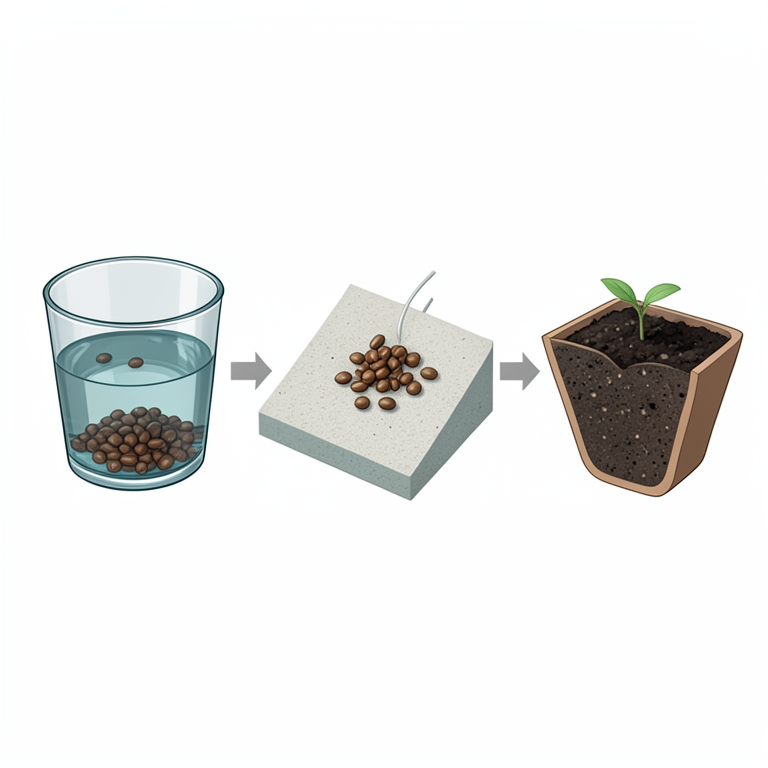
Seed Propagation Process
AI-generated conceptual illustration (Operculina turpethum seeds and seedlings). It explains the idea and does not show study data.
View source evidence ↗Figures & tables
From the original paper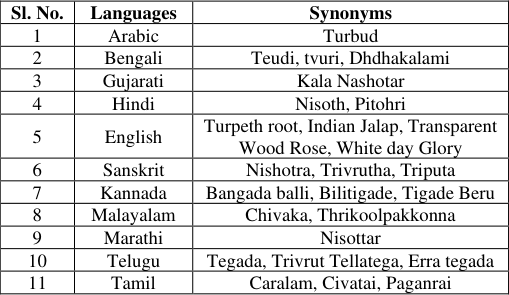 Table 1
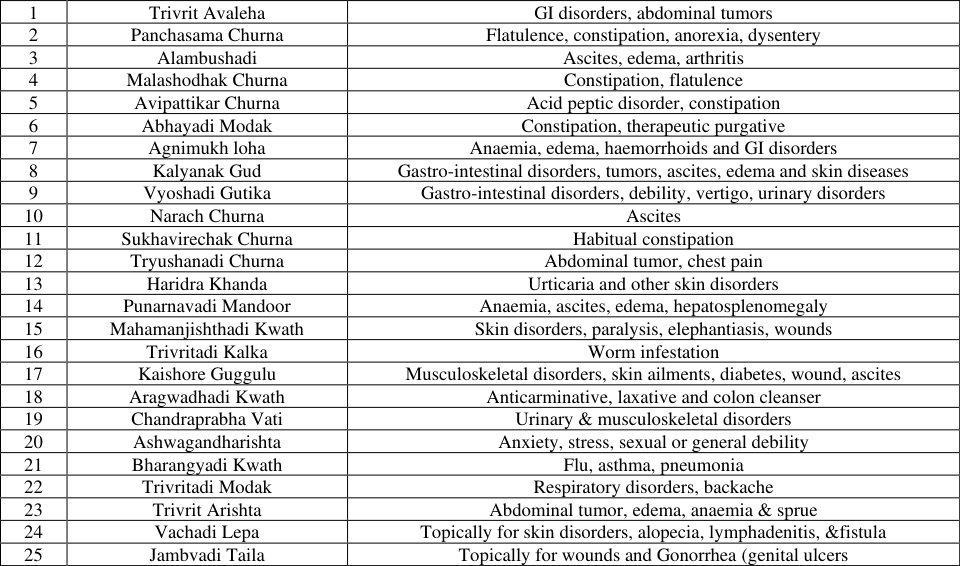 Table 2
Introduction
Medicinal plants are considered as the "backbone" of traditional medicine (Ahvazi et al., 2012) [3] . India is the world's largest producer of medicinal herbs and is popularly known as the "botanical garden" with a rich heritage of medicinal species, having pharmaceutical potential. There are about 4,000 medicinal species, with its abundance in Eastern Himalayas, Western Ghats and Andaman and Nicobar Islands (Swamy et al., 2018) [32] . In rural India, 70 percent of the population relies on Ayurvedic system of medicine and it is considered as an important component of the health care system (Patro, 2016) [19] . Every plant that exist in nature has either one or the other medicinal property and the detailed study on medicinal plants and its products has evolved a separate shastra known as Dravya Guna Shastra. Approximately 80 percent of people in developing countries depend exclusively on herbal medicines for their primary healthcare, while 25% of medicines in developed countries come from wild plant species. In recent days, the demand on herbal drugs, natural health products and secondary metabolites of medicinal plants is increasing at an alarming rate due to its safer effects on health. International Union for Conservation of Nature and World Wildlife Fund has released a data consisting of 50,000 to 80,000 flowering plant species which has immense medicinal value. But due to overharvesting and habitat destruction, 15,000 species are at a verge of extinction (Gopi et al., 2018) [9] . The potency and therapeutic effectiveness of herbal medicine has been severely harmed as a result of the gradual depletion of medicinal plant diversity (Ahana and Hegde, 2018) [1] . The recovery of biodiversity through habitat protection and enhancement of endangered medicinal plants is one of the positive step towards the sustainability of natural resources. Therefore, there is a need for the development of conservation strategies which protects them from extinction. Operculina turpethum (L.) Silva Manso. is one among the important medicinal species, endemic to Western Ghats and is gaining popularity due to its wide range of applications in pharmaceutical industries. cancer. There are two varieties of Trivrit namely Aruna or Shweta [Operculina turpethum (L.) Silva Manso.] having reddish or whitish coloured root and Shyama [ Operculina petaloides] having blackish root (Sharma and Singh, 2012) [29] .
Taxonomic classification (Hoq and Tamanna, 2019) [12] • Kingdom: Plantae [18] .
Distribution
The species is distributed across India, Bangladesh, Nepal, China, Srilanka, Australia, Africa, South America, Pakistan, Taiwan, Myanmar, Indonesia, Malaysia, Thailand, Papua New Guinea, Philippines and is naturalized in West indies (Sharma and Singh, 2012) [29] . In India, it is commonly found in the dry zones of Tamil Nadu and Karnataka (Hoq and Tamanna, 2019) [12] .
Ecology
It requires a warm climate during the growing season followed by cool climate for several months. Sandy loam to clay loam soils are best suitable for its cultivation. It is a semi-deciduous plant that sheds its leaves during winter and the growth of new flush can be seen in the month of January. Flowering and fruiting occurs twice a year from September to November and then from March to May.
Pollination is usually carried out by honey bees (Kohli et al., 2010) [16] .
Plant description
It is a herbaceous perennial climber with purplish stem and milky white exudates. Roots are long, slender, fleshy and branched. Stems are angled, pubescent, tough and brown when they are old. Leaves are alternate, slightly oblong or ovate having reticulate venation with small pubescent hair on both the sides and the leaf base is either cordate or truncate. Inflorescence is a few flowered cyme forming globose capsule enclosed within the brittle sepals. Flowers are axillary, bisexual, solitary and white in colour. Fruits are round measuring 1 to 1.5 cm in diameter containing 3-4 black smooth seeds (Hoq and Tamanna, 2019) [12] .
Harvesting
The plant lasts for about 10 to 12 months. Roots, stems and leaves are harvested in the month of March, when the plants begin to dry. Freshly harvested roots are cleaned thoroughly with fresh water and dried under sun for two to three days followed by shade drying for 10 days until the moisture content is reduced to 8 percent. Mature fruits contain 3-4 black, smooth and round shaped seeds which are harvested on complete drying. April-May is the best time to gather the seeds (Sharma and Singh, 2012) [29] .
Chemical composition
Turpethin is the major active principle present in the root bark, having medicinal properties. Root contains glucoside, jalapine and convolvuli which are insoluble in ether, benzene and carbon sulphide whereas resins, volatile oil, yellow colouring matter, albumin, starch, lignin, salts and ferric oxide are soluble in ether (Choudhary et al., 2020). Apart from these, the presence of various bioactive compounds like β-sitosterol, scopoletin, betulin, cycloartenol, lanosta-5-ene, coumarin, acrylamide 3-(4hydroxy-phenyl)-N-[2-(4 hydroxyphenyl)ethyl] and salicylic acid are reported (Gupta and Ved, 2017) [10] . The aerial parts of the plant contain turpethoside A, glycoside resin B, turpethic acid A-C (Ding et al., 2012) [6] and Operculinosides A, B, C, D are four new dammarane-type saponins separated from plant roots (Ding et al., 2011) [7] .
Propagation
They can be propagated through seeds. But due to poor seed viability, low percentage of germination, survivability and dormancy, there is a need to go for seed treatments. Collected seeds are water soaked for 24 hours followed by mechanical scarification which is done by rubbing the treated seeds with sand paper and are planted in polybags containing a mixture of sand, soil and farmyard manure in equal proportions. This method has proved to be effective as it helps in 95% germination (Tiwari et al., 2018) [34] . Others methods include vegetative propagation using cuttings of 10 cm length, having two nodes are planted in the field with a spacing of 30 cm x 30 cm. The best time for planting these cuttings is June-July (Mohapatra and Basak, 2014) [17] . Apart from this, in-vitro propagation using nodal explants serves as an efficient tool for rapid production of true-totype plants which have excellent vigor and are free from virus infection. Nodal segments with axillary bud when cultured on MS medium supplemented with BAP (1mg/l) gave good response with respect to shoot length, number of leaves and number of shoots (Sebastinraj et al., 2013) [27] . Cotyledonary nodes (1 cm long) were cultured on MS medium with different concentrations of Kinetin and maximum shoot proliferation was reported at a concentration of 1.5 mg/l (Alam et al., 2010) [4] .
Medicinal uses: Roots are used in the treatment of fever, cough, asthma, edema, anaemia, ascites, anorexia, constipation, gout, rheumatism, hepatitis, haemorrhoids, intoxication, ulcers, fistulas abdominal tumors, wounds, worm infestation, scorpion sting and snake bite (Thamizhmozhi and Nagavalli, 2017) [33] . They have anti helminthic, purgative, antipyretic and alexiteric properties (Harun et al., 2002) [11] and are effective in relieving muscle and joint pain (Shareef et al., 2014) [28] . Root bark oil is used in curing skin diseases. Fresh juice of trivit leaves are used for treating corneal opacity. Rhizome powder mixed with honey and butter is used in treating tuberculosis, herpes and vomiting. Flowers are used as a remedy for headache in Western India (Kohli et al., 2010) [16] .
Pharmacological potential
O. turpethum roots serve as a potential source of natural antioxidant by inhibiting the production of free radicals, thereby reducing the risk of cancer (Sharma and [30,26,8,22] . Oral administration of the root extract is effective in the treating painful inflammatory conditions (Sharma and Singh, 2013; Islam, 2016; Prabhavati, 2012) [30,14,20] . The anticancer activity of five medicinal plants namely Holoptelea integrifolia, Operculina turpethum, Cardiospermem halicacabum L, Dilonix regia, Sesbania grandiflora were examined and the results indicated that the ethanolic extract of O. turpethum was effective in fighting against six cancer cell lines when compared to the other plant extracts (Rizwani et al., 2014) [25] . The stem and root extract was helpful in reducing the blood sugar levels which showed the anti-diabetic nature of O. turpethum (Raut et al., 2014; Pulipaka et al., 2012) [24,21] . They possess antibacterial activity against six bacterial species namely Escherichia coli, Enterobacter aerogenes, Klebsiella oxytoca, Proteus vulgaris, Bacillus cereus and Staphylococcus aureus (Ahmed et al., 2013; Kiran et al., 2018; Rathnan et al., 2012) [2,15,23] .
Ayurvedic formulations of Trivrit
Trivrit is considered as a vital ingredient in preparation of more than 135 herbal formulations. Shweta trivrit is used as a purgative and Shyama is used in treating intoxication and abdominal tumors (Kohli et al., 2010) [16] . Some of the formulations are presented in the table below (Sharma and Singh, 2012; Ignatius et al., 2013) [29,13] . Vachadi Lepa Topically for skin disorders, alopecia, lymphadenitis, &fistula 25 Jambvadi Taila Topically for wounds and Gonorrhea (genital ulcers
Need for conservation
Trivrit is an important ingredient in preparation of many drugs. It is mainly used for the treatment of fever, hepatitis, tumors, scorpion sting, snake bite and skin disorders. It is gaining lot of importance in pharmaceutical field to be used as a future potent drug for curing many diseases. But rapid depletion of natural habitat has greatly reduced the distribution of this species and increased the risk of genetic diversity loss (Alam et al., 2010) [4] . Destructive harvesting of root as a source of raw material for ayurvedic drug preparation and other anthropogenic activities have made the species severely threatened in nature and it is Red-listed (vulnerable) medicinal species by IUCN (International Union for Conservation of Nature). Hence, there is an urgent need for conservation.
Future prospects
O. turpethum is a very potent herb having wide pharmacological actions and therapeutic significance. This review is a collection of literature regarding the different aspects starting from plant introduction to future scope.
Recent studies have revealed the phytochemistry and wide spectrum attributed to pharmacological activities but still there is a scope for isolation of various phyto-constituents which gives a clear idea of plant mechanism. Much emphasis has to be laid on effective conservation, utilization and multiplication of this threatened medicinal plant.
Conclusion
Conclusion
Figures and tables from the paper
| Sl. No. | Languages | Synonyms |
|---|---|---|
| 1 | Arabic | Turbud |
| 2 | Bengali | Teudi, tvuri, Dhdhakalami |
| 3 | Gujarati | Kala Nashotar |
| 4 | Hindi | Nisoth, Pitohri |
| 5 | English | Turpeth root, Indian Jalap, Transparent Wood Rose, White day Glory |
| 6 | Sanskrit | Nishotra, Trivrutha, Triputa |
| 7 | Kannada | Bangada balli, Bilitigade, Tigade Beru |
| 8 | Malayalam | Chivaka, Thrikoolpakkonna |
| 9 | Marathi | Nisottar |
| 10 | Telugu | Tegada, Trivrut Tellatega, Erra tegada |
| 11 | Tamil | Caralam, Civatai, Paganrai |
Table text extracted from the original PDF; superscript letters are shown inline. The original table image is below.
View original table image
| 1 | Trivrit Avaleha | GI disorders, abdominal tumors |
|---|---|---|
| 2 | Panchasama Churna | Flatulence, constipation, anorexia, dysentery |
| 3 | Alambushadi | Ascites, edema, arthritis |
| 4 | Malashodhak Churna | Constipation, flatulence |
| 5 | Avipattikar Churna | Acid peptic disorder, constipation |
| 6 | Abhayadi Modak | Constipation, therapeutic purgative |
| 7 | Agnimukh loha | Anaemia, edema, haemorrhoids and GI disorders |
| 8 | Kalyanak Gud | Gastro-intestinal disorders, tumors, ascites, edema and skin diseases |
| 9 | Vyoshadi Gutika | Gastro-intestinal disorders, debility, vertigo, urinary disorders |
| 10 | Narach Churna | Ascites |
| 11 | Sukhavirechak Churna | Habitual constipation |
| 12 | Tryushanadi Churna | Abdominal tumor, chest pain |
| 13 | Haridra Khanda | Urticaria and other skin disorders |
| 14 | Punarnavadi Mandoor | Anaemia, ascites, edema, hepatosplenomegaly |
| 15 | Mahamanjishthadi Kwath | Skin disorders, paralysis, elephantiasis, wounds |
| 16 | Trivritadi Kalka | Worm infestation |
| 17 | Kaishore Guggulu | Musculoskeletal disorders, skin ailments, diabetes, wound, ascites |
| 18 | Aragwadhadi Kwath | Anticarminative, laxative and colon cleanser |
| 19 | Chandraprabha Vati | Urinary & musculoskeletal disorders |
| 20 | Ashwagandharishta | Anxiety, stress, sexual or general debility |
| 21 | Bharangyadi Kwath | Flu, asthma, pneumonia |
| 22 | Trivritadi Modak | Respiratory disorders, backache |
| 23 | Trivrit Arishta | Abdominal tumor, edema, anaemia & sprue |
| 24 | Vachadi Lepa | Topically for skin disorders, alopecia, lymphadenitis, &fistula |
| 25 | Jambvadi Taila | Topically for wounds and Gonorrhea (genital ulcers |
Table text extracted from the original PDF; superscript letters are shown inline. The original table image is below.
View original table image
References
33 in the original paper- Ahana AK, Hegde PL. Conservation of ret medicinal plants W.S.R to Tinospora malabarica (Lam.) Hook.F. & Thoms. Journal of Pharmacognosy and Phytochemistry. 2018, 409-412.
- Ahmed A, How MSI, Dey SK, Hira A, Hossain MH, Uddin MMN. Phytochemical screening and antibacterial activity of different fractions of Operculina turpethum root and leaf. American Journal of Science Research. 2013;4(2):167-172.
- Ahvazi M, Sigaroodi FK, Charkhchiyan MM, Mojab F, Mozaffarian VA, Zakeri H, et al. Introduction of medicinal plant species with the most traditional usage in Alamut region. Iranian Journal of Pharmaceutical Research. 2012;11(1):185-194.
- Alam MJ, Alam I, Sharmin SA, Rahman MM, Anisuzzaman M, Alam MF, et al. Micropropagation and antimicrobial activity of Operculina turpethum (syn. Ipomoea turpethum), an endangered medicinal plant. Plant Omics. 2010;3(2):40-46.
- Choudhary N, Prasad SB, Singh A, Khatik GL, Prabhu KS, Mishra V, et al. Phytochemistry and pharmacological potential of Operculina turpethum. Plant Archives. 2020;20:683-692.
- Ding W, Jiang ZH, Wu P, Xu L, Wei X. Resin glycosides from the aerial parts of Operculina turpethum. Phytochemistry. 2012;81:165-174.
- Ding W, Zeng F, Xu L, Chen Y, Wang Y, Wei X, et al. Bioactive dammarane-type saponins from Operculina turpethum. Journal of Natural Products. 2011;74(9):1868-1874.
- Ezeja MI, Onoja SO, Omeh YN, Chibiko CA. Analgesic and antioxidant activities of the methanolic extract of Operculina turpethum leaves in mice. International Journal of Basic and Clinical Pharmacology. 2015;4(3):453-457.
- Gopi DK, Mattummal R, Narayana SKK, Parameswaran S. IUCN red-listed medicinal plants of Siddha. International Journal of Medical Research. 2018;1(1):15-22.
- Gupta S, Ved A. Operculina turpethum (Linn.) Silva Manso as a medicinal plant species: A review on bioactive components and pharmacological properties. Pharmacognosy Reviews. 2017;11(22):158-166.
- Harun M, Gafur MA, Sadik MG, Rahman MAA. Antibacterial and cytotoxic activities of extracts and isolated compounds of Ipomoea turpethum. Pakistan Journal of Biological Sciences. 2002;5(5):597-599.
- Hoq MO, Tamanna T. Medicinal importance of Operculina turpethum (Linn.): A review. International Journal of Unani and Integrated Medicine. 2019;3(1):56-61.
- Ignatius V, Narayanan M, Subramanian V, Periyaswamy BM. Antiulcer activity of indigenous plant Operculina turpethum Linn. Evidence-Based Complementary and Alternative Medicine. 2013;5(4):145-152.
- Islam NM. Analgesic and CNS depressant effect of the crude ethanolic extract of Operculina turpethum. Biosensors Journal. 2016;4(2):32-45.
- Kiran B, Chauhan JB, Padmini N. Antibacterial activity of different solvent extracts of Operculina turpethum Silva (root) against important species of bacteria. World Journal of Pharmacy Research. 2018;7(13):410-415.
- Kohli KR, Nipanikar SU, Kadbhane KP. A comprehensive review on Trivrit (Operculina turpethum syn. Ipomoea turpethum). International Journal of Pharma and Bio Sciences. 2010;1(4):443452.
- Mohapatra M, Basak U. Macropropagation of Operculina turpethum (Tihudi), a red-listed medicinal plant of Odisha. International Journal of Current Research. 2014;6(11):9488-9493.
- Nafees H, Nafees S, Nizamudeen S. A comprehensive review on Turbud (Operculina turpethum): A potential Unani drug. International Journal of Herbal Medicine. 2020;8(4):88-92.
- Patro L. Medicinal plants of India: With special reference to Odisha. International Journal of Advanced Research Innovations and Ideas in Education. 2016;2(5):121-135.
- Prabhavati NB, Kowsalya B, Kumar SR, Sravani BJ, Sri GD, Sakila A, et al. Analgesic activity of different solvent extracts of Operculina turpethum using Swiss albino mice. Asian Journal of Pharmaceutical and Clinical Research. 2012;5(3):215-218.
- Pulipaka S, Challa SR, Pingili RB. Comparative antidiabetic activity of methanolic extracts of Operculina turpethum stem and root against healthy and streptozotocin-induced diabetic rats. International Current Pharmaceutical Journal. 2012;1(9):272-278.
- Pulipaka S, Pingili RB, Farheen N, Reddy BSS, Leelabai HPP. Evaluation of comparative free-radical scavenging capacity and antioxidant activities of methanolic extracts of leaf, stem, and roots of Operculina turpethum. African Journal of Pharmacy and Pharmacology. 2013;7(29):2025-2032.
- Rathnan RK, Jose F, Pius I, Sathar L, Jimmy N, Sasidharan S, et al. Comparative study of antimicrobial activity of leaves and callus extract of Ipomoea turpethum against antibiotic-resistant pathogenic microorganisms. Research Journal of Pharmacy and Technology. 2012;5(6):805-808.
- Raut NA, Kasliwal AR, Gaikwad NJ. Evaluation of antidiabetic potential of Ipomoea turpethum and Ipomoea batata L. (Convolvulaceae) in alloxan-induced diabetes in rats: A comparative study. Research Journal of Pharmacy, Biology, and Chemical Sciences. 2014;5(6):137-141.
- Rizwani GH, Wang D, Ahmed M, Hassan A, Lai Z, Zahid A, et al. Anticancer activity of five traditionally used medicinal plant extracts. International Journal of Cancer Research. 2014;3(2):103-107.
- Santhosh NA, Varghese CD. Valuation on phytochemical, antioxidant, and antibacterial potential of the root of Operculina turpethum (Linn.) Silva Manso. World Journal of Pharmacy and Pharmaceutical Sciences. 2017;6(9):979-983.
- Sebastinraj J, Britto SJ, Kumar SRS. Micropropagation of Operculina turpethum (Linn.) Silva Manso using cotyledonary node explants. Academic Journal of Plant Sciences. 2013;6(2):77.
- Shareef H, Rizwani GH, Mandukhail SR, Watanabe N, Gilani AH. Studies on antidiarrhoeal, antispasmodic, and bronchodilator activities of Operculina turpethum Linn. BMC Complementary and Alternative Medicine. 2014;14:479-485.
- Sharma V, Singh M. Operculina turpethum as a panoramic herbal medicine: A review. International Journal of Pharmaceutical Sciences and Research. 2012;3(1):21-25.
- Sharma V, Singh M. Enumerating the antioxidant potential and in vitro radical scavenging activity of the ethanolic root extract of Operculina turpethum. World Journal of Pharmacy and Pharmaceutical Sciences. 2013;2(5):2850-2860.
- Sharma V, Singh M. Non-opioid-like mechanism for antinociceptive analgesic and antipyretic activity of ethanolic root extract of Operculina turpethum in Swiss albino mice. International Journal of Pharmacy and Biological Sciences. 2013;4(2):104-112.
- Thamizhmozhi M, Nagavalli D. Anti-arthritic effect of isolated Formonoetic-7-O-β-D-Glucopyranoside from methanolic extract of Operculina turpethum. Journal of Global Trends in Pharmaceutical Sciences. 2017;8(3):4138-4147.
- Tiwari RKS, Chandra KK, Dubey S. Techniques for breaking seed dormancy and its efficacy on seed germination of six important medicinal plant species. International Journal of Environmental Agriculture and Biotechnology. 2018;11(2):293-301.