
Research article · 2025 · Full text
International Journal of Veterinary Sciences and Animal HusbandryBenefits of goat, sheep and buffalo milk: A concise review
Volume 10(3) · Pages 150–155 · DOI: 10.22271/veterinary.2025.v10.i3c.2122 ↗
Research areasAnimal Diversity and Health Studies
Abstract
Author-writtenBackground: Milk and its derivatives are vital in human health, particularly in bone development and maintaining essential organ functions. While cow milk is the predominant source of dairy products, non-bovine milk, such as goat, sheep, and buffalo milk, has gained attention for their distinctive nutritional characteristics and health benefits. Methods: This mini-review was carried out based on studies from the last 5 years, and it sought to summarize these alternative kinds of milk's nutritional and therapeutic properties, highlighting their advantages over cow's milk, particularly regarding macronutrient and micronutrient composition. Results: Among their benefits, these kinds of milk offer viable alternatives for individuals with lactose intolerance or cow's milk allergy due to their lower lactose content and enhanced digestibility. In addition, some components of goat, buffalo, and sheep milk present anti-inflammatory, antihypertensive, or antidiabetic effects. Conclusions: Increased consumption and the diversification of non-bovine milk sources could provide a valuable alternative for various age groups and nutritional needs, especially for vulnerable populations.
Summary
Source-checkedPlain-language reading of the full paper, prepared with AI and checked against the text. Each point links to the authors' own words.
Why it matters
- Milk and dairy products are essential for human health, especially for children and adolescents, because they support the development of bone mass. View evidence ↗
- While cow's milk is the primary dairy source, it must be avoided by people with cow's milk allergies or lactose intolerance. View evidence ↗
- In 2023, total global production of bovine, buffalo, goat, and sheep milk exceeded 900 million tons, with cow's milk accounting for about 81% of that total. View evidence ↗
The question
- The objective of this review is to summarize the nutritional characteristics and therapeutic potential of the primary non-bovine milks. View evidence ↗
What they did
- The review analyzed original articles and reviews published between 2020 and 2025. View evidence ↗
- Data was gathered from several databases, including PubMed, Google Scholar, LILACS, SciELO-Br, and institutional sources like IBGE and EMBRAPA. View evidence ↗
- The authors performed a qualitative analysis focused on the health benefits associated with each type of milk. View evidence ↗
What they found
- Goat milk fat is more digestible and less allergenic than cow milk fat due to smaller fat globules and a higher proportion of low molecular weight fatty acids. View evidence ↗
- Bioactive peptides in goat milk containing proline may help reduce hypertension by modulating angiotensin-converting enzyme activity. View evidence ↗
- The protein beta-lactoglobulin found in buffalo whey is noted for its ability to help reduce blood pressure. View evidence ↗
- Comparing total protein percentages, goat milk (5.5%) and sheep milk (4.4%) have higher protein levels than buffalo milk (3.7%) and cow milk (3.4%). View evidence ↗
- Sheep milk (183.9 mg/100 ml) and goat milk (181.7 mg/100 ml) contain higher calcium levels than buffalo milk (130.4 mg/100 ml) and cow milk (119.8 mg/100 ml). View evidence ↗
- Sheep milk is a rich source of phospholipids, which are essential for maintaining the integrity of the skin's stratum corneum. View evidence ↗
- Because of its bioactive phospholipids, sheep milk is being explored for pharmaceutical use in treating wound healing, specifically for diabetic foot ulcers. View evidence ↗
- A risk associated with non-bovine milk is adulteration, most commonly through the addition of water or cow's milk. View evidence ↗
What it means
- The authors conclude that increasing the production and consumption of non-bovine milks can help create dairy products tailored for people with restrictive diets or specific health conditions. View evidence ↗
- The authors note that goat milk may not be entirely safe for those with cow's milk allergies because of potential cross-reactivity. View evidence ↗
Visual summary
1 visualsIllustrations explain the paper; they do not show study data.
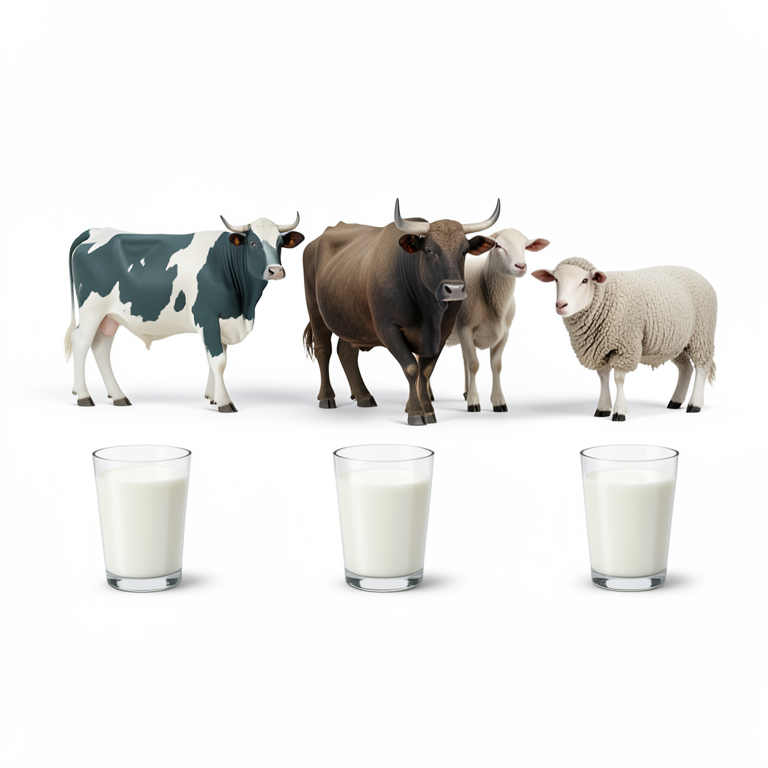
Nutritional Comparison
AI-generated conceptual illustration (cow, buffalo, goat, and sheep). It explains the idea and does not show study data.
View source evidence ↗Figures & tables
From the original paper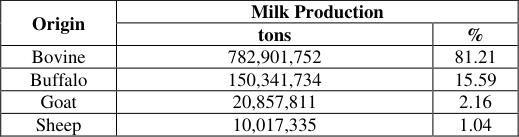 Table 1
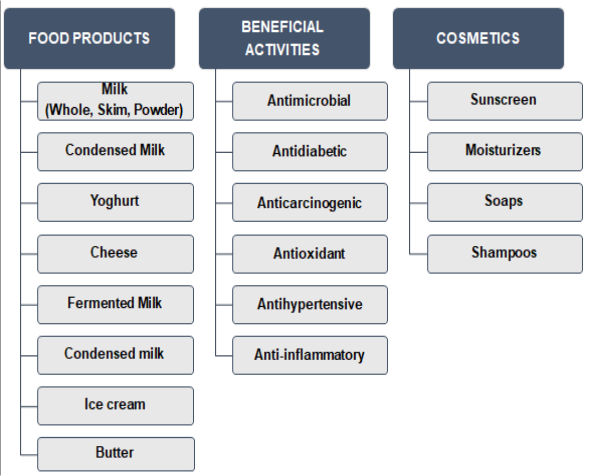 Figure 1
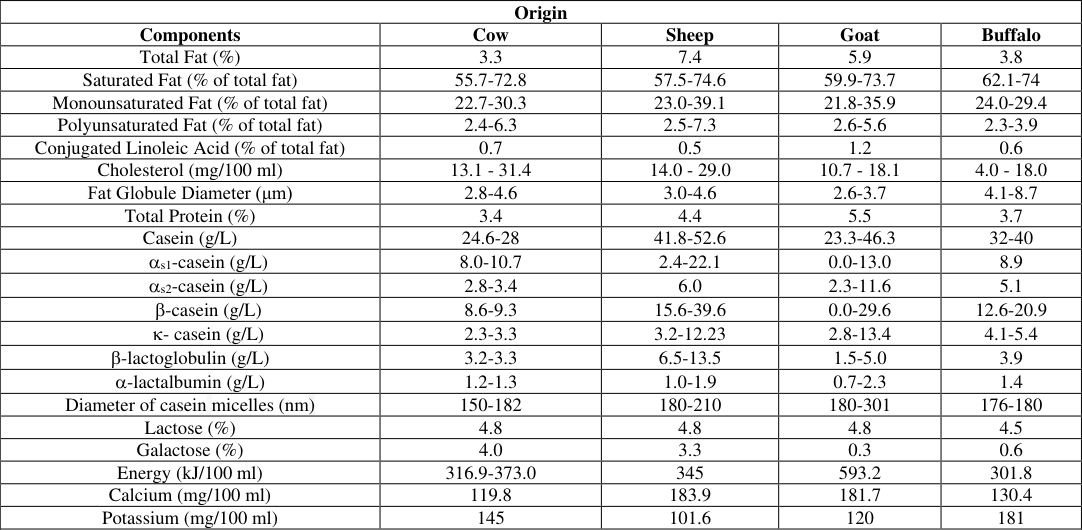 Table 2
Introduction
Milk intake and its derivatives are beneficial across all age groups, particularly for children and adolescents, due to its fundamental role in developing bone mass. These foods are important sources of calcium, vitamin D, proteins, and other nutrients essential for maintaining organ functions. The cow is the leading animal that provides milk. However, individuals with lactose intolerance or cow's milk allergy must avoid this food (Ratajczak et [39,50] . Milk from various species can provide distinct health benefits due to differences in nutritional composition. In 2023, global bovine, buffalo, goat, and sheep milk production surpassed 900 million tons, with cow's milk making up the largest share, at approximately 81%, followed by buffalo, goat, and sheep milk production (Table 1). Goat, sheep, and buffalo milk production remains relatively low compared to cow's milk. However, these non-bovine milk are considered excellent alternatives, offering various nutritional benefits and serving as options for individuals with lactose intolerance or cow's milk allergy. Sheep milk, for example, contains significantly higher proteins and fat than cow, goat, and camel milk. Buffalo milk is notably richer in lipids, and lactose content varies among the milk of different ruminants (Penhaligan et al. 2022) [33] . The consumption of these kinds of milk is limited by various factors, such as the availability and variety of dairy products from these animals, the relatively higher cost compared to cow's milk, and the cultural preference for cow's milk. Nevertheless, there is growing interest in these milks worldwide, particularly among consumers seeking healthier and more natural options. Products derived from goat, sheep, and buffalo milk, such as cheeses, yogurts, and butter, are becoming more common on supermarket shelves and in specialty stores (EMBRAPA, 2020; Júnior et al. 2020; Deshwal et al. 2021) [9,13,23] .
| Origin | Milk Production | — |
|---|---|---|
| tons | % | |
| Bovine | 782,901,752 | 81.21 |
| Buffalo | 150,341,734 | 15.59 |
| Goat | 20,857,811 | 2.16 |
| Sheep | 10,017,335 | 1.04 |
Table text extracted from the original PDF; superscript letters are shown inline. The original table image is below.
View original table image
On the other hand, bioactive peptides generated after hydrolysis and other components of non-bovine milk have been reported for therapeutic activities (Kocak et al. 2020; Guha et al. 2021; Gawai et al. 2024) [20,22,27] . This study aims to provide a concise overview of the benefits of the main nonbovine milk, highlighting their nutritional characteristics and therapeutic potential. [14] .
Materials & Methods
This concise review aims to identify and analyze the nutritional benefits of consuming non-bovine milk, focusing on the nutritional characteristics of buffalo, goat, and sheep milk. The research used databases such as PubMed, Google Scholar, LILACS, SciELO-Br, and institutional sources like IBGE and EMBRAPA. Search terms included "buffalo milk," "goat milk," "sheep milk," "non-bovine milk," and "nutritional characteristics" and their respective translations into English. Inclusion criteria were established for original articles and reviews published between 2020 and 2025, addressing the nutritional properties and health benefits of buffalo, goat, and sheep milk. Incomplete articles and studies that did not focus directly on non-bovine milk's nutritional or therapeutic characteristics were excluded. After article selection, data were extracted and organized to present the nutritional and therapeutical properties of buffalo, goat, and sheep milk. Data analysis was qualitative, focusing on each type of milk's health benefits.
Results and Discussion
Non-bovine milk, especially goat, buffalo, and sheep milk, has attracted consumers' attention and, consequently, from food processing industries and researchers due to its health benefits in different areas. Several foods, such as yogurt, butter, ice cream, kefir, and cheese, have been developed and improved from the milk of these non-bovine mammals. Likewise, components of these milks, especially bioactive peptides and fatty acids, also positively affect health and wellbeing, presenting therapeutic and cosmetic activities. Figure 1 represents the spectrum of benefits from these non-bovine types of milk, as described below.
Goat Milk
Goat milk is widely recognized for its distinctive nutritional profile, characterized by a composition rich in macro-and micronutrients. One key differentiating factor is its higher content of short-and medium-chain fatty acids, particularly caproic, caprylic, and capric acids. These fatty acids are present in significantly higher concentrations in goat milk than in cow's milk, contributing to the characteristic flavor of goat milk-based products, which is slightly tangy and more pronounced. This fact is especially noticeable in goat cheeses, which contain a higher proportion of these fatty acids than cow or sheep milk cheeses (Flipczak et al. 2021; Yu et al. 2024) [49] . Nutritionally, goat milk fat is considered more digestible and less allergenic than cow milk fat. This superior digestibility is attributed to the smaller size of fat globules and a higher proportion of low molecular weight fatty acids (Table 2). This [15,25,41] . In addition to its lipid properties, goat milk contains bioactive peptides derived from milk proteins that offer beneficial biological activities for human health. These peptides show potential for hypertension reduction due to the presence of proline, an amino acid that modulates angiotensin-converting enzyme activity. This inhibitory effect is relevant for blood pressure control and may serve as an adjunct in hypertension treatment (Flis et al. 2021; Qiao et al. 2022) [16,38] . Moreover, proline is vital in collagen synthesis, promoting tissue regeneration and accelerating wound healing (Flis et al. 2021) [16] . [33,35,41] . Goat milk is also rich in minerals, particularly calcium, magnesium, and phosphorus, essential for bone and dental health and metabolic and physiological processes (Siddiqui et al. 2024) [44] . Studies have also highlighted beneficial effects on cardiovascular health and weight management due to the rapid metabolism of medium-chain fatty acids (Kao et al. 2020) [26] . Goat milk has also been shown to improve insulin sensitivity, offering potential benefits for individuals with diabetes (Gong et al. 2020; Pertiwi & Fatchiyah, 2020) [21] . Furthermore, goat milk has antioxidant and anti-inflammatory properties, modulating the immune system and potentially benefiting individuals with chronic inflammatory conditions (Kao et [1,26,31,48] . Antimicrobial and carcinogenic effects associated with CLA were also been described ( [6,40,42] . However, it is essential to note that goat milk may not be a completely safe alternative for individuals allergic to cow's milk due to possible crossreactivity between the two (Roy et al. 2020) [41] .
| Origin | — | — | — | — | — | — |
|---|---|---|---|---|---|---|
| Components | Cow | Sheep | Goat | Buffalo | ||
| Total Fat (%) | 3.3 | 7.4 | 5.9 | 3.8 | ||
| Saturated Fat (% of total fat) | 55.7-72.8 | 57.5-74.6 | 59.9-73.7 | 62.1-74 | ||
| Monounsaturated Fat (% of total fat) | 22.7-30.3 | 23.0-39.1 | 21.8-35.9 | 24.0-29.4 | ||
| Polyunsaturated Fat (% of total fat) | 2.4-6.3 | 2.5-7.3 | 2.6-5.6 | 2.3-3.9 | ||
| Conjugated Linoleic Acid (% of total fat) | 0.7 | 0.5 | 1.2 | 0.6 | ||
| Cholesterol (mg/100 ml) | 13.1 - 31.4 | 14.0 - 29.0 | 10.7 - 18.1 | 4.0 - 18.0 | ||
| Fat Globule Diameter (μm) | 2.8-4.6 | 3.0-4.6 | 2.6-3.7 | 4.1-8.7 | ||
| Total Protein (%) | 3.4 | 4.4 | 5.5 | 3.7 | ||
| Casein (g/L) | 24.6-28 | 41.8-52.6 | 23.3-46.3 | 32-40 | ||
| s1-casein (g/L) | 8.0-10.7 | 2.4-22.1 | 0.0-13.0 | 8.9 | ||
| s2-casein (g/L) | 2.8-3.4 | 6.0 | 2.3-11.6 | 5.1 | ||
| -casein (g/L) | 8.6-9.3 | 15.6-39.6 | 0.0-29.6 | 12.6-20.9 | ||
| - casein (g/L) | 2.3-3.3 | 3.2-12.23 | 2.8-13.4 | 4.1-5.4 | ||
| -lactoglobulin (g/L) | 3.2-3.3 | 6.5-13.5 | 1.5-5.0 | 3.9 | ||
| -lactalbumin (g/L) | 1.2-1.3 | 1.0-1.9 | 0.7-2.3 | 1.4 | ||
| Diameter of casein | micelles (nm) | 150-182 | 180-210 | 180-301 | 176-180 | |
| Lactose (%) | 4.8 | 4.8 | 4.8 | 4.5 | ||
| Galactose (%) | 4.0 | 3.3 | 0.3 | 0.6 | ||
| Energy (kJ/100 ml) | 316.9-373.0 | 345 | 593.2 | 301.8 | ||
| Calcium (mg/100 ml) | 119.8 | 183.9 | 181.7 | 130.4 | ||
| Potassium (mg/100 ml) | 145 | 101.6 | 120 | 181 |
Table text extracted from the original PDF; superscript letters are shown inline. The original table image is below.
View original table image
Even the cosmetics industry has recently incorporated goat milk in shampoos, soaps, and skincare products. Studies have shown that capric and caprylic acids contribute to the formulation of moisturizing creams with sun protection properties (Basudkar et al. 2022; Thakur et al. 2024) [5,45] .
Buffalo Milk
Buffalo milk is second in the ranking of the volume of milk produced worldwide and is widely recognized for its superior nutritional profile and numerous health benefits. Its composition, rich in proteins, provides all essential amino acids, making it a high-quality protein source that is easy to digest (Lima et [14,28,30,46] . Regarding lipid content, buffalo milk has a significantly higher fat concentration than cow's milk (Table 2), with a higher prevalence of saturated fatty acids. However, it also contains beneficial fatty acids such as conjugated linoleic acid (CLA) (Lima et al. 2021) [28] . This makes buffalo milk nutritionally rich, and its high-fat content makes it an excellent raw material for cheese production. Despite having more fat than cow's milk, it has a slightly lower cholesterol content, likely due to differences in fat globule size (Vargas-Ramella et al. 2021). It is important to note that the nutritional profile can vary significantly depending on the buffalo's feeding systems and management practices, influenced by factors such as diets and farming conditions (Vargas-Ramella et al. 2021) [46] . Buffalo milk is a crucial source of fat-soluble vitamins, including vitamins A, D, E, and B12. In terms of minerals, it stands out for its high calcium, phosphorus, magnesium, and potassium content, which are essential for bone, muscle, and nervous system health ( [11,19,29] . Additionally, buffalo milk contains bioactive compounds, such as immunoglobulins and enzymes, with potential immunomodulatory, antiinflammatory, and antioxidant properties (Amr & Farid, 2024) [2] . Notably, beta-lactoglobulin (b-LG), a protein in buffalo whey, helps reduce blood pressure. This protein is a significant source of bioactive peptides with antihypertensive, antioxidant, and antimicrobial actions. These peptides are inactive in the intact b-LG precursor but can be released through enzymatic proteolysis, either in vivo or in vitro (Emakpor et al. 2024) [11] . Buffalo milk has a significant production worldwide (Table 1). India is one of the largest global producers of buffalo milk, contributing significantly to global milk production (Cavali & Pereira, 2020; Siddiqui et al. 2024) [7,44,34] . Buffalo milk is also widely accepted in Pakistan, Egypt, and Nepal, where dairy products from buffalo milk, such as dahi, ghee, and yogurt, are consumed. Additionally, buffalo milk has gained popularity in the Mediterranean, particularly for mozzarella cheese production, and is considered a potential substitute for those with cow's milk allergies. Italy, for example, is renowned for its buffalo mozzarella (Baltazar et al. 2024; Siddiqui et al. 2024) [4,44] . These observations highlight the disparities in agricultural practices and economic conditions across countries and the cultural role of buffalo milk in different societies.
In Brazil, the buffalo herd is estimated to exceed 1.5 million animals (EMBRAPA, 2021) [13] . However, despite the growing global interest in this product, the country's buffalo milk production does not yet stand out significantly on the global stage. This phenomenon can be attributed to a lack of in-depth knowledge regarding best management practices and the anatomical and physiological peculiarities of buffaloes, which affect both milk production and meat quality, consequently impacting the production of dairy products.
Sheep Milk
Sheep milk is widely recognized for its high nutritional value, constituting an excellent source of proteins, vitamins, minerals, and beneficial lipids for health. Due to its nutritional value and biological activities, the demand for sheep milk for the production of various fermented and non-fermented products, such as cheese, yogurt, sweet milk, and ice cream, is steadily growing (Dalabasmaz et al. 2023; Siddiqui et al.
2024) [8,44] . Sheep milk exhibits significant differences in nutritional composition compared to cow's milk (Table 2). This milk is particularly rich in high-quality proteins, which are easily digestible and contain all the essential amino acids needed for proper bodily function. Additionally, sheep milk has a higher viscosity and a lower freezing point than cow's and goat's milk. This higher viscosity can also be attributed to a significant water retention capacity through hydrogen bonds in the milk proteins (Siddiqui et al. 2024) [44] . Regarding lipid content, sheep milk is characterized by many healthy fats, including essential fatty acids such as omega-3 and omega-6. These compounds have been widely associated with cardiovascular health, brain function, and immune system modulation. Furthermore, sheep milk is an excellent source of B vitamins, including vitamin B12, riboflavin (vitamin B2), and niacin (vitamin B3), which play key roles in energy metabolism, brain function, and nervous system health (Flis & Molik, 2021) [16] . Flis et al. (2023) [18] highlight that sheep milk is particularly rich in polar lipids (PLs), essential for forming and maintaining biological membranes. These lipids are crucial in energy storage, cellular structure, and molecular signaling. Furthermore, PLs found in sheep milk contribute to intercellular cohesion in the skin, promoting protection against harmful substances and assisting in the mechanical properties of the epidermis. Regarding composition, PLs are primarily located in milk's membrane of fat globules. Research demonstrates that sheep milk is one of the richest sources of phospholipids, which are vital for the integrity of the skin's stratum corneum. Additionally, sphingolipids in sheep milk exhibit bacteriostatic properties and can modulate inflammatory responses (Flis et al, 2021) [16] . Due to bioactive PLs, sheep milk has gained relevance in the nutraceutical and pharmaceutical industries. It has potential applications in wound healing treatments, particularly for patients with diabetic foot ulcers (Flis et al. 2023) [18] . Sheep milk and its products also present antibacterial and anti-inflammatory effects and can be a source of peptides with antihypertensive and antidiabetic activities (El-Bayoumi, 2021; Pipaliya et al. 2024) [12,36] . In terms of global production, Greece, Turkey, and Spain are notable producers of sheep milk, primarily used in the production of traditional cheeses like feta, which may be made from a blend of sheep's and goat's milk (Popescu et al. 2022; Kaczyński et al. 2023) [24,37] .
Adulteration as a risk behind the benefits In many countries, the price of buffalo, goat, and sheep milk and its derivatives is higher than that of cow milk. These factors and the seasonality of production can lead to an increase in fraud involving the adulteration of these products.
Adulteration is an illegal practice related to the addition of components with lower commercial value or lower quality to products with higher quality to increase their quantity or extend their useful life and, with this, generate illicit financial gain for the trader (Shalileh et al. 2023; Patil et al. 2024) [32,43] . The most common alterations in milk and derivatives from goat, buffalo, and sheep are the addition of water or cow's milk, as the latter is easy to obtain and has lower added value than milk from other ruminants. However, there is a high risk for the most sensitive consumer, given cow's milk's high allergenicity compared to other kinds of milk (Viana et al. 2020; Pereira et al. 2021) [34,47] . It has also been reported that other substances, many of them harmful to health, can be added to milk to extend shelf life or increase fat or protein content, such as melamine, sodium hypochlorite, hydrogen peroxide, and formaldehyde, among others (Patil et al. 2024) [32] . Therefore, the analysis of adulteration of non-bovine milk becomes essential to avoid health problems for the consumer and to ensure the quality and authenticity of the intrinsic value of the products. [10,32,34] are able to detect these possible adulterations in the milk of non-bovine origin.
Conclusions
Although the world's contribution to the global production of goat, sheep, and buffalo milk is relatively modest compared to bovine milk, these products play a significant role in various regions, particularly economically disadvantaged areas.
Besides their distinct characteristics and flavors, which cater to consumers from different socioeconomic backgrounds, non-bovine milk is receiving increasing global attention due to its potential nutritional and therapeutic benefits. The demand for alternative food sources, richer in essential nutrients, has driven the production and consumption of these milks, particularly in the context of growing awareness about health issues such as food intolerances and allergies. However, different components in non-bovine milk from goats, sheep, and buffalo have also attracted attention in the therapeutic fields. New bioactive peptides, for example, obtained from these milks can be used as ingredients of functional and nutraceutical foods with specific therapeutic properties, such as antimicrobial, antioxidant, antihypertensive, and immunomodulatory. Beyond the nutritional and therapeutical benefits, diversifying milk sources offers important market opportunities, mainly when diets based solely on bovine products may not be viable or desirable. The increase in production and consumption of these alternative milk can contribute to the development of new dairy products adapted to the needs of specific audiences, such as those with health conditions requiring restrictive diets.Continued improvement in understanding the nutritional properties of these types of milk and their effects on human health opens up new possibilities for research, making it a promising area for developing healthier and more accessible dairy products.
Acknowledgement
Acknowledgments J.S.N. thanks the research grants from Conselho Nacional de Desenvolvimento Científico e Tecnológico (CNPq -302518/2021-5) and Fundação de Amparo à Pesquisa do Estado do Rio de Janeiro (FAPERJ-E-26/211.480/2021).
References
49 in the original paper- ALKaisy QH, Al-Saadi JS, Al-Rikabi AKJ, Altemimi AB, Hesarinejad MA, Abedelmaksoud TG. Exploring the health benefits and functional properties of goat milk proteins. Food Sci Nutr. 2023;11(10):5641-5656. https://doi.org/10.1002/fsn3.3531
- Amr M, Farid A. Impact of cow, buffalo, goat or camel milk consumption on oxidative stress, inflammation and immune response post weaning time. Sci Rep. 2024;14(1):9967. https://doi.org/10.1038/s41598-02459959-8
- Arrichello A, Auriemma G, Sarubbi F. Comparison of nutritional value of different ruminant milks in human nutrition. Int J Funct Nutr. 2022;3(4):1-10. https://doi.org/10.3892/ijfn.2022.28
- Baltazar CF, Silva R, Cruz AG, Mársico ET. Leite de ovelha e suas características físicoquímicas. Rev Téc Agroindustrial. 2024;1(1):1-10.
- Basudkar V, Gharat SA, Momin MM, Shringarpure M. A review of anti-aging nanoformulations: Recent developments in excipients for nanocosmeceuticals and regulatory guidelines. Crit Rev Ther Drug Carrier Syst. 2022;39(3):45-97. https://doi.org/10.1615/CritRevTherDrugCarrierSyst.202 1039544
- Cakir B, Tunali-Akbay T. Potential anticarcinogenic effect of goat milk-derived bioactive peptides on HCT116 human colorectal carcinoma cell line. Anal Biochem. 2021;622:114166. https://doi.org/10.1016/j.ab.2021.114166
- Cavali J, Pereira RGA. Produção leiteira de búfalos. Embrapa; 2020. Available from: https://www.infoteca.cnptia.embrapa.br/infoteca/handle/d oc/1126184
- Dalabasmaz S, de la Torre EP, Gensberger-Reigl S, Pischetsrieder M, Rodríguez-Ortega MJ. Identification of potential bioactive peptides in sheep milk kefir through peptidomic analysis at different fermentation times. Foods. 2023;12(15):2974. https://doi.org/10.3390/foods12152974
- Deshwal GK, Tiwari S, Kadyan S. Applications of emerging processing technologies for quality and safety enhancement of non-bovine milk and milk products. LWT -Food Sci Technol. 2021;149:111845. https://doi.org/10.1016/j.lwt.2021.111845
- Du C, Zhao X, Chu C, Nan L, Ren X, Yan L, et al. Identification and quantification of goat milk adulteration using mid-infrared spectroscopy and chemometrics. Spectrochim Acta A Mol Biomol Spectrosc. 2025;324:124969. https://doi.org/10.1016/j.saa.2024.124969
- Emakpor OL, Edo GI, Jikah AN, Ikpekoro VO, Agbo JJ, Ainyanbhor IE, et al. Buffalo milk: An essential natural adjuvant. Disciplina Food. 2024;4(1):38. https://doi.org/10.1007/s44187-024-00114-7
- EL-Bayoumi MM. Antibacterial activity of yogurt cheese made from Barki sheep milk supplemented with olive oil. Eur J Agric Food Sci. 2021;3(4):96-101. https://doi.org/10.24018/ejfood.2021.3.4.344
- EMBRAPA. Anuário Leite 2023. Edição Digital. Embrapa; 2023. Available from: https://www.embrapa.br/gado-de-leite
- Filipczak-Fiutak M, Pluta-Kubica A, Domagała J, Duda I, Migdál W. Nutritional value and organoleptic assessment of traditionally smoked cheeses made from goat, sheep, and cow's milk. PLoS One. 2021;16(7):e0254431. https://doi.org/10.1371/journal.pone.0254431
- Flis Z, Molik E. Importance of bioactive substances in sheep's milk in human health. Int J Mol Sci. 2021;22(9):4364. https://doi.org/10.3390/ijms22094364
- Flis Z, Molik E, Szatkowski P. Importance of bioactive substances in sheep's milk in human health. Int J Mol Sci. 2021;22(9):4364. https://doi.org/10.3390/ijms22094364
- Flis Z, Szatkowski P, Pielichowska K, Molik E. The potential of sheep or camel milk constituents to contribute to novel dressings for diabetic wounds. Int J Mol Sci. 2023;24(24):17551. https://doi.org/10.3390/ijms242417551
- Garau V, Manis C, Scano P, Caboni P. Compositional characteristics of Mediterranean buffalo milk and whey. Dairy. 2021;2(3):469-488. https://doi.org/10.3390/dairy2030038
- Gawai MK, Kunal H, Subrota H. The nutritional value of non-bovine milk: An approach from a health perspective: A review. Bhartiya Krishi Anusandhan Patrika. 2024;39(2):131-136. https://doi.org/10.18805/BKAP733
- Gong H, Gao J, Wang Y, Luo QW, Guo KR, Ren FZ, et al. Identification of novel peptides from goat milk casein that ameliorate high-glucose-induced insulin resistance in HepG2 cells. J Dairy Sci. 2020;103:4907-4918. https://doi.org/10.3168/jds.2019-17513
- Guha S, Sharma H, Deshwal GK, et al. A comprehensive review on bioactive peptides derived from milk and milk products of minor dairy species. Food Prod Process Nutr. 2021;3(2):2. https://doi.org/10.1186/s43014-020-00045-7
- Junior JCR, Dos Santos IGC, Dias BP, Ponce L. Perfil do consumidor brasileiro e hábitos de consumo de leite e derivados. Arq Cienc Vet. 2020;25(2):21-30.
- Kaczyński LK, Cais-Sokolińska D, Bielska P, Teichert J, Biegalski J, Yiğit A, Chudy S. The influence of the texture and color of goat's salad cheese on the emotional reactions of consumers compared to cow's milk cheese and Feta cheese. Eur Food Res Technol. 2023;249(5):1257-1272. https://doi.org/10.1007/s00217023-04211-2
- Kiełczewska K, Jankowska A, Dąbrowska A, Wachowska M, Ziajka J. The effect of high pressure treatment on the dispersion of fat globules and the fatty acid profile of caprine milk. Int Dairy J. 2020;102:104607. https://doi.org/10.1016/j.idairyj.2019.104607
- Kao HF, Wang YC, Tseng HY, Wu LS, Tsai HJ, Hsieh MH, et al. Goat milk consumption enhances innate and adaptive immunities and alleviates allergen-induced airway inflammation in offspring mice. Front Immunol. 2020;11:184. doi:10.3389/fimmu.2020.00184.
- Kocak A, Sanli T, Anli EA, Hayaloglu AA. Role of using adjunct cultures in release of bioactive peptides in whitebrined goat-milk cheese. LWT Food Sci Technol. 2020;123:109127. doi:10.1016/j.lwt.2020.109127.
- Lima NP, Melo NMV, Nascimento LCS, Moura Filho JM. Análise físico-química e sensorial de iogurtes produzidos com leite de búfala, cabra e vaca. Braz J Dev. 2020;6(1):5184-5192. doi:10.34117/bjdv6n1-376.
- Pacheco FC, Teixeira EF, Pacheco AFC, Justino HFM, Cunha JS, Santos FRD, et al. Avaliação microbiológica de iogurte de leite de búfala produzido a partir da fermentação assistida por ultrassom. J Eng Exact Sci. 2022;8(10):14824-01a. doi:10.18540/jcecvl8iss.
- Pantoja LSG, Amante ER, da Cruz Rodrigues AM, da Silva LHM. World scenario for the valorization of byproducts of buffalo milk production chain. J Clean Prod. 2022;364:132605. doi:10.1016/j.jclepro.2022.132605.
- Panchal G, Hati S, Sakure A. Characterization and production of novel antioxidative peptides derived from fermented goat milk by Lactobacillus fermentum. LWT Food Sci Technol. 2020;119:108887. doi:10.1016/j.lwt.2019.108887.
- Patil GB, Wani SP, Bafna PS, Bagul VS, Kalaskar MG, Mutha RE. Milk adulteration: From detection to health impact. Food Hum Health. 2024;100339. doi:10.1016/j.foohum.2024.100339.
- Penhaligan J, Poppitt SD, Miles-chan JL. The role of bovine and non-bovine milk in cardiometabolic health: Should we raise the "Baa"? Nutrients. 2022;14(2):290. doi:10.3390/nu14020290.
- Pereira EVS, Fernandes DDS, de Araújo MCU, Diniz PHGD, Maciel MIS. In-situ authentication of goat milk in terms of its adulteration with cow milk using a lowcost portable NIR spectrophotometer. Microchem J. 2021;163:105885. doi:10.1016/j.microc.2020.105885.
- Pérez-Núñez I, Díaz R, Quiñones J, Martínez A, Velázquez L, Huaiquipán R, et al. Molecular characteristics and processing technologies of dairy products from non-traditional species. Molecules. 2024;29(22):5427. doi:10.3390/molecules29225427.
- Pipaliya R, Basaiawmoit B, Sakure AA, Maurya R, Bishnoi M, Kondepudi KK, et al. Production and characterization of anti-hypertensive and anti-diabetic peptides from fermented sheep milk with antiinflammatory activity: in vitro and molecular docking studies. J Sci Food Agric. 2024. doi:10.1002/jsfa.13617.
- Popescu A, Stanciu M, Antonie I. Livestock and milk and meat production in the top five EU countries rearing sheep and goats, 2012-2021. Sci Pap Ser Manag Econ Eng Agric Rural Dev. 2022;22(3):515-530.
- Qiao Z, Wang J, He Z, Pan L, Feng K, Peng X, et al. A novel angiotensin I-converting enzyme inhibitory peptide derived from goat milk casein hydrolysate modulates angiotensin II-stimulated effects on vascular smooth muscle cells. Front Nutr. 2022;9:878768. doi:10.3389/fnut.2022.878768.
- Ratajczak AE, Zawada A, Rychter AM, Dobrowolska A, Krela-Kaźmierczak I. Milk and dairy products: Good or bad for human bone? Practical dietary recommendations for the prevention and management of osteoporosis. Nutrients. 2021;13(4):1329. doi:10.3390/nu13041329.
- Rubin M, Modai S, Rayman S, Kaplan KM, Mendelson E, Lichtenberg D. Antiviral properties of goat milk. Clin Nutr Open Sci. 2021;37:1-11. doi:10.1016/j.nutos.2021.03.002.
- Roy D, Ye A, Moughan PJ, Singh H. Composition, structure, and digestive dynamics of milk from different species-A review. Front Nutr. 2020;7:577759. doi:10.3389/fnut.2020.577759.
- Sansi MS, Iram D, Zanab S, Vij S, Puniya AK, Singh A, Ashutosh, et al. Antimicrobial bioactive peptides from goat milk proteins: In silico prediction and analysis. J Food Biochem. 2022;46(7):e14311. doi:10.1111/jfbc.14311.
- Shalileh F, Sabahi H, Dadmehr M, Hosseini M. Sensing approaches toward detection of urea adulteration in milk. Microchem J. 2023;193:108990. doi:10.1016/j.microc.2023.108990.
- Siddiqui SA, Salman SHM, Redha AA, Zannou O, Chabi IB, Oussou KF, et al. Physicochemical characteristics, bioactive peptides and health benefits of sheep and goat milk-based products. Antioxidants. 2024;13(7):2345. doi:10.3390/antiox13072345.
- Thakur R, Biswa LP, Sari TP, Kumar D, Sagar NA, Bhardwaj S, et al. Therapeutic effect of goat milk and its value-addition: current status and way forward. J Food Sci Technol. 2024;61(9):1621-1631. doi:10.1007/s13197-023-05923-9.
- Vargas-Ramella M, Pateiro M, Maggiolino A, Faccia M, Franco D, De Palo P, et al. Buffalo milk as a source of probiotic functional products. Microorganisms. 2021;9(11):2303. doi:10.3390/microorganisms9112303.
- Viana MP, Fernandes SAD, Silva AGD, Pedreira MDS, Viana PT, Rodrigues VS, et al. Fraud with the addition of cow's milk alters the lipid fraction of buffalo mozzarella. Food Sci Technol. 2020;40:761-768. doi:10.1590/fst.19619.
- Voronina OA, Zaitsev SY, Savina AA, Rykov RA, Kolesnik NS. Seasonal changes in the antioxidant activity and biochemical parameters of goat milk. Animals. 2023;13(10):1706.
- Yu Z, Han H, Muratkhan M, Ma H, Yue F, Lü X. Screening of lactic acid bacteria with the ability to reduce goaty flavor related fatty acids in goat milk. Int J Food Microbiol. 2024;423:110832. doi:10.1016/j.ijfoodmicro.2024.110832.
- Zhu Z, Bu S, Liu J, Niu C, Wang L, Yuan H, et al. Labelfree-based proteomics analysis reveals differential proteins of sheep, goat, and cow milk. J Dairy Sci. 2024;107(11):8908-8918. doi:10.3168/jds.2024-24998.
Cited by 1
From OpenAlex, OpenCitations and reference lists read by Scinovex
- Comparative analysis of goat and cow milk–derived extracellular vesicles in protecting against lipopolysaccharide-induced intestinal injury and immune dysregulation ↗
Mingwang Ling, Xiaoling Zeng, Shulin Yuan, Tianfu Zhang, Yuxuan Wang, Weiqi Tan et al. · Journal of Dairy Science · 2026
Milk-derived extracellular vesicles (mEV) have been shown to possess anti-inflammatory activity and protective effects on intestinal integrity. However, differences in the regulatory roles of goat mEV (G-mEV) and cow mEV (C-mEV) on intestinal imbalance remain unclear. The aim of this study was to investigate the modulatory effects of C-mEV and G-mEV on LPS-induced intestinal injury and immune dysregulation. We compared…
❝ 0PDF