
Research article · 2025 · Full text
International Journal of Agriculture and Food ScienceA comprehensive review of wheat (Triticum aestivum L.): Challenges and strategy
Volume 7(2) · Pages 236–241 · DOI: 10.33545/2664844x.2025.v7.i2d.301 ↗
Research areasGenetics and Plant BreedingAgricultural Science and Fertilization
Abstract
Author-writtenThe main cereal crop for most people on the planet is wheat (Triticum aestivum L.), which is a member of the Poaceae family, one of the most large and diverse. This grain is grown domestically all over the world and is polyploid in nature. About half of all food calories worldwide come from wheat, which is also high in dietary fiber, riboflavin, niacin, thiamine, minerals (Cu, Mg, Zn, P, and Fe), proteins (gluten), and vitamins (B-group and E). Proteins found in wheat seed storage are a significant source of nutrition and energy and are crucial in determining the quality of bread. One important staple crop that is essential to the world's food security is wheat. A thorough examination of wheat's agricultural value chain is necessary to increase the crop's production and distribution's competitiveness, efficiency, and productivity. This study offers a thorough analysis of the wheat agricultural value chain, covering important phases from pre-production to post-harvest operations. In order to find possible areas for development and increased sustainability, it examines the key players, difficulties, and opportunities within the wheat value chain. Policymakers, farmers, and other stakeholders can make well-informed decisions to support the wheat industry and advance global food security by looking at the dynamics of the value chain and comprehending its intricacies. The research report ends with a thorough grasp of the wheat agricultural value chain, including its difficulties and areas for development (Vitale et al., 2020). It highlights how important it is to take a comprehensive approach that involves all parties involved in order to guarantee robust and sustainable wheat production and distribution. The global wheat sector can solve current issues, increase productivity, and make a substantial contribution to global food security by putting focused interventions and policy reforms into place. To accomplish these goals and guarantee the welfare of producers and consumers along the wheat value chain, further study and teamwork are necessary. All parties involved must work together to implement policy implications and recommendations, and governments and private sector actors must be committed over the long run (Rasheed and Venkatesh, 2022). The wheat value chain may become more resilient, sustainable, and efficient by giving priority to these tactics, which will greatly enhance both economic growth and global food security. The wheat industry will be able to adjust to shifting market conditions and new difficulties in the future thanks to ongoing monitoring and assessment of policy results (Molla et al., 2022).
Summary
Source-checkedPlain-language reading of the full paper, prepared with AI and checked against the text. Each point links to the authors' own words.
Why it matters
- Global demand for wheat is expected to rise by about 1.7 per year to support a projected population of 10 billion people by 2050. View evidence ↗
- Wheat productivity is threatened by several factors, including emerging pests, diseases, water scarcity, limited fertile land, and volatile weather patterns. View evidence ↗
The question
- The study aims to analyze the wheat agricultural value chain to identify areas for improvement and suggest policy implications for a more sustainable and efficient sector. View evidence ↗
- The research intends to provide actionable insights for key stakeholders, including farmers, researchers, and policymakers. View evidence ↗
What they did
- The authors conducted a comprehensive review of scholarly journals, government publications, industrial studies, and international organization reports. View evidence ↗
- The methodology incorporates qualitative and quantitative analysis of data derived from case studies and field surveys. View evidence ↗
- The scope of the review covers the entire value chain from pre-production to post-harvest across various geographic locations and both developed and developing economies. View evidence ↗
What they found
- Global wheat production is dominated by hexaploid bread wheat at approximately 95%, while tetraploid durum wheat accounts for the remaining 5%. View evidence ↗
- Wheat rusts can lead to significant yield reductions ranging from 10% to 100%, depending on factors such as cultivar genotype and infection timing. View evidence ↗
- Stem rust (Puccinia graminis f. sp. tritici) is particularly devastating, with the potential to cause total yield loss (up to 100%). View evidence ↗
- The bread wheat genome is characterized by high duplication due to polyploidy, with repetitive DNA sequences making up 80% of the total genome. View evidence ↗
- Infrastructure deficits, such as poor roads and inadequate storage, lead to increased post-harvest losses and higher transaction costs. View evidence ↗
- Precision farming technologies, including drones and GPS-based systems, offer opportunities to optimize resource use and improve crop monitoring. View evidence ↗
What it means
- The authors conclude that targeted policy reforms and focused interventions are necessary to increase productivity and ensure global food security. View evidence ↗
- A comprehensive, multi-stakeholder approach is recommended to guarantee the sustainability and robustness of wheat production and distribution. View evidence ↗
- Due to the broad nature of the topic, the study is limited to focusing on value chains in representative nations across several continents. View evidence ↗
Visual summary
1 visualsIllustrations explain the paper; they do not show study data.
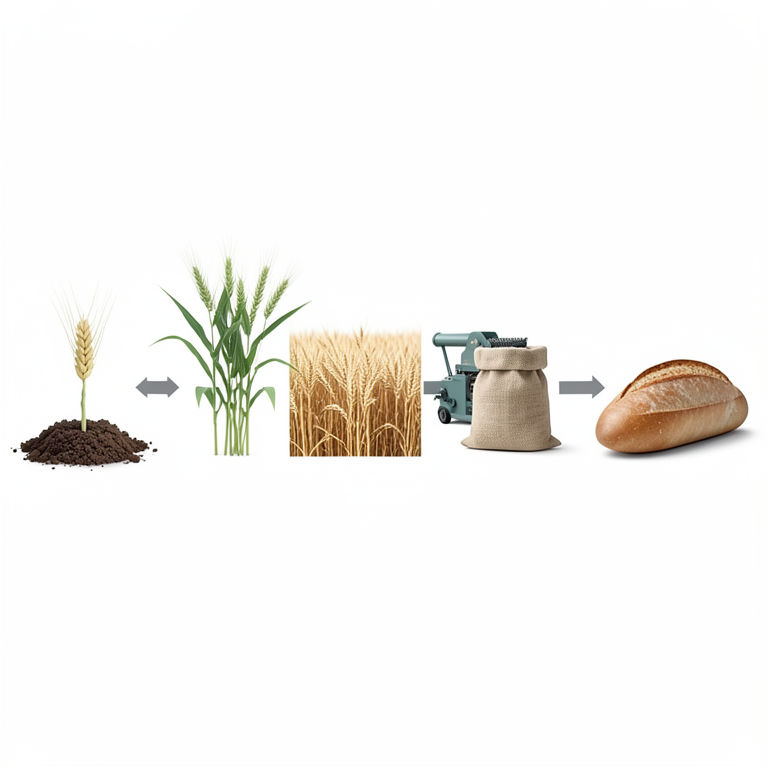
Wheat Agricultural Value Chain Flow
AI-generated conceptual illustration (Wheat plants (Triticum aestivum L.) and agricultural processing equipment). It explains the idea and does not show study data.
View source evidence ↗Introduction
Wheat (Triticum aestivum L) is one of the most important and extensively grown cereal crops in the world. For a sizable section of the global population, it is a staple diet and an important source of proteins, carbs, and other vital elements. Because of rising urbanization, shifting dietary habits, and population growth, there is an ongoing demand for wheat. Therefore, it is essential to comprehend the wheat agricultural value chain in order to guarantee food security, encourage sustainable production methods, and improve the general effectiveness of the wheat sector. By the year 2050, there will be about 10 billion people on the planet, increasing the demand for wheat at a rate of about 1.7 per year. Consequently, throughout the twenty-first century, developing a suitable supply response will continue to be a policy problem (Vitale et al., 2020) [19] . The duty of wheat breeders and their contribution to the creation of superior wheat varieties are becoming increasingly important in raising crop yields. The productivity of wheat is susceptible to newly emerging pests and diseases, insufficient water supplies, a shortage of fertile land, and rapidly changing weather patterns.
Originating in the ancient civilizations of the Fertile Crescent, wheat has been farmed for thousands of years. It eventually made its way to other parts of the world and developed into an important crop in many different economies. It is now grown in a wide range of agro climatic settings, from temperate to subtropical, which increases its environmental adaptability (Mittal, 2022) [15] . It is impossible to overestimate wheat's importance in the world food chain. In many nations, especially those in North America, Europe, and some areas of Asia, it is a staple food. Additionally, it supports the dairy and meat industries by providing vital feed for animals. Millions of farmers, traders, and agribusinesses throughout the world depend on the production and trade of wheat for their livelihoods, which has significant economic ramifications. The wheat value chain confronts many obstacles that impact its competitiveness, sustainability, and efficiency despite its significance. These difficulties include the need to implement contemporary farming methods, infrastructure constraints, market access problems, crop variability, and the effects of climate change (Kumar and Sharma, 2016) [14] .
Background: Around 10,000 years ago, during the "Neolithic Revolution," when hunting and gathering food gave way to steady land management, wheat was first grown. The earliest wheat varieties to be cultivated were diploid (genotype AA, einkorn) and tetraploid (genotype AABB, emmer), which originated in the southeast of Turkey based on their genetic relationships. When hexaploid wheat initially appeared almost 9,000 years ago, cultivation spread to the Near East. In essence, the wheat varieties that were previously cultivated were landraces from wild populations that farmers had carefully selected, most likely due to their better yields (Khader et al., 2019) [13] . However, the selection of wheat's genetic traits, which are distinct from those of its wild forebears, is also associated with domestication. Spike-shattering loss at maturity, which results in a loss of seeds at harvest, is the first of two traits that are crucial. It is an essential feature for verifying seed distribution in real populations. Using changes at the brittle rachis (Br) locus and the transition from husked to freethreshing nude forms, where the outer sterile husk adheres securely to the seeds, the second is the non-shattering trait. With respect to the six sets of chromosomes found in wheat (Triticum aestivum L. 2n = 42, AABBDD), the haploid quantity of DNA is nearly 1.7 × 1,010 base pairs. It is over 100 × larger than the Arabidopsis genome, 40× larger than the rice genome, and almost 6× larger than the maize genome. Repetitive DNA sequences comprise 80% of the whole genome in bread wheat, which is mostly produced from polyploidy with significant duplication. Hexaploid bread wheat currently makes up around 95% of all wheat grown worldwide, with tetraploid durum wheat making up the remaining 5%. The latter is often called pasta wheat to indicate its eventual specific use because it is more suited to the dry Mediterranean climate than bread wheat. In a few places, such as the Balkans, Spain, Turkey, and the Indian subcontinent, small amounts of other wheat species, such as emmer, spelt, and einkorn, are grown (Kaukab et al., 2022) [12] .
Literature Review Overview of Wheat Production and Consumption:
A substantial amount of the world's cereal production is made up of wheat, an important staple crop. It is grown in a variety of agro climatic-zones; the United States, China, India, and Russia are the top producers of wheat (Amentae et al., 2017) [1] . Although wheat is primarily farmed for human consumption, it is also used in many industrial sectors and as animal feed. From pre-production tasks like seed selection and site preparation to the production phase, which includes crop monitoring, irrigation, and harvesting, the wheat production process consists of multiple crucial steps. Following harvest, post-harvest operations include marketing, threshing, cleaning, storage, and transportation (Kaplinsky, 2000) [11] . Wheat is consumed in a wide variety of ways, and its finished products include anything from snacks and confections to beverages and basic foods like bread, pasta, and noodles. Over time, patterns of wheat consumption have changed due to a variety of reasons, including dietary choices, urbanization, population increase, and income levels. In order to sustainably fulfill future food demands, an effective and robust agricultural value chain is required due to the significant rise in the world's demand for wheat.
Conceptual Framework of Agricultural Value Chains
Input supply, production, processing, distribution, and consumption are all stages that contribute to the value of the product and involve a variety of actors, from farmers and input suppliers to traders, processors, retailers, and consumers. The term "agricultural value chain" refers to the set of interconnected activities that go into producing, processing, and distributing agricultural products from farm to fork. The conceptual framework of agricultural value chains aids in comprehending the flow of goods and services, resource allocation, and stakeholder coordination at each stage. Value chain analysis looks for ways to reduce costs, increase efficiency, and add value while tackling issues and bottlenecks that prevent the chain from operating smoothly. Policymakers and stakeholders can pinpoint areas for intervention to improve sustainability, market access, and productivity by mapping the value chain and examining its dynamics. This method also makes it easier to find connections and dependencies among different stakeholders, encouraging cooperation and group decision-making to enhance the value chain's overall performance (Gereffi et al., 2001) [8] .
Previous Research on Wheat Agricultural production Analysis
Numerous investigations have been carried out to examine the wheat agricultural value chain in various locales and situations. These studies have shed important light on the difficulties the wheat sector faces as well as possible areas for development. The following are some major topics covered in earlier studies.
Productivity and yield gaps
Numerous studies have looked at the variables that affect wheat yield, such as the adoption of best management techniques, access to high-quality inputs, and the application of contemporary agricultural technologies. In order to comprehend the potential for improving production efficiency, yield gaps have been found and examined.
Market access and trade:
Evaluating market access concerns, such as trade regulations, infrastructure constraints, and transportation bottlenecks, is a common step in the study of wheat value chains. For wheat growers and consumers to have access to stable and accessible markets, it is essential to comprehend trade dynamics.
Sustainability and environmental impacts
The environmental impact of wheat production, including soil health, greenhouse gas emissions, and water use efficiency, has been the subject of numerous studies. To lessen the effects on the environment, sustainable methods like precision farming and conservation agriculture have been studied.
Policy and institutional analysis
Scholars have investigated how government institutions and policies influence the wheat value chain. The effects of support systems, subsidies, and policy changes on market dynamics, output, and consumption have all been assessed.
Value addition and market diversification
Value addition and the creation of wheat-based goods with greater market potential and value have been the subject of some research. Diversification into value-added and processed goods can lower price volatility and increase farmer incomes.
Research Gap
Even while earlier research has offered insightful information, more study and analysis are still required to handle new issues like the effects of climate change, shifting consumer tastes, and technology breakthroughs. By performing a thorough analysis of the wheat value chain, finding possible areas for improvement, and suggesting pertinent policy implications for a sustainable and effective wheat sector, this research paper seeks to add to the body of information already in existence.
Objectives of the Study
This study paper's main goal is to perform a thorough examination of the wheat agricultural value chain. By recognizing and comprehending the many phases of wheat cultivation, processing, and distribution, we hope to provide insight into the important players, obstacles, and possibilities in the value chain. The goal of this analysis is to offer useful information to farmers, researchers, policymakers, and other wheat industry stakeholders. The following are the study's particular goals: To identify and examine the main stakeholders involved in each stage of the wheat value chain. To assess the challenges and bottlenecks faced by the wheat value chain, including productivity gaps, market access issues, and environmental concerns.
To explore potential opportunities for enhancing the efficiency, sustainability, and profitability of the wheat value chain.
Scope and Research Methodology
This study paper's scope includes a thorough examination of the wheat value chain, encompassing the main phases from pre-production to post-harvest operations. It will take into account both developed and developing economies, as well as different geographic locations and manufacturing methods.
But because the topic is so broad, the study will mostly concentrate on the value chains in representative nations from several continents. This research paper's methodology will entail a thorough analysis of pertinent literature, including government publications, industrial studies, reports from international organizations, and scholarly journals (Erenstein et al., 2022) [7] . In order to offer useful insights into the potential and difficulties in the wheat value chain, data and information from field surveys and case studies will also be used. Additionally, in order to analyze the data and derive significant findings, both qualitative and quantitative analysis will be utilized (Bammann, 2007) [3] .
The results of this study will add to the corpus of information already available on agricultural value chain analysis and offer insightful information to stakeholders and policymakers who wish to increase the sustainability and efficiency of the wheat sector.
Key Stakeholders in the Wheat Value Chain Farmers and Producers
At the start of the wheat value chain, the main players are farmers and producers. By growing and harvesting the crop, they contribute significantly to the production of wheat. To guarantee the best possible yield and quality, farmers choose seeds, prepare their ground, provide irrigation, and control pests. Their decisions affect not just their personal means of subsistence but also the market's dynamics of wheat supply and price. A large percentage of the world's wheat production comes from small-scale farmers, who frequently struggle to obtain capital, technology, and market data.
Agribusinesses and Input Suppliers
In the wheat value chain, agribusinesses and input suppliers are crucial participants. They supply farmers with equipment, seeds, fertilizer, and pesticides, among other agricultural inputs. In order to increase farmers' production and efficiency, input providers are essential in sharing innovations and expertise. Additionally, these companies have a direct stake in marketing their goods and services to farmers. Increased productivity and sustainable farming methods depend on farmers and input suppliers forming strong alliances.
Traders and Middlemen
Wheat is moved from farmers to downstream participants in the value chain with the help of traders and middlemen. They are essential in linking producers with exporters, merchants, or processors. In order to help farmers reach markets and lower post-harvest losses, traders and middlemen frequently offer them financial, storage, and transportation services. Along the value chain, they might affect profit margins and price dynamics in addition to promoting market efficiency.
Food Processors and Manufacturers
Stakeholders in the conversion of raw wheat into different food items include food makers and processors. For both domestic and foreign markets, these sectors manufacture bread, pasta, flour, breakfast cereals, and other wheat-based goods. To satisfy consumer preferences and food safety regulations, wheat processing calls for cutting-edge technologies and quality control procedures. The total competitiveness of the value chain is significantly impacted by the capacity and efficiency of these processing units.
Retailers and Wholesalers
The parties in charge of delivering wheat-based goods to customers are retailers and wholesalers. These consist of supermarkets, bakeries, grocery stores, and other establishments where customers buy foods made from wheat. Retailers are essential to customer education, product marketing, and adapting to shifting consumer needs. To guarantee consistent demand and supply for wheat products, effective distribution and retail networks are crucial.
Consumers and End-users
The final benefactors of the wheat value chain are consumers and end users. Households, eateries, food service companies, and industrial users are among them. Their everyday diets and numerous industrial uses depend heavily on wheat-based products. The demand for various wheat products and the general dynamics of the market are influenced by consumer tastes, dietary trends, and purchasing behavior.
Government and Regulatory Bodies
Because they influence the policy climate for the sector and offer vital support services, governmental and regulatory organizations are important players in the wheat value chain. They are in charge of establishing trade rules, creating agricultural policy, guaranteeing food safety, and offering farmers extension services. Patterns of production, processing, and consumption can all be significantly impacted by government actions. They also contribute to the promotion of sustainable farming methods and market stability.
Opportunities for Value Chain Enhancement Technology Adoption and Digitalization
Digitalization and the use of contemporary agricultural technologies represent one of the main chances to improve the wheat value chain. Drones, GPS-based systems, and remote sensing are examples of precision farming methods that can maximize resource utilization, increase crop monitoring, and help farmers make better decisions. Farmers may make informed decisions by using digital platforms and mobile applications to access real-time market data, weather forecasts, and best agronomic practices. Adoption of technology can improve overall efficiency across the value chain, boost productivity, and lower manufacturing costs.
Capacity Building and Knowledge Transfer
Initiatives for knowledge transfer and capacity building can be extremely important in improving the wheat value chain. Farmers can have a better understanding of post-harvest handling, pest control, and contemporary agricultural techniques by receiving training and extension services.
Agribusinesses and processors can enhance their production methods, quality assurance procedures, and product development skills through capacity building initiatives.
Market Linkages and Contract Farming
Strong market ties between farmers, processors, and retailers can lower transaction costs and increase market access. Contract farming agreements can encourage farmers to engage in higher-yielding and quality-enhancing techniques by guaranteeing them markets, inputs, and professional assistance.
Sustainable Agricultural Practices
One important way to improve the sustainability of the wheat value chain is to encourage sustainable farming methods. Crop rotation, integrated pest management, and conservation agriculture can all assist maintain soil health, use less water, and lessen the environmental effect of growing wheat. Sustainable methods give sustainable wheat products a competitive edge in the market since they align with consumers' growing need for products that are produced ethically and sustainably.
Value Addition and Diversification
Along the value chain, wheat-based products' value addition and diversification can lead to new markets and sources of income. Opportunities for higher-value goods may arise from investments in processing plants that generate wheat flour, semolina, and other specialty ingredients for the food sector. Additionally, investigating wheat's non-food applications for pharmaceuticals, biofuels, and bio plastics can improve the crop's value proposition.
Current challenges in wheat breeding programs and improvement approaches
With an estimated 10 billion people on the earth by 2050, the demand for wheat will rise at a rate of roughly 1.7 per year. As a result, creating an appropriate supply response will remain a policy challenge in the twenty-first century. In order to increase crop yields, the responsibility of wheat breeders and their role in producing superior wheat varieties are becoming more and more significant. Rapidly shifting weather patterns, a lack of fertile land, newly emergent pests and illnesses, and inadequate water resources can all affect wheat output (Chengappa, 2018) [6] . Wheat productivity is significantly hampered by a number of diseases, including rusts (stripe, leaf and stem rust, powdery mildew, spot blotch, Karnal bunt, and head blight). Depending on the virulence factor, resistant/susceptible cultivar genotype, initial infection time, habitat, pathogenesis ratio, and illness duration, rusts can cause a 10-100% reduction in wheat yield, according to several researchers. The abrupt development and spread of stem rust, also known as Ug99, from Africa to Iran, the Middle East, and other nations is a serious worry for wheat production worldwide. Puccinia graminis f. sp. tritici, or stem rust, can cause a yield loss of up to 100%. Due to kernel infection, Tilletia indica (Karnal bunt) disease not only reduces grain yield but also degrades grain quality. Numerous other nations, including Mexico, Pakistan, India, Iran, Nepal, Afghanistan, Iraq, South Africa, and the United States, have also reported cases of this illness. In contrast to biotic stress resistance, the resistance gene plays a small role in defending wheat against insects due to the substantial effect of temperature and light on the existence and performance of the insects. One of the main obstacles to wheat breeding and, consequently, to global food sufficiency is the ongoing harm that pests and diseases do to crop output. Since the primary arthropods that feed on wheat among different pests are aphids, termites, wheat midges, wheat weevil armyworms, Hessian flies, and cereal cyst nematodes (CCN), it is crucial to identify novel genes and understand their interactions and activities in resistance to CCN (Vitale et al., 2020) [19] . In order to battle such insect/pest illnesses, plant breeders must manipulate wheat germplasm to identify novel resistance genes. QTL mapping or genome-wide association studies (GWAS) can be used to identify drought-resistant genes in uncharted germplasm. It is possible to create salttolerant wheat genotypes by using genes and transcription factors from wheat germplasm, such as DREB, NHX2, AVP1, and SHN1, along with the markers that go along with them (Birthal et al., 2007) [5] . Effective and longlasting resistance in many settings is provided by QTLs in conjunction with R-specific resistant genes. To address climate change, both strategies are recommended.
Productivity and Yield Gaps
The productivity and production disparities seen in many wheat-producing regions are one of the major obstacles in the wheat value chain. Farmers struggle to maximize the potential of their crops despite improvements in agricultural technology because of a number of issues, including restricted availability to high-quality seeds, poor irrigation systems, degraded soil, and pest and disease challenges.
Adopting better agronomic techniques, having access to contemporary agricultural technologies, and funding research and extension services to spread best practices to farmers are all necessary to close these disparities.
Infrastructure and Transportation Bottlenecks
Transportation bottlenecks and inadequate infrastructure provide serious problems for the wheat value chain. Inadequate storage facilities, poor road networks, and restricted access to effective transportation cause postharvest losses, higher transaction costs, and delays in the movement of wheat from farms to markets and processing facilities. For wheat and its products to be transported smoothly and on schedule, especially in rural and isolated locations, a robust infrastructure network must be established and maintained.
Price Volatility and Market Access
A persistent issue in the wheat value chain that affects both farmers and consumers is price instability. Unpredictable revenue for farmers and uncertain prices for consumers can be caused by changes in trade policy, currency exchange rates, and global market prices. Furthermore, restricted market access and trade restrictions can impede the crossborder movement of wheat and its derivatives, diminishing prospects for global market involvement and impacting food security in areas that rely on imports.
Quality Control and Standardization
In order to satisfy consumer needs and guarantee food safety, wheat and its products must be maintained at a constant quality and standard. Variability in wheat quality brought on by elements including storage, crop management techniques, and environment can make it difficult to produce consistent goods. In order to satisfy consumer preferences, export market expectations, and regulatory requirements, standardization and quality control methods are crucial across the value chain.
Climate Change and Environmental Concerns
The wheat value chain is seriously threatened by climate change. Extreme weather events, altered precipitation patterns, and rising temperatures can all affect crop productivity and raise the prevalence of pests and illnesses. Water scarcity, soil erosion, and environmental degradation can also be caused by agricultural practices including heavy irrigation and overuse of agrochemicals. Building resilience and reducing the environmental impact of wheat production need the adoption of climate-smart and sustainable farming methods.
Policy and Regulatory Constraints
The wheat value chain's competitiveness and efficiency may be impacted by legislative and regulatory restrictions. Price controls, subsidies, and inconsistent or restrictive trade regulations can skew market dynamics and deter investment in manufacturing and processing. Furthermore, the sector's ease of doing business and the adoption of breakthrough technologies might be hampered by onerous regulatory procedures and bureaucratic red tape. The expansion and development of the wheat sector depend on the simplification and rationalization of regulations to promote a favorable business climate. All parties participating in the wheat value chain must work together to address these issues. To establish sustainable practices, make technological and infrastructure investments, open up markets, and create laws that support a resilient and competitive wheat value chain, governments, farmers, agribusinesses, processors, and consumers must collaborate. The wheat industry can make a substantial contribution to sustainable development and global food security by tackling these issues.
Policy Implications and Recommendations Government Support and Incentives
To encourage the expansion and advancement of the wheat value chain, governments ought to offer focused assistance and incentives. This could involve giving farmers access to financing, financial aid, and subsidies so they can invest in high-quality inputs, sustainable farming methods, and contemporary agricultural technologies. Private sector investments in value addition and processing facilities can also be stimulated by offering tax exemptions and other incentives to processors and agribusinesses. The wheat industry will become more competitive overall if a favorable legislative environment is created that encourages entrepreneurship, innovation, and market-oriented strategies.
Investment in Research and Development
Enhancing the efficiency and resilience of the wheat value chain requires investment in research and development (R&D). Governments, research institutions, and private sector organizations should work together to finance and carry out research on breeding high-yielding and climateresilient wheat varieties, creating sustainable agricultural practices, and developing innovative processing technologies. The dissemination of research findings and best practices through extension services and farmer training programs will allow for the widespread adoption of innovative technologies and practices.
Trade and Export Policies
Since wheat is a commodity that is traded internationally, trade and export policies are important to the wheat value chain. To encourage fair competition, lower trade barriers, and guarantee access to global markets, governments should enact clear and consistent trade policies. Improving market accessibility through trade agreements and discussions will benefit wheat exporters and support the market's general stability. All parties involved must work together to implement these policy implications and suggestions, and governments and private sector actors must be committed over the long run (Beres et al., 2020) [4] . The wheat value chain may become more resilient, sustainable, and efficient by giving priority to these tactics, which will greatly enhance both economic growth and global food security. The wheat industry will be able to adjust to shifting market conditions and new difficulties in the future thanks to ongoing monitoring and assessment of policy results.
Conclusion
The research report ends with a thorough grasp of the wheat agricultural value chain, including its difficulties and areas for development. It highlights how important it is to take a comprehensive approach that involves all parties involved in order to guarantee robust and sustainable wheat production and distribution. The global wheat sector can solve current issues, increase productivity, and make a substantial contribution to global food security by putting focused interventions and policy reforms into place. To accomplish these goals and guarantee the welfare of producers and consumers along the wheat value chain, further study and teamwork are necessary.
References
11 in the original paper- Amentae TK, Hamo TK, Gebresenbet G, Ljungberg D. Exploring Wheat Value Chain Focusing on Market Performance, Post-Harvest loss, and Supply Chain Management in Ethiopia: The Case of Arsi to Finfinnee Market Chain. J Agric Sci. 2017;9(8):22.
- Aslam MS, Xue PH, Bashir S, Alfakhri Y, Nurunnabi M, Nguyen VC. Assessment of rice and wheat production efficiency based on data envelopment analysis. Environ Sci Pollut Res. 2021;28(29):3852238534.
- Bammann H. Participatory value chain analysis for improved farmer incomes, employment opportunities and food security. Pac Econ Bull. 2007;22(3):113-125.
- Beres BL, Hatfield JL, Kirkegaard JA, Eigenbrode SD, Pan WL, Lollato RP. Toward a better understanding of genotype× environment× management interactions-a global Wheat initiative agronomic research strategy. Front Plant Sci. 2020;11:828.
- Birthal PS, Jha AK, Singh H. Linking farmers to markets for high-value agricultural commodities. Agric Econ Res Rev. 2007;20:425-439.
- Gereffi G, Humphrey J, Kaplinsky R. Introduction: globalization, value chains and development. IDS Bull. 2001;32(3):1-8.
- Gutiérrez-Moya E, Adenso-Díaz B, Lozano S. Analysis and vulnerability of the international wheat trade network. Food Sec. 2020;13(1):113-128.
- Kaplinsky R. Globalization and un-equalization: what can be learned from value chain analysis. J Dev Stud. 2000;37(2):117-146.
- Khader BFY, Yigezu YA, Duwayri MA, Niane AA, Shideed K. Where in the value chain are we losing the most food? The case of wheat in Jordan. Food Sec. 2019;11(5):1009-1027.
- Molla E, Hailekirstos E, Mengstie M, Zenebe T. Determinants of wheat value chain in case of North Shewa Zone of Amhara region, Ethiopia. Cogent Econ Finance. 2022;10(1):12-16.
- Vitale J, Adam B, Vitale P. Economics of wheat breeding strategies: focusing on Oklahoma hard red winter wheat. Agronomy. 2020;10:238.
Cited by 5
From OpenAlex, OpenCitations and reference lists read by Scinovex
- Evaluation of yield, quality and water productivity of bread wheat cultivated under supplemental irrigation strategies in semi-arid conditions ↗
Mehmet Ali DÜNDAR, Ramazan Topak · Plant and Soil · 2025
❝ 2 - StatFeat-WheatID: Statistical Image Feature-Based Identification of Wheat Varieties Using Machine Learning ↗
Sushil Kumar Verma, Vicky Khanduja, Utkarsh Dwivedi, Kush Parmar, Digvijay Singh Chauhan, Basant Kumar · International Conference on Electronics, Computer and Computation · 2026
Wheat identification is of prime importance in its supply chain, breeding, and quality management. Manual identification of items, in fact, remains difficult, unpredictable, and error-susceptible. In this research, there comes forward a new statistical imaging technique for wheat variety identification through machine learning-based digital image processing. More than 6800 labeled images have been used for creating a high-quality labeled dataset…
❝ 0 - Influence of Irrigation and Nitrogen levels on Growth and Yield of Wheat (Triticum aestivum L.) in Semi-Arid condition of Rajasthan
Rakesh Chandeliya, SR Bhuniya, Hoshiyar Singh, Raju Singh Jakhar, Akansha Singh, Ashok Kumar Sharma · International Journal of Agriculture and Food Science · 2026
A field experiment was conducted during the Rabi season of 2025–26 at the Department of Agriculture, Vivekananda Global University, Jaipur, Rajasthan, to evaluate the effect of irrigation scheduling and nitrogen levels on the growth and yield of wheat (Triticum aestivum L.) under semi-arid conditions. The experiment was laid out in a Factorial Randomized Block Design with four irrigation schedules, viz., I₁: five irrigations (CRI + tillering + jointing + flowering + grain filling), I₂: four irrigations (CRI + tillering + flowering + grain filling), I₃: three irrigations (CRI + flowering + grai
- Inter‐annual and regional variability of agronomic and grain quality traits of major Korean wheat cultivars under multi‐environmental conditions ↗
Goeun Lee, J E Park, Kyeong-Min Kim, Chon-Sik Kang, S M Kim, Jeong-Heui Lee et al. · Journal of the Science of Food and Agriculture · 2026
BACKGROUND: Wheat agronomic performance and grain quality vary substantially depending on environmental conditions. However, few studies have evaluated agronomic performance, grain quality stability, and growth stage-specific climatic regulation together across representative Korean wheat-production environments. RESULTS: Phenological traits and amylose content showed relatively high stability across multiple environmental conditions, whereas yield components and protein-related quality traits exhibited pronounced environmental variability. Climatic…
❝ 0PDF - Identifying sources of water deficit tolerance on the basis of physiological and biochemical attributes in wheat introgression lines derived from chromosome 5U of wild wheat Aegilops triuncialis ↗
Kulveer Kaur, Navita Ghai, Aman Kumar, Satinder Singh, Achla Sharma, Satinder Kaur · Cereal Research Communications · 2026
❝ 0PDF