
Research article · 2025 · Full text
International Journal of Agriculture and Food ScienceDevelopment and standardization of solar dehydrated pineapple-pomegranate fruit rolls
Volume 7(2) · Pages 189–193 · DOI: 10.33545/2664844x.2025.v7.i2c.296 ↗
Research areasBanana Cultivation and ResearchPineapple and bromelain studiesPostharvest Quality and Shelf Life Management
Abstract
Author-writtenSolar Dehydration Technology is an emerging technology in the food processing sector. Pineapples are loaded with vitamins and minerals including vitamin A, vitamin C, calcium, phosphorus, and potassium. It is also rich in fiber and calories. On top of it all, this fruit is low in fat and cholesterol. Pomegranate juice (PJ) shows potent 17 antioxidant and anti-atherosclerotic properties attributed to its high content of 18 polyphenols. The most abundant of the polyphenols is punicalagin. Excellent flavour, nutritive value and medicinal properties of pomegranate fruit indicates its good potentiality for processing into value added products having extended shelf life. Therefore in this study, solar dehydration technology was used to develop a value added product using fresh pineapple pulp and pomegranate juice. With this objective, the study was conducted to develop solar dried pineapple-pomegranate fruit rolls, with 16 sunny hours of drying time with a yield of 40%, and 13% moisture content in the product. The fruit rolls were packed. Physico-chemical characteristics and nutritional parameters along with microbiological quality at accelerated storage conditions were studied.
Summary
Source-checkedPlain-language reading of the full paper, prepared with AI and checked against the text. Each point links to the authors' own words.
Why it matters
- Pineapples are highly nutritious fruits, containing significant amounts of fiber, calories, and essential minerals and vitamins such as potassium, calcium, phosphorus, and vitamins A and C. View evidence ↗
- Pomegranate juice possesses strong anti-atherosclerotic and antioxidant properties, which are primarily due to its high concentration of polyphenols. View evidence ↗
- Dehydration is a critical food preservation method because it significantly reduces costs associated with storage, packaging, and transportation. View evidence ↗
The question
- The study aimed to increase the shelf-life of pineapple and pomegranate by developing a value-added fruit roll using solar dehydration technology. View evidence ↗
What they did
- Physicochemical parameters were analyzed using three samples (N=3) to determine the mean and standard deviation. View evidence ↗
What they found
- The standardized fruit rolls (F2) contained 73.71 ± 0.41% total soluble solids and 53.54 ± 0.24% total sugars. View evidence ↗
- Nutritional analysis showed the rolls contained 47.20 mg/100g of Vitamin C, 1887.50 μg/g of phenols, and 37.03 mg/100g of calcium. View evidence ↗
What it means
- The authors concluded that solar dehydration effectively maintained the physicochemical parameters of the fruit rolls with negligible loss. View evidence ↗
- The study concludes that the developed solar-dehydrated pineapple-pomegranate fruit rolls are optimal across nutritional, microbial, sensory, and physicochemical metrics. View evidence ↗
- The authors state that further studies on storage conditions and shelf life are necessary to ensure the stability and uniformity of the product. View evidence ↗
Visual summary
2 visualsIllustrations explain the paper; charts are replotted from the paper's own table values.
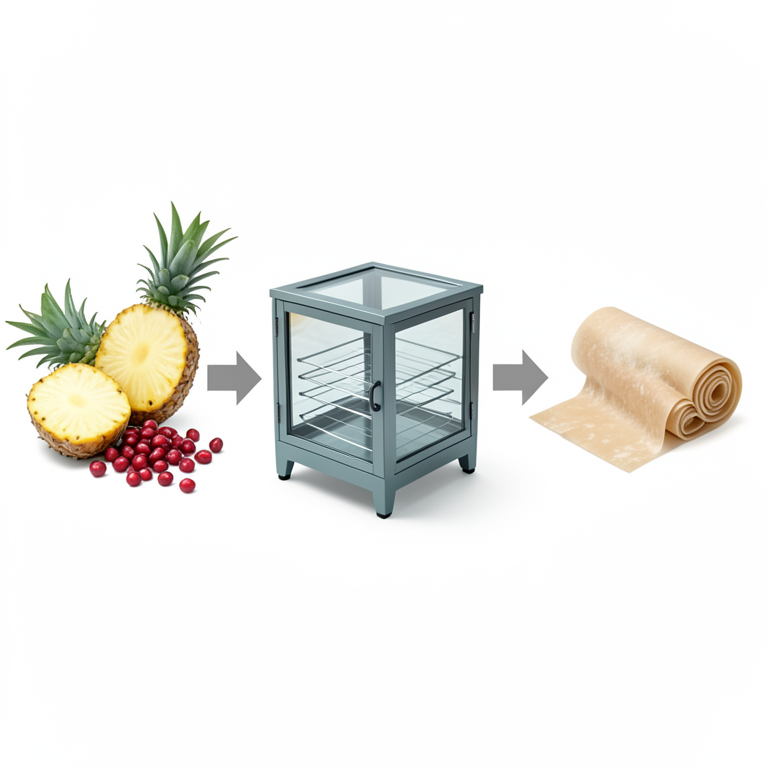
Production Workflow
AI-generated conceptual illustration (pineapple and pomegranate fruit rolls). It explains the idea and does not show study data.
View source evidence ↗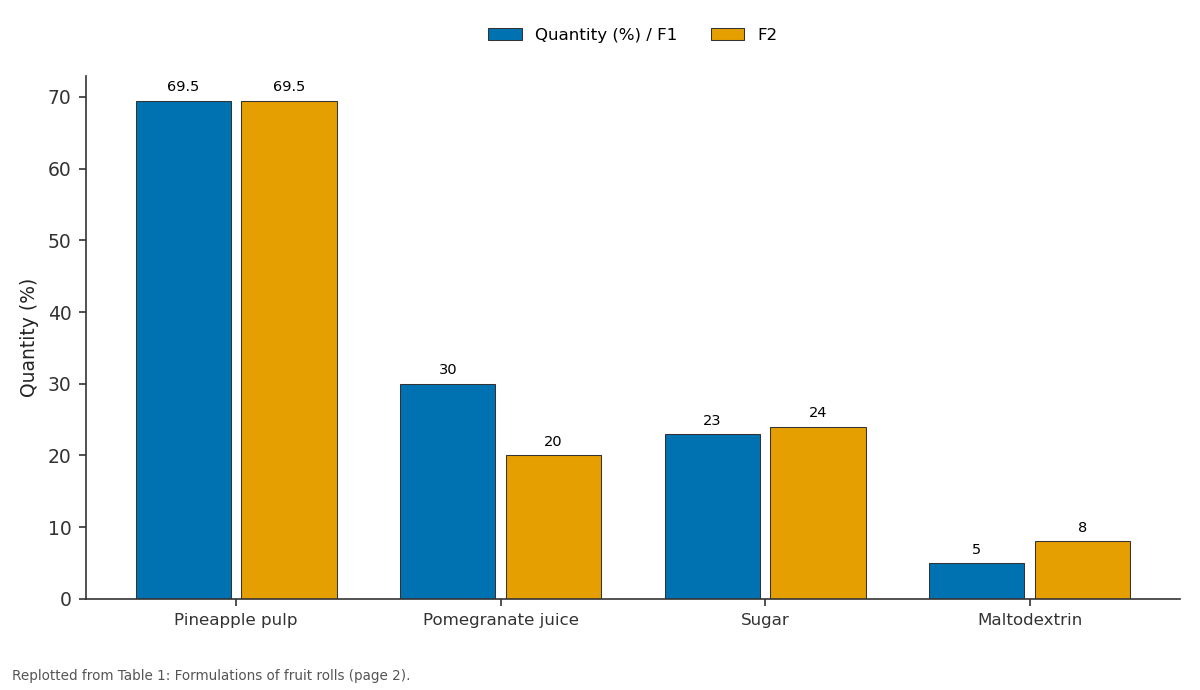
Quantity (%) / F1 and F2: Pineapple pulp vs Pomegranate juice vs Sugar vs Maltodextrin
Replotted from Table 1 (page 2) of the original paper. Every bar is the paper's own table value.
View source evidence ↗Figures & tables
From the original paper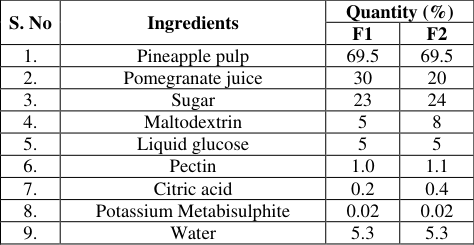 Table 1
 Table 2
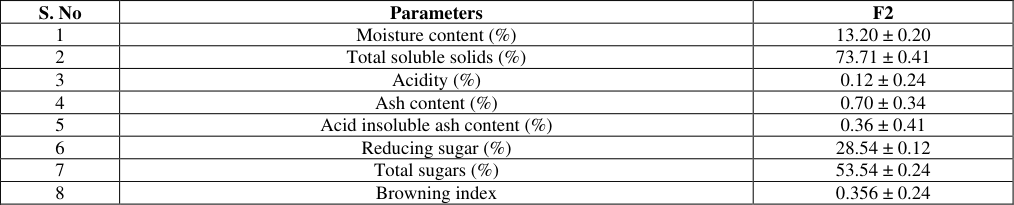 Table 3
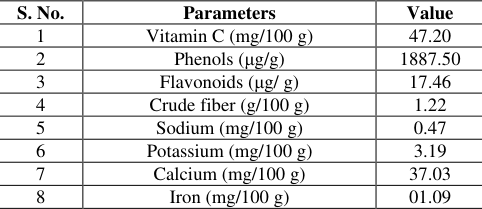 Table 4
 Table 5
 Table 6
Introduction
Many processing techniques can be employed to preserve fruits. Drying and dehydration is one of the most important operations that are widely practiced because of considerable saving in packaging, storage and transportation. Solar dryers are cabinet type which operates on the principle of natural convective airflow in drying chamber. In these dryers, the ambient air enters through the inlet holes in the bottom of the cabinet and the moisturized hot air exhausts through the ventilators located at the top of the cabinet. The solar radiation is incident through transparent glass and this causes the temperature of air inside the cabinet to be higher than ambient air. Drying is a technique of conservation that consists of the elimination of large amount of water present in a food by the application of heat under controlled conditions, with the objective to diminish the chemical, enzymatic and microbiological activities that are responsible for the deterioration of foods (Barnabas et al., 2010) [19] . The aim of the study is to enhance the shelf-life of pomegranate and pineapple by processing it into a value added fruit roll using solar drying technology and thereby increase the shelf-life of the product.
Materials and Methods
Materials and Methods
Collection of Raw Materials
Pineapple and pomegranate fruits, sugar, pectin, potassium metabisulphite and citric acid were procured from the local market, Hyderabad. The chemicals required for analysis of physicochemical characteristics of developed products were procured from Hi-media laboratory Mumbai.
Hence, the study was conducted to utilize the functional properties of pomegranate fruit using solar dehydration technology. The product developed can be considered as a functional food.
Flow Chart
Flow Chart
Preparation of pineapple fruit pulp
Preparation of pineapple fruit pulp
Solar drying ↓
Cut into slabs and then make into rolls ↓ Pack in plastic boxes and shrink wrap the containers Similarly, the load for 2 nd layer was prepared and loaded into trays i.e., onto the 1 st layer (after drying of 1 st layer).
Physico chemical properties of pineapple and pomegranate fruit rolls
Knowledge of the physico-chemical properties of food is fundamental in analysing the characteristics of food during its processing. The study of these food properties and their responses to process conditions are necessary because they influence the treatment received during the processing and also because they are good indicators of other properties and qualities of food. In the present investigation certain physicochemical properties of the developed product were analysed to ensure the quality of the products.
Physicochemical properties of developed products
Dry a petri dish beside its lid in an oven for 30 minutes at 95 °C. Cool to room temperature in a desiccator for about 45 minutes and weigh the dish lid to the nearest 0.1 mg (M1).
Transfer the homogenized representative sample into the dish and record the weight with lid to the nearest 0.1 mg (M2). Place the dish beside its lid into the oven without draught, at ordinary pressure. Dry the whole for 5 hours at 105±2 °C. Then place the lid onto the let cool to room temperature in a desiccator for 45 minutes. Weigh the closed dish to nearest 0.1mg (M3). Calculation: % Moisture Content:
[(𝑀2-𝑀3) / (𝑀2-𝑀1)]×100 M1 = Mass in grams of the empty dish M2 = Mass in grams of the empty dish + the test portion M3 = Mass in grams of the empty dish + the test portion after drying.
Titrable acidity
It was estimated using the method of S Ranganna, "Handbook of Analysis and Quality Control for Fruits and Vegetable Products".
Total Soluble Solids
Weigh about 2 g of sample and macerate it by adding 10ml of distilled water. Smear on the hand refractometer and note down the reading of the soluble solids present in it in terms of 0 Brix. The total soluble solids present in the sample can be calculated using the following formula: % TSS = [(volume made up + weight of sample)* refractometer reading]/(weight of sample).
Reducing Sugars and Total Sugars
They are estimated using the method of S Ranganna, "Handbook of Analysis and Quality Control for Fruits and Vegetable Products"
Nutritive analysis of pineapple and pomegranate fruit rolls
Nutritional profile was done by using the standard methods available.
Estimation of ascorbic acid
The method of Ranganna, (1986) [2] was followed for the estimation of ascorbic acid. Five grams of sample was extracted with 3% metaphosphoric acid. The sample was filtered and 5 ml filtrate was taken for estimation against standard dye to a pink colour. Dye was standardized taking 5 ml ascorbic acid standard (100 mg/100 ml in 3% metaphosphoric acid) in a conical flask and mixed with 5 ml 3% meta phosphoric acid and titrated against the dye to a faint pink colour which persists for 15 sec and the dye factor was determined using the formula Dye factor = 0.5/titre value 10 g of sample was weighed and macerated with 3% metaphosphoric acid. Volume was made up to 100ml with metaphosphoric acid and filtered. 10ml of the extract was titrated against the dye in the burette to a faint pink color which persisted for 15 sec. Ascorbic acid content (mg/100g) = (Titre value × dye factor × volume made up × 100)/(Aliquot taken for estimation × weight of sample taken for estimation).
Total Carotenoids
It was estimated using the method of Arya et al., 1979 [20] .
Total Phenols & Total Flavonoids
They were estimated using the method of Singleton & Rossi, 1965 [21] .
Sensory evaluation
Deep-fried meatballs were subjected to sensory analysis using 55 semi-trained panel members with 9-point hedonic scale. Sensory attributes evaluated were appearance, flavour, texture, taste, juiciness and overall acceptability (Diaz et al. 2022; Mian et al. 2017) [22,23] .
Results and discussions
Much attention has been given to the quality of dehydrated products. Drying methods and physicochemical changes that occur during dehydration seem to affect colour, texture, density, porosity and sorption characteristics of dehydrated product (Abbot, 1999 [2529] . Solar dehydration is one of the easiest and cost effective technologies which can be profitably multiplied at the rural level increasing employment and per capita income.
Drying Data
The drying data is tabulated as follows:
Physico Chemical Parameters
The different physico-chemical parameters were carried out and the study includes estimation of moisture content, acidity, brix, sugar content as well as browning index. The result states that the sugar content in solar dehydrated pineapplepomegranate fruit rolls was around 66%. All the data is tabulated in table -6.2 and the results are as follows: sodium, potassium, calcium, iron [24] . The results indicated that many of the nutrients can be retained with less energy consumption. The final product was acceptable in terms of nutritive value also and the results are tabulated as follows:
Sensory Evaluation
Sensory evaluation is done to know the acceptability of the product. This sensory evaluation helps in ensuring the quality of the product. Mean scores of sensory evaluation are presented in the table. The results revealed that solar dehydrated custard apple rolls were acceptable in terms of colour, appearance and taste.
Conclusion
From the above study on dehydration of pineapplepomegranate fruit rolls using dehydration methods like solar dehydration, it can be concluded that all the physicochemical parameters (moisture, pH, brix, total soluble solids, browning index, reducing sugars and total sugars) were maintained and there was negligible chances of loss in the product.
As the process of development of pineapple-pomegranate roll is by solar drying, the nutritive value of the fruit retains and can be stored for long time.
Based on the microbial analysis, there were no colonies found in solar dehydrated pineapple-pomegranate rolls. Sensory evaluation of the rolls was done as per the 9 points Hedonic scale reading (colour, flavor, texture, appearance, taste). The results of the sensory evaluation revealed that pineapplepomegranate rolls were more appealing than other rolls in terms of all parameters rated on 9-point Hedonic scale. Thus it can be concluded that solar dehydrated pineapplepomegranate fruit rolls are best in terms of nutritional, physicochemical, microbial and sensory parameters. The storage conditions and shelf life of the product must be studied in order to regulate the uniformity of the product and also the stability of the product.
Figures and tables from the paper
| S. No | Ingredients | Quantity (%) | — |
|---|---|---|---|
| F1 | F2 | ||
| 1. | Pineapple pulp | 69.5 | 69.5 |
| 2. | Pomegranate juice | 30 | 20 |
| 3. | Sugar | 23 | 24 |
| 4. | Maltodextrin | 5 | 8 |
| 5. | Liquid glucose | 5 | 5 |
| 6. | Pectin | 1.0 | 1.1 |
| 7. | Citric acid | 0.2 | 0.4 |
| 8. | Potassium Metabisulphite | 0.02 | 0.02 |
| 9. | Water | 5.3 | 5.3 |
Table text extracted from the original PDF; superscript letters are shown inline. The original table image is below.
View original table image
| S. No | Name of the Product | Drying conditions | — | — | — | Finished product | — |
|---|---|---|---|---|---|---|---|
| Loading capacity (kg/m2) | Ambient temp (°C) | Cabinet temp (°C) | Time (hrs) | Moisture Content (%) | Yield (%) | ||
| 1. | Solar dehydrated Pineapple- Pomegranate Fruit Rolls | 7 | 30 | 55 | 16 | 12 | 40 |
Table text extracted from the original PDF; superscript letters are shown inline. The original table image is below.
View original table image
| S. No | Parameters | F2 |
|---|---|---|
| 1 | Moisture content (%) | 13.20 ± 0.20 |
| 2 | Total soluble solids (%) | 73.71 ± 0.41 |
| 3 | Acidity (%) | 0.12 ± 0.24 |
| 4 | Ash content (%) | 0.70 ± 0.34 |
| 5 | Acid insoluble ash content (%) | 0.36 ± 0.41 |
| 6 | Reducing sugar (%) | 28.54 ± 0.12 |
| 7 | Total sugars (%) | 53.54 ± 0.24 |
| 8 | Browning index | 0.356 ± 0.24 |
Table text extracted from the original PDF; superscript letters are shown inline. The original table image is below.
View original table image
| S. No. | Parameters | Value |
|---|---|---|
| 1 | Vitamin C (mg/100 g) | 47.20 |
| 2 | Phenols (μg/g) | 1887.50 |
| 3 | Flavonoids (μg/ g) | 17.46 |
| 4 | Crude fiber (g/100 g) | 1.22 |
| 5 | Sodium (mg/100 g) | 0.47 |
| 6 | Potassium (mg/100 g) | 3.19 |
| 7 | Calcium (mg/100 g) | 37.03 |
| 8 | Iron (mg/100 g) | 01.09 |
Table text extracted from the original PDF; superscript letters are shown inline. The original table image is below.
View original table image
| S. No | Microbial parameters | Value |
|---|---|---|
| 1 | Total plate count | Nil |
| 2 | Yeast and mould | Nil |
| 3 | E. coli | Nil |
Table text extracted from the original PDF; superscript letters are shown inline. The original table image is below.
View original table image
| S. No | Parameters | Score |
|---|---|---|
| 1 | Color | 8.6 |
| 2 | Appearance | 8.7 |
| 3 | Taste | 8.1 |
| 4 | Texture | 7.9 |
| 5 | Flavor | 8.2 |
| 6 | Overall acceptability | 8.4 |
Table text extracted from the original PDF; superscript letters are shown inline. The original table image is below.
View original table image
References
27 in the original paper- AOAC. Official methods of analysis. 18 th Ed. Washington, DC: Association of Official Analytical Chemists, 1998.
- Ranganna S. Handbook of analysis and quality control for fruits and vegetable products. New Delhi: Tata McGraw-Hill, 1986.
- Miguel MG, Neves MA, Antunes MD. Pomegranate (Punicagranatum L.): A medicinal plant with myriad biological properties-a short review. Journal of Medicinal Plant Research. 2010;4(25):2836-2847.
- Elghamry MI, Shihata IM. Biological activity of phytoestrogens. 3. Experimental studies on some biological properties of beta-sitosterol. Planta Medica. 1966;14(3):352-357.
- Magee PJ, Rowland IR. Phyto-oestrogens, their mechanism of action: current evidence for a role in breast and prostate cancer. The British Journal of Nutrition. 2004;91(4):513-531.
- Barnes S. Phytoestrogens and breast cancer. Bailliere's Clinical Endocrinology and Metabolism. 1998;12(4):559-579.
- Adlercreutz H. Phyto-oestrogens and cancer. The Lancet Oncology. 2002;3(6):364-373.
- Glazier MG, Bowman MA. A review of the evidence for the use of phytoestrogens as a replacement for traditional estrogen replacement therapy. Archives of Internal Medicine. 2001;161(9):1161-1172.
- Brzezinski A, Debi A. Phytoestrogens: The "natural" selective estrogen receptor modulators? European Journal of Obstetrics, Gynecology, and Reproductive Biology. 1999;85(1):47-51.
- Halbreich U, Kahn LS. Selective oestrogen receptor modulators current and future brain and behaviour applications. Expert Opinion on Pharmacotherapy. 2000;1(7):1385-1398.
- Hol T, Cox MB, Bryant HU, Draper MW. Selective estrogen receptor modulators and postmenopausal women's health. Journal of Women's Health. 1997;6(5):523-531.
- Sierens J, Hartley JA, Campbell MJ, Leathem AJC, Woodside JV. Effect of phytoestrogen and antioxidant supplementation on oxidative DNA damage assessed using the comet assay. Mutation Research: DNA Repair. 2001;485(2):169-176.
- Fadavi A, Barzegar M, Azizi MH, Bayat M. Physicochemical composition of ten pomegranate cultivars (Punicagranatum L.) grown in Iran. Food Science and Technology International. 2005;11(2):113119.
- Ndawula J, Kabasa JD, Byaruhanga YB. Alterations in fruit and vegetable beta-carotene and vitamin C content caused by open-sun drying, visqueen-covered, and International Journal of Agriculture and Food Science https://www.agriculturaljournals.com polyethylene-covered solar dryers. African Health Sciences. 2004;4(2).
- Çam M, Hışıl Y, Durmaz G. Classification of pomegranate juices based on their antioxidant activity and color parameters. Food Chemistry. 2009;112(2):521-526.
- Hamad BS, Al-Momene LA. Influence of curing regime on properties of high-performance concrete. Construction and Building Materials. 2009;23(2):620631.
- Barnabas B, Jäger K, Fehér A. The effect of drought and heat stress on reproductive processes in cereals. Plant, Cell & Environment. 2010;33(9):1621-1634.
- Arya PS, Sharma SK, Singh J. Studies on seed viability and germination in some leguminous crops. Indian Journal of Agricultural Sciences. 1979;49(5):356-360.
- Singleton VL, Rossi JA. Colorimetry of total phenolics with phosphomolybdic-phosphotungstic acid reagents. American Journal of Enology and Viticulture. 1965;16(3):144-158.
- Diaz D, Smith J, Patel R, et al. Advances in crop yield improvement through biotechnology. Plant Science Journal. 2022;28(4):215-230.
- Mian R, Zhang X, Wang J, et al. Soybean resistance to drought stress: Molecular and genetic approaches. Frontiers in Plant Science. 2017;8:897.
- Saha I, Rajan R, Pandey K, Roy K. Effect of natural preservatives leaf extract and alternative sweetener to extend the shelf life of pineapple jam. Int. J. Adv. Biochem. Res. 2024;8(8):19-27.
- Abbot JA. Quality measurement of fruits and vegetables. Postharvest Biology and Technology. 1999;15(3):207225.
- Gabas AL, Telis VRN, Sobral PJA, Telis-Romero J. Effect of drying conditions on the physical properties of air-dried persimmon. Journal of Food Engineering. 1999;41(2):87-92.
- Lewicki PP, Lukaszub J. Effect of pre-drying treatment on drying kinetics of carrot. Journal of Food Engineering. 2000;45(3):187-193.
- Krokida MK, Maroulis ZB, Saravacos GD. The effect of drying method on the porosity of dehydrated products. Journal of Food Engineering. 2000;46(4):285-289.
- Telis VRN, Murari RC, Yamashita F, Gabas AL. Diffusion coefficients during drying of mango slices. Journal of Food Engineering. 2000;47(3):189-194.