
Research article · 2025 · Full text
International Journal of Biology SciencesThe value of forgiveness in human life
Volume 7(2) · Pages 22–27 · DOI: 10.33545/26649926.2025.v7.i2a.294 ↗
Research areasForgiveness and Related Behaviors
Abstract
Author-writtenForgiveness is a soulful creative act that leave people in a position to move forward into the future together. With regard to the human emotion of forgiveness, Hannah Arendt (1958) has phrased in her book, The Human Condition: “Without being forgiven we would remain the victims of its consequences forever” and it is ‘forgiving’ that serves to undo the deeds of the past, whose “sins” hang like Damocles’ sword over every new generation.
Summary
Source-checkedPlain-language reading of the full paper, prepared with AI and checked against the text. Each point links to the authors' own words.
Why it matters
- Forgiveness is described as a creative act that allows individuals to move past the consequences of previous wrongs and move into the future. View evidence ↗
- The concept of forgiveness is deeply rooted in ancient religious and monotheistic traditions, which emphasize forgiving others as a reflection of being forgiven by God. View evidence ↗
- Social scientists previously ignored forgiveness for nearly three centuries due to a bias stemming from its strong historical association with religion. View evidence ↗
The question
- The paper aims to explore the various definitions, psychological constructs, and the overall value of forgiveness in human life. View evidence ↗
What they did
- The authors synthesize academic discourse and research from the last five decades to analyze forgiveness as a tool of social science. View evidence ↗
What they found
- Forgiveness is identified as a motivational change where the victim is less likely to retaliate or avoid the offender and more open to conciliation. View evidence ↗
- People with a natural disposition to forgive typically score higher in the personality traits of agreeableness and emotional stability. View evidence ↗
- Forgiving individuals experience less emotional turmoil and loneliness compared to those who do not forgive. View evidence ↗
- Forgiveness serves as a mechanism to break cycles of retaliatory violence, providing an evolutionary advantage for social group stability. View evidence ↗
- Maintaining an attitude of unforgiveness is linked to prolonged sadness and adverse health effects. View evidence ↗
What it means
- The authors conclude that because forgiveness mitigates destructive human tendencies, society should be sensitized to its value. View evidence ↗
Visual summary
1 visualsIllustrations explain the paper; they do not show study data.
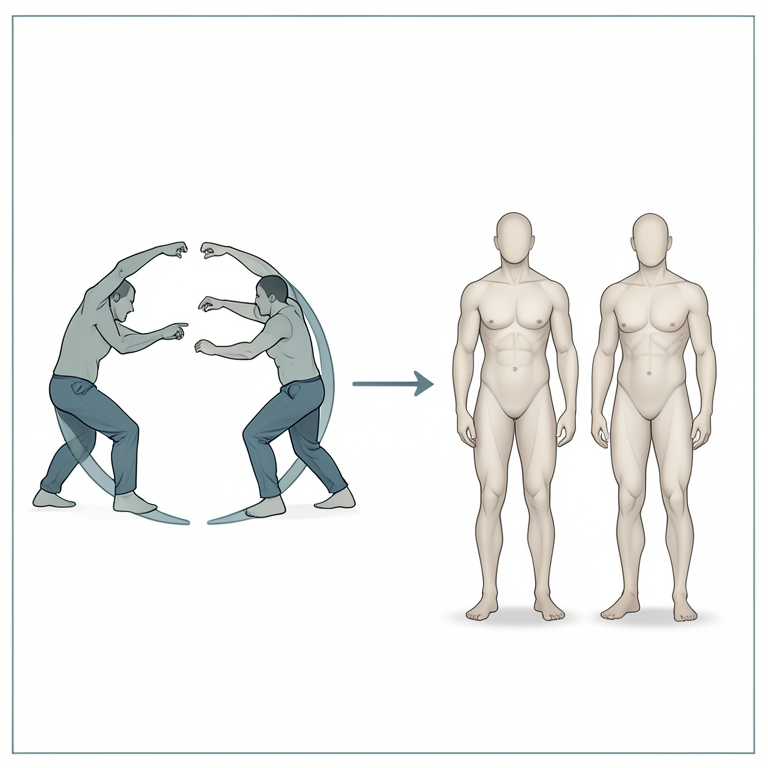
The Cycle of Violence vs Forgiveness
AI-generated conceptual illustration (human figures). It explains the idea and does not show study data.
View source evidence ↗Introduction
Factually, the true origin of forgiveness lies within the ancient religious traditions and there is no dispute about it. Todd (1985) [49] have found forgiveness to be linked to Judaeo-Christian tradition. McCullough and Worthington (1999) [32] have equally observed how most of the world's religions have endorsed the concept of forgiveness for millennia and how all the great monotheistic traditions have upheld that since human beings are always forgiven by God, they should learn to forgive their own transgressors, as well. However, it is a pity to see how 'post enlightenment thought' failed to capture the essence of forgiveness, how social scientists, vehemently ignored the concept for almost three centuries. That forgiveness has both conceptual connection and historical association with 'religion' created an anti-forgiveness bias amongst a section of the social scientists. According to Sells and Hargrave (1998) [48] , it is this bias that became one of the possible reasons for the scantiness of literature in the initial years. However, this void didn't last forever and the subject, slowly but steadily, found its place within the positivist and humanistic traditions. The new generation of psychologists started to acknowledge the healing power and significance of forgiveness and there had been a gradual upsurge of academic discourse since the last five decades. Many eminent scholars (Hope, 1987; Shontz and Rosenak, 1988; McMinn and Rhoads, 1996) [26,46,36] started beginning to accept it as a mainstream subject of social science. As in the gradual course of run, the concept of forgiveness got freed from the realm of religiousness, it crossed the boundaries of churches, synagogues, mosques and temples and eventually stopped being perceived just as a religious theme (DiBlasio & Benda, 1991; DiBlasio & Proctor, 1993) [10,11] . Alongside philosophers and scholars of spiritual faiths, the new-age psychologists, too, tried to grasp the notion of forgiveness with an intention to delineate its boundaries (McCullough et al., 1997; Kaminer, 2006; Zechmeister & Romero 2002; Worthington et al., 2005) [35,28,56,52] . So, it was through research and academic discourse that 'forgiveness' gradually began to be explored as a tool of social science by the psychologists.
Forgiveness: Context & Relevance
There is hardly any individual who does not at some point of time feel betrayed, disappointed and wronged by other individuals. Human beings are social beings and cannot avoid contact with other fellow beings. It is this communal nature of human beings that sometimes put them into troublesome or unfavourable situations. So, human life may involve instances in which one man may strike out against another in an injurious manner. Hence, getting insulted, offended or threatened by another individual is quite a common affair in one's life. Throughout history and across culture, there are innumerable instances showing how much human beings are vulnerable, how much people are exposed to the risks of getting harmed or wronged at the hands of another. In the opinion of Orcutt (2006) [40] , when persons get involved in such interpersonal conflicts, they may have bouts of negative feelings and thus suffer from emotional distress and social anxiety. Such unpleasant interpersonal issues may also give rise to a sense of unfairness, betrayal and humiliation along with a desire of revenge and avoidance (Orth et al., 2008) [41] . While avoidance means both seeking and maintaining distance from the transgressor, revenge is an ill feeling of reciprocating harm with more harm i.e. taking an opportunity to harm the transgressor in kind. Living in an age of aggression and counter-aggression, most human beings have become revenge seeking and hence are prone to cause damage to one another. It is in such contexts of avoidance and revenge, that the human emotion of forgiveness has earned recognition and found its rightful place within the humanistic traditions of Positive Psychology. Since, the behavioural virtue of forgiveness acts as a balm and keep in check the destructive propensities of human beings, it is essential to sensitize the society about this human emotion of forgiveness and also gather more knowledge about its blissful essence. Though the topic of forgiveness is increasingly gaining focus with time, scholars have widely differed in their opinions about the exact nature of forgiveness and so there are various definitions of the same.
Forgiveness: Definitions & Viewpoints
The first important definition has been given by North (1987) [28] . According to him, forgiveness is a wilful decision by a victim to let go his resentment and anger toward his offender. There is an underlying sense of mercy and compassion infused in this definition. In the latter years, this definition got wide recognition from Enright and the Human Development Study Group (1992) [39] , Hebl and Enright (1993) [19] and Gassin (1996) [20] . According to Pingleton (1989) [21] , forgiveness is a psychological condition that helps an injured person first to win over his initial tendency of retaliating or seeking retribution and then to renounce his desire to hit back upon a perpetrator, who caused him injury. The concept of 'antithesis' of a man's innate response towards violation and victimization is the core area of this definition.
According to Bass and Davis (1994) [22] , forgiveness is a virtue that helps a person to give up his anger and to not hold grudge against his perpetrator and not seek any compensation from him. In the future years, Sells and Hargrave (1998) [48] have pointed out that this simplistic definition has failed to incorporate the multi-dimensionality of the concept of forgiveness and lacks the ability to incorporate the intergenerational factor that helps recovery from injury. Smedes (1984) [23] has drawn a unique parallel between 'surgical procedure' and 'forgiveness' and has argued that forgiveness is the only way to remove the wrong doings of the past from our memory.
McCullough et al., (1997) [35] have tried to give a more appropriate definition of forgiveness. According to them, forgiveness involves a change of motivation on the victim's part whereby the victimized person becomes less motivated to retaliate against an offender; less motivated to maintain distance from the offender; and more inclined towards conciliation with the offender despite the latter's harmful actions. Robert Enright, who has dedicated 12 long years of his life (1989 -2000) in the study of this construct, has defined forgiveness as a willpower that propels the victim to get rid of all kinds of negative judgements and resentment with respect to his transgressor. Instead of having indifferent attitude towards the offender, one should utilize his willpower to foster enough generosity, love and compassion and thus get into a loving relationship with him. The fruition of forgiveness lies in the willingness of developing a benevolent stance towards one's transgressor and abandoning all sorts of negative feeling towards him (Enright & Zell, 1989; Enright et al., 1992; Andrews, 2000) [ 24, 39, 2] .
As social scientist progressed with their definitions through the years, it has been found that forgiveness helps human beings to relinquish certain negativities from their mind such as Anger (Fitzgibbons, 1986; Davenport, 1991; Bass and Davis,1994) [22] Resentment (North, 1987; Enright et al., 1996) [38,12] Record of wrongs (DiBlasio, 1991) [10] Revenge (Cloke, 1993) [57] and Shame (Halling, 1994) [58] Forgiveness & its connotations To understand the psychological construct of forgiveness, it is also necessary to differentiate among three senses as per its properties: as a response, as a social capital and as a personality disposition.
As a Response
For many psychologists, forgiveness is a cognitive, emotional and/or behavioural response to inter personal or intra personal conflict. It is an essential response to a basic human challengehow to maintain connectivity with fellow humans in the face of a transgression. McCullough & Worthington (1994), McCullough et al., (1997) [35] , McCullough (2000) [30] have viewed forgiveness as a kind of response that brings a motivational change on the victim's part and in turn helps him establish a pro-social attitude towards a blameworthy transgressor. According to McCullough et al., (1998) [34] , the relevance of forgiveness arises in the context of a transgression when a victim, instead of walking along the path of righteous indignation, becomes pro-social and responds to the injurer in a more positive way and in turn restore benevolent and harmonious interpersonal relations with their transgressors. They have further observed that people who locate forgiveness at their motivational level can counteract or modulate their negative attitudes with passage of time and learn to respond towards their offender in a less negative and more positive or prosocial way. Since forgiveness is truly a productive response, in the face of hurt and pain, for McCullough et al., (2001) [33] this human emotion of forgiveness is not only mutually beneficial to the individuals concerned but it is also beneficial on the societal level.
As a Personality Disposition
As a personality disposition, forgiveness may be understood as an inherent quality of mind and character to forgive an offender, in the face of inter-personal transgressions. Such individuals are naturally forgiving and are often driven by a deliberate decision to let go the negative emotions and forgive the offender. Tangney et al., (2007) [47] have remarked that the decision regarding, whether to forgive or not, very much depends on the mental attitude or disposition of an individual. In this regard, they have also tried to assess individual differences in the propensity to forgive. In this sense, Witvliet et al., (2001) [51] has observed that most people, scaled along a forgiving-unforgiving continuum, fall somewhere intermediate on the range. It is also noteworthy that disposition to forgive has many aspects ingrained in it (Mullet et al., 1998) [37] . According to many eminent researchers, the forgiving disposition is correlated (Positively or negatively) with a broad array of variables that includes several personality traits, psychological symptoms, moral emotions, hope and self-esteem (Tangney et al., 2007; Berry et al., 2001) [47,6] . Several scholars have even tried to simplify the issue by relating the forgiving quality to a set of higher-order personality factors, such as the Five-Factor (Big Five) personality taxonomy as proposed by Costa & McCrae (1999) [8] . According to various literary findings, forgiving personalities are generally in possession of two of such higher order dimensions viz. Agreeableness and Emotional Stability (McCullough & Hoyt, 1999; McCullough et al., 2001; Berry et al, 2001) [32,33,6] . The quality of agreeableness is a personality factor that involves positive traits like altruism, empathy, care and generosity. According to Trait theorists, persons who are highly agreeable tend to thrive in the inter personal realm and experience less conflict in comparison to those persons who are less agreeable. They have also added that agreeable people have a higher sense of moral responsibility and are more empathic towards others. Based on these assumptions the trait psychologists clarify that agreeable people are low on descriptors such as "vengeful" and highly rated them as "forgiving" personalities. This association between Agreeableness and Forgiveness have been very much confirmed by renowned psychologists like Ashton et al., (1998) [5] and Allemand et al., (2013) [1] . People who appear dispositionally inclined to forgive are also blessed with the quality of emotional stability. Emotionally stable people are neither too moody nor too sensitive. So, emotional stability may be defined as a personality dimension that involves 'low vulnerability to experiences of negative emotion'. Thus, according to the trait theorists like Ashton et al., (1998) [5] ; McCullough & Hoyt, (1999) [32] ; Berry et al, (2001) [6] , people who are high in emotional stability score higher in terms of their dispositional forgiveness in comparison to their less emotionally stable counterparts. The research study conducted by Hoyt et al., (2005) [27] has demonstrated that the dispositional characteristics of the forgiver are very much linked to the nature of the relationship and the circumstantial situation around the offensive act. Likewise, Day & Maltby (2005) [9] have asserted that dispositional forgiveness is a crucial tool for maintaining strong social ties while lack of forgiveness is related with disposition of loneliness. They have also stressed the fact that those individuals who are keen to psychologically adjust through interpersonal forgiveness can keep themselves away from loneliness as well as disruptive social and emotional effects. In the opinion of McCullough et al., (2001) [33] , a forgiving person suffers less turmoil and is more emotionally stable than the person who fails to forgive. The study has also shown that forgiveness not only reduces loneliness but also helps human beings to keep away from negative emotions like hatred, hostility, bitterness and resentment.
Forgiveness & misconceptions about it
Enright et al., (1992) [39] have put much effort to clear various misconceptions about forgiveness. They have asserted that forgiveness should not be confused with Pardoning (As it is strictly a legal concept) Condoning (As it justifies an offence) Excusing (As it relates an act of transgression to extenuating circumstances) Forgetting (As when memory of a transgression has decayed or slipped out of conscious awareness) Denial (As being an unwillingness or inability to perceive the harmful injuries that one has incurred). Reconciliation (which rather implies the restoration of a fractured relationship)
Forgiveness: A Way to Achieve Balance
To provide a broad overview of the topic of forgiveness from a psychological view point, it is very significant to mention the study of Wade & Worthington (2003) [49] , whereby they have viewed the topic of forgiveness from a psychological view point and have proposed the metaphor 'injustice gap'. According to them, when people harm, mistreat or misbehave with others by breaking social rulesthey create states of injustice. Here, the word 'injustice gap' refers to a gap between the way that things have become and the way that they should have been if things would have been fair and normal. Such situation necessitates that this gap must be filled somehow; or balance must be restored for establishing a proper sense of justice. According to scholars this 'injustice gap' may be filled through apologies (Exline et al., 2007) [15] , attempts at restorative justice or retributive
punishment of offenders. Scholars like Exline (2013) [14] has further affirmed that people often experience intense anger when they believe that injustices have been committed not only against them but also against their loved ones (Green et al., 2012) [16] or groups with whom they identify themselves (Browne, 2009) [7] . So, it is in the wake of such interpersonal offenses that 'forgiveness' may come as a positive response to fill up the 'injustice gap' and illuminate both the offender and the offended. There are two other parallel theories that support Worthington's point of view in connection to 'injustice gap'. According to Social Exchange theory, transgressions create debts that need to be repaid so that a sense of fairness can be restored. Again, according to the Equity theory (Walster et al., 1973) [50] , offensive acts or transgressions may create an imbalanced state and thus cause the offended party to receive outcomes that are poorer than deserved. In echo of these two earlier theoretical frameworks, Worthington further adds that the 'injustice gap' is substantial in case of serious offenses and can never be easily overlooked as opposed to trivial offenses.
Forgiveness & Its Application
The decision about forgiving may not be so easy in practicality; particularly when a victim finds himself as a target of a serious offense or engulfed in a highly charged crisis situation. In such cases, the act of forgiveness may not be considered as a trivial issue, as it necessitates considerable effort on the victim's part. In support of this view, Worthington et al., (2000) [55] have observed that forgiving usually takes time. Worthington (2007) [54] has even come up with a five-step forgiveness model or intervention plan that he has worked on for long years. [25,18,43,44] . According to scholars, unforgiveness is a delayed reaction and not an immediate response that follows an offense. Negative emotions like hatred, resentment, anger, bitterness and rumination give rise to un-forgiveness (Worthington et al., 2007; Harris & Thoresen, 2006) [54,18] .
Conclusion
Whenever there is an act of transgression, that is, when somebody breaks social rules and harm othersit is not the victim who gets affected alone but also those people surrounding him, in spite of not being directly involved in the confrontation. Conflict of any kind may affect the overall atmosphere and rob peace of mind of people both, absent or present in the scene of confrontation. There is every chance that an incident of aggression will lead to further incidents of retaliative counter aggression which may again lead to negativities of escalating nature. So, that is no less than a potential threat to a social group and their peace of mind. In absence of submissive gestures, it is perhaps only forgiveness that may break a violence-cycle and bring stability in the social structure. So when human beings become generous and forgive their transgressors, not only this noble act affect the offender positively but also produce positive feelings among the surrounding people thus clearing the air. Talking about sub-human creatures, scientists have discovered how lower animals sometimes display submissive gestures and thus bring a stop to the aggression cycle. In an analogous fashion, it is the human emotion of forgiveness that has the right potential to lower any level of hostility and bring a pause in an ongoing cycle of violence. In this sense, forgiveness too has an adaptive evolutionary advantage (Komorita et al., 1992; Enright, 1996) [29,12] as it may play a crucial role in helping social groups live together with interpersonal accord and greater stability. Since, forgiveness helps preserve social structure and promotes human-survival and peace, the consensus according to Worthington et al., (2005) [52] is that it is beneficial to all human beings across culture and time
References
48 in the original paper- Allemand M, Steiner M, Hill PL. Effects of a forgiveness intervention for older adults. J Couns Psychol. 2013;60(2):279.
- Andrews M. Forgiveness in context. J Moral Educ. 2000;29(1):75-86.
- McCullough ME, Worthington EL Jr. Models of interpersonal forgiveness and their application to counseling: a review and critique. Couns Values. 1994;39(1):2-14.
- Ashton MC, Paunonen SV, Helmes E, Jackson DN. Kin altruism, reciprocal altruism, and the Big Five personality factors. Evol Hum Behav. 1998;19(4):24355.
- Berry JW, Worthington EL, Parrott L, O'Connor LE, Wade NG. Dispositional forgivingness: Development and construct validity of the Transgression Narrative Test of Forgivingness (TNTF). Pers Soc Psychol Bull. 2001;27(10):1277-1290.
- Day L, Maltby J. Forgiveness and social loneliness. J Psychol. 2005;139(6):553-5.
- DiBlasio FA, Benda BB. Practitioners, religion, and the use of forgiveness in the clinical setting. J Psychol Christianity. 1991;10(3):139-144.
- DiBlasio FA, Proctor JH. Therapists and the clinical use of forgiveness. Am J Fam Ther. 1993;21(2):175-184.
- Enright RD, Human Development Study Group. Counseling within the forgiveness triad: On forgiving, receiving forgiveness, and self-forgiveness. Couns Values. 1996;40(2):107-126.
- Enright RD, Gassin EA, Wu C. Forgiveness: A developmental view. J Moral Educ. 1992;21(2):99-114.
- Exline JJ. The thorny issue of forgiveness: A psychological perspective. Pepp Disp Resol LJ. 2013;13:13.
- Green M, DeCourville N, Sadava S. Positive affect, negative affect, stress, and social support as mediators of the forgiveness-health relationship. J Soc Psychol. 2012;152(3):288-307.
- Hargrave TD. Families and forgiveness: A theoretical and therapeutic framework. Fam J. 1994;2(4):339-348.
- Harris AH, Thoresen CE. Extending the influence of positive psychology interventions into health care settings: Lessons from self-efficacy and forgiveness. J Posit Psychol. 2006;1(1):27-36.
- Hebl J, Enright RD. Forgiveness as a psychotherapeutic goal with elderly females. Psychother Theory Res Pract Train. 1993;30(4):658-667.
- Gassin EA. Receiving forgiveness from others. In: 27 th Annual Mid-Winter Convention of the American Psychological Association; 1996 Mar; [location]; c1996. p. 28-31.
- Pingleton JP. The role and function of forgiveness in the psychotherapeutic process. J Psychol Theol. 1989;17(1):27-35.
- Enright RD, Zell RL. Problems encountered when we forgive one another. J Psychol Christianity. 1989;8(1):52-60.
- Hope D. The healing paradox of forgiveness. Psychother Theory Res Pract Train. 1987;24(2):240246.
- Hoyt WT, Fincham FD, McCullough ME, Maio G, Davila J. Responses to interpersonal transgressions in families: Forgivingness, forgivability, and relationshipspecific effects. J Pers Soc Psychol. 2005;89(3):3753s90.
- Kaminer D. Forgiveness attitudes of truth commission deponents: Relation to commission response during testimony. Peace Conflict. 2006;12(2):175-187.
- Komorita SS, Parks CD, Hulbert LG. Reciprocity and the induction of cooperation in social dilemmas. J Pers Soc Psychol. 1992;62(4):607-614.
- McCullough ME. Forgiveness as human strength: Theory, measurement, and links to well-being. J Soc Clin Psychol. 2000;19(1):43-55.
- McCullough ME, Hoyt WT. Transgression-related motivational dispositions: Personality substrates of forgiveness and their links to the Big Five. Pers Soc Psychol Bull. 2002;28(11):1556-1573.
- McCullough ME, Worthington EL Jr. Religion and the forgiving personality. J Pers. 1999;67(6):1141-1164.
- McCullough ME, Bellah CG, Kilpatrick SD, Johnson JL. Vengefulness: Relationships with forgiveness, rumination, well-being, and the Big Five. Pers Soc Psychol Bull. 2001;27(5):601-610.
- McCullough ME, Rachal KC, Sandage SJ, Worthington EL Jr, Brown SW, Hight TL. Interpersonal forgiving in close relationships: II. Theoretical elaboration and measurement. J Pers Soc Psychol. 1998;75(6):15861606.
- McCullough ME, Worthington EL Jr, Rachal KC. Interpersonal forgiving in close relationships. J Pers Soc Psychol. 1997;73(2):321-336.
- Mullet E, Houdbine A, Laumonier S, Girard M. Forgivingness: Factor structure in a sample of young, middle-aged, and elderly adults. Eur Psychol. 1998;3(4):289-297.
- North J. Wrongdoing and forgiveness. Philos. 1987;62(242):499-508.
- Orcutt HK. The prospective relationship of interpersonal forgiveness and psychological distress symptoms among college women. J Couns Psychol. 2006;53(3):350-356.
- Orth U, Berking M, Walker N, Meier LL, Znoj H. Forgiveness and psychological adjustment following interpersonal transgressions: A longitudinal analysis. J Res Pers. 2008;42(2):365-85.
- Power FC. Commentary. Hum Dev. 1994;37(2):81-85.
- Ricciardi E, Rota G, Sani L, Gentili C, Gaglianese A, Guazzelli M, et al. How the brain heals emotional wounds: The functional neuroanatomy of forgiveness. Front Hum Neurosci. 2013;7:48075.
- Riek BM, Mania EW. The antecedents and consequences of interpersonal forgiveness: A metaanalytic review. Pers Relat. 2012;19(2):304-325.
- Sells JN, Hargrave TD. Forgiveness: A review of the theoretical and empirical literature. J Fam Ther. 1998;20(1):21-36.
- Shontz FC, Rosenak C. Psychological theories and the need for forgiveness: Assessment and critique. J Psychol Christianity. 1988;7(1):23-31.
- Todd E. The value of confession and forgiveness according to Jung. J Relig Health. 1985;24(1):39-47.
- Wade NG, Worthington EL Jr. Overcoming interpersonal offenses: Is forgiveness the only way to International Journal of Biology Sciences https://www.biologyjournal.net deal with unforgiveness? J Couns Dev. 2003;81(3):343353.
- Walster E, Berscheid E, Walster GW. New directions in equity research. J Pers Soc Psychol. 1973;25(2):151156.
- Witvliet CV, Ludwig T, Vander Laan K. Granting forgiveness or harboring grudges: Implications for emotion, physiology, and health. Psychol Sci. 2001;12(2):117-123.
- Worthington EL Jr, vanOyen Witvliet C, Lerner AJ, Scherer M. Forgiveness in health research and medical practice. Explore. 2005;1(3):169-176.
- Worthington EL Jr, vanOyen Witvliet C, Lerner AJ, Scherer M. Forgiveness in health research and medical practice. Explore. 2005;1(3):169-176.
- Worthington EL Jr, Witvliet CVO, Pietrini P, Miller AJ. Forgiveness, health, and well-being: A review of evidence for emotional versus decisional forgiveness, dispositional forgivingness, and reduced unforgiveness. J Behav Med. 2007;30(4):291-302.
- Worthington EL Jr, Kurusu TA, Collins W, Berry JW, Ripley JS, Baier SN. Forgiving usually takes time: A lesson learned by studying interventions to promote forgiveness. J Psychol Theol. 2000;28(1):3-20.
- Zechmeister JS, Romero C. Victim and offender accounts of interpersonal conflict: Autobiographical narratives of forgiveness and unforgiveness. J Pers Soc Psychol. 2002;82(4):675-688.
- Cloke P. On 'problems and solutions'. The reproduction of problems for rural communities in Britain during the 1980s. Journal of Rural Studies. 1993 Apr 1;9(2):113121.
- Halling PJ. Thermodynamic predictions for biocatalysis in nonconventional media: theory, tests, and recommendations for experimental design and analysis. Enzyme and microbial technology. 1994 Mar 1;16(3):178-206.