
Research article · 2025 · Full text
International Journal of Geography Geology and EnvironmentEvaluation of the physical and mechanical properties of gypsum rocks and assessment of their durability in the quarries of Northwest Kirkuk, Iraq
Volume 7(2) · Pages 07–10 · DOI: 10.22271/27067483.2025.v7.i2a.329 ↗
Research areasRock Mechanics and ModelingGeotechnical and Geomechanical EngineeringTunneling and Rock Mechanics
Abstract
Author-writtenThis study evaluates the physical and mechanical properties of gypsum rocks from quarries in northwest Kirkuk, Iraq, to assess their durability under local environmental conditions. Six stations were selected for sample collection, with seven samples analyzed for porosity, specific gravity, water absorption, moisture content, point load strength, and durability through wet-dry cycles. Results revealed low porosity (1.15–2.70%), minimal moisture content (0.48–1.01%), and moderate water absorption (0.74–1.77%), indicating high cohesion and limited susceptibility to water infiltration. Durability tests classified the rocks as
Summary
Source-checkedPlain-language reading of the full paper, prepared with AI and checked against the text. Each point links to the authors' own words.
Why it matters
- Gypsum rocks are economically and engineeringly significant, playing a key role in medical fields and urban expansion. View evidence ↗
- In the Kirkuk region, gypsum deposits formed within the Fatha Formation due to cyclical evaporation in shallow marine, lagoonal, and supratidal environments. View evidence ↗
- There is a lack of existing research regarding the mechanical properties and erosion rates of gypsum rocks specifically in northwest Kirkuk under local environmental conditions. View evidence ↗
The question
- The study aims to evaluate the physical and mechanical properties of gypsum rocks from northwest Kirkuk to assess their durability under local environmental conditions. View evidence ↗
What they did
- A total of seven rock samples were collected from six different stations in the study area, including one pure and one mixed sample from the sixth station. View evidence ↗
- Physical properties were measured using ASTM standards for porosity, moisture content, specific gravity, and water absorption. View evidence ↗
- Mechanical strength and durability were assessed using the point load index test and a durability test following ASTM D-4644-87. View evidence ↗
What they found
- The gypsum rocks exhibited low porosity (1.15% to 2.70%), suggesting high internal cohesion and few voids. View evidence ↗
- Moisture content was found to be very low, ranging from 0.481% to 1.010%. View evidence ↗
- After two wet-dry cycles, mass retention was between 89.14% and 93.96%, leading to a 'medium high' durability classification for all samples. View evidence ↗
What it means
- The authors conclude that the evaluated engineering properties and resistance of these rocks help determine their appropriate use in industrial and engineering applications. View evidence ↗
- The authors attribute the relatively high durability of these rocks to homogeneous gypsum layers formed during the Middle Miocene sedimentary conditions. View evidence ↗
Visual summary
3 visualsIllustrations explain the paper; charts are replotted from the paper's own table values.
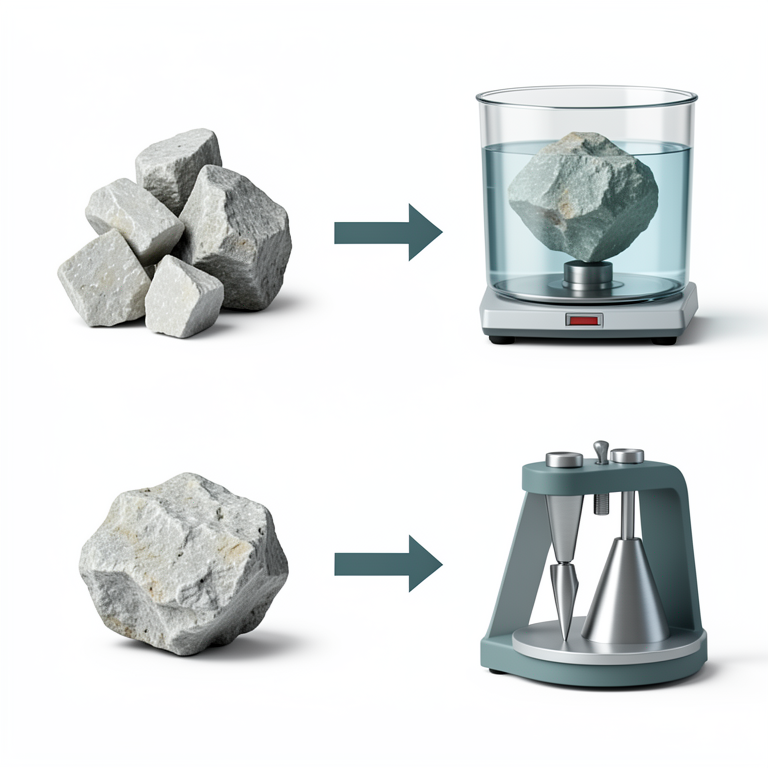
Experimental Workflow
AI-generated conceptual illustration (gypsum rocks from quarries). It explains the idea and does not show study data.
View source evidence ↗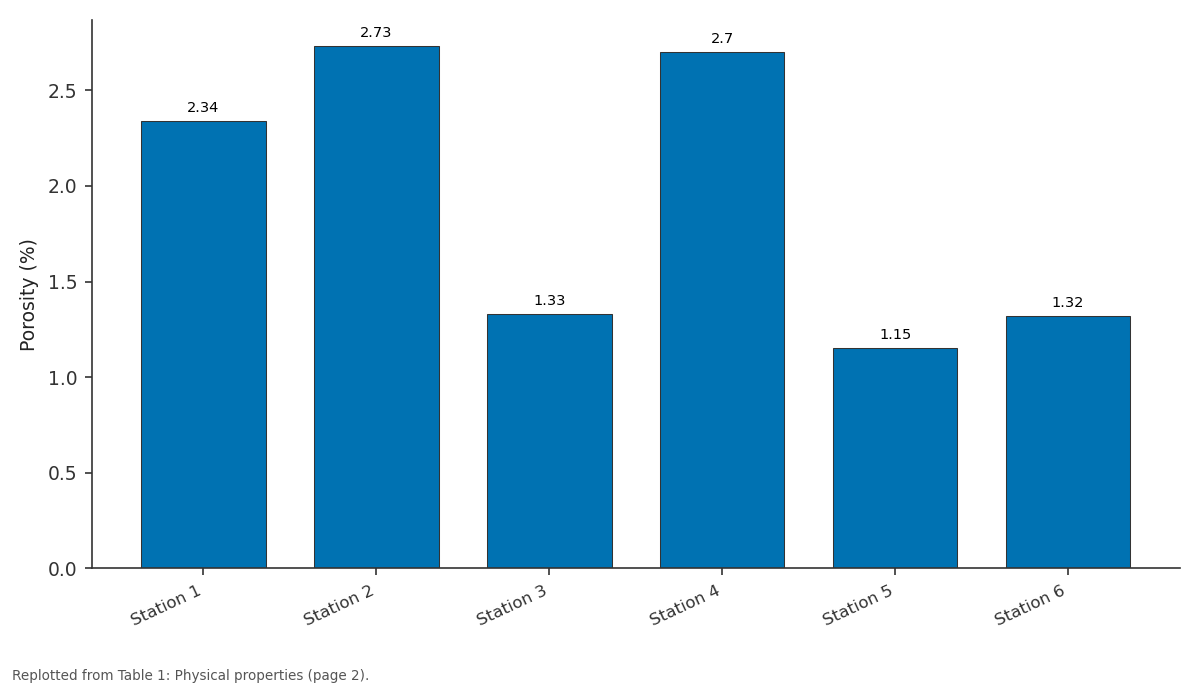
Porosity: Station 1 vs Station 2 vs Station 3 vs Station 4 vs Station 5
Replotted from Table 1 (page 2) of the original paper. Every bar is the paper's own table value.
View source evidence ↗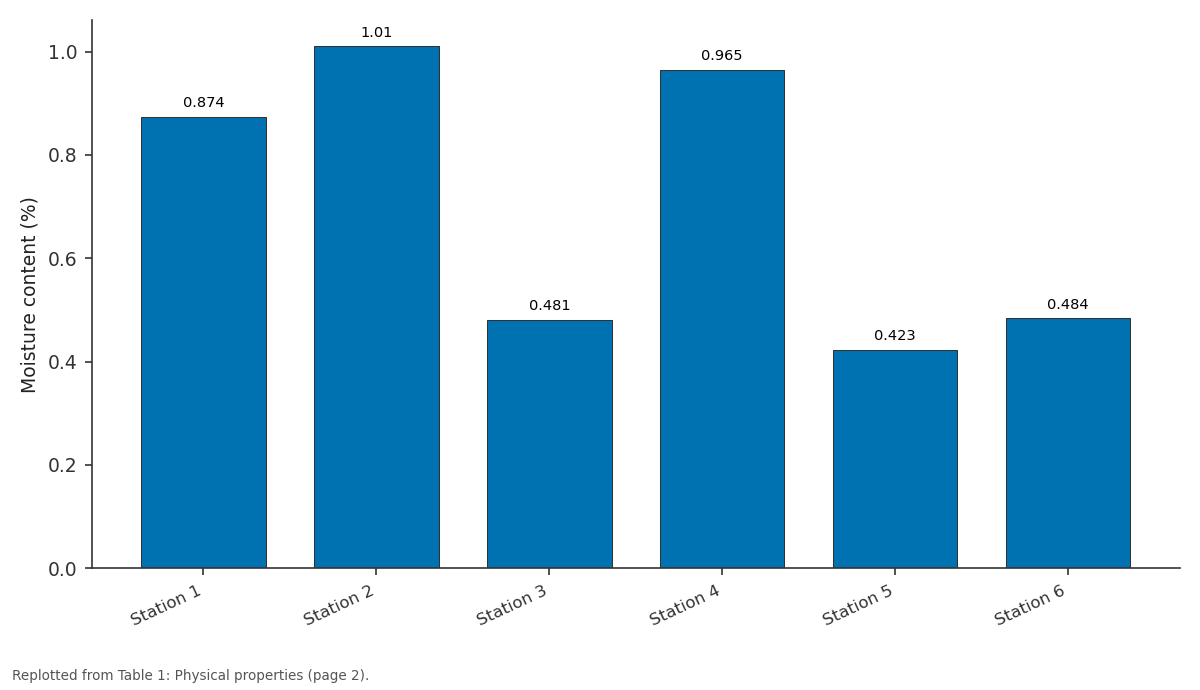
Moisture content: Station 1 vs Station 2 vs Station 3 vs Station 4 vs Station 5
Replotted from Table 1 (page 2) of the original paper. Every bar is the paper's own table value.
View source evidence ↗Figures & tables
From the original paper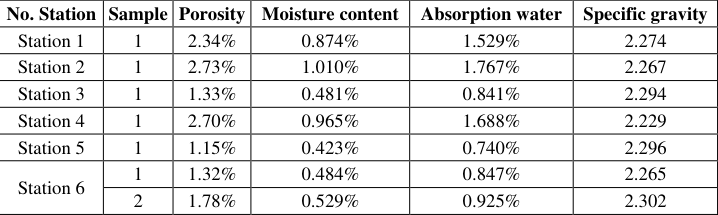 Table 1
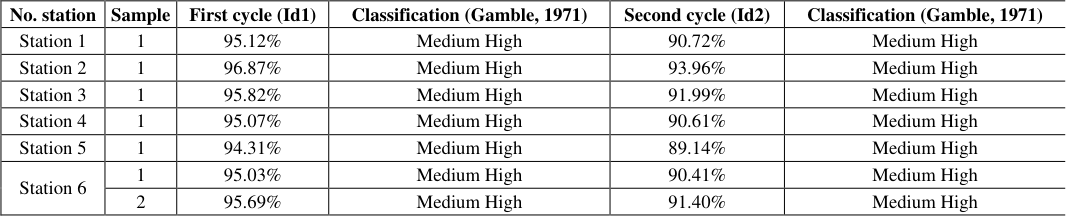 Table 2
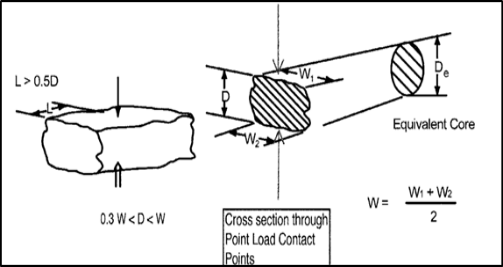 Figure 1
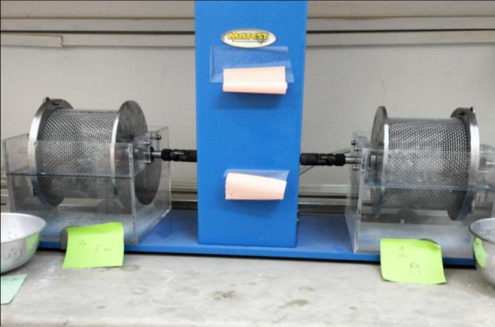 Figure 2
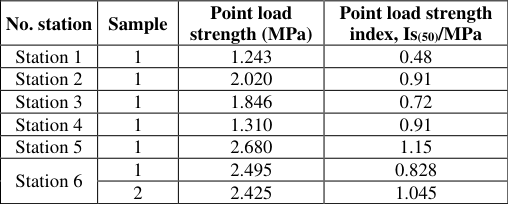 Table 3
Introduction
Gypsum is one of the most common minerals, obtained from sedimentary layers formed in marine basins and with high evaporation. is a key component of sedimentary sequences . Its prevalence in Kirkuk Governorate, Iraq, is particularly notable, where extensive deposits are embedded within the Middle Miocene Fatha Formation and adjacent stratigraphic units (Sissakian & Al-Jiburi, 2014) [18] . The Fatha Formation, deposited reflects a dynamic interplay of shallow marine, supratidal, and lagoonal environments, (Al-Juboury & McCann, 2008) [1] . These settings fostered cyclical episodes of evaporation, leading to the precipitation of calcium sulfate minerals such as gypsum, often interbedded with marl, clay, and limestone layers-a testament to the region's complex paleo environmental history (Buday, 1980) [8] and because of the presence of gypsum rocks in large quantities, it has economic and engineering importance and its important role in urban expansion and medical fields (Carvalho et al., 2008) [4] , (Othman and Ali, 2023) [17] . Six samples were collected from the study area to reach an accurate knowledge of its physical and mechanical properties and the extent of the durability of these rocks. Many studies have focused on the physical properties such as porosity, specific gravity, water absorption and moisture content, as the study (Wei et al., 2020) [22] has proven that porosity and density directly affect the resistance of gypsum rocks and their tolerance to mechanical stress (Wong, 2016) [23] has proven that the difference in specific gravity, porosity and chemical content affects their mechanical properties ,In addition to the following studies that addressed the relationships between engineering and rock properties (Bell, 1993) [7] , (Kahraman and Yeken, 2008) [13] , (Erguler and Ulusay, 2009) [10] , (Török and Přikryl, 2010) [20] , (Yilmaz, 2010) [24] , (Zhou et al., 2011) [26] , (Kumar et al., 2015) [14] , (Khanlari and Naseri, 2016) [15] , (Alyamac et al., 2017) [16] , (Soroush et al., 2020) [15] . Therefore, despite the availability of gypsum rocks in the northwest of Kirkuk, it was noted that there are few studies on the physical and mechanical properties and the extent of rock erosion under local environmental conditions. Therefore, this study provided an evaluation of gypsum rocks it his region.
Study area
The study area is located 23.2 km from Kirkuk city center near Dibs-Kirkuk road. The study area includes two gypsum quarries in fatha formation. The area is located between longitudes 44°14'29" and 44°09'23" east and latitudes 35°11'33" and 35°36'29" north, depending on the Universal Transverse Mercator (UTM) coordinate system.
Aim of study
This study aims to evaluate the physical (porosity, specific gravity, water absorption, moisture content) and mechanical (point load strength) properties of gypsum rock samples from quarries northwest of Kirkuk, Iraq, for the purpose of assessing their durability under local environmental conditions, to fill the gap in data specific to the region and to benefit from them in industrial and construction uses.
Materials and Methods
Rock samples were collected from six stations, with one sample taken from each station. In addition, two samples were taken from the sixth station, one very pure and the other mixed, resulting in a total of seven samples taken within the study area. The samples were also selected based on the apparent differences in the gypsum rocks in order to represent a comprehensive representation of the different types and properties. Care was taken to select rock samples that were not affected by weathering factors and were free of cracks or discontinuities. After the samples were collected, they were broken into smaller samples for distribution to other tests. The samples were prepared for testing, where physical tests were performed, namely rock porosity according to specifications (ASTM.C-97-09, 2010) [4] , moisture content according to (ASTM.D22-16, 2004) [5] , specific gravity according to (ASTM-C-127-2004) [3] , and water absorption according to specifications (ASTM-C-01-127, 2004). A durability test was then conducted to measure the strength of the rocks according to (ASTM D-4644-87, 2004) [6] , Using the device shown in(Figure 1).The point load index test was also used to provide information about how the materials behave under specific stresses according to (ISRM, 2007) [12] , Take measurements as shown in (Figure 2).
Results and Desiccation
The laboratory tests of the rock samples were as follows (Table 1), (Table 2) (Table 3) Physical Properties including (Porosity, Moisture content, Absorption water, specific gravity) Durability test rates and classification according to (Gamble, 1971) [11] . (Table 2)
| No. station | Sample | Point load strength (MPa) | Point load strength index, Is(50)/MPa |
|---|---|---|---|
| Station 1 | 1 | 1.243 | 0.48 |
| Station 2 | 1 | 2.020 | 0.91 |
| Station 3 | 1 | 1.846 | 0.72 |
| Station 4 | 1 | 1.310 | 0.91 |
| Station 5 | 1 | 2.680 | 1.15 |
| Station 6 | 1 | 2.495 | 0.828 |
| 2 | 2.425 | 1.045 |
Table text extracted from the original PDF; superscript letters are shown inline. The original table image is below.
View original table image
| No. station | Sample | First cycle (Id1) | Classification (Gamble, 1971) | Second cycle (Id2) | Classification (Gamble, 1971) |
|---|---|---|---|---|---|
| Station 1 | 1 | 95.12% | Medium High | 90.72% | Medium High |
| Station 2 | 1 | 96.87% | Medium High | 93.96% | Medium High |
| Station 3 | 1 | 95.82% | Medium High | 91.99% | Medium High |
| Station 4 | 1 | 95.07% | Medium High | 90.61% | Medium High |
| Station 5 | 1 | 94.31% | Medium High | 89.14% | Medium High |
| Station 6 | 1 | 95.03% | Medium High | 90.41% | Medium High |
| 2 | 95.69% | Medium High | 91.40% | Medium High |
Table text extracted from the original PDF; superscript letters are shown inline. The original table image is below.
View original table image
| No. Station | Sample | Porosity | Moisture content | Absorption water | Specific gravity |
|---|---|---|---|---|---|
| Station 1 | 1 | 2.34% | 0.874% | 1.529% | 2.274 |
| Station 2 | 1 | 2.73% | 1.010% | 1.767% | 2.267 |
| Station 3 | 1 | 1.33% | 0.481% | 0.841% | 2.294 |
| Station 4 | 1 | 2.70% | 0.965% | 1.688% | 2.229 |
| Station 5 | 1 | 1.15% | 0.423% | 0.740% | 2.296 |
| Station 6 | 1 | 1.32% | 0.484% | 0.847% | 2.265 |
| 2 | 1.78% | 0.529% | 0.925% | 2.302 |
Table text extracted from the original PDF; superscript letters are shown inline. The original table image is below.
View original table image
physical properties
In these physical tests, the porosity showed percentages ranging between (1.15%-2.70%), which indicates few voids and reflects high cohesion, and this is due to the difference in the constituent minerals, and the moisture content percentage (0.481%-1.010%), which indicates very little water trapped inside the pores or between the grains. This may be an indication of a dry environment or a rock that has been exposed to dehydration. Water absorption (0.740%-1.767%) is also a low amount and the rock is unable to absorb large amounts of water. The specific gravity also varied between (2.229-2302), and this difference indicates the difference in the percentages of impurities present in the rock samples (Maqsood, Anis-ur-Rehman and Gul, 2003) [16] .
The durability test
The durability test was conducted to evaluate the resistance of rocks to erosion through second cycles of drying and wetting, and the results were classified according to (Gamble, 1971) [11] . The remaining mass percentages after the first cycle were determined between (94.31%) and (96.87%) for all the samples tested under the experiment in the first cycle and were classified as medium high durability except for a sample from the first site in the third station which was classified as medium due to a slight loss in its mass. These results mean that most of the rocks showed a good degree of corrosion resistance in the first cycle which reflects the good cohesion of the samples. The remaining mass percentages after the second cycle were between (89.14%-93.96%) and all samples were classified as medium high durability. This indicates that the rock is resistant to corrosion even during two cycles.
Point Load Strength
The point load strength values showed differences in the results, where the highest value was recorded in the fifth sample at (2.680 MPa) and the lowest value in the first station (1.243 MPa). This variation reflects the extent of the difference in the structural composition of the samples (Tugrul and Zarif, 1999) [21] .
Conclusion
The results confirm that this study of the characteristics of the rocks of the region makes them important and promising in engineering and industrial applications. The analyses of the physical properties showed a low percentage of porosity ranging between (1.15-2.70%), which reflects a high internal cohesion due to the nature of the compact crystalline structure of gypsum. The values of the specific gravity differed due to the presence of impurities within the rock samples, ranging between (2.229-2.302). The moisture content was low (0.48-1.01%) and the water absorption rate was limited (0.74-1.77%) indicating good resistance to water corrosion, which is good and important in dry areas as the region fluctuates between dry and seasonal rains. In terms of durability, the samples were classified as (mediumhigh) after the two cycles of testing, i.e. the mass retention was (more than 89%), which confirms their ability to withstand repeated stresses from the environment such as drying and wetting. A large variation was observed in the values of point load strength (1.24-2.68 MPa), where the fifth sample recorded the highest value (2.68 MPa), while the first sample appeared weaker with a value of (1.24 MPa). The reason for this variation is due to geological differences during the stratigraphic formation, such as the presence of impurities such as marl deposits and the degree of crystallization, which directly affect the mechanical behavior of rocks. The results are consistent with research that linked the variation between porosity values and specific gravity to increased mechanical resistance. However, the higher classification of gypsum rock durability compared to other areas is due to the sedimentary conditions during the Middle Miocene, which led to the formation of gypsum layers that were more homogeneous. This study provided an evaluation of its engineering properties, degree of resistance and mass retention rate during local environmental conditions, which helps in determining appropriate uses in engineering and industrial fields.
Acknowledgement
AcknowledgementsThe University of Kirkuk, Faculty of Science is to be thanked by the authors for providing the necessary facilities that allowed the quality of their work to be improved
References
25 in the original paper- Al-Juboury AI, McCann T. Sedimentological characterization of the Mid-Miocene Fatha Formation, Iraq. Netherlands: Springer. 2008;43(2-3):135-156.
- Alyamac KE, Ghafoori N, Lashkaripour GR. Prediction of engineering properties of rocks from microscopic data. Netherlands: Springer. 2017;76(3):1003-1015.
- ASTM C127-04. Standard Test Method for Density, Relative Density (Specific Gravity), and Absorption of Coarse Aggregate. Netherlands: ASTM International; 2004.
- ASTM C97/C97M-09. Standard Test Methods for Absorption and Bulk Specific Gravity of Dimension Stone. Netherlands: ASTM International; 2010.
- ASTM D2216-05. Standard Test Methods for Laboratory Determination of Water (Moisture) Content of Soil and Rock by Mass. Netherlands: ASTM International; 2004.
- ASTM D4644-87. Standard Test Method for Slake Durability of Shales and Other Similar Weak Rocks. Netherlands: ASTM International; 2004.
- Bell FG. Engineering Properties of Soils and Rocks. Netherlands: Butterworth-Heinemann; 1993.
- Buday T. The Regional Geology of Iraq: Stratigraphy and Paleogeography. Iraq: State Organization for Minerals; 1980.
- Carvalho JMF, Delgado JF, Costa CJV. Gypsum in construction: origin and properties. Netherlands: Springer. 2008;41(2):255-263.
- Erguler ZA, Ulusay R. Water-induced variations in mechanical properties of clay-bearing rocks. Netherlands: Springer. 2009;46(2):355-370.
- Gamble JC. Durability-Plasticity Classification of Shales and Other Argillaceous Rocks. Netherlands: Springer; 1971.
- ISRM. The Complete ISRM Suggested Methods for Rock Characterization, Testing and Monitoring: 19742006. Switzerland: ISRM; 2007.
- Kahraman S, Yeken T. Determination of physical properties of carbonate rocks from P-wave velocity. Netherlands: Springer. 2008;67(2):277-81.
- Khanlari GR, Naseri F. An experimental investigation of the influence of porosity on the mechanical behavior of gypsum rock. Netherlands: Springer. 2016;75(5):110.
- Kumar R, Bhargava K, Choudhury D. Estimation of engineering properties of rocks from field index tests. Netherlands: Springer. 2015;7(4):389-99.
- Maqsood A, Anis-ur-Rehman M, Gul IH. Physical and mechanical properties of gypsum rocks from Salt Range, Pakistan. Netherlands: Springer. 2003;25(4):298-302.
- Othman RA, Ali SS. Applications of gypsum in sustainable construction and healthcare sectors. Netherlands: Springer. 2023;12(3):45-58.
- Sissakian VK, Al-Jiburi BM. Stratigraphy of the High Folded Zone. Iraq: Iraqi Bulletin of Geology and Mining; 2014.
- Soroush H, Hamidi JK, Asemi F. Evaluating the effect of mineral composition on the durability of gypsum rocks. Netherlands: Springer. 2020;53(4):1887-901.
- Török Á, Přikryl R. Current methods and future trends in testing, durability analyses and provenance studies of natural stones used in historical monuments. Netherlands: Springer. 2010;115(3-4):139-142.
- Tugrul A, Zarif IH. Correlation of mineralogical and textural characteristics with engineering properties of selected granitic rocks from Turkey. Netherlands: Springer. 1999;51(4):303-317.
- Wei X, Li L, Wang E, Li C. Experimental study on the mechanical properties of gypsum under different porosity conditions. Netherlands: Springer. 2020;250:118764.
- Wong LNY. Effects of water on the mechanical properties of gypsum rock. Netherlands: Springer. 2016;49(7):2751-2761.
- Yilmaz I. Influence of water content on the strength and deformability of gypsum. Netherlands: Springer. 2010;47(2):342-347.
- Zhou Y, Zhang L, Yang Q, Zhao J. Experimental study on the mechanical behavior of gypsum under triaxial compression. Netherlands: Springer. 2011;44(5):629634.