
Research article · 2025 · Full text
International Journal of Agriculture and NutritionImpact of Azolla on some biochemical traits of carp (C. carpio)
Volume 7(2) · Pages 05–08 · DOI: 10.33545/26646064.2025.v7.i2a.204 ↗
Research areasBiological Control of Invasive SpeciesFish Biology and Ecology Studies
Abstract
Author-writtenCarp fingerlings C. carpio weighing (41.50-40.50) grams were obtained from the pond fish hatchery. The fish were then randomly distributed in glass tanks with dimensions of (40×40×60) in the laboratory. The fish were divided into four groups, each group had three replicates. The first group was a control group C1, and the second, third and fourth groups C2, C3, and C4 were supplemented with 3, 6 and 9 g/Azolla powder/kg feed. The fish were fed at three times: 6, 12 and 18 hours/day at a rate of 3% of body weight, the fish were raised for two months. The results shows: significant (p≤0.05) increase for C2, and C4 in WBC and total protein, significant (p≤0.05) increase for C3 in AST enzyme, while the C2 group significant (p≤0.05) heights in albumin, creatinine, and VLDL, as well the C4 group significant (p≤0.05) increase in globulin, the C1 group was significant (p≤0.05) heights in urea and cholesterol compared other group.
Summary
Source-checkedPlain-language reading of the full paper, prepared with AI and checked against the text. Each point links to the authors' own words.
Why it matters
- Sustainable livestock production in developing nations is hindered by a reliance on expensive or imported conventional feed ingredients. View evidence ↗
- Standard fish protein sources like soybean, groundnut cake, and fish meal have become too expensive due to high demand. View evidence ↗
- There is a need for locally available, protein-rich feed sources that do not compete with human food, such as the aquatic fern Azolla. View evidence ↗
The question
- The study aims to evaluate how adding different amounts of Azolla to the feed of carp affects their physiological traits. View evidence ↗
What they did
- Carp fingerlings (C. carpio) weighing between 40.50 and 41.50 grams were randomly placed in 40x40x60 glass tanks in a laboratory setting. View evidence ↗
- Fish were split into four groups with three replicates each: a control (C1) and three treatment groups (C2, C3, C4) receiving 3, 6, and 9 g of Azolla powder per kg of feed, respectively. View evidence ↗
- The fish were raised for two months and fed three times daily (at 6, 12, and 18 hours) at a rate of 3% of their body weight. View evidence ↗
- Blood was collected from the caudal vein at 60 days to measure physical traits (RBC, WBC, hemoglobin) and biochemical traits (including total protein, glucose, liver enzymes, and lipids). View evidence ↗
What they found
- Total protein levels were significantly higher (p≤0.05) in groups C2 (46.14±3.01 g/l) and C4 (45.96±0.98 g/l) than in the control group C1 (41.19±2.10 g/l). View evidence ↗
- Albumin levels were significantly higher (p≤0.05) in group C2 (22.17±2.18 g/l) than in the control C1 (15.26±1.31 g/l) and other treatment groups. View evidence ↗
What it means
- The authors conclude that adding Azolla to carp feed may improve production performance by enhancing immune and physiological characteristics. View evidence ↗
Visual summary
3 visualsIllustrations explain the paper; charts are replotted from the paper's own table values.
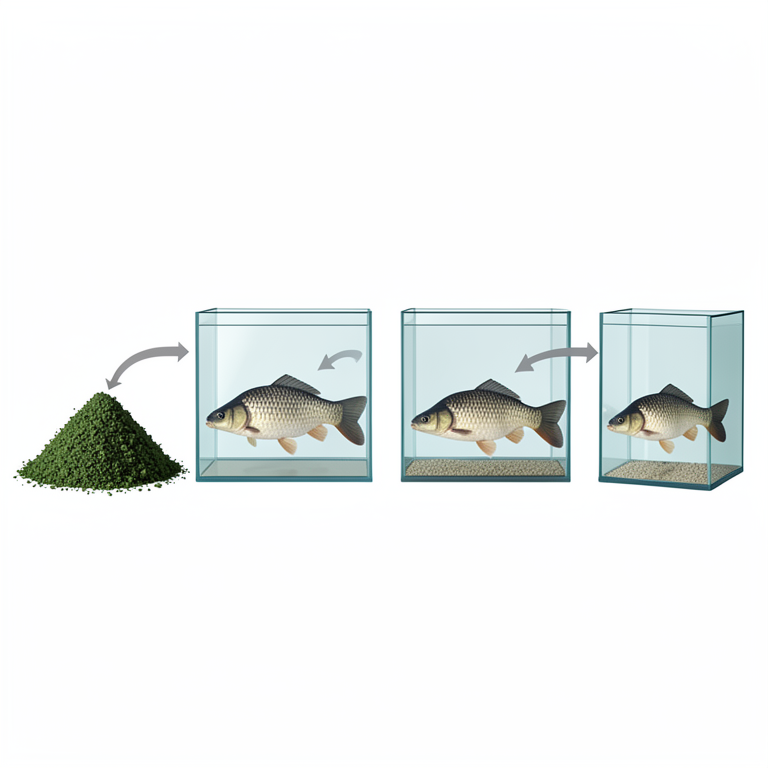
Experimental Group Layout
AI-generated conceptual illustration (Common carp (Cyprinus carpio) and Azolla pinnata powder). It explains the idea and does not show study data.
View source evidence ↗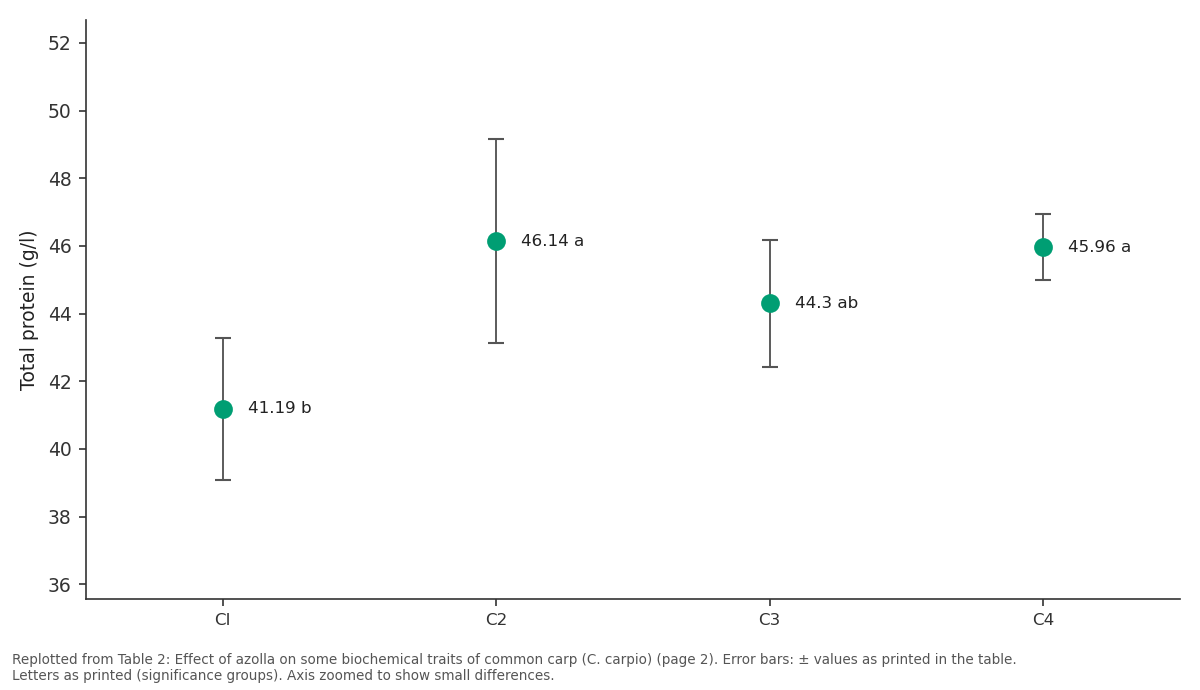
Total protein (g/l): CI vs C2 vs C3 vs C4
Replotted from Table 2 (page 2) of the original paper. Every bar is the paper's own table value.
View source evidence ↗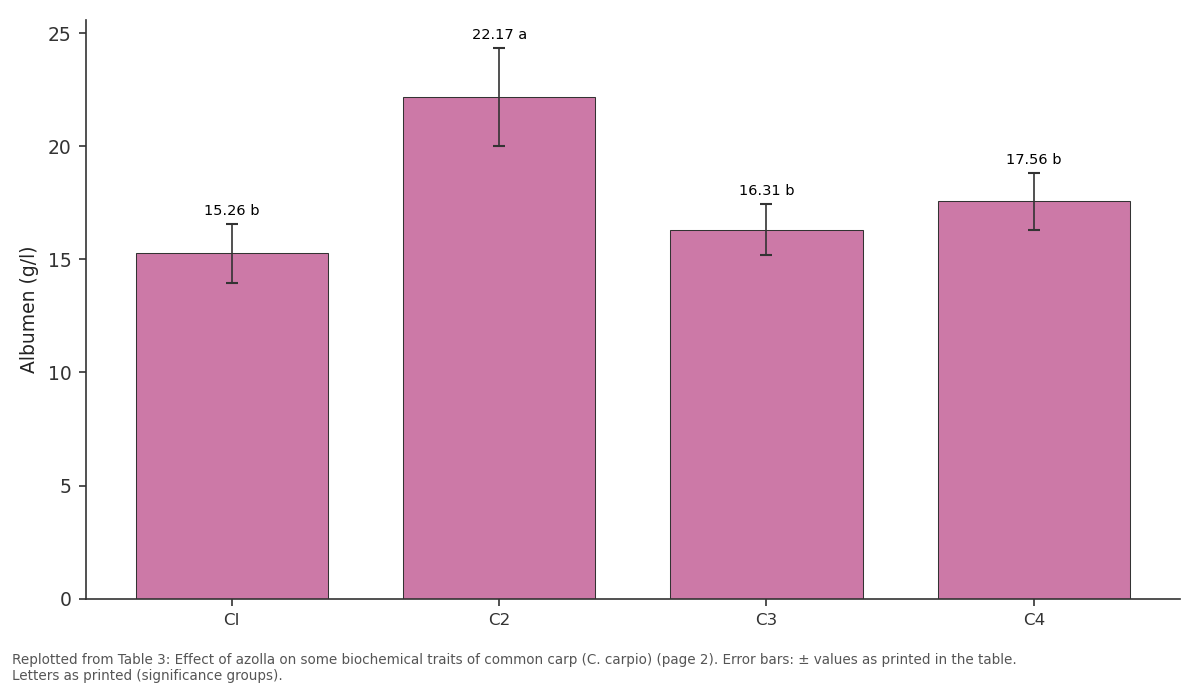
Albumen (g/l): CI vs C2 vs C3 vs C4
Replotted from Table 3 (page 2) of the original paper. Every bar is the paper's own table value.
View source evidence ↗Figures & tables
From the original paper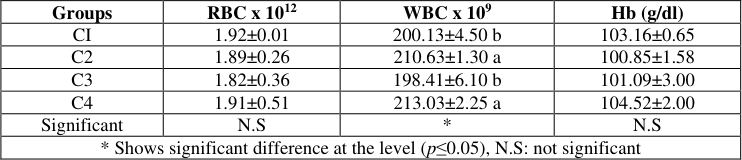 Table 1
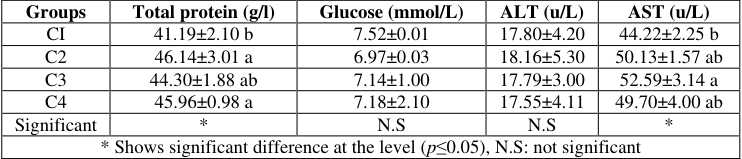 Table 2
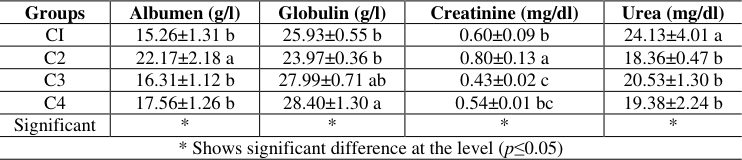 Table 3
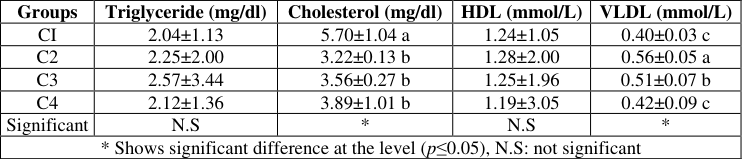 Table 4
Introduction
The success of intensive fish farming depends on many factors, especially the provision of good feed and healthy water that reduces pollution and other essentials for the rapid growth of carp, fish also need many nutritional elements in sufficient quantities to achieve the best growth, in general, these needs vary according to the method of breeding, age and season, in order to provide sustainable fish farming, nutrients must be provided that do not compete with human food, while at the same time providing high-quality feed (FAO, 2007: El-Din et al., 2022) [6,5] . The primary concern of any livestock sector, particularly in developing nations, is the achievement of sustainable output, this has been challenging in the majority of these countries due to their reliance on conventional feed ingredients, which are either Materials Carp fingerlings C. carpio weighing (41.50-40.50) grams were obtained from the pond fish hatchery. The fish were then randomly distributed in glass tanks with dimensions of (40×40×60) in the laboratory. The fish were divided into four groups, each group had three replicates. The first group was a control group C1, and the second, third and fourth groups C2, C3, and C4 were supplemented with 3, 6 and 9 g/Azolla powder/kg feed. The fish were fed at three times: 6, 12 and 18 hours/day at a rate of 3% of body weight. The fish were raised for two months. The fish were fed a diet consisting of 31% fish meal, 18% soybeans, 38% corn, 10% barley, 1% probiotic and 2% vitamins. Obtained Azolla powder from local markets. Blood samples were collected from fish and from each replicate from the caudal vein at the age of 60 days. A portion of it was placed in anticoagulant tubes for the purpose of studying the physical characteristics of blood (the number of red and white blood cells and hemoglobin), and the other portion of blood was isolated from the blood serum for studying the biochemical characteristics of blood (total protein, glucose, liver enzymes AST and ALT, albumin, globulin, creatinine, urea, triglycerides, cholesterol, HDL and VLDL) (Zinkl, 1986) [17] . Statistical analysis was conducted using the SAS program (2012) and using the Duncan multinomial test (1955).
Results and Discussion
In table 1: noted the impact of study in some physical blood traits, there was no significant effect in RBC and Hd, while the C2, and C4 increase significantly (p≤0.05) compared to C1 and C3. 3: shown the effect of azolla in protein metabolism change, the albumen, and creatinine significant (p≤0.05) increase in C2 on C1, C3, and C4 groups, while the globulin was significant heights (p≤0.05) in C4 compared the C1, and C2 groups, as so the urea significant (p≤0.05) increase in C1 compared to other groups. In table 4: noted no significant effect in triglyceride, and HDL, while significant heights (p≤0.05) in cholesterol for C1 group on other groups, the VLDL significant heights (p≤0.05) in C2, and C3 respectively compared to C1, and C4 groups. [18] . Because of their low nutritional potential due to poor digestibility and the presence of antinutritional elements, non-conventional plant feedstuffs are likely to be deemed undesirable as ingredients for fish feed. Depending on the source, strain, and growing medium, the aquatic fern Azolla, which grows quickly in freshwater environments, has a low protein content (19%-31%).
| Groups | Triglyceride (mg/dl) | Cholesterol (mg/dl) | HDL (mmol/L) | VLDL (mmol/L) |
|---|---|---|---|---|
| CI | 2.04±1.13 | 5.70±1.04 a | 1.24±1.05 | 0.40±0.03 c |
| C2 | 2.25±2.00 | 3.22±0.13 b | 1.28±2.00 | 0.56±0.05 a |
| C3 | 2.57±3.44 | 3.56±0.27 b | 1.25±1.96 | 0.51±0.07 b |
| C4 | 2.12±1.36 | 3.89±1.01 b | 1.19±3.05 | 0.42±0.09 c |
| Significant | N.S | * | N.S | * |
| * Shows significant difference at the level (p≤0.05), N.S: not significant |
Table text extracted from the original PDF; superscript letters are shown inline. The original table image is below.
View original table image
| Groups | RBC x 1012 | WBC x 109 | Hb (g/dl) |
|---|---|---|---|
| CI | 1.92±0.01 | 200.13±4.50 b | 103.16±0.65 |
| C2 | 1.89±0.26 | 210.63±1.30 a | 100.85±1.58 |
| C3 | 1.82±0.36 | 198.41±6.10 b | 101.09±3.00 |
| C4 | 1.91±0.51 | 213.03±2.25 a | 104.52±2.00 |
| Significant | N.S | * | N.S |
| * Shows significant difference at the level (p≤0.05), N.S: not significant |
Table text extracted from the original PDF; superscript letters are shown inline. The original table image is below.
View original table image
Whether fresh or combined with other feed ingredients, water fern has gained favor as a natural food source for fish species. Our results demonstrate that for C. carpio var. communis fingerlings, 100% substitution of water fern for fish meal at high degrees of integration is insufficient. One of the useful indicators for monitoring the physiological status and general health of fish is serum biochemical parameters, which are commonly used to evaluate the impact of feed additives on fish health (Parrino et al., 2018; Fazio et al., 2019) [9,7] . These serum properties can significantly contribute in the diagnosis of disease and the efficacy of treatment. In aquaculture, evaluating the serum biochemical parameters is crucial since it enables us to ascertain the normal physiological status of the fish (Patriche et al., 2011) [10] . Proteins are one of the primary energy sources for fish and significantly affect their blood glucose levels, according to Shwetha et al. (2012) [14] . A lower rate of protein synthesis in fish fed greater amounts of dietary azolla may be the reason why the azolla dietary supplement in our study decreased the total serum protein of C. carpio var. communis fingerlings. Calcium, phosphorous, and potassium are blood electrolytes that are frequently measured. While potassium ions are mostly found in intercellular fluid and play a major role in the metabolism of carbohydrates in fish nerve fibers, calcium is a component of bones and also regulates neuron and muscle functions in fish. Variations in potassium levels affect the fish's heart and harm its central nervous system neurotoxically (Adedeji, 2010) [1] . A comparable significant difference was seen in the calcium and phosphorous activities of fingerling C. carpio var. communis compared to the group of fish fed a simple diet (C1). On the other hand, cholesterol follows the reverse tendency, rising when dietary Azolla intake rises. The enzymes alanine aminotransferase (ALT) and aspartate aminotransferase (AST) are found in the liver, kidneys, heart, skeletal muscle, pancreas, spleen, erythrocyte, brain, and gills (Hadi et al., 2009) [8] . These blood plasma enzymes are evaluated as markers of liver health in clinical settings. When there is damage, these enzymes are immediately released into the bloodstream, giving information about liver failure. Serum ALT and AST levels sharply increased during our study. Although Xu et al. (2018) [16] found that blood ALT and cholesterol levels were much lower in C. carpio var. communis fed azolla-replaced meals than in the control group, this suggests that Azolla had a negative impact on the liver. According to Xu et al. (2018) [16] , serum glucose levels demonstrated a good level of liver function and normal bodily metabolism. Additionally, it was demonstrated that when dietary Azolla intake increased, serum glucose levels rose in all groups. Higher AST and ALT levels supported our findings that fish were unable to sustain normal glucose metabolism at higher inclusion levels, putting stress on liver metabolism (Ahmed et al., 2023) [2] .
Conclusion
It is concluded from the results obtained from the study that adding Azolla to carp feed may improve its production performance due to the improvement of physiological and immune characteristics, as the treatment caused an improvement in the number of white blood cells, total protein, albumin and globulin, and also significantly reduced creatinine, urea, cholesterol and liver enzymes.
Figures and tables from the paper
| Groups | Total protein (g/l) | Glucose (mmol/L) | ALT (u/L) | AST (u/L) |
|---|---|---|---|---|
| CI | 41.19±2.10 b | 7.52±0.01 | 17.80±4.20 | 44.22±2.25 b |
| C2 | 46.14±3.01 a | 6.97±0.03 | 18.16±5.30 | 50.13±1.57 ab |
| C3 | 44.30±1.88 ab | 7.14±1.00 | 17.79±3.00 | 52.59±3.14 a |
| C4 | 45.96±0.98 a | 7.18±2.10 | 17.55±4.11 | 49.70±4.00 ab |
| Significant | * | N.S | N.S | * |
| * Shows significant difference at the level (p≤0.05), N.S: not significant |
Table text extracted from the original PDF; superscript letters are shown inline. The original table image is below.
View original table image
| Groups | Albumen (g/l) | Globulin (g/l) | Creatinine (mg/dl) | Urea (mg/dl) |
|---|---|---|---|---|
| CI | 15.26±1.31 b | 25.93±0.55 b | 0.60±0.09 b | 24.13±4.01 a |
| C2 | 22.17±2.18 a | 23.97±0.36 b | 0.80±0.13 a | 18.36±0.47 b |
| C3 | 16.31±1.12 b | 27.99±0.71 ab | 0.43±0.02 c | 20.53±1.30 b |
| C4 | 17.56±1.26 b | 28.40±1.30 a | 0.54±0.01 bc | 19.38±2.24 b |
| Significant | * | * | * | * |
| * Shows significant difference at the level (p≤0.05) |
Table text extracted from the original PDF; superscript letters are shown inline. The original table image is below.
View original table image
References
17 in the original paper- Adedeji OB. Acute effect of diazinon on blood plasma biochemistry in the African catfish (Clarias gariepinus). Journal of Clinical Medicine and Research. 2010;2:1-6.
- Ahmed I, Khan YM, Lateef A, Jan K, Majeed A, Shah MA. Effect of fish meal replacement by Azolla meal on growth performance, hemato-biochemical and serum parameters in the diet of scale carp, Cyprinus carpio var. communis. Journal of the World Aquaculture Society. 2023;54:1301-1316.
- Alalade OA, Iyayi EA. Chemical composition and the feeding value of Azolla pinnata meal for egg-type chicks. International Journal of Poultry Science. 2006;5(2):137-141.
- Ara S, Adil S, Banday MT, Khan M. Feeding potential of aquatic fern-Azolla in broiler chicken ration. Journal of Poultry Science and Technology. 2015;3:15-19.
- El-Din EI, Mursy IA, Soliman FM, Soliman HAM, Badrey AEA, Osman AGM. An alternative diet from agriculture wastes as feed for the grass carp (Ctenopharyngodon idella) in an integrated agriaquaculture system in the Eastern Desert and its influences on haematological parameters, blood biochemistry, and immune status. Egyptian Journal of Aquatic Biology & Fisheries. 2022;26(1):257-272.
- FAO. The State of World Fisheries and Aquaculture 2006. FAO Fisheries and Aquaculture Department, FAO; 2007. p. 162.
- Hadi A, Shokr A, Alwan S. Effects of aluminum on the biochemical parameters of freshwater fish Tilapia zillii. Journal of Science and its Applications. 2009;3:33-41.
- Parrino V, Cappello T, Costa G, Cannava C, Sanfilippo M, Fazio F, et al. Comparative study of haematology of two teleost fish (Mugil cephalus and Carassius auratus) from different environments and feeding habits. The European Zoological Journal. 2018;85:193-199. doi:10.1080/24750263.2018.1460694.
- Patriche T, Patriche N, Bocioc E, Coada MT. Serum biochemical parameters of farmed carp (Cyprinus carpio). Aquaculture, Aquarium, Conservation & Legislation. 2011;4:137-140.
- Prabha BJ, Kumar K. Dried Azolla as a nutritionally rich cost effective and immuno-modulatory feed International Journal of Agriculture and Nutrition https://www.agriculturejournal.net supplement for broilers. Asian Journal of Animal Science. 2010;5(1):20-22.
- SAS. Statistical Analysis System, User's Guide. Version 9.1. 1th ed. SAS Institute Inc., Cary, NC, USA; 2012.
- Sharma K. Biological evaluation of Azolla (Azolla pinnata) in broiler ration. MSc Thesis, Department of Animal Nutrition, CSK Himachal Pradesh Krishi Vishvavidyalaya, Palampur, India; 2014.
- Shwetha A, Hosetti BB, Dube PN. Toxic effects of zinc cyanide on some protein metabolites in freshwater fish, Cirrhinus mrigala (Hamilton). International Journal of Environmental Research. 2012;6:769-778.
- Singh PK, Subudhi BPR. Utilization of Azolla in poultry feed. Indian Farming Journal of Experimental Biology and Agricultural Sciences. 1978;27:37-39.
- Xu X, Ji H, Yu H, Zhou J. Influence of replacing fish meal with enzymatic hydrolysates of defatted silkworm pupa (Bombyx mori L.) on growth performance, body composition, and non-specific immunity of juvenile mirror carp (Cyprinus carpio var. specularis). Aquaculture Research. 2018;49:1480-1490. doi:10.1111/are.13603.
- Zinkl JG. Veterinary Hematology. Philadelphia: Pahle and Fibiger; 1986. p. 256-260.
- Cruz-Velásquez Y, Kijora C, Vergara-Hernández W, Schulz C. On-farm evaluation of Cachama blanca and Nile tilapia fed fermented aquatic plants in a polyculture. Orinoquia. 2014 Dec;18:269-277.