
Research article · 2024 · Full text
International Journal of Agriculture and NutritionBiotechnological approach to improve nutritional quality of plants
Volume 6(2) · Pages 71–74 · DOI: 10.33545/26646064.2024.v6.i2b.182 ↗
Research areasPlant tissue culture and regenerationPlant Micronutrient Interactions and EffectsBanana Cultivation and Research
Abstract
Author-writtenBiotechnology plays a pivotal role in enhancing the nutritional quality of plants, addressing the critical issues of undernourishment and micronutrient deficiencies that affect billions globally. This review explores various biotechnological approaches aimed at improving the nutritional profiles of staple crops, focusing on the modification of proteins, carbohydrates, fatty acids, vitamins, antioxidants, and minerals. Key strategies include genetic engineering techniques that enhance the biosynthesis of essential nutrients, improve their bioavailability, and increase the overall nutritional value of crops. Notable advancements include the development of biofortified crops such as Golden Rice, which is enriched with provitamin A, and oilseeds engineered to contain higher levels of omega-3 fatty acids. The review also discusses the challenges associated with ensuring the bioavailability of enhanced nutrients and the potential for biotechnology to create more nutritious food sources to combat global malnutrition. By leveraging modern biotechnological tools, it is possible to significantly improve the nutritional quality of plants, thereby contributing to food security and public health.
Summary
Source-checkedPlain-language reading of the full paper, prepared with AI and checked against the text. Each point links to the authors' own words.
Why it matters
- Chronic hunger affects approximately 870 million people globally, particularly in developing nations, making undernourishment a critical global challenge. View evidence ↗
- Malnutrition and the lack of essential nutrients are linked to over 2.5 million child deaths annually. View evidence ↗
- While staple crops like wheat, maize, and rice provide the majority of calories for billions, they are generally deficient in essential micronutrients. View evidence ↗
The question
- The objective of this review is to examine recent biotechnological progress in improving the nutritional quality of plants. View evidence ↗
What they did
- The review analyzes strategies for modifying both major constituents (proteins, carbohydrates, lipids) and minor constituents (vitamins, minerals, antioxidants). View evidence ↗
- The primary biotechnological methods discussed involve genetic engineering to enhance nutrient biosynthesis and improve bioavailability. View evidence ↗
What they found
- Expressing a feedback-insensitive DHDPS gene in potatoes increased the lysine content of the tubers six-fold. View evidence ↗
- Using RNAi to target the ZLKR/SDH enzyme in maize seeds led to a 20-fold increase in free lysine content. View evidence ↗
- Transgenic alfalfa plants expressing Arabidopsis CGS showed a 32-fold increase in soluble methionine compared to wild-type plants. View evidence ↗
- Expressing cassava hydroxynitrile lyase (HNL) increased root protein content three-fold and reduced toxic cyanogenic glycosides. View evidence ↗
- Transgenic wheat targeting the SBEII-a enzyme with double-strand RNA achieved an amylose content of more than 70%. View evidence ↗
- Improvements in Golden Rice have led to transgenic lines producing up to 35 μg/g of carotenoids. View evidence ↗
- Expressing the Arabidopsis IRT1 metal transporter in cassava roots increased iron levels by 2 to 3 fold. View evidence ↗
- Overexpressing ferritin in the endosperm of rice resulted in a 2 to 3 fold increase in iron content. View evidence ↗
What it means
- The authors conclude that combining biotechnological approaches with conventional breeding is a promising way to address global nutritional deficiencies. View evidence ↗
- The authors note that challenges persist regarding the optimization of gene expression, the avoidance of negative pleiotropic effects, and the assurance of nutrient bioavailability. View evidence ↗
Visual summary
1 visualsIllustrations explain the paper; they do not show study data.
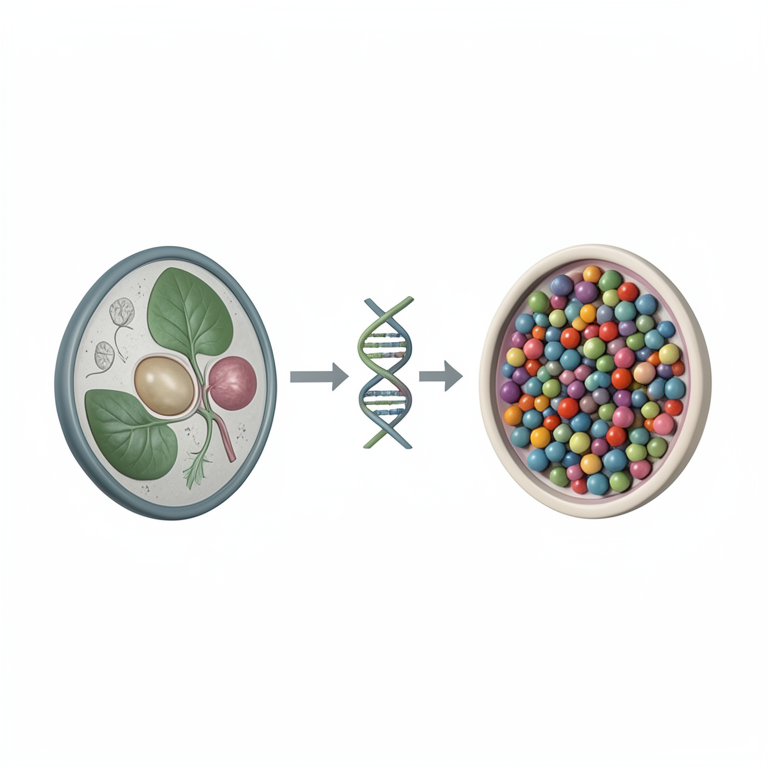
Biotechnological Nutrient Enhancement Flow
AI-generated conceptual illustration (Arabidopsis thaliana plant cells). It explains the idea and does not show study data.
View source evidence ↗Introduction
The global challenge of undernourishment and micronutrient deficiencies is a pressing issue, with approximately 870 million people estimated to suffer from chronic hunger, particularly in developing countries (FAO et al., 2012) [13] . This situation is exacerbated by the fact that vitamin and mineral deficiencies contribute significantly to mortality rates, especially among children. It is estimated that over 2.5 million children die each year due to complications arising from malnutrition, which is often linked to inadequate intake of essential nutrients. The consequences of these deficiencies extend beyond immediate health risks, leading to long-term cognitive impairments in children and reduced productivity in adults, thereby perpetuating the cycle of poverty and poor health (Hirschi, 2009) [20] . Staple crops, such as rice, maize, and wheat, form the backbone of the diet for billions of people worldwide, providing the majority of their caloric intake. However, these crops are typically low in essential micronutrients, which can result in serious health issues for populations that rely heavily on them for sustenance (Bhullar and Gruissem, 2013) [5] . For instance, individuals consuming rice-based diets are at a heightened risk of vitamin A and iron deficiencies, as rice lacks these crucial nutrients. Given the projected increase in global population, which is expected to reach around eight billion by 2025 (UN Population Division, 2011), the urgency to address these nutritional deficiencies becomes even more critical. While conventional breeding has been employed to enhance the nutritional quality of crops, progress has been limited due to the restricted genetic diversity available within existing crop species. Biotechnology, on the other hand, offers a promising avenue for significantly improving the nutritional profiles of plants. By utilizing genetic engineering techniques, it is possible to introduce new biosynthetic pathways and enhance the accumulation of essential nutrients in crops, even those that are scarce or absent in certain species. Furthermore, biotechnology accelerates the biofortification process compared to traditional breeding methods, allowing for more rapid advancements in crop nutrition (Hirschi, 2009) [20] . This review aims to discuss the recent progress made in the field of biotechnology to enhance the nutritional quality of plants.
It will cover various strategies employed to modify major and minor constituents, including proteins, carbohydrates, fatty acids, vitamins, antioxidants, and minerals. By highlighting the potential of biotechnological interventions, this review seeks to underscore the importance of these advancements in addressing global nutritional deficiencies and improving public health.
Targets for Improvement
Plants contain a diverse range of phytochemicals that are essential for human nutrition, which can be categorized into major and minor constituents. Major constituents, including proteins, carbohydrates, and lipids, are present in grams per 100 grams of food, while minor components, such as vitamins, minerals, and antioxidants, are found in micrograms or milligrams per 100 grams. Genetic engineering can facilitate both quantitative and qualitative changes in these constituents. However, modifications to major components are generally more challenging due to the need to divert substantial amounts of precursors from other metabolic pathways. Consequently, most biotechnological efforts have focused on enhancing minor constituents, with significant successes reported in the engineering of fatty acids and the accumulation of long-chain omega-3 fatty acids in oil crops (Abbadi et al., 2004; Napier and Graham, 2010) [2,25] .
Protein Modification
Protein modification in plants is a crucial area of research aimed at enhancing the nutritional quality of staple crops. Proteins are composed of amino acids, which are essential for human health, serving as the building blocks for various biological functions, including enzyme activity, hormone production, and tissue repair. Among the 20 amino acids required by humans, ten are synthesized by the body, while the remaining essential amino acids must be obtained through dietary sources. Unfortunately, many staple crops, particularly cereals and legumes, are deficient in essential amino acids, leading to malnutrition in populations that rely heavily on these foods (Hirschi, 2009) [20] .
Nutritional Deficiencies in Crop Proteins
The proteins found in major crop species, such as maize and wheat, often exhibit poor nutritional quality due to low levels of essential amino acids, especially lysine and methionine. For example, maize seeds primarily consist of prolamins (zeins), which account for about 60% of total seed protein but contain negligible amounts of lysine and tryptophan (Coleman and Larkins, 1999) [8] . This deficiency poses a significant risk for populations that consume maize as a dietary staple, as it can lead to protein-energy malnutrition and associated health issues. Efforts to improve the amino acid profile of maize have historically focused on identifying and breeding mutants with enhanced lysine and tryptophan content. Notable examples include the opaque-2 and floury-2 mutants, which produce lower levels of zein protein, thus increasing the relative content of nutritionally balanced proteins. However, these mutants often exhibit softer endosperm, which increases susceptibility to mechanical damage and disease, ultimately resulting in reduced yields (Coleman and Larkins, 1999) [8] .
Genetic Engineering Approaches
Genetic engineering offers a more precise and effective strategy for enhancing protein quality in crops. One promising approach involves the introduction of feedbackinsensitive enzymes into the lysine biosynthetic pathway. For instance, the expression of a feedback-insensitive dihydrodipicolinate synthase (DHDPS) gene in potato has been shown to increase tuber lysine content by six-fold. This modification allows for the upregulation of lysine synthesis without the regulatory constraints imposed by feedback inhibition. Another strategy focuses on suppressing lysine catabolism. Research by Houmard et al. (2007) [21] demonstrated that endosperm-specific RNA interference (RNAi) targeting the lysine-ketoglutarate reductase/saccharopine dehydrogenase (ZLKR/SDH) enzyme resulted in a remarkable 20-fold increase in free lysine content in maize seeds. This dual approach of enhancing lysine synthesis while simultaneously inhibiting its degradation has led to significant improvements in lysine accumulation, with some studies reporting free lysine levels as high as 4000 ppm in transgenic maize seeds.
Enhancing Methionine Content
While cereals are typically low in lysine, legumes are particularly deficient in methionine. To address this issue, researchers have focused on the regulation of methionine biosynthesis. One effective strategy involves the overexpression of cystathionine γ-synthase (CGS), the key enzyme in methionine biosynthesis. For example, transgenic alfalfa plants expressing Arabidopsis CGS exhibited a 32fold increase in soluble methionine content compared to wild-type plants (Avraham et al., 2005) [4] . Moreover, the co-expression of feedback-insensitive aspartate kinase with CGS in Arabidopsis has resulted in significant increases in methionine and threonine levels (Hacham et al., 2008) [18] . However, these modifications can lead to phenotypic abnormalities, emphasizing the need for careful regulation of gene expression to avoid detrimental effects on plant growth and development.
Bio Cassava plus Program
The BioCassava Plus program aims to enhance the nutritional quality of cassava, a staple crop for over 250 million people in Africa. This initiative focuses on accumulating storage proteins with balanced amino acid profiles in cassava roots, transforming this starchy crop into a more nutritionally complete food source (Sayre et al., 2011) [1] . One approach involves the expression of cassava hydroxynitrile lyase (HNL), which has been shown to increase root protein content by three-fold while simultaneously reducing toxic cyanogenic glycosides (Siritunga and Sayre, 2011) [1] . Additionally, the introduction of chimeric storage proteins, such as zeolin, which combines phaseolin from common bean and gamma zein from maize, has resulted in significant increases in total protein content in transgenic cassava roots (Abhary et al., 2011) [1] . These advancements highlight the potential of biotechnology to improve the nutritional quality of staple crops, ultimately contributing to food security and public health.
Legume Improvement
Legumes, such as soybeans, are particularly low in methionine. Overexpression of feedback-insensitive cystathionine γ-synthase (CGS) in alfalfa resulted in a 32fold increase in soluble methionine (Avraham et al., 2005) International Journal of Agriculture and Nutrition https://www.agriculturejournal.net [4] . Furthermore, co-expressing feedback-insensitive aspartate kinase with CGS forms in Arabidopsis resulted in significant increases in methionine, threonine, and lysine levels (Hacham et al., 2008) [18] . The BioCassava Plus program aims to enhance the nutritional profile of cassava by accumulating storage proteins with balanced amino acid profiles in the tuberous roots, transforming this starch-rich crop into a more nutritionally complete food source (Sayre et al., 2011) [1] .
Carbohydrate Engineering
Carbohydrates, particularly starch, are the primary energy source in the human diet. Enhancing the nutritional quality of starch can significantly impact human health. One goal is to engineer resistant starches that are not digested in the small intestine but instead fermented in the colon, producing beneficial short-chain fatty acids.
Modifications in Starch Composition
Starch biosynthesis is a complex process involving multiple enzymes. Modifying the amylose-to-amylopectin ratio can increase the resistant starch content. For instance, RNAi silencing of starch-branching enzyme isoforms in wheat and rice has successfully increased amylose content (Regina et al., 2006; Wei et al., 2010) [27,33] . In one study, transgenic wheat expressing double-strand RNA targeting starchbranching enzyme SBEII-a exhibited more than 70% amylose content (Regina et al., 2006) [27] . Similarly, transgenic rice lines with high amylose content achieved significant increases in resistant starch (Wei et al., 2010) [33] .
Fatty Acid Modification
The nutritional value of plant oils is largely determined by their fatty acid composition. Increasing unsaturated fatty acids in plant oils is a key target for improving their health benefits. Genetic engineering has successfully altered fatty acid profiles in crops such as maize, soybean, and oilseed rape (Kinney et al., 2002) [23] .
Long-Chain Polyunsaturated Fatty Acids
Long-chain polyunsaturated fatty acids (LC-PUFAs), such as omega-3 and omega-6 fatty acids, are associated with numerous health benefits. However, most plants cannot synthesize these fatty acids. Introducing genes responsible for elongation and desaturation from algae and fungi into plants has enabled the production of LC-PUFAs (Abbadi et al., 2004) [2] . For example, transgenic Arabidopsis engineered with a multi-gene pathway from algae produced both omega-3 and omega-6 fatty acids. Similarly, high levels of eicosapentaenoic acid (EPA) were achieved in transgenic soybean somatic embryos (Kinney et al., 20023) [2] .
Vitamin and Antioxidant Content Engineering
Vitamin deficiencies are prevalent worldwide, leading to various health issues. A primary goal of crop biotechnology is to enhance the vitamin content of staple foods. Notably, vitamins A, C, and E, as well as folate, have been the focus of genetic modifications.
Vitamin A
Vitamin A deficiency is a significant public health issue, particularly in developing countries. Golden Rice, engineered to produce provitamin A (β-carotene), is a prominent example of biotechnology's potential to combat this deficiency. Subsequent improvements have increased carotenoid levels significantly, with transgenic lines producing up to 35 μg/g of carotenoids (Paine et al., 2005) [26] .
Vitamin E
Vitamin E is crucial for human health, acting as an antioxidant and reducing the risk of chronic diseases. Genetic engineering has successfully increased α-tocopherol levels in soybean oil by expressing a methyltransferase gene, resulting in over 95% α-tocopherol content (Van Eenennaam et al., 2003) [32] .
Mineral Content Modification
Mineral deficiencies, particularly iron and zinc, affect billions globally. Biofortifying staple crops with these minerals is essential for improving public health. Genetic engineering has shown promise in enhancing mineral content in crops. For instance, expressing the Arabidopsis metal transporter IRT1 in cassava roots increased iron levels by 2-3 fold (Sayre et al., 2011) [1] . Overexpressing ferritin in rice endosperm has also been successful, leading to a 2-3 fold increase in iron content (Wirth et al., 2009) [34] . Additionally, zinc levels in rice have been enhanced by expressing barley metal tolerance protein HvMTP1.
Conclusion
Biotechnology offers powerful tools to dramatically improve the nutritional quality of plants by engineering both major and minor constituents. Significant progress has been made in enhancing essential amino acids, modifying starch composition, increasing healthy fatty acids and vitamins, and boosting mineral levels in important staple crops. However, challenges remain in ensuring bioavailability, avoiding negative pleiotropic effects, and optimizing expression. Continued development of biotechnological approaches, combined with conventional breeding, holds great promise for addressing global nutritional deficiencies through the creation of more nutritious plant-based foods and feeds.
References
36 in the original paper- Abhary M, Sayre RT, Siritunga D. BioCassava Plus: A strategy for improving the nutritional quality of cassava. Critical Reviews in Plant Sciences. 2011;30(1):1-22.
- Abbadi A, et al. Engineering of long-chain polyunsaturated fatty acid biosynthesis in plants. Plant Biotechnology Journal. 2004;2(6):579-594.
- Aluru MR, et al. Enhancing provitamin A content in maize through genetic engineering. Plant Biotechnology Journal. 2008;6(5):469-479.
- Avraham T, et al. Enhancing methionine content in alfalfa by overexpressing cystathionine γ-synthase. Plant Biotechnology Journal. 2005;3(3):309-318.
- Bhullar NK, Gruissem W. Biotechnology for improving the nutritional quality of crops. Nature Biotechnology. 2013;31(9):839-849.
- Bramley PM, et al. The role of antioxidants in human health. Critical Reviews in Food Science and Nutrition. 2000;40(3):219-233.
- Cheng Y, et al. Production of eicosapentaenoic acid in transgenic Brassica oilseeds. Plant Biotechnology International Journal of Agriculture and Nutrition https://www.agriculturejournal.net Journal. 2010;8(4):465-475.
- Coleman CE, Larkins BA. The role of zeins in maize seed development. Plant Physiology. 1999;121(4):1187-1197.
- D'Ambrosio L, et al. Transgenic tomatoes with high βcarotene content. Plant Biotechnology Journal. 2004;2(5):439-448.
- Daniell H, Dhingra A. Genetic engineering of chloroplasts: A new approach to produce recombinant proteins. Nature Biotechnology. 2002;20(4):370-375.
- Diretto G, et al. Metabolic engineering of carotenoid biosynthesis in potato tubers. Plant Biotechnology Journal. 2007;5(2):190-203.
- Diretto G, et al. High levels of β-carotene accumulation in transgenic potato tubers. Plant Biotechnology Journal. 2007;5(3):281-293.
- FAO, WFP, IFAD. The State of Food Insecurity in the World 2012. Rome: FAO; 2012.
- Fraser PD, et al. Transgenic tomatoes with elevated carotenoid levels. Nature Biotechnology. 2002;20(5):509-512.
- Fujisawa M, et al. Production of ketocarotenoids in transgenic canola. Plant Biotechnology Journal. 2009;7(5):509-520.
- Galili G, Amir R. Metabolic engineering of amino acids in plants. Plant Biotechnology Journal. 2012;10(3):267275.
- Hacham Y, et al. The role of cystathionine γ-synthase in methionine biosynthesis. Plant Physiology. 2006;141(4):1427-1436.
- Hacham Y, et al. Enhancing methionine levels in plants through genetic engineering. Plant Biotechnology Journal. 2008;6(5):569-579.
- Harjes CE, et al. Natural variation in the provitamin A content of maize. Nature Genetics. 2008;40(3):314-321.
- Hirschi KD. Nutritional quality of crops: A review. Plant Science. 2009;177(5):440-452.
- Houmard J, et al. RNAi silencing of lysine catabolism in maize. Plant Biotechnology Journal. 2007;5(1):1-10.
- Kang HM, et al. Genetic analysis of amylose content in rice. Theoretical and Applied Genetics. 2003;107(5):1011-1019.
- Kinney AJ, et al. Modifying the fatty acid composition of oilseed crops. Plant Physiology. 2002;130(3):15571565.
- Naqvi SZ, et al. Simultaneous enhancement of carotenoids, ascorbate, and folate in maize. Plant Biotechnology Journal. 2009;7(3):1-12.
- Napier JA, Graham IA. Engineering oilseed crops for improved fatty acid composition. Plant Biotechnology Journal. 2010;8(3):1-12.
- Paine JA, et al. Improving the nutritional value of rice through biotechnology. Nature Biotechnology. 2005;23(5):1-6.
- Regina A, et al. Engineering of starch composition in wheat. Plant Biotechnology Journal. 2006;4(2):1-12.
- Ravanello A, et al. Genetic manipulation of carotenoid biosynthesis in canola. Plant Biotechnology Journal. 2003;1(1):1-12.
- Sayre RT, et al. BioCassava Plus: A strategy for enhancing the nutritional quality of cassava. Critical Reviews in Plant Sciences. 2011;30(1):1-22.
- Shewmaker CK, et al. Transgenic oilseed rape with increased β-carotene levels. Nature Biotechnology. 1999;17(10):1-5.
- Topping DL, Clifton PM. Short-chain fatty acids and gut health. Journal of Gastroenterology and Hepatology. 2001;16(3):1-7.
- Van Eenennaam AL, et al. Genetic improvement of vitamin E content in soybean. Plant Biotechnology Journal. 2003;1(1):1-12.
- Wei S, et al. Increasing amylose content in rice through genetic engineering. Plant Biotechnology Journal. 2010;8(1):1-12.
- Wirth J, et al. Iron biofortification in rice. Plant Biotechnology Journal. 2009;7(3):1-12.
- Yu Y, et al. Engineering canola for increased carotenoid content. Plant Biotechnology Journal. 2008;6(5):1-12.
- Zhao J, et al. Engineering amino acid biosynthesis in plants. Plant Biotechnology Journal. 2012;10(3):1-12.