
Research article · 2025 · Full text
International Journal of Biology SciencesA comparative evaluation of enzymatic antioxidant and anti-inflammatory properties of Acmella ulinginosa (Sw.) Cass. and Blumea sinuata (Lour.) Merr.
Volume 7(2) · Pages 05–09 · DOI: 10.33545/26649926.2025.v7.i2a.289 ↗
Research areasHerbal Medicine Research StudiesComplementary and Alternative Medicine Studies
Abstract
Author-writtenThe growing area of research in immune metabolism reveals that metabolic reactions not only generate ATP and precursor biomolecules for other biosynthetic pathways, they are also generating free radicals. Once these free radicals are produced in the cell, to get stabilized, they react with different biomolecules such as lipid, protein, and nucleic acid, causing various diseases such as cancer, diabetes mellitus, cardiovascular diseases, atherosclerosis, etc. Antioxidant-rich medicinal plants are a possible source for the evolution of the management of health care and pharmaceutical industries. In the present study, we aimed to evaluate the enzymatic antioxidant and anti-inflammatory properties of two selected plant species of the family Asteraceae. Antioxidant properties were investigated, by using superoxide dismutase (SOD), peroxidase (POD), and catalase (CAT) enzymatic activities. The highest SOD, POD, and CAT activities showed by Blumea sinuata 18.23 SOD U/ mg of fresh weight, 108.58 nmol/mg of protein, and 40.33 µmol/min/mg of protein respectively. The highest anti-inflammatory activity in aqua methanol exhibited by A. ulinginosa and in acetone extract was slightly higher in B. sinuata.
Summary
Source-checkedPlain-language reading of the full paper, prepared with AI and checked against the text. Each point links to the authors' own words.
Why it matters
- Free radicals can react with lipids, proteins, and nucleic acids in cells, which contributes to the development of diseases like cancer, diabetes, and cardiovascular issues. View evidence ↗
- Medicinal plants rich in antioxidants are considered potential resources for advancing healthcare and the pharmaceutical industry. View evidence ↗
- Inflammation is an immune response characterized by symptoms like swelling and pain, and it is often involved in the progression of chronic diseases such as autoimmune and cardiovascular disorders. View evidence ↗
The question
- The study aimed to evaluate the anti-inflammatory and enzymatic antioxidant properties of two plant species from the Asteraceae family. View evidence ↗
What they did
- Acmella ulinginosa and Blumea sinuata were collected from G.B Pant University, Pantnagar, then air-dried and ground into powder. View evidence ↗
- Dried plant material (10 g) was extracted using 100 ml of either 80% aqua acetone or aqua methanol for one week at room temperature. View evidence ↗
- The researchers measured antioxidant properties by analyzing the activities of catalase (CAT), peroxidase (POD), and superoxide dismutase (SOD). View evidence ↗
- Anti-inflammatory activity was tested by reacting plant extracts (50–300 µg/ml) with egg albumin in a phosphate buffer, followed by incubation at 37°C and 70°C. View evidence ↗
What they found
- Blumea sinuata had higher extraction yields than Acmella ulinginosa in both aqua methanol (15.15±0.20% vs 10.99±0.08%) and aqua acetone (23.09±0.25% vs 9±0.57%). View evidence ↗
- The protein content was significantly higher in B. sinuata (27.45±0.17 mg/ml) compared to A. ulinginosa (10.19±0.15 mg/ml). View evidence ↗
- B. sinuata exhibited higher superoxide dismutase (SOD) activity (18.23±0.11 U/mg FW) than A. ulinginosa (8.85±0.14 U/mg FW). View evidence ↗
- Peroxidase (POD) activity was higher in B. sinuata (108.58±0.25 nmol/mg protein) than in A. ulinginosa (75.04±0.23 nmol/mg protein). View evidence ↗
- Catalase (CAT) activity was higher in B. sinuata (40.33±0.16 µmol/min/mg protein) compared to A. ulinginosa (20.76±0.05 µmol/min/mg protein). View evidence ↗
- Both species showed anti-inflammatory properties; A. ulinginosa was most effective in methanol extract, while B. sinuata was more effective in acetone extract. View evidence ↗
What it means
- The authors conclude that these plants are potent sources of anti-inflammatory and antioxidant properties, making them useful for pharmaceutical development. View evidence ↗
Visual summary
2 visualsIllustrations explain the paper; charts are replotted from the paper's own table values.
Comparative Antioxidant Enzyme Activity
AI-generated conceptual illustration (Acmella ulinginosa and Blumea sinuata plants). It explains the idea and does not show study data.
View source evidence ↗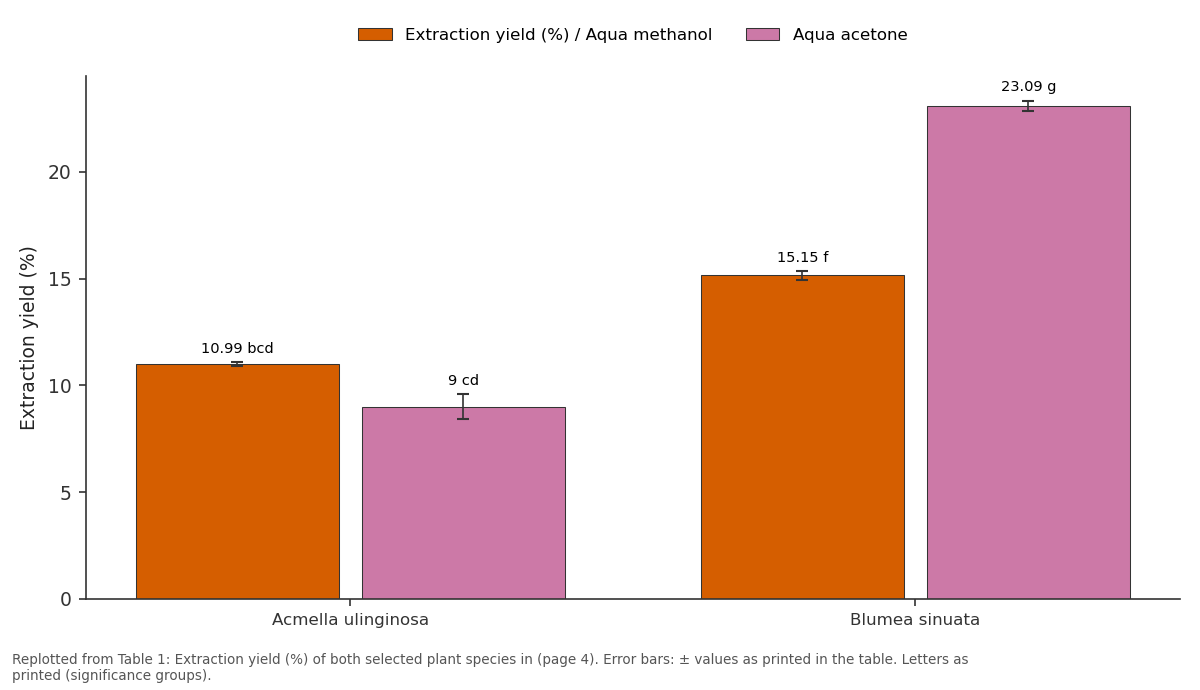
Extraction yield (%) / Aqua methanol and Aqua acetone: Acmella ulinginosa vs Blumea sinuata
Replotted from Table 1 (page 4) of the original paper. Every bar is the paper's own table value.
View source evidence ↗Figures & tables
From the original paper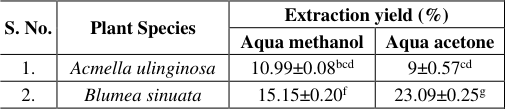 Table 1
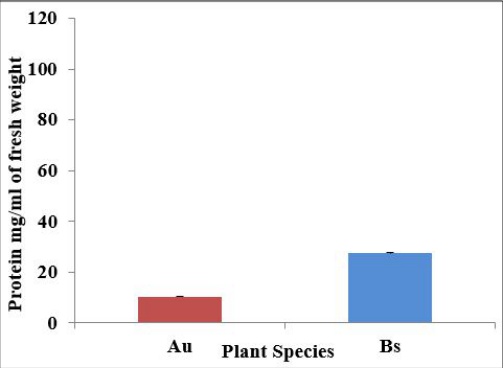 Figure 1
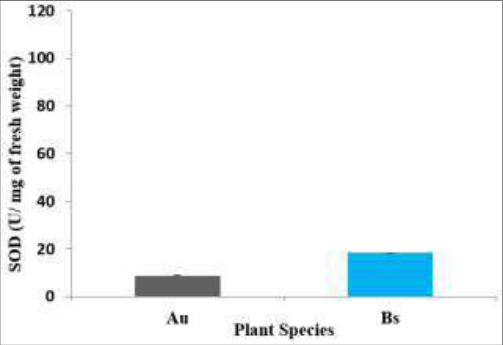 Figure 2
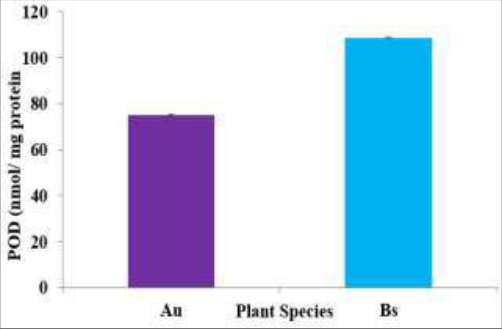 Figure 3
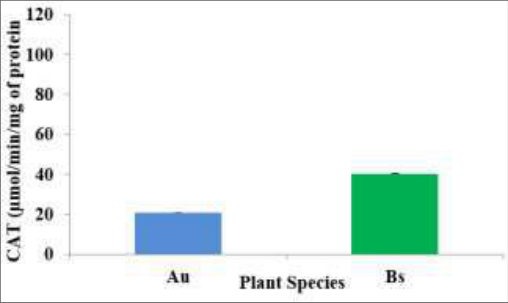 Figure 4
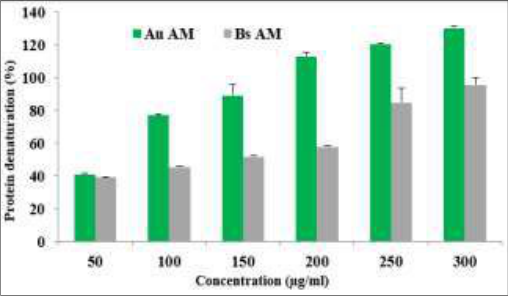 Figure 4
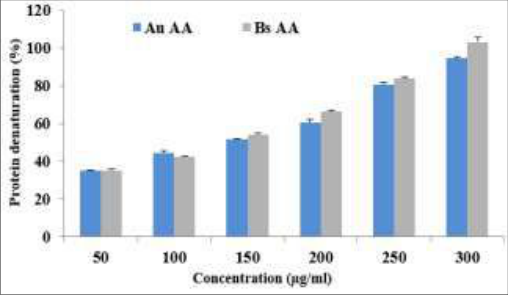 Figure 5
Introduction
Free radicals which are derivatives of oxygen, nitrogen, and sulfur are produced in the human body via various endogenous systems (Such as different metabolic reactions) as well as on exposure to pathophysiological states. These radicals have been involved in the etiology of various threatening ailments and aging by adversely altering the functions of lipid, protein, and genome of the organism [9] . But these free radicals also play an important role as a signaling molecule and maintain body homeostasis at the cellular level [31] . Antioxidants are those biomolecules that neutralize the action of free [29] . In nature, two different categories of antioxidants exist i.e. enzymatic and nonenzymatic. Enzymatic antioxidants are superoxide dismutase (SOD), peroxidase (POD), glutathione reductase, thioredoxin, and catalase (CAT), while phenols, flavonoids, carotenoids, ascorbic acid (vitamin C), and αtocopherol (vitamin E) are nonenzymatic antioxidants. To diminish the detrimental effects of these free radicals, enzymatic antioxidants play a crucial role [30] . It has been validated that the administration of superoxide dismutase and catalase, are showing positive results at attenuating various diseases related to tissue inflammation such as arthritis, chronic gut inflammation, reperfusion, ischemia, and immune complex induced pulmonary injury [6] . These are the first detoxification and most powerful endogenous enzyme in the cell, act to defend cells from reactive oxygen species. Superoxide dismutase (SOD) required a metal as a cofactor for its action, based on their metal requirement, various form of SOD metalloenzymes are present such as (1) Fe-SOD, enzyme bounded by iron, present in prokaryotes and chloroplast of plant cells (2) Mn-SOD in this enzyme surrounded by magnesium, reported in prokaryotes and mitochondria of eukaryotes and (3) Cu/Zn SOD, an enzyme required a copper or zinc as a bivalent cofactor for its activity and reported in the cytosol of the most of eukaryotes [11,19] . Peroxidase (POD), that breakdown reduces hydrogen peroxides (H 2 O 2 ) into the water while oxidizing a variety of substrates [10] .
It protects the cell from oxidative stresses by hindering the peroxidation of lipid. Catalase is a tetra homomeric protein with mol weight 240 kDa, encoded byctt1 gene, and finished the detoxication process introduced by superoxide dismutase. CAT is a very common antioxidant enzyme which required iron or sometimes manganese as a cofactor for the reduction of hydrogen peroxide to water and molecular oxygen [15] . Reactive oxygen species are also responsible for promoting the initiation or amplification of inflammation by the up-regulation of different genes participated in the inflammatory response. Inflammation is an immunological process, associated with redness, swelling, pain, stiffness of muscles, and fever, in which leukocytes and their output products such as vasodilators (histamines) implemented immunity to the human body. It is a substantial factor for the progress of pathological invaders in the vital organs, inflammation is a frequent pathogenesis response for various chronic diseases such as cancer, hyperglycemia, autoimmune and cardiovascular diseases, and it is activated in coordinated signaling pathways [22] . In humans, autoimmune diseases, rheumatoid arthritis along with Psoriatic arthritis and Gouty arthritis are associated with inflammation reaction. Microbial products, cytokines such as interleukin-1β (IL-1β), interleukin-6 (IL-6), and tumor necrosis factor-α (TNF-α) are immediate inflammatory provocations, they initiated inflammatory reactions by interaction with the TLRs, IL-1 receptor (IL-1R), IL-6 receptor (IL-6R), and the TNF receptor (TNFR) [17] . Once stimuli interact with their receptors, an intracellular signaling pathway gets activated such as nuclear factor kappa-B (NF-κB), mitogen-activated protein kinase (MAPK), and Janus kinase (JAK) signal transducer and activator of transcription (STAT) pathways [5] . In the present investigation, A. ulinginosa and B. sinuata two herbaceous plant species of the family Asteraceae were collected for evaluation of their anti-inflammatory properties in two different solvent extracts (aqua acetone and aqua methanol. Taxa Acmella with 30 species distributed in the tropical and subtropical regions all over the world. It exhibited various ethnomedicinal importances, commonly associated with the treatment of throat pain, stomachache, mouth ulcer, and toothache, spilanthol is an alkaloid that was reported to be related to these activities [33] . Previous studies revealed the presence of numerous bioactive compounds, terpenes glycosylated, anthracene derivatives, coumarins glycosylated, glycosylated flavonoid, anthracene derivatives, alkaloids, essential oils, tannins, and saponins in A. ulinginosa [21,24] . Members of Asteraceae have been identified for the production of polyphenols, flavonoids and sesquiterpenoids secondary metabolites in their vegetative as well as in reproductive parts [8] .
Materials and Methods
Materials and Methods
Plant materials
Plant species Acmella ulinginosa and Blumea sinuata were collected from the campus of G.B Pant University, Pantnagar (29.0222° N, 79.4908° E), samples were airdried, then ground to a fine powder in an electrical grinder.
Preparation of extracts
Plant material (10 gm dried) was extracted with 100 ml of 80% aqua acetone and aqua methanol in the rotatory shaker at 120 rpm for one week at room temperature. The extracted sample was filtered with the help of the Whatman filter paper, after filtration, the supernatant was again preceded to the centrifugation process. Then it was transferred to Petriplate for evaporation of the respective solvent. The extracts obtained after the evaporation of solvents were kept at -4°C until an evaluation of the anti-inflammatory property.
Protein estimation
Fresh plant material was used for quantification of protein and evaluated according to the method previously described by [23] with the required modifications.
Superoxide dismutase (SOD) assay
The ability of superoxide dismutase (SOD, EC 1.15.1.1) was determined by using the method reported by [12] . The reaction mixture was prepared by 50 mM phosphate buffer (pH=7.8), 13 mM methionine, 0.1 μM EDTA, 2 μM riboflavin, 75 μM NBT (nitro blue tetrazolium), and 100 μl crude enzyme. A control was prepared without the addition of crude extract. The enzyme mixture spectrometrically measured at 560 nm for measuring superoxide dismutase (SOD, 1 unit) responsible for photo-reduction of NBT by 50% with the following formula:
Z=(X-A) X×100
Where Z= photo-inhibition % of the sample; X= absorbance of control; A= absorbance of enzyme sample; and Z/50= total SOD unit.
Peroxidase (POD) assay
Peroxidase activity (POD, EC 1.11.1.7) was analyzed by methodologies proposed by [18,27] with the required medications. The reaction is based on H 2 O 2 decomposition into H 2 O and O 2 via peroxidase in the presence of a dye such as o-dianisidine or pyrogallol (hydrogen donor). The increasing absorbance of colored oxidized products, i.e., purpurogallin is measured by optical density (Spectrometrically) at 470 nm as a 1POD unit. One unit of POD was determined as 1mg/ml pupurogallin formed from pyrogallol in 60 sec at 6.5pH and measured by the following formula: U/ml enzyme= (At/min-Ao/min)12×0.1×3×df
Where, At =Absorbance of test sample; Ao =Absorbance of control; 3 = Volume (ml) of reaction mixture; df = dilution factor; 12 = Extinction coefficient of 1 mg/ml of pupurogallin; and 0.1 = Volume (ml) of the test sample.
Catalase (CAT) assay
Catalase activity (CAT, EC 1.11.1.6) was assayed by the procedure of [18] with suitable modifications by monitoring the breakdown of H 2 O 2 by decrease absorbance at 240 nm. The activity is computed by the extinction coefficient (40 mM-1 cm-1) for H 2 O 2 . Mixture for the reaction was prepared by the addition of 200 M potassium phosphate buffer (pH 7.0), 100 mM sodium phosphate buffer (pH 6.8), 0.005 M H 2 O 2 (fresh), and 5% H 2 SO 4 . A control was prepared without crude extract.
Evaluation of in vitro anti-inflammatory activity
An in vitro anti-inflammatory assay was evaluated by applying [4] method. The principle behind this assay is to determine to decrease albumin turbidity (protein denaturation) with increasing plant extract concentration. Fresh phosphate buffer saline (PBS) was prepared by mixing NaCl (8 g), KCl (0.2 g), Na 2 HPO 4 (1.44 g), and KH 2 PO 4 (0.24 g) in distilled water (up to 1L) (6.4 pH). 1 ml plant extract of suitable concentrations of 50, 100, 150, 200, 250, and 300 µg/ ml was reacted with 0.1 ml egg albumin and 1.9 ml of phosphate buffer saline (PBS, pH 6.4). The reaction mixture was incubated at 37 ºC for 15 min and then at 70 ºC for 5 min. Diclofenac sodium was taken as a positive standard. After incubation absorbance was measured at 660 nm.
Data presentation and analysis
The findings were expressed as mean and standard error (mean ± SE), calculated from triplicate and the linear relationship was visually calculated. The significant differences among different groups of data were evaluated with ANOVA by using SPSS 16.0 and Duncan's multiple range tests; the level of significance was P <0.05.
Result Extraction yield
Leaves of plants were used for the extraction in two different solvents aqua methanol and aqua acetone at room temperature (Table 1). B. sinuata gave 15.15±0.20 yield in aqua methanol which is higher than A. ulinginosa (10.99±0.08). Similarly in aqua acetone, it was again higher in B. sinuata (23.09±0.25) as compare to A. ulinginosa (9±0.57). Extraction is a very crucial step; the extraction yield of the plant depends upon the method of extraction, temperature, pH, time duration, and the polarity of the used solvent.
| S. No. | Plant Species | Extraction yield (%) | — |
|---|---|---|---|
| Aqua methanol | Aqua acetone | ||
| 1. | Acmella ulinginosa | 10.99±0.08bcd | 9±0.57cd |
| 2. | Blumea sinuata | 15.15±0.20f | 23.09±0.25g |
Table text extracted from the original PDF; superscript letters are shown inline. The original table image is below.
View original table image
Protein content
Protein is a result of transcription and translation (central dogma of life); it is a very crucial bio-molecule for the building, maintaining, and repairing of the cell or tissues in the organism. It contributes in defense against biotic as well as abiotic stresses, channels, or pumps for the movement of different ions across the membrane, and the plant also stores protein in seeds, for the production of energy [16] . The result shows protein content in the selected plant species A. ulinginosa (10.19±0.15) and B. sinuata (27.45±0.17) (Fig. 1).
Superoxide dismutase activity
Superoxide dismutase (SOD), a metalloenzyme scavenge different reactive oxygen (ROS) by catalyzing the conversion of superoxide anion (O•-2) into oxygen (O2) and hydrogen peroxide (H2O2) [7] . In the present investigation, B. sinuata (18.23±0.11SOD (U/ mg of fresh weight showed higher SOD activity as compared to A. ulinginosa (8.85±0.14 SOD (U/ mg of fresh weight) (Fig. 2). Previous investigation in different plant species of family Asteraceae reported by different scientist and research scholars. SOD activity in Echinacea purpurea (83.78 EU g leaf-1) reported by [14] . In other investigation the SOD activity of methanol extract (57.34±3.21 μg/ml) and chloroform extract (70.2±4.56 μg/ml) of Sonchus asper [20] ; the whole plant of Evolvulus alsinoides (49.8±0.13 U/mg protein) and Cynodon dactylon (207.70±3.48 U/mg protein) [13] . These results are comparatively higher than the present study values.
Peroxidase activity
Peroxidase (POD) reduces H2O2 into the water [10] . The highest antioxidant enzyme was determined in B. sinuata (108.58±0.25 nmol/mg of protein), on the other hand in A. ulinginosa (75.04±0.23 nmol/mg of protein) (Fig. 3). Enzymatic antioxidant property of different medicinal plants of the family Asteraceae, among them they reported the highest POD activity in Santolina chamaecyparissus (415.22 EU g leaf-1) ad lowest in İnula helenium (57.68 EU g leaf-1) [14] . Methanol extracts of S. asper peroxidase activity 67.34±3.21 μg/ml [20] in Tylophora pauciora whole plant (381.57±2.19 U/mg protein) [33] ; and in 2016 Alici and Arabaci [1] in Rumex obtusifolius (195.24±0.0044 U/ml) are much higher than the present study values.
Catalase activity
Catalase is a homotetramer enzyme and catalyzes the reaction which is initiated by superoxide dismutase. It catalyzes the breakdown of H2O2 (hydrogen peroxide) into H2O (Water) and O2 (Oxygen) in a minute [25] . The enzymatic antioxidant activity of selected plant species of Asteraceae was showed a significant difference, the CAT activity of B. sinuata (40.33±0.16 µmol/min/mg of protein) was higher than the A. ulinginosa (20.76±0.05 µmol/min/mg of protein) (Fig. 4). Gunes et al. (2019) [14] reported the enzymatic activity of another Asteraceae member such as in Santolina chamaecyparissus L. (1985.08 EU g leaf-1) and Echinacea purpurea (522.90 EUgleaf-1). In other plants such as in Cynodon dactylon (1.38±0.04 U/mg protein) and Pongamia glabra (39.46±0.27 U/mg protein) [26] ; in Tylophora pauciora whole plant (39.87±0.51 U/mg protein) [33] ; and in Rumex obtusifolius leaves (38.65±0.00026 U/ml) [1] were more or less similar as compared to the present study values.
In-vitro anti-inflammatory or Protein denaturation
COX-1, COX-2, and 5-LOX are the main enzymes that participate in inflammatory processes, a relatively high amount of biologically active compounds are present in the family Asteraceae display anti-inflammatory properties [3] . In the present study both the plant species shows the antiinflammatory properties, in the aqua methanol and aqua acetone extracts, in methanol extract it was highest in A. ulinginosa, and in acetone extract higher in B. sinuata (Fig. 5). In 2013 Zheng et al. [32] evaluated anti-inflammatory activities of different extracts of Gnephalium stramonium nhexane (200 mg/kg), methanol (140 mg/kg), and water (no significant anti-inflammatory activity); the antiinflammatory potential of methanol and acetone extract of Ximenia americana leaf, which was (77.51±2.25) and (28.48±2.11) respectively [28] . In 2015 Chagas-Paula et al. [3] evaluated the antiinflammatory property of different selected plant species of Asteraceae to inhibition of Cyclooxygenase-1 and 5-Lipoxygenase and they find Cichorium intybus L. (3.6 and 0.3 µg/mL); Minasia scapigera H. Rob. (5.6 and 4.6 µg/mL), Piptolepis monticola Loeuille (6.7 and 4.8 µg/mL), Prestelia eriopus Sch. Bip. (6.7and 20.6 µg/mL), Sphagneticola trilobata (L.) Pruskei (11.9 and 12.2 µg/mL) and Tithonia diversifolia (Hemsl) A. Gray (28.7 and 11.6 µg/mL) were potent towards Cyclooxygenase-1 and 5-Lipoxygenase respectively.
Conclusion
The present study reveals that both plant species displayed enzymatic antioxidant potential, results showed that B. sinuata exhibited higher protein, SOD, POD, and CAT activities as compare to A. ulinginosa. Methanol and acetone extract of A. ulinginosa and B. sinuata showed moderate to good anti-inflammatory potential against to egg albumin. These selected plant species are weeds for agricultural lands and also have ethno-medicinal importance in different regions of the world. A. ulinginosa also used as a leafy vegetable by tribes. Present results showed that they are potent resource of antioxidant and anti-inflammatory, it seems to be a good resource for pharmaceutical companies for development of new remedies.
References
32 in the original paper- Alici EH, Arabaci G. Annu. Res. Rev. Biol. 2016, 1-7.
- Ahmad A, Yusoff ME, Tuan Ismail TNN. Chemical constituents of water extract of Acmella ulinginosa (Sw.) Cass. flowers, leaves, stems, and roots from Malaysia. Pertanika J Trop Agric Sci. 2020;43(1):43.
- Chagas-Paula DA, Zhang T, Da Costa FB, Edrada-Ebel RA. A metabolomic approach to target compounds from the Asteraceae family for dual COX and LOX inhibition. Metabolites. 2015;5(3):404-430.
- Chandra S, Chatterjee P, Dey P, Bhattacharya S. Evaluation of in vitro anti-inflammatory activity of coffee against the denaturation of the protein. Asian Pac J Trop Biomed. 2012;2(1):178-180.
- Chen L, Deng H, Cui H, Fang J, Zuo Z, Deng J, et al. Inflammatory responses and inflammation-associated diseases in organs. Oncotarget. 2018;9(6):7204.
- Conner EM, Grisham MB. Inflammation, free radicals, and antioxidants. Nutrition. 1996;12(4):274-7.
- Das K, Roychoudhury A. Reactive oxygen species (ROS) and the response of antioxidants as ROSscavengers during environmental stress in plants. Front Environ Sci. 2014;2:53.
- Denisov-Pietrzyk M, Pietrzyk Ł, Denisow B. Asteraceae species as potential environmental factors of allergy. Environ Sci Pollut Res. 2019;26(7):6290-300.
- Devasagayam TPA, Tilak JC, Boloor KK, Sane KS, Ghaskadbi SS, Lele RD. Free radicals and antioxidants in human health: current status and future prospects. JAPI. 2004;52:4.
- Gacche RN, Kabaliye VN, Dhole NA, Jadhav AD. Antioxidant potential of selected vegetables commonly used in the diet in the Asian subcontinent. 2010.
- Gill SS, Tuteja N. Reactive oxygen species and antioxidant machinery in abiotic stress tolerance in crop plants. Plant Physiol Biochem. 2010;48(12):909-930.
- Ginnopolitis CN, Ries SK. Purification and quantification relationship with water-soluble protein in seedlings. Plant Physiol. 1977;59:315-8.
- Gomathi D, Kalaiselvi M, Ravikumar G, Devaki K, Uma C. GC-MS analysis of bioactive compounds from the whole plant ethanolic extract of Evolvulus alsinoides (L.) L. J Food Sci Technol. 2015;52(2):12127.
- Güneş A, Kordali Ş, Turan M, Bozhüyük AU. Determination of antioxidant enzyme activity and phenolic contents of some species of the Asteraceae family from medicinal plants. Ind Crop Prod. 2019;137:208-213.
- Ighodaro OM, Akinloye OA. First-line defense antioxidants-superoxide dismutase (SOD), catalase (CAT), and glutathione peroxidase (GPX): their fundamental role in the entire antioxidant defense grid. Alex J Med. 2018;54(4):287-293.
- Joshi AS, Nebenfuehr B, Choudhary V, SatputeKrishnan P, Levine TP, Golden A, et al. Lipid droplet and peroxisome biogenesis occur at the same ER subdomains. Nat Commun. 2018;9(1):1-12.
- Kaminska B. MAPK signaling pathways as molecular targets for anti-inflammatory therapy--from molecular mechanisms to therapeutic benefits. BBA. 2005;1754:253-262.
- Kar M, Mishra D. Catalase, peroxidase, and polyphenol oxidase activities during rice leaf senescence. Plant Physiol. 1976;57(2):315-319.
- Karuppanapandian T, Moon JC, Kim C, Manoharan K, Kim W. Reactive oxygen species in plants: their generation, signal transduction, and scavenging mechanisms. Aust J Crop Sci. 2011;5(6):709.
- Khan RA, Khan MR, Shareen S, Ahmed M. Evaluation of phenolic contents and antioxidant activity of various solvent extracts of Sonchus asper (L.) Hill. Chem Cent J. 2012;6(1):12.
- Lagnika L, Odjougbele T, Laleye A, Sanni A. Assessment of heavy metals content and their effects on the toxicity of Acmella ulinginosa Sw. Pharmacol Toxicol Res. 2016;2(1):1-9.
- Libby P. Inflammatory mechanisms: the molecular basis of inflammation and disease. Nutr Rev. 2007;65(3):140-6.
- Lowry H, Rosebrough NJ, Farr AL, Randall RJ. Protein measurement with the Folin phenol reagent. J Biol Chem. 1951;193:265-275.
- Maimulyanti A, Prihadi AR. Chemical composition of essential oil and hexane extract and antioxidant activity of various extracts of Acmella uliginosa (Sw.) Cass flowers from Indonesia. Agric Nat Res. 2016;50(4):264-269.
- Mitler R. Oxidative stress, antioxidants, and stress tolerance. Trends Plant Sci. 2002;7:405-410.
- Nemade NV, Chopda MZ, Mahajan RT. Comparative bioefficacy of antioxidant potential of fourteen indigenous wound healing plants. Int. J Pharm Pharm Sci. 2011;3(4):73-77.
- Reddy CC, Seholz RW, Massaro EJ. Cadmium, methylmercury, mercury, and lead inhibition of calf liver glutathione S-transferase exhibiting seleniumindependent glutathione peroxidase activity. Toxicol Appl Pharmacol. 1981;61:460.
- Shettar AK, Kotresha K, Kaliwal BB, Vedamurthy AB. Evaluation of in vitro antioxidant and antiinflammatory activities of Ximenia americana extracts. Asian Pac J Trop Dis. 2015;5(11):918-23.
- Verma S, Dubey RS. Lead toxicity induces lipid peroxidation and alters the activities of antioxidant enzymes in growing rice plants. Plant Sci. 2003;164(4):645-655.
- Yoshikawa T, Toyokuni S, Yamamoto Y, Naito Y. Free Radicals in Chemistry Biology and Medicine. London: OICA International; 2000.
- Zheng X, Wang W, Piao H, Xu W, Shi H, Zhao C. The genus Gnaphalium L. (Compositae): phytochemical and pharmacological characteristics. Mol. 2013;18(7):82988318.
- Thangarajan SG, Gopalakrishnan VK. Enzymatic and non-enzymatic antioxidant properties of Tylophora pauciflora Wight and Arn. -An in vitro study. Asian J Pharm Clin Res. 2013;6:68-71.