
Research article · 2025 · Full text
International Journal of Veterinary Sciences and Animal HusbandryStrategic approaches to parasitic threats mitigation in animal health: An overview
Volume 10(1) · Pages 301–305 · DOI: 10.22271/veterinary.2025.v10.i1e.2039 ↗
Research areasHelminth infection and control
Abstract
Author-writtenParasitic management is vital in veterinary medicine, affecting livestock health, productivity, and economic sustainability. Effective control integrates multiple strategies, including chemotherapy, bioactive crops, biological control, pasture management, phytotherapy, and immunoprophylaxis. Chemotherapy remains a primary method using targeted drugs, while bioactive crops and nutrition help combat parasites sustainably. Pasture management reduces parasite burdens through rotational grazing. Biological control relies on natural predators, and phytotherapy utilizes medicinal plants with antiparasitic properties. Immunoprophylaxis, through vaccines, offers a long-term solution, though challenges in formulation persist.
Summary
Source-checkedPlain-language reading of the full paper, prepared with AI and checked against the text. Each point links to the authors' own words.
Why it matters
- Parasitic infections are a major threat to the health and productivity of livestock, which impacts economic sustainability. View evidence ↗
- Helminths, protozoa, and arthropods cause diseases in animals that can result in weight loss, decreased meat and milk production, reproductive issues, and death. View evidence ↗
- The excessive use of chemical dewormers has caused widespread parasite resistance, creating a need for more sustainable control methods. View evidence ↗
The question
- The paper aims to provide an overview of how integrating multiple strategies, such as chemotherapy, biological control, and pasture management, can effectively mitigate parasitic threats. View evidence ↗
What they did
- The authors review a comprehensive set of mitigation tools, ranging from chemical treatments and nutritional interventions to ecological and immunological approaches. View evidence ↗
What they found
- Chemotherapy using anthelmintics is a primary method for targeting helminth infections, including trematodes, nematodes, and cestodes. View evidence ↗
- Bioactive substances from plants like garlic, chicory, and walnut are known to inhibit helminth infections by reducing egg numbers and hatchability. View evidence ↗
- Neem contains azadirachtin, a bioactive chemical that inhibits various arthropods, including lice, fleas, and mosquitoes. View evidence ↗
- Rotational grazing helps control parasites by disrupting their life cycle and reducing the accumulation of larvae in the pasture. View evidence ↗
- Biological control using the mite Macrocheles muscaedomesticae can reduce house fly populations by preying on up to 10 eggs per day. View evidence ↗
- Lizards act as natural predators of ticks, with reports of 2.5 to 15 ticks found in their stomachs. View evidence ↗
- A mixture of salt and shea butter (1:100 ratio) demonstrated 90% efficacy against psoroptic mange in rabbits by the 14th day. View evidence ↗
- Recombinant subunit vaccines, such as Providean Hydatil EG95 for cattle and Cysvax for pigs, are used to target specific helminth infections. View evidence ↗
What it means
- The authors conclude that the most sustainable solution for managing parasitic threats is a balanced combination of traditional methods, modern innovations, and ecological awareness. View evidence ↗
- The widespread use of essential oils for arthropod control is limited by high costs, short residual life, and a lack of field research. View evidence ↗
Visual summary
1 visualsIllustrations explain the paper; they do not show study data.
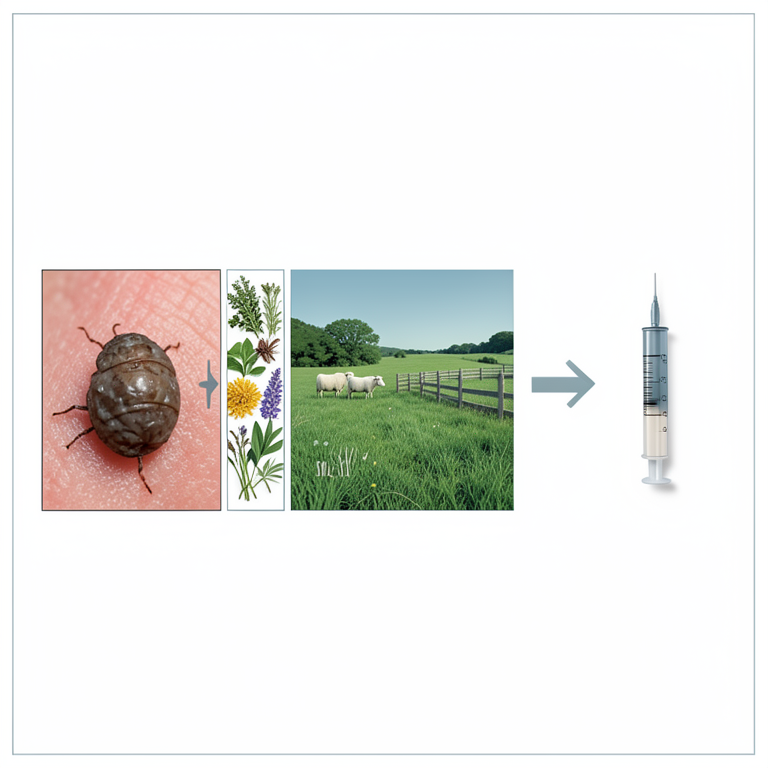
Integrated Parasite Management Framework
AI-generated conceptual illustration (Mixed livestock including cattle, sheep, and goats). It explains the idea and does not show study data.
View source evidence ↗Introduction
Life on Earth is constantly exposed to parasites and re infected in a chain response mode. Parasitic management is a critical aspect of veterinary medicine, especially when it comes to controlling parasites that affect livestock, companion animals, and wildlife. Parasitic infections pose a significant challenge to livestock health, productivity, and economic sustainability. These parasites, including helminths, protozoa, and arthropods, cause diseases that lead to weight loss, reduced milk and meat production, impaired reproduction, and even mortality. Effective parasite control is essential to maintaining livestock welfare and ensuring food security. Mitigating parasitic threats involves an integrated approach that includes chemotherapy, bioactive crops and nutrition, biological control methods, pasture management, phytotherapy and immunoprophylaxis. Overreliance on chemical dewormers has led to widespread resistance, necessitating sustainable alternatives such as rotational grazing, the use of natural predators, and bioactive forages with antiparasitic properties. Advancements in genomics and biotechnology are also opening new avenues for targeted parasite management. This comprehensive approach to parasite control not only improves animal health but also enhances farm profitability and reduces the environmental impact of chemical treatments. By combining traditional and modern strategies, livestock producers can develop sustainable parasite management programs that ensure long-term productivity and resilience.
Chemotherapy
It is necessary to mitigate and/or eliminate specific pathogens at the local, national and universal levels (that play a significant role) to reduce the threat of infections (Bahk et al., 2018) [4] . A multifaceted strategy, including medication-assisted chemotherapy, is necessary for the effective management of parasitic diseases. Treatment of parasitic diseases with chemical substances is known as chemotherapy and the chemical substances used for this purpose are called chemotherapeutic agents or drugs (Horn and Duraisingh, 2014) [9] . Chemotherapy has revolutionized medicine in the modern era. Anthelmintics, a class of chemotherapeutic agents, target helminth infections (trematodes, nematodes, and cestodes) in humans, livestock, and crops, preventing poor growth and economic loss. These drugs act as vermifuges, which expel live worms, or vermicides, which kill them (Hall, 1998) [8]
Bioactive Crops and Nutrition
The use of bioactive plants to control parasites has increased in popularity to their reduced negative human, animal and environmental impacts compared with traditional pest control methods (Zeineldin et al., 2020) [22] .This method focuses on leveraging naturally occurring plant compounds, functional feed additives, and nutritionally optimized diets to control or reduce parasitic burdens. These strategies can serve as an alternative or complement to conventional chemical treatments (anthelmintics and acaricides), especially in the face of rising drug resistance.
Use of bioactive crops against helminths
Bioactive substances such as ascaridole from Chenopodium ambrosioides and thiosulfinates (allicin) from Allium sativum (garlic bulb) (wormseeds), terpenoids or phenolic compounds, coumarins extracted from Cichorium intybus (chicory forage), and naphthoquinone extracted from Juglans regia (walnut leaves and peels) are known to have inhibitory effects against various helminth infections in terms of lowering the number of eggs and hatchability. Similarly, proanthocyanins, phenolic acids, luteolin, sulphated and/or methylated flavonoids, flavonoid glycosides, galloylquinic acid isomers, cafeoylquinic and dicafeoylquinic acids, and quercetin glycosides that were isolated from salt-tolerant plants from southern Portugal's coastal regions were found to be effective in vitro in terms of reported reduction in larval exsheathment inhibition assay (LEIA) and egg hatching inhibition assay (EHIA) against Haemonchus contortus and Trichostrongylus colubriformis third stage larvae (L3) and eggs (Oliveira et al., 2021) [15] .
Use of bioactive crops against Arthropods
Plants, such as neem (Azadirachta indica), contain bioactive chemicals like azadirachtin that inhibit arthropods, including mosquitoes, flies, triatomines, cockroaches, fleas and lice. Certain essential oils also show acaricidal effects, with terpenes, especially monoterpenes and sesquiterpenes, being the most active components. A study by Camilo et al. (2017) [5] reviewed the acaricidal properties of 121 essential oil species across 25 families. Recent studies highlight carvacrol and limonene as key monoterpenes. However, challenges such as high cost, short residual life, lack of field research and difficulties in developing commercial products hinder the widespread use of essential oils for arthropod control (Salman et al., 2020) [19] .
Use of bioactive crops against protozoa
A number of plants have been found to have bioactive metabolites with anticoccidial properties, such as allicin, tannins, polyphenolic compounds, saponins, maslinic acid, proanthocyanidin, diferuloylmethane, flavonoids, acemannan, sugars, and anthraquinones. According to a review by Mgbeahuruike et al. (2017) [13] , secondary metabolites from a variety of Piper species are recognized to have traditional and therapeutic uses, particularly in India. These uses include inhibitory effects on important protozoans like Plasmodium sp., Trypanosoma sp., and Leishmania sp.
Pasture Management
Effective parasite control through pasture management is a holistic approach that reduces the dependency on chemical treatments, which may have long-term negative effects on the environment and animal health. By implementing these strategies, livestock producers can create healthier pastures and animals, ultimately improving productivity and reducing the impact of parasitic diseases. Various ways of pasture management are discussed below.
A. Rotational Grazing
Here the entire grazing land is divided into small paddocks. Rotational grazing involves moving animals between paddocks to prevent overgrazing, maintaining soil health and to allow pastures to rest and regrow to its maximum potential (Wang et al., 2020) [20] . Effective management requires timing rotations based on forage growth to ensure optimal pasture utilization (Pereira et al., 2020) [16] . This method also aids in parasite control by reducing larvae build up in the pasture and disrupting their life cycle, as animals avoid repeatedly grazing on contaminated areas.
B. Pasture Rest Periods
Resting pastures allows parasite larvae time to die off. The larvae of many parasites require specific environmental conditions (moisture, warmth) to survive and develop. By resting pastures, particularly during peak parasite development times (e.g., wet seasons), results in the reduction of the parasitic load in the pasture.
C. Cross Grazing with Different Species
Different livestock species harbour different types of parasites. For example, sheep and cattle tend to carry different parasite species, and certain species are host-specific. By rotating different animal species (e.g., cattle, sheep, goats etc.) on the same pasture, one can reduce the number of parasites specific to one species, as they won't survive when the host species is removed.
D. Use of Fodder Crops and Forage Species
Effective pasture management requires selecting the right forages for conservation, hay, or grazing. Depending on the season in a given location, a variety of legumes and grasses can be used individually or in combination. Forbs like chicory and brassicas can be added to enhance productivity (Baker & Mohler, 2015) [3] . The choice of plant species depends on several factors, including soil pH, nutrient levels, moisture, rainfall, temperature, and the intended purpose, such as livestock nutrition or parasite control. Some plants, like Datura stramonium (jimson weed), Calotropis procera (milkweed), and Peganum harmala (harmal), are valued not only for their nutritional benefits but also for their natural antiparasitic properties.
E. Manure Management
Manure is a primary source of parasite eggs and larvae. Managing manure properly is essential for controlling parasites. Strategies include regularly removing manure from pastures can help reduce the spread of parasitic eggs. Composting manure can kill parasite eggs by raising the temperature, reducing the likelihood of contamination.
F. Integrated Parasite Management (IPM)
Integrated Parasite Management (IPM) in veterinary parasitology represents a holistic and sustainable approach to managing parasitic diseases in animals. It involves combining multiple strategies, including pasture management, surveillance, environmental management, biological control, and resistance management to control parasitic infections. IPM aims to control parasite populations effectively while reducing the long-term risks associated with overuse of drugs and other control measures. The adoption of IPM principles can lead to healthier animals, improved productivity, and reduced environmental impact, making it a key component of modern veterinary parasitology.
Biological Control
Biological control is defined as the activities carried out by a species to control other species in order to reduce its adverse effects (Alston, 2011) [1] . It is a natural, eco-friendly alternative to chemical treatments. These methods involve the use of natural predators, parasitoids, or pathogens to reduce parasite populations in livestock or on pastureland. Biological control aims to disrupt the life cycle of parasites without harming the environment or contributing to chemical resistance. Different ways of biological control discussed below
A. Predators
The biological control of parasites is accomplished by two different kinds of predators: invertebrate and vertebrate. Spiders and insect herbivores, mites, ants, beetles, dragonflies and water bugs are the invertebrates that are used for the biological control of parasites (Greathead and Greathead, 1992) [7] . Mites may prey on nematode ova and on the eggs and larvae of flies. Macrocheles muscaedomesticae is a mite that can prey on 10 house fly eggs a day (Azevedo et al., 2018) [2] . Dragonflies and water bugs (Diplonychus indicus) are used to control the mosquito population; dragonfly larvae prey on mosquito larvae and dragonfly adults prey on adult mosquitoes (Karunaratne and Surendran, 2022) [10] . Vertebrate predetors such as fish, amphibians, reptiles, birds, rodents, and mammals are employed in the biological control of parasites. Several fish species, including Poecilia reticulata, Gambusia affinis, Ctenopharyngodon idella, Cyprinus carpio, Labeo rohita, Tilapia spp., carp fish, Mylopharyngodon piceus (black carp fish), as well as Pelomedusa subrufa (the water tortoise) feed on the mosquito population in water sources. Lizards prey on ticks and it has been reported that 2.5 to 15 ticks may be found in lizard stomachs (Pirali-Kheirabadi, 2012) [17] .
B. Parasitoids
Parasitoids are parasites that attack, parasitize and harm other parasites. Examples include ichneumon, braconid, and chalcid wasps, cabbage caterpillars, scale insects, and tachinid flies. Tachinid flies lay eggs on host insects like Haematobia irritans (horn fly), and their larvae kill the host. These flies are studied for controlling cattle flies. Spalangia wasps parasitize pupal stages of flies like Musca domestica (housefly) and Stomoxys calcitrans (stable fly), and are used in commercial livestock fly control. Nasonia wasps target filth fly pupae, aiding in fly control at poultry houses and livestock facilities.
C. Pathogens
Various pathogens, including fungi, bacteria, viruses, protozoa, nematodes, and earthworms, are used for parasite control. Entomopathogenic fungi (EPF), mainly from Ascomycota phylum, targets ticks, mites, and insects. Zygomycota phylum have a lesser contribution as EPF. Key EPF include Beauveria bassiana, Metarhizium anisopliae, Lagenidium giganteum, and Verticillium lecanii, Entomophthora muscae, Coelomomyces spp., Leptolegnia spp with B. bassiana and M. anisopliae being commercially available for insect control. These fungi can persist in soil, offering long-term control (Quesada-Moraga et al. [18] , 2006; Leger, 2008 [11] ). M. anisopliae is particularly effective against Rhipicephalus ticks, vectors of babesiosis and anaplasmosis. Nematopathogenic fungi (NPF), such as Arthrobotrys oligospora, Drechmeria coniospora, and Duddingtonia flagrans, specifically target and kill nematodes.
D. Bacteria
Bacillus, Paenibacillus and Streptomyces are the genera of bacteria that are used for the biological control of insects or arachnids. Various species eg. Bacillus thuringiensis var. israelensis, B. thuringiensis var. kurstaki, B. thuringiensis var. aizawai, B. thuringiensis var. tenebrionis and B. thuringiensis var. japonensis strain buibui used for Bio control of parasites. Other than Bacillus, Paenibacillus glabratella infects and causes death of snails. Streptomyces (S. avermitilis and S. griseolus) is another genus of bacteria used for the biological control of parasites. Avermectins are toxins produced by S. avermitilis that kill a variety of parasites, such as arachnids, insects and nematodes.
E. Nematodes
Some species of nematodes eg. Steinernema and Heterorhabditis are effective against insect pests, including tick larvae and pupae. They are being investigated for their role in controlling Ixodes ticks (which transmit Lyme disease) and other ectoparasites in livestock and companion animals. Heterorhabditis bacteriophora has been used experimentally to control larvae of parasitic flies, particularly blowflies that infest livestock, including sheep and cattle.
Phytotherapy
Phytotherapy is a cost-effective and efficient alternative for controlling parasitic worms. Key phytochemicals include terpenoids, phenolic compounds, and alkaloids, with many medicinal plants showing anti-helminthic activity (Yellasubbaiah et al., 2015) [21] . Bursera grandifolia, Passiflora mexicana, B. copallifera, Lippia graveolens, Urtica dioica, Prosopis laevigata and Randia echinocarpa are effective against Haemonchus contortus larvae, while extracts of Achillea millefolium, Artemisia absinthium, Artemisia campestris, Artemisia vulgaris and Cichorium intybus target Toxocara vitulorum, H. contortus, and Trichostrongylus colubriformis infections.
A. Phytotherapy in Protozoans
Alocasia indica and Salvia species exhibit anti-giardia and anti-amoebic properties may be due to potent terpenoids. Artemisia annua inhibits sporulation of Eimeria tenella via oxidative stress, while tannins from Pinus radiata affect E. tenella, E. acervulina, and E. maxima (Molan et al., 2009) [14] . Peristrophe bicalyculata shows efficacy against trypanosomiasis, though its mechanism remains unclear. Among bisbenzylisoquinoline alkaloids, 13 are effective against Leishmania donovani, with Drypetes gerrardii, Emblica officinalis, and Azadirachta indica also exhibiting anti-leishmanial activity.
B. Phytotherapy in Arthropod Infestation
In poultry, the control of lice with pawpaw leaves has been reported, used as a topical agent after burning into ashes. In rabbits infected with psoroptic mange, salt and shea butter in a ratio of 1:100 showed 90% efficacy by the 14th day (Fajimi et al., 2002) [6] . Ethanolic extract of Dahlstedtia pentaphyla was found to be effective against adult Boophilus microplus ticks and Copaifera reticulata extract was found to be effective against the larval stage. The larvicidal activity of the ethanolic extract of Magonia pubescens is also reported in the case of R. sanguineus. Methanolic extract of Tephrosia vogelii and Hypericum polyanthimum showed efficacy against hard ticks (Matovu and Olila, 2007) [12] .
Immunoprophylaxis
Immunoprophylaxis offers a long term, sustainable approach to controlling parasitic infections in animals. Despite challenges in vaccine development due to parasite complexity, progress is ongoing. Combining vaccines with other control measures will enhance parasite management in livestock and pets. Several vaccines have been developed for parasitic control in livestock and pets, targeting various pathogens. For helminths, Echinococcus granulosus (cattle) is addressed with the recombinant subunit vaccine, Providean Hydatil EG95, while Cysticercus cellulosae (pigs) is targeted with Cysvax, also a recombinant subunit vaccine. Haemonchus contortus in sheep and goats is controlled with the purified native antigen vaccine Barbervax, and Dictyocaulus viviparus (cattle) is managed using the live attenuated vaccines Bovilis and Huskvac. Ancylostoma caninum (dogs) is controlled with the gamma-irradiated infective vaccine Canine hookworm vaccine. For protozoa and rickettsia, Babesia canis and B. rossi in dogs are addressed with the subunit culture supernatant vaccine Nobivac Piro, while Eimeria sp. in chickens is prevented with either subunit vaccines such as CoxAbic or live attenuated vaccines like Paracox, Livacox, and Eimeriavax. Leishmania donovani in dogs is controlled with recombinant subunit vaccines like Leish-Tec and Leishmune, and Theileria annulata in cattle is managed with live attenuated vaccines such as Rakshavaac T and Teylovac. Toxoplasma gondii in sheep is prevented with the live attenuated vaccine Toxovax, while Trichomonas foetus in cattle is controlled with the inactivated TrichGuard. Anaplasma marginale in cattle is managed with both killed virulent vaccines like Anaplaz and Plazvax, and live attenuated vaccines like Anaviv. For ticks, Rhipicephalus (Boophilus microplus) in cattle is controlled using recombinant subunit vaccines like Gavac Plus and Vacuna Hebertick, as well as Go-Tick and Tick-Vac.
Conclusion
Mitigating parasitic threats in livestock requires a multifaceted approach that integrates various strategies to ensure long-term effectiveness. The use of chemotherapeutic agents, biological control, immunoprophylaxis, and integrated parasite management systems has proven essential in controlling parasitic diseases. Additionally, research into plant-based treatments, as well as the use of natural predators and parasitoids, offers promising alternatives to chemical interventions. However, it is essential to combine these strategies to prevent resistance and promote animal welfare. By adopting a holistic approach, farmers can reduce the economic burden of parasitic diseases, improve livestock productivity, and ensure the sustainability of farming systems. Ultimately, a balance of traditional methods, cutting-edge innovations, and ecological awareness will provide the most effective and sustainable solutions for managing parasitic threats in livestock.
References
22 in the original paper- Alston DG. General Concepts of Biological Control. Utah State University Extension and Utah Plant Pest Diagnostic Laboratory, Logan, Utah. 2011.
- Azevedo LH, Ferreira MP, de Campos Castilho R, Cançado PH, de Moraes GJ. Potential of Macrocheles species (Acari: Mesostigmata: Macrochelidae) as control agents of harmful flies (Diptera) and biology of Macrocheles embersoni Azevedo, Castilho and Berto on Stomoxys calcitrans (L.) and Musca domestica L. (Diptera: Muscidae). Biol Control. 2018;123:1-8.
- Baker BP, Mohler CL. Weed management by upstate New York organic farmers: Strategies, techniques and research priorities. Renew Agric Food Syst. 2015;30(5):418-27.
- Bahk YY, Shin EH, Cho SH, Ju JW, Chai JY, Kim TS. Prevention and control strategies for parasitic infections in the Korea Centers for Disease Control and Prevention. Korean J Parasitol. 2018;56(5):401.
- Camilo CJ, Alves Nonato CD, Galvão-Rodrigues FF, Costa WD, Clemente GG, Sobreira Macedo MA, et al. Acaricidal activity of essential oils: A review. Trends Phytochem Res. 2017;1(4):183-98.
- Fajimi AK, Taiwo AA, Adebowale EA, Ogundola FI. Evaluation of shea butter plus salt against naturally acquired psoroptic mange in rabbits. Trop Vet. 2002;20(1):11-6.
- Greathead DJ, Greathead AH. Biological control of insect pests by insect parasitoids and predators: the BIOCAT database. Biocontrol News Inform. 1992;13(4):61-8.
- Hall A. Anthelmintics: drugs for treating worms. Afr Health. 1998;20(6):4-6.
- Horn D, Duraisingh MT. Antiparasitic chemotherapy: from genomes to mechanisms. Annu Rev Pharmacol Toxicol. 2014;54(1):71-94.
- Karunaratne SH, Surendran SN. Mosquito control: A review on the past, present and future strategies. J Nat Sci Found Sri Lanka. 2022;50:277-92.
- Leger RJ. Studies on adaptations of Metarhizium anisopliae to life in the soil. J Invertebr Pathol. 2008;98(3):271-6.
- Matovu H, Olila D. Acaricidal activity of Tephrosia vogelii extracts on nymph and adult ticks. Int J Trop Med. 2007;2(3):83-8.
- Mgbeahuruike EE, Yrjönen T, Vuorela H, Holm Y. Bioactive compounds from medicinal plants: Focus on Piper species. S Afr J Bot. 2017;112:54-69.
- Molan AL, Liu ZhuoJian LZ, De ShamPa DS. Effect of pine bark (Pinus radiata) extracts on sporulation of coccidian oocysts. Folia Parasitol. 2009;56(1):1-5.
- Oliveira M, Lima CS, Ketavong S, Llorent-Martínez EJ, Hoste H, Custódio L. Disclosing the bioactive metabolites involved in the in vitro anthelmintic effects of salt-tolerant plants through a combined approach using PVPP and HPLC-ESI-MSn. Sci Rep. 2021;11(1):24303.
- Pereira FC, Machado Filho LC, Kazama DC, Júnior RG, Pereira LG, Enríquez-Hidalgo D. Effect of recovery period of mixture pasture on cattle behaviour, pasture biomass production and pasture nutritional value. Animal. 2020;14(9):1961-8.
- Pirali-Kheirabadi K. Biological control of parasites. Parasitology. 2012;53-66.
- Quesada-Moraga E, Ruiz-García A, Santiago-Alvarez C. Laboratory evaluation of entomopathogenic fungi Beauveria bassiana and Metarhizium anisopliae against puparia and adults of Ceratitis capitata (Diptera: Tephritidae). J Econ Entomol. 2006;99(6):1955-66.
- Salman M, Abbas RZ, Israr M, Abbas A, Mehmood K, Khan MK, et al. Repellent and acaricidal activity of essential oils and their components against Rhipicephalus ticks in cattle. Vet Parasitol. 2020;283:109178.
- Wang T, Jin H, Kreuter U, Feng H, Hennessy DA, Teague R, et al. Challenges for rotational grazing practice: views from non-adopters across the Great Plains, USA. J Environ Manag. 2020;256:109941.
- Yellasubbaiah N, Nagasudha B, Kuamr SS, Sowjanya B, Sultana MH, Lakshmi PH, et al. Evaluation of antioxidant and anthelmintic activity of Rhynchosia minima (Linn) DC. Glob Trends Pharm Sci. 2015;6(2):2579-88.
- Zeineldin MM, Sabek AA, Barakat RA, Elghandour MM, Salem AZ, de Oca Jiménez RM. Potential contribution of plants bioactive in ruminant productive performance and their impact on gastrointestinal parasites elimination. Agrofor Syst. 2020;94:1415-32.