
Research article · 2025 · Full text
International Journal of Advanced Chemistry ResearchIdentification of bioactive compounds in ethanol extract of Beta vulgaris using GC-MS analysis
Volume 7(1) · Pages 43–49 · DOI: 10.33545/26646781.2025.v7.i1a.255 ↗
Research areasPsidium guajava Extracts and Applications
Abstract
Author-writtenThe resistance to therapeutic drugs increases the demand to discover novel chemical compounds with potential potency. Medicinal plants provide a wide window of opportunities to discover new drug leads through a screening process with scientific validation and optimization. Hyphenated techniques in drug discovery made it easier to isolate the structural information. It allows analysts to distinguish between known and unknown compounds. Advancing the research, Gas Chromatography-Mass Spectroscopy was employed in this study to identify the bioactive compound within the ethanolic extract, marking a notable progression. The spectrum confirms the presence of various medicinal components including heneicosane, n-decyl-N'-isopropyl, Octacosane, Eicosane, Hexatriacontane, 1,2-Benzenedicarboxylic acid, bis(2-ethylhexyl) ester, Tetracosane, Heptacosane, 1,2-Benzenedicarboxylic acid, diundecyl ester, Di-isooctyl phthalate, Eicosane, 2-methyl, Nonacosane, Tetracosane, 11-decyl, responsible for the antimicrobial activity, anti-inflammatory, cytotoxicity, antimalarial, anti-inflammatory property of beetroot thus could play vital roles in health care programs.
Summary
Source-checkedPlain-language reading of the full paper, prepared with AI and checked against the text. Each point links to the authors' own words.
Why it matters
- Increasing resistance to existing therapeutic drugs has created a need for the discovery of new chemical compounds with potent pharmacological effects. View evidence ↗
- Medicinal plants are valuable resources for identifying new drug leads when subjected to scientific screening and optimization. View evidence ↗
- Beetroot is recognized in nutritional science for its health benefits and phytochemical constituents that can serve various health purposes. View evidence ↗
The question
- The primary goal of this research was to isolate and identify the bioactive compounds present in beetroot. View evidence ↗
What they did
- Fresh Beta vulgaris (beetroot) was sourced from a local market in Shaheed Benazirabad, Sindh, Pakistan, in March 2024. View evidence ↗
- A sample concentration of 10 µg/ml was analyzed using Gas Chromatography-Mass Spectroscopy (GC-MS). View evidence ↗
- The GC-MS mass spectra were interpreted by comparing them against the National Institute of Standard and Technology (NIST) database, which contains over 60,000 patterns. View evidence ↗
What they found
- The analysis identified 13 distinct mass peaks that corresponded to known compounds in the NIST library. View evidence ↗
- Five long-chain alkanes, heneicosane (RT 14.665), tetracosane (RT 18.810), heptacosane (RT 19.490), nonacosane (RT 22.460), and Tetracosane, 11-decyl (RT 23.495), were identified as having antibacterial activity. View evidence ↗
- Tetracosane and heptacosane were also found to exhibit antioxidant and cytotoxic properties. View evidence ↗
- Octacosane (RT 15.625) showed antimalarial and anti-inflammatory activity, while eicosane (RT 16.505) showed only anti-inflammatory activity. View evidence ↗
- Eicosane-2methyl (RT 21.585) was identified as a non-bioactive carrier compound. View evidence ↗
- The biological activities of six identified compounds, including Hexatriacontane and Di-isooctyl phthalate, remain unknown. View evidence ↗
What it means
- The identification of these compounds highlights the medicinal chemistry diversity of beetroot and supports its potential use in antimicrobial, anti-inflammatory, antioxidant, and cytotoxic applications. View evidence ↗
- The authors state that this work serves as a foundation for future research to isolate and characterize further compounds in beetroot. View evidence ↗
Visual summary
1 visualsIllustrations explain the paper; charts are replotted from the paper's own table values.
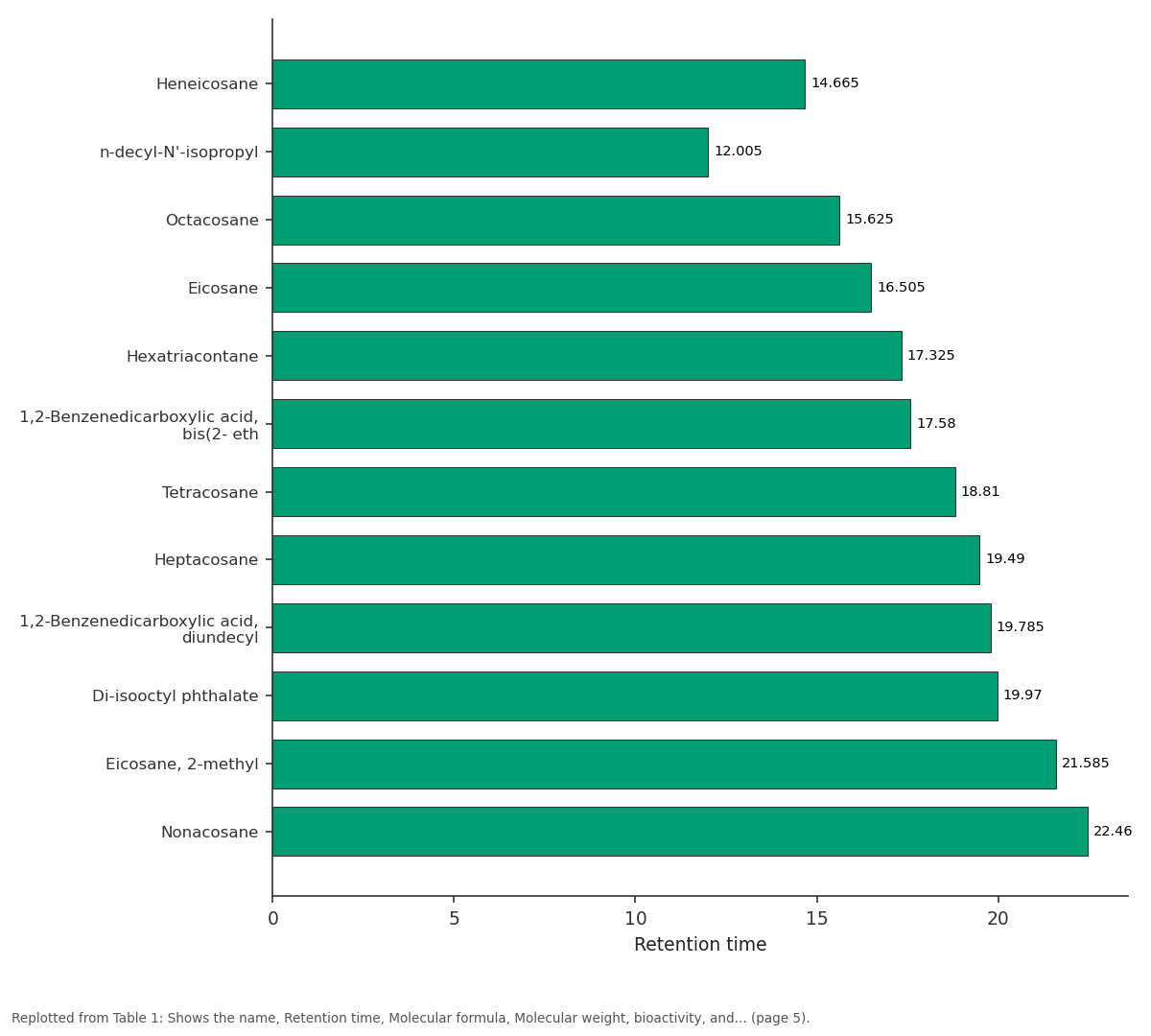
Retention time: Heneicosane vs n-decyl-N'-isopropyl vs Octacosane vs Eicosane vs Hexatriacontane
Replotted from Table 1 (page 5) of the original paper. Every bar is the paper's own table value.
View source evidence ↗Figures & tables
From the original paper Figure 1
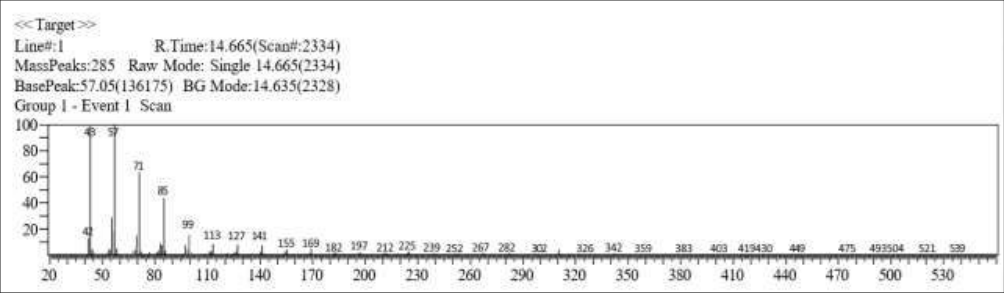 Figure 1
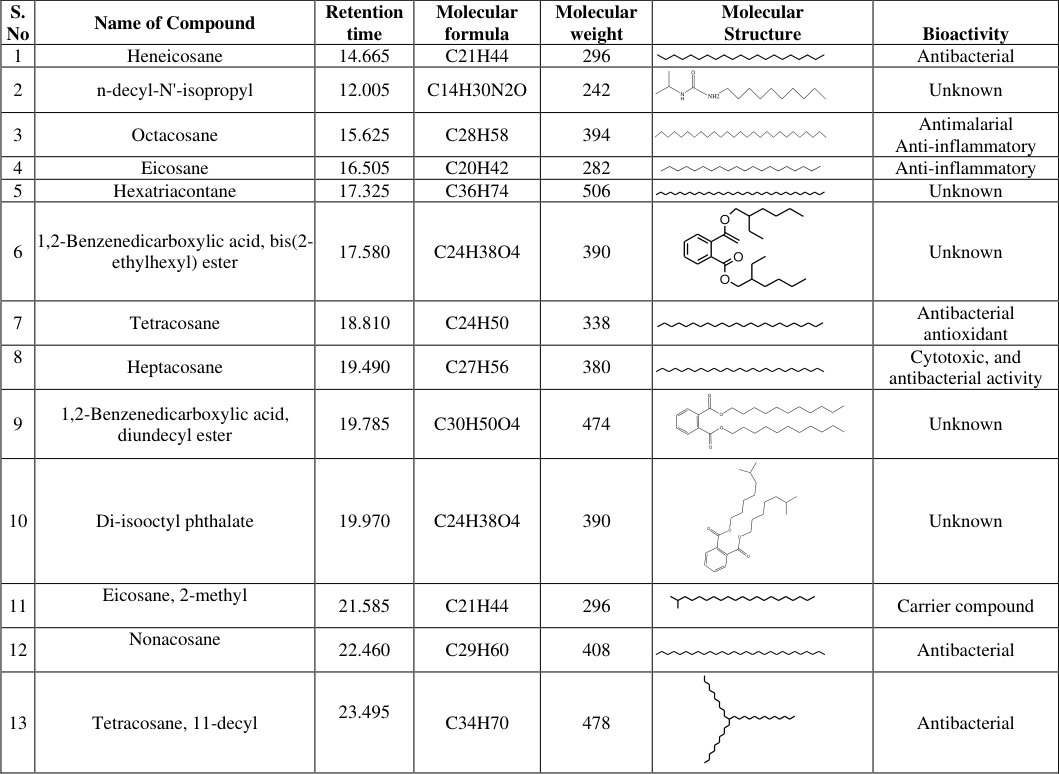 Table 1
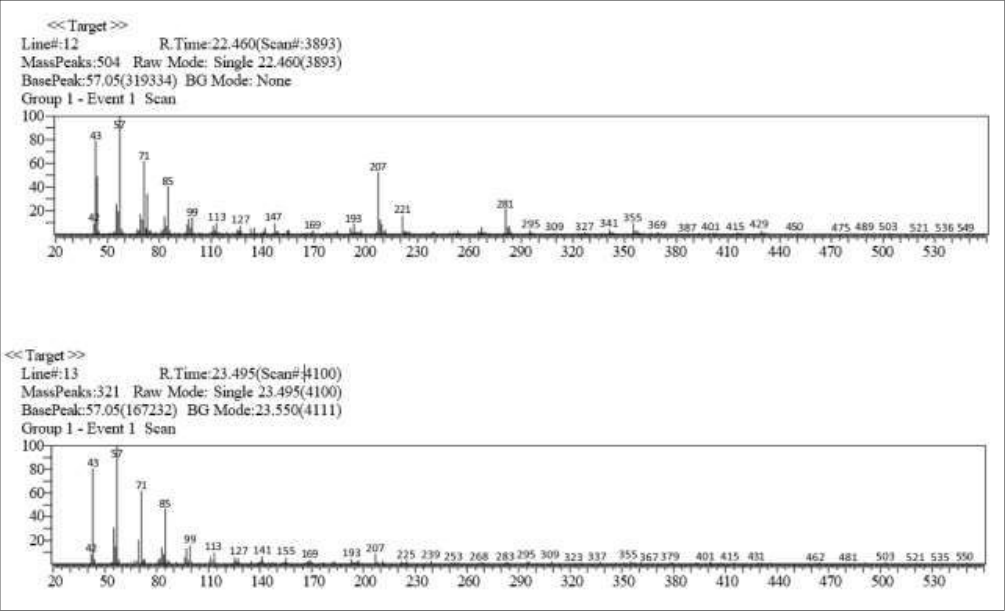 Figure 2
Introduction
Medicinal Plants have been employed as primary sources in past decades for the development of chemical compounds, lately utilized to manufacture herbal products but also play an important role in drug discovery to expand the pharmaceutical formulations in the modern therapeutic system [1] . Different industries like chemical, pharmaceutical, cosmetics, and industrial raw materials have been utilizing plant-based chemical compounds to develop different formulations to treat human illness [2] . The US drug market recognized Different types of new drugs like vincristine, resin amine, vinblastine, and reserpine during 1950-1970 in approximately 100 different plants [3] . Apart from the complimentary use of herbal plants, the ethnopharmacological properties reveal diverse biological activity like Artemisinin from Artemisia annua, used to treat multidrug-resistant malaria [4] . Silymarin is used in liver disease, derived from the seeds of Silybum marianum [5] , with the help of analytical techniques. Similarly, the contribution of beetroot in nutritional sciences for human health and diet is renowned along with its distinguished phytochemical constituents which can be used for multiple health purposes [6] . The pharmaceutical industry is creating a new revolution in modern medicine research to discover new molecules through advanced analytical methods and techniques [7] . Drug discovery always relies on the generation and innovation in analytical techniques and big data converter tools for molecule recognition and screening [8] . The major invention in analytical instrumentations includes Gas Chromatography-Mass Spectroscopy, high-performance liquid chromatography, mass spectrometry, capillary electrophoresis, vibrational spectroscopies (infrared and Raman), Xray diffractometry, and hyperspectral imaging techniques [9] . Gas Chromatography-Mass Spectroscopy is an advanced sophisticated analytical technology with a combination of two powerful analytical tools mainly operated for Compounds identification with low detection limits based on chemical structure and potential for quantitative measures [10,11] . GC-MS has been demonstrating and uncovering the medicinal Chemical Constituents of many plants including evolvulus alsinoides (Dwarf morning glory) [12] . Polygonum Chinense (Creeping smartweed or Chinese knotweed) [13] . Moringa oleifera (Drumstick tree) [14] . Justicia wynaadensis (Moddu Soppu) [15] . For decades, numerous beneficial chemical constituents have been waiting to be discovered. GC-MS has enormous applications not specifically in Pharmaceutical sciences but also in environmental analysis, explosives investigations, food and flavor analysis, drug testing of athletes, and forensic analysis [11] . Previous studies reported the diversity in pharmacological properties of beetroot and its therapeutic uses for human health. Some studies have confirmed the presence of many chemical compounds and phyto-components for example flavonoids, saponins, essential oils, phenols, tannins, and fatty acids. The main objective of this study is to isolate the bioactive compound in beetroot.
Ethical Considerations
Ethical Considerations
Method Preparation of Extract
The Fresh beetroot was cleaned, dried, decorticated, and ground into coarser powder using a mechanical grinder. The powder was weighed about 5 gm, dissolved in 100 ml of ethanol, and then macerated for 72 hours at room temperature. The extract was filtered using cellulose filter paper. A 10 µg/ml sample was submitted for GC-MS analysis at the Institute of Pharmaceutical Science Liaquat University of Medical and Health Sciences Jamshoro Sindh Pakistan.
GC-MS Identification
The GC-MS analysis of ethanol extract of Beta Vulgaris was performed by using Shimadzu GC 2010 comprising AOC-20i+s autosampler, a Shimadzu single quadrupole GCMS-QP2020 NX gas chromatograph interfaced with a mass spectrometer (GC-MS) equipped with an Elite 5-MS capillary column 30 m x 0.25 mm I.D. x 0.25 µm thick film with a composition of (5% 1,4-bis (Dimethylsiloxy) phenylene, 95% dimethyl polysiloxane). The injection mode was normal with 0.3 sec injection port dwell time and 3 times pumping. Column Temperature was 80 ºC for 2 min., rising to 300 °C then held for 4mins. Linear Flow Control Mode was maintained throughout the process, 95.8 KPa Column Pressure, GCMS-QP 2020 with TCD detector, Injector and detector temperature 200 ºC and 300 ºC respectively. Helium utilized as a carrier gas with a constant Flow rate at 1.40 ml/min and Injection Volume 1µl was employed with Injection split mode (Ratio of 10:0). The total flow was 18.4 ml/min. Mass spectra were taken at 1.10 kv+0.20 kv, with a scan time of 0.30 sec, and fragments from 42 to 550 in ACQ mode with a scan speed of 2000 cm. The solvent cut time was 3min and the total GC-MS running time was 27 min.
Result
Result
GC-MS Chromatogram of ethanolic extract of Beta vulgaris
showed different peaks (figure1) which indicated the presence of phytochemicals constituents. The mass spectra are presented in (Figure 2). The Molecular formula, retention time, molecular weight, and bioactivities of beta vulgaris are shown in Table 1.
Discussion
Interpretation on mass-spectrum GC-MS was conducted using the database of the National Institute of Standard and Technology (NIST) having more than 60,000 patterns of different components. GC-MS chromatogram of ethanolic extract of beetroot demonstrated mass peaks at different retention times The unknown components were analyzed by comparing their spectra with the known components stored in the NIST library. After collecting, assembling, and screening the results, 13 mass peaks were found and resembled the compound present in the NIST library. The identified compounds and chromatogram details are mentioned above in Table 1. The article's studies focus on utilizing Gas Chromatography-Mass Spectroscopy (GC-MS) to investigate the bioactive compounds observed in the ethanolic extract of Beta vulgaris (Beetroot). This examination addresses the escalating demand for novel chemical entities with potent pharmacological properties due to the increasing resistance to conventional therapeutic drugs. The observation confirms the existence of many bioactive components and also sheds light on its role in the major activity associated with beetroot i.e. antibacterial activity. The employment of hyphenated techniques for example GC-MS enables the accurate identification and isolation of compounds and presents a significant advancement inside the realm of drug discovery within medicinal plants.
The compounds heneicosane [16] tetracosane [17] , heptacosane [18] , nonacosane [19] , Tetracosane, 11-decy l [20] with retention time 14.665, 18.810, 19.490, 22.460, 23.495 found to possess antibacterial activity because of the presence of long chain alkane compound. Most compounds have microbial activity, this plant is mainly beneficial as herbal medicine against antibacterial resistance. Additionally, tetracosane [21] and heptacosane also showed the ability of anti-oxidant and cytotoxic [22] . The compound octacosane with a retention time of 15.625 was found to possess antimalarial [23] and anti-inflammatory activity [24] , while eicosane at 16.505 exhibits only anti-inflammatory activity [24] . therefore, this plant could be beneficial in the management of inflammation. The eicosane-2methyl at 21.585 retention time is not a bioactive compound but could work as a carrier compound [25] and serve as a reservoir in a well-controlled environment for bioactive compounds in drug formulation for industrial purposes. The biological activity of Compound n-decyl-N'-isopropyl, Hexatriacontane, 1,2-Benzenedicarboxylic acid, bis(2ethylhexyl) ester, 1,2-Benzenedicarboxylic acid, diundecyl ester, Di-isooctyl phthalate is unknown. The Importance of this research extends beyond the mere identification of many bioactive compounds in beetroot. It underscores the extensive capacity of natural sources in drug development and the pivotal role of advanced analytical methodologies in uncovering novel bioactive compounds. The GC-MS evaluation was carried out to exemplify how cutting-edge scientific tools can unveil hidden therapeutic agents inside natural sources. Employing elucidating the presence of many compounds and linking them to the antimicrobial properties of beetroot, this examination not only contributes to the understanding of the pharmacological and therapeutic properties of this plant but, additionally, exemplifies the strength of analytical technique in unlocking the pharmaceutical potential of natural substances.
Conclusions
In the last decades' medicinal plants have been the subject of drug discovery. It caught the interest of researchers worldwide to discover new lead compounds with the help of analytical techniques. GC-MS performs a vital role in assisting the investigations and Preliminary information which provides a reliable source for the researcher. This research article highlights the presence of bioactive alkanes and different compounds in Beta vulgaris. Figuring out the compounds contributes to understanding beetroot's medicinal chemistry diversity and promotes its potential use in antimicrobial, anti-inflammatory, antioxidant, and cytotoxicity applications. Furthermore, this work provides a foundation for future investigations aimed at isolating and characterizing other extensive compounds present in beetroot.
Acknowledgement
AcknowledgmentThe Author like to express sincere gratitude to the supervisor Sir Tehseen Channa for his guidance advice, and continuous assistance and support throughout the research process. The Author also appreciates the Head of Pharmacy Department of Peoples University of Medical and Health Sciences for Women for Providing the Lab facilities and encouragement and the Head of Pharmacy Department of Liaquat University of Medical & Health Sciences for GC-MS analysis.
References
23 in the original paper- Devkota HP, Watanabe M. Role of medicinal plant gardens in pharmaceutical science education and research: An overview of medicinal plant garden at Kumamoto University, Japan. Journal of Asian Association of Schools of Pharmacy. 2020;9:44-52.
- Rustamovna KN. The role and importance of medicinal plants in the development of the pharmaceutical industry. International Journal of Management IT and Engineering. 2022;12(3):88-93.
- Cooper R, Deakin JJ. Botanical miracles: Chemistry of plants that changed the world. CRC Press; 2016.
- Kshirsagar A, Ingawale D, Ashok P, Vyawahare N. Silymarin: A comprehensive review. Pharmacognosy Reviews. 2009;3(5):126-135.
- Zamani H, De Joode M, Hossein I, Henckens N, Guggeis M, Berends J, et al. The benefits and risks of beetroot juice consumption: A systematic review. Critical Reviews in Food Science and Nutrition. 2021;61(5):788-804.
- Siddiqui MR, AlOthman ZA, Rahman N. Analytical techniques in pharmaceutical analysis: A review. Arabian Journal of Chemistry. 2017;10:S1409-S1421.
- Kogawa AC, Salgado HRN. Analytical methods need optimization to get innovative and continuous processes for future pharmaceuticals. Scholars Academic Journal of Pharmacy. 2016;5(6):240-244.
- Sharma S, Singh N, Ankalgi AD, Rana A, Ashawat MS. Modern trends in analytical techniques for method development and validation of pharmaceuticals: A review. Journal of Drug Delivery and Therapeutics. 2021;11(1-s):121-130.
- Hoke II SH, Morand KL, Greis KD, Baker TR, Harbol KL, Dobson RL. Transformations in pharmaceutical research and development, driven by innovations in multidimensional mass spectrometry-based technologies. International Journal of Mass Spectrometry. 2001;212(1-3):135-196.
- Cheriyedath S. Gas chromatography-mass spectrometry (GC-MS) applications. Medical Life Science News. 2019.
- Gomathi D, Kalaiselvi M, Ravikumar G, Devaki K, Uma C. GC-MS analysis of bioactive compounds from the whole plant ethanolic extract of Evolvulus alsinoides (L.) L. Journal of Food Science and Technology. 2015;52:1212-1217.
- Ezhilan BP, Neelamegam R. GC-MS analysis of phytocomponents in the ethanol extract of Polygonum chinense L. Pharmacognosy Research. 2012;4(1):11-15.
- Bhalla N, Ingle N, Patri SV, Haranath D. Phytochemical analysis of Moringa oleifera leaves extracts by GC-MS and free radical scavenging potency for industrial applications. Saudi Journal of Biological Sciences. 2021;28(12):6915-6928.
- Ponnamma S, Manjunath K. GC-MS analysis of phytocomponents in the methanolic extract of Justicia wynaadensis (Nees) T. Anders. International Journal of Pharmacy and Biological Sciences. 2012;3(3):570-576.
- Vanitha V, Vijayakumar S, Nilavukkarasi M, Punitha V, Vidhya E, Praseetha P. Heneicosane-A novel microbicidal bioactive alkane identified from Plumbago zeylanica L. Industrial Crops and Products. 2020;154:112748.
- Assefa T, Tesso H, Abdisa E, Guta L, Melaku Y. Chemical composition and antibacterial activity of essential oils from selected species of the genus Cucumis in Ethiopia. Bulletin of the Chemical Society of Ethiopia. 2023;37(3):703-715.
- Witkowska-Banaszczak E, Długaszewska J. Essential oils and hydrophilic extracts from the leaves and flowers of Succisa pratensis Moench. and their biological activity. Journal of Pharmacy and Pharmacology. 2017;69(11):1531-1539.
- Al Kamaly O, Imtara H, Alanazi AS, Noman O. Phytochemical composition and cytotoxic activity of Senecio asirensis hexane fraction using in vitro and in silico approaches. Natural Product Communications. 2024;19(4):1934578X241246418.
- Priyanto JA, Prastya ME, Minarti M, Permatasari V. Pharmaceutical properties and phytochemical profile of extract derived from purple leaf Graptophyllum pictum (L.) Griff. Turkish Journal of Pharmaceutical Sciences. 2024;21(2):133-140.
- Gateva S, Jovtchev G, Chanev C, Georgieva A, Stankov A, Dobreva A, et al. Assessment of anticytotoxic, anti-genotoxic and antioxidant potentials of Bulgarian Rosa alba L. essential oil. Caryologia. 2020;73(3):1-12.
- Pirmohammadi Y, Asnaashari S, Nazemiyeh H, Hamedeyazdan S. Bioactivity assays and phytochemical analysis upon Alcea glabrata; focusing on xanthine oxidase inhibitory and antimalarial properties. Toxicon. 2023;229:107140.
- Okechukwu PN. Evaluation of anti-inflammatory, analgesic, antipyretic effect of eicosane, pentadecane, octacosane, and heneicosane. Asian Journal of Pharmaceutical and Clinical Research. 2020;13(4):1-8.
- Octarya Z, Novianty R, Suraya N, Saryono S. Antimicrobial activity and GC-MS analysis of bioactive constituents of Aspergillus fumigatus 269 isolated from Sungai Pinang Hot Spring, Riau, Indonesia. Biodiversitas Journal of Biological Diversity. 2021;22(4):1-12.