
Research article · 2025 · Full text
International Journal of Veterinary Sciences and Animal HusbandryEvaluation of Intramammary ozone therapy for clinical mastitis in dairy cows
Volume 10(1) · Pages 226–229 · DOI: 10.22271/veterinary.2025.v10.i1d.2028 ↗
Research areasMedical and Biological Ozone Research
Abstract
Author-writtenThe effectiveness of ozone therapy was assessed after administering ozone to the inflammatory quarters of cows suffering from clinical mastitis. Using ozone gas generating apparatus, ozone was injected via a teat canal into the inflammatory area. Thirty cattle with clinical mastitis were divided into three groups: Ten cows were treated with ozonated normal saline (NS), ten cows with ozonated NS + antibiotic and Ten cows were treated with antibiotic therapy. Systemic and local clinical signs, California mastitis test scores, mastitis-causing pathogens, pH and somatic cell counts in milk were compared across and within groups. 60% (6/10) of cows with clinical mastitis treated with ozonated NS, 70% (7/10) treated with sensitive antibiotic, and 100% (10/10) of cows treated with ozone + antibiotic therapy recovered. It was demonstrated that this recently developed ozone therapy method is both safe and effective. The combination therapy also sterilized the udder quarters as no bacterial isolate could be detected in post-treatment milk samples.
Summary
Source-checkedPlain-language reading of the full paper, prepared with AI and checked against the text. Each point links to the authors' own words.
Why it matters
- Mastitis is a widespread and complex disease in livestock, influenced by production systems and the environment. View evidence ↗
- Antimicrobial resistance is a significant factor contributing to low cure rates in mastitis, despite the availability of high-quality treatments. View evidence ↗
- Ozone therapy acts as a disinfectant against anaerobic bacteria and may work by activating immune cells and erythrocytes. View evidence ↗
The question
- The study aimed to evaluate whether ozone therapy (OT) is a feasible and effective treatment for acute clinical mastitis in cows. View evidence ↗
What they did
- The study included 30 cows that tested positive via the California mastitis test (CMT) and had a somatic cell count (SCC) exceeding 200,000 cells/mL. View evidence ↗
- The 30 cows were randomly assigned to three groups of 10 animals each. View evidence ↗
- Group A received ozonated saline (60 µg/mL), Group B received ozonated saline plus sensitive antibiotics and NSAIDs, and Group C received only antibiotics and NSAIDs. View evidence ↗
What they found
- The combination of ozone and antibiotics resulted in a 100% recovery rate (10/10 cows), compared to 70% (7/10) for antibiotics alone and 60% (6/10) for ozonated saline alone. View evidence ↗
- Group B (ozone + antibiotic) showed a significantly faster reduction in CMT scores and SCC by day 6 and day 10 compared to Group A (ozone alone). View evidence ↗
- Combination therapy (ozone + antibiotic) achieved complete sterilization of the udder quarters, with no bacterial isolates found in post-treatment samples. View evidence ↗
- Most bacterial isolates showed high sensitivity (70.00-76.67%) to antibiotics such as ceftriaxone + tazobactum and cefoparazone. View evidence ↗
What it means
- The authors conclude that intramammary ozone infusion, either alone or combined with antibiotics, is an effective treatment for clinical mastitis. View evidence ↗
- Because the combination therapy yielded the best results, the authors recommend ozone therapy as a beneficial complementary approach to antibiotics. View evidence ↗
Visual summary
3 visualsIllustrations explain the paper; charts are replotted from the paper's own table values.
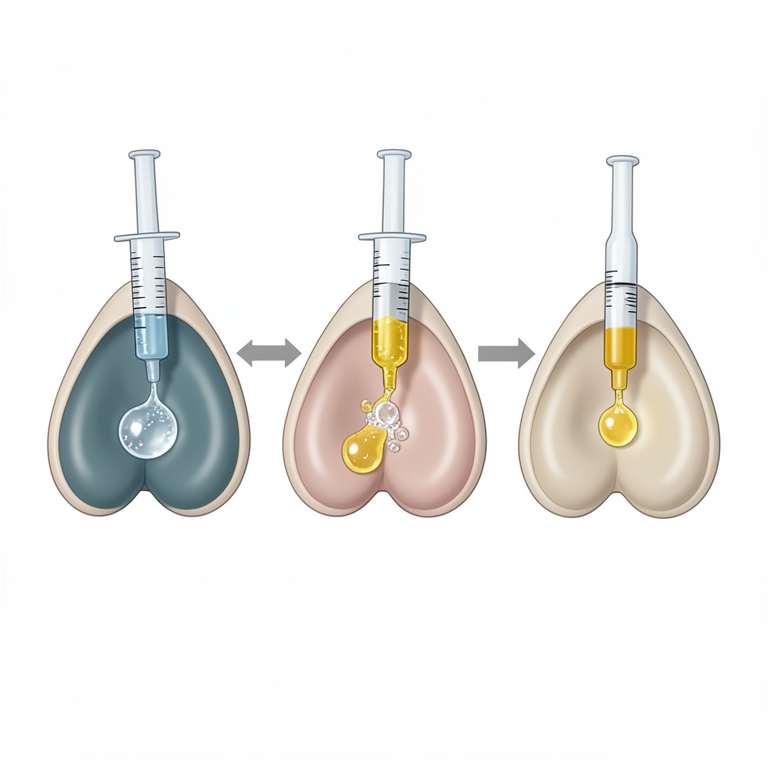
Treatment Group Comparison
AI-generated conceptual illustration (dairy cow mammary glands). It explains the idea and does not show study data.
View source evidence ↗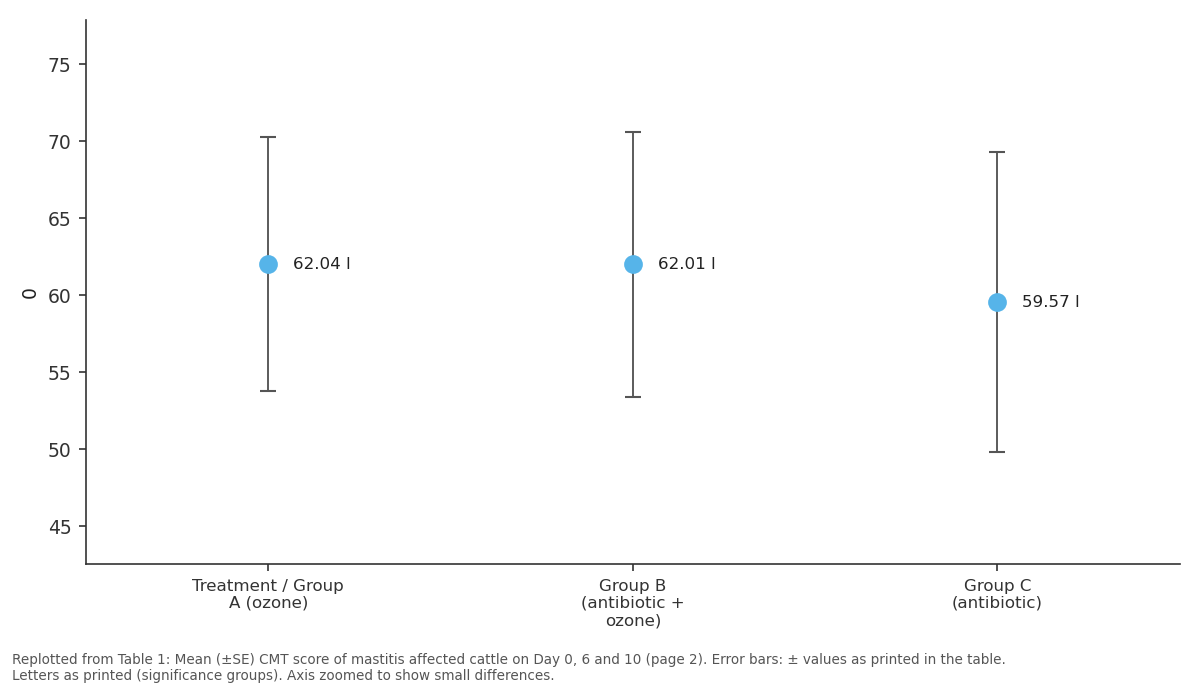
0: Treatment / Group A... vs Group B (antibiotic +... vs Group C (antibiotic)
Replotted from Table 1 (page 2) of the original paper. Every bar is the paper's own table value.
View source evidence ↗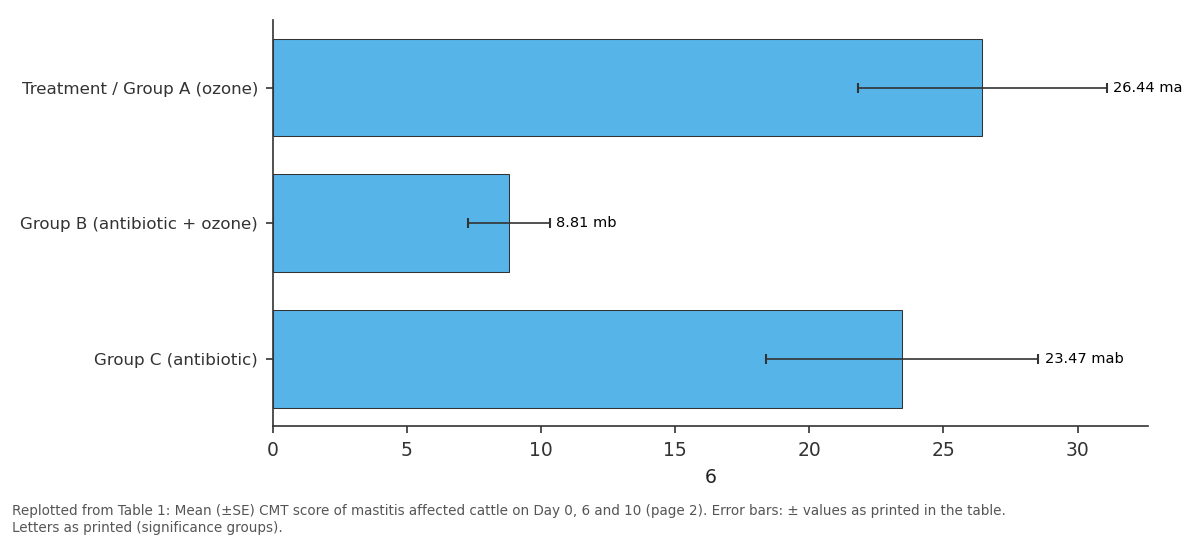
6: Treatment / Group A... vs Group B (antibiotic +... vs Group C (antibiotic)
Replotted from Table 1 (page 2) of the original paper. Every bar is the paper's own table value.
View source evidence ↗Figures & tables
From the original paper Table 1
 Table 2
 Table 3
 Table 4
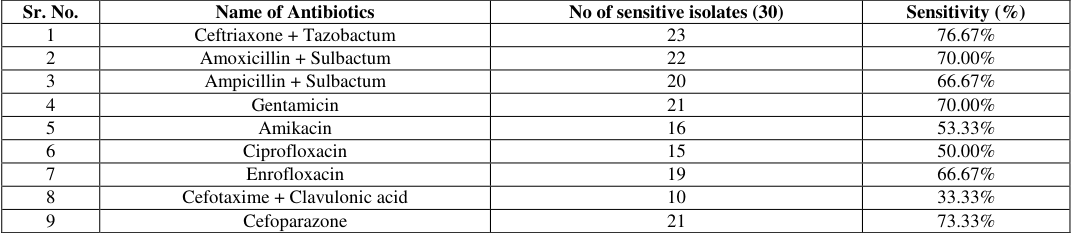 Table 5
Introduction
Mastitis is a complex illness that affects livestock all over the world and is strongly linked to the environment and the production system (Mekibib et al., 2010) [10] . Mastitis is defined as an increase in somatic cell counts (SCC) in secreted milk or the udder's mammary tissue, local udder inflammation with swelling, heat, pain, redness and abnormal milk production, such as discoloration or clots (described as clinical mastitis, CM) or an increased SCC with normal milk appearance (subclinical mastitis, SCM) (De Vliegher et al., 2012) [4] . A number of diagnostic techniques, such as the California mastitis test (CMT), the Modified Whiteside test (MWT), the Somatic cell count (SCC), pH, Chlorine and Catalase tests can be used to indirectly identify changes in mastitis. Antimicrobial therapy is commonly used to prevent and treat mastitis. Unfortunately, despite the best antimicrobial treatments available, antimicrobial resistance (AMR) is regarded as one of the reasons for low cure rates (Barkema et al., 2006) [1] . Ozone (O3) is an unstable polymerized oxygen which is created by the passage of air or oxygen over high energy electrodes within an ozone generator system or by ultraviolet light (Yang and Chen, 1979). After a short period of exposure, bacteria, spores and viruses may be inactivated by ozone therapy (Bocci, 1996) [2] . Ozone shows its efficacy with different mechanisms including the activation of erythrocytes and immune cells and it is a disinfectant against the anaerobic bacteria (Zobel et al., 2014) [17] . In cases of mastitis, ozone has been shown to lower the somatic cell count (SCC). Mastitis can be safely and effectively treated with ozone therapy, leaving no trace in milk (Ogata and Nagahata, 2000) [11] . The use of ozone therapy (OT) seems to have many advantages in treatment of bovine clinical mastitis. The aim of this study was to describe the feasibility and effectiveness of OT in bovine acute clinical mastitis.
Materials and Methods
The current study was conducted, following approval by IAEC, at Teaching Veterinary Clinical Complex, Krantisinh Nana Patil College of Veterinary Science, Shirwal, Satara (Maharashtra, India) and nearby villages of Shirwal. Lactating cows presented with clinical signs like reduced milk yield, painful, hot, hard and swollen udders and abnormal milk were suspected for mastitis. Out of these 30 animals which were positive for CMT and somatic cell count more than 200,000 cells/mL were included in the present therapeutic study. These 30 cows were randomly divided into 3 treatment groups consisting 10 cows in each group (Group A, Group B, Group C).
Clinical Examination of Cows under Study
General clinical examination included rectal temperature (°F), pulse (/min), heart rate (beats/min) and respiratory rate (breaths/min). Changes in teat and udder conformation, and physical characteristics of milk like smell, taste, colour, consistency and pH were also recorded.
Diagnostic Tests
The pH of milk samples was recorded by Digital pH meter (Laqua Benchtop). The pH electrode was calibrated to 7.00. The California mastitis test (CMT) was conducted during milking of lactating dairy animals as per the instructions of manufacturer of the reagent. The manual somatic cell count (SCC) in milk samples was done as per the method described by Schalm et al. (1971) [13] .
Bacteriological Culture of Mastitis Milk Samples and AbST of Isolates
Milk samples from mastitis positive quarters were inoculated on various media and characterization of bacterial isolates was performed based on colony morphology and Gram's staining as per the method described by Cowan (1993) [3] . In vitro antibacterial sensitivity pattern of the micro-organisms isolated was carried out by disc diffusion method using nine antibiotics discs.
Treatment Regime
The ozone machine, which already had an integrated system for ozonizing water, was used to prepare the ozonated saline. The gas was added for a predetermined amount of time until it reached the right concentration of ozone (60 µg/mL), which was then used for intramammary administration of antibiotics and anti-inflammatory drugs. Cattle in group A were treated with ozonated normal saline (@ 60 µg/mL) intramammary 30 mL per quarter for 5 days; cattle in group B were treated with ozonated normal saline (@ 60 µg/mL) intramammary 30 mL along with most sensitive antibiotic, i.e. Ceftriaxone + Tazobactum (@ 10 mg/kg b.wt.) / Cefoparazone (250 mg intramammary) for 5 days with supportive NSAID as Tolfenamic acid (2 mg/kg IM); cattle in group C were treated with most sensitive antibiotic with supportive NSAID as in group B without ozonated saline.
Statistical Analysis
The data generated was analysed statistically for two-way repeated measures ANOVA by using online statistical software, SPSS 20.0. The p-value < 0.05 was regarded as significant.
Results and Discussion
In present study, we aimed to compare the treatment efficacy of ozonated NS insufflation via latex free 30 mL syringe alone and with combination of antibiotic and only antibiotic treatment in dairy cows with clinical mastitis. However, prolonged use of antibiotic can leave behind residues in milk that pose a major risk to the general public's health (Gruet et al., 2001) [7] . The application of ozone infusion into the inflamed quarter in clinical mastitis of dairy cattle can result in the sterilization of causative agents as well as detoxification of the inflamed quarter (Ogata and Nagahata 2000) [11] . Shinozuka et al. (2009) [14] found that mammary irrigation with ozone water was more effective at treating mastitis in dairy cows than systemic antibiotic administration. The results of CMT, SCC, and pH of clinical mastitic milk of cattle before and after three treatment regimens are depicted in Tables 1 to 3, respectively. Antibiotic susceptibility test results are shown in Table 5. There was a significant (p<0.05, p<0.01) reduction in CMT score, SSC of milk, pH of milk and even pathogens isolated on days 6 and 10 over day 0 following all three treatment regimens. Moreover, the decline in CMT score and SCC was significantly (p<0.05) faster in group B than group A, with intermediate values in Group C, by day 6 and/or both day 6 & 10, but no such trend was noted in milk pH (Table 1-3). Ogata and Nagahata (2000) [11] reported the initial CMT score as 10±0.97, which decreased to 4.55±0.83 on the 3 rd day after ozone treatment. In the present study, CMT scores were found to be significantly (p<0.01) reduced in group B (O3 + AB combination) post-treatment when compared to pre-treatment (1.77±0.25 vs. 3.50±0.17) scores. They further reported SCC values decreased gradually towards normal range after 3 weeks of ozone and antibiotic treatment. In current study, SCC results were found to be decreased in line with Ogata and Nagahata (2000) [11] , after therapy. In this study, posttreatment SCC values reduced to normal reference range when compared with pre-treatment values, i.e., in group A (from 62.04±8.23 to 18.22±6.27) and in group B (from 62.01±8.59 to 3.00±0.37). The results of bacterial pathogens isolated from the clinical mastitic milk of cattle before and after three treatment regimens are depicted in Table 4. The most isolated bacteria among 30 mastitic milk samples before treatment were Staphylococcus aureus (12) and E. coli (8) followed by Streptococcus sp. ( 6), Klebsiella sp. (2) and mixed infection (2), which were reduced in post-treatment samples in all three groups, with complete absence of isolates particularly in Group B treated with Ozone + sensitive antibiotic (Table 4). S. aureus was also the most isolated bacteria (N=7) in study conducted by Ogata and Nagahata (2000) [11] . In place of using antibiotics, Shinozuka et al. (2008) [15] recommended the use of ozone therapy, which can reduce the endotoxin release from E. coli into the milk. They reported that ozone sterilization involves the destruction of microbial cell membranes. Group A 1 0 3 0 0 2.
| Sr. No. | Name of Antibiotics | No of sensitive isolates (30) | Sensitivity (%) |
|---|---|---|---|
| 1 | Ceftriaxone + Tazobactum | 23 | 76.67% |
| 2 | Amoxicillin + Sulbactum | 22 | 70.00% |
| 3 | Ampicillin + Sulbactum | 20 | 66.67% |
| 4 | Gentamicin | 21 | 70.00% |
| 5 | Amikacin | 16 | 53.33% |
| 6 | Ciprofloxacin | 15 | 50.00% |
| 7 | Enrofloxacin | 19 | 66.67% |
| 8 | Cefotaxime + Clavulonic acid | 10 | 33.33% |
| 9 | Cefoparazone | 21 | 73.33% |
Table text extracted from the original PDF; superscript letters are shown inline. The original table image is below.
View original table image
| Sr. No. | Treatment Group | Staphylococcus sp. (N=12) | E. coli (N=8) | Streptococcus sp. (N=6) | Klebsiella sp.(N=2) | Mixed infection (N=2) |
|---|---|---|---|---|---|---|
| Bacteria isolated from mastitis affected cattle under different treatment groups on ‘Day 0’(pre-treatment) | ||||||
| 1. | Group A | 2 | 5 | 3 | 0 | 0 |
| 2. | Group B | 5 | 2 | 1 | 1 | 1 |
| 3. | Group C | 5 | 1 | 2 | 1 | 1 |
| Bacterial cure in different treatment groups (post-treatment) | ||||||
| 1. | Group A | 1 | 0 | 3 | 0 | 0 |
| 2. | Group B | 0 | 0 | 0 | 0 | 0 |
| 3. | Group C | 1 | 1 | 0 | 0 | 1 |
Table text extracted from the original PDF; superscript letters are shown inline. The original table image is below.
View original table image
| Days | Treatment | — | — | P-Value |
|---|---|---|---|---|
| Group A (ozone) | Group B (antibiotic + ozone) | Group C (antibiotic) | ||
| 0 | 62.04±8.23l | 62.01±8.59l | 59.57±9.74l | NS |
| 6 | 26.44±4.64m,a | 8.81±1.51m,b | 23.47±5.07m,ab | <0.05 |
| 10 | 18.22±6.27n | 3.00±0.37n | 13.32±5.23n | NS |
| Mean ± SE | 35.57±5.08 | 24.61±5.67 | 32.12±5.36 | NS |
Table text extracted from the original PDF; superscript letters are shown inline. The original table image is below.
View original table image
In the present study, majority of isolates were sensitive to ceftriaxone + tazobactum, cefoparazone, amoxicillin + sulbactum, and gentamicin (70.00-76.67%), with moderate sensitivity to others, and the least (33.33%) to cefotaxime + clavulonic acid (Table 5). The present results were in line with Kaliwal et al. (2011) [8] and Kumar et al. (2020) [9] . showed cure of 10 out of 10 cattle (100%) that received treatment with ozonated normal saline (@ 60 µg/mL) intramammary along with the most sensitive antibiotic in terms of all above criteria, while in Group C, 7 (70%) cattle out of 10 recovered, which received the most sensitive antibiotic alone.
According to the statistical analysis in the current study, the most efficient treatment regime was group B when compared to other groups (A and C) and was found statistically significant. The efficacy of group A and C was found significant when compared to group B in cattle for clinical mastitis.
Rilling and Viebahn (1990) [12] found that the effectiveness and convalescence of AT and OT therapies were nearly identical. Ogata and Nagahata (2000) [11] found changes in the EC and SCC of cows in the O3 and antibiotic groups of similar patterns in terms of inflamed quarter recovery after each therapy. The changes observed in O3 and antibiotic were similar, indicating that O3 had the same efficacy as antibiotic. The current study also showed similar results. According to Ogata and Nagahata (2000) [11] and Enginler et al. (2015) [6] Streptococcus uberis has a high resistance to ozone treatment in mastitis. The current results were consistent with these reports.
Conclusion
Clinical cases of mastitis in dairy cattle can be effectively treated with intramammary infusion of ozone alone or together with antibiotics. The results showed that ozone insufflation is a successful treatment regimen for curing clinical mastitis. However, the animals that received ozone therapy in addition to antibiotic therapy showed the most favourable results, leading to the conclusion that ozone therapy can be beneficial as a complementary approach in cases of clinical mastitis in dairy cattle.
Acknowledgement
AcknowledgementThis work was supported by all staff of KNPCVS, Shirwal, Dist. Satara, and Maharashtra.
Figures and tables from the paper
| Days | Treatment | — | — | P-Value |
|---|---|---|---|---|
| Group A (ozone) | Group B (antibiotic + ozone) | Group C (antibiotic) | ||
| 0 | 3.50±0.17l | 3.50±0.17l | 3.60±0.16l | NS |
| 6 | 2.40±0.22m,a | 1.30±0.15m,b | 2.1±0.23m,a | <0.05 |
| 10 | 1.70±0.0.37n,a | 0.50±0.17n,b | 1.5±0.34n,ab | <0.05 |
| Mean ± SE | 2.53±0.20a | 1.77±0.25b | 2.40±0.22a | <0.05 |
Table text extracted from the original PDF; superscript letters are shown inline. The original table image is below.
View original table image
| Days | Treatment | — | — | P-Value |
|---|---|---|---|---|
| Group A (ozone) | Group B (Antibiotic + ozone) | Group C (antibiotic) | ||
| 0 | 7.31±0.19l | 7.36±0.16l | 7.18±0.11l | NS |
| 6 | 6.66±0.16m | 6.76±0.16m | 6.56±0.10m | NS |
| 10 | 6.42±0.13m | 6.35±0.10m | 6.36±0.12m | NS |
| Mean ± SE | 6.79±0.12 | 6.82±0.11 | 6.70±0.09 | NS |
Table text extracted from the original PDF; superscript letters are shown inline. The original table image is below.
View original table image
References
17 in the original paper- Barkema HW, Schukken YH, Zadoks RN. Invited review: The role of cow, pathogen, and treatment regimen in the therapeutic success of bovine Staphylococcus aureus mastitis. J Dairy Sci. 2006;89(6):1877-95.
- Bocci V. Ozone as bioregulator: Pharmacology and toxicology of ozone therapy today. J Biol Regul Homeost Agents. 1996;10(2-3):31-53.
- Cowan ST. Cowan and Steel's Manual for the Identification of Medical Bacteria. Cambridge University Press, 1993.
- De Vliegher S, Fox LK, Piepers S, McDougall S, Barkema HW. Invited review: Mastitis in dairy heifers: Nature of the disease, potential impact, prevention, and control. J Dairy Sci. 2012;95(3):1025-1040.
- Đuricic D, Valpotić H, Samardzija M. Prophylaxis and therapeutic potential of ozone in buiatrics: Current knowledge. Anim Reprod Sci. 2015;159:1-7.
- Enginler SÖ, Sabuncu A, Kahraman BB, Koçak Ö, Yıldar E, Güzel Ö. Comparison of intramammary ozone administration doses in dairy cows with clinical mastitis. Acta Scientiae Veterinariae. 2015;43:1-7.
- Gruet P, Maincent P, Berthelot X, Kaltsatos V. Bovine mastitis and intramammary drug delivery: Review and perspectives. Adv Drug Deliv Rev. 2001;50:245-59.
- Kaliwal BB, Sadashiv SO, Kuriogi MM, Sanakal RD. Study on prevalence and antimicrobial susceptibility of coagulase negative Staphylococci isolated from bovine mastitis. Vet World. 2011;4(4):158-161.
- Kumar N, Dua K, Goel P, Sandhu P, Jaswal A, Shekhawat A, et al. Prevalence of mastitis, antibiotic residues, and antibiotic resistant pathogens in dairy animals: Prevalence of mastitis in dairy animals. Indian J Dairy Sci. 2020;77(2):117-122.
- Mekibib B, Furgasa M, Abunna F, Megersa B, Regassa A. Bovine mastitis: Prevalence, risk factors and major pathogens in dairy farms of Holeta town, Central Ethiopia. Vet World. 2010;3(9):397-403.
- Ogata A, Nagahata H. Intramammary application of ozone therapy to acute clinical mastitis in dairy cows. J Vet Med Sci. 2000;62(7):681-686.
- Rilling S, Viebahn R. Praxis der Ozon-Sauerstoff Therapie. 3 rd Ed. Heidelberg: Verlag für Medizin Dr. Ewald Fischer, 1990.
- Schalm OW, Carrol EJ, Jain NC. Mastitis complex: A brief summary. In: Schalm OW, Carrol EJ, Jain NC, editors. Bovine Mastitis. Philadelphia: Lea and Febriger, 1971.
- Shinozuka Y, Hirata H, Ishibashi I, Okawa Y, Kasuga A, Takagi M, et al. Therapeutic efficacy of mammary irrigation in dairy cattle diagnosed with acute coliform mastitis. J Vet Med Sci. 2009;71(3):269-273.
- Shinozuka Y, Uematsu K, Takagi M, Taura Y. Comparison of the amounts of endotoxin released from Escherichia coli after exposure to antibiotics and ozone: An in vitro evaluation. J Vet Med Sci. 2008;70(4):419422.
- Yang PPW, Chen TC. Stability of ozone and its germicidal properties on poultry meat microorganisms in liquid phase. J Food Sci. 1979;44(2):501-504.
- Zobel R, Martinec R, Ivanovic D, Rosic N, Stancic Z, Zerjavic I, et al. Intrauterine ozone administration for improving fertility rate in Simmental cattle. Vet Arhiv. 2014;84(1):1-8.