
Research article · 2025 · Full text
International Journal of Agriculture and NutritionStudies on the quality of Misti Dahi collected from Kolkata and its suburbs
Volume 7(1) · Pages 42–44 · DOI: 10.33545/26646064.2025.v7.i1a.201 ↗
Research areasFood Science and Nutritional StudiesBanana Cultivation and ResearchBotanical Research and Chemistry
Abstract
Author-writtenThe storage studies on the misti dahi samples have shown that there is a sharp increase in the titratable acidity during storage at 302 0C while the rate of increase of titratable acidity of misti dahi samples during storage at 52 0C was rather slow. During storage at 302 0C the maximum increase in acidity was noticed after 24 hrs of storage while increase in acidity during storage at 52 0C was always steady. Yeast and mould in the products increased progressively during storage. A sharp increase in the yeast and mould population is noticeable during storage at 302 0C while increase is relatively gradual during storage at 52 0C. The rates of destruction of coliform organisms were higher at room temperature (302 0C) than at refrigeration temperature (52 0C). The overall relatively poor results obtained for all the samples in relation to their microbiological quality indicate that step should be taken to improve their quality.
Summary
Source-checkedPlain-language reading of the full paper, prepared with AI and checked against the text. Each point links to the authors' own words.
Why it matters
- Dahi is one of the most important dairy products in India, with the sweetened version, Misti dahi, being particularly popular in eastern regions like West Bengal, Assam, Bihar, and Orissa. View evidence ↗
- Because dahi is nutrient-rich, it is susceptible to microbial contamination during production and handling, which can introduce potentially pathogenic organisms. View evidence ↗
- Strict quality control of Misti dahi is necessary to protect consumer health. View evidence ↗
The question
- The study aims to determine the quality, sanitary conditions, and public health impact of Misti dahi sold in Kolkata and its suburbs through microbiological examination. View evidence ↗
What they did
- The researchers collected 30 samples of Misti dahi from Kolkata and surrounding suburban areas. View evidence ↗
What they found
- The overall microbiological quality of all tested samples was relatively poor. View evidence ↗
What it means
- The authors state that refrigeration does not help destroy coliforms if the product is already contaminated. View evidence ↗
Figures & tables
From the original paper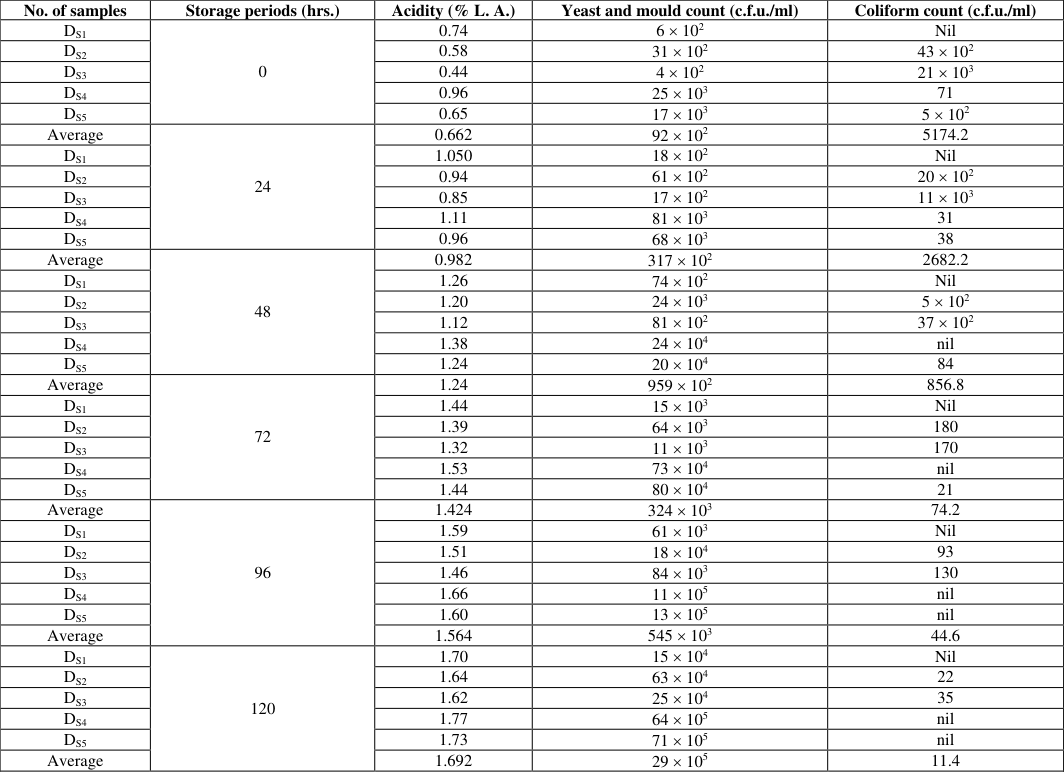 Table 1
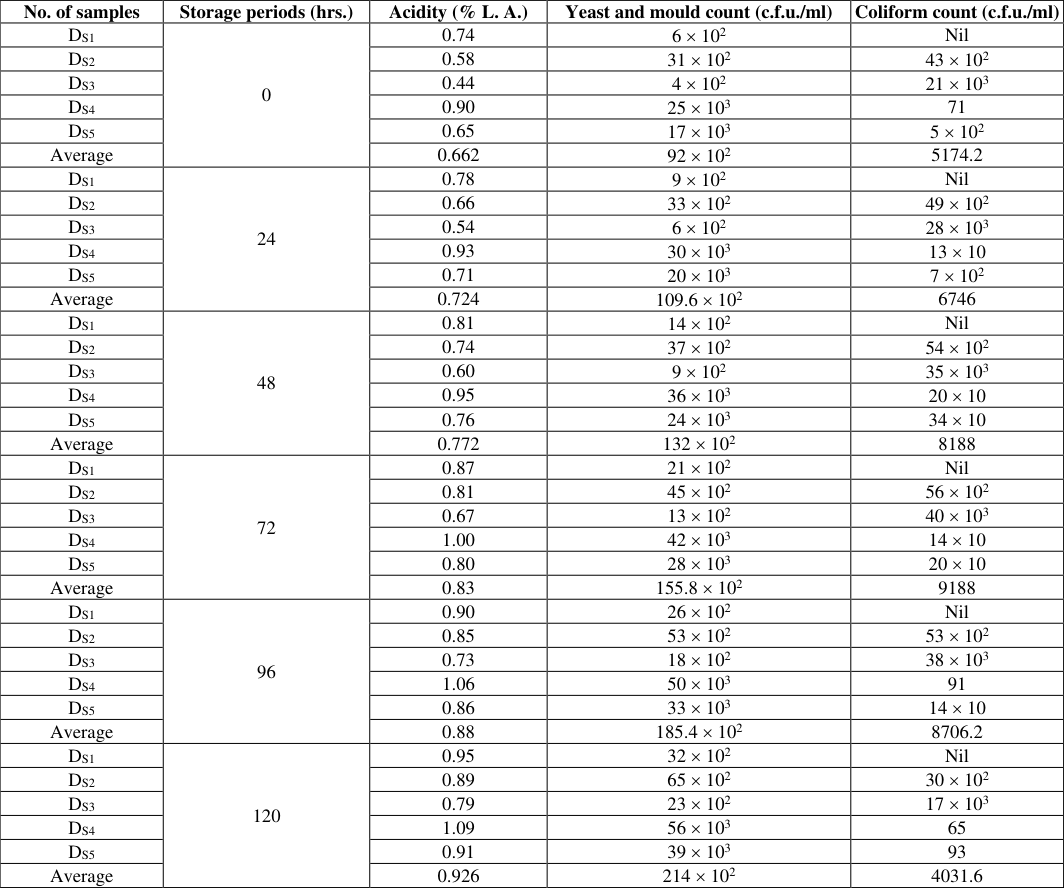 Table 2
Introduction
Next to milk dahi is the most important dairy product prepared and utilized in various forms at most households in this country. Misti dahi is quite popular in the eastern parts of India, mainly West Bengal and partly in Assam, Bihar and Orissa. Cane sugar in varied proportions 6 to 25 per cent-Ray and Srinivasan (1972) [6] ; 15.8 to 22 per cent-Mukhopadhyay and Singh (1973) [4] ; 12.8 to 18.7 per cent-Ghosh and Rajorhia (1987) [4,1] is added to milk either before or at the time of inoculation for preparation of misti dahi in unorganized sector. Prolonged heating of sweetened milk at simmering temperature leads to partial concentration and browning. A characteristic cooked flavour and firm body develop after setting of the curd. Use of colour or sugar caramel or gur is also in vogue. Dahi, a rich source of nutrients, is subject to microbial contamination at various stages of manufacture and during addition of ingredients. The handling by the operators who happen to be carries of certain diseases may also contaminate the product with potential pathogenic organisms. Hence, to ensure the safety of the product, microbiological quality of misti dahi should be as high as possible and it must be free from any of the pathogens as the people largely consume the product. In order to safeguard the consumer health, which is of primary concern, there is a need to impose firm control on the quality of misti dahi. In the present investigation, the microbiological examinations will help in determining the quality of the product, the sanitary and hygienic conditions maintained and the effect of public health for the marketed product available in Kolkata and its suburbs.
Materials and Methods
Materials and Methods
Collection of samples
The samples (30 Samples) of misti dahi were collected from Kolkata and its suburbs.
Analytical Methods
Methods relating to estimation of various microbial population in the samples, the following microbiological examination along with testing of titratable acidity were carried out:
Storage studies
Storage studies were done at 3020C and 520C till the quality remain good in term of titratable acidity, Yeast and mould count and Coliform count. population is noticeable during storage at 3020C while increase is relatively gradual during storage at 520C. It is observed that the rate of growth of yeast and mould count is higher when sufficient acidity is produce to bring the pH down to around 5.0. It may be concluded that the chance of spoilage of misti dahi is higher during storage at room temperature (3020C) due to higher rate of growth of yeast and mould at room temperature.
Results and Discussions Effect of storage period on Titratable acidity of Misti dahi: From
Results and Discussions Effect of storage period on Titratable acidity of Misti dahi: From
Effect of storage period on Coliform count of Mist dahi
From Table-1 and Table-2 it is clear that during storage the rates of destruction of coliform organisms were higher at room temperature (3020C) than at refrigeration temperature (520C). In regard to the effect of storage temperature it was observed that these organisms survived for longer period of time at refrigeration temperature (5 20C) than that at room temperature (3020C). In this connection, it has been reported that viable counts of coliform decreased very rapidly with the fall of ph below 4.0 (Tiwari and Singh, 1966; Goel et al., 1971) [6,7] . The slow rate of destruction of the coliform is ascribed to gradual increase in acidity, which perhaps permits development of acid tolerant strains (Prasad IN VI., 1984) [5] . In the light of the above report, it may be concluded that misti dahi stored at a lower temperature is of no value in preventing the destruction of coliform if the product is already contaminated. It is possible that misti dahi kept at room temperature during summer months is less likely to be a source of coliform than that samples of misti dahi stored at the temperature during winter months.
Figures and tables from the paper
| No. of samples | Storage periods (hrs.) | Acidity (% L. A.) | Yeast and mould count (c.f.u./ml) | Coliform count (c.f.u./ml) |
|---|---|---|---|---|
| D S1 | 0 | 0.74 | 6 102 | Nil |
| D S2 | 0.58 | 31 102 | 43 102 | |
| D S3 | 0.44 | 4 102 | 21 103 | |
| D S4 | 0.96 | 25 103 | 71 | |
| D S5 | 0.65 | 17 103 | 5 102 | |
| Average | 24 | 0.662 | 92 102 | 5174.2 |
| D S1 | 1.050 | 18 102 | Nil | |
| D S2 | 0.94 | 61 102 | 20 102 | |
| D S3 | 0.85 | 17 102 | 11 103 | |
| D S4 | 1.11 | 81 103 | 31 | |
| D S5 | 0.96 | 68 103 | 38 | |
| Average | 48 | 0.982 | 317 102 | 2682.2 |
| D S1 | 1.26 | 74 102 | Nil | |
| D S2 | 1.20 | 24 103 | 5 102 | |
| D S3 | 1.12 | 81 102 | 37 102 | |
| D S4 | 1.38 | 24 104 | nil | |
| D S5 | 1.24 | 20 104 | 84 | |
| Average | 72 | 1.24 | 959 102 | 856.8 |
| D S1 | 1.44 | 15 103 | Nil | |
| D S2 | 1.39 | 64 103 | 180 | |
| D S3 | 1.32 | 11 103 | 170 | |
| D S4 | 1.53 | 73 104 | nil | |
| D S5 | 1.44 | 80 104 | 21 | |
| Average | 96 | 1.424 | 324 103 | 74.2 |
| D S1 | 1.59 | 61 103 | Nil | |
| D S2 | 1.51 | 18 104 | 93 | |
| D S3 | 1.46 | 84 103 | 130 | |
| D S4 | 1.66 | 11 105 | nil | |
| D S5 | 1.60 | 13 105 | nil | |
| Average | 1.564 | 545 103 | 44.6 | |
| D S1 | 120 | 1.70 | 15 104 | Nil |
| D S2 | 1.64 | 63 104 | 22 | |
| D S3 | 1.62 | 25 104 | 35 | |
| D S4 | 1.77 | 64 105 | nil | |
| D S5 | 1.73 | 71 105 | nil | |
| Average | 1.692 | 29 105 | 11.4 |
Table text extracted from the original PDF; superscript letters are shown inline. The original table image is below.
View original table image
| No. of samples | Storage periods (hrs.) | Acidity (% L. A.) | Yeast and mould count (c.f.u./ml) | Coliform count (c.f.u./ml) |
|---|---|---|---|---|
| DS1 | 0 | 0.74 | 6 102 | Nil |
| DS2 | 0.58 | 31 102 | 43 102 | |
| DS3 | 0.44 | 4 102 | 21 103 | |
| DS4 | 0.90 | 25 103 | 71 | |
| DS5 | 0.65 | 17 103 | 5 102 | |
| Average | 0.662 | 92 102 | 5174.2 | |
| DS1 | 24 | 0.78 | 9 102 | Nil |
| DS2 | 0.66 | 33 102 | 49 102 | |
| DS3 | 0.54 | 6 102 | 28 103 | |
| DS4 | 0.93 | 30 103 | 13 10 | |
| DS5 | 0.71 | 20 103 | 7 102 | |
| Average | 0.724 | 109.6 102 | 6746 | |
| DS1 | 48 | 0.81 | 14 102 | Nil |
| DS2 | 0.74 | 37 102 | 54 102 | |
| DS3 | 0.60 | 9 102 | 35 103 | |
| DS4 | 0.95 | 36 103 | 20 10 | |
| DS5 | 0.76 | 24 103 | 34 10 | |
| Average | 0.772 | 132 102 | 8188 | |
| DS1 | 72 | 0.87 | 21 102 | Nil |
| DS2 | 0.81 | 45 102 | 56 102 | |
| DS3 | 0.67 | 13 102 | 40 103 | |
| DS4 | 1.00 | 42 103 | 14 10 | |
| DS5 | 0.80 | 28 103 | 20 10 | |
| Average | 0.83 | 155.8 102 | 9188 | |
| DS1 | 96 | 0.90 | 26 102 | Nil |
| DS2 | 0.85 | 53 102 | 53 102 | |
| DS3 | 0.73 | 18 102 | 38 103 | |
| DS4 | 1.06 | 50 103 | 91 | |
| DS5 | 0.86 | 33 103 | 14 10 | |
| Average | 0.88 | 185.4 102 | 8706.2 | |
| DS1 | 120 | 0.95 | 32 102 | Nil |
| DS2 | 0.89 | 65 102 | 30 102 | |
| DS3 | 0.79 | 23 102 | 17 103 | |
| DS4 | 1.09 | 56 103 | 65 | |
| DS5 | 0.91 | 39 103 | 93 | |
| Average | 0.926 | 214 102 | 4031.6 |
Table text extracted from the original PDF; superscript letters are shown inline. The original table image is below.
View original table image
References
7 in the original paper- Ghosh J, Rajorhia GS. Chemical, microbiological and sensory properties of misti dahi sold in Kolkata. Asian J Dairy Res. 1987;6:11.
- Goel MC, Kulshrestha DC, Marth EH, Francis DW, Gradsaw JG, Read RS. J Milk Fd Technol. 1971;36:418. Cited from Mohanon et al., 1985.
- Mohanan KR, Sankar PA, Laxminarayana H. Growth and acid production of dahi starter cultures at suboptimum temperatures. Indian J Dairy Sci. 1984;37:177.
- Mukhopadhyay S, Singh RS. Studies on the bacteriological quality of dahi of eastern region. NDRI Annual Report. 1973, 213.
- Prasad G, Khan BL, Kulshrestha DC. Survival of Escherichia coli and Enterobacter aerogenes in dahi. II. Contamination after curdling of milk. Indian J Dairy Sci. 1984;37:261.
- Ray HP, Srinivasan RA. Use of micro-organisms for production of indigenous fermented milk products (Sweetened dahi). J Fd Sci Technol. 1972;9:62.
- Tiwari MP, Singh IP. Survival of pathogens in dahi. II. Contamination after curdling of milk. Indian J Dairy Sci. 1966;19:162.