
Research article · 2025 · Full text
International Journal of Agriculture and Food ScienceEconomic significance of fixed-timed artificial insemination in buffalo
Volume 7(1) · Pages 166–169 · DOI: 10.33545/2664844x.2025.v7.i1c.252 ↗
Research areasReproductive Physiology in LivestockGenetic and phenotypic traits in livestockLivestock Management and Performance Improvement
Abstract
Author-writtenThis review examines the economic significance of Fixed-Time Artificial Insemination (FTAI) in buffalo, highlighting its role in enhancing reproductive efficiency, genetic improvement, and overall farm profitability. FTAI enables synchronized breeding, resulting in increased calving rates and shorter intervals between calvings, which optimizes herd productivity. The use of superior genetics through high-quality semen contributes to improved traits such as milk production and disease resistance, fostering faster genetic progress and greater genetic diversity within herds. Additionally, FTAI offers cost-effective solutions by reducing the need for bull maintenance and labor associated with natural breeding methods. The adoption of FTAI enhances market competitiveness by producing higher quality livestock that meet consumer demands. Furthermore, it mitigates risks related to disease transmission and provides predictability in breeding outcomes. Despite challenges such as initial investment costs and variability in conception rates, the long-term economic benefits of FTAI are significant. This review underscores the importance of education and continuous improvement in FTAI practices to maximize its economic impact on buffalo farming and contribute to sustainable livestock production systems.
Summary
Source-checkedPlain-language reading of the full paper, prepared with AI and checked against the text. Each point links to the authors' own words.
Why it matters
- Buffaloes are economically and culturally vital in developing nations, providing essential resources like meat, milk, and draught power. View evidence ↗
- Regardless of their location, buffaloes generally suffer from poor reproductive efficiency. View evidence ↗
- Common reproductive issues in buffalo include delayed puberty, poor estrus expression, extended postpartum ovarian quiescence, and low conception rates during artificial breeding. View evidence ↗
The question
- The review aims to examine how Fixed-Time Artificial Insemination (FTAI) impacts the economic viability of buffalo farming through reproductive efficiency and genetic improvement. View evidence ↗
What they did
- FTAI works by synchronizing estrus cycles, which allows breeding at a set time and removes the requirement for heat detection. View evidence ↗
- Various hormonal protocols used in FTAI include the use of GnRH, progesterone (such as CIDR or Crestar), estradiol, PMSG, and prostaglandins. View evidence ↗
- Buffalo estrus cycles typically last 16 to 33 days (most commonly 21 to 24 days), with a heat duration of only 8 to 32 hours. View evidence ↗
What they found
- FTAI is associated with increased conception rates and a reduction in the time between calvings. View evidence ↗
- Implementing FTAI has been shown to significantly reduce breeding costs when compared to traditional breeding methods. View evidence ↗
- By using semen from elite bulls, FTAI enables the improvement of milk yield and disease resistance in future generations. View evidence ↗
- FTAI reduces the number of bulls required on a farm, which lowers expenses for housing, feed, and veterinary services. View evidence ↗
- The decreased reliance on bulls helps mitigate the risk of spreading sexually transmitted diseases within the herd. View evidence ↗
- Increased productivity per animal via FTAI may lead to a lower carbon footprint by reducing greenhouse gas emissions per unit of output. View evidence ↗
What it means
- The authors conclude that FTAI provides substantial economic benefits across multiple areas, including sustainability, risk mitigation, and reproductive efficiency. View evidence ↗
- A primary challenge to FTAI adoption is the significant initial cost required for technology, veterinary services, and personnel training. View evidence ↗
Visual summary
1 visualsIllustrations explain the paper; they do not show study data.
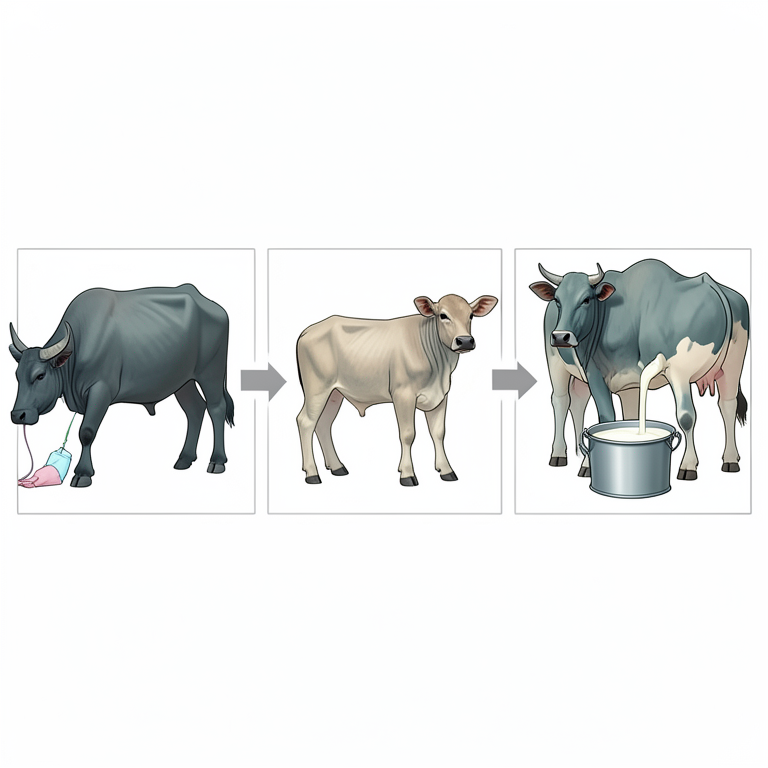
Economic Impact Cycle of FTAI
AI-generated conceptual illustration (water buffaloes). It explains the idea and does not show study data.
View source evidence ↗Introduction
Fixed-Timed Artificial Insemination (FTAI) has emerged as a pivotal reproductive technology in the livestock industry, particularly in buffalo farming. This method allows for the synchronization of estrus cycles, enabling farmers to breed their animals at a predetermined time without the need for heat detection. The economic significance of FTAI in buffalo is multifaceted, impacting productivity, profitability, and genetic improvement. Nowadays, the fixed time artificial insemination may be utilized throughout the year, in order to schedule efficiently the conception and the calving period. Improvement of the FTAI protocol by incorporating ultrasound scanning and intracornual AI was performed to reduce waste and maximize the effectiveness of the OvSynch hormone therapy. The efficiency of the ovarian response was achieved through a careful gynecological selection of female heifers and bio-stimulation with bulls (Stefan Gregore, 2023) [17] . Buffalo has a significant role in the agricultural economy of many developing countries by providing milk, meat and draught power. The buffalos can utilize poorer quality roughages, adapt to harsher environments and are more resistant to several bovine tropical diseases. Despite these merits, buffalo have relatively poor reproductive efficiency irrespective of their location throughout the world. Buffalo exhibit many of the known reproductive disorders including delayed onset of puberty, poor oestrus expression, longer postpartum ovarian quiescence, and most importantly lowered conception rates particularly when bred artificially (Warriach et al., 2015) [18] . Assisted reproduction can be considered an enabling technology that allows the livestock industries to achieve faster rates of genetic gain by making greater use of individual males and females with commercially important traits. Buffalo is a multipurpose domestic animal has extraordinary capacity utilization of less digestible feeds (straw, sugar cane wastes, crop residues etc.) helps the livelihood of people by providing excellent quality food milk and meat. Buffaloes are economically and culturally important livestock species especially in developing countries (Hagos and Mokhtar, 2015) [9] .
International Journal of Agriculture and Food Science https://www.agriculturaljournals.com
The water buffalo is the second most important species in the world in terms of milk production, after dairy cows (Coroian et al., 2013) [20] and good source of milk and meat in all over the world. Comparing to cow, buffalo milk is higher in protein, fat, lactose and energy. The Ovsynch protocol effectively synchronized estrus in indigenous river type buffaloes with a reasonable conception rates after FTAI. Estrus synchronization and FTAI could be applied for effective breeding program of buffalo in Bangladesh, though further studies are needed to increase the conception rate. (Rabidas, Susanto and Gofur, Md (2017) [24] .
Hormonal Protocols
Hormonal synchronization of estrus and AI technologies are crucial reproductive technologies for buffalo propagation.
The reproductive biotechnology-AI has had such a massive and significant impact on herds' genetic progress and technological transformation. But its widespread use in the dairy industry and water buffalo industry remains limited due to unique characteristics and differences in buffalo reproductive biology.
Study of different hormonal treatments (GnRH, PGF2α, progesterone) used to synchronize estrus in buffalo.
Synchronizing estrus and ovulation in buffalo using timed inseminations (TAI) protocols circumvents the limitations associated with estrus detection. Spontaneous estrus in buffalo may achieve more conception rate on insemination than those subjected to synchronization of estrus and timed insemination (TAI). The advantages of insemination following synchronization programs include higher detection rates combined with decreased embryonic losses and reduction in days open. A synchonization programme should ensure control of estrus cycle which entirely depends on ovarian status of animals before starting any protocol. Estrus induction protocols using various hormones such as gonadotropin-releasing hormone (GnRH), progesterone (CIDR, Crestar), estradiol, pregnant mare serum gonadotropin (PMSG), and prostaglandins associated with fixed-time artificial insemination (FTAI) have been tried for the treatment of anestrus with variable success rates. (L Kumar, 2016) [12] Estrus synchronization in buffaloes Satisfactory results have been achieved when estrus cycles were synchronised on the basis of manipulation of ovarian activity and prediction of time of ovulation in cattle. Such manipulation and prediction could be possible by controlling the estrus cycle in buffaloes which has already been reviewed by previous studies (Perera, 2011) [14] . The estrus cycle may be controlled by either controlling the luteal phase or follicular phase such as follicular development and ovulation The cycle duration of estrus ranges from 16 to 33 days, with the highest concentration between 21 and 24 days. Water buffalo have a shorter duration of heat only 8 to 32 hours compared to cattle, with less pronounced heat symptoms (Drost, 2007) [7] . The buffalo even exhibit nocturnal sexual behavior, with little or rare homosexual activity and slight mucus discharge, making it difficult to identify females in heat. This results in a high silent ovulation rate (Perera, 2008) [13] . A secondary estrus sign, tail curling when exerting pressure on the pelvic area, is present in this species, which could be used in heat detection programs.
Buffaloes are short-daylight seasonal polyestrous animals, but can reproduce throughout the year under certain conditions (Perera, 2011) [14] . Factors such as rainfall and availability of forage influence the cyclical reproductive pattern
Economic Benefits
Increased Reproductive Efficiency: FTAI enhances the reproductive efficiency of buffalo by reducing the time and labor associated with estrus detection. Studies have shown that FTAI can lead to higher conception rates and shorter calving intervals. This efficiency translates into more calves produced per breeding season, directly influencing milk and meat production (Praveen et al., 2024) [23] .
The Fixed-Time Artificial Insemination (FTAI) is advantages to the buffalo breeders because it reduces the time and labor for detection of estrous and can introduce the superior genes from bull. This technique was introduced in Philippines in 2017 (Atabay et al., 2017) [1] , which greatly improve the artificial insemination efficiency and conception in buffalo.
Cost-Effectiveness: By streamlining the breeding process, FTAI reduces costs related to labor and management. Farmers can allocate resources more effectively, leading to overall cost savings. According to Singh et al. (2019) [6] , the implementation of FTAI in buffalo herds resulted in a significant reduction in breeding costs compared to traditional methods.
Genetic Improvement: FTAI facilitates the use of superior genetics by allowing the introduction of high-quality semen from genetically elite bulls. This practice can enhance milk yield and disease resistance in subsequent generations, providing long-term economic benefits (Kumar et al., 2019) [6] . The ability to access a wider genetic pool contributes to overall herd improvement.
Market Competitiveness:
As global demand for dairy products increases, farmers utilizing FTAI can improve their competitiveness in the market. Enhanced productivity leads to higher output, enabling farmers to meet market demands more effectively (Ranjan et al., 2021) [25] . This is particularly important in regions where buffalo farming is a significant economic activity.
Risk Mitigation: FTAI can help mitigate risks associated with reproductive failures and seasonal breeding challenges. By ensuring more predictable breeding outcomes, farmers can stabilize their production cycles and financial planning (Patel et al., 2022) [26] .
Challenges and Considerations While FTAI presents numerous economic advantages, challenges remain. The initial investment in training, technology, and veterinary services can be significant. Additionally, successful implementation requires careful management of nutrition and health to ensure optimal reproductive performance (Singh et al., 2019) [6] Discussion of the Review The economic significance of Fixed-Time Artificial Insemination (FTAI) in buffalo is a multifaceted topic that encompasses various aspects of livestock production, reproductive efficiency, and economic viability.
1. Increased Reproductive Efficiency: FTAI allows for the synchronization of estrus in buffalo, enabling multiple animals to be inseminated within a short time frame. This increases the efficiency of breeding programs by reducing the time between calving intervals, which can lead to Higher Calving Rates. 2. Genetic Improvement: FTAI facilitates the use of superior genetics through the introduction of highquality semen from selected bulls. This can lead to: Enhanced Genetic Diversity: Access to a broader genetic pool, which is particularly beneficial in improving traits such as milk production, growth rates, and disease resistance and Faster Genetic Progress: The ability to rapidly disseminate desirable traits throughout the herd.
References
26 in the original paper- Atabay EP, Atabay EC, Maylem ERS, Flores EB, Tilwani RC, Sarabia AS. Progesterone based Ovulation Synchronization with human Chorionic Gonadotrophin Increased Fertility Rates in Dairy Buffaloes. Buffalo Bulletin. (in press); 2017.
- Ali SFhman. Ovarian dynamics and milk progesterone concentrations in cycling and non-cycling buffalo-cows (Bubalus bubalis) during Ovsynch program. Theriogenology. 2007;68(1):23-28.
- Baruselli PS, Carvalho NAT, Hernandez CHP, Amaral R, Nichi M. Synchronization of ovulation for timed artificial insemination during the off-breeding season in the buffalo. In: Proceedings of the 1st Buffalo Symposium of Americas; 2002; 418-420.
- Chaikhun T, Promdireg A, Suthikrai W. Hormonal profile and ovulation time in Thai swamp buffaloes after ovulation synchronization program. Revista Veterina. 2010;21:902-904.
- De Rensis F, López-Gatius F. Protocols for synchronizing estrus and ovulation in buffalo (Bubalus bubalis): A review. Theriogenology. 2007;67:209-216.
- Dhaka AP, Phogat JB, Singh S, Pandey AK, Sharma K, Kumari S. Efficacy of modified co-synch plus protocol with or without progesterone device for estrus induction and conception rate in Murrah buffaloes under field conditions during summer season. Buffalo Bulletin. 2019;38(2):353-361.
- Drost M. Advanced reproductive technology in the water buffalo. Theriogenology. 2007;68(3):450-453.
- El-Wishy AB. The postpartum buffalo: II. Acyclicity and anestrus. Animal Reproduction Science. 2007;97(3-4):216-236.
- Geary TW, Whittier JC. Effects of a timed insemination following synchronization of ovulation using the Ovsynch or CO-synch protocol in beef cows. The Professional Animal Scientist. 1998;14:217-220.
- Gimenes LU, Sa Filho MF, Madure EH, Trinca LA, Barros CM, Baruselli PS. Estudo ultrasonografico da divergbncia folicular em novilhas Bos indicus. Acta Scientiae Veterinariae. 2005;33(Supplement):210.
- Hoque MN, Talukder AK, Akter M, Shamsuddin M. Evaluation of ovsynch protocols for timed artificial insemination in water buffaloes in Bangladesh. Turkish Journal of Veterinary and Animal Sciences. 2014;38(4):418-424.
- Kumar L, Phogat JB, Pandey AK, Phulia SK, Kumar S, Dalal J. Estrus induction and fertility response following different treatment protocols in Murrah buffaloes under field conditions. Veterinary World. 2016;9(12):1466-1470.
- Perera BM. Reproduction in domestic buffalo. Reproduction in Domestic Animals. 2008;43(Suppl 2):200-206.
- Perera BM. Reproductive cycles of buffalo. Animal Reproduction Science. 2011;124(3-4):194-199.
- Rigos LM, Atabay EC, Atabay EP, Apolinario JPR. Determination of pregnancy associated-glycoproteins (PAGs) during and post pregnancy in riverine buffaloes (Bubalus bubalis Linn). 2022.
- Rathore R, Sharma RK, Phulia SK, Mudgal V, Jerome A, Ghuman SPS, et al. Comparative efficacy of oestrus synchronization protocols in buffalo (Bubalus bubalis). Tropical Animal Health and Production. 2017;49(7):1377-1382.
- Stefan Gregore. Upgrading the fixed-time artificial insemination (FTAI) protocol in Romanian buffaloes. 2023.
- Warriach et al. A review of recent developments in buffalo reproduction; 2015.
- Hagos A, Mokhtar K. A review on strategies for sustainable buffalo milk production in Egypt. Journal of Biology and Agriculture Healthcare. 2015;5:63-67.
- Coroian A, Erler S, Matea CT, Mireșan V, Răducu C, Bele C, Coroian CO. Seasonal changes of buffalo colostrum: physicochemical parameters, fatty acids and cholesterol variation. Chemistry Central Journal. 2013;7(1):40.
- Perera BMAO. Reproductive cycles of buffalo. Animal Reproduction Science. 2011;124(3-4):194-199. DOI: 10.1016/j.anireprosci.2010.08.022.
- Kumar A, et al. Genetic improvement through artificial insemination in buffalo. Livestock Science. 2019.
- Praveen KS, Radhika V, Chandrika T, Srihari J, Manoranjan I, Srikanth NR, Rao MM. Artificial insemination in cattle and buffalo: An update. Int J Vet Sci Anim Husbandry. 2024;9(5):221-225.
- Rabidas S, Gofur MD. Synchronization of Estrus Using Ovsynch Protocol and Fixed Timed Artificial Insemination (FTAI) in Indigenous Dairy Buffaloes: An Effective Buffalo Breeding Program in Bangladesh. Asian Journal of Biology. 2017;2(1):1-8.
- Ranjan R, et al. Market implications of enhanced productivity through FTAI in buffalo. Agricultural Economics; 2021.
- Patel M, et al. Challenges and opportunities in the implementation of fixed-timed artificial insemination. Veterinary World; 2022.