
Research article · 2025 · Full text
International Journal of Veterinary Sciences and Animal HusbandryModern biosecurity measures in pig farming
Volume 10(1) · Pages 165–172 · DOI: 10.22271/veterinary.2025.v10.i1c.2017 ↗
Research areasAnimal Disease Management and Epidemiology
Abstract
Author-writtenBiosecurity is a crucial aspect of managing animal disease risks in pig farming, where the importance of biosecurity measures has become increasingly evident especially as the global pork industry faces increasing challenges from infectious diseases like African swine fever and porcine reproductive and respiratory syndrome. This paper highlights the critical role of biosecurity in preventing disease outbreaks, protecting herd health, and ensuring sustainable pork production while addressing the economic implications of biosecurity measures, as they directly impact the profitability of pig farms. Additionally, it discusses the challenges and strategies for implementing biosecurity in large-scale farming systems, where animals have outdoor access, increasing susceptibility to wildlife-borne diseases. The review further explores internal and external biosecurity measures, including visitor and worker protocols, transportation hygiene, quarantine measures, animal movement and segregation, the importance of clean food, water, bedding, cleaning and disinfection, boot baths, waste management and proper disposal of dead animals are essential components of a comprehensive biosecurity program. In addition, it highlights, the emerging technologies in biosecurity, such as using sensors and algorithms, smart feeding and watering systems, and RFID tags to monitor individual feeding and drinking behaviours, which are essential components of a comprehensive biosecurity program. The primary goal of these biosecurity practices is to protect animal health, ensure the sustainability of pig farming, and safeguard public health within the One Health framework.
Summary
Source-checkedPlain-language reading of the full paper, prepared with AI and checked against the text. Each point links to the authors' own words.
Why it matters
- Biosecurity is essential for managing disease risks in pig farming, particularly as the global industry faces threats from diseases such as African swine fever and porcine reproductive and respiratory syndrome. View evidence ↗
- Pigs are economically valuable livestock due to their high fecundity, early maturity, short generation intervals, and efficient feed conversion. View evidence ↗
- The high density of animal production sites and their interacting structures contribute to the global spread of infectious diseases, leading to morbidity, death, and economic loss. View evidence ↗
The question
- The paper aims to highlight how biosecurity prevents disease outbreaks and protects herd health to ensure sustainable pork production and farm profitability. View evidence ↗
What they did
- The review examines a comprehensive range of biosecurity measures, categorized into internal and external strategies, covering everything from worker protocols and transportation to waste management. View evidence ↗
- The authors analyze the specific challenges of implementing biosecurity in large-scale systems where pigs have outdoor access and are more susceptible to wildlife-borne diseases. View evidence ↗
What they found
- The emergence of PEDV in the US in May 2013 led to the death of approximately 8 million pigs and economic losses exceeding 1.8 billion US dollars. View evidence ↗
- In May 2020, 11 outbreaks of African Swine Fever (ASF) in Assam and Arunachal Pradesh, India, resulted in the death of 3,701 pigs. View evidence ↗
- Certain pathogens can spread via air over significant distances, with foot and mouth disease virus reaching up to 20 km and others like PRRSV2 reaching up to 9 km. View evidence ↗
- Cleaning alone reduces bacteria on concrete surfaces by approximately 90%, but adding disinfection can increase this reduction to 96%. View evidence ↗
- Organic acids (OA) in feed or water lower the pH to 3.8-4.2, which inhibits the growth of most gastrointestinal bacteria while sparing lactobacilli. View evidence ↗
- A study of 20 pig farms found that using ATP monitoring as a hygiene biomarker within customized biosecurity plans significantly reduced the prevalence of certain pathogens. View evidence ↗
What it means
- The authors conclude that comprehensive biosecurity strategies are necessary to protect herds, prevent outbreaks, and maintain the economic viability of pig farming. View evidence ↗
- The authors recommend a combination of continued biosecurity focus, research, technology, and education to ensure a sustainable future for swine agriculture and global food security. View evidence ↗
Visual summary
1 visualsIllustrations explain the paper; they do not show study data.
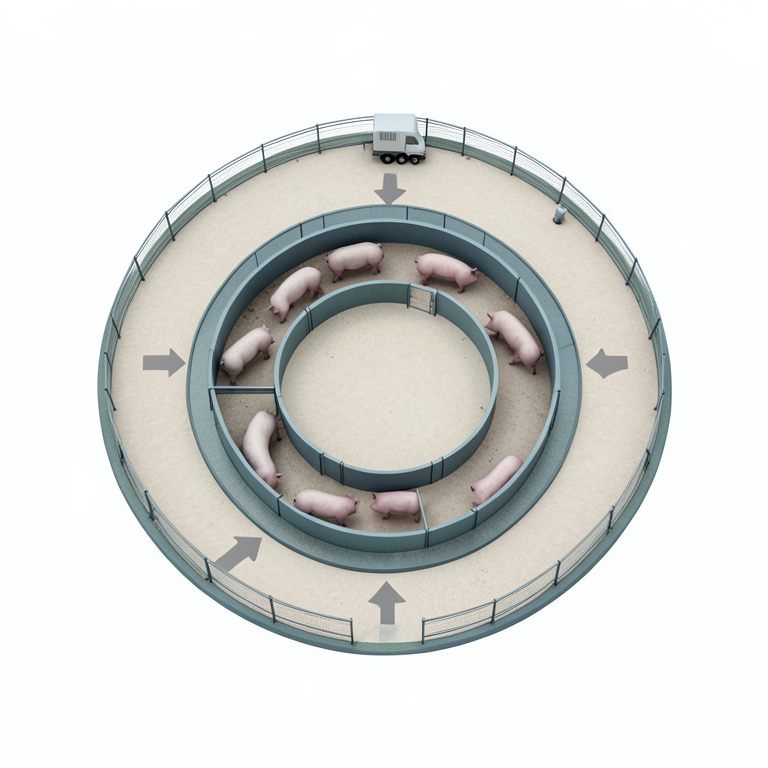
Biosecurity Layers
AI-generated conceptual illustration (domestic pigs in a farm facility). It explains the idea and does not show study data.
View source evidence ↗Introduction
Biosecurity is described as "a set of management and physical measures designed to reduce the risk of introduction, establishment, and spread of animal diseases, infections, or infestations to, farm, and within an animal population" in the Terrestrial Animal Health Code by the World Organization for Animal Health [OIE] [1] . According to the U.S. Association of State Departments of Agriculture, "biosecurity" is "the vital work of strategy, efforts, and planning to protect human, animal, and environmental health against biological threats." It became popular in the 1980s about animal health and production systems [2] . Infectious animal diseases that cause morbidity, death, and economic losses globally are fueled by the high density of animal production locations and their associated interacting structures [3] . Several previous instances of disease spread resulting from inadequate biosecurity measures have been documented, including the foot-and-mouth disease [FMD] epidemic in the United Kingdom in 2001 [4] , the high pathogenic strain of porcine reproductive and respiratory syndrome [HP-PRRS] [5] , and porcine epidemic diarrhoea [PED] [6] . African swine fever in India in 2020 [7] . Therefore, it is crucial to continue highlighting the role that biosecurity plays in the prevention of illness. The importance of pig health and its connection to biosecurity has come into more prominence in swine farms in recent years as a result of the emergence and reemergence of hard-to-control illnesses involving African swine fever and porcine epidemic diarrhoea [8] . "At the farm level, biosecurity can be categorized into External biosecurity, which focuses on reducing the risk of entry of new pathogens, and Internal biosecurity, which focuses on lowering the risk of internal dissemination of pathogens" [2] . Recent research has shown a positive relationship between biosecurity and farm profitability, greater consumer acceptability of quality and safety of food supply, healthy animals that are more productive improved animal welfare, and improved efficiency and productivity [9] .
Alternatively, as part of the One Health concept biosecurity can be divided into five stages: B1, Bio-Exclusion: Reducing the Risk of Introduction; B2, Bio-Compartmentation: Reducing the Spread Within the Same Facility [Intraherd Transmission]; B3, Bio-Containment: Reducing the Spread to Other Animal Facilities [Inter-Herd Transmission]; B4, Bio-Prevention: Reducing the Risk of Human Contamination; and B5, Bio-Preservation: Reducing the Risk of Environmental Bio contamination [8] . According to numerous studies, technical aspects of livestock production, such as growth or feed conversion rates, and the level of biosecurity are correlated. Additionally, biosecurity can at least preemptively assist in reducing the use of antimicrobial agents in animal husbandry [10] .
Economic importance of biosecurity
Pigs are significant among livestock animals since they are raised by socioeconomically underprivileged individuals. Pigs have a greater potential than other livestock species to help farmers see a faster return on their investment because of some inborn characteristics, including high fecundity, improved feed conversion efficiency, early maturity, and short generation intervals [11] . If pigs' health is properly cared for, pig farming can be quite profitable. However, if infections are not successfully prevented and controlled, it can result in significant losses. In pig farms, maintaining appropriate biosecurity is crucial for preventing diseases and safeguarding the animals' well-being. Recently, cleanliness practices have become more significant as a biosecurity tool on swine farm sites [12] . Another way for farmers to increase sustainability and long-term profitability is to enhance biosecurity. Implementing efficient biosecurity measures protects animal health and adds to pork safety, increasing customer confidence and market competitiveness [13] . Over the past 30 years, a series of infectious disease outbreaks have had severe consequences on many industries, but pig producers have likely suffered more than other industries. Many of these have been extremely contagious viral illnesses, such as pig respiratory and reproductive syndrome [PRRS], swine influenza, Aujeszky's disease, transmissible gastroenteritis [TGE], Foot-and-mouth disease [FMD] and classical swine fever [CSF] The entire viability of the pig business has been threatened by post-weaning multi-systemic wasting syndrome [PMWS], which has been related to porcine circovirus [PCV-2] infection. When introduced into unprepared herds, even long-established endemic diseases like enzootic pneumonia [EP] and swine dysentery [SD] can result in significant losses [14] . The porcine epidemic diarrhoea virus [PEDV], which has been responsible for enormous economic losses to the swine sector due to high piglet mortality rates, first emerged in the US in May 2013.PEDV caused the deaths of about 8 million pigs, which resulted in an industry-wide economic loss of more than 1.8 billion US dollars [15] . Similarly, the OIE confirmed 11 outbreaks in the Indian states of Assam and Arunachal Pradesh on May 21, 2020, where 3701 pigs perished from ASF [7] . Farmers lost thousands of pigs in this process and animals that died from disease. As a result, pig farming in both states became chaotic and many farmers lost their jobs. One of the most crucial parts of livestock production nowadays is disease prevention, as the spread of ASFV has been stopped by isolation, mobility limitations, and sanitation, cleaning and disinfection [16] .
Extensive rearing
Strict biosecurity protocols are more challenging to implement in alternative farms where animals have external access. These animals are significantly more likely to be exposed to various infections circulating in wildlife, such as the African swine fever virus, which is much higher [17] . Of course, the biggest problem with raising pigs outside is their interaction with wildlife, particularly wild boars. Infections such as brucellosis, classical swine fever [18] , African swine fever [19] , and Aujeszky's disease [20] are thought to be contracted through contact with wildlife. Pigs may also come into contact with other animals that carry diseases. Certain leptospiral serovars from several wild species, such as hedgehogs, foxes, and rats, are invariably exposed to pigs raised outside [21] . Several pathogens that can affect pigs can be found in rodents, including Brachyspira hyodysenteriae, Lawsonia intracellularis, [21] species of Salmonella and Yersinia, protozoa like toxoplasma gondii, helminths like Trichinella spp. and Echinococcus multilocularis, and Erysipelothrix rhusiopathiae. [22] Another vector that is particularly challenging to manage in extensive systems is birds. For instance, they might be involved in the transmission of avian tuberculosis, salmonellosis, or transmissible gastroenteritis [21] . Last but not least, animals raised outside are more approachable to inquisitive visitors, which promotes the transmission of zoonotic diseases [23] . Fencing is strongly advised, if not mandatory, to minimise contact between wildlife and domestic pigs raised with outdoor access [24] . The most crucial precautions for extensive farms include fencing to prevent wild suids from entering the agricultural area and coming into direct contact between farmed and wild suids. These precautions apply to all production systems, not only extensive ones, as this kind of interaction can occur in farms where animals are maintained in outside runs or in buildings where there are one or more exterior wall portions open. [23] Strategies to improve bio-security in pig farms Farm biosafety strategies are a collection of precautions and guidelines that, when established in place, may decrease the danger of disease occurrence and spread on farms [25] . To achieve high levels of biosecurity and to manage or avoid diseases, farmers must use the necessary technologies and strategies [26] .
Bio-Exclusion
All actions performed to prevent the entry of infectious agents into farms and the prevention dissemination of infectious agents from farms [bio-containment] are collectively referred to as external biosecurity or bio-exclusion.
Visitors and Workers
A pig unit may also risk contacting a disease from visitors to livestock enterprises, such as veterinarians, livestock consultants, inseminators, and feed suppliers [27,13,28] . A significant source of disease transmission during outbreaks of highly contagious diseases is people entering the swine farm, both as workers and visitors [12] . Various pig diseases, including Salmonella, PRRSV, PED, TGEV and Brachyspira can be transmitted by fomites carried by humans [boots, garments, etc.] or even by the people themselves through contaminated skin [13,[29][30][31] .
The key measures to reduce these potential risks are reviewed as follows:
Only necessary visitors should be permitted to enter the area or buildings housing the animals [28] , and to reduce the risk, these visitors should be provided with protective clothing and footwear. Additionally, boots should be cleaned with a disinfecting solution after scrubbing off any visible dirt at the end of the visit. Working staff can reduce or even prevent the spread of pathogens by providing on-farm laundry facilities for all protective clothing worn on the farm. Finally, hands should be washed before and after handling sick or young animals [27,28,32] . Setting up a distinct boundary between clean and dirty areas is a crucial step in limiting the number of visitors and vehicles on the farm [33] . The 'dirty road' should always be used for all incoming and outgoing traffic that serves numerous businesses [such as feed, liquid manure, external animal transportation, etc. Deliveries of safe goods and animals are permitted on the "clean road," but only in trucks thoroughly washed and sanitized whereas, liquid manure should be transported through the dirty road which should also provide reasonably simple access for visitors, suppliers, and customers [13] . Regular training on disease prevention techniques, such as cleanliness and disease security, should be provided to staff members. When teaching recruited staff fundamental hygiene and disinfection techniques, it's important to take into account the prevention of the infectious agent's introduction and spread from both external and internal sources [34] .
Transportation
Vehicles can have infections in their cabins, on their surfaces, and in their tyres, which serve as fomites to spread disease. Research has shown that bacteria can endure for long periods on vehicle surfaces, which raises the possibility of crosscontamination between farms [35,36] . Therefore, reducing this risk requires effective vehicle biosecurity controls. Moreover, the spread of diseases in pig farms can be significantly facilitated by vehicles used for transporting animals between farms or to the abattoir, as well as by the drivers of these vehicles [37] . A truck should not pick up animals from various farms since it increases the danger of infection transmission. As a result, determining a list of "permitted transports and permissible actions" for every vehicle and planning its route plans accordingly would be the initial step This is especially critical if the truck has come from a location where various animals have mixed, such as auction markets or slaughter factories [8,38] . Additionally, transporting finishers to slaughter in the morning and weakness in the afternoon does not provide appropriate cleaning and disinfection time between journeys. Implementing a three-week batch weaning strategy lowers the need for frequent pig movement and supports a sanitary approach [all-in, all-out] [14] . Consequently, livestock trucks should be maintained clean, and all visitors and drivers should wear clean footwear [38] . Cleaning and disinfecting trucks is challenging in practice and requires careful planning and execution [39] . Most people agree that the following actions must be followed to make this cleaning and disinfection successful: removing of organic debris, washing with hot, soapy water, or descaling, drying, and finally disinfecting with the appropriate solutions [8,40] . However, trucks can take days to dry naturally throughout winter, especially in cool climates. Alternatives like air drying or heated boxes have been developed in response to this [41] . Finally, implementing an external parking area is necessary for any operations [Such as farm visits by veterinarians] that do not necessitate vehicle entry [42] .
Quarantine measures
Direct contact is one of the most efficient ways that pathogens spread among infected and susceptible organisms [43] . The term "quarantine" refers to the temporary isolation of animals before they are brought into a herd or area for a specific period. The total duration of the quarantine relies on three factors: a] the time it takes for the diseases on our "avoid" list to incubate; b] how long they are contagious; and c] how long it takes to make a diagnosis. If a test for unwanted diseases comes back positive, it is also essential to prepare a backup plan [13] . As biocontention units, quarantines need to be built to prevent the spread of any pathogen that the newly purchased animals might have carried with them. Consequently, it is necessary to cut off the direct connection between the main farm and the quarantine unit [8] . Most frequently, it is stated that quarantines must be situated not less than 1000 meters from any other pig unit referring to their location. This is regarded as the ideal distance for the majority of pathogens [But not all] that are transmitted by air, as well as those that are transmitted by rodents, flies, etc., [45] . Nevertheless, some viral pathogens, including Aujeszky's disease virus, foot and mouth disease virus, porcine reproductive respiratory virus 2 [PRRSV2], and bacteria, including Mycoplasma hyopneumoniae, have been reported to be transmitted or may be transmitted by air over longer distances [up to 20 km for foot and mouth disease virus and 9 km for Aujeszky's disease virus, PRRSV2, or M. hyopneumoniae [99,100] . Animals should have regular examinations to check for any sickness or unusual behaviour as well as to screen for serious diseases. At least two weeks before their discharge from isolation, the animals should be vaccinated [29] .
Internal biosecurity measures
Biocontainment or internal biosecurity, which has been defined as a set of management practices that prevent the spread of infectious agents between animal groups on a farm or the management practices intended to prevent the infectious agent from leaving the farm, is a crucial element of farm-level biosecurity. The best way to maintain biocontainment integrity is to avoid direct and indirect contact between groups of animals, especially high-risk groups [44] .
Animal flow and segregation
Managing animal flow and segregation is one of the most important parts of internal biosecurity. Specifically, these approaches entail organizing pig mobility and housing in such a way that disease transmission is reduced. For instance, the strict adoption of all-in/all-out [AIAO] management procedures is an effective way to stop disease transmission. AIAO systems ensure that pigs are closely matched by age and progress through production phases in the same groups, lowering disease spread and enhancing animal performance [46] . Moreover, this approach has been shown to effectively minimise the circulation of pathogens and eliminate the need for multiple drug applications on farms [8] . Another key part of managing animal flow is to separate pigs based on age. Numerous pathogens can be found in sows, and early weaning techniques were created to stop some diseases from being passed from mother to offspring [47,48] . However, early weaning can harm pig welfare and is not authorised in some areas [8] . Studies have reported that the primary methods of preventing porcine pleuropneumonia are internal biosecurity measures to break the chain of infection, such as age-and litter-segregated rearing, which should be practised [49,50] .
Feed, Water and Bedding
Feed and water can become contaminated and contribute to maintaining hazardous or endemic diseases. Particular care must be taken when using food waste to feed pigs because some bacteria can persist in tainted meat waste [which might include processed pork products like dry cured meats that have not been cooked]. For various pandemic diseases, such as FMD, hog cholera, and African swine fever, the risks of pigs having access to [or ingesting] uncooked meat or food products [i.e., swill] have been emphasised [51][52][53] . In consequence, to reduce these disease risks, swill feeding has been banned in several countries. This risk can be kept below critical status by reducing the possibility that a disease would enter the feed supply chain, such as by keeping high-risk ingredients out of facilities, expanding biosecurity to mills, and considering proactive mitigation measures. [54,55] The development of "feed quarantine" storage facilities for incoming products and the scheduling of a validated sampling procedure for ingredients with higher risk are a few of these. [56] According to numerous studies, adding Chemical feed additives to feedstuff has been proven to be effective at reducing the risk of both viruses and bacteria. [57,58] Organic acids like formic, lactic, or propionic are effective additions, but fatty acids and essential oils have also been effective against specific pathogens. [59] With organic acids [OA], salmonella can be reduced and pig growth can be improved. The OA lowers pH to 3.8-4.2 when administered in water and/or feed, altering or directly preventing the growth of most gastrointestinal bacteria except lactobacilli. OA additionally controls the intestinal fermentation patterns of feed and creates a better gastrointestinal environment with improved feed utilization and growth. [60][61][62] . Adding formaldehyde was another strategy that has been demonstrated to effectively reduce the risk of PEDV and Salmonella [63,64] . Pigs obtain their water mostly through three sources: feed, drinking, and metabolism. Poor water availability has been linked to reduced feed intake, slower growth rates, and urinary tract infections in sows [66] . Moreover, improper cleaning of drinkers leads to a high bacterial load in drinking water samples intended for livestock. Contaminated drinkers and feeders can easily transmit pathogenic bacteria from animals of a previous batch to newly arriving pigs through water or feed consumption [97] . Leptospirosis is a condition that has historically been linked to water contamination. Water can get contaminated with leptospira from rats and other animals, and even rats can be consumed by pigs. Additionally, the majority of diseases with a fecal-oral transmission cycle can travel through water. [13] Therefore, the bacteriological quality of the water should be checked regularly, at least once a year [67] Regular cleaning and disinfection of water systems, tanks, and pipelines are necessary since biofilm can be a source of bacteria for pigs [68] . Similar to feed and water, bedding material for pigs in confinement can introduce ASFV into a healthy herd. Straws, sawdust, and wood shavings have all been shown to transmit other pathogens just as well. It's essential to take into account the risks associated with straw, shavings, and other bedding materials acting as fomites [54] . These materials must not originate from places where animals or faeces may have been present, and they must be stored in covered areas away from the reach of birds and other pests [69] .
Cleaning and Disinfection
Cleaning and disinfection are multi-step procedures that include clearing the area of any visible debris, cleaning it with a detergent solution, rinsing it off, and then applying an appropriate disinfectant at the right dilution for the suggested amount of time. While cleaning can lower the amount of bacteria on a concrete surface by about 90%, the bacterial load can decrease by up to 96% when disinfection is applied afterwards [70] . Buildings, barns, tools, clothes, and footwear that have come into touch with pigs must be cleansed and disinfected [32] . Separate cleaning and disinfection should be performed on all removable equipment, including feeders, drinkers, and other loose equipment [71] . The best way to clean and disinfect an area is to work your way up and down the property, from clean to dirty. To reduce the possibility of contaminating previously cleaned areas, it is crucial to include the entire stable in the cleaning and disinfection process, including the ceiling, walls, floor, water pipes, ventilation system, manure removal system, and all current equipment [72] . Seven steps make up the complete cleaning and disinfection protocol: dry cleaning, wet cleaning, rinsing, drying, disinfecting, drying, and assessing the efficiency of the procedure [72,73] .
Boot baths
Boot bath is an essential biosecurity tool to stop the growth and spread of bacteria that cause disease. Wet, dirty, or contaminated surfaces are breeding grounds for microorganisms. The amount of pathogens in boots is not decreased by simply stepping on a boot bath and leaving the faeces in them before soaking them in the disinfectant solution [74,75] . For this reason, it is advised to wash the boots with a brush and soapy water first. Then, after the boot is clean, it should be submerged in the disinfection solution for at least five minutes, making sure that at least 15 centimetres of the boot sole are covered [13] . However, it is not very practical, though, to have to stand in a disinfectant bath for a long time before moving on to another sector. By keeping an extra pair of boots available at every disinfection bath, one can prevent this difficulty by keeping the other pairs of boots in the disinfection solution while the other pair is being utilised. Additionally, the presence of foot baths highlights the significance of biosecurity on farm grounds for both personnel and visitors [19] .
Dead animal disposal
The disposal of carcasses on pig farms is an important part of biosecurity control since it prevents disease spread and maintains livestock health. Dead animals should be removed and disposed of by burning, burial, or composting to reduce disease survival and prevent access by scavengers [73] .
However, Groundwater contamination, air pollution, and high costs make traditional procedures like burial, pit disposal, landfilling, burning, and rendering unsuitable for the environment [74] . The disposal of carcasses in piggeries has evolved into an increasingly complex and ecologically meticulous process. Through composting, dead animals naturally break down into organic materials that can be applied as fertilizer. Incineration, on the other hand, is the high-temperature burning of carcasses to reduce them to ash. [75] .
Manure disposal and waste management
Manure disposal and waste management are critical aspects of biosecurity in swine farms, where pig farming produces a significant amount of organic waste, including urine, faeces, wastewater from farm maintenance and cleaning, animal food waste, and animal mortality such as viscera, placenta, stillbirths, corpses, and other body fragments; if not properly managed, this waste poses risks to the environment, human and animal health [76] . Agricultural waste and by-products can be transformed into valuable resources through intensified conversion processes, leading to the production of valueadded products such as bioenergy, bio fertilizers, biomaterials, and biomolecules, depending on the volume of biomass available [84] . It has been recommended that manure from other swine facilities not be dispersed, sprayed, or injected within 3.2 km of pig farms due to the increased danger involved if the manure originates from other pig farms [77] . Therefore, improper waste management, including collection, storage, and disposal, can constitute a health risk. Manure may include zoonotic diseases that can be transmitted through food and water for human use and other transmission routes [78,79,80] . Certain methods of managing manure in pig production typically involve storing liquid manure in tanks for several months in the case of a deep pit and 2-8 weeks in the case of a pull plug. Other methods use manure in solid forms, like bedding various materials for disposal, corresponding composting, and solid-liquid separation, which uses the waste completely [81] . However, there are environmentally friendly substitutes, such as composting, which the FAO describes as "the mixing of decomposing organic matter under aerobic conditions used to improve soil structure and provide nutrients" [82] . It is an aerobic process in which microbes convert organic material into more stable and usable chemicals for soil and crops [83] .
Biosecurity technologies in swine farming
Technological advancements have greatly strengthened biosecurity in pig farming, improving disease prevention, early detection, and farm management efficiency. Increasingly, modern farms are adopting automated systems, sensors, and data analytics to safeguard herds from infectious diseases and minimize economic losses. Similar technological applications have been evaluated in human healthcare environments, specifically through the use of sensors to track hand washing hygiene among farm workers [90,95] . Likewise, various sensors, including cameras, microphones, and accelerometers, have been adapted for use in production settings to gather data. This data is then analyzed using sophisticated algorithms in computational software, providing valuable insights to farm personnel [86] . In a related context, continuous monitoring of animals in commercial settings is essential for mitigating risks in human food production, such as declining livestock performance and health. Precision Livestock Farming [PLF] addresses this need by using modern technologies like sensors and algorithms to automatically gather data, enabling optimized management practices [89,90] . Some examples of precision in pig production include electronic feeders that track animals' feed intake, [85] smart feeding and watering systems that help minimize contamination by reducing human contact, [87] and RFID tags monitoring individual feeding and drinking behaviours, all crucial for swine health and welfare [88] . Advancements such as sensors that detect estrus behaviour in sows to optimize the timing of insemination [91] , real-time sound analysis for monitoring animal health, [92] and 24/7 environmental monitoring sensors in stables have significantly improved farming efficiency [93] . Moreover, the integration of technologies like geofencing and electronic sow feeder systems [89] in swine production could further enhance the monitoring of biosecurity protocols, allowing for better oversight of both direct and indirect connections between production systems [96] . These advanced tools contribute to precise real-time monitoring and prompt notifications, thereby boosting production efficiency and selfsufficiency while also improving animal welfare. Building on these innovations, biosecurity protocols in pig farming have further advanced through the use of specific tools like Adenosine triphosphate [ATP] monitoring. For instance, in a study conducted on 20 pig farms, implementing customized biosecurity incorporating ATP monitoring as a biomarker for hygiene assessments significantly reduced the prevalence of certain pathogens, underscoring the potential of real-time environmental evaluations to enhance biosecurity measures [84] . In line with these advancements, another innovation is the Biorisk® system by Pig CHAMP Pro Europa, which, instead of focusing on animals, is designed for farm staff. It tracks staff activities on pig farms to ensure proper biosecurity measures are maintained. [94] By implementing these monitoring systems, pig farms can enhance biosecurity compliance, ensuring that workers adhere to hygiene protocols that further protect livestock from potential disease outbreaks.
Conclusion
Biosecurity is a crucial element of modern livestock production. By adopting comprehensive biosecurity strategies, pig farmers can protect their herds, prevent disease outbreaks, and ensure the economic viability of their operations. Continued attention to biosecurity, together with advances in research, technology, and education, will be crucial in managing growing animal health concerns, safeguarding the integrity of the global food supply, and securing a sustainable future for swine agriculture. An investigation into the efficacy of washing trucks following the transportation of pigs-A Salmonella
References
89 in the original paper- Renault V, Humblet MF, Saegerman C. Biosecurity concept: Origins, evolution and perspectives. Animals. 2021;12(1):63. Available from: https://onlinelibrary.wiley.com/doi/full/10.1111/ijcp.1261
- Meyerson LA, Reaser JK. Biosecurity: moving toward a comprehensive approach. BioScience. 2002;52(7):593600.
- Cooper DS, Biondi B. Subclinical thyroid disease. Lancet. 2012;379(9821):1142-54. Available from: https://scihub.st/https://www.thelancet.com/journals/lancet/article/ PIIS0140-6736(11)60276-6/abstract
- Brookes VJ, Jover HM, Holyoake P, Ward MP. Industry opinion on the likely routes of introduction of highly pathogenic porcine reproductive and respiratory syndrome into Australia from south-east Asia. Aust Vet J. 2015;93(1-2):13-19.
- Scott A, McCluskey B, Reid BM, Grear D, Pitcher P, Ramos G, et al. Porcine epidemic diarrhea virus introduction into the United States: Root cause investigation. Prev Vet Med. 2016;123:192-201.
- Wolf VDPJ, Schie VFW, Elbers ARW, Engel B, Heijden VDHMJF, Hunneman WA, Tielen MJM. Epidemiology: administration of acidified drinking water to finishing pigs in order to prevent salmonella infections. Vet Q. 2001;23(3):121-125.
- Patil SS, Suresh KP, Vashist V, Prajapati A, Pattnaik B, Roy P. African swine fever: a permanent threat to Indian pigs. Vet World. 2020;13(10):2275-2285.
- Alarcón LV, Allepuz A, Mateu E. Biosecurity in pig farms: a review. Porcine Health Manag. 2021;7(1):5.
- Laanen M, Persoons D, Ribbens S, Jong DE, Callens B, Strubbe M, et al. Relationship between biosecurity and production/antimicrobial treatment characteristics in pig herds. Vet J. 2013;198(2):508-512.
- Mohakud SS, Hazarika RA, Sonowal S, Bora DP, Talukdar A, Tamuly S, et al. The extent and structure of pig rearing system in urban and peri-urban areas of Guwahati. Infect Ecol Epidemiol. 2020;10(1):1711576.
- Pineda P, Deluque A, Peña M, Diaz OL, Allepuz A, Casal J. Descriptive epidemiology of classical swine fever outbreaks in the period 2013-2018 in Colombia. PLoS One. 2020;15(6):e0234490.
- Dewulf J, Immerseel VF, editors. Biosecurity in animal production and veterinary medicine. CABI, 2019.
- Pritchard G, Dennis I, Waddilove J. Biosecurity: Reducing disease risks to pig breeding herds. In Pract. 2005;27(5):230-237.
- Kim Y, Krishna VD, Torremorell M, Goyal SM, Cheeran MCJ. Stability of porcine epidemic diarrhea virus on fomite materials at different temperatures. Vet Sci. 2018;5(1):21.
- Cappai S, Rolesu S, Coccollone A, Laddomada A, Loi F. Evaluation of biological and socio-economic factors related to persistence of African swine fever in Sardinia. Prev Vet Med. 2018;152:1-11.
- Wormington JD, Golnar A, Poh KC, Kading RC, Martin E, Hamer SA, et al. Risk of African swine fever virus sylvatic establishment and spillover to domestic swine in the United States. Vector-Borne Zoonotic Dis. 2019;19(7):506-511.
- Delsart M, Pol F, Dufour B, Rose N, Fablet C. Pig farming in alternative systems: Strengths and challenges in terms of animal welfare, biosecurity, animal health and pork safety. Agriculture. 2020;10(7):261.
- De L. Agence Nationale de Sécurité Sanitaire de L'alimentation de L'environnement et du Travail. Relatif au Suivi des Teneurs en sel des Principaux Vecteurs Entre, 2003.
- Charrier F, Rossi S, Jori F, Maestrini O, Richomme C, Casabianca F, et al. Aujeszky's disease and hepatitis E viruses transmission between domestic pigs and wild boars in Corsica: Evaluating the importance of wild/domestic interactions and the efficacy of management measures. Front Vet Sci. 2018;5:1.
- Andres VM, Davies RH. Biosecurity measures to control Salmonella and other infectious agents in pig farms: A review. Compr Rev Food Sci Food Saf. 2015;14(4):317335.
- Lowe J, Gauger P, Harmon K, Zhang J, Connor J, Yeske P, et al. Role of transportation in spread of porcine epidemic diarrhea virus infection, United States. Emerg Infect Dis. 2014;20(5):872.
- Delsart M. Biosécurité en élevage: exemple de la Peste Porcine Africaine. Proceedings of the Journée Scientifique AEEMA; Épidémiol. ET Santé Anim.: Maison-Alfort, France. 2019;75:107-116.
- Hampson DJ, Burrough ER. Swine dysentery and Brachyspiral colitis. In: Diseases of swine. 2019;951-970.
- Paton N, Schaefer KA, Armitage-Chan EA, Cooper H, Buggiotti L. Disease prevention efforts on Welsh cattle farms are influenced by farm demographics. Vet Rec. 2022;190(9).
- Oliveira VH, Sørensen JT, Thomsen PT. Associations between biosecurity practices and bovine digital dermatitis in Danish dairy herds. J Dairy Sci. 2017;100(10):8398-8408.
- Levis DG, Baker RB. Biosecurity of pigs and farm security. University of Nebraska-Lincoln, Extension, 2011.
- Filippitzi ME, Brinch Kruse A, Postma M, Sarrazin S, Maes D, Alban L, et al. Review of transmission routes of 24 infectious diseases preventable by biosecurity measures and comparison of the implementation of these measures in pig herds in six European countries. Transbound Emerg Dis. 2018;65(2):381-398.
- Hege R, Zimmermann W, Scheidegger R, Stärk K. Incidence of reinfections with Mycoplasma hyopneumoniae and Actinobacillus pleuropneumoniae in pig farms located in respiratory-disease-free regions of Switzerland -Identification and quantification of risk factors. Acta Vet Scand. 2002;43(3):145.
- Baraitareanu S, Vidu L. Dairy farms biosecurity to protect against infectious diseases and antibiotics overuse. Antimicrob Resist One Health Perspect. 2020.
- Štukelj M, Radulović PJ, Bellini S. Cleaning and disinfection in the domestic pig sector. In: Understanding and combatting African Swine Fever. Wageningen Academic; 2021. p. 283-304.
- Villarroel A. Practical biosecurity on dairy farms. In: Oregon Veterinary Conference; Corvallis, OR: OVC, 2007, p. 1-4.
- Barrington GM, Allen AJ, Parish SM, Tibary A. Biosecurity and biocontainment in alpaca operations. Small Rumin Res. 2006;61(2-3):217-225. perspective. Foodborne Pathog Dis. 2008;5(3):261-271.
- Browne C, Loeffler A, Holt HR, Chang YM, Lloyd DH, Nevel A. Low temperature and dust favour in vitro survival of Mycoplasma hyopneumoniae: Time to revisit indirect transmission in pig housing. Lett Appl Microbiol. 2017;64(1):2-7.
- Canadian Swine Health Board. Live hog transport vehicle wash/disinfect/dry protocols, 2011. Available from: https://www.albertapork.com/wpcontent/uploads/2017/06/1.-Live-Hog-Transport-VehicleWashDisinfectDry-Protocols.pdf. Accessed 12 Aug 2020.
- Carr J, Howells M. Biosecurity on pig and poultry farms: Principles for the veterinary profession. In Pract. 2018;40(6):238-248.
- Dewulf J. An online risk-based biosecurity scoring system for pig farms. Vet Ireland J. 2014;4(8):426-429.
- Villarroel A, Dargatz DA, Lane VM, McCluskey BJ, Salman MD. Suggested outline of potential critical control points for biosecurity and biocontainment on large dairy farms. J Am Vet Med Assoc. 2007;230(6):808-819.
- Desrosiers R. Transmission of swine pathogens: different means, different needs. Anim Health Res Rev. 2011;12(1):1-13.
- Fitzgerald RM, O'Shea H, Manzanilla EG, Moriarty J, McGlynn H, Calderón Díaz JA. Associations between animal and herd management factors, serological response to three respiratory pathogens and pluck lesions in finisher pigs on a farrow-to-finish farm. Porcine Health Manag. 2020;6:1-10.
- Alexander TJ, Thornton K, Boon G, Lysons RJ, Gush AF. Medicated early weaning to obtain pigs free from pathogens endemic in the herd of origin. Vet Rec. 1980;106(6):114-119.
- Tobias TJ, Bouma A, Van Den Broek J, Van Nes A, Daemen AJJM, Wagenaar JA, et al. Transmission of Actinobacillus pleuropneumoniae among weaned piglets on endemically infected farms. Prev Vet Med. 2014;117(1):207-214.
- Cleveland-Nielsen A, Nielsen EO, Ersbøll AK. Chronic pleuritis in Danish slaughter pig herds. Prev Vet Med. 2002;55(2):121-135.
- Moennig V. Introduction to classical swine fever: Virus, disease and control policy. Vet Microbiol. 2000;73(23):93-102.
- Knowles NJ, Samuel AR. Molecular epidemiology of foot-and-mouth disease virus. Virus Res. 2003;91(1):6580.
- Stewart SC, Dritz SS, Woodworth JC, Paulk C, Jones CK. A review of strategies to impact swine feed biosecurity. Anim Health Res Rev. 2020;21(1):61-68.
- Cochrane RA, Huss AR, Aldrich GC, Stark CR, Jones CK. Evaluating chemical mitigation of Salmonella Typhimurium ATCC 14028 in animal feed ingredients. J Food Prot. 2016;79(4):672-676.
- Jones C, Stewart S, Woodworth J, Dritz S, Paulk C. Validation of sampling methods in bulk feed ingredients for detection of swine viruses. Transbound Emerg Dis. 2020;67(1):1-5.
- Dee S, Neill C, Clement T, Hennings CJ, Nelson E. An evaluation of a liquid antimicrobial (Sal CURB®) for reducing the risk of porcine epidemic diarrhoea virus infection of naïve pigs during consumption of contaminated feed. BMC Vet Res. 2014;10(1):220.
- Lynch H, Leonard FC, Walia K, Lawlor PG, Duffy G, Fanning S, et al. Investigation of in-feed organic acids as a low cost strategy to combat Salmonella in grower pigs. Prev Vet Med. 2017;139:50-57.
- Dee SA, Niederwerder MC, Edler R, Hanson D, Singrey A, Cochrane R, Spronk G, Nelson E. An evaluation of additives for mitigating the risk of virus-contaminated feed using an ice-block challenge model. Transbound Emerg Dis. 2021;68(2):833-845.
- Postma M, Backhans A, Collineau L, Loesken S, Sjölund M, Belloc C, et al. The biosecurity status and its associations with production and management characteristics in farrow-to-finish pig herds. Anim. 2016;10(3):478-489.
- Gómez-García M, Sol C, De Nova PJ, Puyalto M, Mesas L, Puente H, et al. Antimicrobial activity of a selection of organic acids, their salts and essential oils against swine enteropathogenic bacteria. Porcine Health Manag. 2019;5:1-8.
- Michiels J, Missotten J, Rasschaert G, Dierick N, Heyndrickx M, Smet DS. Effect of organic acids on Salmonella colonization and shedding in weaned piglets in a seeder model. J Food Prot. 2012;75(11):1974-1983.
- Liu Y, Espinosa CD, Abelilla JJ, Casas GA, Lagos LV, Lee SA, Kwon WB, Mathai JK, Navarro DMDL, Jaworski NW, Stein HH. Non-antibiotic feed additives in diets for pigs: A review. Anim Nutr. 2018;4(2):113-125.
- Renault V, Damiaans B, Sarrazin S, Humblet MF, Dewulf J, Saegerman C. Biosecurity practices in Belgian cattle farming: Level of implementation, constraints and weaknesses. Transbound Emerg Dis. 2018;65(5):12461261.
- Somagond A, Patel BHM, Pattanaik AK, Verma MR, Krishnaswamy N, Periyasamy RTS, et al. Effect of physical form of the therapeutic diet on the behaviour of crossbred calves experimentally infected with foot-andmouth disease virus. Prev Vet Med. 2023;212:105843.
- Nyachoti M, Kiarie E. Water in swine production: a review of its significance and conservation strategies. In: 24 th Manitoba Swine Seminar, 2010 February, p. 3-4.
- Edwards L. Drinking water quality and its impact on the health and performance of pigs. Co-Operative Research Centre for High Integrity Australian Pork. Innovation Project 2A-118, 2018.
- Paarlberg P. Updated estimated economic welfare impacts of porcine epidemic diarrhea virus (PEDV), 2014.
- Cullen JT, Lawlor PG, Viard F, Lourenco A, Mascaraque GLG, O'Doherty JV, et al. Optimising the hygiene of a liquid feeding system to improve the quality of liquid feed for pigs. Sci Rep. 2024;14(1):16516.
- Roman AV, Lukešová D, Novak P, Žižlavský M. Biosecurity in pig breeding herds. Agric Trop Subtrop. 2006;39:120-123.
- Butucel E, Balta I, McCleery D, Morariu F, Pet I, Popescu CA, et al. Farm biosecurity measures and interventions with an impact on bacterial biofilms. Agriculture. 2022;12(8):1251.
- Pitkin A, Deen J, Dee S. Further assessment of fomites and personnel as vehicles for the mechanical transport and transmission of porcine reproductive and respiratory syndrome virus. Can Vet Res. 2009;73(4):298-302.
- Van Immerseel F, Luyckx K, De Reu K, Dewulf J. Cleaning and disinfection. In: Biosecurity in Animal Production and Veterinary Medicine, 2018.
- Van Limbergen T, Dewulf J, Klinkenberg M, Ducatelle R, Gelaude P, Méndez J, et al. Scoring biosecurity in European conventional broiler production. Poult Sci. 2018;97(1):74-83.
- Ia B. Traditional methods of carcass disposal: A review. J Dairy Vet Anim Res. 2017;5(1).
- Taiganides EP. Pig waste management and recycling: The Singapore experience. International Development Research Centre; 1992.
- Tejeda SMA, Reynoso LF, Chávez CMDR, Monjardin RLC. Analysis of the environmental impact generated by backyard swine production in Tepetlán, Veracruz, Mexico: Pig production impact in Tepetlán, Veracruz. Agro Productividad, 2021.
- Amass SF. Biosecurity: reducing the spread, 2005.
- Krause DO, Hendrick S. Zoonotic pathogens in the food chain. CABI; Oxfordshire, UK, 2011.
- Ström G, Albihn A, Jinnerot T, Boqvist S, Djurfeldt AA, Sokerya S, et al. Manure management and public health: Sanitary and socio-economic aspects among urban livestock-keepers in Cambodia. Sci Total Environ. 2018;621:193-200.
- Villamil MA, Carranza MKJ, Pulido PAF, Rendón RT, Noriega NJ, Villamarín PA. Trends in the management of organic swine farm waste by composting: A systematic review. Heliyon, 2023.
- Wang Y, Dong H, Zhu Z, Gerber PJ, Xin H, Smith P, et al. Mitigating greenhouse gas and ammonia emissions from swine manure management: A system analysis. Environ Sci Technol. 2017;51(8):4503-4511.
- Roy RN, Finck A, Blair GJ, Tandon HLS. Plant nutrition for food security: A guide for integrated nutrient management. FAO Fertilizer and Plant Nutrition Bulletin. 2006;16(368):201-214.
- Füleky G, Benedek S. Composting to recycle biowaste. In: Sociology, organic farming, climate change and soil science, 2010, p. 319-346.
- Monastyrskiy DI, Kulikova MA, Zemhenko GN, Kolesnikova TA, Andreeva AN, Novikova DA. Analysis of approaches to waste management of pig farms. In: BIO Web of Conferences. 2022;48:04001.
- Koketsu Y, Dial GD, Pettigrew JE, Marsh WE, King VL. Characterization of feed intake patterns during lactation in commercial swine herds. J Anim Sci. 1996;74(6):1202-1210.
- Benjamin M, Yik S. Precision livestock farming in swine welfare: a review for swine practitioners. Animals. 2019;9(4):133.
- Dayoub M, Shnaigat S, Tarawneh RA, Al-Yacoub AN, Al-Barakeh F, Al-Najjar K. Enhancing animal production through smart agriculture: possibilities, hurdles, resolutions, and advantages. Ruminants. 2024;4(1):22-46.
- Norton T, Chen C, Larsen ML, Berckmans D. Precision livestock farming: Building 'digital representations' to bring the animals closer to the farmer. Animal. 2019;13(12):3009-3017.
- Piñeiro C, Morales J, Rodríguez M, Aparicio M, Manzanilla EG, Koketsu Y. Big (pig) data and the internet of the swine things: A new paradigm in the industry. Anim Front. 2019;9(2):6-15.
- Neethirajan S. Recent advances in wearable sensors for animal health management. Sensing Bio-Sens Res. 2017;12:15-29.
- Labrecque J, Rivest J. A real-time sow behaviour analysis system to predict an optimal timing for insemination. In: 10th International Livestock Environment Symposium (ILES X). American Society of Agricultural and Biological Engineers, 2018, p. 1.
- Berckmans D, Hemeryck M, Berckmans D, Vranken E, Van Waterschoot T. Animal sound… talks! Real-time sound analysis for health monitoring in livestock. Proc Anim Environ Welfare. 2015;215-222.
- Berckmans D. Precision livestock farming technologies for welfare management in intensive livestock systems. Rev Sci Tech. 2014;33(1):189-196.
- Bernaerdt E, Díaz I, Piñeiro C, Collell M, Dewulf J, Maes D. Optimizing internal biosecurity on pig farms by assessing movements of farm staff. Porcine Health Manag. 2023;9(1):11.
- Baslyman M, Rezaee R, Amyot D, Mouttham A, Chreyh R, Geiger G, et al. Real-time and location-based hand hygiene monitoring and notification: proof-of-concept system and experimentation. Personal Ubiquitous Comput. 2015;19:667-688.
- Black NJ. Pigs, production, & people: utilizing technology to facilitate biosecurity monitoring in an evolving swine production industry. The Ohio State University, 2021.
- Sánchez GVH, Johnson JD, Solís GD, Fucsko LA, Wilson LD. A review of the introduced herpetofauna of Mexico and Central America, with comments on the effects of invasive species and biosecurity methodology. ZooKeys. 2021;1022:79.